Top 10 Must-Have Software for Startups

There has never been a better time to start a business. Because so much of the infrastructure needed to run a business is simply a small stack of software that you can set up and run online. The software needs of a newborn business may seem intimidating from the outside. But they are easy to find, easy to implement and easy to scale. Like Eazy-E. To help make it even easier for you to start your own business, I am sharing the ten software suggestions to get your startup party started right.

One of the first things we did when we created The Weaponry in 2016 was set up a series of software accounts. This, in essence, becomes your operational center. It’s super easy to set up. And generally quite affordable to maintain. Not only are the software accounts scalable, which means you pay a small amount for a small business, and then slowly increase your payments as your needs or size increase, but there are free versions or free trial periods of many software offerings that allow you to try them out before you get too deep.

Here’s a quick overview of the software systems we use to run The Weaponry.

Google Workspace is the central hub of our business. It offers email. It offers Google Docs for writing. (I also write my books on Google Docs.) It provides Sheets for spreadsheets (not bed sheets) and Slides for building decks and presentations. (Not playgrounds.) It offers an online calendar, chat, a file storage drive for documents and much, much more. Microsoft Office also offers this type of functionality. Choose your favorite and get businessing!

We use Slack for instant communication. This is the primary venue for our teams day to day communication. This takes a lot of unnecessary traffic out of your email inbox. You can have real-time communications and share files instantly on this platform. Think of it like a super chat platform. (Or chatform.) You can create dedicated channels for specific accounts, departments or teams. There is a ton you can do for free. Or you can upgrade and also use Slack to store all of the documents you ever share on the platform. Which is cool. I also find that Slack is a better platform for sharing funny comments than email because it is quicker. And the little emoji responses make it feel like people think you are funny. (Just in case funniness is important to you.)

Quickbooks is the accounting software we use to track and manage all of our accounting. This is the heart of our accounting world. You connect all of your business bank accounts and credit cards here. It makes it easy to create and send invoices (bills) and to know what is due and when. It also provides reports (profit and loss, profitability, balance sheets, etc.) and dashboards that help you manage your business. You can set up Quickbooks to receive payments from your clients, including via credit cards. Get this going as soon as you can afford to. It will become the backbone of your accounting system. And your business’s scoreboard. It helps make everything official, and easy to share with your tax accountant when it is time to talk taxes. And best of all, Quickbooks is not the book equivalent of quicksand. (Just in case you were wondering.)

We use Harvest for all of our time tracking and reporting. Our team members enter the time they spend on each task, project, or client on a daily basis. This easy-to-use software helps us track our labor costs for every client. Plus it enables us to track our staff utilization. So we always know how much of our team’s time is billable. Which helps you know when you should hire more people. However, this software does not let us know the best time to harvest the stuff we grow in our gardens. I hope they fix that in the next update.

We use Asana as our project management tool. We use this to help house important information like timelines, files, overviews, and due dates on each project, by client. This becomes the central hub for all information needed to deliver a project. Like The Manhattan Project, The Alan Parsons Project, or The Mindy Project.

We use Gusto to process our payroll. You want a payroll processing software to help make sure you are automating everything in accordance with the IRS as well as state and local laws related to taxes and various benefits. Plus, it just makes your life a lot easier when you’re not wanted by the feds for tax evasion.

We use Guideline to provide and administer our 401(k) plan. Guideline is offered as a partner through Gusto. That makes it an easy add-on when your organization is mature enough to offer this great employee savings and retirement benefit. Which is kinda like hitting puberty for a startup. Only without the bad skin.

We use DropBox for file storage. This works as both a server and as a way to share and request large files with clients and partners. As an advertising and ideas agency, we create and move a lot of large files. Like art files, video files, X-Files and Simone Files.

We use Zoom for video conferencing. Thanks to the COVID-19 global pandemic, everyone on the planet knows about Zoom. At The Weaponry, we’ve been using Zoom for both internal and client meetings from day one. Because our clients are all over the country and in Canada. Not to mention we have worked with great clients in England, France and India. (Except I did just mention them. Which ruins the not-to-mention thing.) Google Meet also works well, and is offered as part of the Google Workspace. And if you go with Microsoft software you can use Teams.

We use Grasshopper as our virtual phone system. As a startup business you don’t need a receptionist or a fancy phone system. Grasshopper and options like it allow you to create a virtual system that connects your teams’ mobile phones and makes you appear professional and organized in a way that transcends simply using your personal phone as the phone number for the business. (Which of course is fine to do in your early stages. Part of the charm of a baby business is having a voicemail that says, ‘Hi, you’ve reached Billy’s voicemail, and the world headquarters for Galactic Pickles.)

Specialty Software

You will also find specialty software available for your specific industry. In our world, those things include the Adobe Creative Cloud for all creative development software including Photoshop, Illustrator, InDesign and more. We use Figma when creating websites. A quick Google search will help you discover the useful software services available to you and your industry online.

To Shop or Not To Shop…

There are plenty of other options for each of the software offerings shared above. But my goal is not to list all the options. It is to show you what you can grab today and get going so you don’t put off your great business idea any longer. I encourage you to look at these options first, and if you have a problem with something they don’t offer that you want or need, keep looking. But don’t let research and shopping turn into procrastination and delay. The key is to get going. And get rid of all the things that are stopping you from starting. Which sounds funny, but it’s true.

Key Takeaway

It has never been easier to set up your business infrastructure online. Start with the relevant software shared here. Shop for potential alternatives if these options don’t serve your specific needs. Many of these are available as free versions to get started, or for very low trial rates. The software offerings make it easy for you to set up a fully functional business quickly. So don’t let your infrastructure needs delay your entrepreneurial dreams. You don’t even need an IT expert to get these resources up and running. I am living proof of that.

*If you know someone who could benefit from this message, please share it with them.

+For more of the best life lessons I have learned check out my book, What Does Your Fortune Cookie Say? from Ripples Media.
If you want to start a successful business, start getting involved in your community. 

You’ve heard the saying that it takes a village to raise a child. Well, the same principle applies to creating a business. Because you need customers, suppliers, employees, partners, contractors, references and promoters to make a business sing. Even if you’re not in the singing business. In other words, even as a solo entrepreneur, you can’t do it alone.

That’s why it is so important to get involved in your community. As a community member, there are countless ways to show your community they can count on you, like an abacus. You can get involved as a volunteer, member, attendee, leader, or sponsor. You can teach, coach or create. You can donate your time, talent, treasure or tasty treats. And all of this helps create fertile ground to grow your business.

This happens in several different ways.

First, the more people you know, the more people will know about your business. Think of this as word-of-mouth advertising about the existence of your business. This is extremely beneficial. Because the first thing a business needs to be successful is for people to know it exists. It’s hard to hire or buy from a business that you don’t know exists. Because if you are invisible or autonomous, you are wicked hard to google.

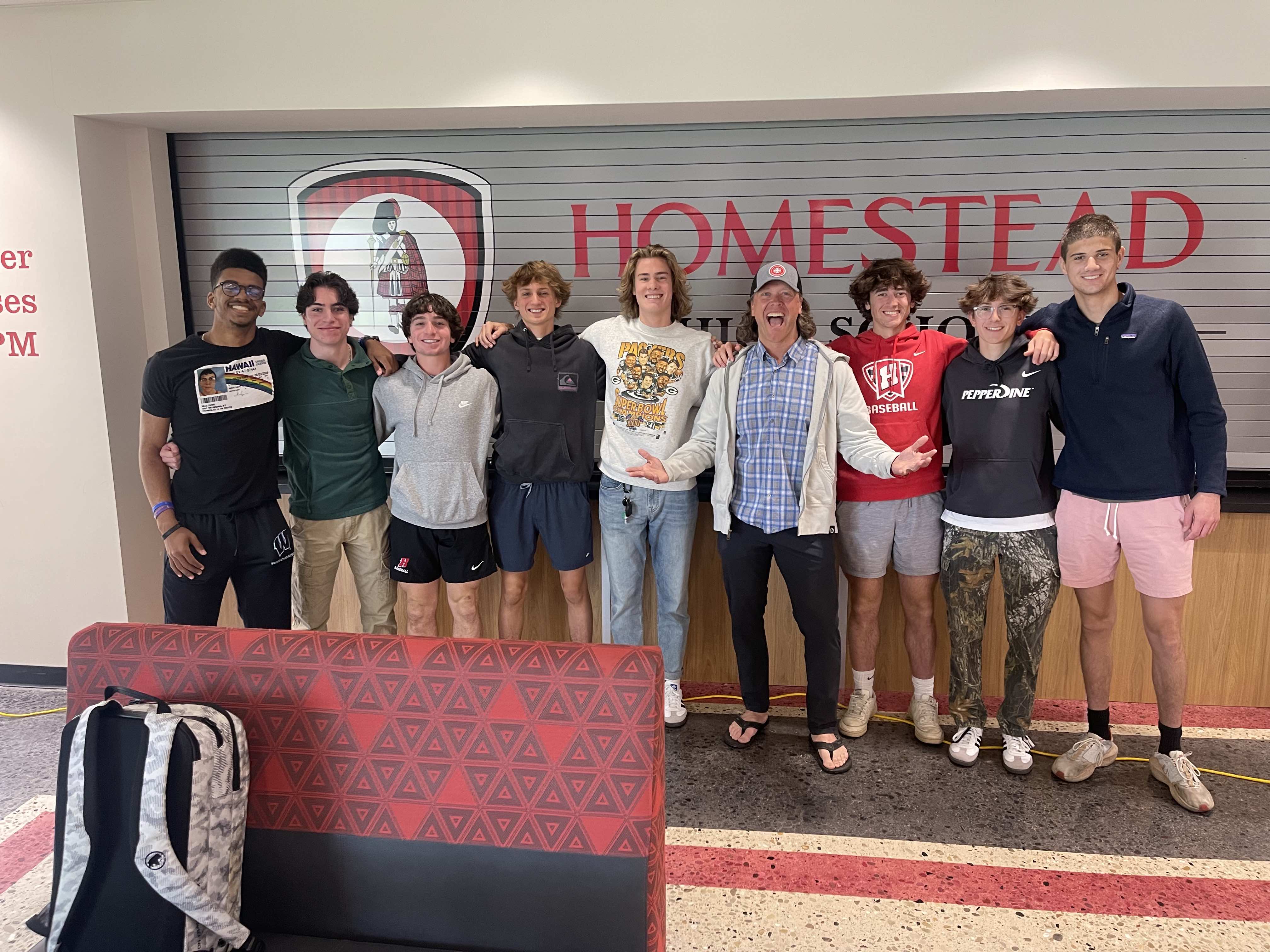
Speaking to high school students about my career path and why I get to wear flip-flops to work.

Second, being actively involved in your community helps people connect the dots for you. (In some communities, the dots are actually women named Dot. Especially in the senior community.) The more people know about you and your business, the more likely they are to share their relevant connections to businesses, suppliers, distributors and other experts and resources that may benefit you.

Me and some of the amazing ladies I have coached on the girl’s track team at Homestead High School.

But what may be even more important is that there is a great reciprocity factor at play. When you support your community, the people of your community are more likely to support you. It’s a thing. This happens as community members buy from you, refer potential customers to you, or include you on valuable lists, or in media or social opportunities. Community members look out for their own. And the more valuable you are to your community, the more they will look out for you. Which means the more time you spend in the dunk tank at the community fundraiser the less likely your business is to get dunked or tank in real life.

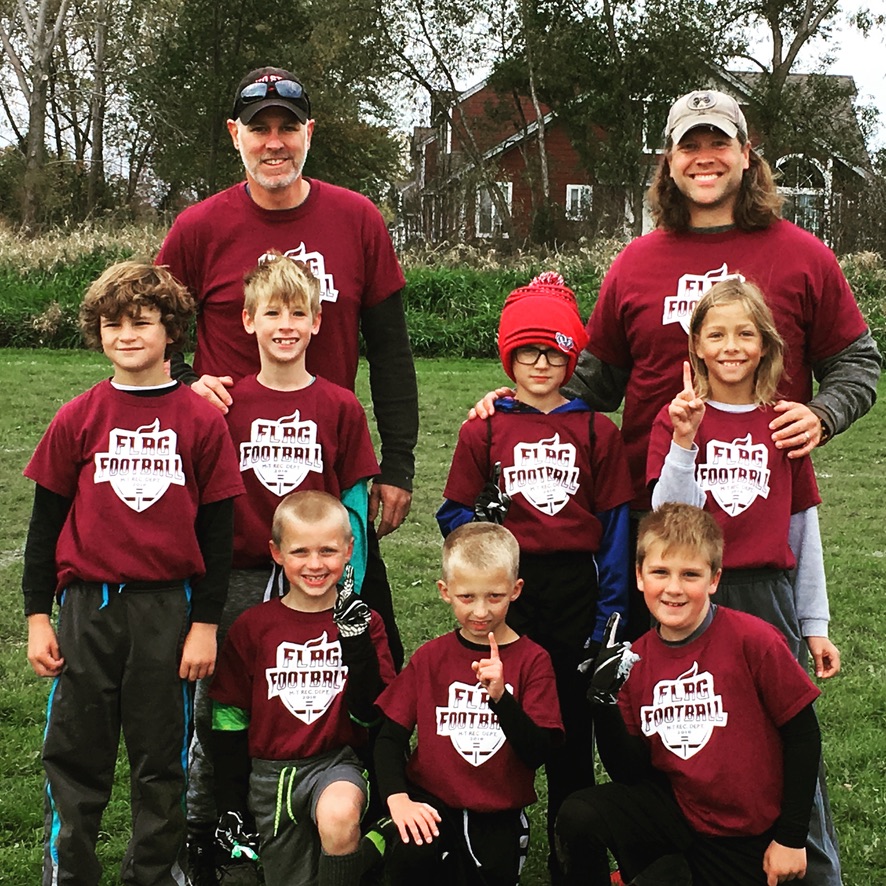
Coaching flag football and teaching the boys which finger is called the index.

Your community could mean your neighborhood, your town, or the larger city you live in or near. (I like to think of this like being an active member of the village people.) But your community could also mean a community of interests at a local, state, or national level. It could mean becoming active within an industry, association, or regular event. The key is to consider where your business is active and get involved there.  

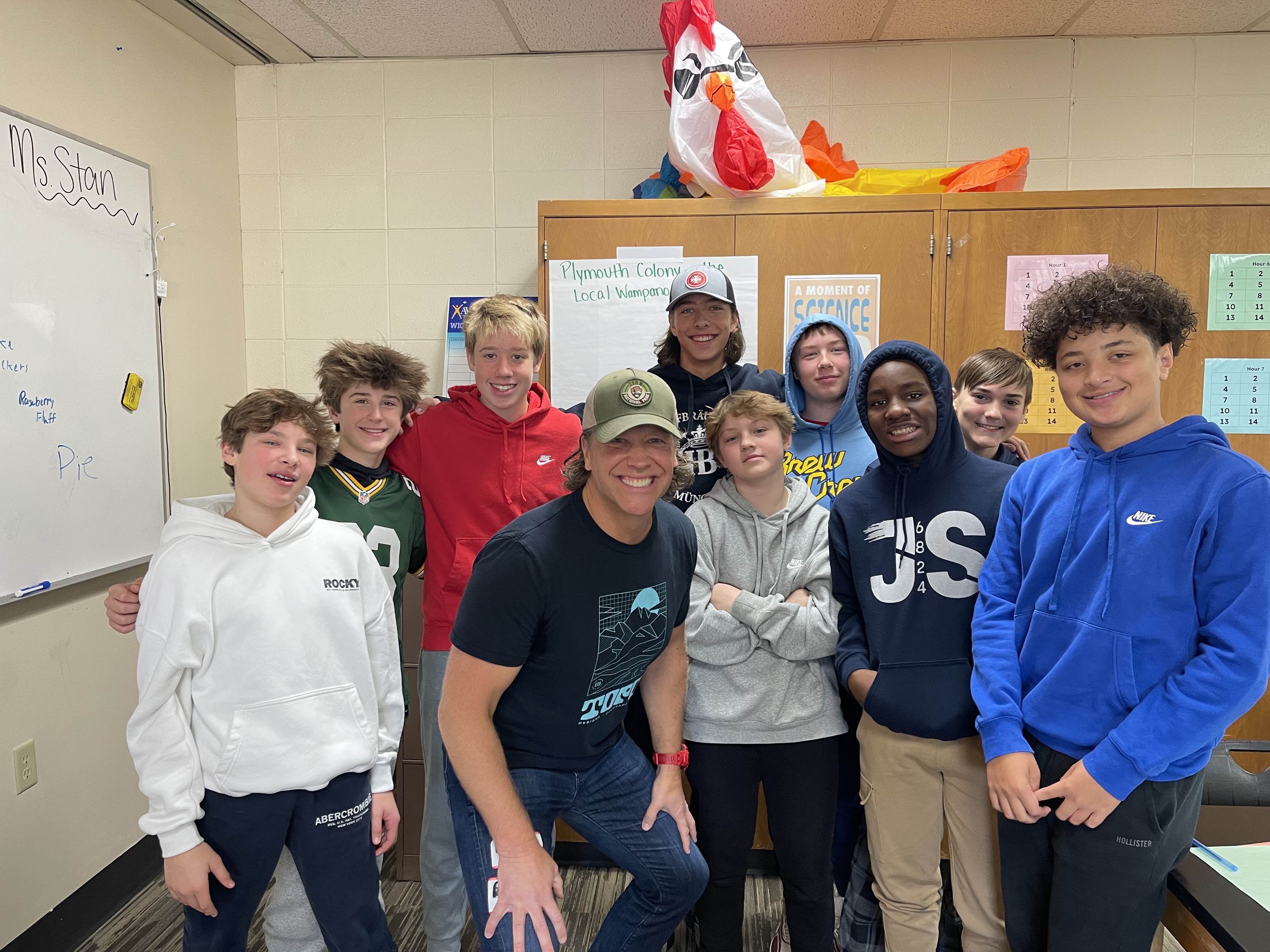
I am involved in my local community in a number of ways. I am a regular speaker within our local school district, where I talk about my career path to middle and high school students. I regularly speak at the university in our town too. (It used to be our town too…) I have coached high school track and field for 4 years. I have coached youth football for 8 years.

My business, The Weaponry, has been a presenting sponsor of our youth football program. Which included signage, announcements at games, company logos on program-issued clothing and mentions on the program website. All of which help get the word out about my business and our interest in being athletic supporters to the local community.

Speaking to my guys at Steffen Middle School, and a partially inflated chicken.

My family and I also attend band and orchestra concerts and sporting events of all types. We go to and participate in parades, festivals and fun runs. (And eat Funyuns.) We volunteer at concession stands and other activities that add value to our community. We are seen at local events regularly. And all of those events, both large and small, create connections and relationships and keep me and my business top of mind within our home base. It’s not the primary reason we do all these things. But I can assure you that your involvement is also good for you, your reputation and your business.

As you are planning or growing your business, make sure to get out and spend time supporting and adding value to your community. The more involved you are in your community, the more you will be connected to others and the valuable opportunities they can introduce you to.

Key Takeaway

As an entrepreneur or business owner, the more involved you are in your community, the more you connect with others and the opportunities they can introduce you to. You want strong ties to the people around you, and this is one of the best ways to get to know as many people as possible. Even better, when you support your community and its interests, you will find that your community supports you and your interests, too. It’s what communities do.

*If you know someone who could benefit from this message, please share it with them.

+For more of the best life lessons I have learned check out my book, What Does Your Fortune Cookie Say? from Ripples Media.
How to build your personal brand, even without TikTok.

A good friend called me this week to tell me he had started a new business. Because his new entrepreneurial adventure would require him to sell himself to others, he asked me for my best advice on how to build a personal brand. I’m not sure if he asked me because I have spent my entire career building brands, because he admired my personal brand, or because he wanted to understand where I went wrong. I was afraid to ask. After a moment of reflection, I shared my best advice on building a personal brand. And here it is for you.

Influencers know something that other people don’t:

It is not about who you know. It really is about who knows you. 

The more people who know about you, what you know, and what you are doing, the better. The Kardashians have built an empire on this simple principle. And the fact that so many people can actually spell Kardashian is proof that it works.

The first thing you should consider when building your personal brand is to start a blog, vlog, podcast, newsletter, social media feed, or other regularly published knowledge. (Which would include having your own TV show like the Kardashians.)

When I first started The Weaponry, I also started The Adam Albrecht Blog. It has been an amazing vehicle to share my thoughts, ideas, successes, and learnings with the world. Literally. My blog has been read in over 150 countries. Who knew there were over 150 countries? (Geographers and cartographers knew. There are actually 195 countries.)

A regular commitment to sharing your knowledge and experience through blogging helps build your personal brand and reputation. For the past 9 years, I have shared my thoughts, experiences and perspectives two to three times per week. This creates a steady stream of value-adding content that I can then share on various other channels, including LinkedIn, Facebook, X, Medium, Reddit, Instagram and Threads. However, as of this morning, we Americans can no longer share our expertise or best dance moves and lip-syncing skillz on TikTok. Because apparently national security is more important.

As of this publishing, I have written and published 1,045 blog posts that I can share across my social media ecosystem. As a result, my business and I are both top of mind when people have relevant opportunities. I regularly hear from people that I haven’t seen in a long time who tell me that they think of me often. This is what sharing your content does for you. This makes it great for building your brand but terrible if you are in the witness protection program.

Podcasts, newsletters, vlogs, columns, and social media channels all work too. The key is to share information and value with the world broadly so that more people than you could reach through individual messages know about you, your skills, experience, philosophies, and your business offering.

While you may create your platform to help support your business, you never know where your platform may lead. My blog readers encouraged me to write a book. Which sounded crazy-hard, until 2020, when I suddenly had plenty of time on my over-sanitized hands to do crazy-hard things. I published my first book in 2021, building on the content I had first created for my blog. 

My first book, What Does Your Fortune Cookie Say?, created amazing new opportunities for me as a paid speaker, and as a guest on TV shows and podcasts. Those opportunities helped raise my profile, and enabled me to share more about my business and my personal perspective on a wide range of topics. 

In 2024 I also started publishing Adam’s Good Newsletter. The reach of the newsletter now exceeds the reach of my blog. And the newsletter is a great vehicle to share good news and information about all of my activities, interests and offerings. 

Having your own newsletter also means that you own a media channel. While Facebook, LinkedIn and X continue to modify their algorithm to their own advantage, making it harder and harder for you to share your message without paying for exposure, like at those clubs, you control everything about the way your message is shared in a newsletter. And the audience you develop for your newsletter becomes one of your greatest assets. 

What’s more, a newsletter created through a newsletter service provider like Mailchimp (which I use), Substack or others, enables you to see when readers have opened your newsletter, and which links interested them enough to click on them. This feedback enables you to create an even more valuable offering, both for your readers and for yourself and your business.

Key Takeaway 

Always remember, it’s not about who you know. It’s who knows you. Develop a platform to share what you know and what you are experiencing with others. This not only creates value for your audience, it raises your profile. It means that people will think of you more often, even when you are not thinking of them. As a result, you won’t just seek out your own new opportunities, the dynamic flips, and both people and opportunities find their way to you. Which changes everything. Kinda like a TikTok ban.

*If you know someone who could benefit from this message, please share it with them.

+For more of the best life lessons I have learned check out my book, What Does Your Fortune Cookie Say? from Ripples Media.

Keys to a Successful Marriage or Business Relationship: Lessons from My Grandfather.

Marriage is a fascinating human experience. It’s both highly rewarding and challenging. Yet while most couples put a lot of preparation into the wedding day, few put much, if any effort into preparing for the marriage itself. Which is why half of marriages end in I don’t. And a healthy percentage of the other half of marriages aren’t as healthy as they could be.

The Program

To help prepare for our marriage, my wife Dawn and I listened to an audio program called Marathon Marriage. We learned the many lessons and philosophies of the program and did all of the exercises shared in the 4 CD set. (At least it wasn’t on 8-track cassettes.) It was a good reminder that just as you need to prepare to run a successful marathon, you need to prepare for a long and successful marriage. So we stocked up on plenty of Gatorade and snacks. And we felt like we had a good game plan.

The Mentors

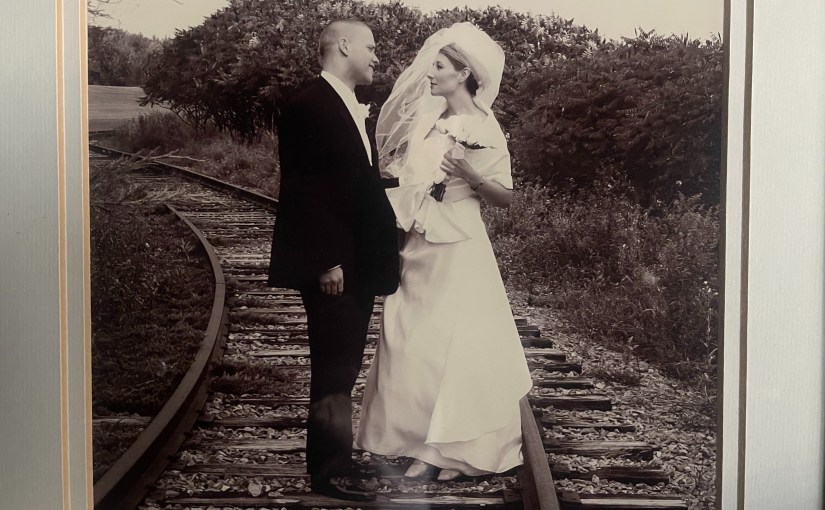
Then, on our wedding day I wanted to cram in one last bit of preparation. So I scheduled breakfast with my three marriage mentors, which included my dad and my two grandfathers (who would all laugh me off the family tree for calling them my marriage mentors). At the time, my parents had been married 32 years. My two sets of grandparents had been hitched for 61 and 63 years.

After we sat down at Emma Krumbees in Wausau, Wisconsin and worked through some Northwoods pancakes and sausage, I decided it was time for the knowledge share. I asked The Paternity Council, ‘What is the key to making a marriage great?’  With 156 years of experience at the table, I was about to get the fatherlode of great advice.

Then my 86-year-old maternal grandfather, Kenny Sprau, crossed his arms, leaned back in his chair and shared,

‘Keep doing what you’re doing.’

Um… WTF Grampy?  61 years of trial and error, nine kids and a World War, and that’s all you’ve got?  I wanted to give him a mulligan and see if he could hit it past the ladies’ tee this time. But he went on. ‘You have to keep doing the things that got you to this point.’

My Grampy, Kenneth Adam Sprau. (Thanks for the hair.)

Perspective On The Advice

While at the time the 29-year-old me was totally underwhelmed by the advice, over the past 22 years I have developed a deep appreciation for what Grampy Sprau said. Because when we are dating, we are at our best. The unfortunate tendency is to drop the hard work, energy, attention, and charm we put into the relationship after the contract is signed. Without pouring that effort, care and prioritization into the relationship, the relationship isn’t as healthy and strong as it was during your courtship and engagement. Which is kind of like leaving the cap off a bottle of soda-pop, only to realize that it’s the cap that keeps the soda popping.

Over our 22 years of marriage, I have recognized plenty of times when I was not putting in the same kind of attention and prioritization into our relationship as I did when we were just kids in the heartland, like in that little ditty ’bout Jack and Diane. It gets much harder alongside the demands of raising children, building a successful career, growing a business, and the effort required to fend off the Dad bod creep. But whenever I find that my attention to my bride has slipped (or I am reminded by my bride that my attention to my bride has slipped), I use Grampy Sprau’s advice, to help make the appropriate adjustments and corrections.

Applying The Advice To Business

Eight years after launching the advertising and ideas agency, The Weaponry, I have discovered that Grampy Sprau’s advice holds true in business as well as marriage.  You need to treat your potential clients and partners well. Act as if you would like nothing more than to spend the rest of your time together. Listen. Make them laugh. Show them you are interesting, kind and thoughtful. And then after you get the contract signed, keep doing what you’ve been doing.

In business, as in marriage, listening and collaborating are valuable approaches to your growth strategy. Clients and spouses alike really like that stuff. (Crazy right?)  When you respond favorably to a client’s request, they generate something called ‘good feelings’ about you.  And these ‘good feelings’ make them want to see you more and work with you more. And the result is business growth.

The opposite is also true.  If you are the all-time best seller at The Jerk Store, no one wants to be around you. This is true of both the individual and the organization.

If you recognize complacency, apathy or combativeness between your organization and your clients or between you and your spouse, stamp that out like a flaming bag of dog poo on your front porch. The behavior may feel justified today. But you’ll regret the justice leveled tomorrow when you’re trading the offspring in the McDonald’s parking lot.

Key Takeaway

Treat your spouse the way you did when you were dating. Treat your current business like new business. Never take either of them for granted. Work to re-win them every day. Even after you put a ring on it.

Thanks for the wise advice, Grampy.

*If you know someone who could benefit from this message, please share it with them.

+For more of the best life lessons I have learned check out my book, What Does Your Fortune Cookie Say? from Ripples Media.
The valuable life lesson you can learn from chewing gum.

When I was a kid, I liked chewing gum. I found the whole process fascinating. And when I say the whole process, I mean the whole process. I discovered that human effort can transform gum. And through the same process, we can learn to transform ourselves. Which is getting pretty deep for a story about chewing gum. But let’s go with it and see what we land.

Chew, Chew!

Gum starts as a solid form. It’s typically a stick or a small blocky nugget of some sort. Although it could be shaped like tape or rope. It could be a primary-colored ball. (I always call gumballs Bryant or Greg.) Or your gum may be shredded like cheese if you are into Big League Chew. And I am into Big League Chew.

As you begin to chew, your gum changes form under your direction. It softens as you mash it and mold it with your molars.

During the chewing process, gum releases its embedded flavor into your mouth. Gumtastic flavors include mint, peppermint, spearmint, experiment, wintergreen, cinnamon, grape, orange, watermelon, sour apple, lemon, strawberry, blueberry and the elusive juicy fruit, the Sasquatch of fruit.

Despite the wide range of interesting flavors that are used to create and market gum, shortly after you start chewing, the flavor disappears. And when it does, the most enjoyable part of the experience is over. Boo.

Then, not long after that, the gum begins to harden. Double Boo.

At this point, the fun part of chewing gum is over for most people. In fact, most people spit their gum out somewhere between the flavor dissipation and the great hardening.

But my favorite part of chewing gum comes after most people quit it, spit it and forget it.

At that point, most people feel they have extracted all the value they could get from gum. Other than maybe sticking the hard, flavorless wad to the underside of a desk or a railing for Buddy Elf.

Most people have no idea what happens after chewing gum loses flavor and hardens.

But I know.

Because when I was a kid, I loved to keep mashing away after the thrill was gone for most kids. I felt like the gum became an opponent to beat. I felt the gum was challenging me to a showdown on the playground at high noon. And the formerly fruity gum thought it was tougher than me.

But I wouldn’t wave the white flag.

I kept chewing and chomping. Like a cow chewing cud. Or Hubba Bubba. Or Bazooka.

Then, an interesting thing happened.

The gum gave up.

The wad of gum that became so tough to chew threw in its tiny little gum towel. It softened again. And then it fell apart. It lost all shape. It lost its will to gum. It stopped resisting. And it literally liquefied.

The formerly proud gum became a runny puddle of nothingness. No flavor. No form. No function. In fact, you could no longer even hold it in your mouth. If you didn’t spit the puddle out it would leak out of your face.

I loved getting to that point. It always made me feel like I had won. I felt like I took on a difficult challenge and completed it. I felt like I took on a difficult opponent, and I beat it. Like Michael Jackson.

The Lesson

Gum chewing taught me I could do hard things. That I could push through the unrewarding muddy middle of a long process. And that if I just kept going, even when it wasn’t fun. I would win.

I have applied the gum-chewing lesson countless times throughout my life. I found the approach useful as a track and field athlete when the work felt hard and the rewards felt small. It was helpful as an entrepreneur when I started The Weaponry and found that you just have to keep chewing no matter what. The lesson served me well when I wrote What Does Your Fortune Cookie Say? and the work seemed long and the finish line was nowhere in sight. And as I faced the hard and unrewarding parts of parenthood, employment and yard maintenance I reminded myself that the key to getting through tough times and past challenging obstacles it to just keep chewing.

Key Takeaway


Success and accomplishment is like chewing gum. Everyone enjoys the beginning. It’s full of flavor and quick rewards. But when those immediate rewards disappear, it’s easy to quit. You lose interest and motivation. And when things get hard, it’s easy to get soft. But if you just keep going, keep doing and chewing, you will win. You will get the ultimate reward of knowing that you are tougher than the things you face. It’s an incredibly valuable lesson to learn from a stick of Big Red or Juicy Fruit. It’s a lesson that is more valuable than the fun, the flavor or the freshening the gum provides. But you only learn that lesson by sticking around when things get hard, and chewing to the very end.

*If you know someone who could benefit from this message, please share it with them.

+For more of the best life lessons I have learned check out my book, What Does Your Fortune Cookie Say? from Ripples Media.
Are you willing to trade a good life right now for a great life later?

I don’t believe in work-life balance. I never have. It’s just a nice mythical idea. Kinda like The Fountain of Youth. Or a happy Kardashian marriage. You can’t divide your life into 3 neat 8-hour blocks of work, personal time and sleep and become rich, successful and fulfilled. To have a wildly successful career you have to throw things out of balance. You need chapters of your life when you put a disproportionate amount of time and energy into your career. That’s what all of the most accomplished people you’ve never met do. It’s why they don’t have time to meet you.

Sometimes this means days of extreme dedication and focus. Sometimes it means weeks. But more likely, there will be many months and years where your career is the thing, Stephen King. You don’t have to ignore the rest of your life the way Michael Douglas ignored Glenn Close in Fatal Attraction. But your career demands to be your priority during certain seasons. Just as farmers must put all their attention into harvesting when it is time to get the crop in, you must pay attention to the opportunity seasons of your career, and make all the progress you can before the window closes.

In the movie about your life, this part of your career would be the montage. You know, the part where they show quick clips of all your hard work, focus, skill development, late night sessions, early morning sessions, and burning-the-candle-at-both-ends kind of work. (You can learn everything you need to know about your montage in this 1-minute video from Team America, World Police.) If you are not willing to have your movie montage chapter (or two or three) you will not be dedicating enough focus and energy to your career to pull away from the pack.

Focusing your time and energy on your career instead of your personal life is like investing your money for greater compounded gains tomorrow rather than spending it on yourself today. That time invested in your professional development and in developing career capital will pay out in massive ways in the future if you don’t scarf your marshmallow today.

The sacrifice is worth it. But you have to keep the primary goal in mind to remember why you are not buying that timeshare in Gatlinburg or knocking off early to meet your friends at Applebee’s. And if you have a family, you and your spouse need to focus on the long-term payoff and be willing to sacrifice whatever nights, weekends, holidays, birthdays, anniversaries and vacations need to be traded now, for better versions of all of those things in the years to come.

One of the great regrets people have in life is that they didn’t do the foundational work they should have done to achieve their dreams. It is important to know about this widespread regret while you still have time to do the foundational work. The work is more than a fair trade. The payout is so handsome, (like George Clooney handsome) that is feels like a small price to pay.

I have experienced enough chapters of significant sacrifice in my advertising career to fill a forthcoming book. In the first chapter of career sacrifice, I wanted to become a stronger writer. So I spent considerable time working on and improving my craft. I read all the time. I wrote far more than my professional peers. I studied other great writers in all John Rahs. (And I learned the word is actually genres.) I read great writers’ writings on writing. I experimented with words, style, structure, tone and humor. Through that focus, my writing got sharper, smarter, and more interesting.

Then I focused a disproportionate amount of time and energy on developing my presentation skills. Because girls only want boyfriends who have great skills. I took courses. I read books. I became a student again. I practiced and applied all that I was learning. This helped make me a strong and entertaining performer in business development meetings, sales pitches and client presentations. Which led to promotions and more responsibility. Because sometimes your hard work gets you more hard work.

Next, I focused heavily on creative direction skills, leadership and management. And within a four year span I motored from my first creative director position to executive creative director to Chief Creative Officer. The only position in my industry left was CEO. And I wanted that job too.

So I began focusing on what it took to run the entire business. I learned as much as I could about accounting and finance. I learned about human resources and non-surgical operations. I learned systems and processes. Project management and IT. I learned stuff that most writers and art directors in advertising never learn anything about. But then again, they get to go to Applebee’s and eat good in the neighborhood.

I didn’t want to wait for a CEO job to open or to wait in line for the CEO in front of me to leave, or die. So I decided to grab the role for myself by starting my own agency called The Weaponry.

As an entrepreneur you not only need to know a bit about all areas of a business, you need to create the whole business from dust. That takes more time, energy, focus, learning, sacrifice and work, work, work, work, work. Like Rihanna said.

Again, I sacrificed other opportunities in my personal life to make this happen. It’s the only way to make big dreams a reality. It’s not easy. But it has been both immensely fun and rewarding.

To share what I was learning through my entrepreneurial journey, I also started this blog. This is the 1023rd blog post I have written in the past 9 years. This too requires sacrifice. I write first thing every morning. I write 5 to 7 days every week. By 6:10 am I am in my office hammering away at another post, another story, another idea. While other people are still in bed or enjoying a cup of coffee and a good social media scroll.

By dedicating so much time to writing I further developed my storytelling skills. And I found my own unique writing style. Which sounds exactly like the way I talk. Now, I write books too. And writing books takes yet another level of dedication and sacrifice. Which is a sacrifice I am willing to make, because I understand the compounding benefits that come from that investment.

Key Takeaway

The great achievements in your career don’t come easy. They don’t come at a natural pace. They come by throwing your life out of balance. By heavying your load. By gorging on learning. And by giving more time, attention and energy to your work than others are willing to give. But by unbalancing your career early your life balance will flip later, and you will receive far more financial and career capital by becoming uncommonly great at what you do. Today, I have no foundational regrets. Instead, I have the rewards of a lot of hard work and sacrifice. And not only can you take that to the bank, you can take it on long, well-deserved vacations with your family and friends.

*If you know someone who could benefit from this message, please share it with them.

+For more of the best life lessons I have learned check out my book, What Does Your Fortune Cookie Say? from Ripples Media.
Why it is time for you to harvest more good ideas.

Good ideas are everywhere. Like oxygen and excuses. That’s because people have good ideas all the time, and they are happy to share them with you. In fact, a good idea is the thing people are quickest to share. Because people don’t want to keep good ideas to themselves. It is only through sharing your good ideas that your ideas get validated, like parking. It is only through sharing a good idea that you are given credit for being smart, creative or insightful. Or for being good at evading the law.

Are You Gonna Come My Way?

People share their good ideas with me all the time. Some share because I am an entrepreneur. And entrepreneurs are known for bringing good ideas to life, like General Electric. People share with us either because they want advice on how to bring their idea to life, or because they are hoping that we will bring their idea to life because they don’t have the time, money or energy to do it themselves. Which is kind of like giving your idea up for adoption, because you know you are not fit to raise the idea on your own. Yet you don’t want to terminate your idea either. #ProIdea vs #MyIdeaMyChoice

Another reason people share their good ideas with me is because I am a professional creative thinker. I lead the advertising and ideas agency The Weaponry. So when you think of a great idea, you naturally want to share it with someone who will recognize it and appreciate you for coming up with it. People also know that I will have ideas on what they should do next. Kinda like the owl that those kids asked how many licks it took to get to the Tootsie Roll center of a Tootsie Pop. (Drop the answer in the comments if you know.)

The third and perhaps most important reason people share good ideas with me is because I am looking for them. It’s the law of attraction. They come my way because I am coming their way. And we meet in the middle, like Parker McCollum and Maren Morris.

Why You Should Harvest Good Ideas.

Ideas create opportunities. They make things easier. They make things more enjoyable. They create more Wow in your world. And they offer more ways to make money than The Mint. (Actually, The Mint only makes money the coiny way and the bulliony way.)

But good ideas also offer clues, instructions, blueprints or templates on how to create more good ideas. Because the same insight, combination, application or exploration that led to one good idea can help create more. You can always reverse engineer a good idea, and once you discover the process, you can apply it to create countless others. Which means that when you collect good ideas you are also collecting keys to unlock more good ideas.

Key Takeaway

To live a successful, creative and interesting life, become an idea harvester. Look for them. Go where they grow. Spend time with idea creators. And move through the world like a combine moves through a field of corn, wheat, soybeans, or AI-generated light bulb plants. Pick all the ideas you can. Collect them. Polish them. Combine them in new and novel ways. And they will create more value than anything else can.

*If you know someone who could benefit from this message, please share it with them.

+For more of the best life lessons I have learned check out my book, What Does Your Fortune Cookie Say? from Ripples Media.
Why September 3rd is the new New Year’s Day.

Happy New Year! That’s right, Tuesday September 3, 2024, is the new New Year’s Day. I know you’re wondering, what the Dick Clark is this guy talking about!?!

Allow me to explain.

January Ain’t Even Right

Americans traditionally celebrate the new year at the worst possible time. In January you are stumbling out of the most hectic and stressful time of the year. Which makes it a poor time to set new goals, quit bad habits and reinvent yourself.

new year s eve ceremony champagne sparkling wine
New Year’s is a great time for drinking. Not for resolving.

Think Fall Once And For All

The simple fact is that the fall, not spring, and certainly not January 1, is the best time for new beginnings.

It’s Grow Time!

If you were a tree, today is when your next ring would start to grow. Preschool starts in the fall. So does kindergarten, middle school, high school and college. Which means fall is the start of the next chapter for kids, parents and teachers alike. In fact, the day after Labor Day is the first day schools everywhere are back in session and fully engaged.

photo of four girls wearing school uniform doing hand signs
We’re all back to school now like Rodney Dangerfield.

Back To Full Strength

When summer break is over for kids, summer vacations are over for adults. Which means that starting today, we are all back to work. Our businesses are operating at full strength for the first time in 3 months. Factories are humming. Offices are buzzing. And farms are farmy.

white laptop
Let’s do it, do it, do it.

Can I get An Amen?

Churches now begin their regularly scheduled programs. So if you see a church, and see a steeple, open it up and you’ll see all the people.

altar arches architecture art
Take me to church.

The new television season starts now. (Remember television?)

Both NCAA and NFL football kickoff now too.

This is a great time of year.

100% Battery Life

For those of you who used your summer vacation days well, you are hitting September 3rd fully recharged. Not only did you take the last three months to fill up on Vitamin D, travel, relaxation and inspiration, you got a three-day weekend to top it all off. #noexcuses

This is where we are right now.

Go Team Go!

At The Weaponry, the advertising and idea agency that I help lead, we are fully engaged. We’re all primed, rested and ready. Your team should be too. Let’s push hard. Have fun. And make this the best year ever. And here you thought today was just another Tuesday.

Key Takeaway

Fall is the very best time of year for growth and development. Now that your tanks are full and you are refocused, it is time to treat this like the new beginning you almost missed. Set new goals. Drop a bad habit. Pick a new challenge. Plan your next chapter. Grab that next rung. Or build your own ladder.

*If you know someone who could benefit from this message, please share it with them.\


+For more of the best life lessons I have learned check out my book, What Does Your Fortune Cookie Say? from Ripples Media.

The latest lesson I have learned as an entrepreneur is an expensive one.

Since I first launched The Weaponry, the advertising and idea agency I lead, I have learned a lot of interesting lessons. I didn’t become an entrepreneur for the life lessons. But entrepreneurship has a funny way of teaching you new things, whether you want to learn or not.

The Learnin’

Over the past few months, we have had to replace several computers. The Weaponry’s computers are not cheap. We are all Macs all the time. Like Roni and Cheese.

Many of our computers are supped-up machines built for high-end design, art, and video work. The kind of creative work we do requires serious machinery and significantly more storage than your garden-variety Apples. (Or would that be orchard-variety?)

But with all the computers we have had to replace lately I am not mad, frustrated, or worried. After all, this isn’t a quality problem. The computers were not stolen. And they did not run away to join the circus. (Do computers still do that?)

The reason we are replacing so many machines is the best reason of all.

We simply wore our computers out. We worked them hard. Our Weapons have kept our machines busy with demanding work for a long time. We have been slinging advertising, branding, videos, logos, design and illustration work for 8 years.

Many of our team members have been with us for 6 to 8 years now. All that work has been crushing our equipment. And like that popular TV show from the 70s with those classic hairstyles, it seems that when it comes to computer hardware and software, eight is enough.

Replacing our computers is a sign of success, demand and longevity.

And I am grateful for it all.

Key Takeaway

Businesses require investments in equipment and resources. One great reward of success is staying in business long enough to wear out your stuff. Don’t lament the new expenses. Recognize them as a sign of demand and longevity. You have earned the privilege of replacing your resources because you are still here. Still needed. Still sought after. The same is true in our personal lives. When you have to replace equipment it means you have outlived your stuff. That is a blessing not to be taken for granted.

*If you know someone who could benefit from this message, please share it with them.

+For more of the best life lessons I have learned check out my book, What Does Your Fortune Cookie Say? from Ripples Media.

How to put Charlie’s Rule of opportunities to work for you.

Last week I was talking with my good friend Charlie Wills about business. Charlie and I met through The W-Club, the University of Wisconsin varsity athlete alumni group. Talking with Charlie is a pain in the neck. Literally. Because Charlie is really, really tall. He is a former University of Wisconsin standout basketball player, who played in the 2000 Final Four against the Flintstones. #IYKYK

Today, Charlie towers over the real estate world in Madison, Wisconsin where he has been putting people before profits for over 20 years. Not only is Charlie a close friend of mine, but he is also a client of The Weaponry, the advertising and ideas agency that I lead.

Charlie shared an interesting statistic with me about where his clients come from. He told me that 96% of his organization’s clients come from within their sphere. That includes current and past clients, recommendations, friends, family and acquaintances.

If you are good at math, you also realize that only 4% of opportunities came from outside their sphere. Which is a shockingly small number. In fact, if that number was 4 sizes smaller it would be nothing.

I love the fact that Charlie uses the term sphere instead of network or circle. It’s very basketbally of him. And it gives the group more dimension.

Charlie’s Rule: The vast majority of your opportunities in business and in life originate within your sphere.

This rule, while surprising, is also logical.

People in India whom you have never met and have no real connections to, are highly unlikely to come to you with a life-changing opportunity. (The same goes for the dude from the royal family in Nigeria.) But your past client, your cousin, and the person you know from that thing you do in your spare time are likely to think of you when they need a You-Like person to help solve the kind of problem you are great at solving.

Armed with the knowledge that we all benefit from some variation of Charlie’s Rule, what are you supposed to do about it?

1. Develop more relationships. Whenever you are dealing with success as a percentage game, and it always is, increase the base number. The more people you know the more opportunities will come your way. Because opportunities come to you through humans. Kinda like COVID-19 and invitations to Tupperware parties.

2. Maintain the relationships you have. Not all relationships are equal. The kid you knew from kindergarten who you haven’t spoken to since you stopped napping together in class is not very valuable. So stay in touch with your people. Reach out via phone, email, text, or social media to keep your relationship active. Write a newsletter, blog, or other way to share what’s happening in your life. Social media is great for maintaining relationships across a broad spectrum of familiarity. Use this amazing resource.

Key Takeaway

Your relationships are critical to your success. Remember, Charlie’s Rule says that the vast majority of your opportunities in business and in life originate within your sphere. So bring more people into your sphere. Keep the relationships in your sphere active by staying in touch through any appropriate means. As a result, more good opportunities will find their way to you. Just like Charlie said.

*If you know someone who could benefit from this message, please share it with them.

+For more of the best life lessons I have learned check out my book, What Does Your Fortune Cookie Say? from Ripples Media.