Keys to a Successful Marriage or Business Relationship: Lessons from My Grandfather.

Marriage is a fascinating human experience. It’s both highly rewarding and challenging. Yet while most couples put a lot of preparation into the wedding day, few put much, if any effort into preparing for the marriage itself. Which is why half of marriages end in I don’t. And a healthy percentage of the other half of marriages aren’t as healthy as they could be.

The Program

To help prepare for our marriage, my wife Dawn and I listened to an audio program called Marathon Marriage. We learned the many lessons and philosophies of the program and did all of the exercises shared in the 4 CD set. (At least it wasn’t on 8-track cassettes.) It was a good reminder that just as you need to prepare to run a successful marathon, you need to prepare for a long and successful marriage. So we stocked up on plenty of Gatorade and snacks. And we felt like we had a good game plan.

The Mentors

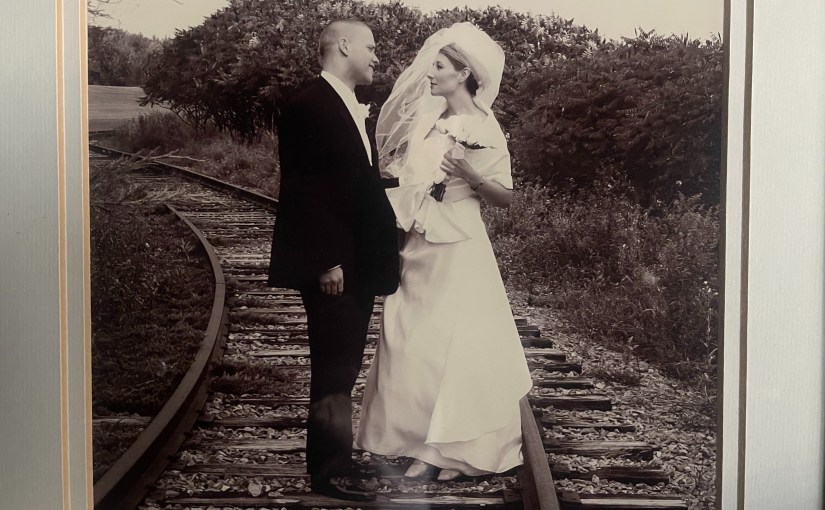
Then, on our wedding day I wanted to cram in one last bit of preparation. So I scheduled breakfast with my three marriage mentors, which included my dad and my two grandfathers (who would all laugh me off the family tree for calling them my marriage mentors). At the time, my parents had been married 32 years. My two sets of grandparents had been hitched for 61 and 63 years.

After we sat down at Emma Krumbees in Wausau, Wisconsin and worked through some Northwoods pancakes and sausage, I decided it was time for the knowledge share. I asked The Paternity Council, ‘What is the key to making a marriage great?’  With 156 years of experience at the table, I was about to get the fatherlode of great advice.

Then my 86-year-old maternal grandfather, Kenny Sprau, crossed his arms, leaned back in his chair and shared,

‘Keep doing what you’re doing.’

Um… WTF Grampy?  61 years of trial and error, nine kids and a World War, and that’s all you’ve got?  I wanted to give him a mulligan and see if he could hit it past the ladies’ tee this time. But he went on. ‘You have to keep doing the things that got you to this point.’

My Grampy, Kenneth Adam Sprau. (Thanks for the hair.)

Perspective On The Advice

While at the time the 29-year-old me was totally underwhelmed by the advice, over the past 22 years I have developed a deep appreciation for what Grampy Sprau said. Because when we are dating, we are at our best. The unfortunate tendency is to drop the hard work, energy, attention, and charm we put into the relationship after the contract is signed. Without pouring that effort, care and prioritization into the relationship, the relationship isn’t as healthy and strong as it was during your courtship and engagement. Which is kind of like leaving the cap off a bottle of soda-pop, only to realize that it’s the cap that keeps the soda popping.

Over our 22 years of marriage, I have recognized plenty of times when I was not putting in the same kind of attention and prioritization into our relationship as I did when we were just kids in the heartland, like in that little ditty ’bout Jack and Diane. It gets much harder alongside the demands of raising children, building a successful career, growing a business, and the effort required to fend off the Dad bod creep. But whenever I find that my attention to my bride has slipped (or I am reminded by my bride that my attention to my bride has slipped), I use Grampy Sprau’s advice, to help make the appropriate adjustments and corrections.

Applying The Advice To Business

Eight years after launching the advertising and ideas agency, The Weaponry, I have discovered that Grampy Sprau’s advice holds true in business as well as marriage.  You need to treat your potential clients and partners well. Act as if you would like nothing more than to spend the rest of your time together. Listen. Make them laugh. Show them you are interesting, kind and thoughtful. And then after you get the contract signed, keep doing what you’ve been doing.

In business, as in marriage, listening and collaborating are valuable approaches to your growth strategy. Clients and spouses alike really like that stuff. (Crazy right?)  When you respond favorably to a client’s request, they generate something called ‘good feelings’ about you.  And these ‘good feelings’ make them want to see you more and work with you more. And the result is business growth.

The opposite is also true.  If you are the all-time best seller at The Jerk Store, no one wants to be around you. This is true of both the individual and the organization.

If you recognize complacency, apathy or combativeness between your organization and your clients or between you and your spouse, stamp that out like a flaming bag of dog poo on your front porch. The behavior may feel justified today. But you’ll regret the justice leveled tomorrow when you’re trading the offspring in the McDonald’s parking lot.

Key Takeaway

Treat your spouse the way you did when you were dating. Treat your current business like new business. Never take either of them for granted. Work to re-win them every day. Even after you put a ring on it.

Thanks for the wise advice, Grampy.

*If you know someone who could benefit from this message, please share it with them.

+For more of the best life lessons I have learned check out my book, What Does Your Fortune Cookie Say? from Ripples Media.
Are you willing to trade a good life right now for a great life later?

I don’t believe in work-life balance. I never have. It’s just a nice mythical idea. Kinda like The Fountain of Youth. Or a happy Kardashian marriage. You can’t divide your life into 3 neat 8-hour blocks of work, personal time and sleep and become rich, successful and fulfilled. To have a wildly successful career you have to throw things out of balance. You need chapters of your life when you put a disproportionate amount of time and energy into your career. That’s what all of the most accomplished people you’ve never met do. It’s why they don’t have time to meet you.

Sometimes this means days of extreme dedication and focus. Sometimes it means weeks. But more likely, there will be many months and years where your career is the thing, Stephen King. You don’t have to ignore the rest of your life the way Michael Douglas ignored Glenn Close in Fatal Attraction. But your career demands to be your priority during certain seasons. Just as farmers must put all their attention into harvesting when it is time to get the crop in, you must pay attention to the opportunity seasons of your career, and make all the progress you can before the window closes.

In the movie about your life, this part of your career would be the montage. You know, the part where they show quick clips of all your hard work, focus, skill development, late night sessions, early morning sessions, and burning-the-candle-at-both-ends kind of work. (You can learn everything you need to know about your montage in this 1-minute video from Team America, World Police.) If you are not willing to have your movie montage chapter (or two or three) you will not be dedicating enough focus and energy to your career to pull away from the pack.

Focusing your time and energy on your career instead of your personal life is like investing your money for greater compounded gains tomorrow rather than spending it on yourself today. That time invested in your professional development and in developing career capital will pay out in massive ways in the future if you don’t scarf your marshmallow today.

The sacrifice is worth it. But you have to keep the primary goal in mind to remember why you are not buying that timeshare in Gatlinburg or knocking off early to meet your friends at Applebee’s. And if you have a family, you and your spouse need to focus on the long-term payoff and be willing to sacrifice whatever nights, weekends, holidays, birthdays, anniversaries and vacations need to be traded now, for better versions of all of those things in the years to come.

One of the great regrets people have in life is that they didn’t do the foundational work they should have done to achieve their dreams. It is important to know about this widespread regret while you still have time to do the foundational work. The work is more than a fair trade. The payout is so handsome, (like George Clooney handsome) that is feels like a small price to pay.

I have experienced enough chapters of significant sacrifice in my advertising career to fill a forthcoming book. In the first chapter of career sacrifice, I wanted to become a stronger writer. So I spent considerable time working on and improving my craft. I read all the time. I wrote far more than my professional peers. I studied other great writers in all John Rahs. (And I learned the word is actually genres.) I read great writers’ writings on writing. I experimented with words, style, structure, tone and humor. Through that focus, my writing got sharper, smarter, and more interesting.

Then I focused a disproportionate amount of time and energy on developing my presentation skills. Because girls only want boyfriends who have great skills. I took courses. I read books. I became a student again. I practiced and applied all that I was learning. This helped make me a strong and entertaining performer in business development meetings, sales pitches and client presentations. Which led to promotions and more responsibility. Because sometimes your hard work gets you more hard work.

Next, I focused heavily on creative direction skills, leadership and management. And within a four year span I motored from my first creative director position to executive creative director to Chief Creative Officer. The only position in my industry left was CEO. And I wanted that job too.

So I began focusing on what it took to run the entire business. I learned as much as I could about accounting and finance. I learned about human resources and non-surgical operations. I learned systems and processes. Project management and IT. I learned stuff that most writers and art directors in advertising never learn anything about. But then again, they get to go to Applebee’s and eat good in the neighborhood.

I didn’t want to wait for a CEO job to open or to wait in line for the CEO in front of me to leave, or die. So I decided to grab the role for myself by starting my own agency called The Weaponry.

As an entrepreneur you not only need to know a bit about all areas of a business, you need to create the whole business from dust. That takes more time, energy, focus, learning, sacrifice and work, work, work, work, work. Like Rihanna said.

Again, I sacrificed other opportunities in my personal life to make this happen. It’s the only way to make big dreams a reality. It’s not easy. But it has been both immensely fun and rewarding.

To share what I was learning through my entrepreneurial journey, I also started this blog. This is the 1023rd blog post I have written in the past 9 years. This too requires sacrifice. I write first thing every morning. I write 5 to 7 days every week. By 6:10 am I am in my office hammering away at another post, another story, another idea. While other people are still in bed or enjoying a cup of coffee and a good social media scroll.

By dedicating so much time to writing I further developed my storytelling skills. And I found my own unique writing style. Which sounds exactly like the way I talk. Now, I write books too. And writing books takes yet another level of dedication and sacrifice. Which is a sacrifice I am willing to make, because I understand the compounding benefits that come from that investment.

Key Takeaway

The great achievements in your career don’t come easy. They don’t come at a natural pace. They come by throwing your life out of balance. By heavying your load. By gorging on learning. And by giving more time, attention and energy to your work than others are willing to give. But by unbalancing your career early your life balance will flip later, and you will receive far more financial and career capital by becoming uncommonly great at what you do. Today, I have no foundational regrets. Instead, I have the rewards of a lot of hard work and sacrifice. And not only can you take that to the bank, you can take it on long, well-deserved vacations with your family and friends.

*If you know someone who could benefit from this message, please share it with them.

+For more of the best life lessons I have learned check out my book, What Does Your Fortune Cookie Say? from Ripples Media.

A great adventure book that will help toughen you up.

Yesterday afternoon was chilly in Wisconsin. The mid-October temperature dropped throughout the day. Dark clouds rolled in. The wind picked up. And I was outside mowing my 1.7 acre lawn in Mequon on my John Deere lawn tractor.

Suddenly the clouds burst open with rain. Big fat, cold drops quickly soaked my clothing. The wind whipped at my face. The obvious discomfort brought a big broad smile to my face, and I just kept on mowing.

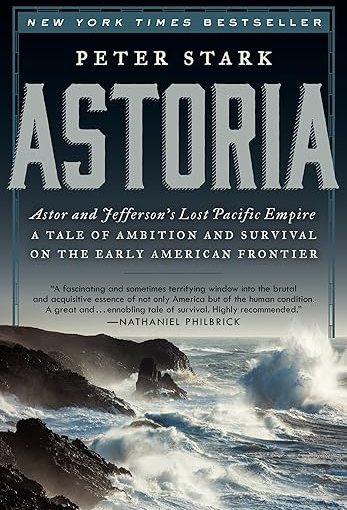
You see, as I was mowing I was also listening to the tail end of the audiobook Astoria by Peter Stark. This amazing book tells the epic tale of the men and one woman who set off to establish the first American settlement in the northwestern United States in 1811 at what is now Astoria, Oregon. You may know Astoria better as the location where The Goonies was filmed. #pinchersofperil

This adventure had huge influences on the development of the Pacific Northwest, including the discovery of what would become the Oregon Trail and fertile ground to grow grunge music.

Astoria was the vision of famed fur mogul and real estate hoarder John Jacob Astor. Astor wanted to establish Astoria at the northwestern hub of his transcontinental fur trade where the great Columbia River meets the Pacific Ocean with a roiling fist bump. This is just down the block from where the Lewis and Clark expedition spent a miserable winter once they reached the Pacific Ocean at Cape Disappointment. (Note to self: Don’t move anywhere that has the name Disappointment.)

The expedition dealt with unfathomable challenges as the overland party trudged across the continent with resistance at every turn. While others experienced the worst the sea has to offer as they sailed from New York City, south around Cape Horn, to Hawaii, and on to Vancouver Island. Things went bad. Really bad. Which is part of the reason this story hasn’t endured as a great American tale. But it is also the reason the story is so fascinating to read now.

Astoria is one of the top 3 adventure books I have ever read. It ranks up there with Stephen Ambrose’s Undaunted Courage about the Lewis and Clark’s adventure, and Endurance, about the fateful voyage of Ernest Shackleton’s crew to Antarctica.

Key Takeaway

If you like stories of survival, adventure, drama, business, or history you will love Astoria. This instant classic will also remind you that things could always be worse and that you can endure far more than you think you can. All of which makes a little cold rain on your lawn tractor feel like no problem at all.

*If you know someone who might enjoy this book, please share this review with them.

+For more of the best life lessons I have learned check out my book, What Does Your Fortune Cookie Say? from Ripples Media.

The latest lesson I have learned as an entrepreneur is an expensive one.

Since I first launched The Weaponry, the advertising and idea agency I lead, I have learned a lot of interesting lessons. I didn’t become an entrepreneur for the life lessons. But entrepreneurship has a funny way of teaching you new things, whether you want to learn or not.

The Learnin’

Over the past few months, we have had to replace several computers. The Weaponry’s computers are not cheap. We are all Macs all the time. Like Roni and Cheese.

Many of our computers are supped-up machines built for high-end design, art, and video work. The kind of creative work we do requires serious machinery and significantly more storage than your garden-variety Apples. (Or would that be orchard-variety?)

But with all the computers we have had to replace lately I am not mad, frustrated, or worried. After all, this isn’t a quality problem. The computers were not stolen. And they did not run away to join the circus. (Do computers still do that?)

The reason we are replacing so many machines is the best reason of all.

We simply wore our computers out. We worked them hard. Our Weapons have kept our machines busy with demanding work for a long time. We have been slinging advertising, branding, videos, logos, design and illustration work for 8 years.

Many of our team members have been with us for 6 to 8 years now. All that work has been crushing our equipment. And like that popular TV show from the 70s with those classic hairstyles, it seems that when it comes to computer hardware and software, eight is enough.

Replacing our computers is a sign of success, demand and longevity.

And I am grateful for it all.

Key Takeaway

Businesses require investments in equipment and resources. One great reward of success is staying in business long enough to wear out your stuff. Don’t lament the new expenses. Recognize them as a sign of demand and longevity. You have earned the privilege of replacing your resources because you are still here. Still needed. Still sought after. The same is true in our personal lives. When you have to replace equipment it means you have outlived your stuff. That is a blessing not to be taken for granted.

*If you know someone who could benefit from this message, please share it with them.

+For more of the best life lessons I have learned check out my book, What Does Your Fortune Cookie Say? from Ripples Media.
How to put Charlie’s Rule of opportunities to work for you.

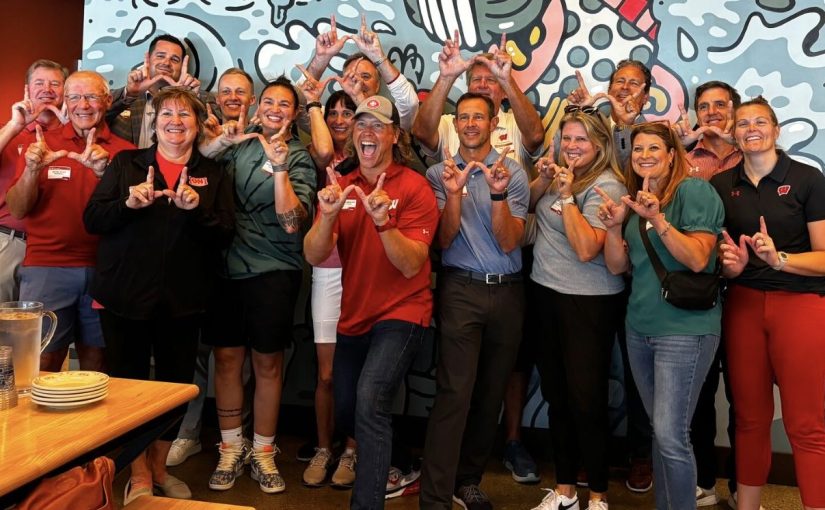
Last week I was talking with my good friend Charlie Wills about business. Charlie and I met through The W-Club, the University of Wisconsin varsity athlete alumni group. Talking with Charlie is a pain in the neck. Literally. Because Charlie is really, really tall. He is a former University of Wisconsin standout basketball player, who played in the 2000 Final Four against the Flintstones. #IYKYK

Today, Charlie towers over the real estate world in Madison, Wisconsin where he has been putting people before profits for over 20 years. Not only is Charlie a close friend of mine, but he is also a client of The Weaponry, the advertising and ideas agency that I lead.

Charlie shared an interesting statistic with me about where his clients come from. He told me that 96% of his organization’s clients come from within their sphere. That includes current and past clients, recommendations, friends, family and acquaintances.

If you are good at math, you also realize that only 4% of opportunities came from outside their sphere. Which is a shockingly small number. In fact, if that number was 4 sizes smaller it would be nothing.

I love the fact that Charlie uses the term sphere instead of network or circle. It’s very basketbally of him. And it gives the group more dimension.

Charlie’s Rule: The vast majority of your opportunities in business and in life originate within your sphere.

This rule, while surprising, is also logical.

People in India whom you have never met and have no real connections to, are highly unlikely to come to you with a life-changing opportunity. (The same goes for the dude from the royal family in Nigeria.) But your past client, your cousin, and the person you know from that thing you do in your spare time are likely to think of you when they need a You-Like person to help solve the kind of problem you are great at solving.

Armed with the knowledge that we all benefit from some variation of Charlie’s Rule, what are you supposed to do about it?

1. Develop more relationships. Whenever you are dealing with success as a percentage game, and it always is, increase the base number. The more people you know the more opportunities will come your way. Because opportunities come to you through humans. Kinda like COVID-19 and invitations to Tupperware parties.

2. Maintain the relationships you have. Not all relationships are equal. The kid you knew from kindergarten who you haven’t spoken to since you stopped napping together in class is not very valuable. So stay in touch with your people. Reach out via phone, email, text, or social media to keep your relationship active. Write a newsletter, blog, or other way to share what’s happening in your life. Social media is great for maintaining relationships across a broad spectrum of familiarity. Use this amazing resource.

Key Takeaway

Your relationships are critical to your success. Remember, Charlie’s Rule says that the vast majority of your opportunities in business and in life originate within your sphere. So bring more people into your sphere. Keep the relationships in your sphere active by staying in touch through any appropriate means. As a result, more good opportunities will find their way to you. Just like Charlie said.

*If you know someone who could benefit from this message, please share it with them.

+For more of the best life lessons I have learned check out my book, What Does Your Fortune Cookie Say? from Ripples Media.

Why logic isn’t enough to win at marketing.

As the Founder & CEO of the advertising and idea agency, The Weaponry, I get to work on a lot of great brands with a lot of great people. But as someone passionate about great creative work it may surprise you to hear that one of my favorite brands to work on is in a historically conservative category. Yet we have developed a brand personality and creative work for our client that is full of the type of personality and wit that is more common in categories like soda pop or men’s deodorant. #ImOnAHorse.

But like most brands, our fun client also has a lot of legitimate reasons to choose it the way choosey moms choose JIF. So a while back the marketing team decided to emphasize those legitimate reasons to choose the brand in a fairly straightforward way. The personality was downplayed. Features and benefits took center stage. And the brand started feeling, well, flat. Kinda like soda pop after someone left the cap off of the bottle for a few days, in Iowa.

I could tell that we were starting to drift slowly off course. The fun brand we had built was an honest reflection of the reason customers loved the organization. The people and culture of the place were great. We simply made sure that it shined bright like a diamond in the marketing too.

So we met with our client and shared our concerns. I told the client that we were getting too logical. We were focusing on rational reasons to choose our brand. And our endearing personality, the fun, cool, the funny, was fading into the background. As we focused on our features and benefits, things that many of our competitors could also promote, we were losing our differentiation. And we were in danger of losing our emotional magnetism.

As marketers, we must never forget this fundamental law:

To be wildly successful, you need your audience to love you, not logic you.

Our superstar clients understood the problem. And we made appropriate adjustments. Starting with our next creative campaign, we put our personality front and center as we promoted the great reasons to believe in the brand.

Today, when I see our work I love everything about the brand. The personality is fun, smart and clever. It provides a smile if not a laugh. There is a clear reason to choose the brand in every marketing morsel. People comment on the work all the time. And the brand is enjoying strong growth and success across the board. Which I love most of all, Scarecrow.

Key Takeaway

Resist the temptation to focus fully on your features and benefits. Brands should have personalities, just like people. Invest time and energy in developing a great personality that grabs attention and magnetizes your audience to the brand. Make your customers and prospects love you, not logic you. Because once you win their hearts, everything else will follow.

*If you know someone who could benefit from this message, please share it with them.

+For more of the best life lessons I have learned check out my book, What Does Your Fortune Cookie Say? from Ripples Media.

An open letter to junior employees who want to keep their new jobs.

Hey Junior Employees!*

Congratulations on landing that new job of yours! Finding the job may have seemed like the hard part. It is not. The hard part is not getting left behind.

Now that you have the job it’s frick’n go time! You have to start performing and competing like you did in your classes. Like you did in your athletic competitions or music competitions, or art competitions, or dance competitions or beer chugging competitions, or whatever you once did competitively.

As a new employee, you are a liability. You cost the company more than you make it. Because we have to train you to do your job in a way that adds value. You are not an asset to the company until you have learned enough to create more value than we pay you in salary or wages. For some employees, this never happens. And if it doesn’t happen quickly enough you can’t stay with the company.

Remember the line you heard at the bar at closing time in college:

‘You don’t have to go home, but you can’t stay here.’

The same applies to employees who don’t learn, contribute and start providing value that exceeds their wages.

You need to focus on transforming yourself into an asset employee. That means you should be pushing me, your supervisor, or boss, or business owner for more. For more work, for more opportunities for more access, for more teaching and exposure (work-appropriate exposure only.)

You have got to stand up and demand to be noticed. You’ve got to bring ideas to the table. Or wherever ideas should be brought if you work in a table-less organization.

Take initiative.

Ask questions. As many as you can.

Learn and grow faster than anyone else in the organization.

Soak it all up, like Sheryl Crow. (Ask your parents to explain what that means.)

You are starting at a low point. Growth should be evident quickly.

Create your own fast track to the top by moving fast. By learning fast. By growing fast. Like Luke Combs in that fast car he bought from Tracy Chapman.

Don’t wait for me. I may be too busy to help you move fast unless you are requesting it. Or forcing it.

Don’t allow yourself to be ignored for long stretches. (Think about it like developing real-life Snapstreaks with the senior people at work.)

Create stuff.

Add value in ways we never requested.

Because once you become an Asset Employee everything changes.

And your employer will do all they can to keep you.

That’s the goal.

Key Takeaway

New employees, both junior and senior, begin their jobs as liabilities, costing companies more than they earn. To develop job security you have to produce. That means action, initiative, learning and growth. Master the systems and processes. Bring new ideas. Outpace the expected learning curve. Make yourself indispensable and irreplaceable. This is how you transform yourself from a liability into one of the most profitable assets within your organization. It’s really up to you.

*I learned several years ago that you are supposed to call employees with little to no experience juniors. Not young. Or the old people will want to sue you for age discrimination.

**If you know someone who could benefit from this message, please share it with them.

+For more of the best life lessons I have learned check out my book, What Does Your Fortune Cookie Say? from Ripples Media.

Why brainstorming is a bad idea and what to do instead.

I have never liked brainstorming. Ok, that is not entirely true. At first, I loved brainstorming. You know, the classic meeting that sounds like barnstorming, but without the barns, biplanes and scarves. In brainstorming sessions, a group gathers in a conference room with markers and candy to generate a collective storm of creative ideas that come from the brain.

In the very beginning of my career, I loved these meetings because I was good at them. Brainstorming sessions allowed me to show off just how stormy my brain was. I would blast the room with my ideas. I would build on the ideas that others stormed. I felt like I was in my element. Like a hottie in a swimsuit contest in Panama City on Spring Break.

But then I started realizing what was really happening in those brainstorming sessions.

  1. A small number of people shared a large number of ideas.
  2. A large number of people shared a small number of ideas.
  3. Too many people weren’t sharing any ideas. They were just eating the candy.

Boo.

The key to valuable ideation is volume and variance. You need to generate a lot of ideas. Because great ideas are a percentage of total ideas generated. You also need variance because you want different types and styles of ideas to compare and contrast with each other to weigh the relative benefits of each approach. If your volume is low, or your variance is low, your options are low. And your creative possibilities are limited.

Social dynamics also degrade the potential power of brainstorming sessions. The loudest and most influential people tend to Boss Hogg the air time. They create a hierarchy that prevents others from wanting to share ideas or stick their neck out with contrarian ideas. Which is what brainstorming sessions must have to provide maximum value.

Once I recognized how inefficient these group thinking sessions were I became a born-again non-brainstormer. And I have never liked them since.

A Better Solution

The best way to create the most ideas is to have people think on their own and write down as many ideas as possible. By ideating independently, each person maximizes their thinking time, which leads to more ideas, and a greater range of exploration. An hour spent with 10 people generating ideas independently means everyone has 1 hour of air time. That’s 10 hours of idea generation. Which beats 10 people together sharing 1 hour of air time every time. (See the talk show The View for proof.)

For maximum effectiveness, the ideas should be collected and shared anonymously, so they are evaluated without biases towards their creators. Once all of the ideas are available it is valuable to gather, evaluate, discuss and build on the ideas as a team. And you can still serve candy and sniff markers.

At The Weaponry, the advertising and ideas agency I lead, we’ve created something we call Seed Sessions. In these sessions, we share a broad range of pre-generated ideas that we call seeds. Each seed is shared as a slide with 3 elements.

  1. The name of the idea
  2. A short paragraph summarizing the essence of the idea
  3. A visual representing the idea

In a Seed Session, we may sow anywhere from 20 to 40 seeds. We discuss the ideas and build on the favorites. Everyone in the room has the opportunity to feed and water them. We shine sun on the favorites. And by the end of the session, the seeds have grown into vibrant plants full of potential.

The Seed Session process offers a great way to maximize idea generation and utilize the collective intelligence of the group to identify and build on the best ideas. Which is exactly what brainstorming sessions are intended to do. *Unless brainstorming sessions were actually created by candy companies to sell more candy to adults. Which is a pretty sweet idea.

Key Takeaway

Great ideas create competitive advantages for organizations. To generate the best ideas you should maximize both the volume and variance of your ideas. This is best done through individual ideation, which maximizes thinking time and minimizes social inhibitors and biases. Share the generated ideas and build on them together. It’s the greatest way to harness the collective brain power of your team.

*If you know someone who could benefit from this message, please share it with them.

+For more of the best life lessons I have learned check out my book, What Does Your Fortune Cookie Say? from Ripples Media.

12 Lessons I have learned from 8 years as an entrepreneur.

When I set out on my entrepreneurial adventure 8 years ago I had a lot to learn. So I became a student of entrepreneurship in the same way that I became a student of Journalism, Psychology and Bratwurst at The University of Wisconsin. I read books, magazines, and blogs. I talked to friends who were entrepreneurs and business leaders. The non-standardized tests started in April of 2016 when I launched the advertising and ideas agency, The Weaponry. And I am still tested every day.

8 years later, I can’t imagine my career without this chapter. I have learned a lot about what it takes to launch and run a business. It turns out there is a lot more to it than printing up a batch of business cards and cool company t-shirts. (Although you should do those things too.)

I wanted to share 8 lessons I have learned along the way. Because 8 ideas from the past 8 years seemed well-balanced. But I had too many lessons to stop at The Ocho. So here are 12-ish lessons I have learned that you should know if you are thinking about starting your own business, or if you already have a business and you now need to get your fecal matter straight.

12 Lessons I have learned from 8 years as an entrepreneur.

  1. Don’t quit your day job*. This is the most important lesson. Start working on your new business as a side hustle. Use your nights and weekends to study, plan and create your business. Use the income from your day job to fund your embryonic startup. Start generating revenue from the new entity. Then, as your startup indicates that it will be able to replace your required income, you can transition out of your full-time employment. But allowing your startup to grow as a side hustle will take a lot of pressure and stress off the early stages of entrepreneurship. From my first paid project to leaving my day job was 5 months. But a year or two of side hustling is not crazy. It is time well spent. *Note: This lesson is only for people who currently have day jobs. If you don’t have a day job the next 11 lessons are for you.

2. Good people are gold, Pony Boy. Business is the ultimate team sport. A great business is simply a great team of people running great plays. Find the right people. Treat them well. They will make the company and the culture amazing. As an entrepreneur, you get to pick your entire team. It’s one of the best parts of entrepreneurship. That and picking the dress code.

3. Good processes make it happen. Your systems and processes enable success, reduce friction, and organize the organization. Determine your organization’s way of doing everything. Write it down. Share it broadly. It ensures that everyone in your organization knows that you always pass the Dutchie on the left-hand side. Don’t worry if the process isn’t perfect. You can always improve it when you discover a better way. Read The E-Myth by Michael Gerber and Traction by Gino Wickman to help you dial this in.

4. Great creative thinking is key. As an advertising and ideas agency, creativity is what our clients come to us for. This has to be great or nothing else matters, like Metallica said. However, all entrepreneurial organizations should focus on creative thinking. It is how you get things done when you don’t have all the resources you wish you had. And it is how you beat competitors who always do things the same old way. Because creativity creates competitive advantages.

5. Great customer service is a must. This is why your clients stay. Always think about your service, and how you can make it better. We want to treat our clients so well that they never want to leave. And we want to make sure they hire us again when they leave their current job for a new opportunity. This has happened more times than I can count. And I am relatively good at counting.

6. Business development is critical. You have to put focused effort into expanding your business. There is natural attrition that happens in business, even if your product and your service are great. The economy plays games you can’t control. So do a dozen other influences. Businesses that forget to find new customers eventually die. Sometimes they die slowly. Sometimes they die all at once. But the net result is the same.

7. Trust is everything. At the beginning of your entrepreneurial adventure, people will take a chance on buying from your new entity solely because of you. The company will have no real track record or history of doing what it says it will do. But you do. Be a trustworthy human. That personal trust will be the bridge that gets early customers to try your offering before you have real proof that your business is as good as advertised. (Also remember to advertise that you are good.)

8. Build in a fair profit. It’s not enough to have paying customers. You have to understand the cost of your goods or services. Then you have to build in a fair profit. Which means if your offering costs you $100 to deliver, you must charge $5, $10, $20, or $100 on top of that to make sure the business makes a fair profit. That profit is what keeps the business sustainable. Some customers and most procurement departments will try to beat the profit out of your business. Don’t let them. Know what you need to make, know your value, and stick to it. Like a cocklebur on corduroy.

9. Share the success with your team. Business success is team success. You have to recognize and celebrate the contributions of everyone involved. When you do, a good team is eager to create even more success. That stuff is addicting. Like Dot’s Pretzels.

10. Relationships are extremely important. The personal relationships you create help create your success. Those include your relationships with your team, clients, partners, vendors, bankers, brokers, accountants, lawyers and the media. But all your relationships matter to business. Because you never know where your next referral will come from. And you never know who you may need as a character witness. Or who may be carrying an extra kidney that you may need one day. And don’t neglect your relationships with your family to make the business work. My relationship with my wife Dawn has been the most valuable relationship on my entrepreneurial adventure. And I get to spend more time with my kids now as an entrepreneur than I did as an employee. Which is perhaps the biggest win of all.

11. You have to keep experimenting. Business success is an interesting combination of running tried and true plays and trying new things that create new advantages. It’s kinda like the way you have to keep things spicy in your romantic relationship. Businesses that keep experimenting with new technology, new offerings, and new models survive changes. So stay on your toes. (If you have toes.) Watch the horizon for change, both in your industry and the broader economy. Expect that the future will be different than the past and you will be prepared for the strange changes. Like David Bowie said.

12. Create a newsletter. This is a great way to stay in contact with your community, which includes team members, customers, partners, supporters, potential customers, potential employees, the media, fans, and your parents. Add value through each issue. Share your news and successes. Social media channels are beyond your control, and it can be challenging to get your message in front of your audience there. But a newsletter is your own media outlet. It is like an express train to your audience’s inbox. Choo Choo! We use Mailchimp for our newsletter. There are many good options you can find using the Googler. You can sign up for The Weaponry newsletter here to see how we do it.

Bonus

13. Learn to spell entrepreneur. When you become one you end up writing the word a lot. At least you do if you have a blog sharing your experience as an entrepreneur. To spell entrepreneur, remember that all of the vowel holes start with ‘e’ and you come last. Which is how I remember that there is a ‘u’ after the last ‘e.’

Key Takeaway

Starting your own business is an exciting and rewarding adventure. It enables you to design your own life. It combines the thrill of competitive sports with the satisfaction of having a positive impact on your team members and your community. To start your journey, do some prep work. But then get going. You will learn what you need to know along the way. Remember to always bet on yourself. It is the safest bet you will ever make.

*If you know someone who could benefit from this message, please share it with them.

+For more of the best life lessons I have learned check out my book, What Does Your Fortune Cookie Say? from Ripples Media.

The Weaponry turns 8 years old!

When I first started my career in advertising I dreamed of starting my own agency one day. And one day I did. That one day was eight years ago. Today, I can say that there is almost nothing better than to say that your one day happened in the past. That your one day has an actual date. That your one day is not a hope, dream, or wish. It is part of your permanent record. Like that suspension from high school.

How It Happened

I didn’t just dream about starting my own business. I envisioned it. I planned it. I took action. And I made it happen. I did what I told myself I would do. And because I did, I started believing that I could take on other big challenges. Like starting a blog, writing a book, or swallowing a spoonful of cinnamon without crying for my mommy.

You may have noticed there were a lot of ‘I’s in the last paragraph, eleven to big exact. That is because it takes a lot of personal action, initiative and determination to start a business. But once you’ve started, it takes a lot of weness to keep it going. I am extremely thankful to our talented team of Weapons for building The Weaponry into the organization it is today.

The Weaponry was born on April of 2016. (I know that because I checked its born-on date, like a can of Budweiser from 1996.) In the beginning, it was a huge accomplishment to get to our first birthday. In fact, it was a huge accomplishment to make it to each of our first 5 birthdays, because such a high percentage of businesses don’t last 5 years. Kinda like a Kim Kardashian marriage.

But the thing that I love most about The Weaponry turning 8 years old is that there is no real significance to it. 8 years is not a memorable milestone. The business is simply taking care of business. Like Bachman-Turner Overdrive. If we put out a press release saying The Weaponry Celebrates 8 Years of Business no media would reshare our news. Except maybe The Adam Albrecht Blog. Because I know a guy there.

No Surprise Party

The other thing I love about turning 8 years old is that it is not a surprise. No one worried when we hit 7 years that we wouldn’t be here for the 8th. We didn’t eke out another year by the skin of our teeth. (Although I have never understood that saying. And I’ve never met a dental dermatologist.) Quite to the contrary, The Weaponry has had our two best years in 2022 and 2023, growing steadily each year.

Key Takeaway

When you start a new business there is a lot of instability. Which is part of the fun. And most of the challenge. But there is a great reward in reaching stable ground. It’s important to appreciate the steadying effect of hard work, smart systems, tested processes, a strong team, and accumulated experience. They make your business more predictable. Undoubtedly, there will always be more challenges ahead. And you will be ready for them when they come.

*If you know someone who could benefit from this message, please share it with them.

+For more of the best life lessons I have learned check out my book, What Does Your Fortune Cookie Say? from Ripples Media.