Why You Should Embrace Last Minute Opportunities.

I have some friends who produce and host a TV show. They call me when a planned guest cancels and they need a replacement on short notice. (And no, the show is not Cops.)

There is a teacher in my kids’ school district who has me on speed dial when they need a last-minute classroom speaker. Even though my kids are not in their class and I can’t barter favors for grades.

I was once asked if I could speak for 15 minutes to a company meeting of 1,000 people, just an hour before I was supposed to be on stage. I had nothing prepared. But I did it anyway. I figured that even if I crashed and burned, it would make for a good story. But if I crushed it, I imagined there was an outside chance that I would earn a lifetime supply of ham.

Recently, a woman who has hired me 3 times to speak recommended me to a colleague who had a speaker cancel a week before her big event. I had never given a talk on the topic they were looking for. (But I did stay at a Holiday Inn Express.)

And over the course of my advertising career, I have had too many last-minute requests from clients for even Count Dracula to count.

Be At The Top Of The Go-To List.

I step up and say yes to last-minute requests all the time.

Because I am a problem solver.

Because, like a firefighter, I can be ready for action on short notice.

Because I am prepared.

Because I stay ready.

Because I figure it out.

I have a process that allows me to deliver on short notice. Or nearly no notice.

Being the go-to backup plan when things go wrong is an honor.

People don’t forget those who helped them out when they were in a tight spot.

Throughout your life, you will have many opportunities to save the day.

Save it for others whenever you can.

Plus, more repetitions make you better at what you do.

So you improve through the process, too.

It bolsters your brand reputation.

And I have heard there are better accommodations in Heaven for those who help others here.

Key Takeaway

Be at the top of other people’s last-minute list. Save the day whenever you can. Be the person others turn to when they really need help. You will always help yourself in the process.

*If you know someone who could benefit from this message, please share it with them.

+For more of the best life lessons I have learned check out my book, What Does Your Fortune Cookie Say? from Ripples Media. And consider subscribing to Adam’s Good Newsletter.
Are you playing small ball or swinging for home runs?

Last week, I talked to my friend Ashley Skubon about her fun wine-focused business in Austin, Texas, called Snooti. Ashley and I worked together at Engauge. The first time I met Ashley, she said, ‘My name is Ashley, by the way.’ So naturally, I asked her if she was related to any other Bytheways.

I had seen through social media that Ashley and The Snooties had introduced some exciting new offerings recently, and I wanted to get the scoop.

During our conversation, she said something that has stayed with me.

As she told me the story about the big idea she recently launched, she shared that she felt that she had been playing small ball.

Which is a way of saying that she hadn’t been thinking big enough.

In baseball or softball terms, small ball is a careful approach that focuses on small opportunities for singles, walks, bunts and stolen bases. But when you play small ball, you are not swinging for the fences. You are not hitting home runs or grand slams. And AC/DC won’t sing songs about you.

The small ball mindset can keep you in the game. But it will also prevent you from recognizing when a home run opportunity is perfectly teed up for you.

Remember, Hank Aaron and Babe Ruth are American legends for their home run hitting prowess. While Brett Butler, the all-time leader in bunt hits, is the baseball player most likely to be confused with a character from Gone With the Wind. Or Grace Under Fire.

It is easy to buy into the safety of small-ball thinking. It keeps the lights on. It allows you to live to fight another day. But it doesn’t change the world. It won’t change your fortunes, your career or your tax bracket.

Key Takeaway

If you find you are playing small ball in life, in your career, as an entrepreneur, leader, innovator or artist, it’s time to carve out time to think bigger. Consider the smash hit opportunities right in front of you. See the benefits of your big swings. They can change your trajectory and your life in an instant.

*If you know someone who could benefit from this message, please share it with them.

+For more of the best life lessons I have learned, check out my book, What Does Your Fortune Cookie Say? from Ripples Media. And consider subscribing to Adam’s Good Newsletter.

The Easiest Way To Have A Positive Impact On The World.

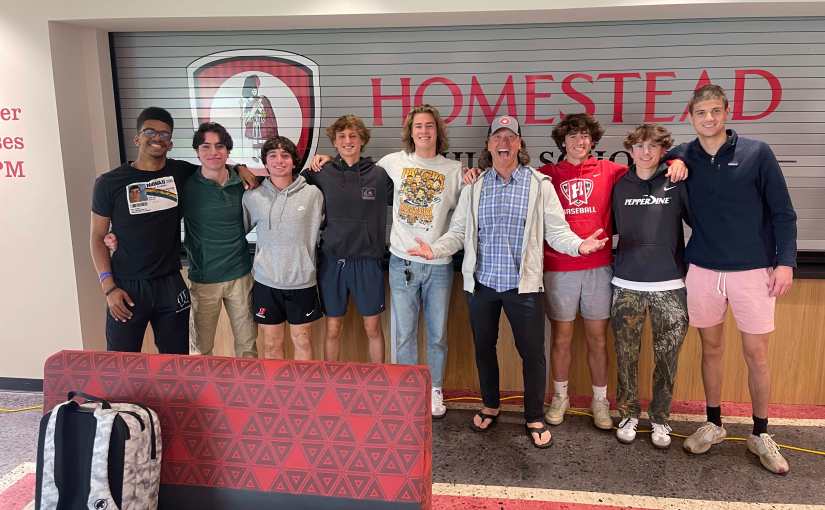
I got an email yesterday from Matt Wolf. Matt is the Academic & Career Planning Coordinator at Homestead High School in Mequon, Wisconsin, where I live. And Wolf, in case you hadn’t noticed, is a rock star kind of last name. So, for the rest of this story, I will refer to Matt simply as The Wolf.

The Wolf was putting together a Career Day extravaganza at Homestead. I knew this was happening, because he reached out to me to ask if I knew anyone that would be a great speaker on sports marketing. The Wolf share that students frequently list sports marketing as a career area they are highly interested in. I blame Jake Paul.

So I connected The Wolf with my friend and former coworker Leslie Stachowiak, who, in addition to having a name that would trip up a Spelling Bee champion, works for the Milwaukee Brewers, the Major League Baseball team.

The Request

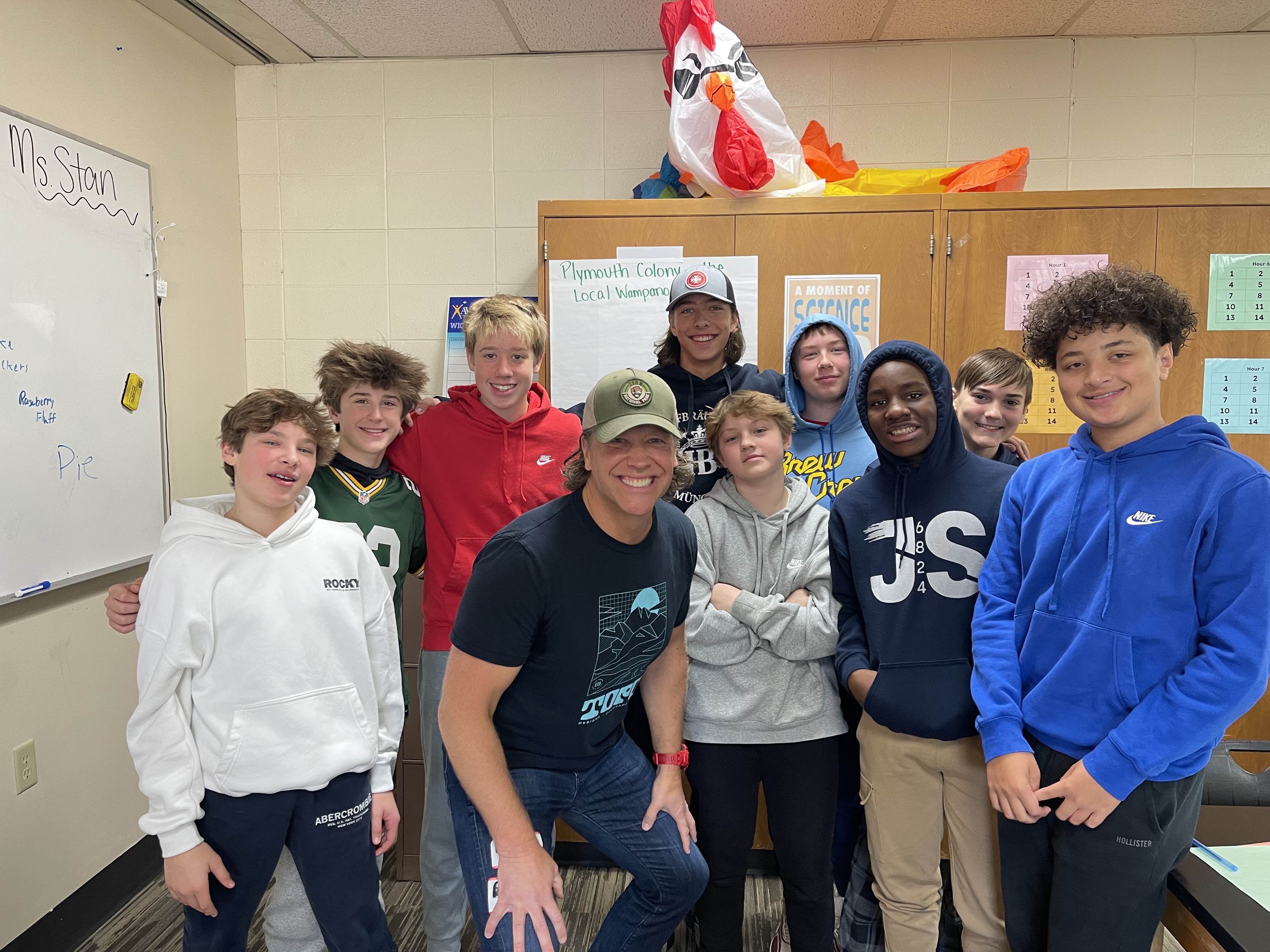
But now The Wolf was apologetically asking me at the last hour if I could also fill a slot in the career day lineup. He wrote this apologetically because he asks me multiple times a year to come speak to the middle schools in The Quon about my career as the Founder and CEO of the advertising and ideas agency, The Weaponry. And since I volunteer for that job multiple times each year, he was trying to avoid asking me to also volunteer to speak at the high school.

My Most Important Work

What The Wolf doesn’t know is that I think the most important and impactful work I do is having a positive influence on the youth in my community. That’s why I always raise my hand to speak to the middle schools. (I also raise my hand because I use Sure Deodorant.) It is why I speak each year at Career Day at our neighboring Whitefish Bay High School.

It is why I volunteer to guest lecture at The University of Wisconsin, Madison (the most fun university in the history of universities), Marquette University, Concordia University, and basically any school that invites me to come speak.

My interest in having a positive influence on youth is also why I coach track and field at Homestead. It is why I also volunteered to coach track and field at Steffen Middle School this year. And it is why I have coached youth football in Mequon for the past 7 years. Which means I have proudly passed a lot of background checks. (The hardest part of those tests is remembering my address from 7 years ago.)

I love teaching life lessons and character development through athletics. Because the life lessons I learned through athletics have benefited me for a lifetime. Plus, there were never any Scantron sheets or number 2 pencils required on the track or football fields.

Not only have I coached these boys on the football field, I have shared my educational and career path with them. I also showed them how to grow hair. It looks like my work here is done.

Helping future generations is why I volunteer to speak with student-athletes at the University of Wisconsin whenever I can. Which is why my great friend Nicholas Pasquarello, Executive Director of the W Club and Strategic Partnerships, invites me to so many events and activities with current and former Badger athletes.

Helping kids is also why I wrote the book, What Does Your Fortune Cookie Say? I wanted my kids and the rest of the next generation to have quick access to valuable life and career lessons it took me decades and a lot of mistakes to learn.

The Answer

So I told The Wolf that I would happily come speak at Career Day next week. Because this type of work is a priority. I can’t think of more important or more impactful work.

Key Takeaway

Please consider sharing what you know with the next generation. And the generations after that. Whether you take time to share your knowledge and experience with the youth in your community, college students, recent graduates, or those navigating careers in your field of expertise, your wisdom and guidance is extremely valuable. You help provide a model and a path for others to follow. You have the ability to inspire others to follow your lead, to develop their skills, and to lean into their interests, passions and strengths. It is the easiest and most rewarding way to have a positive impact on the world.

*If you know someone who could benefit from this message, please share it with them.

+For more of the best life lessons I have learned check out my book, What Does Your Fortune Cookie Say? from Ripples Media.
Jealous of others making a job change? Then it’s time to make your own.

I have mostly loved my career. I have always enjoyed the work I do. But there have been a couple of brief periods when I didn’t like where I worked.

At one point in my advertising career, due to some business loss, we decided to shut down one of our agency’s office locations. Which meant that virtually everyone in that office had to find a new job. The whole experience was right out of a movie.

But I had a very surprising reaction to the situation.

Under those circumstances, it is natural to feel lucky that you are not affected by the office shutdown. That while everyone else is losing their job, you get to keep yours. It should feel like a win. However, instead of feeling bad for that group of my teammates forced to find the next chapter of their careers, I found myself envying them.

I envied that they had to make a change.

I envied that they got to stop what they were doing and find a new situation. That could involve a new company, mission, industry, a new set of coworkers, a new career path, a new level within an organization, or a new attitude, like Patti Labelle.

Meanwhile, I was going to stay in the same job, with the same shortcomings, the same cultural challenges, the same feeling that this place didn’t fit me. The same sense that I was better than this situation. The same feeling that the only reason I was still here was for the money. For the false sense of stability that this salaried employee job offered me.

But something in the feeling of envy for those forced to move on and move forward in their careers, changed something profound in me. I recognized that life is too short to spend unhappy and unfulfilled at work, in a culture, climate and a missionless or purposeless environment.

So my mind shifted.

I knew I needed to find my own next chapter that would make me feel all the things I wish I felt. I spoke to several advertising agencies about the prospect of joining their teams. I explored several different markets to live and work in. The exploration was energizing. And I knew I was on the right path.

Within a year of my profound mindset shift triggered by envy for my teammates who had to make a career change, I had discovered my new path. I started my own business. I launched The advertising and ideas agency The Weaponry. And my life changed in all the ways that I hoped it would.

The past 9 years at The Weaponry have been the most adventurous and rewarding of my career. All because I tuned in to what my envy was telling me. I was willing to make a dramatic change for the better. I was willing to risk the perceived safety and security of my situation for the control and happiness of an unknown adventure. And that has made all the difference.

Key Takeaway

If you are jealous when others are forced to write the next chapter of their career, it means that you have to find your own new next chapter. It is time for greater happiness and fulfillment. It is time to throw off the ropes of your current condition and sail for something better, more fulfilling, more exciting and new. Something that matches your skills and vision for your life’s adventure. Get going. There’s nothing stopping you but you.

*If you know someone who could benefit from this message, please share it with them.

+For more of the best life lessons I have learned check out my book, What Does Your Fortune Cookie Say? from Ripples Media.

How to build your personal brand, even without TikTok.

A good friend called me this week to tell me he had started a new business. Because his new entrepreneurial adventure would require him to sell himself to others, he asked me for my best advice on how to build a personal brand. I’m not sure if he asked me because I have spent my entire career building brands, because he admired my personal brand, or because he wanted to understand where I went wrong. I was afraid to ask. After a moment of reflection, I shared my best advice on building a personal brand. And here it is for you.

Influencers know something that other people don’t:

It is not about who you know. It really is about who knows you. 

The more people who know about you, what you know, and what you are doing, the better. The Kardashians have built an empire on this simple principle. And the fact that so many people can actually spell Kardashian is proof that it works.

The first thing you should consider when building your personal brand is to start a blog, vlog, podcast, newsletter, social media feed, or other regularly published knowledge. (Which would include having your own TV show like the Kardashians.)

When I first started The Weaponry, I also started The Adam Albrecht Blog. It has been an amazing vehicle to share my thoughts, ideas, successes, and learnings with the world. Literally. My blog has been read in over 150 countries. Who knew there were over 150 countries? (Geographers and cartographers knew. There are actually 195 countries.)

A regular commitment to sharing your knowledge and experience through blogging helps build your personal brand and reputation. For the past 9 years, I have shared my thoughts, experiences and perspectives two to three times per week. This creates a steady stream of value-adding content that I can then share on various other channels, including LinkedIn, Facebook, X, Medium, Reddit, Instagram and Threads. However, as of this morning, we Americans can no longer share our expertise or best dance moves and lip-syncing skillz on TikTok. Because apparently national security is more important.

As of this publishing, I have written and published 1,045 blog posts that I can share across my social media ecosystem. As a result, my business and I are both top of mind when people have relevant opportunities. I regularly hear from people that I haven’t seen in a long time who tell me that they think of me often. This is what sharing your content does for you. This makes it great for building your brand but terrible if you are in the witness protection program.

Podcasts, newsletters, vlogs, columns, and social media channels all work too. The key is to share information and value with the world broadly so that more people than you could reach through individual messages know about you, your skills, experience, philosophies, and your business offering.

While you may create your platform to help support your business, you never know where your platform may lead. My blog readers encouraged me to write a book. Which sounded crazy-hard, until 2020, when I suddenly had plenty of time on my over-sanitized hands to do crazy-hard things. I published my first book in 2021, building on the content I had first created for my blog. 

My first book, What Does Your Fortune Cookie Say?, created amazing new opportunities for me as a paid speaker, and as a guest on TV shows and podcasts. Those opportunities helped raise my profile, and enabled me to share more about my business and my personal perspective on a wide range of topics. 

In 2024 I also started publishing Adam’s Good Newsletter. The reach of the newsletter now exceeds the reach of my blog. And the newsletter is a great vehicle to share good news and information about all of my activities, interests and offerings. 

Having your own newsletter also means that you own a media channel. While Facebook, LinkedIn and X continue to modify their algorithm to their own advantage, making it harder and harder for you to share your message without paying for exposure, like at those clubs, you control everything about the way your message is shared in a newsletter. And the audience you develop for your newsletter becomes one of your greatest assets. 

What’s more, a newsletter created through a newsletter service provider like Mailchimp (which I use), Substack or others, enables you to see when readers have opened your newsletter, and which links interested them enough to click on them. This feedback enables you to create an even more valuable offering, both for your readers and for yourself and your business.

Key Takeaway 

Always remember, it’s not about who you know. It’s who knows you. Develop a platform to share what you know and what you are experiencing with others. This not only creates value for your audience, it raises your profile. It means that people will think of you more often, even when you are not thinking of them. As a result, you won’t just seek out your own new opportunities, the dynamic flips, and both people and opportunities find their way to you. Which changes everything. Kinda like a TikTok ban.

*If you know someone who could benefit from this message, please share it with them.

+For more of the best life lessons I have learned check out my book, What Does Your Fortune Cookie Say? from Ripples Media.
Are you willing to trade a good life right now for a great life later?

I don’t believe in work-life balance. I never have. It’s just a nice mythical idea. Kinda like The Fountain of Youth. Or a happy Kardashian marriage. You can’t divide your life into 3 neat 8-hour blocks of work, personal time and sleep and become rich, successful and fulfilled. To have a wildly successful career you have to throw things out of balance. You need chapters of your life when you put a disproportionate amount of time and energy into your career. That’s what all of the most accomplished people you’ve never met do. It’s why they don’t have time to meet you.

Sometimes this means days of extreme dedication and focus. Sometimes it means weeks. But more likely, there will be many months and years where your career is the thing, Stephen King. You don’t have to ignore the rest of your life the way Michael Douglas ignored Glenn Close in Fatal Attraction. But your career demands to be your priority during certain seasons. Just as farmers must put all their attention into harvesting when it is time to get the crop in, you must pay attention to the opportunity seasons of your career, and make all the progress you can before the window closes.

In the movie about your life, this part of your career would be the montage. You know, the part where they show quick clips of all your hard work, focus, skill development, late night sessions, early morning sessions, and burning-the-candle-at-both-ends kind of work. (You can learn everything you need to know about your montage in this 1-minute video from Team America, World Police.) If you are not willing to have your movie montage chapter (or two or three) you will not be dedicating enough focus and energy to your career to pull away from the pack.

Focusing your time and energy on your career instead of your personal life is like investing your money for greater compounded gains tomorrow rather than spending it on yourself today. That time invested in your professional development and in developing career capital will pay out in massive ways in the future if you don’t scarf your marshmallow today.

The sacrifice is worth it. But you have to keep the primary goal in mind to remember why you are not buying that timeshare in Gatlinburg or knocking off early to meet your friends at Applebee’s. And if you have a family, you and your spouse need to focus on the long-term payoff and be willing to sacrifice whatever nights, weekends, holidays, birthdays, anniversaries and vacations need to be traded now, for better versions of all of those things in the years to come.

One of the great regrets people have in life is that they didn’t do the foundational work they should have done to achieve their dreams. It is important to know about this widespread regret while you still have time to do the foundational work. The work is more than a fair trade. The payout is so handsome, (like George Clooney handsome) that is feels like a small price to pay.

I have experienced enough chapters of significant sacrifice in my advertising career to fill a forthcoming book. In the first chapter of career sacrifice, I wanted to become a stronger writer. So I spent considerable time working on and improving my craft. I read all the time. I wrote far more than my professional peers. I studied other great writers in all John Rahs. (And I learned the word is actually genres.) I read great writers’ writings on writing. I experimented with words, style, structure, tone and humor. Through that focus, my writing got sharper, smarter, and more interesting.

Then I focused a disproportionate amount of time and energy on developing my presentation skills. Because girls only want boyfriends who have great skills. I took courses. I read books. I became a student again. I practiced and applied all that I was learning. This helped make me a strong and entertaining performer in business development meetings, sales pitches and client presentations. Which led to promotions and more responsibility. Because sometimes your hard work gets you more hard work.

Next, I focused heavily on creative direction skills, leadership and management. And within a four year span I motored from my first creative director position to executive creative director to Chief Creative Officer. The only position in my industry left was CEO. And I wanted that job too.

So I began focusing on what it took to run the entire business. I learned as much as I could about accounting and finance. I learned about human resources and non-surgical operations. I learned systems and processes. Project management and IT. I learned stuff that most writers and art directors in advertising never learn anything about. But then again, they get to go to Applebee’s and eat good in the neighborhood.

I didn’t want to wait for a CEO job to open or to wait in line for the CEO in front of me to leave, or die. So I decided to grab the role for myself by starting my own agency called The Weaponry.

As an entrepreneur you not only need to know a bit about all areas of a business, you need to create the whole business from dust. That takes more time, energy, focus, learning, sacrifice and work, work, work, work, work. Like Rihanna said.

Again, I sacrificed other opportunities in my personal life to make this happen. It’s the only way to make big dreams a reality. It’s not easy. But it has been both immensely fun and rewarding.

To share what I was learning through my entrepreneurial journey, I also started this blog. This is the 1023rd blog post I have written in the past 9 years. This too requires sacrifice. I write first thing every morning. I write 5 to 7 days every week. By 6:10 am I am in my office hammering away at another post, another story, another idea. While other people are still in bed or enjoying a cup of coffee and a good social media scroll.

By dedicating so much time to writing I further developed my storytelling skills. And I found my own unique writing style. Which sounds exactly like the way I talk. Now, I write books too. And writing books takes yet another level of dedication and sacrifice. Which is a sacrifice I am willing to make, because I understand the compounding benefits that come from that investment.

Key Takeaway

The great achievements in your career don’t come easy. They don’t come at a natural pace. They come by throwing your life out of balance. By heavying your load. By gorging on learning. And by giving more time, attention and energy to your work than others are willing to give. But by unbalancing your career early your life balance will flip later, and you will receive far more financial and career capital by becoming uncommonly great at what you do. Today, I have no foundational regrets. Instead, I have the rewards of a lot of hard work and sacrifice. And not only can you take that to the bank, you can take it on long, well-deserved vacations with your family and friends.

*If you know someone who could benefit from this message, please share it with them.

+For more of the best life lessons I have learned check out my book, What Does Your Fortune Cookie Say? from Ripples Media.
An open letter to junior employees who want to keep their new jobs.

Hey Junior Employees!*

Congratulations on landing that new job of yours! Finding the job may have seemed like the hard part. It is not. The hard part is not getting left behind.

Now that you have the job it’s frick’n go time! You have to start performing and competing like you did in your classes. Like you did in your athletic competitions or music competitions, or art competitions, or dance competitions or beer chugging competitions, or whatever you once did competitively.

As a new employee, you are a liability. You cost the company more than you make it. Because we have to train you to do your job in a way that adds value. You are not an asset to the company until you have learned enough to create more value than we pay you in salary or wages. For some employees, this never happens. And if it doesn’t happen quickly enough you can’t stay with the company.

Remember the line you heard at the bar at closing time in college:

‘You don’t have to go home, but you can’t stay here.’

The same applies to employees who don’t learn, contribute and start providing value that exceeds their wages.

You need to focus on transforming yourself into an asset employee. That means you should be pushing me, your supervisor, or boss, or business owner for more. For more work, for more opportunities for more access, for more teaching and exposure (work-appropriate exposure only.)

You have got to stand up and demand to be noticed. You’ve got to bring ideas to the table. Or wherever ideas should be brought if you work in a table-less organization.

Take initiative.

Ask questions. As many as you can.

Learn and grow faster than anyone else in the organization.

Soak it all up, like Sheryl Crow. (Ask your parents to explain what that means.)

You are starting at a low point. Growth should be evident quickly.

Create your own fast track to the top by moving fast. By learning fast. By growing fast. Like Luke Combs in that fast car he bought from Tracy Chapman.

Don’t wait for me. I may be too busy to help you move fast unless you are requesting it. Or forcing it.

Don’t allow yourself to be ignored for long stretches. (Think about it like developing real-life Snapstreaks with the senior people at work.)

Create stuff.

Add value in ways we never requested.

Because once you become an Asset Employee everything changes.

And your employer will do all they can to keep you.

That’s the goal.

Key Takeaway

New employees, both junior and senior, begin their jobs as liabilities, costing companies more than they earn. To develop job security you have to produce. That means action, initiative, learning and growth. Master the systems and processes. Bring new ideas. Outpace the expected learning curve. Make yourself indispensable and irreplaceable. This is how you transform yourself from a liability into one of the most profitable assets within your organization. It’s really up to you.

*I learned several years ago that you are supposed to call employees with little to no experience juniors. Not young. Or the old people will want to sue you for age discrimination.

**If you know someone who could benefit from this message, please share it with them.

+For more of the best life lessons I have learned check out my book, What Does Your Fortune Cookie Say? from Ripples Media.

Why it is so important to be in the right place at the right time.

I spend a lot of money on gasoline. And airfare. Then there are the trains, subways, ferries, and those incline thingies in Pittsburgh and Chattanooga.

Why do I spend so much on transportation?

Because place matters.

So we pay to be in the place where the thing is happening, Hot Stuff.

We pay to be in the place where people gather.

If you want to be included you have to be in the place.

If you want to be seen you have to be in the place.

If you want to develop or deepen your relationships, you have to be in the place.

If you want to influence the outcome, you have to be the ace in the place, with or without the helpful hardware folks.

Being in the right place at the right time makes magic, Mike.

It unlocks doors. It finishes the job. Or starts the next one.

As Woody Allen said, “80% of success is showing up.”

If you don’t show up your world shrinks. This includes your engagements, relationships, opportunities and learnings. And no one likes shrinkage.

So show up to the places that matter.

Be in the room where it happens.

Put yourself amongst the people.

Be in the human traffic flow.

And good things will happen.

Key Takeaway

Regardless of technological advances that enable you to work from anywhere, physical locations will always be important. Be where the people are. Attend the events. Increase the chances of chance encounters. Increase your familiarity. Be seen and become known. Be missed when you are not there. Better yet, be the reason others show up.

*If you know someone who could benefit from this message, please share it with them.

+For more of the best life lessons I have learned check out my book, What Does Your Fortune Cookie Say? from Ripples Media.
Do you know the pivotal days of your career?

In the story of your life, some days matter more than others. A lot more. In fact, in most careers, there are ten days that make all the difference. The actions you take on those 10 pivotal days not only have an outsized impact on your career, but they also have a transformational impact on your life. These are the days that songs, books and movies are written about. These are the days that will help the actor playing you in the movie about your life win the big awards. So make sure to take good notes for them.

If you take a little time to reflect on your career it is not hard to find your 10 pivotal days. The days that changed the trajectory or accelerated the velocity of your career. The days that earned you new respect, new responsibility and made you more money. The days that you didn’t have vomit on your sweater. (Mom’s spaghetti.)

Here are my 10 Pivotal Days.

  1. The day I got off the couch and called Paul Counsell, The CEO of Cramer Krasselt, and asked for an informational interview. This was the first domino to fall in my career. I got an interview. It lasted 5 hours. I made people laugh. I got a job. Everything else happened because of this call.
  2. The first new business pitch I was in. The client started the meeting by telling our agency we had no chance of winning the account. But I had seen the movie The Secret of My Success. I knew I was the Michael J Fox character. And I had prepared as if this was the biggest moment of my career. Which it was. We won the account. Boom goes the dynamite.
  3. The day I met my wife Dawn. We met at work. The impact she has had on my career growth and entrepreneurial journey can’t be overstated. She is my greatest cheerleader. Like the Toni Basil to my Mickey.
  4. The day I accepted the job as the Creative Director at Engauge. Taking on a new job with new responsibilities in a new jack city with all new coworkers and clients turbocharged my growth and development. It changed my family’s lives too.
  5. The day of my first Nationwide TV commercial shoot. We filmed a Corvette doing donuts in a cul-de-sac in Charlotte, North Carolina, in 100-degree heat. The new clients that I met that day, the challenges of the shoot that we overcame together and the strong friendships I developed with them had a huge influence on me both professionally and personally. But this day was as important for what I didn’t do as it was for what I did do. (Which I know sounds like a lot of do-do.) I wrote a story about that day here.
  6. The day I became Chief Creative Officer of Engauge. The new level of responsibility and opportunity to impact an organization was monumental. My learning, exposure and influence increased tremendously. I was ready to leave Engauge for this kind of opportunity. So when it came to me, it felt like the end of the book The Alchemist. (Which you should read if you haven’t.)
  7. The day I was picked to be part of the pitch team when Engauge was being sold. Being part of the 4-person leadership team that met with all of our potential buyers offered me an advanced degree in business. That process taught me critical lessons that prepared me for my entrepreneurial journey. Like Jamal Malik in Slumdog Millionaire.
  8. The day I was encouraged to start my own agency. I got 2 calls the same day in August of 2015 from former clients. In both conversations, the callers talked about wanting to work with me, but not wanting to work with my current agency. Which led to a discussion of starting my own agency. All the other dominoes had led to this. (Except for the Domino’s that delivers pizza.)
  9. The day I left my job at Moxie to start The Weaponry. It is one thing to think about or talk about starting your own agency. It’s another thing to do it. I had been ramping up The Weaponry by doing night and weekend side work for 5 months. But jumping made everything different. Like Camp Randall Stadium before the 4th Quarter.
  10. The day that The Weaponry signed its first retainer client. The Weaponry had generated significant cash flow over its first year and a half. But it wasn’t predictable. Once we landed our first retainer client we had the stability to hire staff and lease an office. It was when we Pinocchioed from a startup to a real business. 

Key Takeaway

Know your pivotal days. They are valuable to identify. Because they provide clues to your success. They show you what mattered most along your career journey and your story. By knowing your pivotal days, you are also able to recognize when the next pivotal days come along. When you understand how situations and opportunities lead to transformation you better prepare to make sure those opportunities go your way.

*If you know someone who could benefit from this message, please share it with them.

+For more of the best life lessons I have learned check out my book, What Does Your Fortune Cookie Say? from Ripples Media.
Why it’s important not just to plan but to create a backup plan.

I love to read. And I write a lot about reading. In January I wrote about both the 41 books I read in 2023 and the 24 books I have already picked out to read in 2024. I also like to read about writing. And I like woodchucks who could chuck wood.

I am currently reading a great book titled The Psychology of Money. Which I highly recommend to everyone. But you don’t have to take my word for it. The book has a 4.7 star rating on Amazon with 47,000 people weighing in. Which is more readers than there are people in the biggest city in Vermont, where I grew up. (Oh, but we had cows…)

The Psychology of Money is packed with rich insights and reminders related to wealth and happiness. Here is one of my favorite gems from the book.

Planning is important, but the most important part of every plan is to plan on the plan not going according to plan.

-Morgan Housel

This line really resonates with me. Because one of my core beliefs is that the secret to success is a good plan B.

Planning helps you get the most out of nearly every aspect of life. You should plan your career, investments, family, vacations, workouts, dates, and Me-time. (Note: You should read me-time as you-time, meaning the time you plan for you, not the time that you spend with me, Adam Albrecht.)

However, things go wrong in my life all the time. It’s almost as if Chaos Theory is using me as a test pilot. So I am always thinking about backup plans, contingencies and safety nets. And because I am already thinking of backup plans, I am not floored or ruined when my Plan A falls apart. I am just thankful that I have a Plan B, C and D. And you should too.

Key Takeaway

Develop great plans for all important aspects of your life. Plan on greatness, happiness, wealth and success. But also expect the unexpected. And plan for multiple ways forward. Variables will change. Adaptability and resilience must be your constants.

*If you know someone who could benefit from this message, please share it with them.

+For more of the best life lessons I have learned check out my book, What Does Your Fortune Cookie Say? from Ripples Media.