The Power Of Client Friends: Maximizing Your Professional Relationships.

I use a term I never hear anyone else use.

It’s not gazoinkers. Or tootsnickers. Or zwerp. All of which I use as well.

The term I use regularly that others don’t is client friend.

Even Grammarly tells me this is not a thing.

Oh, Grammarly, but it is a thing.
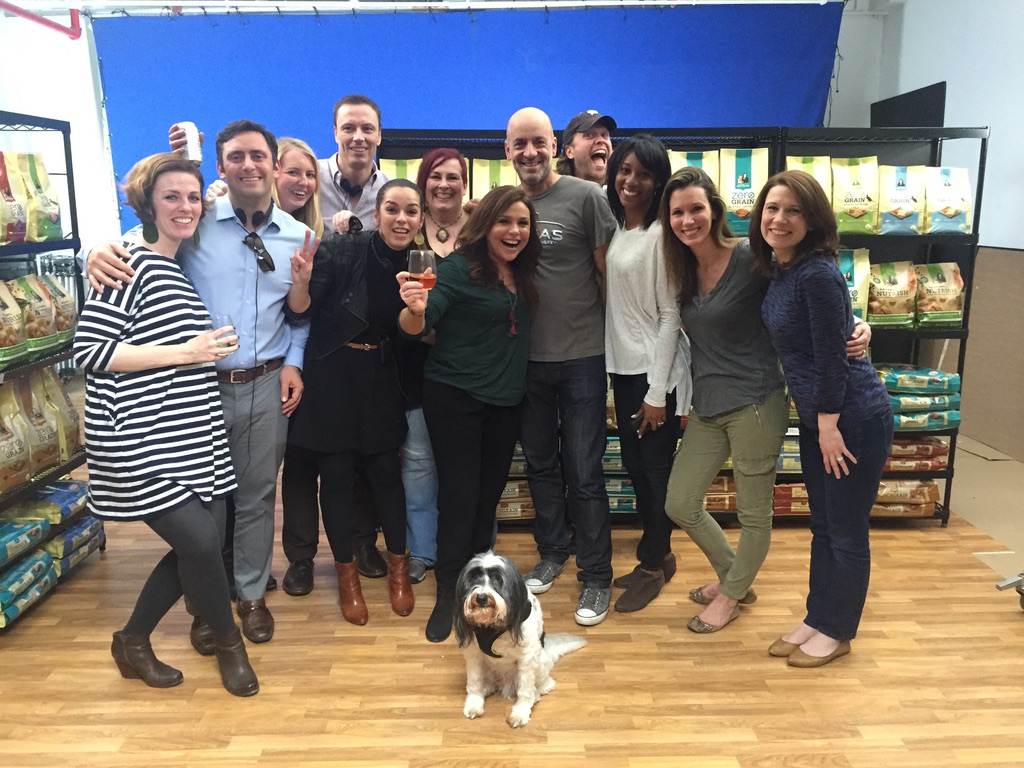
The term client friend is an important addition to my vocabulary, necessary to accurately describe many of the important people in my life.

Client Friend helps me express the duality of my relationship with many of my clients.

The Origin

Early in my career, I realized that I was not accurately representing my relationship with a large swath of people in my orbit by simply referring to them as clients. That was way too transactional, or distant, or businessy.
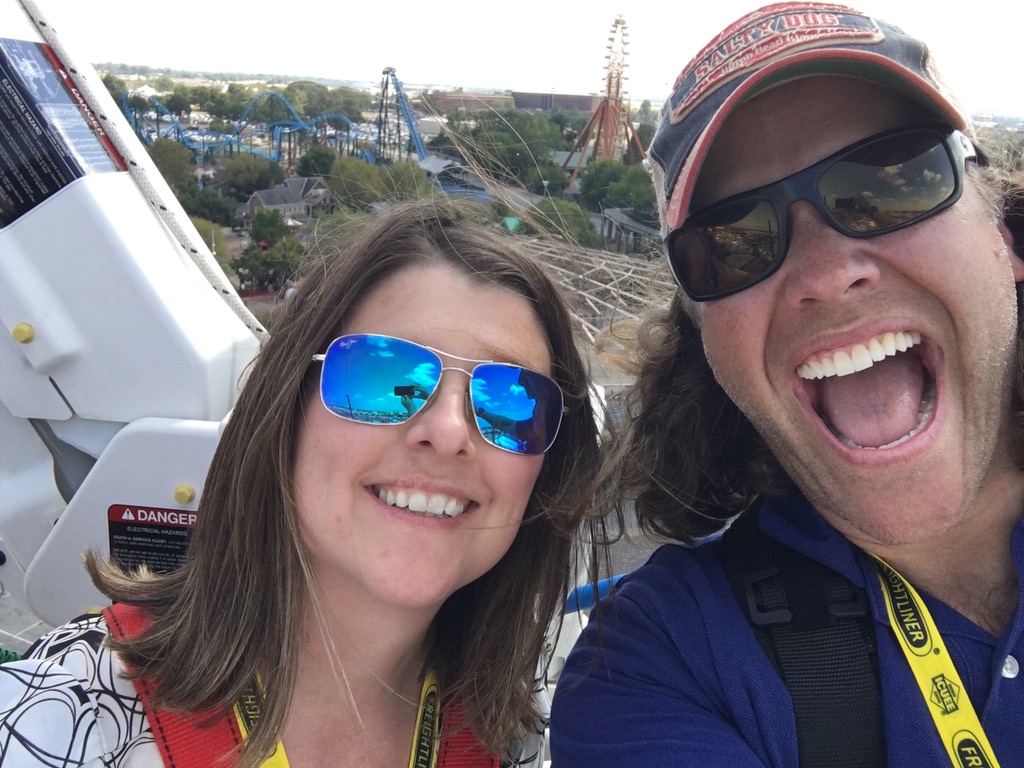
For me, the client relationship is simply the introductory vehicle to many of my favorite friendships. And the workplace is just the meetup venue for our friending actions.

So for the dictionary entry I propose the following:

Client Friend. /klient frend/ nouny. A friend whom you originally met as a client.
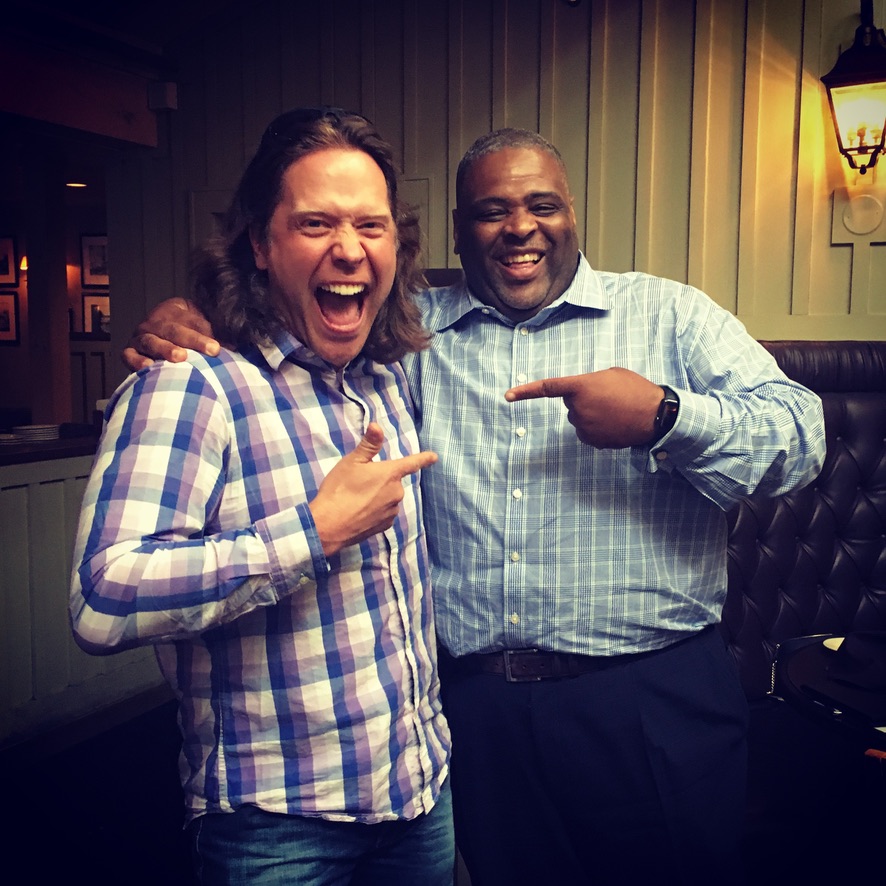
For comparative context, some people have drinking friends or fishing buddies. Other people have friends who they play softball with, or poker, or fantasy football. I have even heard of knitting circle friends. And hunting wives.

I have friends who I do commerce with.

We meet up and talk about their business. We talk about branding, and marketing and advertising. We talk about sales and products and services. We talk about innovation and customer experience, and off-menu creative ideas to enhance their brand image. We talk about competitive pressures, and trends and threats. (Oh My!)
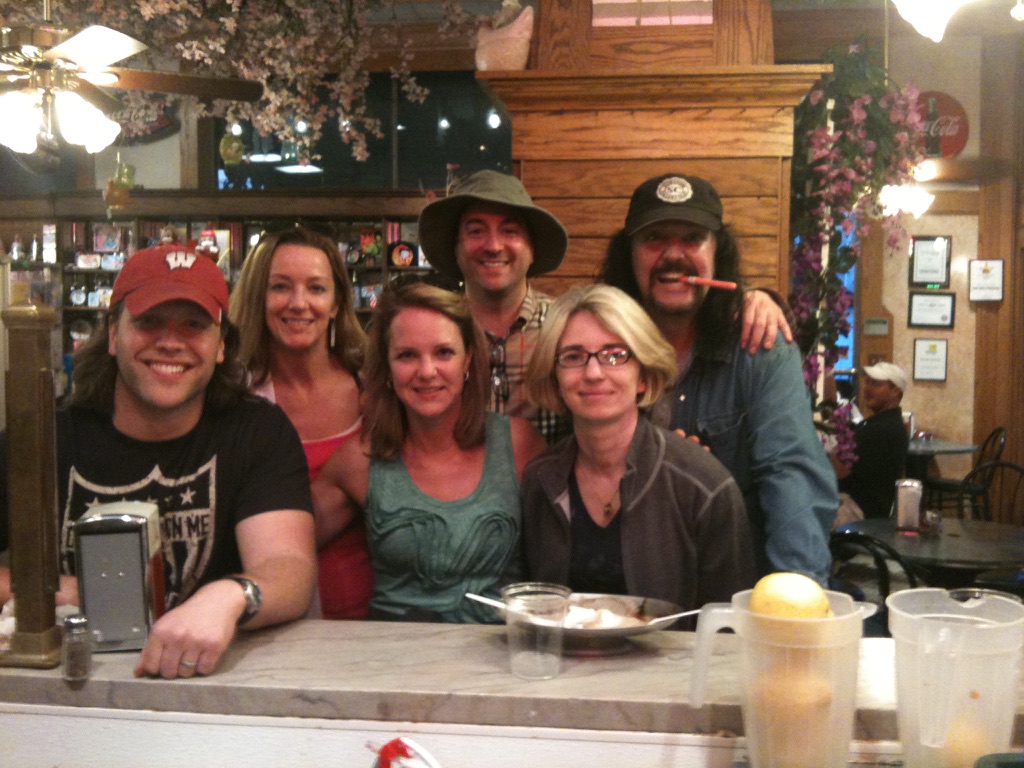
And we love it!

We nerd out on all these things. Because we are gazoinkeers for business, marketing, advertising and creative problem solving.
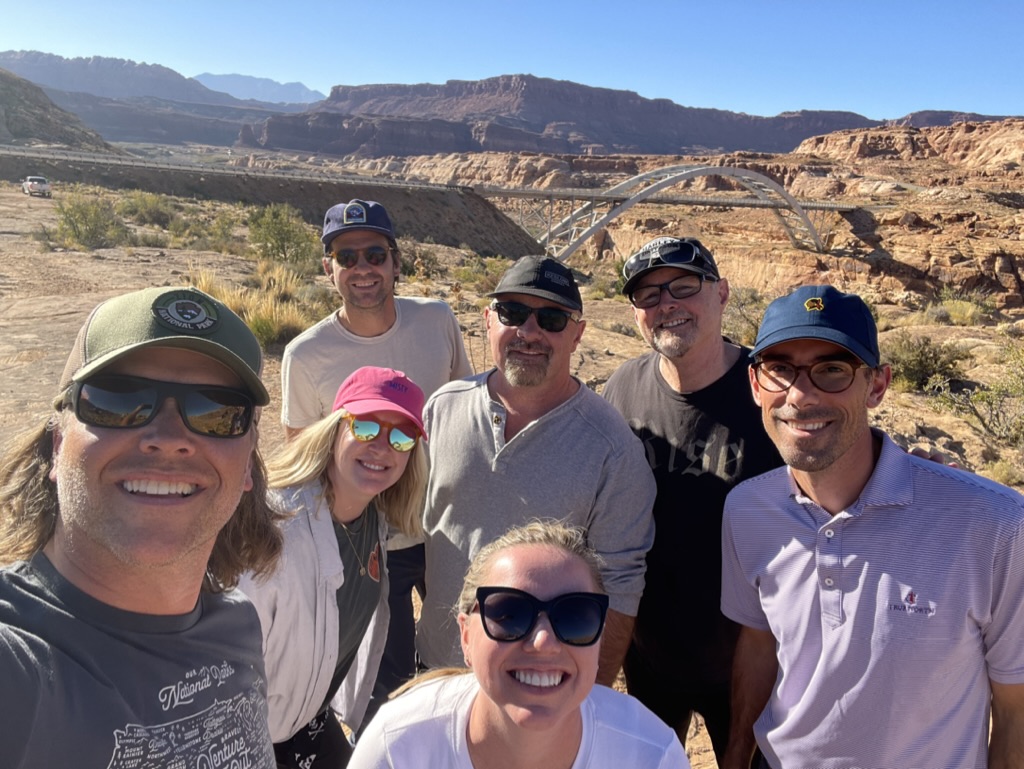
We also share stories about the fun travel we’ve done together. And film and photo shoots in interesting places. And the great meals we have shared. And all the hilarity that happened along the way. Zwerp!

But we also talk about our families, vacations, hobbies and pets.
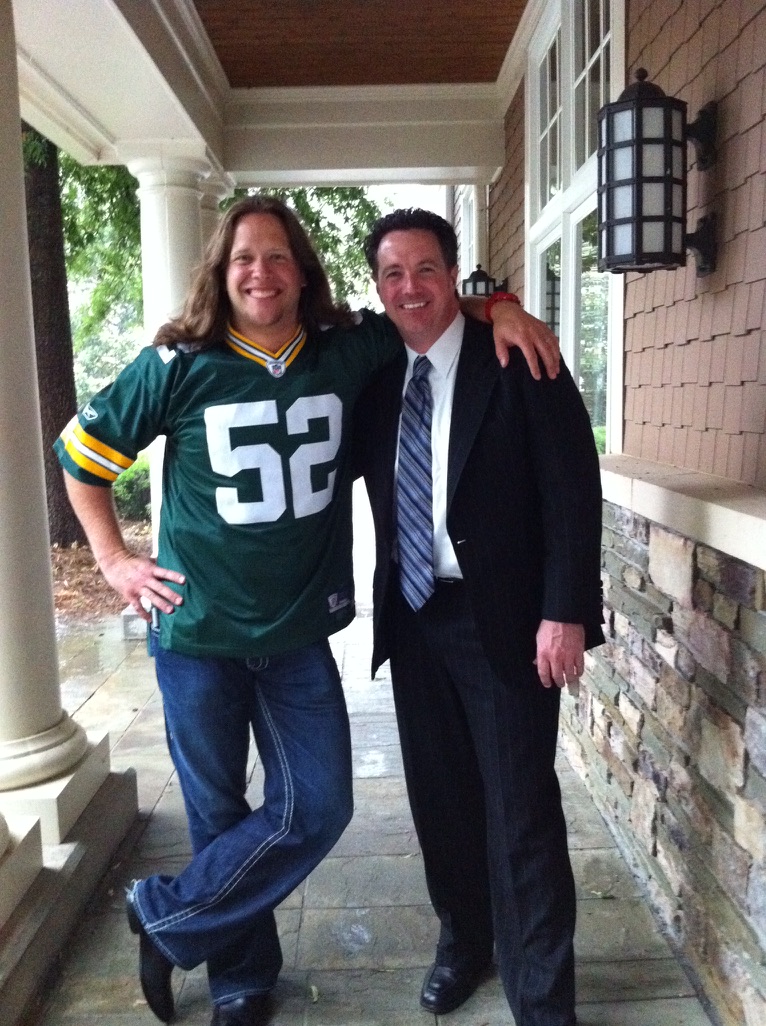
I freaking love making new friends. I go gazoinkers for adding new people to my world. Because my clients and I have so much in common, we typically become friends quickly, both because of the work, and beyond the work.
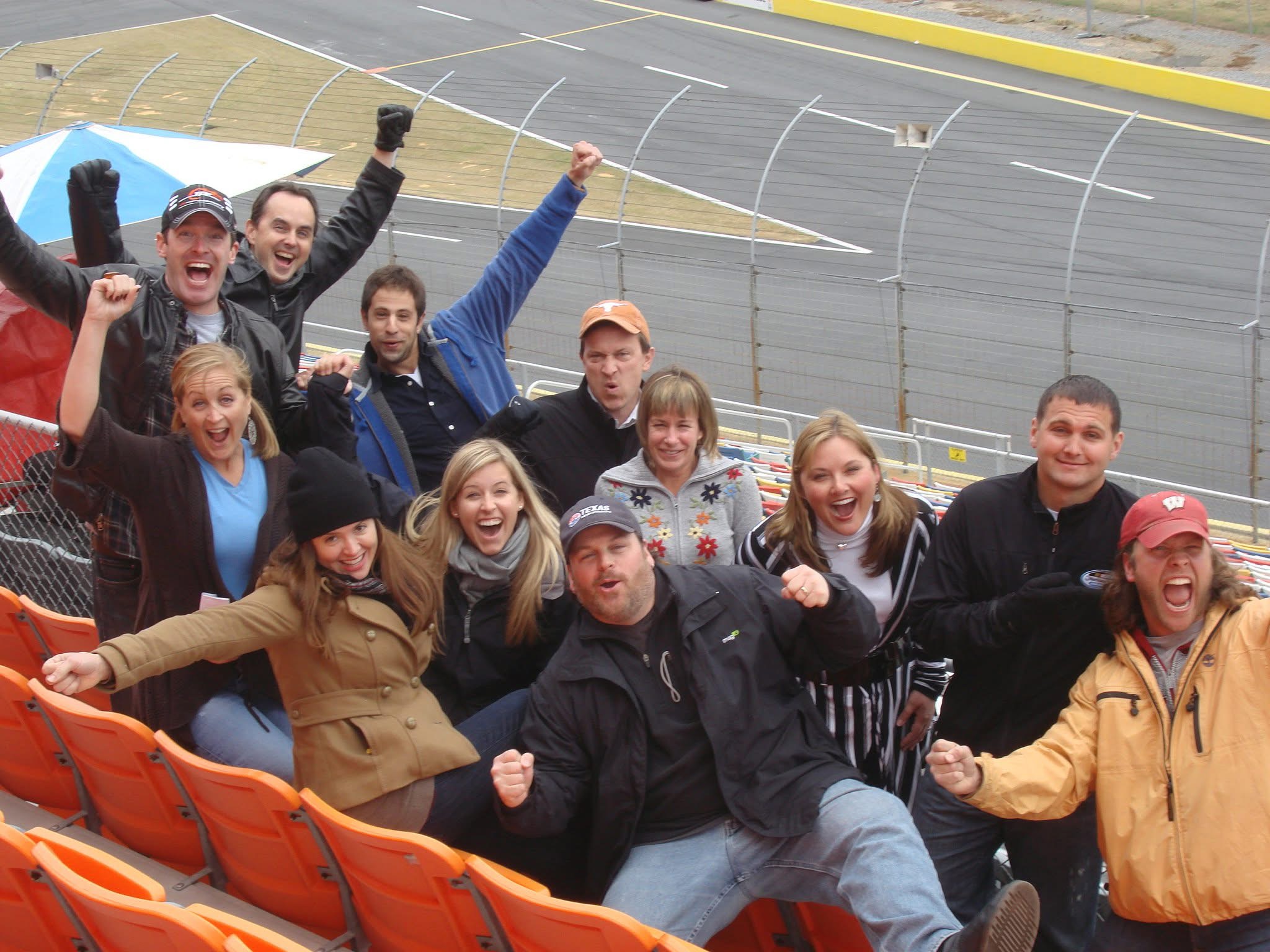
When I began seriously thinking about starting my own advertising and ideas agency back in 2015, a couple of my client friends called me to encourage me to do it. Then I called more client friends to talk about it. I met other client friends at restaurants and talked with them for hours about it. And when I first launched The Weaponry, my very first client was actually my friend, Dan Richards, whom I have known since we were in 7th grade in Hanover, New Hampshire.
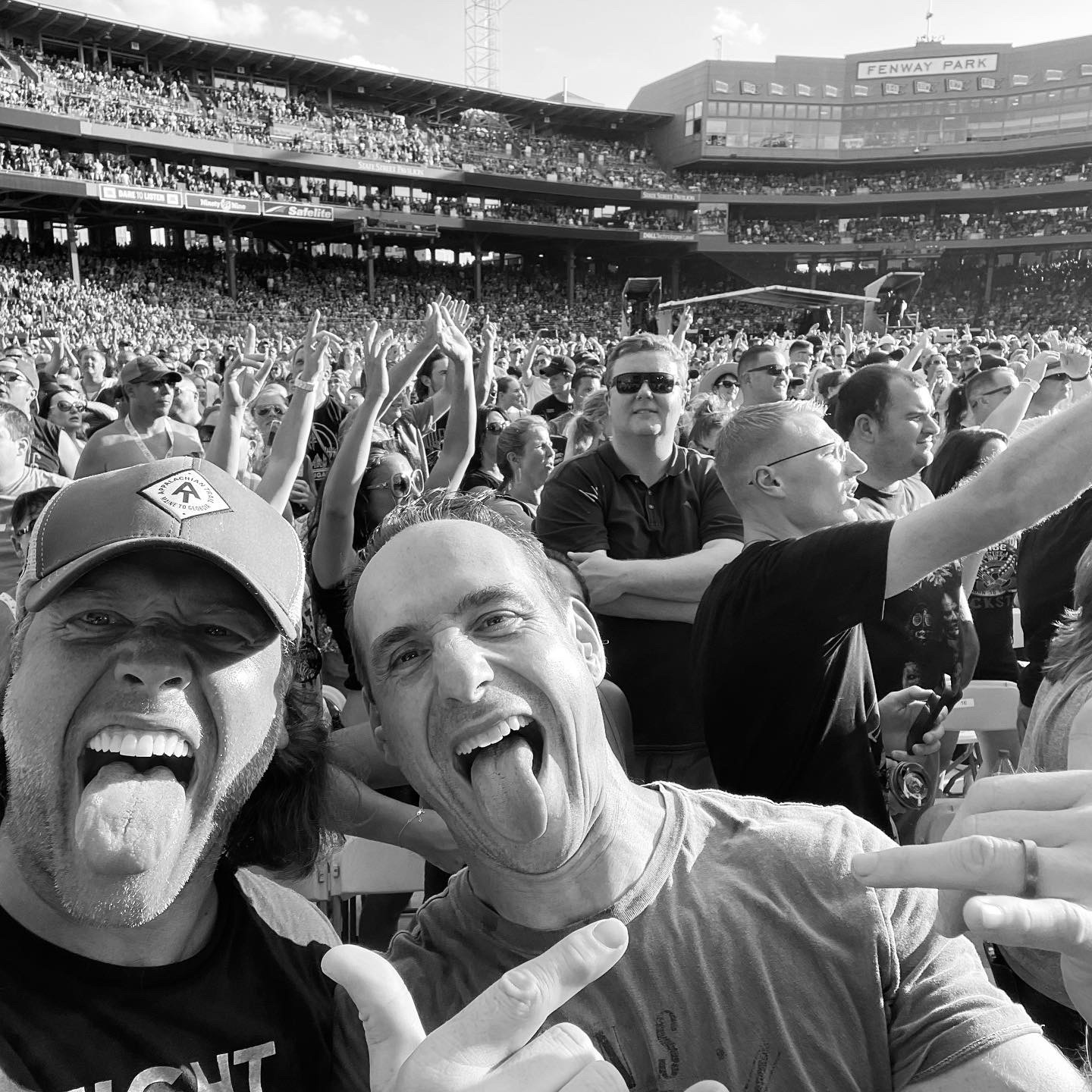
Looking back, I can clearly see that it was my client friends who enabled me to start The Weaponry. And it has been client friends who have sustained us for the past 9 years.
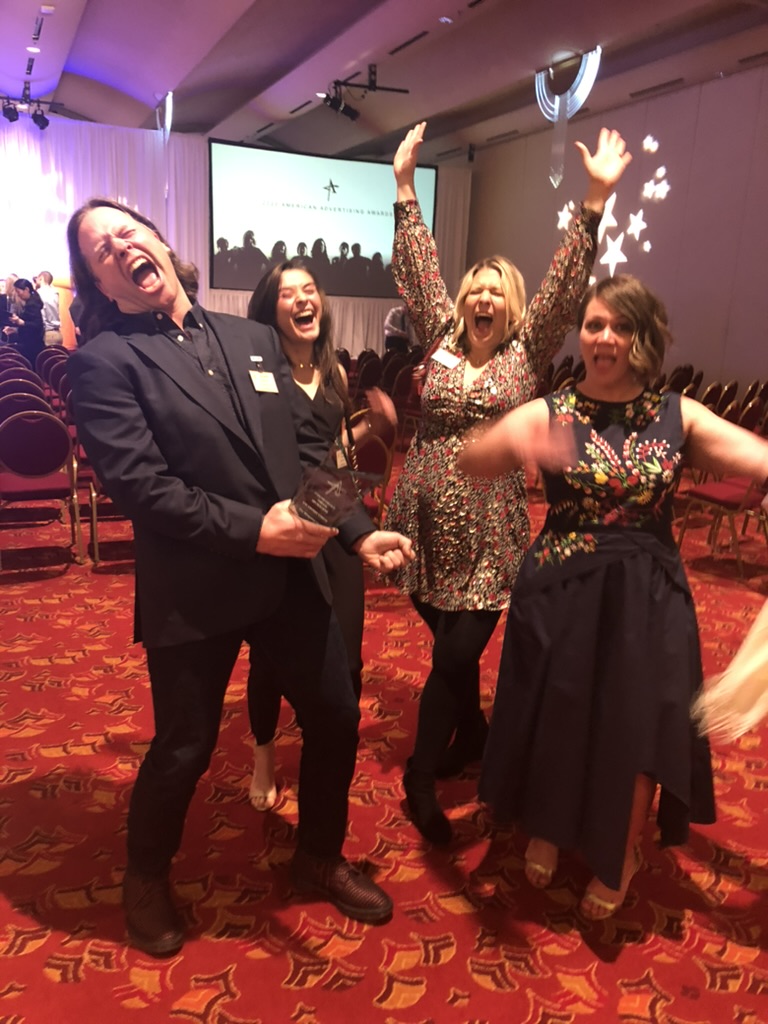
We spend something like 100% of our time at work. Which makes the workplace a great place to develop and maintain friendships and deepen relationships with the people you work with. Take advantage of this rich field for meaningful social interactions. (Did I mention I also met my wife, Dawn, at work? I did. And she’s amazing!)
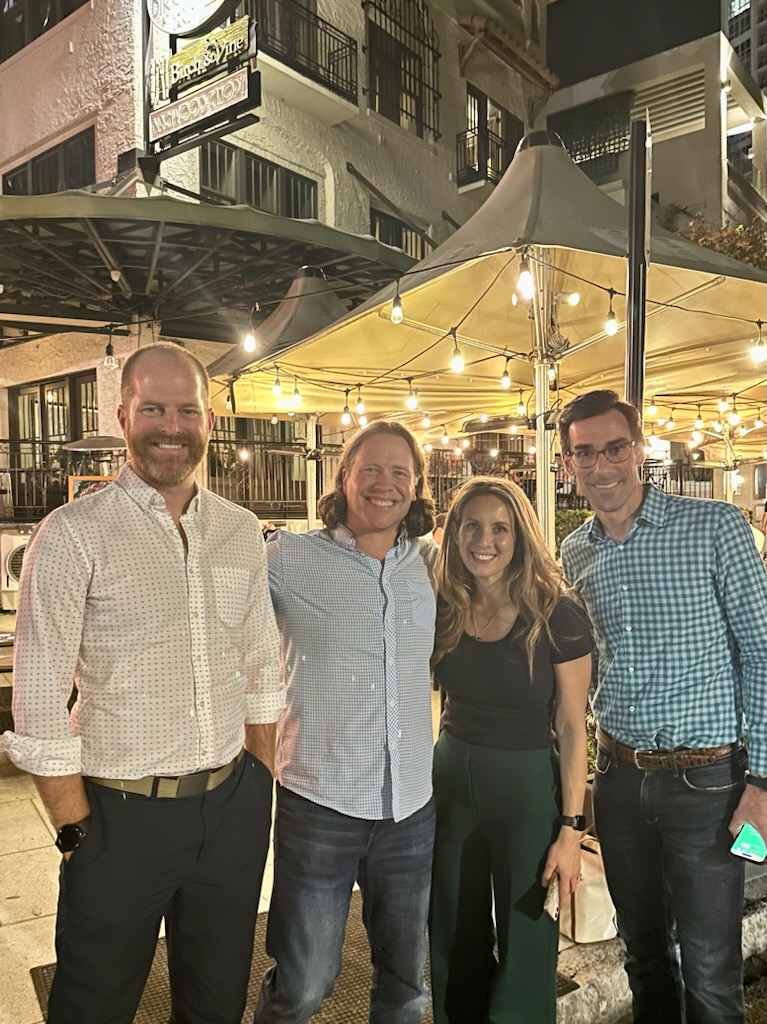
At the end of your career, you won’t care about the awards you won nearly as much as you will value the client friends you won and the work-related relationships you developed. Those client friends are just as good as any other form of friendship. Maybe even better. Because you have so much history and so much to talk about in retirement.

Not everyone has client friends. Instead, you may have customer friends. Or member friends. Or partner friends. Or collaborator friends. Or vendor friends. Or Joey, Chandler, Ross, Monica, Phoebe and Rachel. Collect them all. Enjoy them all. The universe put them in your world so that you can develop a human relationship. We are not just here for business transactions. We are here to engage meaningfully with each other for the greater good of all.

Key Takeaway

Make more client friends. And customer friends. And co-worker friends. And people-you-interact-with-because- of-work friends. Working with your friends makes life more enjoyable. And friending with the people you work with is the ultimate relationship hack. More and better friends lead to a better life. So make friends everywhere you can. Especially at work. And if you want to work with people who want to be your friend, shoot me a text or call me at 614-256-2850, or email me at adam@theweponry.com. I always have room for more friends.

*If you know someone who could benefit from this message, please share it with them.

+For more of the best life lessons I have learned check out my book, What Does Your Fortune Cookie Say? from Ripples Media.And consider subscribing to Adam’s Good Newsletter.

Why you should bring your freakin idea to life and share it with the world.

A couple of weeks ago, I saw the band Bombargo. They were playing a free concert in a park 2 miles from my house. The band is a bundle of energy and entertainment from the off-off Broadway, town of Saskatoon, Saskatchewan. Which is also one of the cartooniest place names ever invented. The band was on their Disco Surf Rodeo Tour, because any one of those things on its own is just not enough.

For a flavor of their fun music, check out Let It Grow or Oxygen. (Songs I assume were inspired by The Lorax.)

An hour into their set, the band told an interesting story as they introduced one of their signature songs.

During the winter months, Saskatoon is often among the coldest places on the planet. And during one of those cold spells, the lead singer stopped by his brother-bandmate’s igloo home. His brother-bandmate was playing a new song idea on the piano. The lead singer really liked what he was playing and decided that they should write a song to it.

So they wrote the full song that day.

The next day, they recorded the song, shot a video for it, and shared it online.

Then something swiftdiculous happened. Taylor Swift, the most influential musician on the planet, heard the song, loved it, and added it to her Spotify playlist.

The song immediately blew up thanks to Swift’s endorsement.

The band shared that it was rare for them to work so fast and not tweak a song to death. But it was exactly this speed of creating and sharing that led to the success of the song Mr. No Good.

Reminder

Each of the ideas you bring to life is like a lottery ticket. It has the potential to pay off in a big way. So create it, share it and move on. Don’t analyze it to death. Great work doesn’t have to take a long time. Focus on creating work that you love. If you love it, there is a great chance that others will love it too.

Key Takeaway

Create things you love and share them quickly. It’s the key to being a successful artist, innovator, or entrepreneur. The world benefits from your ideas. And your ideas benefit from real-world exposure. Successful ideas are a percentage game. The more ideas you bring to life, the more likely you are to produce hits. And when you love your creations, there is a great chance others will too. So don’t die with your song in your head, your art in your heart or your startup in your soul.

*If you know someone who could benefit from this message, please share it with them.

+For more of the best life lessons I have learned check out my book, What Does Your Fortune Cookie Say? from Ripples Media.And consider subscribing to Adam’s Good Newsletter.
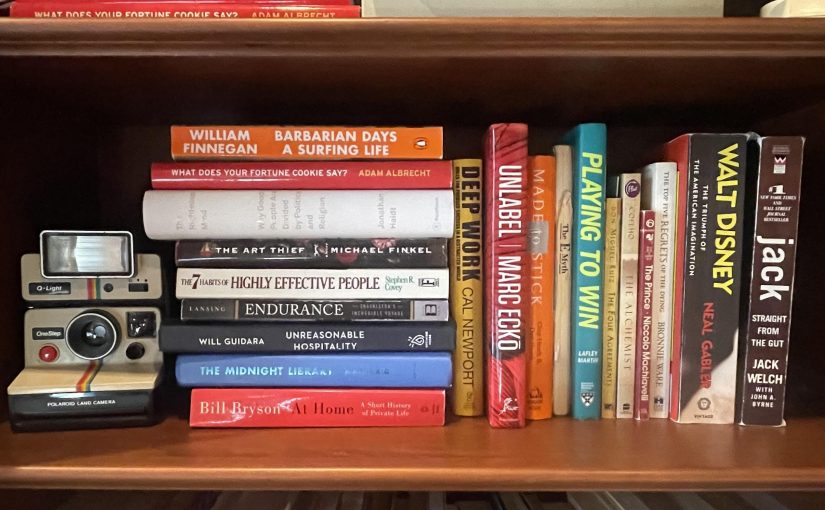
People are reading less. Which is great news for you!

The greatest way to increase your value to yourself and others is through reading.

You could just stop reading this post now and go grab a book to read instead.

But I am going to drop some new reading knowledge on you that is worth 90 seconds of attention.

Why Should You Read?

Bill Gates reads about 50 books a year. Or about a book each week.

Warren Buffett famously reads about 500 pages per day.

Lin-Manuel Miranda bought the book Hamilton to read on vacation in Mexico.

So read books that expand your thinking and your knowledge base.

Read to understand how things work.

Read for inspiration, motivation, and all the other great ations.

Read to understand how successful people became successful.

Read about what worked in the past in your field of expertise.

And read to learn what is changing in your field, so you can surf that change, rather than get pummeled by it.

Read to improve your writing and expand your vocabulary.

Read to develop your focus and your patience for long-term goals.

But most importantly…

Read To Separate Yourself From The Pack.

Despite all of the mental nutrition and long-term success that sprouts from reading, a new study just released by researchers at the University of Florida and University College London (which sounds like the fakest British school name ever) found that reading for pleasure among Americans has declined by 40% over the past two decades.

  • In 2004, 28% of Americans said they read for fun.
  • In 2023, only 16% said they read because they wanted to.

It is not lost on me, or the researchers, that Facebook launched in 2004 and the iPhone was released in 2007. Together, social media and smart phones may be accomplices, killing reading softly, like Roberta Flack or the Fugees.

This all means that people who read books have a greater competitive advantage now than ever before.

The statistics are fascinating.

The average number of books adults read each year is 12. Which was also my favorite song from Sesame Street.

However, this is massively skewed by the avid readers.

In fact, estimates reveal that between 25-46% of adults READ NO BOOKS each year.

And the median number of books read annually by adults is only about 4. That’s how much the average person hates paper cuts.

Which means there are fewer and fewer people after the pot of gold at the end of the Reading Rainbow.

There are fewer people who are willing to do the slow, steady, yet transformational work of knowledge gain through reading. While others are settling for bite-sized bits of video, podcasts, and tweetable wisdom served by algorithms, readers are accumulating broad and deep knowledge that helps make them more capable, valuable and irreplaceable.

The new study also revealed that those who do read for fun are spending more time doing so. Because while haters gonna hate, readers gonna read.

And in the era of artificial intelligence, it is the humans who can contribute more than the machines that will be in greatest demand.

Key Takeaway

Now more than ever, reading is your great competitive advantage. Your self-directed education makes you a valuable and irreplaceable resource. It improves your thinking. Which drives smarter decisions and actions. And it draws other people to you who want to tap into what you know.

*If you know someone who could benefit from this message, please share it with them.

+For more of the best life lessons I have learned check out my book, What Does Your Fortune Cookie Say? from Ripples Media.And consider subscribing to Adam’s Good Newsletter.
You are an inflection point.

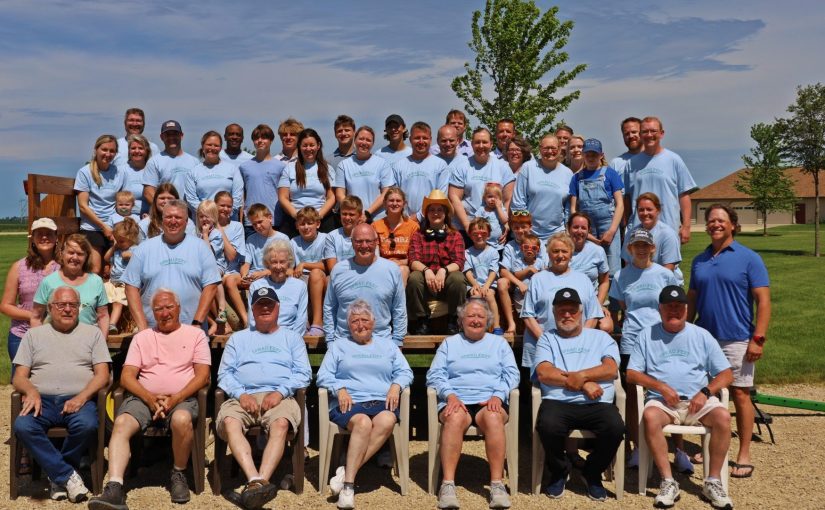
A few weeks ago, I attended a family reunion. It took place in the tiny but personally significant town of Elkton, Minnesota, where my mom Jill (Sprau) Albrecht was born and raised. Elkton is a town of 130 people. My mom is one of 9 kids. So the Sprau family made up a significant percentage of the town. In fact, the town was so small that the gerrymandering lines were drawn between the bedrooms in my Mom’s childhood home.

The Sprau family reunion took place at my Uncle Jerry’s farm. Which is next to my Uncle Randy’s farm, which is next to my Uncle Rod’s farm, where my Grammy’s family, The Andersons, first settled in Mower County, Minnesota. Straight outta Norway.

In addition to the typical cheek-pinching, wow-you’ve-gotten-talling, hot dog and burger eating, photo-taking, game playing and storytelling, we did something else that really got me thinking thoughty thoughts.

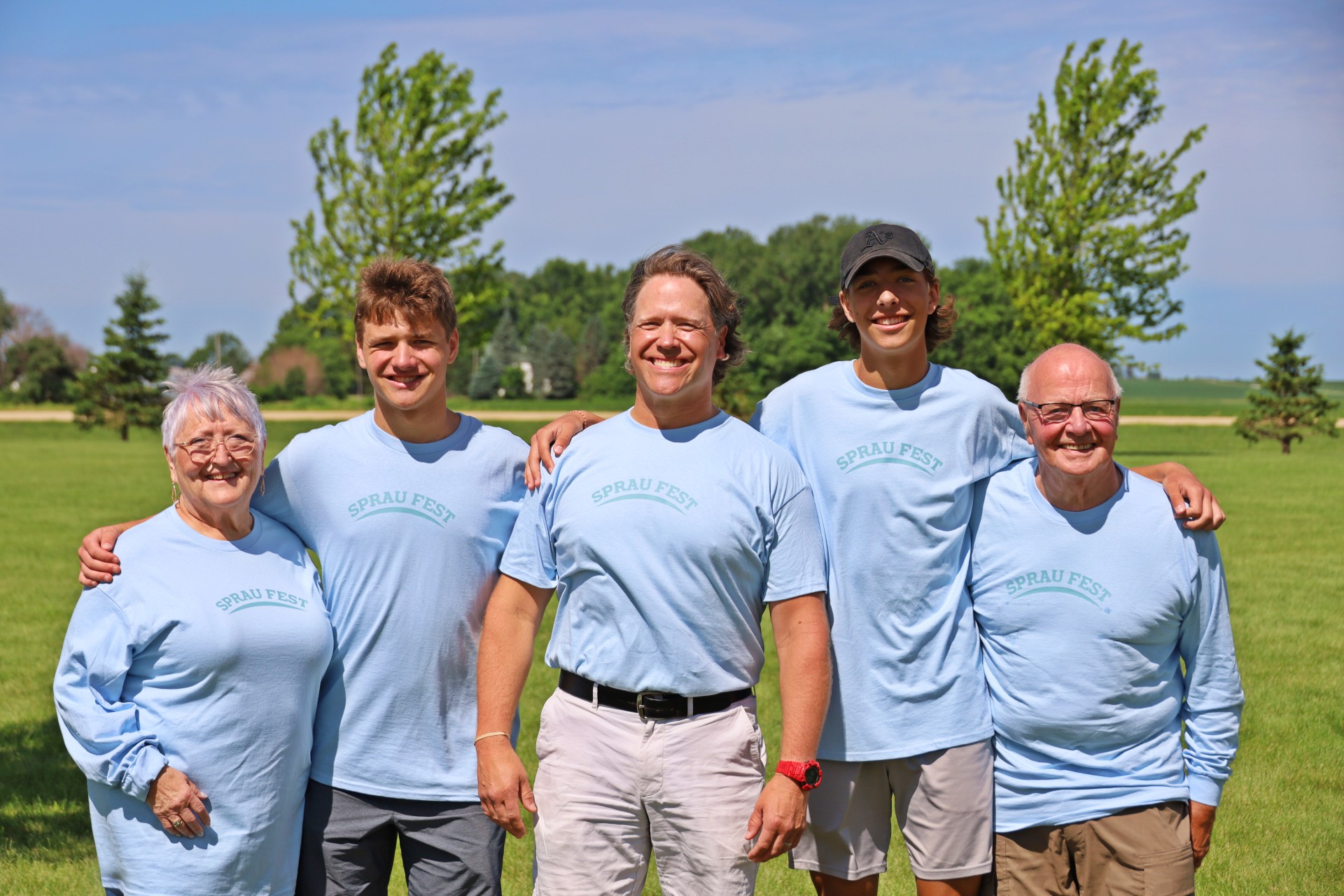
Me, my sons Johann and Magnus, and two hands growing out of my neck.

I was asked to lead a session on our Sprau and Anderson family history. I am an amateur genealogist and probably the closest thing we have to a family historian. Much of this started when I was younger and I was told how important my first name, Adam, is on my mom’s side of the family. And of course, my last name, Albrecht, is significant on my Dad’s side of the family. And my middle name, Robert, is both my dad’s first name and my maternal great grandfather, Robert Anderson’s, first name. So it’s not hard to see that I got tangled into this family history through a few well gifted names.

Following my Shed Talk on Friday, which is like a Ted Talk, but in a shed, I had an aha moment. (It was not about a black and white hand drawn music video.)

As a result of my family history talk, and the genealogical homework I did to prepare for the weekend, I started to visualize a model of my life and my place in my family history that I had never considered before.

Me and my sisters, Donielle, Alison, and Heather, my Mom and Dad, and me. But none of our feet.

I imagined a simplified version of my family tree that led to me.

Here’s what I pictured:

Above me on my family tree are my 2 parents. So my simplest genealogical tree is an inverted triangle with my parents at the top, and me at the lower point. (Which makes me the low point in our family’s history.)

When you add the layer above that, you find 4 people atop my parents. Obviously, those are my 4 grandparents. And the level above them holds my 8 great-grandparents. Which makes that a pretty great level.

As you trace your family history you just keep building a taller and wider triangle. And by the time you rise 7 generations you have 128 grandparents. By 10 generations, you have 1,024 grandparents on a single level of your tree. That’s like compound interest, in reverse. And we are all a product of this construct. It’s nature’s math.

My realization over the weekend is that all of the genes and traits, skills, lessons, strengths and abilities of the generations before me have poured into me like a funnel. All of these people have been learning and teaching, improving and growing and passing along what they learned in the best way they knew how.

They also accumulated flaws and habits that didn’t serve them. But much of that got passed along too, through the bottom of the family funnel.

I got the accumulated nature and nurture of countless generations before me from as many as 3 different continents.

That is wild.

However, what happens next is just as wild.

Me and my cousins and sisters getting tanked.

Because I married and decided to have children, the pyramid flips over. I am now at the top of a triangle of my own descendants.

My wife Dawn and I will forever sit at the top of a triangle of our own creation.

We know that pyramid has 3 descendants on the next level: our kids, Ava, Johann and Magnus.

The Three Generation Station

The pyramid may stop right there. Like that woman said to Meatloaf. Or it may continue until the end of time. Like Meatloaf was praying for.

But regardless of how long it builds, all of the nature and nurture that follows flows from me and Dawn.

As the next generations grow and multiply it becomes evident that our genealogy really looks like an hourglass.

There is an inverted triangle above us, that funnels down to us.

Below us is the pyramid of accumulating generations.

This means that many, many ancestors have poured not only their genetics, but their experiences, decisions, strengths and accumulated wisdom into you.

It is hard to say where the sayings, prayers, traditions, terms of affection, mannerisms or womanerisms you use today really started. But there is a strong chance they are deeply rooted in your family tree.

If you choose to have your own children, you are not only passing along your genetic traits, but you are also pouring your habits, values and lessons into the next generations.

This means that you are the center of the hourglass.

You are the filter.

You are the gate keeper.

You are the seed of all that comes after you.

Your decisions, biases, lessons, choices, habits and behaviors will influence everyone who comes after you.

Choose wisely what you pass along to the next generations.

Give them your best.

Filter out the worst. (Although, if you are Germanic, you should give them the best wurst.)

Share as much knowledge and wisdom as you can.

Pass along great habits.

Pass along strong traditions.

Eliminate the things that don’t serve you and won’t serve them.

Ensure that your offspring get the best of what is available to them.

You are the teacher.

The coach.

The prioritizer.

And the great example.

They say sex is hereditary. If your parents didn’t have it, it likely you won’t either.

But the same is true for religion.

And a love for books.

And quality time together.

And games.

And travel.

And sports, culture and music.

And love and kindness.

And generosity.

And friendship.

And braveness

And humor.

And resiliency.

And work ethic.

And grit.

Pass the good stuff along.

It’s how you can pass the best of you along deep into the future.

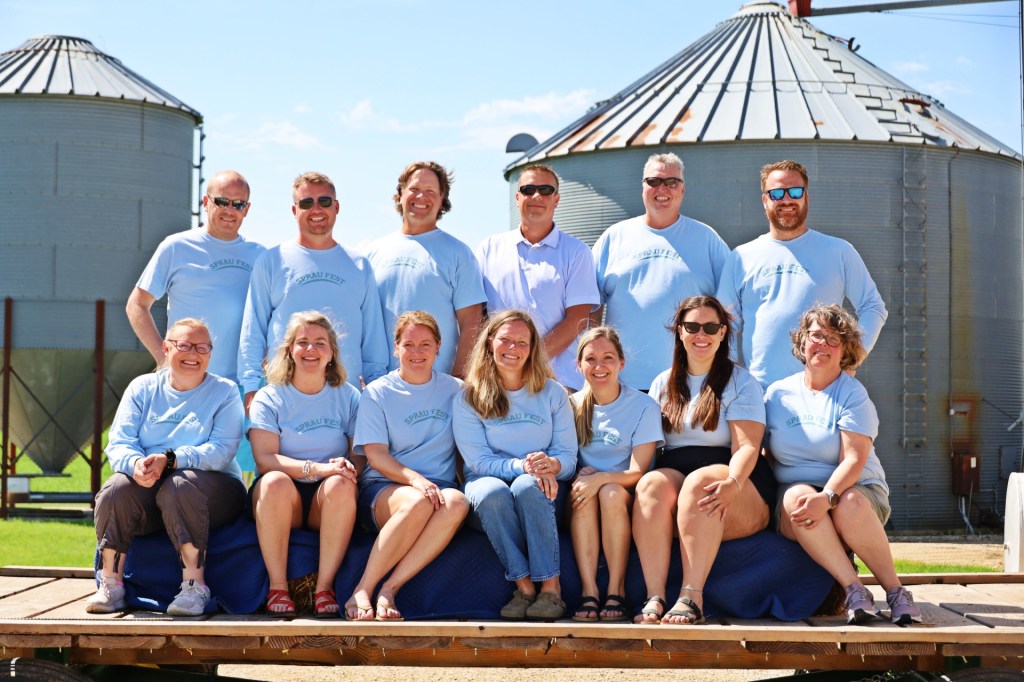
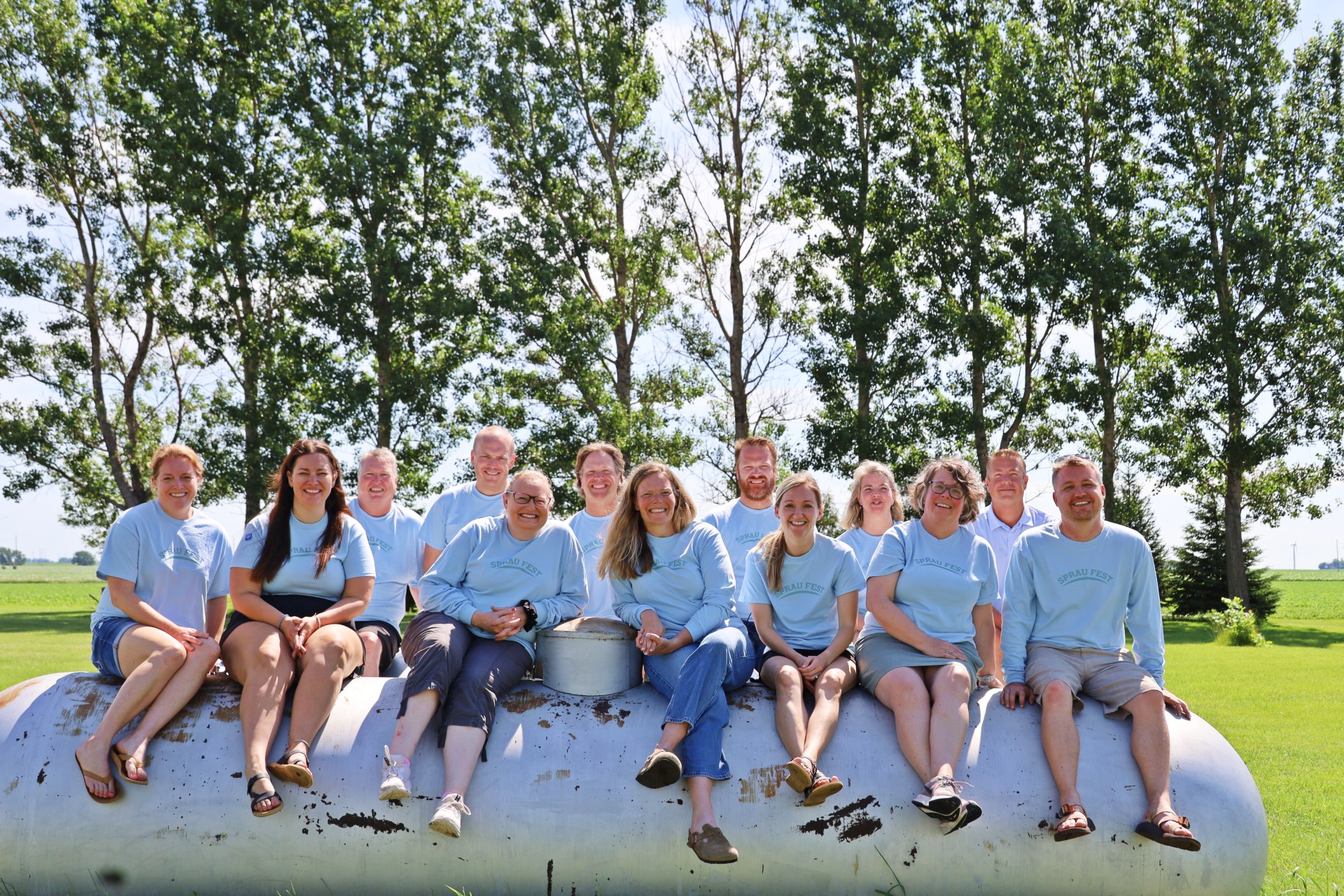
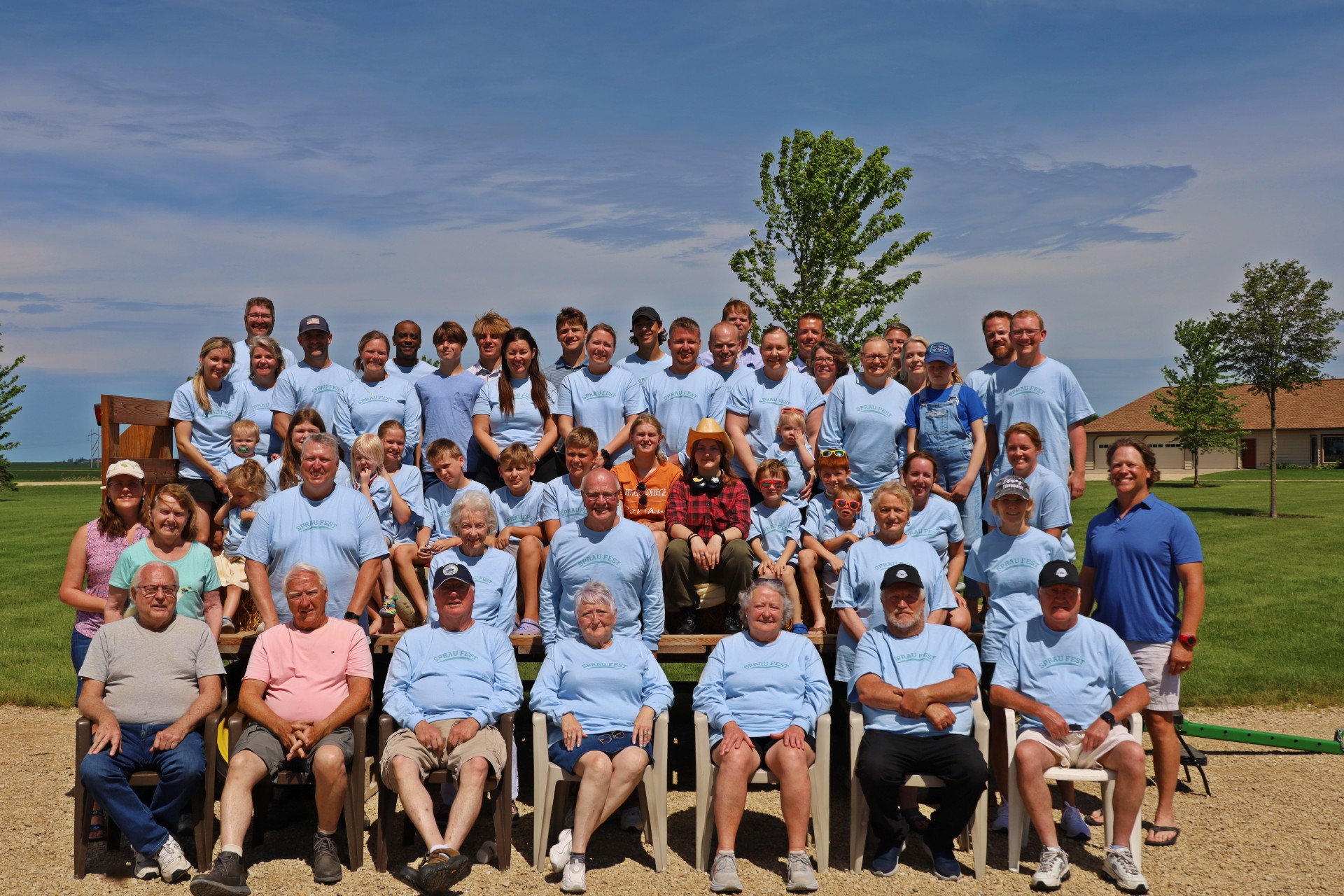
A healthy portion of the Kenneth and Lilian Sprau Family in Elkton, Minnesota on June 28, 2025.

Key Takeaway

Your ancestors have poured the best they have into you. Now you get to pour the best of you into the future generations. Make sure you carefully consider your contributions. And pass along the best inheritance you can.

*If you know someone who could benefit from this message, please share it with them.

+For more of the best life lessons I have learned check out my book, What Does Your Fortune Cookie Say? from Ripples Media.  And consider subscribing to Adam’s Good Newsletter.

Your Actions Tell You Who You Are.

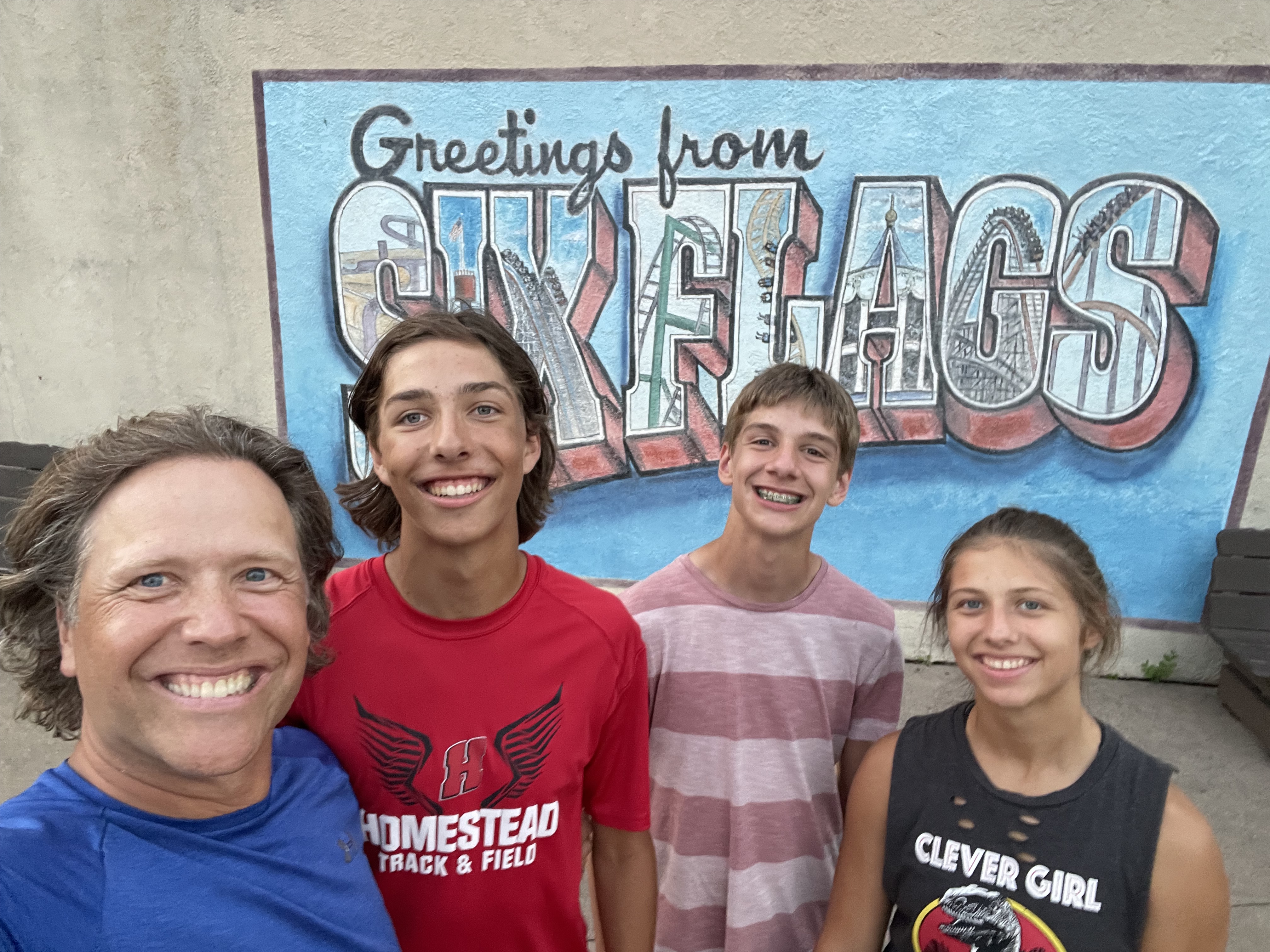
Earlier this week, I took the day off from work to take my son Magnus to Six Flags for his 15th birthday. We invited Magnus’ friend Phineas along for the day of adventure. I had to go because they can’t drive. And also because I FREAKING LOVE ROLLER COASTERS! (Did I type that too loud?) In fact, if I could take a roller coaster to work, I would be living my ideal life.

I picked Magnus and Phineas up after their strength and conditioning session in Mequon, Wisconsin, at 9:30 am. We drove a giddy hour to the park, which is just north of Chicago. We chattered about all the rides we couldn’t wait to hit.

Then we arrived at the park, and crushed it!

In fact, I didn’t drop Phineas off at his home until 11:30pm. (This is the point where I warn you that if I invite you or your kids to an amusement park, we are going to stay until they kick us out.) By the time those boys got to bed, it was midnight in Mequon. And Montgomery.

But early the next morning, when I dropped Magnus off for strength and conditioning at Homestead High School, I saw Phineas bouncing across the parking lot with his large jug of water, ready to run and lift weights.

Phineas and Magnus were roller coaster riding pros.

I love what these high school freshmen did in those 24 hours.

First, they worked out hard in the morning.

Then they played all day, and practically all night long. Like Lionel Richie. They rode 11 different roller coasters that flipped, spun and dropped them until the park closed. Neither of them ever hinted at wanting to quit early. Or barfing.

They got home late.

They got to bed late.

But the next day, they woke up early and got right back to work.

That is a work hard, play hard, work hard approach to life. Wiz Khalifa-style.

The Mid-Week Coaster Crew. And my coaster hair.

Through their own actions, those boys are telling themselves that they are the kind of people who will soak up as much fun as they can. And they will still keep their commitments the next morning.

They will do hard things, even when they don’t necessarily feel like doing them.

Because to be highly successful, you do what you have committed to do, even when you don’t feel like it.

Through such actions, you tell yourself that you are resilient, determined and focused. And when you believe your positive self-talk, you stick to your commitments. And you build momentum. Like a roller coaster on that first drop.

That type of discipline will get you everything in life.

Keep up the strong work, boys.

You’re training. yourselves to be great.

My daughter Ava also joined, because roller coasters, like pickle ball, are better with 4 people.

Key Takeaway

To achieve great things, you need to take action. You need to commit to hard work. Even when you are tired. Even when you have good excuses not to. Even when you don’t feel like it. Even when you played hard the night before. But when you stick to your personal commitments, you send a powerful message to yourself. You tell yourself that you do do hard things. That you are committed, disciplined and determined. Those actions build trust in yourself. They build self-confidence. And they lead to outstanding results.

*If you know someone who could benefit from this message, please share it with them.

+For more of the best life lessons I have learned check out my book, What Does Your Fortune Cookie Say? from Ripples Media.  And consider subscribing to Adam’s Good Newsletter.

Let your experiences and adventures change you.

This year, I have had a tall flapjack stack of fun and interesting experiences outside of work.

  • I traveled to Nashville in May to visit colleges and enjoy some live music at the Grand Ole Opry. (Although I still have no idea what an opry is.)
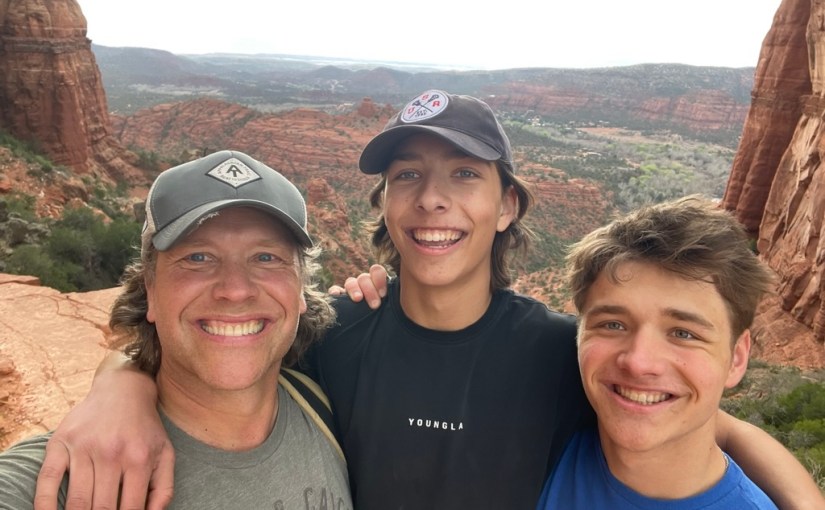
  • I spent our family’s spring break in Arizona, splitting time between Scottsdale and Sedona. (I didn’t have time for standing on the corner in Winslow.)
  • I completed a circle tour of Lake Michigan, seeing many things that are not that far away by the way the crow flys or the salmon swims, but quite far away by the way the car drives.
  • I coached 2 great athletes at the Wisconsin State High School Track Championship on the other side of the state in La Crosse.
  • I attended a family reunion in southern Minnesota, in my mom’s hometown of Elkton, with a whole flock of reuning relatives.

How To Profit From Your Experiences

My goal, when I experience such things, is to come back different.

I don’t want these to be inert experiences.

You want the special experiences of your life to have impact.

You want them to expand your view of the world.

You want them to create new or deeper relationships.

You want new learning.

You want new ideas.

You want to grow through each one of your novel experiences and be better as a result. (Your novel experiences don’t have to include a novel.)

You want to be a different and more capable version of yourself after the experience than you were before. (And you want to maintain all of your limbs and phalanges.)

When you aim to grow, expand and improve through your experiences, you will always find your path to accomplish your aim.

You will spot things you have never seen before.

You will recognize the learning, the lessons and the insights when they arrive.

You will grab the opportunity to meet new people you encounter. And you will find that each new person you meet will change you in some way. Sometimes these changes are large and profound. Other times, they are small and seemingly insignificant. But if you genuinely try to get to know people in a greater way, you will walk away a greater person.

Key Takeaway

Throughout your human experience, always look for ways to grow. Collect and connect dots. Add new humans to your world. Expand your circle of friends. Upgrade your world view. Come back from your experiences and adventures smarter, wiser and more informed. It helps generate excitement and curiosity every time you leave home. And it brings you back better, wiser and more creative than you were when you left.

*If you know someone who could benefit from this message, please share it with them.

+For more of the best life lessons I have learned check out my book, What Does Your Fortune Cookie Say? from Ripples Media.And consider subscribing to Adam’s Good Newsletter.
Why you need to have a need for speed.

If there is one defining factor of how the world works today versus any other time in history it is speed.

Today, everything happens faster. Not just Jimmy John’s. And Tinactin.

Communication technology has advanced from mail, to email to Slack and texting. Information arrives instantly.

News can be reported with a tweet, just seconds after it occurs.

You can stream practically anything you want to watch on demand, anytime.

AI has squeezed the gestational period of our research, discovery, query and analysis down to a mere burp.

So Why All The Slow Motion?

Yet, with all of the technology enabling us to move at Lightning McQueen-speed, I am constantly surprised by how slow many organizations move.

Nearly all technological friction has been taken out of our systems, yet human friction is still ubiquitous. K, why is that?

Human decision making, prioritization and hesitation still kill momentum, push deadlines and slow progress to a snail-mail’s pace.

The Weaponry, the advertising and ideas agency I lead, was launched 9 years ago, and the urgency of the social era was baked into our DNA. Because in the social era, opportunities come and go in a flash. In the social era, you must harvest social opportunities during the very short season when the opportunities are ripe. This can be as short as a few seconds, but never longer than a couple of days.

One of the mandates for our organization is to operate with the urgency of social media. Move quickly. Jump on opportunities. Thwart threats quickly. Move faster than other organizations. It was programmed into our genomic code from the start.

When we present timelines in our proposals, we share aggressive timelines, and note that this timeline only works if the client can keep up, and turn approvals around within our reasonable, but not generous, turnaround periods.

Yet as much as we hear about how important the work we do is to our clients’ success and how they want to get it done quickly, organizations can rarely keep up with their own ambitions. They are simply not built for speed and urgency.

While not all windows of opportunity close as quickly as social media does, all opportunities are finite.

When you fail to get your advertising in market in time, you also fail to drive sales during that time. For seasonal businesses, that is revenue lost forever. For non-seasonal businesses, it means your sales slide later in the year or into the next year. When you delay decisions, your overall revenue numbers for the current month, quarter or year are lower than they should be. That’s a loss. And an avoidable one.

My friend and client Bob Monnat, Senior Partner at Mandel Group Inc, shared some insights with me about one of his organization’s best partners. He revealed that they are great partners because they are always pushing them to move faster, to decide quicker, to get the work done so that they can ultimately turn their projects into cash-flowing assets.

Never lose sight of the reason businesses exist. They are created to make money. And time is money. The quicker you move, the more money you are likely to make.

Key Takeaway

Move faster. Today, advanced technology means that the slowest part of the process is the humans who have the most to gain. Slow actions and slow decisions cause wasteful delays. Identify the bottlenecks and pinch points in your process. Then attack them. Address your delays to help move your organization faster so that everyone can enjoy the success of speed. It is today’s competitive advantage.

*If you know someone who could benefit from this message, please share it with them.

+For more of the best life lessons I have learned check out my book, What Does Your Fortune Cookie Say? from Ripples Media. And consider subscribing to Adam’s Good Newsletter.

How I screwed up my very first email, but lived to email you about it.

Do you remember writing your first email?

I do.

It was very confusing.

I composed my first email message when I was a college student. It was my second or third year of college at the University of Wisconsin. I wrote the email to my parents from the computer lab at college. Because back then, almost no students in my socio-economic subdivision owned their own computers.

I was awestruck by the idea of this new technology. It would allow me to send a written letter to my parents, but without having to find a sheet of paper or an envelope. I wouldn’t have to buy a stamp. Or lick a stamp. I wouldn’t have to find a mailbox. Or lick a mailbox. And I wouldn’t have to wait a week for them to get the letter. They would get it instantaneously! This was some kind of magic from the future. And I couldn’t wait to try it out.

But when I went to write my first high-tech email letter, something went wrong.

I quickly filled the small field provided for the message with my first sentence. Then, as I continued to type, the new words pushed the old words out of the field. It was very confusing. But, hey, this was magic mail. And I was just a regular human. So I figured I wasn’t supposed to fully understand the wizardry.

I stared at the email for a long time, trying to understand what was happening to my message. But finding no good explanation, I eventually poked the send button and sent my magic mail into the ether, hoping it would land as promised inside my parents’ home computer in the woods of Norwich, Vermont.

The next day, when I received a reply email from my parents, I realized what had gone wrong.

I wrote my entire email letter to them in the subject field.

Looking back, it is easy to laugh at that mistake. It is easy to say I was a dufus. Or a doofus. (Both of which are dictionarily acceptable.)

But I find inspiration in this story. Because it serves as a reminder that when you try new things, you will be bad at them. Or at least as bad as you will ever be.

But just because you are bad at things at first doesn’t mean you will be bad at them forever. In fact, the only way to greatness is to travel through badness and mediocrity. It’s like traveling through the wardrobe into Narnia.

My first email experience demonstrates that by trying, experimenting and exploring, you grow and expand your capabilities. You have to be willing to try new things to accomplish new things. You have to be willing to be bad to become good. You have to be willing to make mistakes to make yourself great.

I am now 9 years into leading the advertising and ideas agency, The Weaponry. And I can draw a direct connection from my willingness to try to ride a bike, to my willingness to try to write my first email, to my eagerness to try to launch a startup business. They are all plunges into the unknown. They all involved missteps, mistakes, mistypes, or mispedals.

Here’s The Recipe:

You try.

You mess up.

You learn.

You correct.

You try again.

You improve.

You try again.

You improve again.

And you just keep trying.

Forgive my braggadocio, but today, I am freaking good at writing emails. I can fill in the To, CC, and BCC fields like a boss. I can write a subject that will tell the recipient why they should want to read the email. I can craft a clear, concise, compelling and occasionally comedic message. And I write that whole message in the body section. I can add an attachment. I can change the font size. I have a standard signature that includes my name, title, office location, and website address. My email also lets people know that I wrote a book called, What Does Your Fortune Cookie Say? And that I publish Adam’s Good Newsletter. Which is a newsletter that I send out regularly via email. Boom!

Key Takeaway

Don’t be afraid to try something new because you think you will be bad at it. You will be bad at it. At least as bad as you will ever be. But that is the price you pay to achieve greatness. You have to humble yourself at the beginning of the process. Which helps you appreciate your growth and ultimate success. The learning journey is the life journey. So learn as much as you can. It’s how you create the most rewarding life.

*If you know someone who could benefit from this message, please share it with them. And if you want to show off your email skillz, send me a note at adam@theweaponry.com.

+For more of the best life lessons I have learned, check out my book, What Does Your Fortune Cookie Say? from Ripples Media. And consider subscribing to Adam’s Good Newsletter.

Wake Up And Take Control Of Your Day with This Simple Habit.

When I was a kid, I had a small, square alarm clock.

It was very simple.

It had a traditional analog face, with an hour hand and a minute hand. (They actually looked more like arms than hands. But I think that ship has sailed.)

On the back of the clock, there were two simple dials. One set the time. The other set the alarm.

On top, there was a single, mushroom-shaped button. (Which grew in the dark.)

You pulled the plastic mushroom up to set it.

You pushed it down to turn it off.

That’s all there was to it.

But what was really important about my alarm clock was its location, location, location.

I didn’t set it on my nightstand like normal alarmists.

I placed it on top of my dresser on the other side of the room.

Every morning when the alarm clock sounded, I hopped out of bed and hustled across the room to turn it off.

And just like that, I was up and out of bed for the day.

I never hit the non-existent snooze button.

I didn’t crawl back in bed.

I started my day.

The Adam Albrecht Approach to Alarm Clocking has trained me to get up and start my day the moment my alarm sounds for the rest of my life.

Go Ahead, Make Your Day.

By training yourself to start the day when your alarm goes off, every day, you train yourself to take control of your life.

Today, I have stacked a series of beneficial habits into my morning routine.

Here’s The First Hour+ Of My Day:

When my alarm goes off, I turn it off.

Then I put a big smile on my face for 10 seconds.

I get out of bed.

I make my half of the bed.

I go to the bathroom and drink a tall glass of water I set out the night before. (Which means today’s success began yesterday.)

I weigh myself. (The daily feedback helps me keep my weight between the ditches.)

I enter my weight in my Happy Scale app.

Then I sit down at my desk in my home office to write.

I write from 6:10am until 7 or 7:30am.

As a result of this morning routine, I wake up, smile, hydrate, track my weight, and produce new creative work every morning.

Not because I decide to each day.

But because I decided to once, 10 years ago.

By 7am, I am rolling. I have won the first hour of the day. And I roll into the rest of the day, and my next habit stacks, with momentum.

But it all starts with the way I respond to my alarm clock.

Key Takeaway

Get on top of your day before your day gets on top of you. When you control how you start each day, it helps you take control of your entire day. And when you are in control of your days, you are in control of your life. So get up when your alarm goes off. Set your alarm on the other side of the room if you have to. Put a big smile on your face. And go win the day.

*If you know someone who could benefit from this message, please share it with them.

+For more of the best life lessons I have learned check out my book, What Does Your Fortune Cookie Say? from Ripples Media.And consider subscribing to Adam’s Good Newsletter.
5 Lessons From A Middle School Graduation Speech We Can All Use.

Last week, my son Magnus wrapped up his 3-year run as Magnus In The Middle School. It culminated with a graduation service on Wednesday evening. My friend Dr. Matt Joynt, the Super Duper Intendent of the Mequon-Thiensville School District, spoke at the ceremony and gave the graduating 8th graders five great pieces of advice. And since I am in the business of passing along the good advice I have heard, here is the High 5 from Dr. J.

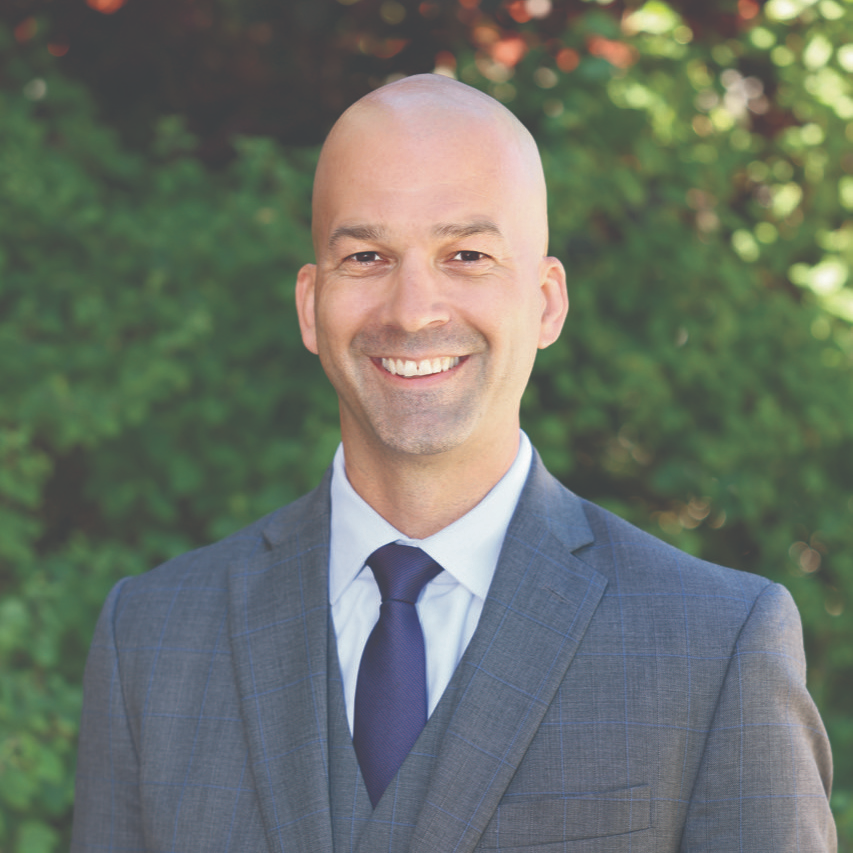
Dr. Matthew Joynt, Superintendent of The Mequon-Thiensville School District and Dropper of Knowledge.
  1. Do More Of What Works For You. I love this. To me, this means figure out what works for you in the broadest sense. The routines. The preparation. The responses. The flossing and deodoranting. It means spending your time in areas that offer you a strong return and doing things that build your confidence and drive good outcomes.

2. Make a plan for handling challenges. Challenges will always come. Like Cold & Flu season. In fact, life is one long hurdle race of interesting challenges. So expect them. And have a framework for working through them ahead of time. Develop a philosophy for dealing with them. (I repeat ‘This Too Shall Pass” a lot.) Keep advisors and supporters you can turn to when times get tough on speed dial. Or at least keep them on speed text.

3. Praise Your Base. And Show Your Gratitude. None of us does this, whatever this is, on our own. We all have people who support our success. It is important to recognize those who help you succeed and to show gratitude for what you have. And thank your tribe for tribing with you.

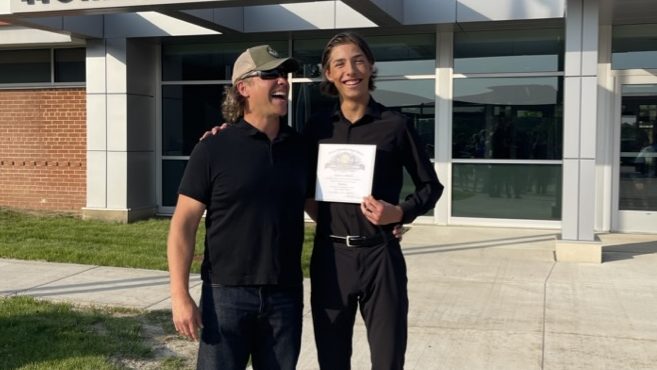
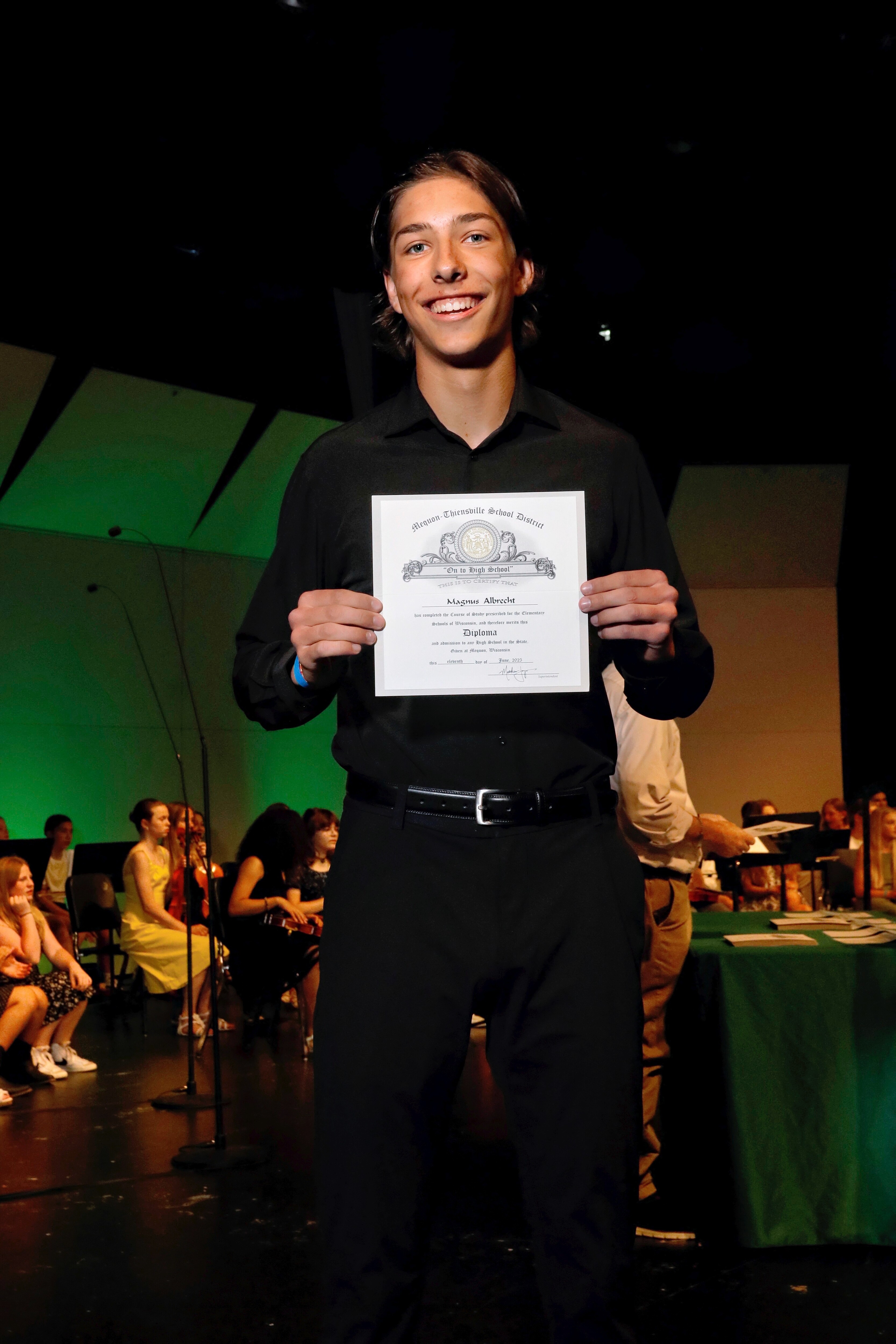
My son, Magnus, and his certificate of high school eligibility.

4. Choose a trusted adult and commit to talking to them about anything. This is strong advice for young people. Developing a trusting relationship with an adult can be one of the greatest relationships and advantages of your life. There are parents, teachers, coaches and bosses who want to help you succeed. They have already experienced many of the things you are going through, or will go through. Having that kind of resource in your corner is a huge help. Even if you don’t have an actual corner. But adults should so the same. Find someone 10 years older than you who you can talk with regularly. They can give your perspective from a decade down the road. That is a valuable resource. Kinda like Google Maps, but better equipped to eat food and drink beverages with you.

5. Thank your community. It is important to recognize that schools are supported by the community. This is through taxes, votes, volunteerism, attendance and a variety of other methods. It takes a village to create and support the schools that support your growth and development. Recognize the efforts and commitment of those in your community to your success.

However, students aren’t the only people supported by their community.

I recognize the variety of communities that support me. As a parent, I recognize that my local community helps support my children’s education and development. As an entrepreneur and business owner, my community of clients, partners and advocates support me and my team in a wide variety of ways. As an author, blogger and newsletterer, my community of readers, including you, provide valuable support through your time, attention, purchases, endorsements, recommendations and feedback. As a track coach, a strong community of athletes, parents, fans, coaches, trainers, administrators, officials, referees and media support my efforts.

Thank you to all of you who help support my efforts. You are much appreciated.

Key Takeaway

Thank you, Dr. Joynt, for sharing this good advice with our kids. But commencement speeches are not just valuable for the graduating students. They offer great advice and reminders for everyone willing to listen. So do more of what works for you, make a plan for facing challenges, praise your base, find a mentor, and thank your community. It’s timeless advice that will compound in value over time.

*If you know someone who could benefit from this message, please share it with them.

+For more of the best life lessons I have learned check out my book, What Does Your Fortune Cookie Say? from Ripples Media. And consider subscribing to Adam’s Good Newsletter.