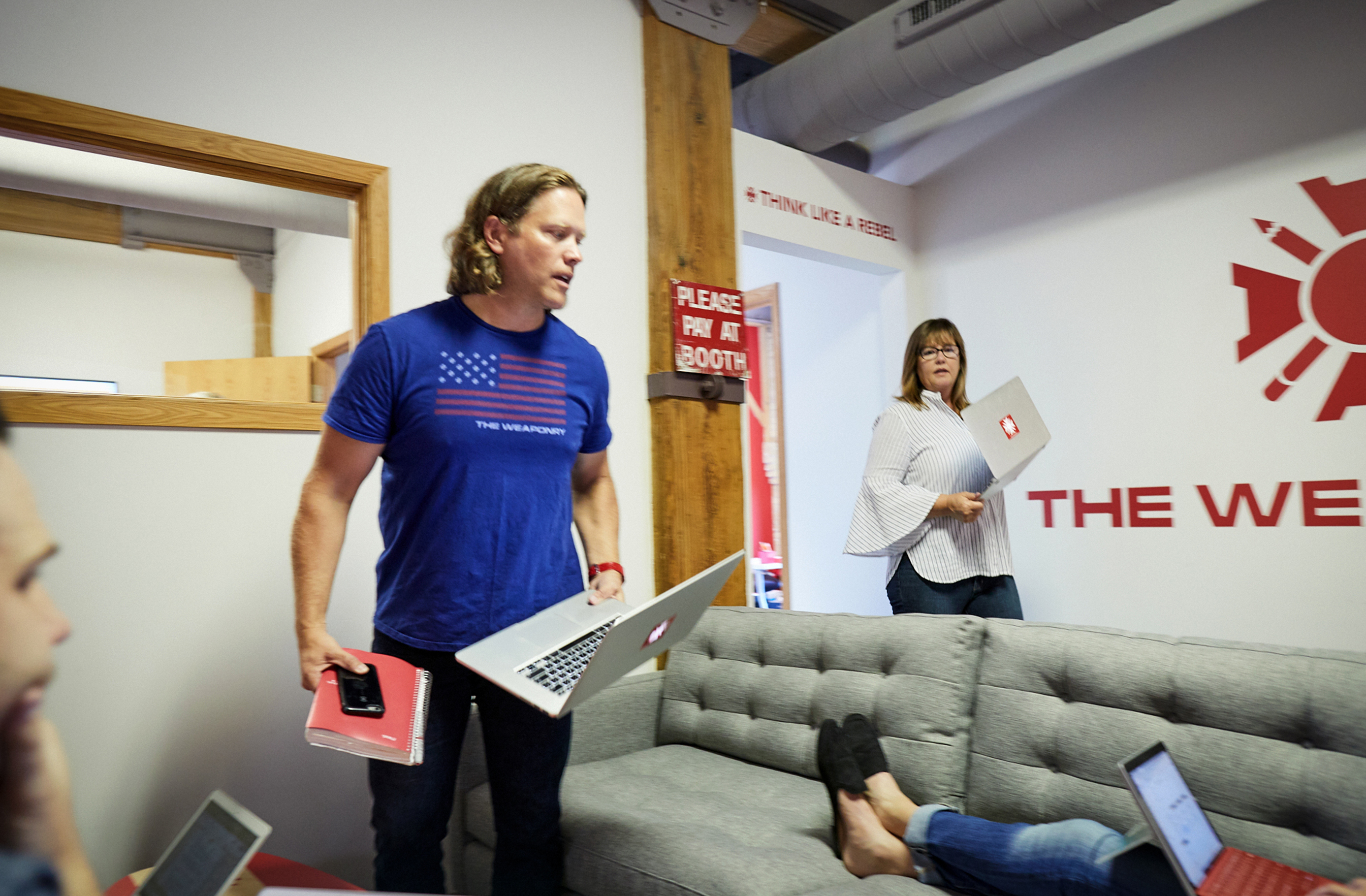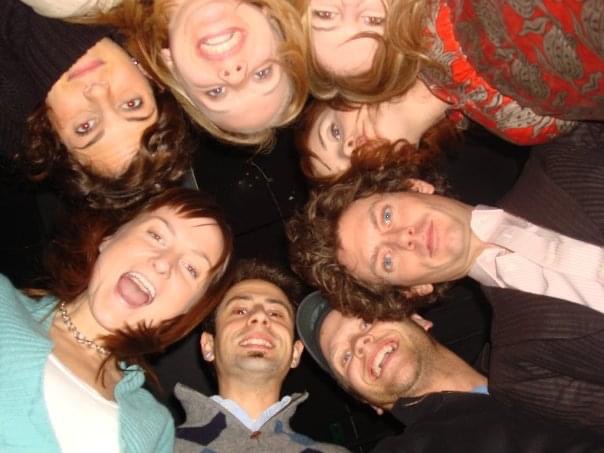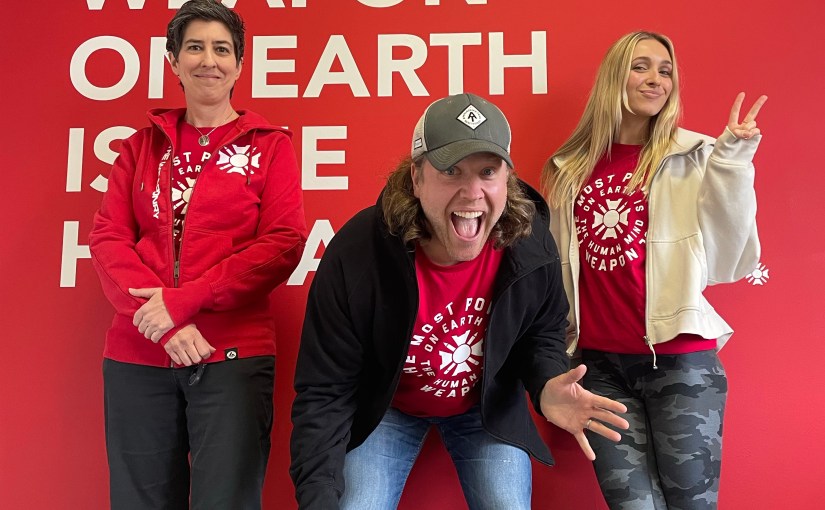
The Weaponry Turns 6 today! Here are 6 things I’ve learned along the way.

On the eve of my 40th birthday, I sat down and wrote about the things I was most proud of from my first 4 decades on The Big Blue Marble. It was a fun process. I thought about my family and friends. I thought about my wins. My adventures. My career successes. I thought about that time I petted a hummingbird in the wild. (I have now done that twice!) And I thought about how I was creating a better person every day. (Not in a Mary Shelley kind of way)

Then I shifted my focus to my unfinished business. I asked myself this very simple question.

If you died tomorrow what would you most regret not doing?

-39.99 year-old Adam Albrecht

The first and most obvious answer was that I had not tried to start my own advertising agency. So I put that at the top of my list. And I got to work on a plan to avoid that regret. The more I thought about it the more real the plan became. I was like Joaquin Phoenix in the movie Her. Or maybe like the dudes in Weird Science bringing their project to life.

To start your own business you need the support of your family. A couple of mums and pumpkins don’t hurt.

Go Time!

When I was 42 years old, I did it. I launched the advertising and ideas agency The Weaponry.

That was 6 years ago today!

Simply trying to start my own agency would have eliminated the regret. Because I put a premium on simply trying. It was the not-trying that I knew would have bothered me most when things started heating up at the crematorium. It’s a major bonus that things have worked out and that The Weaponry is thriving 6 years later. Plus, most businesses don’t last past 5 years. And I never wanted to be like most people. Except maybe Johnny Most. (Bird Steals The Ball!)
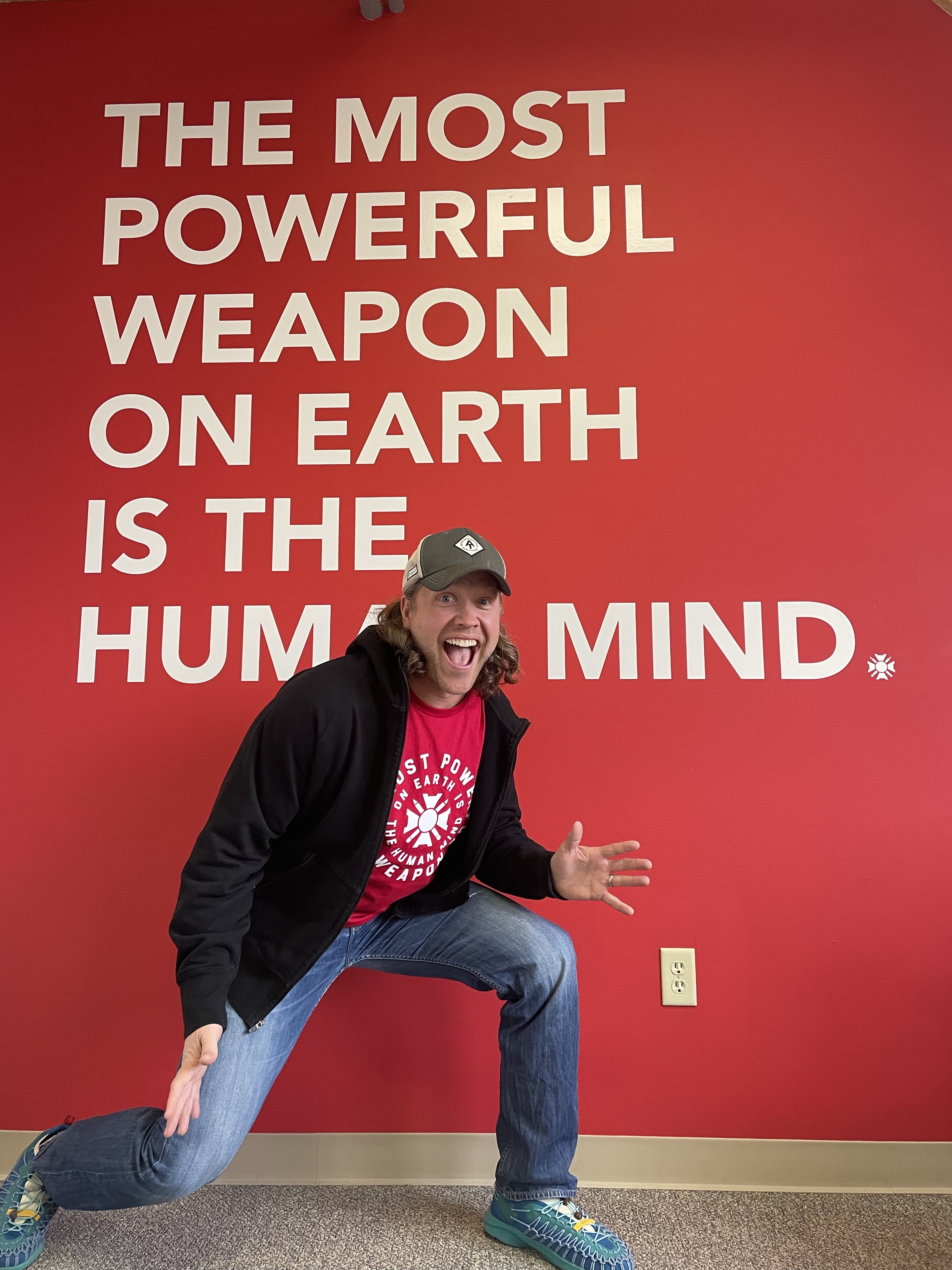
Just keep swimming!

Earning and Learning

I have learned a lot from starting my own business. And fortunately, when I started planning the business I also created this blog to share what I was learning along the way. (Cue Dana Carvey’s Church Lady saying ‘Well isn’t that special!’)

6 Things I Have Learned About Business.

`1. Every year in business is a success in itself. Leadership’s primary responsibility is to keep the business in business forever. Each anniversary is proof that we are doing our jobs. Just like we should be thankful for each day on top of the topsoil, having your doors open is a success. Although today businesses don’t even need doors. Kinda like a Jeep Wranger in summer.

2. You have to keep looking for ways to improve. I am always thinking about the gap between the ideal version of The Weaponry and who we are today. So the mission becomes to continuously work on closing that gap. We meet every Friday to talk about ways to improve our processes and strengthen our weaknesses. You have to call that stuff out into the light in order to be able to address it, work on it and improve it. Fall in love with that process and you’ll fall in love with business. Kinda like Lee Majors in that TV show where he was the stuntman.

3. You need great people. Our team is amazing. We are loaded with nice people who like to collaborate to get great team results. We take a lot of pride in doing what we said we would do. Our team members love to solve problems for our clients. The team is quick and productive. They are great at accumulating knowledge and applying that knowledge to create more and more value for our clients. They are smart people who are really enjoyable to be around. Recruiting and working with a great team has been one of the greatest rewards of the past 6 years.

4. You have to keep adding new clients. Like Lucille in that Kenny Rogers song, a client could leave you at any time. The decision-makers could quit, get pushed out, die or simply change their minds at any moment. So you have to always be growing your business with new clients because you can’t protect yourself from all client attrition through hard work, great ideas and excellent customer service alone. Plus, you need to create a diverse portfolio of clients to protect against shifts in markets, dry spells, spending cuts, or making a client so wildly successful that they no longer need to do anything to help their business thrive.

5. You have to have fun. Fun comes in a lot of different forms. And I love to have fun in everything I do. Including business. Here are just some of the things I find fun at The Weaponry.

  • Learning new things.
  • Game Planning
  • Problem Solving
  • Meeting New People
  • Sending out job offers with a lot of funny non-traditional language.
  • Saying silly things in meetings.
  • Making clients smile and laugh
  • Storytelling
  • Travel
  • Typing funny comments into the chat during Zoom meetings
  • Creating new stuff
  • Getting new swag
  • Eating lunch together
  • Winning new business
  • Helping our clients grow
  • Wowing our clients
  • Putting on a show
  • Receiving compliments for a job well done.
  • Being told we are fun
  • Baking humor into our setup slides.
  • The humorous final slides of our presentation.
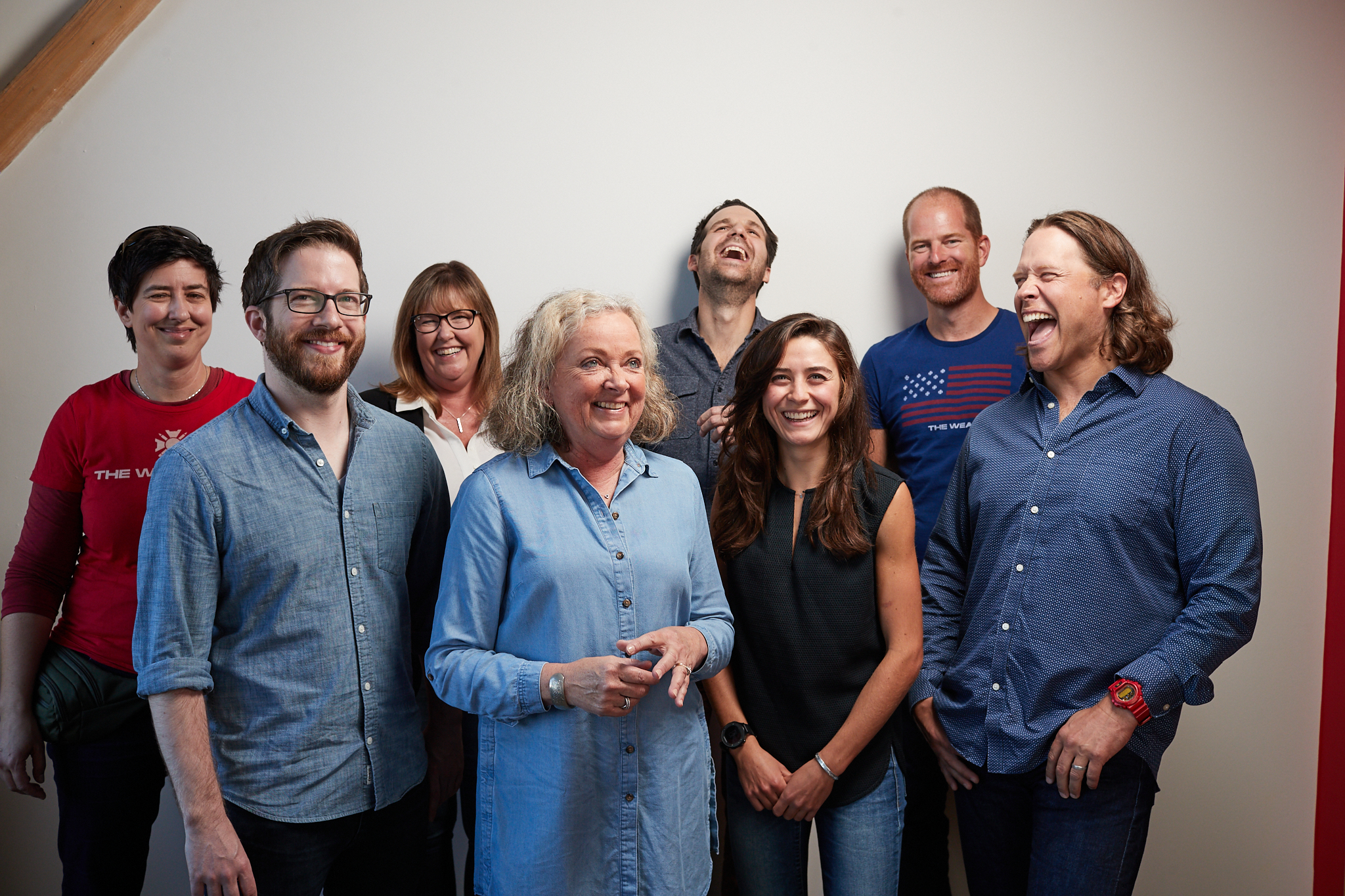
We love to laugh. Like that song in Mary Poppins.

6. You have to be paranoid that the business will collapse. I am never comfortable with our success. I am afraid that if we are not careful everything we have been doing and building will go away. You can’t ignore the opportunities to get better. You can’t let things slide. Just like you should try to win over your spouse again every day, you have to be concerned that things could go bad with your clients if you take your eye off the ballpoint. And if you worry enough, and do something about it, the bad things will never happen.

Key Takeaway

A great business is simply a collection of great people running great processes, contributing great value to customers, having fun, and worrying that it will all end if they are not careful. I am extremely thankful for all of our Weapons, our great clients, and our partners who work as a trusted extension of our team. Here’s to 6 fun years. Let’s keep this thing going forever.

*If you know someone who could benefit from this message, please share it with them.

+ To see more of the lessons I’ve learned throughout my career check out my new book What Does Your Fortune Cookie Say? from Ripples Media.
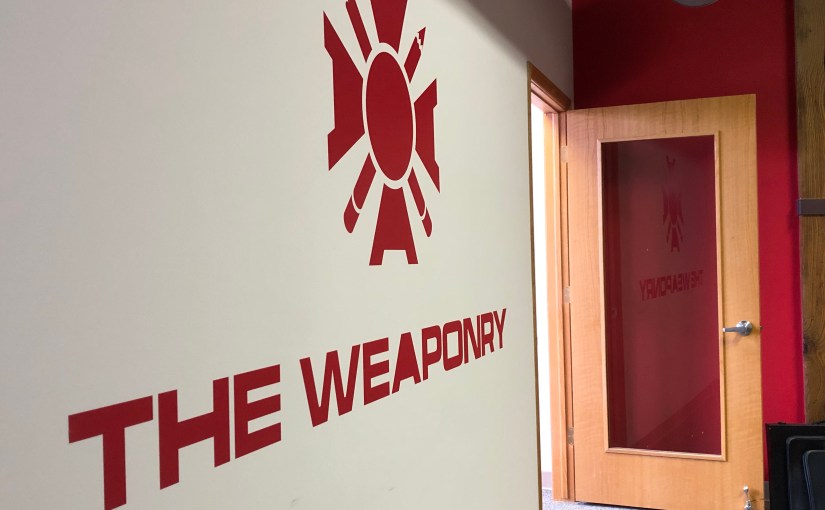
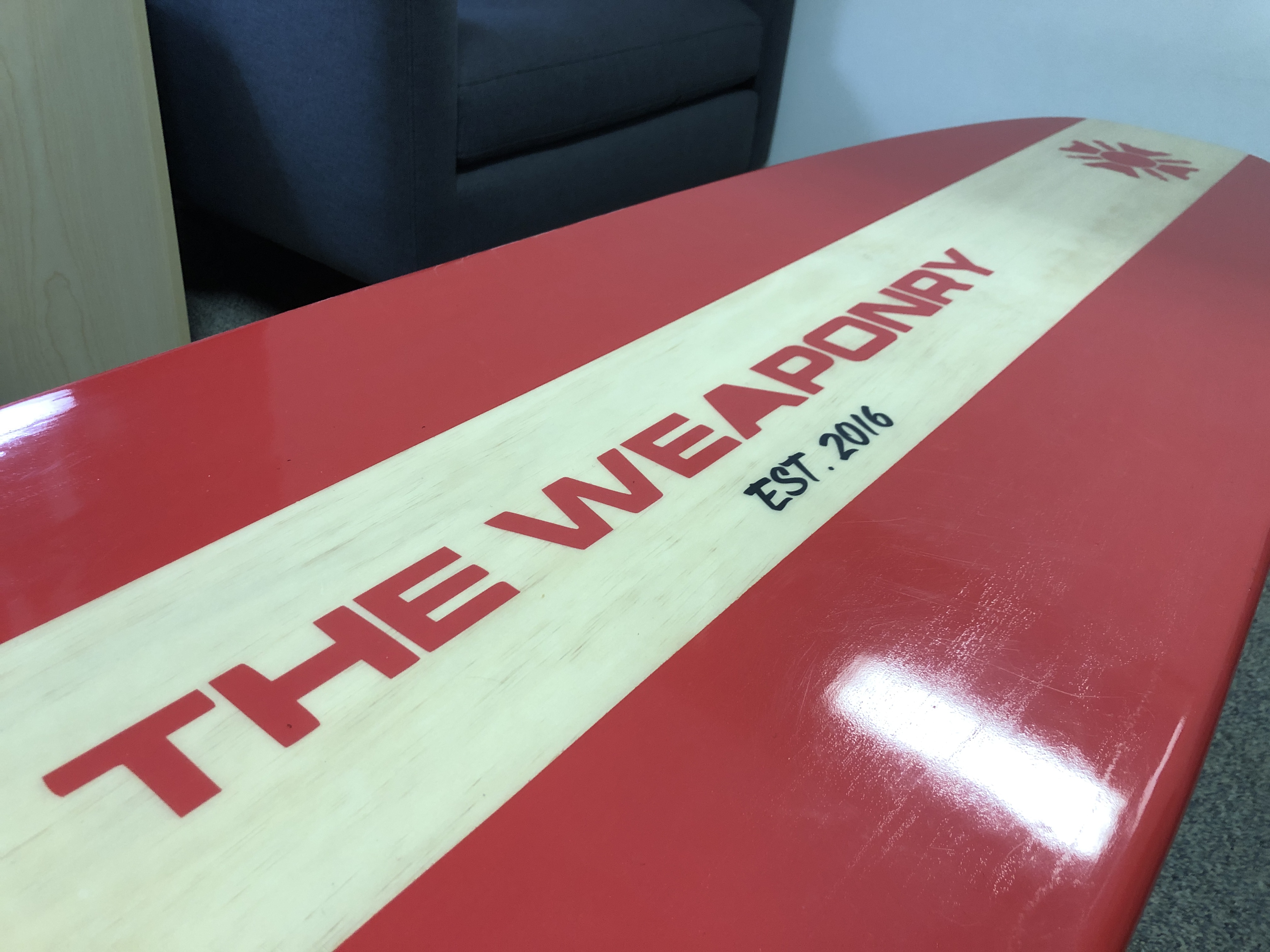
There are no A-holes allowed at our agency. In fact, we baked the rule into our logo.

I’m not a huge fan of rules.  Creative people as a species are naturally averse to them. But if you want to develop a business with a strong culture you need some rules to guide you.

When I joined my first advertising agency executive team our first order of business was to create some simple rules to govern the organization. Because we believed that a great organization is made of great people who enjoy working together the first rule we unanimously agreed on was the ‘No Assholes’ rule. For those not familiar with the rule, or the obviousness of the phrase, it means that your organization will not tolerate people who act like A-holes.

Prevention

Preventing the A-holes from joining your team isn’t easy. Because they are on their best behavior in interviews. Sometimes we sniff them out (yeah, I said it). But often they sneak past our filters.  So as much as we try to prevent an A-hole from getting into our organizations in the first place, they get in. So now what?

The Problem

You just get rid of them, right?  After all, no one likes an A-hole. Unfortunately, it’s typically not that simple. Because let’s face it, there are a lot of talented A-holes. The drive, intelligence, confidence and will of a typical A-hole make things happen. It’s common for them to make a quick impact and create immediate wins.

But that upside comes with an equally significant downside. Because A-holes are uncomfortable to be around, they drain morale and sap energy. The unfortunate reality is that when you retain an A-hole, it sends a terrible message about your values to your most valued employees. You’ll watch them drop like flies.  Among the employees that you retain you’ll lose untold dollars in productivity as co-workers gather to talk about what an A-hole the A-hole is.

Of course, the worst problem of all occurs when the A-hole develops a close relationship with the client.  Because then the agency has to decide whether they want to lose the valuable contributions of the A-hole and irritate or lose a client.

Removal

I recommend a proven 2-step process to handle such problematic employees.  

  1. Ask a handful of cross-functional team members if they think the co-worker in question is an A-hole.  
  2. If the consensus is yes, put on your scrubs and perform an Assholectomy.

No Compromise

There simply is no room for the distraction, the division and the drama caused by A-holes. Accepting them tells the rest of the organization that it’s okay to be an A.  That can’t happen. Because eventually enough people will leave, or threaten to leave that you have no choice but to get rid of the jerk anyway.

After implementing the A-hole rule in the past, I’m proud to say we purged several very talented but very difficult people. And the culture, vibe, productivity and love for the organization improved as a result.

That’s why when I started The Weaponry I wanted it to be rule number one. I felt so strongly about it that we designed the rule right into our logo. We purposely removed the A-hole from the letter A in the word Weaponry. It is a constant reminder of our persona non grata.

Notice the A? Notice there is no A-hole?

Key Takeaway

Don’t be an A-hole. And don’t let A-holes on your team. They kill the culture and they ruin the fun. If an A-hole does sneak onto your team get rid of them quickly. It will send a message to the rest of your team that you care about them. And it shows that you care about creating an enjoyable work environment for your team. Which is worth more than all the A-holes combined.

*If you know someone who could benefit from this message, please share it with them.

+For more of my foundational life and business philosophies check out my new book What Does Your Fortune Cookie Say? from Ripples Media.

Beware, the rewards switch with time.

There are 2 ways to think about life.

  1. You can focus on The Now.
  2. You can focus on The Next.

When you think about The Now you are encouraged to do the things that are rewarded now. Sleep in. Relax. Have fun. Indulge. Spend. Eat. Drink. And hang out with Mary.

When you think about The Next you do the things that are rewarded next. You wake up early. Work. Focus. Study. Save. Exercise. Build. Carefully monitor your food, drinks, and activity with Mary. (And Ben and Jerry.)

Focusing on The Now is immediately enjoyable. Focusing on The Next makes now less enjoyable in most ways. (Sorry, Charlie.)

But beware, the rewards switch.

In a literal blink, you are past The Now and into The Next. And what is rewarded in The Next is the opposite of The Now. Which is what makes life and the decisions you make so interestingly complicated. And it is why I encourage you to tie the following quote to your decision tree:

“It almost always happens that when the immediate consequence is favorable, the later consequences are disastrous, and vice versa.

-Frédéric Bastiat, French Economist.

Key Takeaway

Always think about the long-term consequences of your actions and inactions. Invest your time, energy, and growth into a much larger payout in the future. A delay of gratification is most often rewarded with compounded interest in The Next. And it’s always well worth the wait.

*If you know someone who could benefit from this message, please share it with them.

+For more ideas on how to enjoy a better future, check out my new book What Does Your Fortune Cookie Say? from Ripples Media.

The new place you can now find my new book.

During the Covid Lockdown of 2020, I had a lot of extra time on my hands. (And on the rest of my body too.) To take advantage of all that extra time I decided to write a book. I published my paper baby just days before Christmas of 2021. Which means that the past 4 months have been full of exciting new experiences.

My book What Does Your Fortune Cookie Say? from Ripples Media was uploaded to Amazon, on December 16th. It went live on December 18th. I ordered a copy and had the first physical copy of my book on December 19th. That Amazon is pretty amazing.

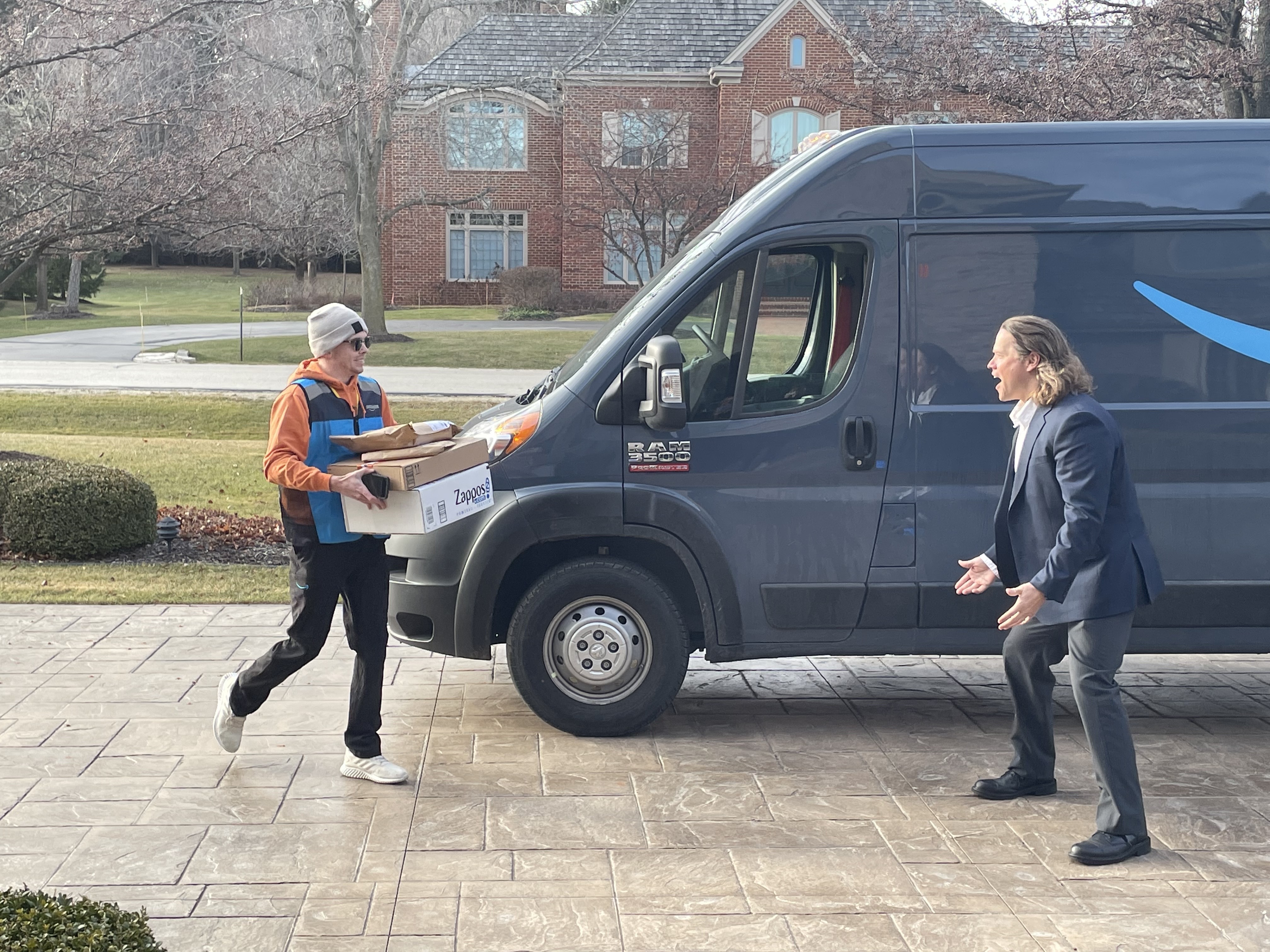
The moment this unassuming driver showed up with my first copy of my first book. (And I’m just assuming he was unassuming.)

As soon as I shared the news that my book was available I had friends and family members across the United States share that they had purchased the book. First, they sent me pictures of their orders or notes that they had bought the book. Then they started sending me pictures of their new books in hand. Which is mindblowing.

I have now seen pictures of my book in Canada, all across the US and in Mexico. (Keep the pictures coming!)

What Does Your Fortune Cookie Say? has now been featured on Television and podcasts. I have been in local newspapers too.

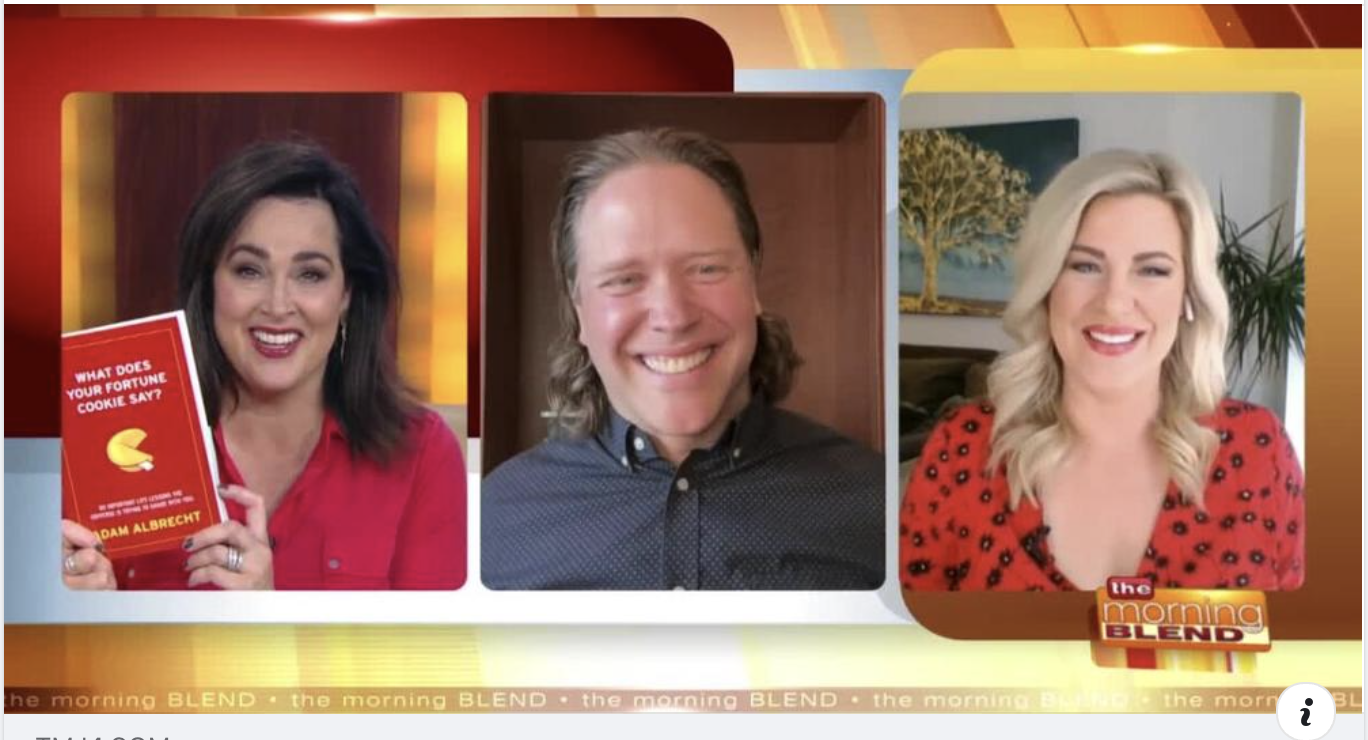
Molly, Me and Tiffany on The Morning Blend. They wore red to coordinate with the book. I didn’t get the memo.

Covid Strikes Again

Because of a massive spike of Covid cases due to the Omicron variant, my in-person speaking opportunities and book talks have been largely delayed. My talks begin in earnest in April. Which is exciting for me. (But less exciting for Earnest and April.) I already have speaking events scheduled through the fall. (And I would be thrilled to add more.)

Now At The Library

Last week I had another new first. I donated a copy of my book to my local public library. As a new author, I was very curious about how the process of donating a book to the library worked.

Here’s how it happened.

  1. I sent an email to my local library introducing myself as a resident of the community who had recently published a new book. I shared that the book contained 80 of the most valuable life lessons I have learned throughout my life. I also shared links to TV appearances, newspaper articles and Amazon reviews to prove that this book was legitimate and worthy of a little shelf space at the local library. As a bonus, I added that I hadn’t been shushed at a library for many months.

2. I got no response.

3. I stopped by the library unannounced with a copy of my book and told the person at the check-out desk that I was a local resident that would like to donate a new book I wrote. The young man told me that I should talk to the woman at the information desk.

4. I walked 50 feet to the information desk and told the woman at the desk the same thing I told the young man at the front desk. She told me that she could take the book. So I handed it to her. And that was pretty much it. She told me it would take about a week for it to be added to the system. But they would try to work on it between all the shushing they had to do.

There was no ceremony. No confetti. No certificate of literary citizenry. And I didn’t get to meet Dewey Decimal.

Donating my book to the library day!

A few days later my daughter Ava announced that she was looking on the library website and found What Does Your Fortune Cookie Say? available for checkout. I immediately logged in to see it too. Then I requested my own book from the library. Which was pretty cool. Yet also pretty dumb, since I have about 200 copies of the book at my house already. But I wanted the experience.

Stopping by to check out my book from the library. (Frank is never there.)

Yesterday I stopped by the library to pick up my own book. I entered the library and went into my semi-quiet mode (because I don’t have a Full Library internal setting. I walked to the area of the Frank C. Weyenberg library where they hold reserved books for pickup. And I found my book waiting for me.

Myself on a shelf!

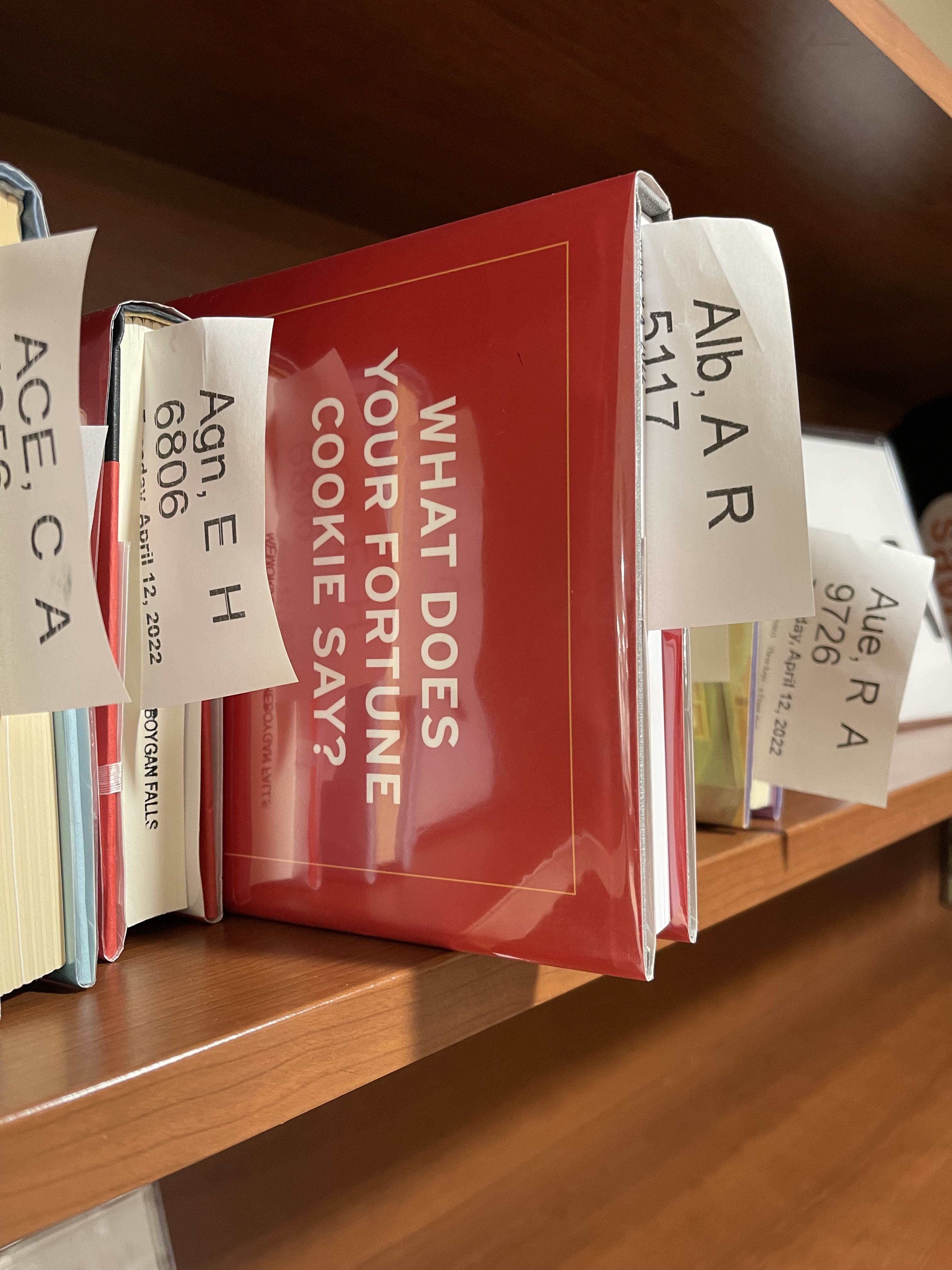
It was interesting to see the book in library form. It looked like my book, but more official. It had a formal clear plastic protective jacket. I felt like my book had won the library equivalent of a Green Jacket for winning The Masters. Or a yellow jacket for induction into the NFL Hall Of Fame.

The book also had new markings. Including a couple of 14 Day Loan stickers, an official system sticker with the number 158.1 and the name Albrecht. Which seemed to be the equivalent to the Dewey Decimal system number, but perhaps newer and Deweyer.

My book, fresh from the library’s tattoo parlor sporting new ink.

The book also had an official barcode for checkout. This was my favorite part. It made it official. Seeing that barcode on my book let me know that my book, with my carefully collected and curated body of knowledge, was not just available on Amazon and at Winkie’s in Whitefish Bay, Wisconsin. But it was also now a part of the publicly available body of knowledge in Ozaukee County, Wisconsin. Anyone in Ozaukee County can now access the most important lesson I know for free by clicking this link.

That barcode makes it official. Even if it’s not at a bar.

While the donation process of the book was anticlimactic and unofficially, the book itself looks like it is part of a special club. Which offered a special and unexpected reward.

Me checking out my own book. I practiced catch and release and immediately returned the book for the next reader to enjoy.

Key Takeaway

Share what you know. Create value. Offer it to the world. It may be more valuable than you think. The process itself will help you learn and grow and have more to share with the world.

*If you know someone who could benefit from this message. please share it with them.

+If you’d like to learn more about the book you can visit fortunecookiebook.com. You can buy it on Amazon. And if you live in Ozaukee County Wisconsin you can check it out here.

Do you process your feedback for growth or defense?

When you receive feedback from the world you process it with one of two devices in your noggin.

  1. Your Growth Processer
  2. Your Defense Processor.

The Growth Processer says: I have the ability to get better with this feedback. I can learn and improve and enhance my abilities and capacity. It acknowledges that you have room for improvement, and you have discovered an opportunity to press your advantage further. Think of this as the Billy Joel Processor. Because it starts evaluating feedback by saying, You may be right. I may be crazy.

The Defense Processor says: I should not change. I am already where I should be. The world doesn’t know what I know. There are important reasons for doing what I am doing and I need to defend against change or modification. I need to build a wall to protect my processes, decisions and style. Because they are not only as good as they ever need to be, they are better than anyone else. Therefore, I need to defend against decay. Think of this as the Donald Trump Processor. Because like Franks Redhot, he uses his defense processor on everything. Which offers a sense of confidence and superiority. But it prevents all possibility of growth and improvement. (Because just imagine how many times his hairdresser offered up a less imaginative hairdo.)

Real-World Example (But not from the MTV Show.)

If you are part of a race team you have to always be looking for ways to get faster. Speed is growth in racing. Everything that ultimately leads to speed should be sought out, embraced, and accepted. It’s simple. It’s scientific. It’s how you get better faster.

Key Takeaway

Always look for opportunities to improve. Find the valuable gems in your feedback. Consider everything. Think like a race team. Seek out and soak up everything that presses your advantage forward. It will help you get a little bit better every day.

*If you know someone who could benefit from his message, please share it with them.

+For more ideas on personal growth and self-improvement check out my book What Does Your Fortune Cookie Say? from Ripples Media.
How strong is your personal gravity?

Have you ever noticed that when apples break their stematic bonds with trees that they fall to the ground? Sir Isaac Newton noticed. And with this simple observation, he discovered gravity. Which we have come to know as the planetary pull. Gravity is the force that pulls us towards Earth. It also keeps the moon and all of the satellites in orbit. Including the Georgia Satellites. (So don’t give me no lines and keep your hands to yourself.)

But planets aren’t the only ones that create gravity. All heavenly bodies do. And you do too. Even if your body is no longer heavenly.

However, not all gravity is created equal. Which is why you feel like you weigh less on the moon than you do on the Earth. It’s why you feel heavier on Saturn or Jupiter. And it’s why you feel lazy when you are on your Uranus.

Your Gravitational Pull

Your personal gravitational pull is a result of the value you create for others and the energy you radiate. The more value you offer and the more energy you emit the more personal attraction you create.

There is an easy way to evaluate your own gravitational pull. Just look at the people you are attracting and ask yourself these 3 questions:

  1. What kind of people are you attracting? This indicates the quality of your gravity.
  2. Are you attracting many or are there few? This indicates the quantity of your gravity.
  3. Is their orbit growing closer to you or drifting farther away? This indicates your relative growth.

Key Takeaway

The great sign of growth and improvement as a human is to look at who is in your orbit. As you grow wiser and kinder you will attract more and better people. Positive energy attracts. Negative energy repels. Dedicate yourself to improving your personal gravity. It will not only improve your own life, but it will improve the lives of those around you. It will attract more great people to your orbit. And that, my friends, is heavenly.

*If you know someone who could benefit from this message, please share it with them.

+If you’re interested in more ideas on personal growth and self-improvement, check out my new book What Does Your Fortune Cookie Say? from Ripples Media.
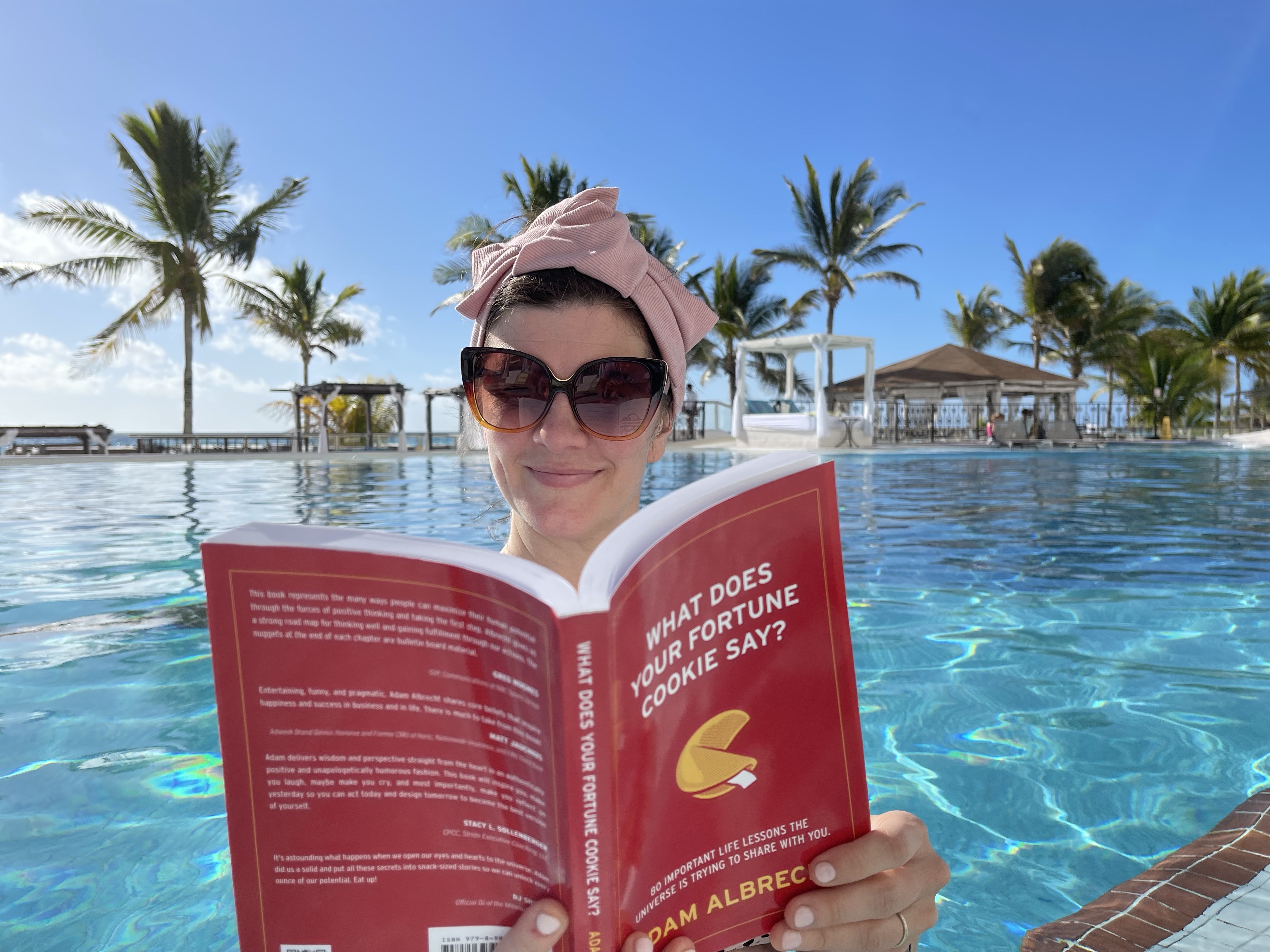
The valuable life lesson Will Smith could use right now.

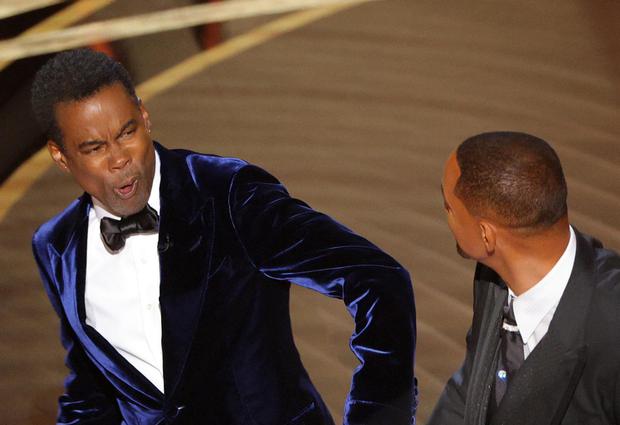
Everyone makes mistakes. Will Smith reminded us of that on Sunday night. And if you are a learning, growing, improving human your mistakes make you better prepared for the next challenge life throws your way. And life is going to throw more challenges your way. It’s what life does.

Early in my career, I made a mistake kinda like Will Smith’s. Granted, there were no Oscars involved. It was not on national television. I wasn’t mad at Chris Rock for saying that my wife looked like one of the fittest, most beautiful Hollywood actresses of all time. (You go Demi!) And I didn’t actually touch anyone.

But I did overreact to a coworker who had done something wrong.

In the moments that followed my overreaction, my boss gave me one of the most valuable lessons I have learned in my career. He simply and calmly told me:

When you are right, don’t respond in a way that makes you have to apologize.

It was great advice. It perfectly reframed my mistake for me. I could see that I was in the right, until I wasn’t. Yes, I had been wronged. But I became wronger. The court of public opinion would have acquitted me, until my behavior was such that they could no longer support me. #IWishIKnewHowToAcquitYou…

For two decades now that piece of advice has been written into my decision-making code. When I am processing how to respond to aggravations, slights, irritations, and insults I frequently access that code. And it always helps me make better decisions. As a result, I don’t give my power of rightness back to those who have wronged me.

Key Takeaway

When you are right, don’t respond in a way that makes you have to apologize.

*If you know someone who could benefit from this message, please share it with them.

+For a full collection of the best life lessons I have learned check out my new book What Does Your Fortune Cookie Say? from Ripples Media.
The absolute best way to climb the corporate ladder fast.

Every year, throughout your career, you will gain another year of valuable experience. Which means that you will get a little bit smarter every year. This process of steady improvement could go on for 40 or 50 years. The accumulated knowledge makes you more capable and more valuable to your organization. Which leads to more responsibility and more income. Which is good.

The problem is that everyone else who started their career when you did is gaining knowledge and experience at the same pace. So while you are growing as an individual, you are maintaining pace with the cohort who began their careers when you did. Which is like the nuclear arms race. Only without the threat of global destruction and Olympic figure skater subplots.

The Key To A Highly Succesful Career.

The key to a highly successful career is to outpace your peers. This means that instead of gaining 1 year of experience and knowledge in 1 year, you gain 2 years in one. Or 3 years in 1. Heck, why not gain 20 years of experience in just 12 months? That’s what Doogie Howser would do.

How Do You Do This?

To pack multiple years of growth into one year you can’t simply rely on your own experiences. You have to borrow from others. Luckily, there are many ways to absorb mass quantities of knowledge and experience from others in a short time. And none of them involve cannibalism.

1. Books. Books are quite literally the lessons and experiences learned by others, captured and summarized for you. Which means that you can buy 10, 20 or 40 years of knowledge and experience for under $30. Crazy, right? (Do this.)

2. Workshops: Workshops are designed to put you through time-compressed experiences to help you improve your skills at a highly accelerated pace. During a workshop, there are eyes on you to make sure you learn how to perform a task the ideal way. You receive quick and constructive feedback. It’s the kind of feedback that may have taken you years or decades to receive on your own. Especially if you and your Swingline stapler are still stuck in the basement.

3. Coaching: Coaching comes in many forms. From actual career, business or executive coaches. From mentors. From experts who take you under their wings. Coaches feed you their knowledge and experience like a mama bird feeds a baby bird. Which means they are directly regurgitating their knowledge into you. Just not usually by barfing it in your face.

4. Podcasts: Podcasts drop knowledge like an audio college. Podcasts are often great knowledge aggregators that share insights, ideas and experiences from many different perspectives. It’s easy to listen to a podcast while doing something else, like commuting, mowing the lawn, or sitting at your child’s sporting or religious event.

5. Blogs: Blogs are full of smart, informative and actionable tips. They usually come at you fast-paced with dense growth nutrition. Eat that stuff up. If you need a blog to subscribe to I suggest adamalbrecht.blog.

6. Magazines: Magazines that are specific to your industry or role are extremely helpful. The great advantage here is that the knowledge is purposefully fresh and well-polished by a professional staff. There are many different topics covered in every issue which has the potential to add a lot to your knowledge base every month. Pro Tip: Choose magazines where everyone wears clothes.

7. Documentaries: I love watching a film or TV show about a successful person. It’s an easy way to learn what made them successful. Then simply start doing what they did. You just may end up with your own documentary.

Next Level

To gain the most knowledge and experience in the shortest amount of time, stack multiple knowledge sources. Read books, listen to podcasts, and attend workshops. Or any combination that works best for you. The pace at which you gain knowledge will quickly surpass your peers. It will turn heads. And make you seem like you are smarter and more capable than others in your competitive set. Then you will Usain Bolt past those in front of you. You’ll be surprised how quickly you can overtake others who are gaining one year of experience per year.

Key Takeaway

Don’t settle for the natural pace of growth and improvement. Accelerate your knowledge, experience and skill acquisition by learning from other people. The accelerated path is available to anyone interested. But far too few people take the opportunity. Be one of those who do. It’s possible to pack a decade of growth into one year. And you will feel yourself pulling away from others. And when you do, make sure to share what you have learned so that others can benefit from you.

*If you know someone who could benefit from this message, please share it with them.

+To learn more of what I have learned through decades of accelerated learning check out my new book What Does Your Fortune Cookie Say? from Ripples Media.
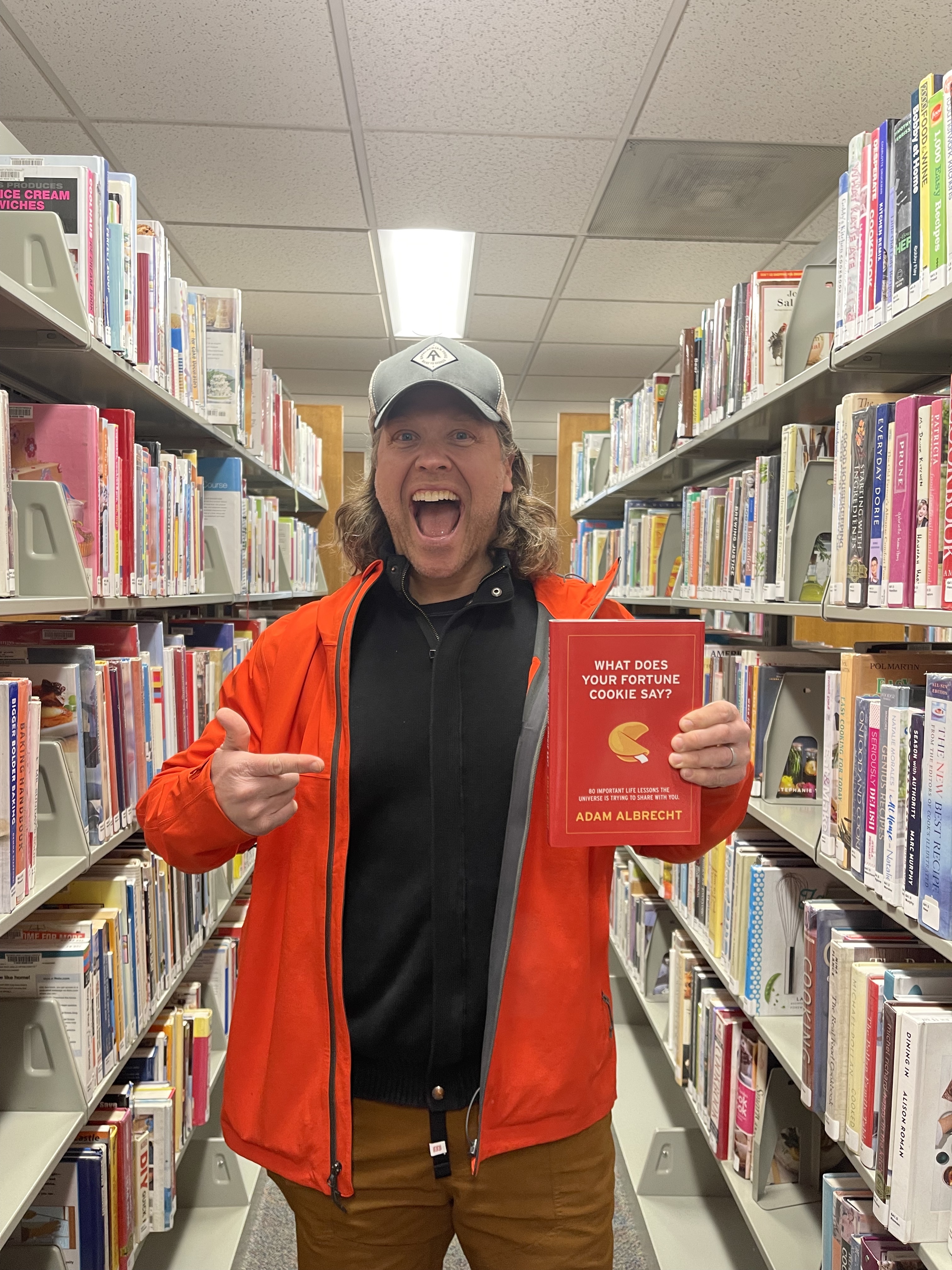
If you have never run out of gas here’s why you should.

Have you ever run out of gas? I have. I did it on purpose.

I was in my early 20s and home from college for the summer in Vermont. It seemed like knowing how far your car could go on empty was a valuable life lesson. Did E Really Mean E? Or was the needle on the fuel gauge of my 1982 Ford Escort just the little needle who cried E? Inquiring minds want to know.

On a warm June morning, I planned my knowledge-seeking pilgrimage. I called a friend and told him that I expected to run out of gas somewhere along my route that morning. I gave him a specific time to come look for me. And to bring some fuel.

Then I left my parents’ house and drove down a quiet country road in Vermont. And if you have ever been to Vermont you know that a quiet country road in Vermont is a redundant statement. Or maybe a redundant redundant statement.

About 5-miles into my trip, I ran out of gas and rolled to a stop on the side of the road. Minutes later my friend arrived with some spare gas. I gave the car 1 gallon of petro from the classically red gas can. I fired the car back up, and drove it to the nearest gas station a mile or so down the road and filled the tank with 12 gallons of gas.

How Low Can You Go?

As I climbed back into my car, not only was my tank full of gas, my brain was full of new knowledge. I now knew how far my car could go on empty. I knew what my car did after it drank its last drops. I knew that a good backup plan minimized the impact of running out of gas. And I knew how far I could safely push things in the future. Or as Salt N’ Peppa said, I now knew I could push it real good.

I have applied this same limit-seeking approach to other areas of my life. Because I want to find my real limits. Not for limit’s sake. But so that I know what the possibilities are. I want to know how far I can really push myself before I can’t go any farther. Most people never do this. But we all should.

Key Takeaway

Explore your outer bounds. You should know where the real limitations are. Know when your car will really run out of gas. But also know your real limits are for strength, work, endurance, and pain. Find the edge. It is the only way to know how much you are truly capable of. It’s more than you think.

*If you know someone who could benefit from this message please share it with them.

+ For more of the best life lessons I’ve learned, check out my new book What Does Your Fortune Cookie Say? from Ripples Media.

10 things I have learned from writing 700 blog posts.

Back in the fall of 2015, I knew I was going to launch my own business. It was such an exciting adventure that I decided to document it by starting a blog. But like so many big ideas (and Band-Aids on freshly washed hands), I didn’t know if this blogging thing would stick.

Well, it stuck.

Today I am proud to say I have published 700 blog posts. I don’t know many people in the 700 Club, besides Pat Robertson and Jim Bakker. The whole point of the blog was to share what I have learned. But through the process of writing this blog, I have learned a lot too.

My Learnings From Writing 700 Blog Posts.

I do this a lot.
  1. To do something big simply start with something small. The 700th post is not really that important. The most important one was the first post. Just like an estate begins with a single dollar put away, you need that first post, or first step, most of all. If you have a goal (of course you have a frick’n goal!) take the first step!

2. I found my writing voice. I started my career in advertising as a copywriter. So I wrote a lot. But I wrote in the voice of the brands I worked on. Writing this blog has allowed me to dial into my own writing voice. Most people who know me would say my writing voice is exactly like my speaking voice. (I am one of those people.) I simply write this blog the way I think and the way I talk. That’s my style. Once you find your style, writing becomes easier. It just flows out of you. Like pee.

2.5 You can write anything you want in your own blog. (See the last 2 words of the last paragraph.)

I started the blog when I started my business. Both have grown into healthy adults.

3. Develop your good habits. I never think about whether I am going to write in the morning. It’s totally automatic. Like that Pointer Sisters song. Writing is a strong habit for me. Sunday through Thursday morning I am in my office writing by 6:10 am. I write until 7 or 8 am. On Friday and Saturday mornings, I write, read or exercise. Studies show that it takes an average of 66 times to create a habit. Then you don’t think about it anymore. You just do. Today I just do. Like Whitney Houston in So Emotional.

4. A blog lets you take control. The world is full of gatekeepers who are trying to keep you out. They are trying to not let you in up in da club you’d like to be in. I prefer to make my own club. I love musicians who put their music on YouTube. Artists who put their work on Etsy. And Dancers who show off on TikTok. Blogs let writers show off what they can do without anyone else getting a veto vote. The most beautiful thing about technology today is that it empowers you to create and share. So, create and share any way you can.

5. You can be read around the world. I publish my blog on WordPress. This platform is read all over the planet. Today, my writings have been read in over 120 different countries. That’s pretty crazy. This past Valentine’s Day I wasn’t scheduled to publish anything. I was just going to enjoy being in love. But I had an idea on my drive to work. So as soon as I got to work I sat down and hammered out that additional idea and posted it right away. Within 2 hours that idea I had on my commute had been read in 30 countries. That’s wild. That’s WordPress. (That should be their new tagline.) (No it shouldn’t.)

A circle of my people.

6. It’s not about who you know. Before starting my blog and launching The Weaponry, my advertising and idea agency, I read The Little Black Book of Connections by Jeffery Gitomer. In his book, he writes, ‘It’s not who you know. It’s who knows you.’ I took that to heart. By writing this blog I have been able to reach and connect with far more people than I could have met on my own. This has brought opportunities my way that I never would have had without the blog. That compounds over time. Like Compound W.

7. I think differently now. I have always been a creative thinker. I have always had a lot of ideas. But by writing a blog and needing to have new ideas to share 3 days a week you begin finding ideas everywhere. When I was a kid Tootsie Roll had a commercial with a jingle that said, “Everything I think I see become a Tootsie Roll to me.’ And the kid in the commercial saw Tootsie Roll-shaped things everywhere. Now, I am like that kid. Except, instead of seeing Tootsie Rolls I see business lessons, creative lessons, marketing lessons, and the ever-popular life lessons, everywhere. My finder is finely tuned to detecting lessons because of the blog. That has been one of the greatest gifts of writing this thang.

8. The Blog Was a Gateway Drug. I didn’t know it in the beginning, but the blog was just the start of something bigger. Eventually, all that writing built into more. I have now published a book, and have more books in the works. I don’t know how far this will go. I guess we’ll find out together.

The first time I held my own book. I didn’t know yet not to cover up my name.

9. Getting Paid To Write. All the blogging I do is free to read. I have never made any money directly from any of my blog posts. But people who read the blog encouraged me to write a book. So I did. And while writing a 50,000-word book is more challenging than writing a 500-word blog post, it is a natural extension of what I have been doing for 6 years. Three months ago I published my first book titled What Does Your Fortune Cookie Say? with Ripples Media. Now I get paid a royalty every time someone buys a book. Which is exciting. Because it demonstrates that I am providing others with value through my writing. Which is rewarding in multiple ways.
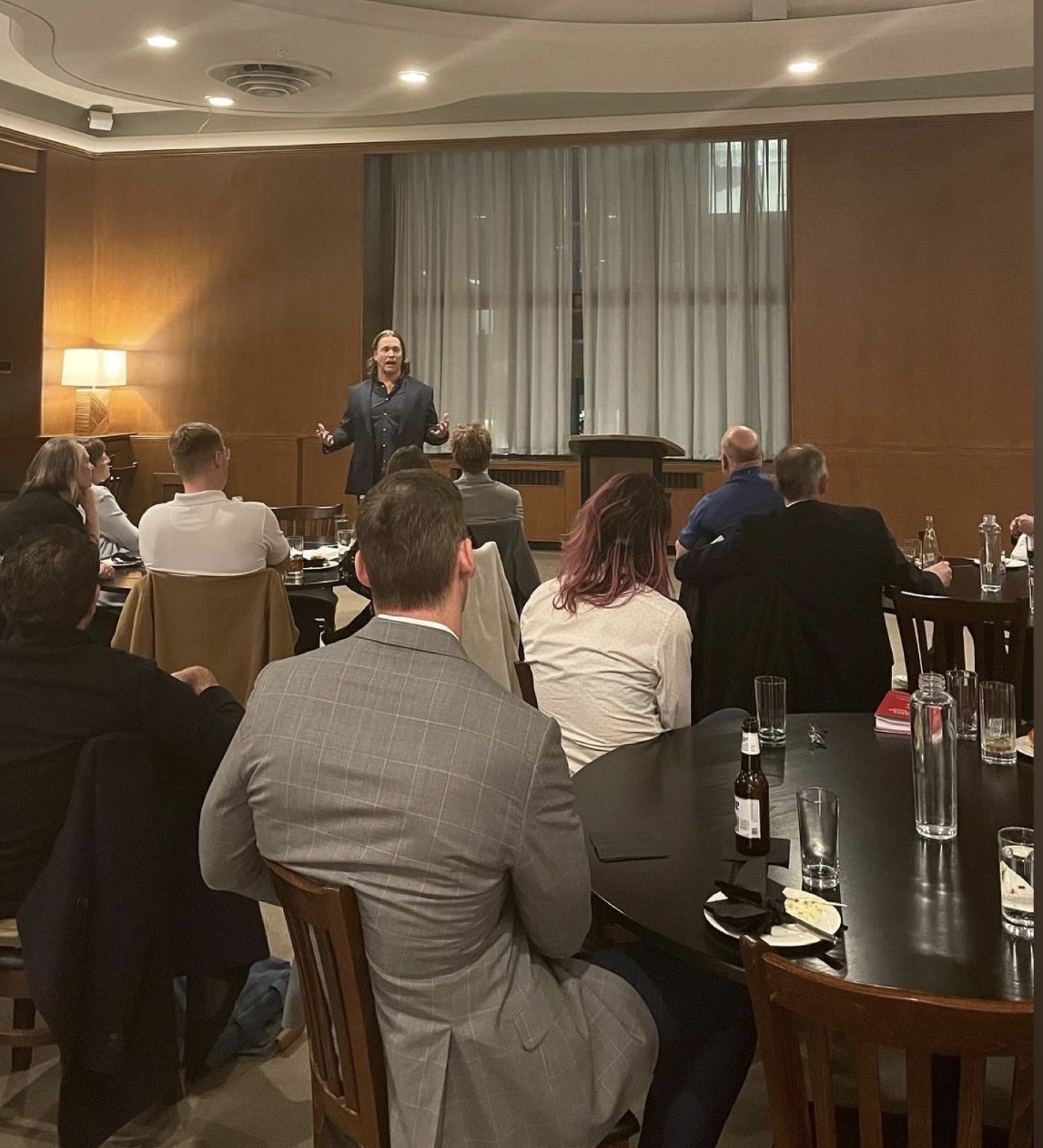
Me at a recent book talk at the Milwaukee Athletic Club.

10. Getting Paid to Speak Throughout my career I have spoken to many different groups. But since writing my book the opportunities have mushroomed. Despite having written 700 blog posts, it was the next step of writing a book that has made people seek me out for speaking engagements. Today I have paid speaking engagements lined up into August and September. By paid engagements, I mean that I am either being paid directly to speak, or the organization I am speaking to is buying books for attendees, or some combination of the two. The key learning here is that I wouldn’t have these opportunities through blogging alone. But I wouldn’t have written the book if it weren’t for the blog. Which means that first, you have to get started. Then you have to keep pushing yourself to the next level for greater rewards.

Key Takeaway

A journey of 1000 miles begins with a single step. And to get to 700 blog posts you have to first write one. But if you create a good habit it will compound over time, leading to bigger and better results and open doors to new opportunities. I don’t know where all of this will lead. But I am certainly glad I started 6 years ago. I encourage you to start that thing you have always wanted to do by taking that critical first step. If you have already created a good habit and developed some positive, value-creating work, ask yourself what’s next? Keep challenging yourself to take that next step. And make it worth writing about.

> For more of my lessons on blogging check out these past posts:

What I have learned about blogging after 200 posts.

12 things I’ve learned from writing 300 blog posts.

+To see where all this writing has led check out my new book What Does Your Fortune Cookie Say?

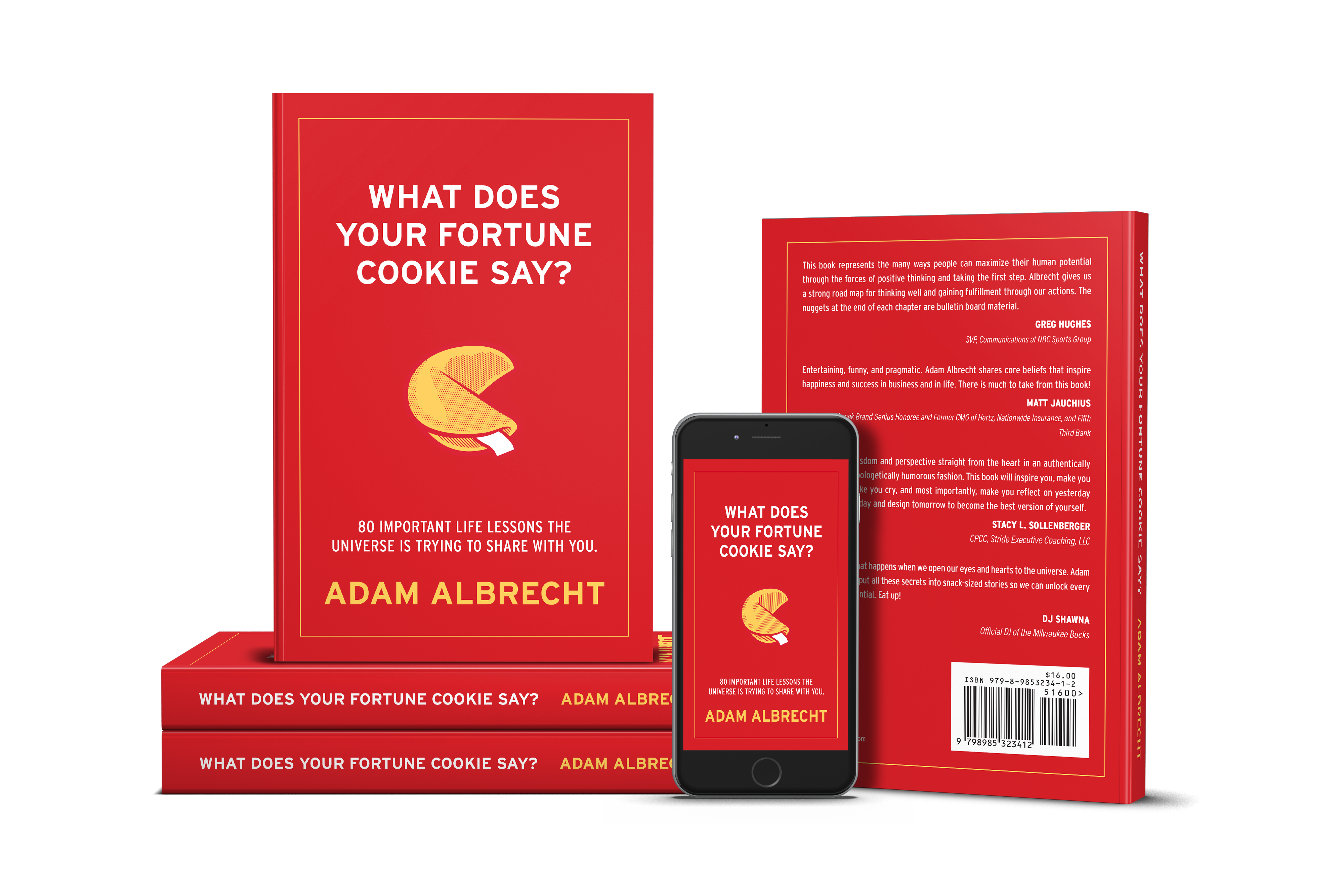
Start with 1 blog post and you just may end up with your own book in 3 formats.