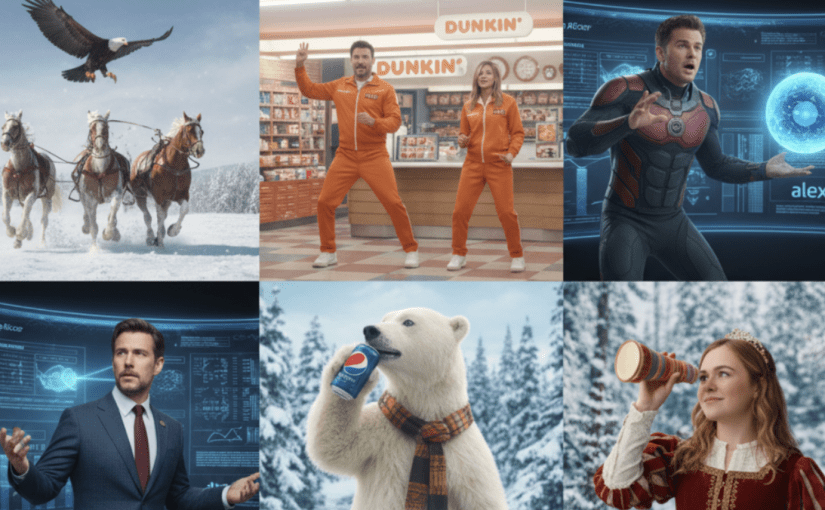
Last week, there was a lot of talk about the Super Bowl commercials. (Partly because the game itself was not worth talking about.) The advertising industry and businessy people spend a lot of time debating the merits of the top spots. After all, the Super Bowl is also the Super Bowl of advertising. (Accept the advertising executives don’t get a Gatorade shower at the end.) (But they should.)
Playing Monday morning Creative Director is a national pastime. But ultimately, advertising and marketing professionals don’t determine which commercials worked the best. The audience does.
Today, a full week after the Super Bowl, is a great time to determine who really created great Super Bowl commercials.
Here’s How.
If you watched the Super Bowl last Sunday, ask yourself the following questions:
1. Which commercials do I still remember? (Remember, member…)
If you still remember them, they get a B.
2. Of those spots I remember, which commercials made me like the brand, product, or service more?
These brands all get an A.
3. Of those commercials, which brands did I buy or use in the past week?
These all get Gold Stars. Those commercials drove purchase, usage, munchage, guzzleage, or telephonery.
Key Takeaway
Ultimately, great commercials create awareness, interest, and appetite. So while it may be fun to have an intellectual debate about commercials immediately following the game, the real impact takes time to measure. Because what really matters is what you remember and how it positively influences your actions, attitudes and purchases.
*If you know someone who could benefit from this message, please share it with them.
The writing and publishing marathons are finite. You complete them and move on. (You should also shower and rehydrate.)
But the promotional marathon only ends when you stop. And when you stop promoting your book your book stops selling.
It’s a good reminder that when you have products or services to sell, you should never stop promoting them. Otherwise, they lose awareness and, in turn, lose value. Because they only have value when people see them, think about them, and value them.
Which means that more exposure leads to greater appreciation. Which leads to preference, desire and demand.
This is how you generate value for your organization.
It’s also how you generate more value for your personal brand.
People have to know you to know your value.
They have to desire what you have in order to give you their money, honey.
If you are unknown, you are also uncompensated.
If your offerings are invisible, they are inconsequential.
If potential customers and clients don’t see you, they won’t see value in you. Unless you sell Invisibility Cloaks. In which case, the opposite is true.
This is why advertising is so valuable.
It’s why trade shows are valuable.
And public relations.
And talking about your offering on social media.
And promotions of all sorts. Even the wacky stuff.
We created The Weaponry to help our clients with all of these activities.
Because the more people who know you, the more they help grow you.
Key Takeaway
Create products worthy of promotion. Offer services that people want. Then talk about them as much as you can. There are always more people who should know about you, your products and your services. You will reap the rewards until the talking stops. Which is why advertising is a never-ending discipline.
*If you know someone who could benefit from this message, please share it with them.
So you know it’s not the cash register code for a sandwich at Arby’s.
Or a pennant and banner industry term for rainbow flag.
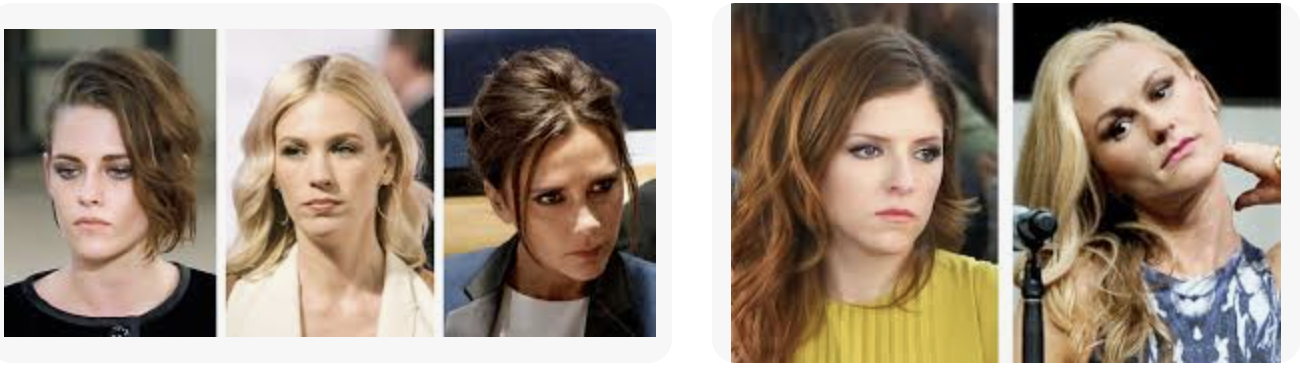
RBF refers to Resting Bitch Face.
It is a default facial expression that makes a person appear unfriendly.
It makes people think you are irritated, annoyed or angry. Even when resting.
And it appears in both women and men. (See Kanye.)
RBF makes people think you are unapproachable
It may be unfair. It may be the furthest thing from the truth.
But if you have RBF, it makes a negative first impression. And it builds a personal brand that works against you.
It sends a message to the people around you that you don’t want to talk.
And Jack White can tell that we aren’t gonna be friends.
Unfortunately, you never get a second chance to make a first impression. (Head and Shoulder’s taught me that.)
But there is another default facial expression that gets far less attention.
And it is far more valuable.
RFF
People with RFF have a friendly default countenance.
It may be a smile.
Or a warmth.
Or kindness.
They look like they would be happy to talk to you.
People with RFF look like they want to be your friend.
Resting Friend Face.
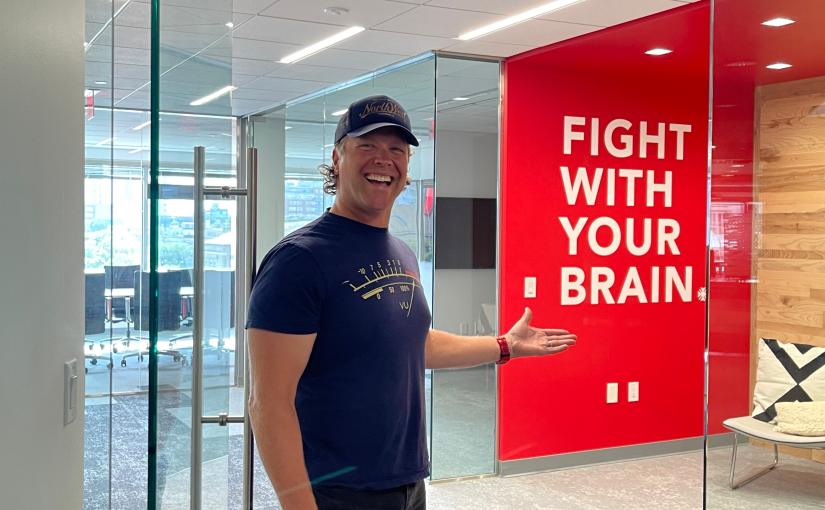
I am talking to this guy in a room full of strangers.
When I was a kid, I lived in 5 different states by the time I started 7th grade. So I learned how to make friends in a room full of strangers. And it always starts by looking for the person with the resting friend face.
Remember when you used to play Red Rover when you were a kid? You would look for the weakest link in the lineup.
Making friends works kinda like that. Only it feels less Lord of The Flies-y
I would ask her for directions.
When you walk into a room full of strangers, you look for someone with RFF as the best person to approach.
They are the person least likely to give you the cold shoulder. And most likely to be interested in having a conversation.
At networking events, people with RFF are approached first.
At a dance, someone with RFF gets invited onto the dance floor first.
At a bar, the person with RFF gets approached. (So be careful if you don’t want to be approached in a bar.)
In business, when the person with RFF walks into a pitch or a sales call, they are immediately likable.
Humans are programed to discern friend from foe.
We do this unconsciously.
Automatically.
It’s coded into our historic software.
That’s why RFF offers an unfair advantage in relationship development.
This guy gets it.
So train yourself to develop your Resting Friend Face.
Smile.
Or Smize.
Train yourself to default to a friendly pose.
Put a pleasant look on your face. It doesn’t have to be toothy.
Uncross your arms.
Put your phone away.
And look like a friend other people would like to have.
Practice in front of a mirror.
Film yourself to find what looks friendly on camera.
See what others see.
That’s a pro RFF!
By developing a RFF you will increase the potential for developing more friendships.
You will develop a better social and professional network.
People will choose to talk to you in a room full of other options. Which will make you feel like Sally Field at the `1985 Academy Awards.
You will be the person others will approach at a trade show, job fair, conference or seminar.
It’s how you get people to approach your booth, table or tent.
You will be the person others will choose to sit next to at a dinner party full of strangers.
And ultimately, you will benefit from attracting more good people into your life.
Key Takeaway
Develop your Resting Friend Face. Practice looking friendly and approachable as a default. You will stand out in a crowd. It will help you grow your brand, your network and the number of great opportunities that come your way.
*If you know someone who could benefit from this message, please share it with them.
Over the 4th of July weekend, I completed a circle tour of Lake Michigan. My wife Dawn, sons Johann and Magnus, and I took 4 and a half days to circumnavigate the lake clockwise, starting in Milwaukee. Which is on the southwestern shore of the Great Lake, 90 miles north of Chicago. But a world away in terms of traffic, cost of living and pizza.
On our adventure, we saw a lot of new things. New cities and towns. New parks and National Lakeshores. We took new ferries and boat tours. We crossed new bridges. We explored new islands. Who knew there was so much new to know?
We also needed to eat, drink and do a little shopping. In the process we found many establishments that were mostly empty and easily accessible.
But we found other establishments with long lines out the door and down the sidewalk.
The places with the long lines still have my attention as I return to work at The Weaponry, the advertising and ideas agency I lead. Because generating long lines of eager customers should be the goal of those who create, run or contribute to successful businesses. And it should be the goal of every brand that offers products or services.
Today, I encourage you to think about creating lines out the door for your offerings. Here are the 6 things that help create long lines that people are happy to stand in.
6 Factors That Create Lines Out The Door.
1. Quality products. Offer products that really work. Things that are well-made and do their jobs well. Products that take care of business will take care of your business. Like Bachman-Turner Overdrive.
2. Great Service: Take care of your customers. Make them feel that their needs and expectations are met, their questions are answered, and their time is respected. Treat them like that boyfriend or girlfriend you really want to keep. But don’t make out with them. Unless that’s part of your service. (I hope it’s not.)
3. Great Value: Make your customers feel like they get more than they paid for. Or more than they would get for the same dollar spent somewhere else. This does not mean your offering is cheap or inexpensive. It means every penny is well worth the investment.
4.Great Experience: You want your customers to feel that the whole experience was interesting, fun, worthwhile, memorable, and story-worthy. It wasn’t just a transaction. There was something more to it. It felt different than other seemingly similar transactions or purchases. It was worth doing again. It was worth telling others about. It was something you are proud to have done. Even if you can’t fully articulate why it was so great. Even if you are a fully articulate human.
5. Scarcity: This means that what you offer isn’t easy to find. There is no easy substitute. It means that people are willing to make additional sacrifices for your offering. They will wait and trade more of their time in order to get what you are offering. They are ok suffering inconveniences like standing in line. Or sitting in a waiting area for their opportunity to enjoy your offering. Because nothing compares to you. Like Sinead O’Connor said.
6.Esteem: Some offerings are so good that they transcend mere preference and become part of what can be considered esteem experiences. This means that you get additional social credit for having experienced the offering.
Examples:
People who saw the play Hamilton in its first year.
Consider these 6 factors when crafting your offers. They will push you to develop things that are beyond compare. Beyond substitute. Things that are rewarding to experience. Things that are hard or impossible to find anywhere else. They lead to offerings that command a higher price and are still worth every penny, Marshall. And they leave customers feeling like you did a great job taking care of them.
It’s a winning recipe. It is how brands thrive. It is how startups become stalwarts. It is how you grow revenue, profits and envy. It is how you create momentum. And competitive advantages. It is how you build a moat around your business. It is how you generate talk value, word of mouth advertising, referrals, 5-star ratings, and repeat customers.
That’s how you create lines out the door.
Key Takeaway
Never settle for good enough. Push for greatness. Continually look for opportunities to improve your offering, your experience, your value and your uniqueness. If others copy you, innovate again. You can’t create advantages or envy with commodity and parody offerings. Your goal should always be to create lines out the door, and be able to charge a premium to your competitors. Better yet, innovate your offering to the point where there are no competitors. There are just customers lined up out the door.
*If you know someone who could benefit from this message, please share it with them.
Advertising is typically thought of as a creative endeavor. More Art Garfunkel than science. But here are 11 simple truths about making great and effective advertising that every marketer, businessperson and communications professional should know. At The Weaponry, these truths drive everything we do. Here they are in a particular order.
11 Truths About Great Advertising.
1.It stems from great strategy: All great advertising and marketing begins with a great strategy. You have to know how you win. You need to know which of your advantages to leverage. You need to know who your audience is. And what they need to hear from you in order to give you their money, their vote, or their blood.
2.It differentiates. Great advertising sets you apart from the crowd. You are no longer a commodity. You are special. Like that little girl from The Help. This is the power we build into strong brands. It makes you irreplaceable. You want to be seen as a special exception. Be the option that sparkles and calls your customer’s name. They have to think, This is the brand that gets me.
3. You haven’t seen or heard it before. Great advertising feels new. It tickles a part of the brain that has never been tickled before. It offers phrases, imagery, design, or attitude that you have never encountered before. Which helps your advertising land in a new place on the perceptual map. Like new art. Or Chipotle. Which is why so many new food concepts are now described as the Chipotle of their cuisine type. You also know that Chipotle has built a strong brand because when people tell you they are going to grab Chipotle, you don’t imagine them grabbing a smoke-dried jalapeno.
4. You have to earn a longer leash to create it. Great advertising often represents a perceived risk. Because it feels different than what you’ve seen from the brand or the category before. Which means that the client-approver needs to trust the creators. The client approvers must trust that the creators have their best interest at heart. They must trust that this is a smart and calculated departure from the past, or from a norm. (Norm!!!) They must trust that you know what you are doing. This type of trust, which I call earning rope, or earning leash, takes time. Sometimes this is earned through a handful of interactions, like during the new business pitch process. Sometimes this is earned over years of working together. But without first earning trust, advertisers are less likely to jump the gap with you. (Which has nothing to do with mugging people at The Gap. Or minding the gap. Or Michael Strahan.)
5. It avoids layers of approval. Great advertising doesn’t get approved by an army of approvers. The more approvers that are involved, the more likely the work gets pushed right back to the center of the expected range from your category. The people who will be approving the great work should all be in the room or on the Zoom when the great work is presented. They should be exposed to the strategic thinking and the insights that birthed the idea. And they should be able to compare the work in question to the other ideas presented and their relative merits. (Not the merits of their relatives.)
6.It can not be evaluated devoid of the strategy. To judge great creative work you need to know the strategy. This is critical. If you don’t know the strategy the work can’t be right and it can’t be wrong. The strategy represents the aim of the work. Without knowing the aim, you can’t know if it hit the target. Armchair quarterbacks don’t know what the insiders know. You have to know the insider information to judge the idea and the execution.
7. A great idea gets better partners than your budget deserves. Creative people love creative ideas. They are more interested in bringing a creative idea to life than making money. Which means they will often slash their rates or even do work for free to be involved in great creative work that they can add to their portfolio, reel, or website. As a result, a great creative idea attracts talent and resources beyond what you can afford. So great ideas often get favorable treatment and privileges that ordinary work does not. In turn, it gets even greater at each step in the process.
8. You have to sweat the details. To make great advertising, you have to start with a great idea. But then you have to pay attention to all of the details throughout the process. You have to set high standards for every aspect of the work, and then be vigilant, and critical, to ensure that every element is done right. The words, colors, imagery, size of everything, performances, sound, casting, announcer, kerning, leading editing, graphics, photography, and retouching all have to be right. A flaw in any of those areas can ruin the whole thing. Like the pea under the mattress, the fly in the soup, or the toothy grin on Mona Lisa.
9. It causes envy. Great work may seem subjective. And in some ways it is. Supreme Court Justice Potter Steward once remarked that hardcore pornography may be hard to define, but “I know it when I see it.’ The same holds true for great advertising. The measure I always use is that it creates envy. When I see great advertising, I wish I had created it. I wish I had it in more portfolio. I wish I could brag about it. In fact, when I am hiring creative talent that is my requirement. The candidate must have work in their portfolio that makes me jealous. That’s what great advertising does. And indeed, great work of any type should create envy. (Side note: Don’t you wonder just how much hardcore porn Justice Steward has seen?)
10. It drives results. Great advertising can’t be great without driving results. Results don’t just mean sales. Because there are other factors that advertising can’t overcome that impact a final sale. But great advertising must drive interest, or engagement, inquiries, calls, store visits, website traffic, leads, votes or whatever it was intended to do. Ultimately, this is the measure that trumps everything else. (That was not a political sentence.) Agencies and marketers alike win when the work works.
11.It makes people look forward to your next idea. Great advertising flips the dynamics in the favor of the advertiser. The audience no longer sees you as an interrupter. They see you as interesting, entertaining, smart, or funny. They see you as adding value to their lives. And when you do that, the world looks forward to what you do next. They want to know what great idea you will share next. Whether it’s your funny Super Bowl commercials, your engaging content, your frame-worthy print ads, your stunning billboards, or your crazy stunts, great advertising means you are no longer interrupting. You are anticipated. You are sought out. This is the ultimate benefit of great advertising. The gatekeeper is keeping an eye out for you. And when you appear, they invite you to cut the line and make your way inside.
Key Takeaway
Great advertising is fundamentally different than technically sound advertising. It is created differently. It is approved differently. It triggers a different and more valuable response from your audience. Great advertising offers tremendous value and creates advantages that help you win your unfair share of the pie. If your advertising is not great, revisit this list to understand why and where it may have gone wrong. Then fix it. You always have the ability to get it right.
*If you know someone who could benefit from this message, please share it with them.
The slow no is the decision that is always going to be no. No matter how much support there is for a yes.
Decision makers will let you explore, research, propose, pile up work towards, and spend a lot of time diddling on things that are always going to finish with a no.
It’s a waste of time, energy, enthusiasm and hope. Like that romantic interest that you know is way out of your league, but they are really nice to you, and you start thinking there is a chance, when there is really no chance there is a chance.
What’s the best way to deal with the slow no?
Cut to the chase.
Ask if this is likely to end in a slow no.
Ask the decision-makers, if all the evidence seems to support a yes, will it still be a no because of politics, budget, bias, distance, favored-competitors, or other factors out of your control.
The slow no is likely to occur when:
You wonder why the decision maker hasn’t made a decision like this before
The cost seems out of line with the budget
It all seems too good to be true (like the whole Lance Armstrong thing)
The action would be out of character for the decision maker
You smell political factors or nepotism at play
They say you are facing 1 in a million odds, and you think they are saying there’s a chance
The decision maker puts the word pro in procrastination
The best thing you can do is hit fast forward and turn that slow no into a fast no. Or a know-now no.
You can also openly rescind your proposal or request.
When your change of heart is met with a shrug, you know it was a slow no.
That puts time back into your account. So you can use it more productively on something else. Or someone else.
Key Takeaway
Don’t lose time on a slow no. Sniff them out. Fast forward them to the final answer. And use your time on something more valuable.
*If you know someone who could benefit from this message, please share it with them.
I recently experienced a suspicious outreach. That happens when someone you don’t know very well or haven’t spoken to in a long time reaches out, suddenly eager to talk. Typically this means they are newly unemployed, have something they want to sell you, or a judge has asked them to let you know there is a sex offender in your neighborhood.
This person who contacted me and I have never met in person. He initially reached out to me a few years ago, but after his original introduction, there was never any maintenance to the relationship. In fact, he acknowledged his deadbeatness in his outreach. But suddenly he was eager to talk. Like a close-lipped criminal after being granted legal immunity. I could tell from the note that whatever he was selling at his Tupperware Party would be far more valuable to him than to me.
I don’t mind hearing about what you have going on or what you are trying to sell. But I am much more interested in talking about it if we have spent time talking about other things first.
A Rule of Thumb
Don’t meet and sell on the same day. Don’t do it on the second interaction either. Instead, create a base for your relationship before you develop your base for sales. As a good rule of thumb, meet, email, or call 3 times before you start asking for a transaction. Better yet, provide value to the other person first. Find an article or book they should read. Connect them with another person they should meet. Let them know if they have spinach in their teeth. You know, be helpful.
People don’t like to be sold, but they love to buy. Give others a chance to approach you about your offering first. If you develop a real relationship, and they are a good candidate for your offering, there is a good chance they will bring it up first if you just give them a chance.
Key Takeaway
Develop relationships first. Add value first. Once a good relationship is established the sale, donation or vote may come without an ask.
*If you know someone who could benefit from this message, please share it with them.
Last week I had a work trip to Columbus. People will often refer to the city as Columbus, Ohio. But because C-Bus is the 14th largest city in the U.S., I go first name only. Like LeBron. Or Covid.
On my flight back to Milwaukee I sat next to a real Yinzer from Pittsburgh named Nicole. (She was actually wearing a Yinzer t-shirt. That’s representing!)
Nicole Bakewell is an engineer and was traveling to Milwaukee for work, to meet with a client about some robotic warehouse improvements. That’s some cool stuff, Mrs. Roboto!
Nicole asked me what I did for work. I told her I led the advertising and ideas agency The Weaponry. Then she asked what I was doing in Columbus. Which was a fun question to be asked. Because I had a story.
I asked Nicole if she had heard of the new bar in Pittsburgh called Pins Mechanical. She replied, “I love that place!’
I continued, ‘Well, I am also an author, and wrote a book. (Which is required to be called an author.) And I was invited to be the keynote speaker at Pins Mechanical’s parent company’s annual meeting.’
She said that sounded cool. Then she asked what my book was about. But instead of telling her about it I pulled a copy of What Does Your Fortune Cookie Say? out of my backpack and handed it to her to see for herself.
She read the front and back covers. She said she thought it sounded really interesting. So I flipped the book open to chapter 12 and invited her to read that 4-page chapter, titled, Never Give Up.
A few minutes later she finished the chapter, turned to me, and said, ‘Wow, I feel really inspired!’ Can I buy this on Amazon? I said yes. But I can share a payment link to buy the copy in your hands right now.
She said, let’s do that!
She bought the copy and has emailed me that she has been reading and enjoying the book. And Nicole and I are friends now. Which is the real win.
But I also enjoyed the opportunity to share my book with her. I loved that I was able to serve up a small taste test of the book. One chapter. 4 pages. Make or break. Thumbs up or thumbs down. Win or lose. And 4 pages in, Nicole told me she felt inspired. That was extremely rewarding. Thanks for the feedback, Nicole.
Key Takeaway
When creating a product or service, make sure you create something so great that it performs well when sampled. If so, you have a winner. And you will sell as much of your offering as you can get people to try. If not, go back to the lab again and keep working until your taste test wins every time.
*If you know someone who could benefit from this message, please share it with them.
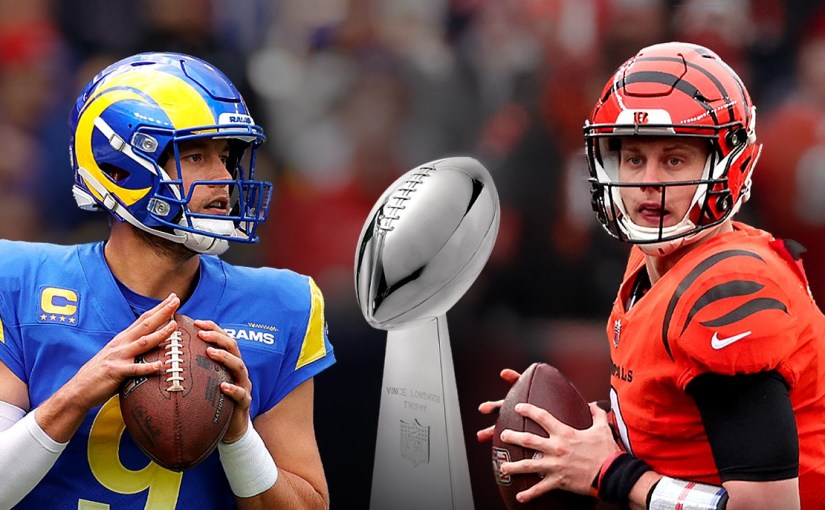
Welcome to Super Bowl Sunday! For American advertisers, this is the biggest opportunity of the year. Because Super Bowl viewers make up the biggest American audience advertisers can reach at one time without a white Ford Bronco.
Messages need eyeballs and earballs to be received. More receptors and detectors mean that your message can have a bigger impact, more influence, generate more demand, create more persuasion and generate more revenue. It’s all you need to know to understand the popularity of the lip-sync platform Tik Tok.
The cost of running a Super Bowl commercial is super high. Because a commercial that airs during the Super Bowl has super potential to generate sales. Like an army of Mary Kay saleswomen in pink Cadillac’s invading the suburbs.
Remember, it’s not about who you know. It’s who knows you. Your idea, brand, product, service, movement, cause, or candidate’s success is limited by the number of people who are aware you even exist.
Key Takeaway
The shortcut to marking success is to get yourself in front of the biggest audience you can find. It’s ok to start small, but don’t think small. Keep ratcheting up your reach. Converting your audience will always be a percentage game. The greater the audience the greater the opportunity. Just ask the NFL. Or Kris Jenner.
*If you know someone who could benefit from this message, please share it with them.
Businesses are complex machines. They have lots of moving parts. They need constant attention. They are challenging to maintain, and even more difficult to grow. Which means that if you own or lead a business there are always plenty of reason to grow gray hairs.
6 Things For Business Leaders To Worry About.
Are you growing your business? Businesses are either growing or shrinking. And no one likes shrinkage.
Do you have the people you need? Businesses are simply a group of people running a group of systems. Having the right people is everything.
Are your people delivering what they need to deliver? Even the best people don’t always perform the best without the right direction.
Are your products and services good enough? Are the things you deliver superior? Competitive? Still functional?
Are you heading in the right direction? Industries and opportunities are fluid and constantly changing. Are you moving towards the next great opportunity? Or are you trying to rent people VHS tapes in a Netflix world?
Are you going to be sunk by a global pandemic? Or do you have a plan and reserves to outlast it?
The Cure For Worry
Just as vaccinations stop viruses, antidotes combat poisons, and clothing cures nudity, there is a surefire cure to business worry.
Work.
The best way to combat anything that threatens your business is to get to work.
Work on your business development efforts to make sure you are growing.
Work on your recruiting, training and development to makes sure you have the right people in the right seats on the bus.
Work on your processes to make sure you continuously improve what you deliver and how you deliver it. Especially if you are a stork.
Work on product development and service refinement to dial into what the market wants next and is willing to pay a premium for.
Work on your strategy and plan to make sure you are ready to take advantage of the next great opportunities. And make sure you are protecting your business against the negative impact of external factors.
Key Takeaway
The best cure for worry is to do something to avoid, minimize or fix the problem that concerns you. By putting in the work you take control of a situation, instead of letting it take control of you.
*If you know someone that could benefit from this message, please share it with them.











 Adam Albrecht Blog