The writing and publishing marathons are finite. You complete them and move on. (You should also shower and rehydrate.)
But the promotional marathon only ends when you stop. And when you stop promoting your book your book stops selling.
It’s a good reminder that when you have products or services to sell, you should never stop promoting them. Otherwise, they lose awareness and, in turn, lose value. Because they only have value when people see them, think about them, and value them.
Which means that more exposure leads to greater appreciation. Which leads to preference, desire and demand.
This is how you generate value for your organization.
It’s also how you generate more value for your personal brand.
People have to know you to know your value.
They have to desire what you have in order to give you their money, honey.
If you are unknown, you are also uncompensated.
If your offerings are invisible, they are inconsequential.
If potential customers and clients don’t see you, they won’t see value in you. Unless you sell Invisibility Cloaks. In which case, the opposite is true.
This is why advertising is so valuable.
It’s why trade shows are valuable.
And public relations.
And talking about your offering on social media.
And promotions of all sorts. Even the wacky stuff.
We created The Weaponry to help our clients with all of these activities.
Because the more people who know you, the more they help grow you.
Key Takeaway
Create products worthy of promotion. Offer services that people want. Then talk about them as much as you can. There are always more people who should know about you, your products and your services. You will reap the rewards until the talking stops. Which is why advertising is a never-ending discipline.
*If you know someone who could benefit from this message, please share it with them.
10 years ago, in the fall of 2015, when Donald Trump was still best known as the star of The Apprentice, I began publishing the Adam Albrecht Blog.
I had just read a book by Jeffrey Gitomer called Little Black Book of Connections, where Gitomer wrote about the importance of having a platform to broadcast your ideas. By doing so, you can share your experience and perspective with many people at once. Which is a far more effective and efficient way of connecting and staying in touch with people than communicating one-on-one. Like Hall & Oates.
At the time, I was planning the launch of The Weaponry, the advertising and ideas agency I have led for the past 9.5 years. I had already dabbled with 6 different blog attempts at that point. In each case, I stopped writing almost as quickly as I started. I simply didn’t have the motivation or the habit to keep them going.
But The Adam Albrecht Blog stuck. Like bubble gum in hair. I spend as much time writing each week as I do eating food or exercising. I spend as much time writing as I do commuting to and from work each week.
All this writing has changed my life. The blogging has led to writing books, which have led to amazing speaking opportunities all over the country. (I would also be happy to speak in any of the other 135 countries where my blog has been read.)
The writing keeps my thinking sharp, like aged cheddar. It creates something of value to contribute to the world 2-3 times each week. Remember, your value to others is directly related to your contribution.
Additionally, because I share all of this writing on broadly visited platforms, I am often top of mind when other people have relevant opportunities. Which means I get more than my fair share of great opportunities. Which is the whole point of advertising.
The Math
This is my 1,100th blog post. It’s a crazy big number to think about. But it’s a simple example of small, consistent efforts compounding over time. 1,100 published blog posts over 10 years equals 110 posts per year. That means, on average, I have published a new blog post every 3.3 days. Or 2 blog posts per week, consistently for 10 years.
If all this math talk sounds like the teacher from Charlie Brown to you, just know that I have written a lot over the past decade. And while I have shared a pile of ideas, lessons and insights with the blog-accessing world, the person who has learned the most through this process is me. Because if you don’t learn a great deal from writing that much, you probably aren’t all that smart to begin with.
11 things I have learned from publishing 1,100 blog posts.
You can’t get to 1,100 without the first step.
1. Get started.
While a journey of 1000 miles begins with a single step, a blog of 1100 stories begins with a single post. I started with a post titled The Perfect Agency Project, which I published on November 9th, 2015. (That was also the name of the blog for the first few years.) Two days later, I followed up with a post titled The perfect agency could be like the DMV. On November 17th, 2015, I published the seminal work, The A-holes Rule. And I was off and writing.
Those first 3 posts gave me a taste for what could be. Just like Neil Armstrong said, it was the first small step that mattered most. If you want to create a blog, podcast, YouTube channel, newsletter, column or any other knowledge share, don’t overthink it. Just get started. That is the pass/fail of any undertaking. Action is the best teacher. You can figure out the rest as you go. Need more help here? Try reading Why you should be an Imperfectionist, like me.
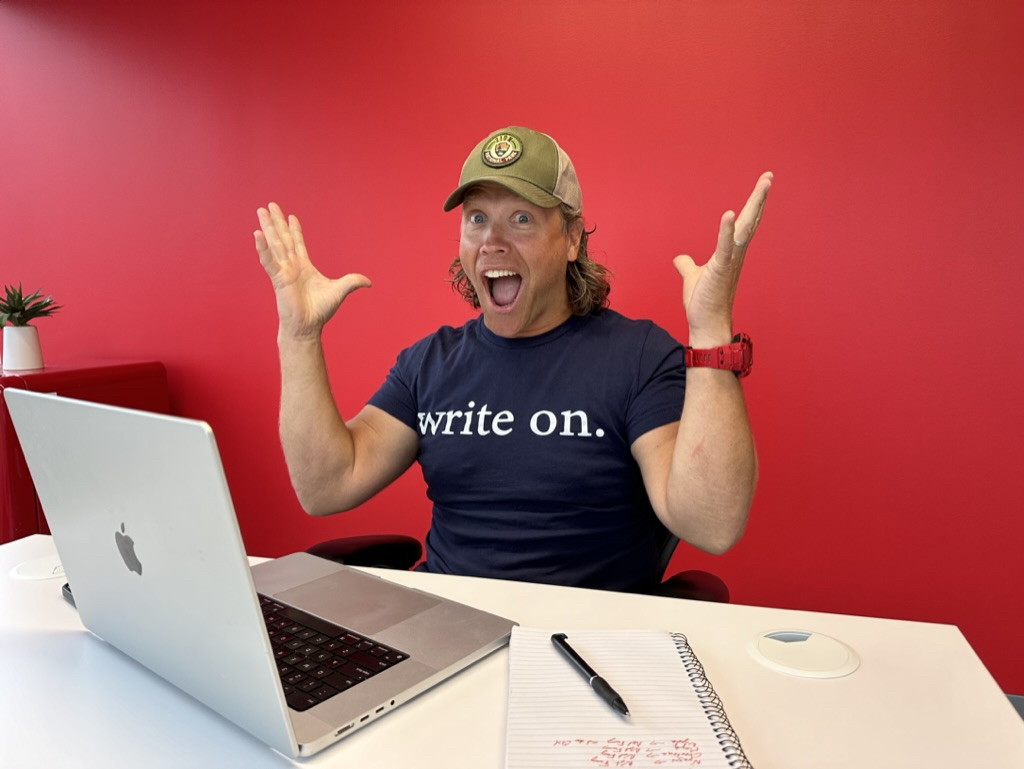
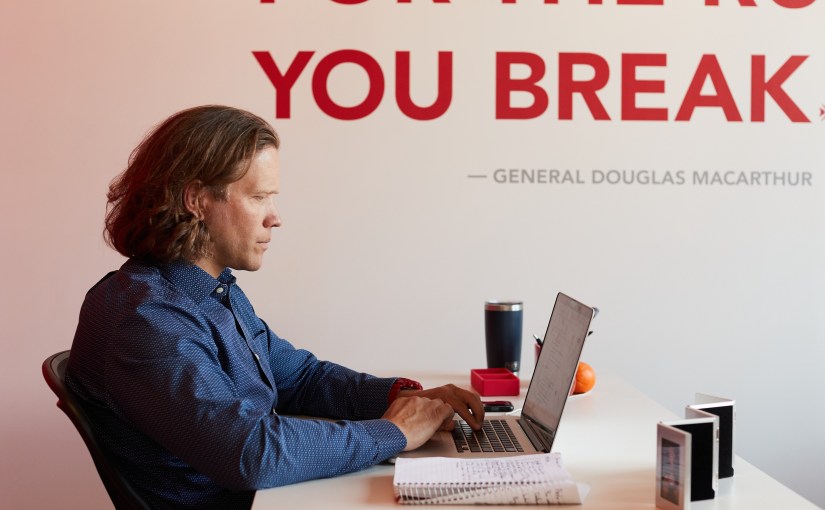
This is my blogging in-action shot.
2. Write About Things You Really Care About.
This makes all the difference. Don’t just write about things you think you should write about. Choose things you really care about, and really think about. It will mean you have a deep well of inspiration. I write regularly about advertising, entrepreneurship, business, creativity, and self-improvement and human relationships.
Unlike a magazine, newspaper or professional blog, the beautiful thing about a personal blog is that you don’t have anyone telling you what you can and can’t write about. I have developed a rule not to complain in my blog posts. But other than that, anything goes. Including these random posts about the fly that landed in my ranch dressing and a strange encounter I had at my local Piggly Wiggly.
3. Create A Strong Writing Habit.
I quickly realized that the best time for me to write is first thing in the morning. I wake up at 6 am and write for an hour, Sunday through Thursday. I don’t think about it. I just do it, automatically. Like Nike.
My writing habit was created in the first year, and it made everything easier. Find a time that works for you every day, or every weekday, or every weekend day, and make it happen. Then watch the production pour in. As Will Durant (not Aristotle) wrote, “We are what we repeatedly do. Excellence, then, is not an act, but a habit.” If you consistently write, you are a writer. And as Matthew McConaughey said, “All write, all write, all write!”
4. Don’t Worry About Readership.
I would love it if every blog post was read by millions of people. But I learned early on that even when you write really good posts on really important topics, you never know what is going to be read and what won’t. You’re blog relies on a series of algorithms to get in front of people. Whether you are posting it on WordPress, sharing on Facebook, LinkedIn, Medium or other platforms, the algorithms play gatekeeper. So write to positively impact just one person, and you have created real value. I also learned that it is valuable to create your own newsletter so that you control the channel. So write good posts that offer value. That is all you should ever care about. Well, that and human rights.
I’ve never heard this guy sing, but I can tell he has a distinct voice. Or he couldn’t rock that hat.
5. Create Your Own Voice.
I have discovered that my favorite writing style mirrors my speaking style. So I write the way I talk. Which is full of random asides and pop culture references. Because that’s the way my mental machine works.
But I have also landed on a recipe that creates a distinct flavor for my writing. I want everyone who reads my work to learn a little, laugh a little and lift a little. Which means my writings should be educational, humorous and optimistic. Most non-fiction writing is educational. It’s the addition of humor and optimism that makes my writings more Rocky Road than vanilla. Find your own flavor. Blogging is great for helping you find it. Just keep writing and experimenting until you find a style that suits you. Like a business suit, jumpsuit or birthday suit.
6.Start A Draft Whenever You Have An Idea.
Inspiration for posts can come from anywhere. When inspiration strikes, write the basic idea into a quick draft on your phone, computer or notebook. I currently have hundreds of unpublished drafts. In fact, my blog is so drafty I am regularly served ads for weather-stripping. Your ideas are likely to disappear if you don’t write them down. Having several drafts started gives you plenty of options to work with on days when you are less inspired to write something new.
7. Posting Brings Good Things.
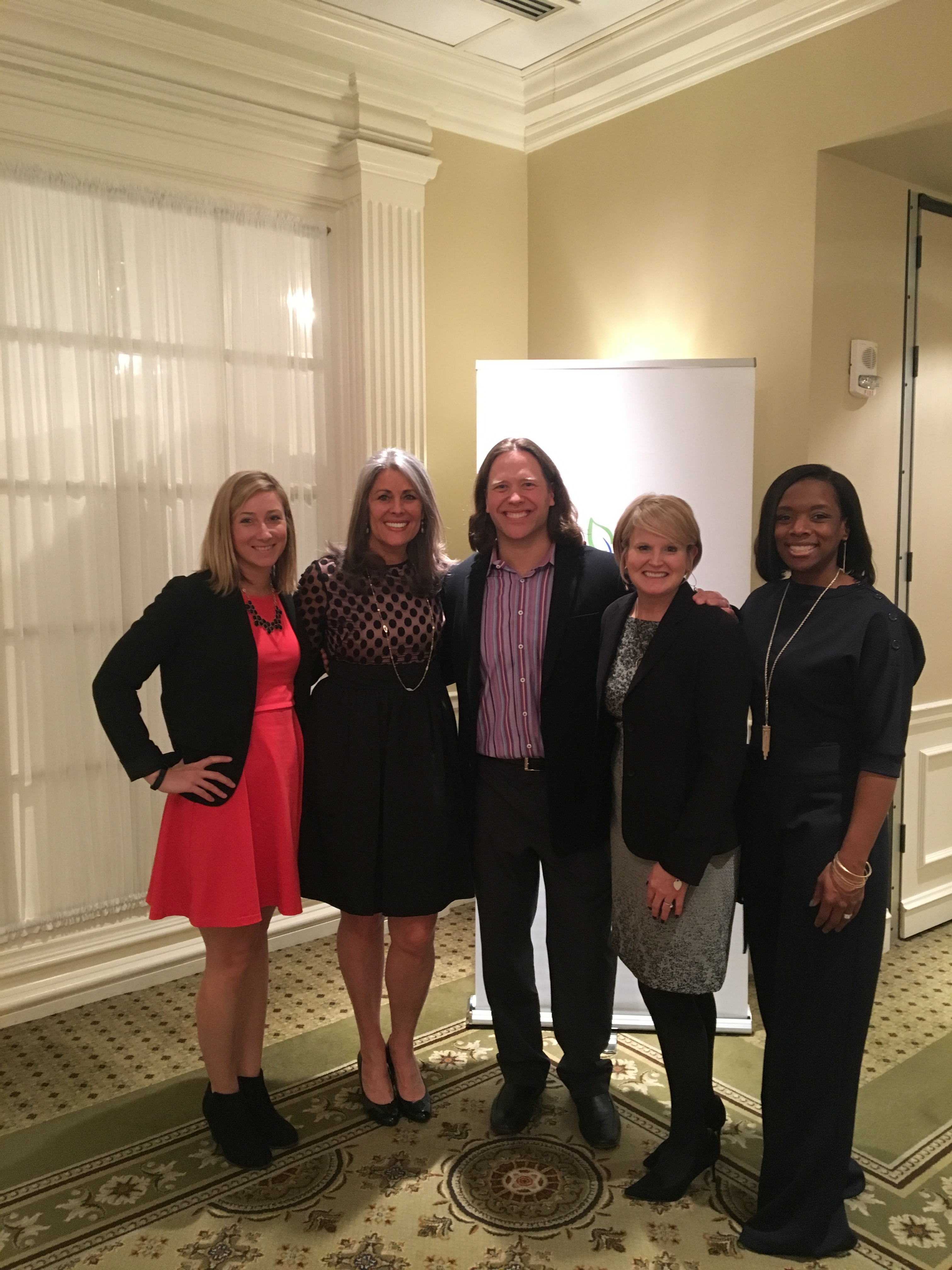
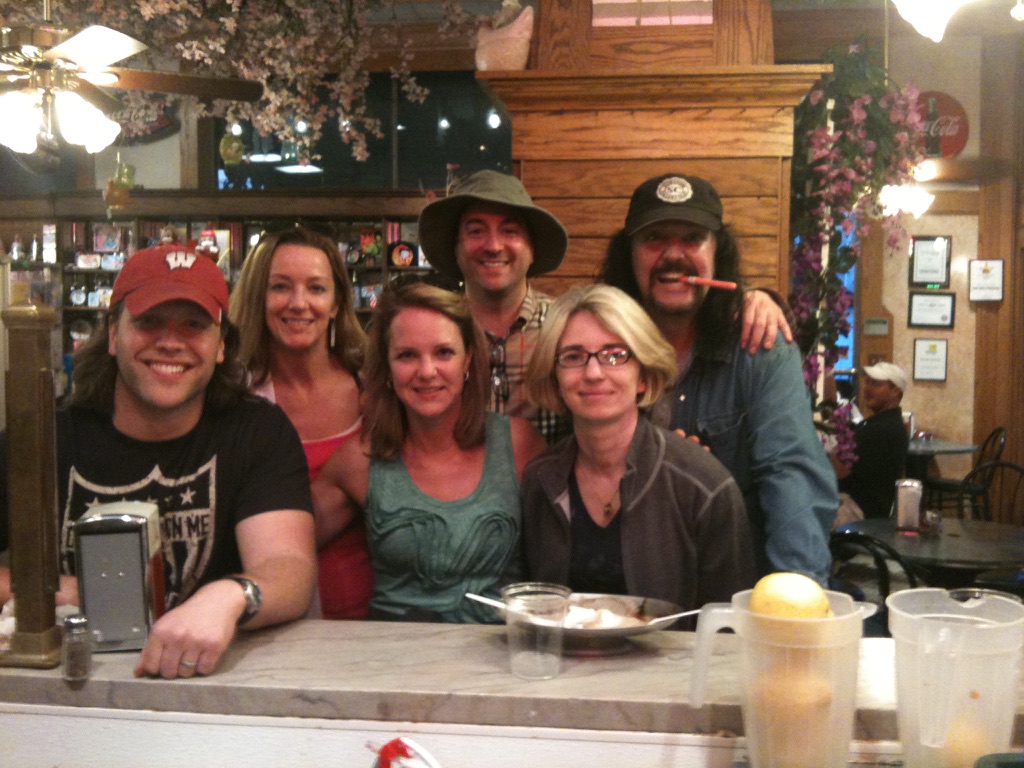
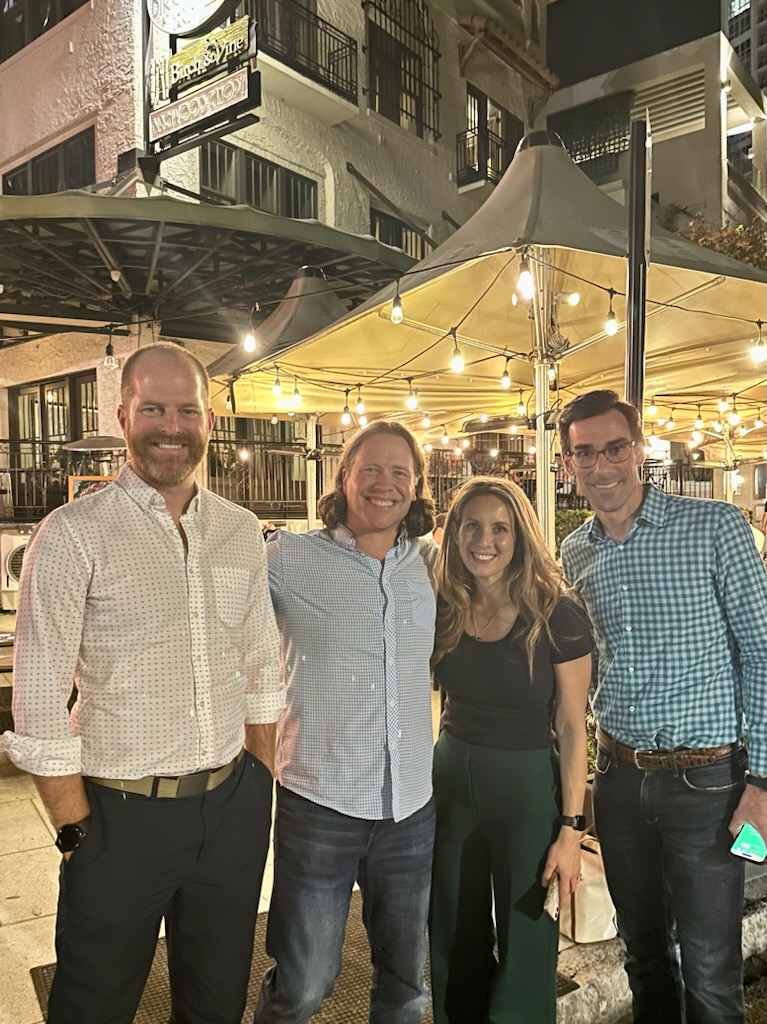
Every time I publish a post something good happens. I get an opportunity or an introduction. I hear from a friend or family member. Or I get a kind, thankful or supportive comment from a reader. And sometimes, I get asked to emcee a charitable luncheon by my friend Stacy Sollenberger (second from right), where I meet a future employee who helps bring great new opportunities to The Weaponry. Or my friend Tim McKercher forwards a post to Vanilla Ice, who tweets the post out to the world. You know, that kinda stuff.
8. There Is Always Something To Fix.
When I look back at my published posts I feel like Michael Jackson looking at his face. Because there is always something I want to change. Always. I would add another example, smooth a transition, insert another joke. (Or take out a joke I would no longer make.) But the blog posts must get published. Published is better than perfect. It’s a blog. Not a book. You get a round of writing. A round of improving. And then you have to push that post out of the nest to fly or flop.
9. The Real Impact Is Not Measured In Views, Follows, Likes Or Comments.
Let me address measurement one more time. After having published 1,100 posts, I am certain that you can not measure the impact of a blog in views, followers, likes or comments. The true impact of a blog is in how it impacts a life. It is in how the story, insights, information, motivation or inspiration you share improve the lives of your readers.
Blog posts are meant to help in some way. That help is not measured in likes and comments. It is measured in things like confidence, reassurance, life lessons learned, successful actions taken, and opportunities seized. Never lose sight of this. The real impact of your blog may not be recognized for years, or even decades. Be patient. And just keep writing.
10. The Blogger Learns More Than The Reader.
When I first began writing my blog I expected to teach others a bit about the things I write about. But I learn more than anyone else. Regular writing forces a lot of self reflection, and analysis. You start viewing everything in life as lessons and insights worth sharing. The writing and editing process teaches you to clarify and refine your thinking. You draw scores of new connections and aha’s along the way. #takeonme So regardless of whether or not anyone ever reads your writings, you will profit from the writing itself.
11. You Can Create A Massive Library Of Knowledge.
My regular blogging habit over the past decade has resulted in an estimated 550,000 words published. That is the equivalent of 11 full-sized, 50,000 word books. That means I have written a shelf worth of books for your home library. It is my contribution to the compounding pile of human knowledge. And it would take you a long time to read it all. The quantity of information, insights and experiences I have shared is almost beyond my own comprehension. But, like Sonny Bono, I am glad I have shared so much. It has provided as least one more perspective for others to consider as they navigate their own adventure.
Key Takeaway
Blogging pays off. But it pays off slowly. You have to be patient. And persistent. When you are, the cumulative effect of writing and sharing good work regularly increases your value to others. Which in turn becomes valuable to you in ways that are both monetary and life-i-tary. Blogging keeps your voice and your viewpoint top of mind for others. Which means that you are both recently and relevantly recalled when opportunities surface. It works for me. It can work for you too. And despite all the tips it really comes down to this:
Think, Write, Review, Publish, Repeat.
Thanks for reading. I really appreciate your time.
*If you know someone who could benefit from this message, please share it with them.
The more options you create, the more success you will find.
Comedians know this.
The more jokes you come up with, the more likely you are to have really funny jokes.
To be a raging success, you write lots of jokes. Perform those jokes in front of small crowds. Keep only the ones that work. Toss the rest. Repeat.
If you want more innovation, explore more what-ifs. While it may only take 3 licks to get to the center of a Tootsie Pop, it took Thomas Edison 10,000 attempts to create a light bulb. (And it took Natalie Merchant 10,000 Maniacs to create a hit song.)
The more people you know, the more likely you are to know a person who can help you open the next door, overcome a challenge, or offer you a kidney.
To find your prince or princess, you must kiss a lot of frogs. Or frogettes.
To catch one muskie, studies show you have to cast an average of 3,000 times.
To create a bag of tricks, you need many tricks. (And a bag.)
At The Weaponry, the advertising and ideas agency I lead, one of our hallmarks is that we explore a lot of options.
We explore a wide variety of strategies.
We explore as many creative options as the time and budget allow.
Great advertising doesn’t come from crafting one great headline. And designing one look.
There are often hundreds of headlines explored when creating a single ad. And dozens, if not hundreds, of looks.
It creates a large population of options to choose from. And large populations increase the potential for greatness.
So consider many strategic options.
Consider many, many creative options.
Consider many candidates.
And life partners.
Write a lot of jokes.
Pick only the very best ones.
That’s how you do smart things that set you apart.
Key Takeaway
To be successful, you first have to be productive. Create lots of options. You will both become better and create better by doing more. So drill more holes. That’s how you find the gusher.
*If you know someone who could benefit from this message, please share it with them.
It’s not gazoinkers. Or tootsnickers. Or zwerp. All of which I use as well.
The term I use regularly that others don’t is client friend.
Even Grammarly tells me this is not a thing.
Oh, Grammarly, but it is a thing.
The term client friend is an important addition to my vocabulary, necessary to accurately describe many of the important people in my life.
Client Friend helps me express the duality of my relationship with many of my clients.
The Origin
Early in my career, I realized that I was not accurately representing my relationship with a large swath of people in my orbit by simply referring to them as clients. That was way too transactional, or distant, or businessy.
For me, the client relationship is simply the introductory vehicle to many of my favorite friendships. And the workplace is just the meetup venue for our friending actions.
So for the dictionary entry I propose the following:
Client Friend. /klient frend/ nouny. A friend whom you originally met as a client.
For comparative context, some people have drinking friends or fishing buddies. Other people have friends who they play softball with, or poker, or fantasy football. I have even heard of knitting circle friends. And hunting wives.
I have friends who I do commerce with.
We meet up and talk about their business. We talk about branding, and marketing and advertising. We talk about sales and products and services. We talk about innovation and customer experience, and off-menu creative ideas to enhance their brand image. We talk about competitive pressures, and trends and threats. (Oh My!)
And we love it!
We nerd out on all these things. Because we are gazoinkeers for business, marketing, advertising and creative problem solving.
We also share stories about the fun travel we’ve done together. And film and photo shoots in interesting places. And the great meals we have shared. And all the hilarity that happened along the way. Zwerp!
But we also talk about our families, vacations, hobbies and pets.
I freaking love making new friends. I go gazoinkers for adding new people to my world. Because my clients and I have so much in common, we typically become friends quickly, both because of the work, and beyond the work.
When I began seriously thinking about starting my own advertising and ideas agency back in 2015, a couple of my client friends called me to encourage me to do it. Then I called more client friends to talk about it. I met other client friends at restaurants and talked with them for hours about it. And when I first launched The Weaponry, my very first client was actually my friend, Dan Richards, whom I have known since we were in 7th grade in Hanover, New Hampshire.
Looking back, I can clearly see that it was my client friends who enabled me to start The Weaponry. And it has been client friends who have sustained us for the past 9 years.
We spend something like 100% of our time at work. Which makes the workplace a great place to develop and maintain friendships and deepen relationships with the people you work with. Take advantage of this rich field for meaningful social interactions. (Did I mention I also met my wife, Dawn, at work? I did. And she’s amazing!)
At the end of your career, you won’t care about the awards you won nearly as much as you will value the client friends you won and the work-related relationships you developed. Those client friends are just as good as any other form of friendship. Maybe even better. Because you have so much history and so much to talk about in retirement.
Not everyone has client friends. Instead, you may have customer friends. Or member friends. Or partner friends. Or collaborator friends. Or vendor friends. Or Joey, Chandler, Ross, Monica, Phoebe and Rachel. Collect them all. Enjoy them all. The universe put them in your world so that you can develop a human relationship. We are not just here for business transactions. We are here to engage meaningfully with each other for the greater good of all.
Key Takeaway
Make more client friends. And customer friends. And co-worker friends. And people-you-interact-with-because- of-work friends. Working with your friends makes life more enjoyable. And friending with the people you work with is the ultimate relationship hack. More and better friends lead to a better life. So make friends everywhere you can. Especially at work. And if you want to work with people who want to be your friend, shoot me a text or call me at 614-256-2850, or email me at adam@theweponry.com. I always have room for more friends.
*If you know someone who could benefit from this message, please share it with them.
If there is one defining factor of how the world works today versus any other time in history it is speed.
Today, everything happens faster. Not just Jimmy John’s. And Tinactin.
Communication technology has advanced from mail, to email to Slack and texting. Information arrives instantly.
News can be reported with a tweet, just seconds after it occurs.
You can stream practically anything you want to watch on demand, anytime.
AI has squeezed the gestational period of our research, discovery, query and analysis down to a mere burp.
So Why All The Slow Motion?
Yet, with all of the technology enabling us to move at Lightning McQueen-speed, I am constantly surprised by how slow many organizations move.
Nearly all technological friction has been taken out of our systems, yet human friction is still ubiquitous. K, why is that?
Human decision making, prioritization and hesitation still kill momentum, push deadlines and slow progress to a snail-mail’s pace.
The Weaponry, the advertising and ideas agency I lead, was launched 9 years ago, and the urgency of the social era was baked into our DNA. Because in the social era, opportunities come and go in a flash. In the social era, you must harvest social opportunities during the very short season when the opportunities are ripe. This can be as short as a few seconds, but never longer than a couple of days.
One of the mandates for our organization is to operate with the urgency of social media. Move quickly. Jump on opportunities. Thwart threats quickly. Move faster than other organizations. It was programmed into our genomic code from the start.
When we present timelines in our proposals, we share aggressive timelines, and note that this timeline only works if the client can keep up, and turn approvals around within our reasonable, but not generous, turnaround periods.
Yet as much as we hear about how important the work we do is to our clients’ success and how they want to get it done quickly, organizations can rarely keep up with their own ambitions. They are simply not built for speed and urgency.
While not all windows of opportunity close as quickly as social media does, all opportunities are finite.
When you fail to get your advertising in market in time, you also fail to drive sales during that time. For seasonal businesses, that is revenue lost forever. For non-seasonal businesses, it means your sales slide later in the year or into the next year. When you delay decisions, your overall revenue numbers for the current month, quarter or year are lower than they should be. That’s a loss. And an avoidable one.
My friend and client Bob Monnat, Senior Partner at Mandel Group Inc, shared some insights with me about one of his organization’s best partners. He revealed that they are great partners because they are always pushing them to move faster, to decide quicker, to get the work done so that they can ultimately turn their projects into cash-flowing assets.
Never lose sight of the reason businesses exist. They are created to make money. And time is money. The quicker you move, the more money you are likely to make.
Key Takeaway
Move faster. Today, advanced technology means that the slowest part of the process is the humans who have the most to gain. Slow actions and slow decisions cause wasteful delays. Identify the bottlenecks and pinch points in your process. Then attack them. Address your delays to help move your organization faster so that everyone can enjoy the success of speed. It is today’s competitive advantage.
*If you know someone who could benefit from this message, please share it with them.
I composed my first email message when I was a college student. It was my second or third year of college at the University of Wisconsin. I wrote the email to my parents from the computer lab at college. Because back then, almost no students in my socio-economic subdivision owned their own computers.
I was awestruck by the idea of this new technology. It would allow me to send a written letter to my parents, but without having to find a sheet of paper or an envelope. I wouldn’t have to buy a stamp. Or lick a stamp. I wouldn’t have to find a mailbox. Or lick a mailbox. And I wouldn’t have to wait a week for them to get the letter. They would get it instantaneously! This was some kind of magic from the future. And I couldn’t wait to try it out.
But when I went to write my first high-tech email letter, something went wrong.
I quickly filled the small field provided for the message with my first sentence. Then, as I continued to type, the new words pushed the old words out of the field. It was very confusing. But, hey, this was magic mail. And I was just a regular human. So I figured I wasn’t supposed to fully understand the wizardry.
I stared at the email for a long time, trying to understand what was happening to my message. But finding no good explanation, I eventually poked the send button and sent my magic mail into the ether, hoping it would land as promised inside my parents’ home computer in the woods of Norwich, Vermont.
The next day, when I received a reply email from my parents, I realized what had gone wrong.
I wrote my entire email letter to them in the subject field.
Looking back, it is easy to laugh at that mistake. It is easy to say I was a dufus. Or a doofus. (Both of which are dictionarily acceptable.)
But I find inspiration in this story. Because it serves as a reminder that when you try new things, you will be bad at them. Or at least as bad as you will ever be.
But just because you are bad at things at first doesn’t mean you will be bad at them forever. In fact, the only way to greatness is to travel through badness and mediocrity. It’s like traveling through the wardrobe into Narnia.
My first email experience demonstrates that by trying, experimenting and exploring, you grow and expand your capabilities. You have to be willing to try new things to accomplish new things. You have to be willing to be bad to become good. You have to be willing to make mistakes to make yourself great.
I am now 9 years into leading the advertising and ideas agency, The Weaponry. And I can draw a direct connection from my willingness to try to ride a bike, to my willingness to try to write my first email, to my eagerness to try to launch a startup business. They are all plunges into the unknown. They all involved missteps, mistakes, mistypes, or mispedals.
Here’s The Recipe:
You try.
You mess up.
You learn.
You correct.
You try again.
You improve.
You try again.
You improve again.
And you just keep trying.
Forgive my braggadocio, but today, I am freaking good at writing emails. I can fill in the To, CC, and BCC fields like a boss. I can write a subject that will tell the recipient why they should want to read the email. I can craft a clear, concise, compelling and occasionally comedic message. And I write that whole message in the body section. I can add an attachment. I can change the font size. I have a standard signature that includes my name, title, office location, and website address. My email also lets people know that I wrote a book called, What Does Your Fortune Cookie Say? And that I publish Adam’s Good Newsletter. Which is a newsletter that I send out regularly via email. Boom!
Key Takeaway
Don’t be afraid to try something new because you think you will be bad at it. You will be bad at it. At least as bad as you will ever be. But that is the price you pay to achieve greatness. You have to humble yourself at the beginning of the process. Which helps you appreciate your growth and ultimate success. The learning journey is the life journey. So learn as much as you can. It’s how you create the most rewarding life.
*If you know someone who could benefit from this message, please share it with them. And if you want to show off your email skillz, send me a note at adam@theweaponry.com.
Over the 4th of July weekend, I completed a circle tour of Lake Michigan. My wife Dawn, sons Johann and Magnus, and I took 4 and a half days to circumnavigate the lake clockwise, starting in Milwaukee. Which is on the southwestern shore of the Great Lake, 90 miles north of Chicago. But a world away in terms of traffic, cost of living and pizza.
On our adventure, we saw a lot of new things. New cities and towns. New parks and National Lakeshores. We took new ferries and boat tours. We crossed new bridges. We explored new islands. Who knew there was so much new to know?
We also needed to eat, drink and do a little shopping. In the process we found many establishments that were mostly empty and easily accessible.
But we found other establishments with long lines out the door and down the sidewalk.
The places with the long lines still have my attention as I return to work at The Weaponry, the advertising and ideas agency I lead. Because generating long lines of eager customers should be the goal of those who create, run or contribute to successful businesses. And it should be the goal of every brand that offers products or services.
Today, I encourage you to think about creating lines out the door for your offerings. Here are the 6 things that help create long lines that people are happy to stand in.
6 Factors That Create Lines Out The Door.
1. Quality products. Offer products that really work. Things that are well-made and do their jobs well. Products that take care of business will take care of your business. Like Bachman-Turner Overdrive.
2. Great Service: Take care of your customers. Make them feel that their needs and expectations are met, their questions are answered, and their time is respected. Treat them like that boyfriend or girlfriend you really want to keep. But don’t make out with them. Unless that’s part of your service. (I hope it’s not.)
3. Great Value: Make your customers feel like they get more than they paid for. Or more than they would get for the same dollar spent somewhere else. This does not mean your offering is cheap or inexpensive. It means every penny is well worth the investment.
4.Great Experience: You want your customers to feel that the whole experience was interesting, fun, worthwhile, memorable, and story-worthy. It wasn’t just a transaction. There was something more to it. It felt different than other seemingly similar transactions or purchases. It was worth doing again. It was worth telling others about. It was something you are proud to have done. Even if you can’t fully articulate why it was so great. Even if you are a fully articulate human.
5. Scarcity: This means that what you offer isn’t easy to find. There is no easy substitute. It means that people are willing to make additional sacrifices for your offering. They will wait and trade more of their time in order to get what you are offering. They are ok suffering inconveniences like standing in line. Or sitting in a waiting area for their opportunity to enjoy your offering. Because nothing compares to you. Like Sinead O’Connor said.
6.Esteem: Some offerings are so good that they transcend mere preference and become part of what can be considered esteem experiences. This means that you get additional social credit for having experienced the offering.
Examples:
People who saw the play Hamilton in its first year.
Consider these 6 factors when crafting your offers. They will push you to develop things that are beyond compare. Beyond substitute. Things that are rewarding to experience. Things that are hard or impossible to find anywhere else. They lead to offerings that command a higher price and are still worth every penny, Marshall. And they leave customers feeling like you did a great job taking care of them.
It’s a winning recipe. It is how brands thrive. It is how startups become stalwarts. It is how you grow revenue, profits and envy. It is how you create momentum. And competitive advantages. It is how you build a moat around your business. It is how you generate talk value, word of mouth advertising, referrals, 5-star ratings, and repeat customers.
That’s how you create lines out the door.
Key Takeaway
Never settle for good enough. Push for greatness. Continually look for opportunities to improve your offering, your experience, your value and your uniqueness. If others copy you, innovate again. You can’t create advantages or envy with commodity and parody offerings. Your goal should always be to create lines out the door, and be able to charge a premium to your competitors. Better yet, innovate your offering to the point where there are no competitors. There are just customers lined up out the door.
*If you know someone who could benefit from this message, please share it with them.
I just had another birthday. Which I think is great. But it is easy to not think your birthday is great. When you are happy with your life, family, career, health and finances, birthdays can be enjoyable reminders that you are doing well. Because you are where you thought you would be at your stage of life. And not living in a van down by the river.
However, the opposite is also true. When you reach your birthday, but feel that you are not where you expected to be at your age, it can make you feel like you are behind the pace you set for yourself. And the farther off pace you feel you are, the more likely it is to affect your happiness.
A great exercise to do when you feel off pace is an honest self-evaluation. This helps you identify where you are feeling short of your expectations, which gives you an area to focus on for greater happiness and accomplishment.
The other benefit of the self-evaluation is that it often highlights all the things that are going well in your world. This can help you shift your focus from your shortcomings to your longcomings. (I don’t think I will use that parallel phrasing again.)
Despite the fact that I am feeling good about my life right now, I find the annual self-evaluation valuable. It serves as a reminder of the good in my life. And it highlights areas for growth and improvement and helps me prioritize experiences and actions that I identify as important. Remember, what is important to you is both highly personal and fluid. Like your blood, sweat and tears. So your list can change significantly from year to year. Just like your hairstyle or the style of your fashionable jeans.
So without any more color commentary, here’s Adam’s Annual Self-Evaluation 2025.
Doing Well
I am happy.
I smile a lot (Smiling’s my favorite.)
I am very happy in my marriage.
I have a good relationship with my 3 kids.
I enjoy my work.
I have seen my doctor and my dentist in the past year. (And I play Doctor My Eyes by Jackson Browne as my appointment walkup music.)
My health labs and screenings are all up to date and in the right zones.
I continue to both develop and maintain good relationships .
I seek out a lot of knowledge and self-improvement.
I believe in myself (Someone has to.)
I gather people (Kinda like Noah, but without the ark and the imminent doom.)
I read dozens of books each year.
I talk to my parents regularly.
I believe in my ability to improve.
I exercise regularly.
I feel strong for my advanced age.
I have relatively good endurance. (but not for long boring meetings)
I don’t drink or do drugs. (But I understand why others do. #raisingteenagers)
I have hobbies and activities I enjoy.
I have added to my investments in the past year.
I vote regularly. (Typically for Pedro)
I travel regularly.
The Weaponry is healthy with a great outlook.
My speaking opportunities are exciting.
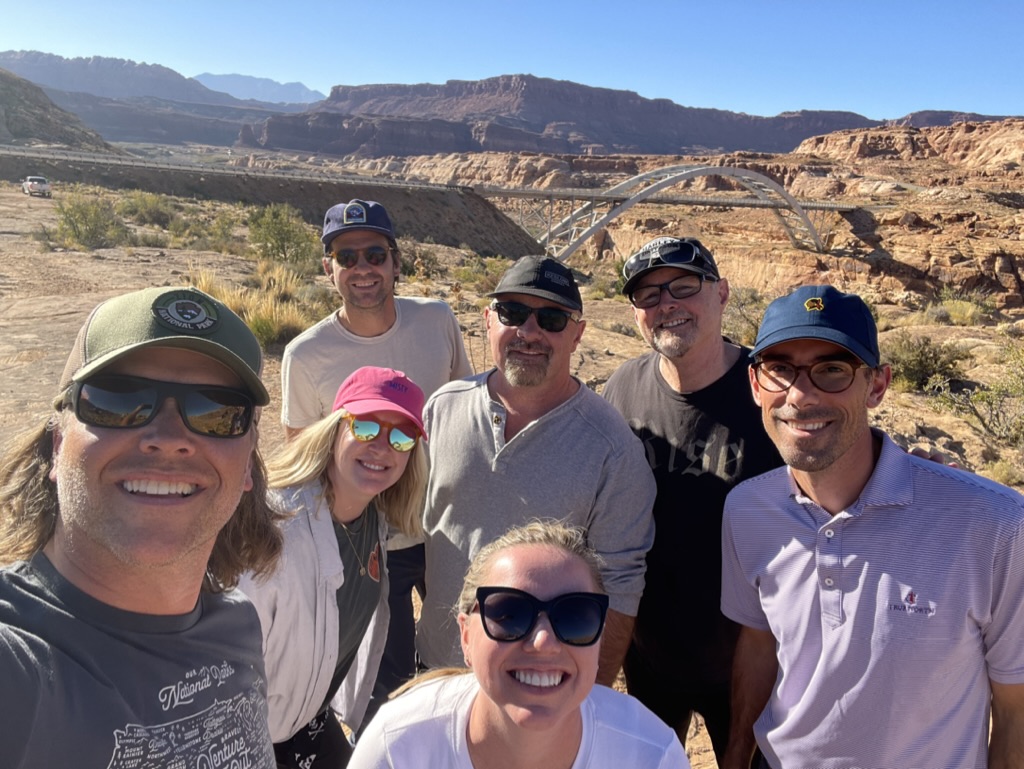
I have prioritized my annual guys trip for several years now, making it a real thing.
I typically get good sleep.
I volunteer a lot of my time.
I am sharing my knowledge with youth.
I think I am pretty good at admitting when I am wrong.
Want To Do Better
Be more patient and tolerant.
Be a better Christian. (And a better Adam.)
Less time on my phone.
Be more present. (Because the present is a present.)
Follow through on all the things I say I will do.
Get better at giving gifts.
I want to drop below my snoring weight. (I’m about 5 pounds over my snore-free weight now.)
Get in better shape (But I still want to be human-shaped.)
Think bigger.
Create a better system for giving to charities and other worthy causes.
Things I have done.
Started a business (The Weaponry LLC. This was on my Life List when I turned 40.)
Created a blog (AdamAlbrecht.Blog) (I tried starting a blog 6 times before it finally took.)
Created a newsletter (Adam’s Good Newsletter) (This was on my life list last year. Now there are 16 issues.)
Traveled extensively across America (49 Countries and Puerto Rico – no Hawaii by the time I turned 5-0.)
Traveled to 6 countries in Europe
Traveled to India and Argentina
Been married for 22+ years
Own a home
Paid off my cars
Coached Track & Field at a proficient level
Coached youth football
Helped kids improve their skills and confidence
Made people smile and laugh. (I don’t know if they were laughing with me or at me, but I’ll take it.)
Found a great wife (Yes, it is you, Dawn!)
Created and partially raised 3 pretty great kids
I have ridden a snowmobile 113 mph
I have bounced back from failure. (And I am still bouncing.)
I have volunteered for hard jobs when I knew I was the best person for the job
Donated blood regularly (Which I had never done until COVID. This was on my list of things I regretted never having done when I turned 40. Now I give regularly, which is proof that this evaluation helps. And that I have blood.)
Things I haven’t done yet that I really want to do.
Write more books.
Give a commencement address.
Travel to East Asia.
Travel to Africa (And bless the rains, like Toto.)
Travel to Australia & New Zealand.
Travel to Italy and Norway.
Rim-to-rim hike of the Grand Canyon. (While drinking Brim)
Walk a marathon.
Attend a Super Bowl, The Grammys and The Oscars.
Become proficient at an instrument. (Preferably a musical instrument.)
Become reasonably fluent in another language.
Do everything I say I will do.
Own enough rental properties to support my retirement.
Hike to Havasu Falls.
Create a self-sustaining business that doesn’t need me anymore.
Go hunting. (Like Good Will)
Create my own highly successful brand.
Become embarrassingly rich.
Go skydiving (I’m waiting for that sweet spot when my dependents don’t depend on me anymore, but I’m still not wearing Depends.)
Key Takeaway
To create the life you want, give yourself an annual self-evaluation. Focus on the positive. Note your accomplishments and what is going well. Then consider areas of improvement, experiences, actions, and accomplishments that would be meaningful to you. Identify them. Prioritize them. And deadline them. It’s the best way to do more of the things you value in the year ahead.
*If you know someone who could benefit from this message, please share it with them.
Advertising is typically thought of as a creative endeavor. More Art Garfunkel than science. But here are 11 simple truths about making great and effective advertising that every marketer, businessperson and communications professional should know. At The Weaponry, these truths drive everything we do. Here they are in a particular order.
11 Truths About Great Advertising.
1.It stems from great strategy: All great advertising and marketing begins with a great strategy. You have to know how you win. You need to know which of your advantages to leverage. You need to know who your audience is. And what they need to hear from you in order to give you their money, their vote, or their blood.
2.It differentiates. Great advertising sets you apart from the crowd. You are no longer a commodity. You are special. Like that little girl from The Help. This is the power we build into strong brands. It makes you irreplaceable. You want to be seen as a special exception. Be the option that sparkles and calls your customer’s name. They have to think, This is the brand that gets me.
3. You haven’t seen or heard it before. Great advertising feels new. It tickles a part of the brain that has never been tickled before. It offers phrases, imagery, design, or attitude that you have never encountered before. Which helps your advertising land in a new place on the perceptual map. Like new art. Or Chipotle. Which is why so many new food concepts are now described as the Chipotle of their cuisine type. You also know that Chipotle has built a strong brand because when people tell you they are going to grab Chipotle, you don’t imagine them grabbing a smoke-dried jalapeno.
4. You have to earn a longer leash to create it. Great advertising often represents a perceived risk. Because it feels different than what you’ve seen from the brand or the category before. Which means that the client-approver needs to trust the creators. The client approvers must trust that the creators have their best interest at heart. They must trust that this is a smart and calculated departure from the past, or from a norm. (Norm!!!) They must trust that you know what you are doing. This type of trust, which I call earning rope, or earning leash, takes time. Sometimes this is earned through a handful of interactions, like during the new business pitch process. Sometimes this is earned over years of working together. But without first earning trust, advertisers are less likely to jump the gap with you. (Which has nothing to do with mugging people at The Gap. Or minding the gap. Or Michael Strahan.)
5. It avoids layers of approval. Great advertising doesn’t get approved by an army of approvers. The more approvers that are involved, the more likely the work gets pushed right back to the center of the expected range from your category. The people who will be approving the great work should all be in the room or on the Zoom when the great work is presented. They should be exposed to the strategic thinking and the insights that birthed the idea. And they should be able to compare the work in question to the other ideas presented and their relative merits. (Not the merits of their relatives.)
6.It can not be evaluated devoid of the strategy. To judge great creative work you need to know the strategy. This is critical. If you don’t know the strategy the work can’t be right and it can’t be wrong. The strategy represents the aim of the work. Without knowing the aim, you can’t know if it hit the target. Armchair quarterbacks don’t know what the insiders know. You have to know the insider information to judge the idea and the execution.
7. A great idea gets better partners than your budget deserves. Creative people love creative ideas. They are more interested in bringing a creative idea to life than making money. Which means they will often slash their rates or even do work for free to be involved in great creative work that they can add to their portfolio, reel, or website. As a result, a great creative idea attracts talent and resources beyond what you can afford. So great ideas often get favorable treatment and privileges that ordinary work does not. In turn, it gets even greater at each step in the process.
8. You have to sweat the details. To make great advertising, you have to start with a great idea. But then you have to pay attention to all of the details throughout the process. You have to set high standards for every aspect of the work, and then be vigilant, and critical, to ensure that every element is done right. The words, colors, imagery, size of everything, performances, sound, casting, announcer, kerning, leading editing, graphics, photography, and retouching all have to be right. A flaw in any of those areas can ruin the whole thing. Like the pea under the mattress, the fly in the soup, or the toothy grin on Mona Lisa.
9. It causes envy. Great work may seem subjective. And in some ways it is. Supreme Court Justice Potter Steward once remarked that hardcore pornography may be hard to define, but “I know it when I see it.’ The same holds true for great advertising. The measure I always use is that it creates envy. When I see great advertising, I wish I had created it. I wish I had it in more portfolio. I wish I could brag about it. In fact, when I am hiring creative talent that is my requirement. The candidate must have work in their portfolio that makes me jealous. That’s what great advertising does. And indeed, great work of any type should create envy. (Side note: Don’t you wonder just how much hardcore porn Justice Steward has seen?)
10. It drives results. Great advertising can’t be great without driving results. Results don’t just mean sales. Because there are other factors that advertising can’t overcome that impact a final sale. But great advertising must drive interest, or engagement, inquiries, calls, store visits, website traffic, leads, votes or whatever it was intended to do. Ultimately, this is the measure that trumps everything else. (That was not a political sentence.) Agencies and marketers alike win when the work works.
11.It makes people look forward to your next idea. Great advertising flips the dynamics in the favor of the advertiser. The audience no longer sees you as an interrupter. They see you as interesting, entertaining, smart, or funny. They see you as adding value to their lives. And when you do that, the world looks forward to what you do next. They want to know what great idea you will share next. Whether it’s your funny Super Bowl commercials, your engaging content, your frame-worthy print ads, your stunning billboards, or your crazy stunts, great advertising means you are no longer interrupting. You are anticipated. You are sought out. This is the ultimate benefit of great advertising. The gatekeeper is keeping an eye out for you. And when you appear, they invite you to cut the line and make your way inside.
Key Takeaway
Great advertising is fundamentally different than technically sound advertising. It is created differently. It is approved differently. It triggers a different and more valuable response from your audience. Great advertising offers tremendous value and creates advantages that help you win your unfair share of the pie. If your advertising is not great, revisit this list to understand why and where it may have gone wrong. Then fix it. You always have the ability to get it right.
*If you know someone who could benefit from this message, please share it with them.
I have mostly loved my career. I have always enjoyed the work I do. But there have been a couple of brief periods when I didn’t like where I worked.
At one point in my advertising career, due to some business loss, we decided to shut down one of our agency’s office locations. Which meant that virtually everyone in that office had to find a new job. The whole experience was right out of a movie.
But I had a very surprising reaction to the situation.
Under those circumstances, it is natural to feel lucky that you are not affected by the office shutdown. That while everyone else is losing their job, you get to keep yours. It should feel like a win. However, instead of feeling bad for that group of my teammates forced to find the next chapter of their careers, I found myself envying them.
I envied that they had to make a change.
I envied that they got to stop what they were doing and find a new situation. That could involve a new company, mission, industry, a new set of coworkers, a new career path, a new level within an organization, or a new attitude, like Patti Labelle.
Meanwhile, I was going to stay in the same job, with the same shortcomings, the same cultural challenges, the same feeling that this place didn’t fit me. The same sense that I was better than this situation. The same feeling that the only reason I was still here was for the money. For the false sense of stability that this salaried employee job offered me.
But something in the feeling of envy for those forced to move on and move forward in their careers, changed something profound in me. I recognized that life is too short to spend unhappy and unfulfilled at work, in a culture, climate and a missionless or purposeless environment.
So my mind shifted.
I knew I needed to find my own next chapter that would make me feel all the things I wish I felt. I spoke to several advertising agencies about the prospect of joining their teams. I explored several different markets to live and work in. The exploration was energizing. And I knew I was on the right path.
Within a year of my profound mindset shift triggered by envy for my teammates who had to make a career change, I had discovered my new path. I started my own business. I launched The advertising and ideas agency The Weaponry. And my life changed in all the ways that I hoped it would.
The past 9 years at The Weaponry have been the most adventurous and rewarding of my career. All because I tuned in to what my envy was telling me. I was willing to make a dramatic change for the better. I was willing to risk the perceived safety and security of my situation for the control and happiness of an unknown adventure. And that has made all the difference.
Key Takeaway
If you are jealous when others are forced to write the next chapter of their career, it means that you have to find your own new next chapter. It is time for greater happiness and fulfillment. It is time to throw off the ropes of your current condition and sail for something better, more fulfilling, more exciting and new. Something that matches your skills and vision for your life’s adventure. Get going. There’s nothing stopping you but you.
*If you know someone who could benefit from this message, please share it with them.

















 Adam Albrecht Blog