The magic ingredient that leads to high performance when it counts most.

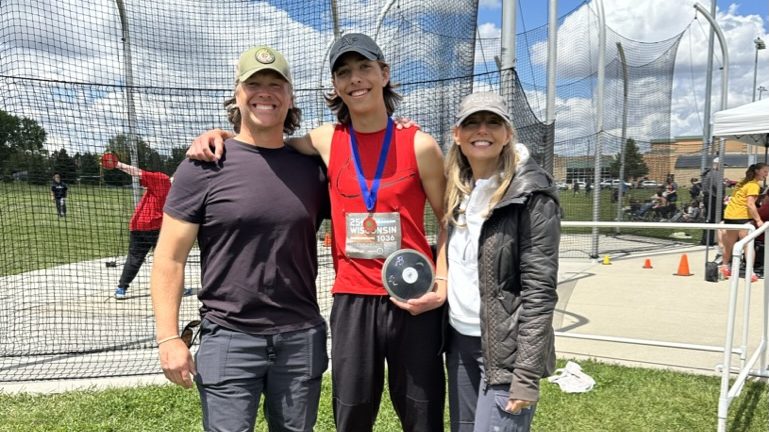
This weekend I will be coaching at the Wisconsin State High School Track & Field Championships in La Crosse, Wisconsin. I work with two great athletes who have had impressive seasons and are in the running to end the state meet and the season, standing on the podium with medals around their necks. And when this Hollywood ending happens, I will treat everyone to the non-alcoholic drink of their choice at the local Kwik Trip.

At this point in the season, all of the preparation is done. As we say in track & field, the hay is in the barn. (I think they also say that in farming.)

My job now is mostly not to do anything to mess my kids up. Which is also my number one responsibility of parenting. But I have found that there is one thing coaches can do at the pinnacle of the season that helps more than anything else.

Build Their Confidence

Two weeks ago, my son Magnus, who is in 8th grade, won the Wisconsin State Middle School Track Meet in the discus. When I asked him afterwards when he knew he was going to win, he said, ‘After my first throw.’ I then asked him how he built his confidence for the meet. He replied, ‘I just focused on feeling happy, excited and playing a great, exciting song in my head.’

That sounds like a winning formula to me.

Why Confidence Is So Important

Confidence is the magic ingredient in high-pressure situations. When the heat is on, it is confidence that keeps you cool.

Confidence makes you feel as big as the moment itself.

Confidence enables you to focus.

Confidence keeps your attention on yourself and the things you can control. (Like Janet Jackson.)

Confidence makes you feel prepared. Like a Boy Scout.

Believing in yourself when you are facing strong competition is the ultimate win.

Self assurance can be felt by others.

Your visible confidence, as communicated through your body language, positively impacts your teammates and negatively impacts your competition.

Confidence keeps you fully engaged in the competition to the very end, preserving the premium value of your final efforts.

Confidence quiets the doubt. And fear. And gets the butterflies to quit flapping and flying in your stomach.

Confidence neutralizes the shifting landscape of competition.

Confidence helps you overcome a weak week of practice.

Confidence lets you lock into what you know.

Confidence lets your training shine through.

Confidence means you can’t wait to step up to the line, the runway, the circle or apron. (Or onto the field, court, pitch, rink, floor or whatever you call that thing that fencers stand on.)

Confidence helps you remember all of your preparation.

Confidence helps you remember all of your past successes.

Confidence helps you forget the times you fell short.

The Keys To Building Confidence In others

Shift the feedback diet from correction to celebration.

Share success stories parallel to their own story.

Provide a simple and clear mental game plan.

Remind them of their past successes.

Remind them of their preparation.

Focus on what they are doing right.

Let them know you believe in them.

Help them play to their strengths.

Reduce distraction.

Discount shortcomings.

Surround them with support.

Lead the cheers.

Never underestimate the power of a good movie.

Encourage them to compile their pre-competition soundtrack. (I suggest starting with Imagine Dragon or One Republic. And here’s my confidence-inspiring playlist on Spotify.)

Key Takeaway

Confidence is a game-changer. It helps you perform at your very best. It enables you to tap into all of your preparation and rise to the occasion. As a coach, leader or parent, your most important job is to instill confidence in those you lead. As a competitor, it is important to create your own competitive advantage by tapping into the magical powers of your own self-confidence. Create pre-competition routines, self-talk and soundtracks that build your self-belief. When you do, the results will naturally follow.

*If you know someone who could benefit from this message, please share it with them.

+For more of the best life lessons I have learned check out my book, What Does Your Fortune Cookie Say? from Ripples Media.

A simple rule of thumb to get the most out of your people.

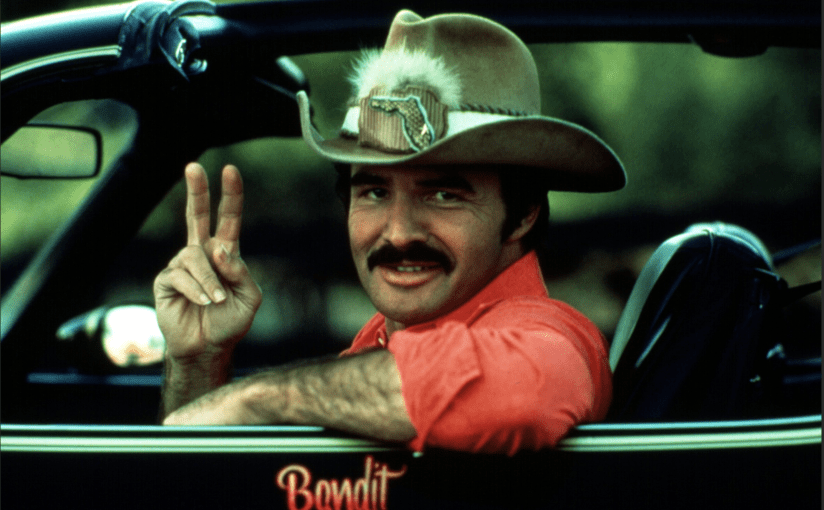
When I was a kid I loved the movie Smokey and The Bandit. I was into trucks and Trans Ams. So a movie about those two vehicles racing across America, starring Burt Reynolds and his mustache, was an obvious Oscar winner to me.

I also loved the theme song from the movie, East Bound and Down by Jerry Reed. My favorite line from the song is the classic, ‘We’ve got a long way to go, and a short time to get there.’

Those lyrics still play in my head today. Because as a business owner, and both a football and track and field coach, I have big goals for my teams to accomplish. And I have a short time to make them happen.

Getting The Most Out Of Your People

To get the most out of your people there is a simple exercise to help you budget the time and energy you spend with each of the members of your team.

Grab a sheet of paper. (Yes, they still make paper.) On the left side write down a list of those you manage or coach in order from most productive to least productive. Your productivity rock stars will be at the top. Your ‘Why-are-they-still-here’ person is at the bottom.

Then, to the right of that, create a list, in order, of how much time you spend managing or coaching each of the people you lead.

Now, you are going to draw a good old-fashioned straight line connecting the names on the left list to the same name on the right list.

If you are drawing straight lines, and the lines don’t cross, you are budgeting your time appropriately. If your lines Christopher Cross, you spend too little time with your most talented people, and too much time with your least talented people. It is time to re-budget.

Key Takeaway

Maximize the return on your time invested in your team. This means the most productive people should get the most time and attention. The least productive people should get the least of your time. This rewards good behavior from your best people. And it ensures that your time and energy are invested where they will get the greatest return. Spending more time with your less productive team members sends the wrong signal to your great talent. And it is a waste of time. With rare exceptions, the least productive team members will always generate the least results.

*If you know someone who could benefit from this message, please share it with them.

+For more of the best life lessons I have learned check out my book, What Does Your Fortune Cookie Say? from Ripples Media.

Do great people want to be on your team bus?

Humans are social creatures. We seek out other humans for all kinds of reasons. From companionship and protection to the division of labor and reproduction. There is great value in surrounding yourself with other great humans. Because like ants and bees, humans can do far more together than we could alone. (Especially the reproduction part.)

All human groups have a culture. Like yogurt. The culture creates rules, whether explicit or implied, that govern the way members behave.

I have been part of great cultures and I have spent time in organizations that had very negative cultures. The difference between the two types of organizations is immense. Not just in the enjoyability of the environment, but in the results they produce and the talent they attract and retain.

If your team is regularly losing good people you have a culture problem. But if good people are seeking you out, you likely have a very good thing going. Don’t eff it up.

A great culture is the secret sauce that helps separate great organizations from the merely good. In Jim Collins’ book Good To Great, he writes that an organization is like a bus. You have to get the wrong people off the bus, get the right people on the bus, and get everyone in the right seats.

But there is more to the bus analogy.

While an organization is like a bus, the organizational culture influences what the bus ride feels like. Is there music? Are people talking? Are there roars of laughter? Is it quiet and serious? Is there a team activity happening on the bus? Storytelling? Games? A leader playing tour guide? Or are there jerks sneaking up behind you to dish out wet willies and wedgies?

It is what is happening on the bus, the feel, the vibe, the energy, and the activity, that makes the bus ride enjoyable, or not. And we all spend far too much time at work and with our various other teams not to enjoy the ride.

Key Takeaway

Culture creates a magnetic force within your organization. A positive culture attracts great people who share the same values and enjoy team success. They come together on the bus to spend as much time interacting and feeding off of each as they can. A negative culture forces great people away. Which means they either don’t get on the bus, or they keep to themselves the entire ride, minimizing the collective power of your organization. So make sure to pay close attention to the kind of force your culture creates.

*If you know someone who could benefit from this message, please share it with them.


+For more of the best life lessons I have learned check out my book, What Does Your Fortune Cookie Say? and the soon-to-be-released The Culture Turnaround that I co-authored with Jeff Hillimire. Both books are published by Ripples Media.

Cover image courtesy of Prevost

How the most difficult decision in my career is still paying off today.

Our careers are full of choices. Some are small and arbitrary. Some feel ginormous. The tough thing about tough choices is that the right answer is never clear at the moment we need to make them. And we may not know whether we made the right call for years. Or decades.

Tough Call

Recently I was asked to think about one of the toughest business decisions I had to make in my career. Several decisions popped into my head. Including big ones like whether or not I should quit my job and launch my own business. And whether I should risk asking a coworker to go on a date. (I have now been married to that coworker for 20 years.) But there is one particularly challenging situation I faced that not even Robert Frost could help me through. I call it The Roanoke Decision. Here’s the story.

Roanoke

In the summer of 2008, I had a business trip to Roanoke, Virginia. I worked at an advertising agency called Engauge. And I was to fly to Roanoke from Columbus, Ohio with a client for a night of focus groups. I was excited about the trip because I love the knowledge and insights gained from a focus group of my client’s customers. I had never been to Roanoke. And visiting new places is one of my favorite things. Along with brown paper packages tied up with string.

A New Challenge

But a funny thing happened on my way to Roanoke. A new client of our advertising agency, Nationwide Insurance, scheduled a TV commercial shoot on the same day in Charlotte, North Carolina. #RutRo

To this point in the project, all of the work I had done was behind the scenes. My boss, the Chief Creative Officer, had been meeting with the client and presenting the work. The client had proved to be challenging, and after each meeting, there was a new story about the over-the-top client and how difficult they had been to please.

Could You, Would You, On A Plane?

Eventually, we landed on a TV commercial script to produce. And because of other scheduling conflicts, I was asked to attend the Nationwide TV shoot. We determined that I would be able to travel to Charlotte the day before the shoot for location scouting and the important pre-production meeting. Then I could attend the first half of the TV shoot, and leave for the airport at lunch to catch my flight to Roanoke. At that point, the 2 experienced Associate Creative Directors on the account would manage the rest of the shoot. Easy Peasy.

The Best Laid Plans

Things did not go as planned. While attending the preproduction meeting I met two clients from Nationwide Insurance. One was Steven Schreibman, who was as over-the-top as advertised. He wanted the spot to be Spectacular! The other was Jennifer Hanley, who I was ice cold in the meeting. She had clearly done this sort of thing before, knew exactly what she wanted, and wasn’t about to suffer any fools who didn’t know how to deliver. This was going to be interesting.

The Commercial

The commercial was a simple idea. It was called ‘Burnout’ (think NASCAR victory, not Jeff Spicoli). The spot opens on a shot of a cul de sac in a quiet suburban neighborhood. Suddenly, a sports car speeds into the cul de sac and begins doing donuts. We cut inside the car to a shot of the driver, NASCAR champion Kevin Harvick, who tells the camera that he just saved a bunch of money by switching to Nationwide Insurance. Hence the celebratory burnout.

The 100-Degree Wrinkle

However, it was supposed to hit 100 degrees that day in Charlotte. So everyone involved was worried about how the heat would affect our shoot, the talent, and the car.

My team, including talented ACDs Jason Thomas and Oscar Reza, got to the set early. And it was already hot as balls. When the two clients arrived we met them and gave them the plan for the morning. We enjoyed a nice on-set breakfast together as the crew readied for the shoot and the sun began to broil the blacktop.

The Thaw

As the day warmed, so did my relationship with Hanley and Schreibman. The iciness and the craziness of the initial meeting didn’t come to the set that morning. Instead, they were both very pleasant. They were excited about the shoot and excited to work with Harvick for the first time. But they were also greatly concerned about the heat. (And not Dwyane Wade’s former basketball team).

Secretly Sweating

I too was concerned about the heat. I was worried it would drench Harvick in sweat as he delivered his lines to the camera. I was worried about the impact the heat would have on the Corvette, which would be repeatedly pushed to its max as we spun it in high-speed circles. I was worried about the young stuntman who was going to be performing the donuts that afternoon. And I was worried about making a graceful exit in the middle of all of this to head to Roanoke.

What To Expect When You Are Expecting

The day went exactly as I expected. Meaning that I was quickly bonding with the new client, and the heat was causing real logistical problems for Kevin Harvick. He was a great sport, but would quickly sweat through his Nationwide polo and we would need to repeatedly break to freshen Kevin and his wardrobe. Which was slowing things down, and generating tension on the set.

Tick Tock Tick Tock

As the heat was burning up our time, I was making regular phone calls back to my office in Columbus. I was updating the account supervisor who lead the other account that was conducting the important focus groups in Roanoke. I was originally supposed to leave for the airport at 11am. But with the delays and tension on the set in Charlotte, I felt like I couldn’t leave at that hour.

What to do?

We decided to rebook my flight for another flight 2 hours later. I would have a car service pick me up at 1pm and speed me to the airport. I would then OJ Simpson through the airport, and make the flight just before they closed the boarding door. (Remember when we used to Associate OJ with running through airports?)

Bond. Personal Bond.

It was a good plan. But I still hadn’t told the Nationwide clients that I would be leaving the shoot. As so often happens in difficult situations, we were bonding. There was both stress and gallows humor as the clock raced faster than our progress. I worked with the producer, director and client to create a workable scenario and adjustments that would enable us to get all of the shots we needed. We decided that during some air-conditioned cool-off breaks we could record some voiceover work for the commercial and radio spots to save precious time.

Here it comes!!!

But 1pm was coming faster than Kevin Harvick in an 800hp stock car. And like The Clash, I had to decide, do I stay or do I go now? I knew that if I stayed there would be trouble. But if I go, it may be double. What to do?

The Walk

I walked off by myself for a moment, and carefully evaluated the situation. Not just the logistics. But the intangibles. The relationships. The commitments. The business development potential. And both clients’ needs. There was a lot to process in a little time.

The Call

Then I called Peter Zenobi, the account supervisor, and reluctantly told him that I would not be flying to Roanoke as planned.

The Decision

I decided that I had to be on Nationwide’s side. The degree of difficulty we were dealing with in the heat with the stunts and the celebrity talent was too high to walk away from. I recognized that I was quickly developing a strong rapport with both Jennifer Hanley and Steven Shreibman. And the focus group, while it was my original commitment, and I really, really hated to back away from it, would be recorded. And there would be a detailed report produced.

Ahead Of The Curve

While I didn’t technically go to Harvard Business School, I did read a book about it. In Ahead of the Curve, author Philip Delves Broughton writes about his experience as an MBA student at Harvard Business School. He reveals that the 2 greatest things gained in this prestigious program are 1. A remarkable network. 2. Confidence to make difficult decisions when you don’t have all the information you would like. And The Roanoke Decision was a clear case of having to make a tough decision without all that information.

Was it the right decision?

The heat-related challenges continued the rest of the afternoon. But we worked through it all. We got the footage we needed of the Corvette doing burnouts. But barely.

The young stunt driver needed a lot of time to get his driving dialed in. Which, in the 100-degree heat, took a toll on the car. In fact, the brand new Corvette, borrowed from a local dealership, overheated and shut down completely. So by late afternoon the car literally shut itself down, and could not be started again for 6 hours.

But we had what we needed. No one got hurt. And the Nationwide clients and I headed to the airport, together.

That night, on the flight home to Columbus, Jennifer Hanley and I sat together and talked the whole way. We developed a fast friendship. And before we landed, Jennifer said that she had a lot more work that she wanted to send to our agency.

The Partnership

Nationwide and Engauge quickly developed a very strong partnership. Soon we had an annual retainer with Nationwide of over $5 million. We handled the advertising for Nationwide’s sports sponsorships, including their high-profile NASCAR and  PGA sponsorships, and work with NCAA basketball and the NHL. We refreshed their pet insurance brand, VPI. We rebranded Titan Insurance and created a very high-profile disaster response commercial, featuring Julia Roberts as the narrator.

My relationship with Jennifer continued to strengthen. And I developed strong relationships with many other great friends at Nationwide. In fact, my Nationwide relationships are among the strongest personal relationships I have developed in my career. (I considered listing all the great friends I made through Nationwide Insurance here, but it would double the length of the story.)

7 years after The Roanoke decision, when I made another difficult career decision to start my own advertising and idea agency called The Weaponry, those Nationwide relationships benefited me once again. In fact, they have led directly to our work with Hertz and Thrifty rental cars, Fifth Third Bank, and American Family Insurance. (Thank you Matt Jauchius, Dennis Giglio, Nick Ferrugia, Tiffanie Hiibner, Susan Jacobs, and Dawn Pepin.)

Steven

Starting that hot summer day in Charlotte I developed a very special relationship with Steven Schreibman. And when Steven passed away in May of 2018, the tribute I wrote about him on this blog became the most popular post of all time. And just last month, over 4 years after Steven’s passing his Mom, E.J. Bloom called to thank me for writing the story about Steven, and how she reads it often to enjoy wonderful memories of her wonderful son. We talked for an hour, like new old friends. Last week I received a package in the mail from E.J. that contained a copy of Steven’s book, Blood in My Hairspray.  You can find the blog post here: Our time here is short. Make the most of it, like Steven did.  

14 Years Later

Did I make the right choice on that blazing hot day in August of 2008, in the subdivision in Charlotte? When Roanoke was calling, and Charlotte wouldn’t let go? With more than a decade of great friendships, partnerships, and funny memories now in the bank, it would certainly appear I did.

Key Takeaway

When making difficult decisions, trust your instincts. There may not be a right or wrong choice. You may not have all the facts you want. But be confident in your decisions anyway. When you walk confidently in the direction of your decisions the universe rewards you. Know that you have the privilege of choosing your own adventure. Take advantage of that. Take control of your career and your life. Things will work out. Someday I expect to visit Roanoke. And I will thank the city for all it gave me in that trade years ago.

*If you know someone who could benefit from this message, please share it with them.

+For more of the best life lessons I have learned check out my new book, What Does Your Fortune Cookie Say? from Ripples Media.
Make the most of your magic ingredient.

Yeast is like magic. It is the secret, almost invisible ingredient that makes bread rise. It creates action and life. It creates transformation. And alcohol. And stank.

But yeast only works if the conditions are favorable. If the environment is too cold it won’t activate. If the temperature is too hot it kills the yeast that makes the magic. #TooHotInTheHotTub

The human spirit is like yeast. It is your magic ingredient. It is the will to win. The drive to succeed. The hunger for more.

The human spirit fuels your resilience and determination. It is the force that will transform you into something even more remarkable tomorrow. Something far more remarkable than bread. Or beer.

But just as yeast needs the proper conditions to activate, so does the human spirit.

Remember

If you are a business owner, leader, parent, teacher, coach, or the person who runs Fight Club, you are responsible for creating the environment.

Your most important job is to make sure the environment doesn’t kill the magic ingredient.

Great people won’t stay in a toxic work environment.

Great athletes won’t stay to play on a negative team.

A lion tamer won’t stick his head in the mouth of a stressed-out lion. (At least not more than once.)

And most importantly, a poor home environment will prevent children from growing into the amazing adults they were born to be. We can’t let this happen.

Key Takeaway

Create an environment that lets the human spirit work its magic. Or seek out a supportive environment for yourself. And magic will surely follow.

*If you know someone who could benefit from this message, please share it with them.

For more, check out my new book, What Does Your Fortune Cookie Say? from Ripples Media.
Start with a script to make sure you stay on the rails.

A surprising number of humans have a major fear of public speaking. Or maybe it’s just surprising if you are not one of them. I have no issue giving a speech, presentation or eulogy. Although I do limit eulogies to one per person.

I once had a supervisor ask me if I ever got nervous about public speaking. I replied, ‘I get nervous that they’ll cut me off.’ But a major reason I feel comfortable speaking in front of others is that I prepare.

When I address an audience I often begin in a way that feels very informal. Usually there is some kind of ice breaker or introductory humor. But what appears to be a casual start to my talks is designed.

I learned many years ago that my energy and my eagerness to talk about anything can work against me if I am not careful. I can start a presentation or speech hard and fast with loads of enthusiasm. But that can approach can feel like bull riding, with lots of surprising jumps and turns, but not much forwards progress.

To control the story flow, and make sure I hit the key points I need to hit upfront, I use a special technique: I always script my opening.

Even if I am only given a brief moment to prepare to speak I use all the time I have to craft my opening. I know the first word, sentence, and paragraph, cold. (Which means I have it memorized, not the my knowledge is temperature-dependent.)

I have found that if the first 60 seconds of my talks are predetermined, everything goes well. I spend time learning and perfecting that opening. And by delivering that well, I know I am staying on track. Then, like a freight train, I find my rhythm and follow the track all the way to the destination.

Key Takeaway

Whenever you speak in public script your opening. By organizing your introductory words and ideas you will point your speech, presentation, or toast in the intended direction. When the beginning goes well, it is easy to relax, enjoy and pick up momentum as you roll. Preparation is the best way to minimize your fear or anxiety. And it’s the best way to do your best every time you talk.

*If you know someone who could benefit from this message, please share it with them.

Why I have so much confidence in the power of confidence.

When I was a kid there was a famous commercial where a group of idealists sang, ‘I’d like to buy the world a Coke.’ The commercial made me believe that together we could solve world-thirst. But despite how much I enjoy an occasional ice-cold Coca-Cola, if I could give the world anything at all, it would be more confidence.

The Dictionary Definition

Merriam Webster, a woman who knew a lot of words, defines confidence in the following way:

Confidence: 

a feeling or consciousness of one’s powers

b: faith or belief that one will act in a right, proper, or effective way

c: the quality or state of being certain 

Becoming A Confidence Donor

Many years ago I made a conscious decision to contribute to individual confidence whenever I could. I began handing out compliments liberally. I complimented people on strong performances. I noted how much potential or ability I saw in others. I highlighted skills and talents that people were really good at.

I let my positive inner dialog about others become an outer dialog, where I tell people the good things I am thinking about them. Kinda like Jim Carey in Liar Liar. I comment on quick math skills, strong customer service, a smart suggestion, good hair, a great attitude, a fun clothing choice, or the refusal to stop drinking Tab just because the rest of the world did.

I don’t feel awkward about offering others such positive comments either. Because I know it is like making a valuable deposit in their confidence piggy bank. And the fuller the piggy bank the more valuable it is when you need to butcher the pig.

Just as we can pay each other with money, we can also pay others in confidence. In fact, some of the compliments, encouragement, feedback, and support that I have received throughout my life have been more valuable than money. Because they have forced me to see myself as better, stronger, smarter or more capable than I recognized. Which in turn encouraged me to take bigger bets on myself.

The bets I’ve made on myself include raising my hand for challenging assignments, speaking up when I thought someone needed to, and stepping out of my comfort zone to develop new abilities. In fact, when I decided to start my own business it was my confidence in both myself and my team and our ability to make the business successful that made all the difference.

I string together my own successes like popcorn on a old-timey Christmas tree. Or Cheerios on a preschool necklace. That string of successes helps me believe that my next attempt will be successful too. Of course this is not guaranteed. And I have plenty of failures, missteps and mistakes. But I don’t string them together to tell a story about myself. Neither should you. Because it simply doesn’t help.

Key Takeaway:

Confidence is one of the planet’s most valuable forces. It fuels a can-do, will-do mindset. It provides courage to take on new challenges. It is like armor that helps you survive the attacks of life. Help build confidence in others through genuine compliments, support, and encouragement. It will prove amongst the greatest investments you will ever make.

*If you know someone who could benefit from this message (because they are amazing) please share it with them.

How to be a better leader during a crisis.

It’s 2020, and we are all taking a crash course on crisis management, whether we want to or not. This is a crazy time. But life is full of crazy times. And when the crazy times come they create opportunities for leaders to step up and lead their people through the experience. So as Prince once said, let’s go crazy.

The Crisis Question

The great question that we all have to ask ourselves when we face a crisis is: What role will I play?

There are always many roles available to us. We can be The Complainer, The Blamer, The Eye-Roller. The Conspiracy Theorist, Negative Nancy, Debbie Downer, or RBF. These are easy roles to take on. But they add no value to others.

However, there are also these roles:

  • The Optimist
  • The Cheerleader
  • The Rock (the Dwayne Johnson role)
  • The Person of Few Words.
  • The Sage
  • The Jester
  • The Father Figure (George Michael called dibs on this)
  • The Mother Figure.
  • The Big Brother or Sister (Not the CBS version)
  • The Listener
  • The Stabilizer
  • The Rebel (Billy Idol and James Dean role)

These can all be valuable leadership roles that help your organization, team or family through challenging times.

When to Choose Your Role

The best time is to decide which role you will take on is before a crisis occurs. It’s good to think about which of these roles work with your natural tendencies and personality. It’s also good to understand which roles your team, group or organization already have covered, and what is available to you. Just like in Dungeons & Dragons.

Consistency

Once you pick your role, never waiver. I have spent my career building brands for some of the world’s best companies. And the most important factor in developing a strong brand is consistency.

So as you develop your strong crisis leadership brand always be who your team needs you to be.  Don’t be the optimist some days and the complainer other days. That spoils everything.

De-escalation*

In a crisis, emotions naturally escalate. Which simply exacerbates the problem. That’s why there is tremendous value in those who can help decrease the pressure in a situation. Always focus on making things better. Not worse. Others will recognize that, and seek you out in challenging times.

*This is not the down escalator.

Conflict Resolution.

My wife and I recently celebrated our 18-year wedding anniversary. I attribute much of our successful marriage to the fact that we resolve our conflicts quickly. We recently both agreed that in the 20 years we have been together as a couple, including 2 years pre-ring-wearing) the longest we have been in conflict with each other is 24 hours. We swear by the following conflict resolution formula to help get through our sticking points. (I also swear when I am not by the following conflict resolution formula.)

The Sure-Fire Formula

  1. The first person speaks without interruption.
  2. The second person plays back what they heard.
  3. The second person speaks without interruption
  4. The first person plays back what they heard.

Why this works:

  1. You both get to say everything you want to say.
  2. You both feel heard.

Try this the next time you have a conflict with another person. If it doesn’t work I’ll refund the money you spent on this blog post.

Leadership Is Lonely.

As a leader and an entrepreneur, I can’t show indecision or weakness to my team. They have put their trust in me, and I can’t waiver in front of them. Instead, organizational leaders need to find their own support group. This consists of a person or people outside your organization, team or family who you can share your challenges with.

I am part of a CEO roundtable that meets once a month to discuss the challenges we are facing, support each other and offer advice and guidance. It has proven to be a highly effective way of supporting leaders who don’t have a natural support structure within their own organization. And research on roundtables groups has indicated that any shaped table will do.

I have also created a meetup group of men who live in my community. All of them are either successful entrepreneurs or top leadership within their businesses. They are all husbands and fathers. We talk about issues that dudes don’t typically talk about. In this environment we can discuss the real challenges we face, the uncertainty we feel and share thoughts on how to be better businessmen, family men and members of our community.

Taking Care Of Yourself In Crisis.

There are stresses, frustrations and losses that accumulate every day. We are drained by daily setbacks. And 2020 has taken things to 11. So we have to prevent the stress gunk from building up and fouling our systems. The key is to figure out how to reboot, regenerate, and respond positively. 

The following 3 activities provide a proven formula for positively dealing with stress.

  1. Sleep helps your body and mind refresh and recover.
  2. Exercise helps you burn the stress off.
  3. Worship helps you rebalance and offers big-picture perspective.

You need to get rid of the stress gunk that builds up like WD-40. These back-to-basics keys help you find your balance again when you start to weeble or wobble. Try them for yourself. They will make you feel like a better human.

Key Takeaway

  1. Crisis is unavoidable.
  2. Crisis creates opportunity (Remember, chaos is a ladder).
  3. Find your most valuable role and play it consistently.
  4. Learn to de-escalate.
  5. Use the 4-Step approach to conflict resolution.
  6. Leaders need to find their own support system.
  7. Decrease your stress through, exercise, sleep and your own spirituality.

*If you know someone who could benefit from this message, please share it with them.

You are complicated. And so am I.

I read the same way a prospector pans for gold. I sift through words looking for gold nuggets. Once I find those nuggets of wisdom, inspiration and insight I lock them into my mental vault. There they begin to appreciate by improving the way I think. Which ultimately makes me a more valuable human.

One of the most valuable nuggets in my collection came from a book I read on Thomas Jefferson. There was an interesting idea that appeared in his writings multiple times. It jumped off the page at me the first time I read it. Ole TJ was a complicated cat. On the one hand, he fancied himself a great champion of human freedom. On the other hand, he was a racist slave owner in love with black woman. Go figure. In an attempt to describe his complex thoughts and feelings he dropped this gold:

Of all machines, ours is the most complicated and inexplicable.  -Thomas Jefferson

This nugget serves as a valuable reminder that your thoughts, feelings and action are complicated. But more importantly, it reminds us that all humans are complicated machines.

The COVID-19 crisis has stressed human machinery in ways we have not been stressed before. Add to that the senseless killing of Geoge Floyd and the complex issues it raises, and it is no wonder that so many are glitching, smoking and crashing. #reboot

As humans, we must recognize that we are complicated. We are not mass-produced. We are individually crafted. Our hardware and software are custom made. We each have a unique collection of inputs that influence our outputs. Our individual experiences, wiring and programming mean that no two of us process life the same way. This is true in the best of times. And it is true in the most challenging of times. Like right now. And during tax season.

Key Takeaway

Humans are inexplicably complicated machines. To get the best from a human, approach them with empathy and compassion. Listen. Aim to understand. Find common ground. Accept that our diversity runs deeper than we could possibly categorize. When all else fails, treat others the way you want to be treated. That’s a little gold we can all profit from.

*If you know someone who could benefit from this message, please share it with them.

The touching story of a repurposed billboard.

The week of March 16th was like nothing I had ever experienced. That Monday morning The Weaponry, my advertising and idea agency, met with the University of Wisconsin Credit Union about updating their outdoor billboards and TV commercials in response to the emerging COVID-19 crisis.

By the end of the day, The Weaponry presented a whole new billboard campaign. The new outdoor boards were up practically overnight in both Madison and Milwaukee. In the process, The Weaponry set new turnaround expectations that are likely to haunt me for the rest of my career.

Standing Together

I was very proud of the new work that we developed in a single day. I especially loved the billboard that said, ‘Even when we’re apart we, stand together.’  It was a great way to express UW Credit Union’s promise to be Here for every you. During that time of growing isolation and uncertainty, as our community faced both a health and financial crisis, the message was spot on. And true.

UWCU-Together-Milwaukee-Bulletin copy
Rome was not built in a day. But a new UW Credit Union billboard campaign was.

George Floyd

Two months later, just as our nation was beginning to emerge from the COVID-19-induced isolation, George Floyd was killed by police officers, and our country found itself deep in another crisis.

In the days since George Floyd’s murder, people across the country have searched for ways to express their outrage and create change. Some have found powerful forces for progress. A few have engaged in more divisive actions. Unfortunately, the media coverage of the divisive has far exceeded that of the progressive. Because flames, shattered glass, and unpaid for merchandise with legs make for more interesting video than peaceful demonstrations.

Back To The Billboard

Early Tuesday morning I received an email from Anne Norman, the Chief Marketing Officer at UW Credit Union. She had received an update from Adams Outdoor, the billboard company in Madison, Wisconsin. As the Adams team (no relation) arrived to do a scheduled replacement of the We Stand Together billboard they discovered the billboard has been spray-painted with the words George Floyd. They took a picture of the graffitied billboard and shared it with us so we could see what had happened.

MVIMG_20200601_092043
The George Floyd Board. It features a curious extra E, removed by Yellow-Out.

Wow

Anne and I were both struck by how powerful the graffitied board was. And we thought it would have been better to have simply left the billboard and its modified message in place. I suggested that we share the George Floyd board via our social channels.

Anne suggested an even better idea. She asked what I thought of putting the graffitied board back up. I thought it was an excellent idea.

The Reposting

Yesterday, on June 3rd, UW Credit Union reposted the George Floyd Board. Except this time they had it posted in one of the highest visibility locations in Madison, on the top of the Adams Outdoor building, beside the highly trafficked beltline. Because you know that a good billboard company always saves the best location for itself.

IMG_0063
The new home of the George Floyd Board. (Try saying George Floyd Board 10 times fast.)

Proud Partner

I am extremely proud to partner with UW Credit Union. It’s an organization fully committed to the communities it serves. I am proud of Anne Norman for making a courageous decision to repost this billboard, a billboard that no longer features the UW Credit Union logo, in support of George Floyd, the Black community and the Black Lives Matters movement.

IMG_2129
This is how Anne Norman shared the story in her own words. She uses the word ‘We’ a lot, as does everyone at UW Credit Union. But know that she was instrumental in making this happen. 

Key Takeaway

Do what you can to make a difference. Stand together. Work together. Support each other. Always do what you know is right. Like my friend Anne Norman and millions of others across America who are determined to leave this world better than they found it.

*If you know someone who could benefit from this message, please share it with them.