Happy Leap Day! February 29th is your lucky day. In fact, it’s luckier than a 5-leaf clover. And it’s rarer than a mooing steak. In fact, it is so rare that it only happens every 4 years. Like the Olympics, a Presidential election, or a J-Lo wedding.
Opportunity Day!
However, it is not the rarity of Leap Day that matters. It’s the opportunity. Today is a bonus day! Which means that today is the perfect day to do something extra. Like Michael Jackson said, today, ‘You got to be startin’ somethin.Or finishing somethin’. Or working hard on somethin’.
Take a few minutes to think about those things you can never seem to find the time to start, plan or complete. Take a leap and get rolling today.
Possible Leap Day Activities:
Exercise
Take a hike
Play a Game
Start a blog, vlog, slog, or drink Glogg
Start a business
Pick up a new hobby, or re-engage in an old hobby (like Holly)
Create a podcast
Play an instrument
Create a product
Start a book (reading or writing)
Paint
Marie Kondo your house
Volunteer, or sign up to volunteer
Go to church (or find a place of worship to go to this week)
Start a meetup
Join a club or worthy organization
Ask someone to be your mentor.
Call someone you haven’t talked to for too long
Find a Dentist
Find a Doctor
Find a nurse
Find a lady with an alligator purse
Start your taxes
Plan a vacation
Organize a girls’ night, or a guys’ night, or a Michael Knight
Make a career or life plan
Do something more you, because no one knows you better than you
Bonus Time Is Start Time
Me in my office. That leaf is what the original Adam was wearing when he got in trouble with God.
I started planning my own business, The Weaponry, during a little bonus time like you have today. Now we have been in business for nearly 8 years. We have 2 offices and clients from Quebec to California.
I started this blog during a little bit of free time. This is post number 966.
The pink and red countries are where my blog has been read. Crazy, right?
During the last leap year in 2020, I used the bonus free time provided by the COVID-19 lockdown to write my first book, What Does Your Fortune Cookie Say?
Today, will use some of my bonus time to work on my next book currently titled, Adam Albrecht’s Next Book. Catchy, I know.
The 3 Big Bs
My business, blog, and book represent the 3 biggest elective projects of my life. And they were all birthed during bonus time. It was time that I used wisely.
Now it’s your turn to do something meaningful. Don’t miss the opportunity today is offering You.
Key Takeaway
Time is your more precious resource. Use it wisely. Alchemize it into magic. And when you get a bonus day or a bonus hour, take advantage of it. Otherwise, when you come to the end of your time, you will wish you had.
Which begs the question: What will you do with your Leap Day?
Note: Happy Leap Day Birthday to my friend Jeff Hilimire, who turns 12 today.
Jeff ‘The Leap Day’ Hilimire, shows us how big he was when he was born.
I have been thinking a lot about my Pivotal Days lately. Last week I shared a post about the importance of knowing your Pivotal Days. These are the days that have the biggest impact on your career and your life. They are the days that alter your path and your trajectory. And perhaps your tax bracket, zip code and Wikipedia page.
The reason it is so important to know your Pivotal Days is that they help you develop wisdom. Wisdom does not come from experience. It comes from reflecting on your experience. When you analyze your past you learn and grow. By reflecting on your most positively impactful days you learn how to create more of them. Because success leaves clues. Just like bad criminals. #BlackLeatherGlove
Reflecting on my Pivotal Days has taught me the following:
Take action. My advertising career started when I literally got off the couch and made a phone call. I stopped overthinking and procrastinating. I dialed 10 numbers. And my life changed. Boom.
Ask For What You Want. It’s a very simple premise. But it opens more doors than you can imagine. (Unless you have a really good imagination, in which case it opens all those doors that you can accurately imagine.)
Prepare for your opportunities. Not all of the magic happens on the Pivotal Days. Preparation fuels dreams. In many cases, you have to do the hard work ahead of time. So when the opportunity arises on those big days, you are ready to shine bright like a diamond.
Take Risks. Sometimes the gold is on the other side of the gap, and you have to risk the leap to get it. This happens when you take a new job, become an entrepreneur, make an investment, write a book or ask that special someone for a date. Especially when that special someone is a co-worker and it would be super awkward if it didn’t work out. (But it did work out.)
Bet On Yourself. You have to believe that you are the pivot point. You are the secret ingredient. That you have the superpower. That you have the invisible key to unlock success. When you believe that you are the difference maker you should go all in on your abilities. There is no safer bet in the world than to bet on yourself. Because you can stack the deck in your favor through your hard work, determination and resiliency.
Enthusiasm Matters. There have been several pivotal moments in my life and my career when my enthusiasm got others excited. They bought into a vision because I was so bought in. They believed that I had both the right vision and the energy to make the vision come true. Be that person. Energy is contagious. Like yawns. And giggles in church.
Key Takeaway
Know your pivotal days. Reflect on them. Understand what contributed to them. Because when you understand the causes of your pivotal days you can create more of them.
*If you know someone who could benefit from this message, please share it with them.
I was listening to a podcast over the weekend while mowing the lawn. I always listen to something educational while doing yard work. I imagine that I am a professional landscaper, working for the man, and I plan to bust out of my lawn jockey job by learning as I mow.
In the podcast, the interviewee told the host that he went to business school to get his MBA because he wanted to learn how to start and run a business. When I heard this I laughed out loud. In fact, I laughed so loud that I heard myself over the roar of the lawn mower, despite the fact that I was also wearing ear protection.
The idea that you need an MBA to start a business is hilarious. I launched The Weaponry, the advertising and ideas agency I lead, 7 years ago. I studied Psychology and Journalism in college. I took only one business class at the University of Wisconsin. But I did stay at a Holiday Inn Express.
The Knowledge You Need Is Everywhere
There has never been a better time to start a business. There are countless books on the topic. There are only slightly more countable podcasts. (Although it is odd to compare the relative countability of countless things, no?)
You can follow the blogs and social feeds of entrepreneurs to learn from them. And many you can reach out to directly through social media by slipping into their DMs.
Entrepreneurship is not a secret club you get into by attending to an Ivy League business school. You can learn everything you need to know through self-directed education. And through a little trial and error.
Adam Albrecht’s Entrepreneuerhsip 101
If you really want to become an entrepreneur here is what you need to know:
To start a successful business you need to:
Offer a product, service or experience people want or need.
To learn from other great entrepreneurs check out the How I Built This podcast wherever your favorite pods are cast.
Key Takeaway
You can be an entrepreneur without an MBA, without going to business school, and without going to college. You just need a strong desire to start your own business. The keys to successful entrepreneurship and business ownership are available at your local library, your local bookstore or your local Amazon website. Inspiring stories and examples are available on podcasts, in magazines, and in books. There are no barriers to entrepreneurial education. Which means there are also no excuses. If you think entrepreneurship is the next step in your career then get going. There is nothing stopping you but you.
*If you know someone who could benefit from this message, please share it with them.
If you want to help people become really great at things you have to let them first be bad. It’s part of the process. Beginners need to know it is ok to fumble and bumble a bit as they find their way. When I started my advertising and ideas agency, The Weaponry, one of the best gifts I gave myself was permission to be an amateur. Because high expectations and standards at the start of a new journey tend to kill motivation, growth, and joy.
I have a client who just opened a new restaurant in a new town. Opening a new restaurant is a massive undertaking. It involves creating a new physical space and hiring an entire staff who have never run the operating system required to make the business work. The start is messy. (Kind of like the first draft of this blog post.) I have great respect for those willing to take on the difficult task.
My client had a soft opening event, where they invited people to come and test drive the restaurant, for free. This gave the chef, cooks, waitstaff and manager an opportunity to work out the kinks, like Ray Davies. Following the 2-day free-for-all opening, they remained open without fanfare for 2 weeks before their official grand opening event. Those 2 unadvertised weeks allowed the staff time to find their groove, like Stella. Or Madonna.
However, during those 2 weeks, a handful of people wrote negative Google reviews about their experience dining at this fledgling startup restaurant. They complained about the wait time or about the lack of niche condiments for their particular health challenge. And, yes, some wrote that their food didn’t come out to their liking. However, the outstanding reviews far outnumbered the negative, which offers an exciting and favorable glimpse into the future experience for everyone visiting the restaurant.
Support Baby Businesses.
When you visit a new store, restaurant or business, give them some grace. Just like a child needs time to learn, and a beginner of any age needs experience to improve, a new business needs time to become a well-oiled machine. Complaining publicly with negative reviews in the first month of operation doesn’t allow for the required maturation process.
When you publicly complain about an infant business you hurt its chances of ever becoming a full fledge business. And if we create an atmosphere where businesses don’t have time to learn and grow we will only ever have massive chain stores and restaurants. We would snuff out local entrepreneurship. Which would be McUnfortunate.
As parents, coaches and managers we calibrate our expectations to the age and experience of those we are trying to help. As customers, we should do the same. It is helpful for us to teach, coach, critique, and even complain about the shortcomings of our experience directly to the person or organization in question. But hold off on sharing your disappointment publicly through negative reviews until the organization is past the wobbly legs stage. Which I suggest is the first month of operation.
The new entity won’t work out every challenge within that first month. But they should figure out how to make their wrongs right with the customers through proper apologies, compensatory price adjustments, free extras, or an incentive to return for a second chance, like 38 Special.
Key Takeaway
If you want to encourage more great businesses in your community or spheres of interest, grant them permission to begin as amateurs. There will be mistakes and learning at the start. These are the occupational hazards of entrepreneurship and operating a new business. As customers, we owe it to newbies to offer honest constructive feedback to help them grow and mature quickly. Honest, early public praise is one of the most valuable assets a new business has. While early negative public reviews hurt a business’s ability to grow into the excellent resource you want and expect. By sharing early negative reviews directly with the staff, rather than the public, you become a valuable part of the improvement process. And you help accelerate their growth and maturation rather than hinder it.
If you know someone who could benefit from this message, please share it with them.
May is my favorite month of the year. May is spring, and new beginnings and good weather. May is track & field season. May brings Memorial Day weekend, which kicks off summer. Although in Wisconsin, sometimes it’s a Charlie Brown kickoff, and Lucy pulls the ball away before it ever gets a chance to fly.
May is also Birthday Month for me, my 3 sisters, my son Johann, and a couple of nieces and a nephew. This year, my birthday was no small milestone. On May 25, I turned 50. Which is significant on several levels. Mostly, because I make it significant in my head. To make the most of each decade I set major long-term goals by the decade. Today, I am excited about the possibility and promise of my 50s. Because by all accounts, my 40s were a raging success. Here’s my reflection.
14 Things That Went Great In My 40s.
My Career: I started my own business when I was 42, and I spent the majority of my 40s leading the advertising and ideas agency, The Weaponry. Starting an advertising agency was my #1 goal of my 40s. Not starting a business would have been my greatest regret. The business is now well into its 8th year and growing. Check the box!
Me at The Weaponry. And a leaf like the original Adam wore.Several Weapons
2. Travel. In my 40s I traveled all over America. I think I visited 45 states. The only state I have left to visit is Hawaii. In the past decade, I also traveled to Argentina, India and Canada. And I would have traveled to Europe if it wasn’t for that meddling pandemic! But I have a trip to London, Paris, Bern and Munich locked and loaded. So go 50s!
My trip to India was an epic part of my travel over the past decade.
3. Writing: I have now written 881 blog posts. All that writing prepared me to write my first book: What Does Your Fortune Cookie Say? I started writing the book when I was 46 and published it when I was 48. I co-authored my first book with Jeff Hilimire too, titled The Culture Turnaround. There are more books planned (and mostly written) for my 50s. Plus there is a newsletter in the works…
The first time I held my paper baby.
4. Speaking: Publishing my book led to speaking opportunities. This year I am on track to earn more money from speaking than I did in the first year of my advertising career. I really enjoy speaking and sharing stories and lessons with others. On my 50th birthday, I took the day off of work to enjoy my big day, but I then volunteered to speak to students at two schools about my career. Which means I really enjoy it. Or else I just really like hanging out at Middle Schools.
My first talk of my 50s.
5. Coaching Track: I started coaching high school track and field 3 years ago. I didn’t know any more about coaching than anyone else who had participated in a sport through high school and college. I didn’t even have a clipboard, whistle or a Throw-one-for-the-Gipper speech. But 3 years in I have coached a boy discus thrower to 181 feet, the second farthest throw in Wisconsin last year, and my daughter Ava hit 130 feet as a junior. For context, 3 years into coaching, I have only seen 4 girls hit 130 feet or more in a meet, and Ava is one of them. Exciting things are ahead for my daughter-athlete next year. And both of my sons plan to throw next year too. Their training has already started.
Some of the great girls I’ve coached.
6. Coaching Football: I started coaching youth football. Again, I started knowing very little beyond my own experience as a player. Today I am the defensive coordinator for the 6th-grade team in Mequon, Wisconsin. Which will be the 7th-grade team next year. I have learned a lot and developed rewarding relationships with a fun group of boys in my son Magnus’ class. And I’m trying to help create a positive experience that the boys will remember forever. Or at least get them to break a huddle in unison.
My son Magnus is #55. You can see my knee beside his.
7. Parenting. I started my 40s with 3 children who were 7, 5, and 2 years old. Today they are 17, 16 and 12. (Because math works like that.) I am proud to say that I have a strong relationship with my 3 children. Even though they are teens or tweens, we remain very close through what I expected to be the most challenging period of our relationship. I know them well enough to know that none of them are teen-wolfs. I am highly involved in each of their lives, and I will miss them greatly when they fly from the nest in my new decade.
Me and the offspring on my 50th!
8. Marriage: I have now been married for 20 years to my wonderful wife Dawn. We are closer than ever and our marriage works well. Our communication is strong. She is my best friend. Sorry everyone else who thought they were my bestie. (You are my next-bestie.)
Me and Dawn when we were just babies. Now we are both 50+ and feeling Nifty+!
9. Fitness: I wanted to hit my 50s in great shape. One year ago I weighed 224 pounds. For context, I am 6 feet tall. And I graduated from high school at 215 pounds and from college at 211. I lift weights several times a week and am about as strong as I was at 18. Plus, I do cardio work 4 times per week. On my 50th birthday, I weighed 206 pounds. And I have a goal of doing 20 pullups at 50 years old. I haven’t attempted it yet. But I did hit 20 pullups 3 times in the past 2 weeks, so I expect it will be no problem. #dothehardworkearly.
10. Hair: I still have a full head of hair. I am not bragging. I am thankful. Or grateful, or whichever one is politically correct.
Still flowing at fifty.
11. Reading: I have read more in my 40s than in any other decade of my life. I can feel the effect of my reading. I am continuously learning and adding to my understanding and knowledge. My thinking keeps getting better. My brain feels well exercised. And I have set a new record for paper cuts. I got up on my birthday and read from 5:30 am to 6 am when it was time to write. ( I am currently reading The Greater Journey, about Americans in Paris in the 1880s by David McCullough, and listening to How Successful People Think by John C. Maxwell. I have already completed 17 books in 2023, and should finish 1 more today!
My initial reading list for the year.
12. Relationships. Through the past decade, I have lived in 3 states. And I have gained tons of new friends. I have also maintained my many friendships. I’m like a friend hoarder. Only I let people live in their own homes instead of piling them in my kitchen. I have organized social groups. I planned and hosted my 30th high school reunion. I make friendships very quickly. It is one of my greatest or favorite strengths. However, in the past 5 years, I have also had an odd falling out with one of my (formerly) closest friends, which I really don’t understand. But I accept it and have moved on. There is a lesson in that too.
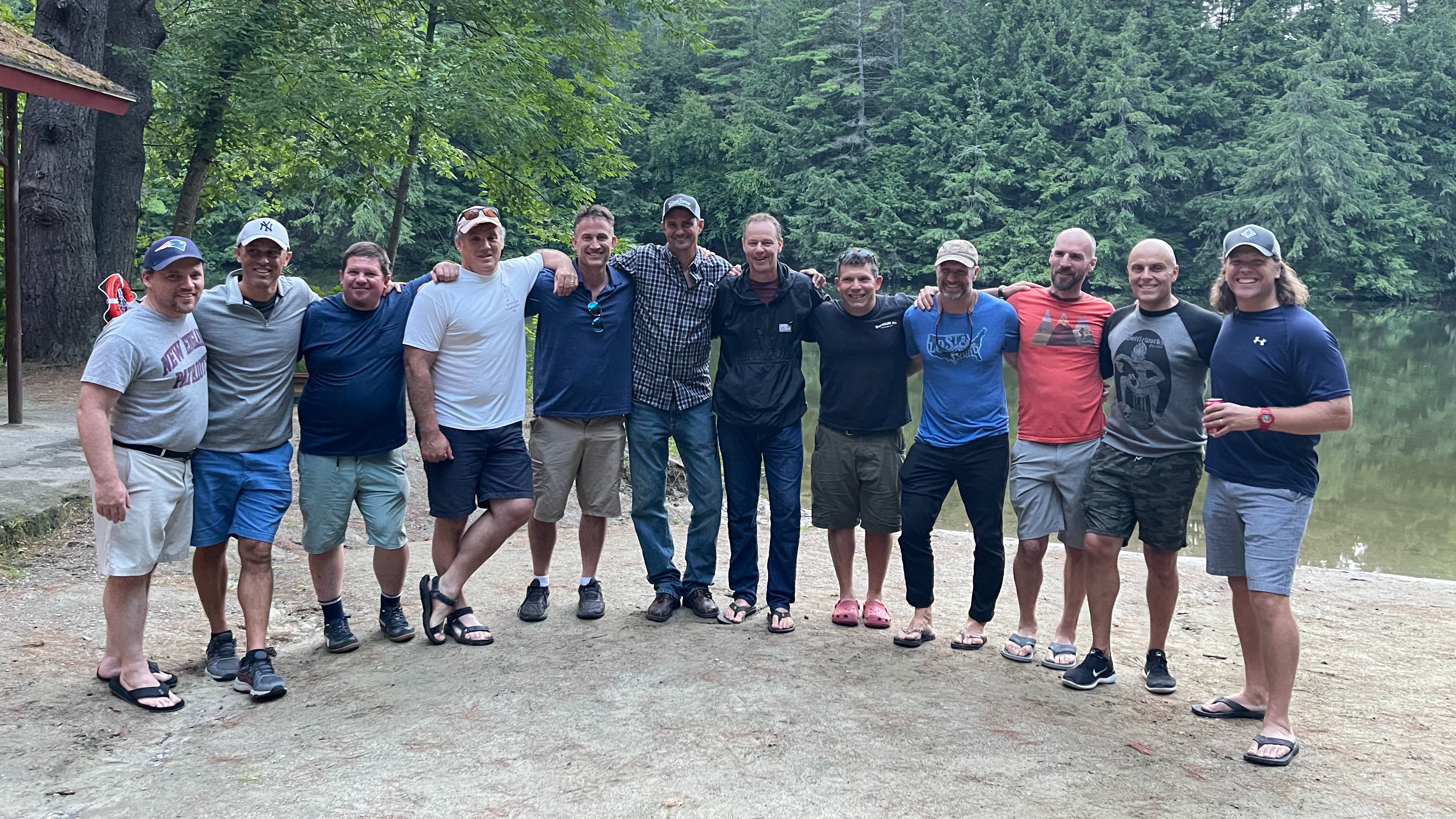
Some of my favorite Marauder friends from Hanover High School in New Hampshire, 30 years later.
I’m thankful that my original family is all still here and that we remain close. Although we look a little too happy considering this was taken right after my Grandma Albrecht’s funeral. (You know we love you Grandma. And you were 99.)
13. Skillz. I added some new skills in the past decade. Entrepreneurship, blogging and authoring are the obvious ones. But also surfing, coaching, mentoring, keynoting, wake surfing and parenting teenagers to name a few. I am currently working on my French aussi. You are never too old to keep adding skills. And girls like guys with skills. Like nunchuck skills.
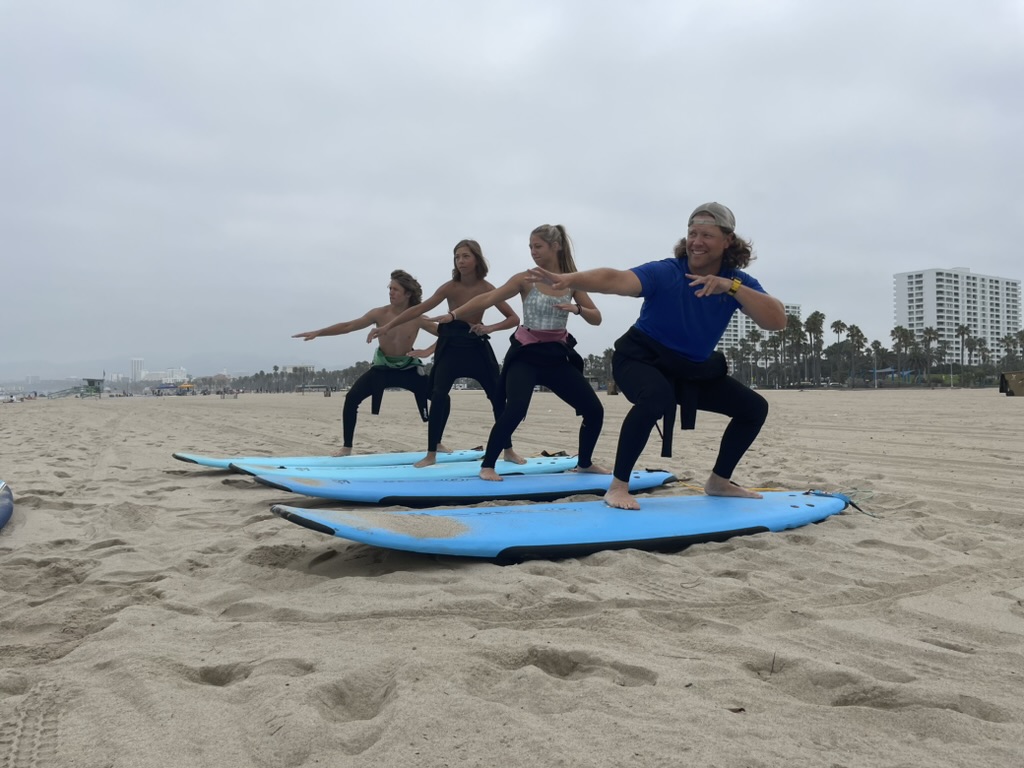
I learned to surf in my 40s. I even got off the sand and into real water!
14. Home During my 40s I lived in 4 different houses in Ohio, Georgia and Wisconsin. 2 years ago, after shopping for 2.5 years and not making a single offer, Dawn and I walked into our current home the first day it was on the market. We immediately knew it was the home for us and made an offer that afternoon. We have loved living in our current home. It is the first time in my adult life that I have lived somewhere that I didn’t consider temporary. Which is a great base for a great next decade.
Me and the Crew at home.
Key Takeaway
There is a difference between aging and living. Don’t confuse the two. Focus on the living and the aging won’t bother you. Life is what you make it. Setting goals for each decade helps you think long-term and act in the short term. Decade thinking gives you enough time for great accomplishments and great change. But it provides a clear and unmoveable endpoint that creates the everpresent gift of urgency. So enjoy your life. Enjoy your decade. And make the most of every day.
If you know someone who could benefit from this message, please share it with them.
Opportunities are the seeds of success. Just as the acorn becomes an oak, opportunities can transform into happiness, wealth, fulfillment, or success. And like little pigs, musketeers, and Charlie’s Angels, they come in 3 types:
The opportunities that find you.
The opportunities that you find.
The opportunities that you create.
The first kind falls in your lap. The second kind you catch. The third kind you make.
If you wait around for the first type, you may wait forever, like an airline customer service representative.
The second type you need to look for. And you better be ready to compete for it when you find it. Kind of like parade candy. Or the t-shirt shot out of a cannon at a sporting event that isn’t even your size.
The third type will have no competition. Because without you it doesn’t exist. Like your next business, book or baby. This includes connections, creations, innovations and organizations of all types. Basically anything with a tion in it. Because the suffix tion turns a verb into a noun. Just like opportunities empower you to make things with your actions.
Key Takeaway
Keep your eyes open to find opportunities. But more importantly, keep your mind open to create your own. Because those are the most valuable and available variety of all.
*If you know someone who could benefit from this message, please share it with them.
One of the great mistakes you can make in life is studying things to death. By this, I mean that you read and research the things you want to do. And then you die. Your life is full of studying, thinking and preparing. But never actually doing. This is a big mistake. Huge. Like Julia Roberts said.
Most people think they need to prepare to get started. But they are never prepared enough to go. If you subscribe to this philosophy you will never meet the greatest teacher of all. Because she isn’t in your books. And she isn’t part of the PTA in Harper Valley.
The best teacher in the history of the planet is action. Action provides immediate lessons, feedback and progress. You learn by doing. You do not really learn by not really doing. I think Dr. Doolittle said that.
You learn to play a game by actually playing the game. This was true on the playground. It’s true in board games, video games and head games. (Just ask Lou Gramm.) It is also true in the game of life and in the great game of business.
As an entrepreneur, I learned how to start and run a business by simply jumping in and doing it. I learned more in the first week I launched The Weaponry than I learned from all of the books, magazines and articles I ever read.
I’ve learned how to coach sports by jumping in and doing it, while I was still totally ignorant. (Now I am just 3/4 ignorant.) Each step you take teaches you what you should do next. It’s how Mark Zuckerberg invented Facebook. And why the Winklevosses did not.
Key Takeaway
If you really want to learn how to do something don’t study it. Do it. You will learn more and faster by taking action than you could through any other approach. The more action you take the more you will learn. You are already prepared enough. It’s go-time.
*If you know someone who could benefit from this message, please share it with them.
I thought about becoming an entrepreneur for a long time before I summoned my inner David Lee Roth and actually jumped. In fact, I thought about starting a business for nearly 2 decades before I launched the advertising and idea agency The Weaponry. Which means that, unlike Geddy Lee, I didn’t rush into anything.
Once I had my entrepreneurial awakening in the summer of 2015 I began generating income within just a few months. I officially legalized The Weaponry as an LLC (yeah, you know me) in the spring of 2016. And while I have physically looked back since then, I have had no regrets.
Over the past 7 years, I have learned a lifetime’s worth of lessons about entrepreneurship. (Starting with how to spell the word itself.) But the most important thing to know about entrepreneurship is this:
The entrepreneur is the great limiter of the business.
10 Ways Entrepreneurs Limit Their Business
You will be limited by your energy and ability to work hard.
2. You will be limited by your network and willingness to reach out and connect.
3. You will be limited by your ability to recruit and hire. (Think about it. There must be hire love.)
4. You will be limited by your willingness to create standardized processes.
5. You will be limited by your ability to give up control to others.
6. You will be limited by the size and scope of your vision.
7. You will be limited by your ability to control your greed and keep your hands off the cash flow, Gordon Gekko.
8. You will be limited by your ability to grow sales to scale your operation into a more effective and efficient machine.
9. You will be limited by your creativity and willingness to innovate
10. You will be limited by your risk tolerance. If you are not willing to walk the tightrope to the promised land you will never get there.
Perhaps most importantly, there is no one else to blame if you don’t become an entrepreneur at all. And if you are an entrepreneur, there is no one else that will prevent you from growing your business’s annual revenue to $100,0000, $1,000,000, $100,000,000, or $1,000,000,000 per year. That’s on you.
As the entrepreneur, you are both the gas pedal and the brake. Most people are afraid to take their foot off the brake, and as a result, never get going. Which means they never see where their journey could have taken them. Don’t let that be you.
Key Takeaway
Find your entrepreneurial gas pedal. Get going. Keep going. Then go faster. It will be your willingness to go, grow, create, and accelerate that will determine how far your journey takes you. We all have a limited amount of time. So go while you can. Realize that you are the determining factor. So be determined to be more.
*If you know someone who could benefit from this message, please share it with them.
I had several conversations this week with dreamers. They all had interesting ideas that they wanted to bring to life. Which led to our discussions about the next steps on their journey.
Through my countless conversations, with dreamers, it is clear that we do a poor job of teaching people how to bring their dreams to life. Which means that most people have an easier time creating a human than creating a blog. Which is crazy. Or it’s a sign that God wanted more babies than blog posts.
I have spent my entire career bringing ideas to life. First, as a professional advertising creative, then as a t-shirt creator. I ramped up the degree of difficulty when I created The Weaponry, a full-service advertising and ideas agency. Most recently I published the book What Does Your Fortune Cookie Say? Then I made 80 real fortune cookies, with my real fortunes inside them.
I know how to make dreams a reality. I follow a simple process. And I want to make sure you know it too. Here it is.
5 simple steps to convert your dreams into reality.
1. Dream: Think of the fun, interesting, and rewarding things you would like to create or do. Most people who come to me to talk about their next steps have gotten this far. I’m guessing you’ve gotten this far, or you probably wouldn’t have been interested in this article. Because headlines help us decide. That’s the power of advertising.
2. Write: Get the dream out of your head and write it down. This creates the first real manifestation of your idea in the real world. It makes it tangible and detailed. This physical form of the idea is like a blueprint or a recipe card. Once you have the dream written down you can bring it to life. The more detail the better. You would be shocked how few people come to this step on their own. Most dreams never make it to written form. Yet it is the easiest part of the process. Easy like Sunday morning.
3. Research Once you have your dream written down, do a little research to educate yourself on the topic, process, industry, or whatever you need to learn to get the train moving. Google is your friend. (If you’d don’t know what Google is just google it.) But the key is to do a little research. Don’t analyze things to death. Learn just enough to get moving. Then go. If you are researching more than a week before you take your first steps you are procrastinating.
4. Deadline Give yourself a deadline. Dreams without a deadline are pure fantasy. To get into the non-fiction section you have to constrain your plans with a due date. Or a Do-date. Or a Zippity-do-date. Set a date to take your first action. And set a date for completion. If you really want results, create an entire timeline. And block time on your calendar to take action, Jackson. Again, none of this is hard.
5. Action Get to the doing. Take the very first action. When you do, the next action will magically appear. Like Platform Nine and 3 Quarters. Then just keep taking steps. Always have a bias towards action. Bloggers Note: I once dreamed of writing a blog. By the end of this month, I will have written 800 blog posts. Because I just keep taking action.
Key Takeaway
Bringing your dreams to life is easier than you think. Follow the process. The steps are not hard on their own. Just keep taking steps and soon your dream will be your reality. If your progress stalls, revisit the process. Your problem will be solved by taking steps 2, 3, 4 or 5.
*If you know someone who could benefit from this message, please share it with them.
I always loved the idea of being an entrepreneur. But like most normal people, I started my career as an employee. I worked for my first employer for 10 years. I worked for my next employer for 9 years. I liked my jobs. But I always knew that in my dream scenario I wanted to own my own business. I bet your dream scenario has a similar entrepreneurial ending. And maybe a swim-up bar.
After years of semi-scientific research, I have concluded that there are 3 great times to start your own business. I have published my findings below for your evaluation.
The 3 Great Times To Start Your Own Business.
When you are first out of school, and have nothing to lose.
When you retire, have plenty of money and time, and have nothing to lose.
When you are 40ish, have a lot of experience, skills, contacts, and confidence. And a lot to lose.
The first 2 paths are popular for obvious reasons. Like the-nothing-to-lose part. When you are right out of school, you aren’t giving up anything. And at the end of your regularly scheduled career, you get to choose an overtime period. Which is fun. And only threatens your shuffleboard time.
I am a mid-career entrepreneur. Jeff Hilimire started his entrepreneurial adventure while still in college. We’re both happy with our decisions.
Track Switching
But how in the world do you switch from the employee track to the entrepreneurial track mid-career? Even more challenging, how do you do it if you have a really successful career and are well compensated? How do you make the transition when you have a significant mortgage? And car payments? And kids? And a spouse you really want to keep? Plus, there is the insurance thing. And the annual company Christmas party with all the free alcohol! How do you walk away from all that gravy?
Dream it up and make it happen.
You can do it!
Well W-2 Nation, I did it. And it has been an amazing experience. When I turned 40, I realized that if I died then and there, on the dance floor, while doing the Electric Slide, my greatest regret would be that I never started my own advertising agency. So I resolved to start my own business within the next 2 years.
I launched The Weaponry, an advertising and idea agency, 6 years ago. Today, we have 26 clients, 2 offices, health insurance, dental insurance, and a matching 401(k) plan. (Never forget the k, or all you have is an area code.) We are looking at a 50% year-over-year revenue growth rate. And most importantly, I got to create the dress code.
Make the move!
Now, I want to help you begin your mid-carer entrepreneurial adventure. What lies below the fold is the collection of tips, how-tos, and advice I wish I had 7 years ago. This isn’t how-to-build-a-unicorn stuff. I’m not talking about a Zuckerberg, Gates, or Jobs path, where you drop out of college and start a trillion-dollar business. I am talking about advice for regular people, with regular careers, who want to use their experience as a launchpad to entrepreneurial success.
That’s what I did. And you can too. Here’s how, brown cow.
20 Key Steps To Becoming A Mid-Career Entrepreneur.
Surround Yourself With Entrepreneurs. Entrepreneurship is a mindset more than anything. It helps to spend as much time as you can with other entrepreneurs. It helps rewire your brain to see opportunities and become a problem solver. It will help you develop your risk tolerance. Because once you are around entrepreneurs who are enjoying the rewards of their risk tolerance you will realize the nice homes, cars, vacations, and freedoms are well worth the wager. Ask your Mentorpreneurs all the questions you can think of. They will want to help. And by hanging with your Mentorpreneurs, you realize it is far riskier to leave the control over your income to someone else. Plus, you quickly realize that you can create anything you dream up. Like the word Mentorpreneur.
2. Become really great at what you do. When you are great at what you do you become sought after. And when people seek you out, it means you no longer need your employer to develop opportunities for you. Because you can create those opportunities for yourself. This is called career capital. The more you develop the easier it becomes to call your own shots (shots shots shots!) When your clients at your day job are more in love with you than the company you work for you have a green light to start your own business. And green means go, Mario!
3. Develop And Maintain Your Network. People work with people. And they love to work with people they like and trust. Continuously expand and strengthen your relationships. The more people who like and trust you the better. Those people will become customers, partners, connectors, and referrals. And those are the 4 most important people in an entrepreneur’s life. (After the supportive spouse and great coworkers.) If you’ve neglected this area of your career, it’s time to get to work. When I started The Weaponry I quickly realized I had done much of the hardest work of entrepreneurship decades earlier through my relationship-building.
4. Save Your Money. By having reserves in your bank account or investments you can tap into, you buy yourself running room to start your own business. Most people can’t consider starting their own business because they don’t have the luxury of not having a dependable paycheck for several months. Don’t be that kid. If you don’t have the money on hand yet, start your Run-My-Own Business Fund today. You might not need the money. Or not much of it. But simply having it available provides the confidence to jump, like David Lee Roth.
5. Live Below Your Means. As your income increases, don’t let your expenses rise at the same rate or you will always need your current level of income. That’s a problem. You’ve heard of the golden handcuffs of a high-paying job that keep people locked into their employer. But the most dangerous career situation is the one where you need your current income level to support your lifestyle. Because you will never be able to downshift into a lesser-paying situation, even temporarily. And the first move an entrepreneur needs to make is downshifting into a lesser-paying situation for an undefined length of time. That is the price of entry. That is the entrepreneurial initiation ritual, my friends. Tip #4 helps you bridge that gap. My dip only lasted about a year. But it really made me hustle. And hustling helps you make money. #dothehustle
6. Don’t Quit Your Day Job. To combat the money challenges outlined in the previous points, don’t do something rash, like quit your job. Hold onto your job as long as you can. It will be the primary source of funding for your startup. Use your current job to help pay for the expenses of your next job as long as you can. Work on your startup at night and on the weekends. Like Shania Twain said, no one needs to know right now. Not quitting your day job allows your startup to gain speed, momentum, and cash flow. Not quitting until you have to makes it much easier to jump from the Employee Train to the Entrepreneur Train. If we were swinging from ring to ring on a playground, think about not letting go of the ring you are holding until you have your hand firmly on the next one. And if you never have a firm grip on the next ring, then you never let go of the one you were already holding. No harm. No foul. You tried. You can be proud of that.
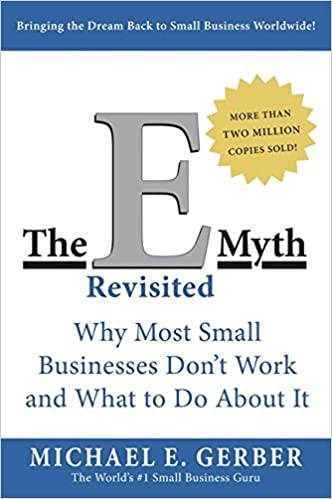
7. Read The Book The E-Myth by Michael Gerber. This book is the bible on how to start and run your business the right way. (Only there is no Jesus.) I followed all of the guidance in this book before launching The Weaponry. It helped me think about the whole process the right way, and avoid a lot of problems. When people tell me they are planning to start a business, or are floundering in their startup, I always recommend they read this. And everyone always thanks me. If I were you I would hit the link above and order the book right now. Tip #8 can wait.
8. Create Your Legal Entity: It’s easy to create a legal business entity. Start simply by applying for your FEIN. Which is your Federal Employer Identification Number. It’s like your business’s social security number. This ID number enables you to do everything the way the government and IRS want you to. With this in hand, you can file your legal business entity with your state as an LLC (Limited Liability Company), Corporation, Limited Partnership, General Partnership, or as a Sole Proprietor. I set up an LLC. (Yeah you know me.) It’s quick and easy. Then you can open your business bank accounts and get your company credit card. With these things in place, you have your financial and legal structures ready to roll. Which means you won’t need to ask your customers to pay you in cash. Or chickens.
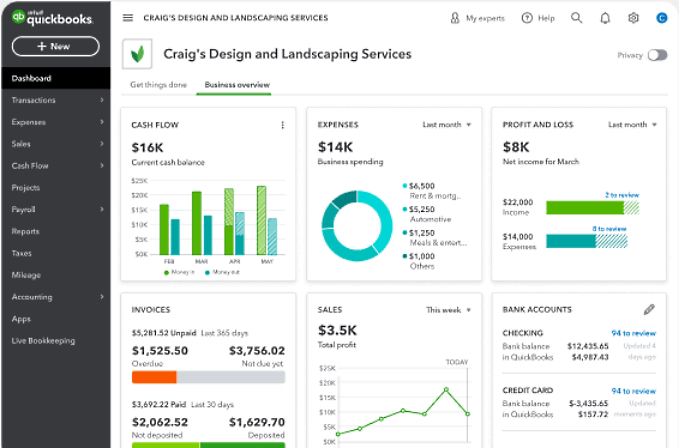
9. Get Quickbooks. Quickbooks is the accounting software that makes it easy to track and manage your accounting. You connect all of your bank accounts and credit cards to this. It makes it easy to create and send invoices (bills) and to know what is due and when. It also provides reports (profit and loss, profitability, balance sheets, etc.) and dashboards that help you manage your business. Get this going as soon as you can afford to. It will become the backbone of your accounting system. And your scoreboard. Best of all, Quickbooks is not the book equivalent to quicksand.
10. Get A Good Bookkeeper. Bookkeepers are God’s gift to entrepreneurs. They are reasonably priced specialists who have a valuable skillset that you likely don’t have. They can help you stay on top of your accounting while enabling you to spend more time on the things only you can do. Like finding paying clients. And putting on your deodorant.
11. Collect Recognizable People And Logos: You can start your business by working with anyone. But the goal should be to collect recognizable names as customers. That could mean that you work with well-known brands or people that other people know. When you share the kinds of brands or people that you work with you are elevating and legitimizing your brand by using theirs. If you work with individuals, work with the most popular most trusted, and most respected people you can. Their decision to work with you will carry more weight than say, your grandma. Sorry, Grandma.
12. Get involved in your community. The more involved you are in your community the more you will be connected to others and the opportunities they can introduce you to. You could be involved as a volunteer, member, attendee, or sponsor. You are going to want strong ties to the people around you and this is one of the best ways to get to know as many people as possible. Even better, when you support your community you will find that your community supports you too. It’s a thing.
13. Grab Chocolate Milk. Entrepreneurs understand the power of spending time with other people. Getting together for chocolate milk, (my preference) or coffee (most of America’s preference) is not about the beverage. It’s about the sharing and comparing of experiences and ideas. Through the process is sitting down with another person and talking you discover new ideas and resources. It creates a great transfer of knowledge and experience. It is the best way to tap into another person’s perspective and network. You could also meet for breakfast, lunch or drinks. Or fricken caramels. It’s all ah-bu-trary. #namethatmovie
14. Start A Blog, Podcast, Or Regularly Published Knowledge Share. It is not about who you know. It really is about who knows you. The more people who know about you, what you know, and what you are doing, the better. I started a blog right when I launched The Weaponry. And it has been a great vehicle to share my thoughts, ideas, successes, and learnings with the world. By doing so, my business and I are both top of mind when people have relevant opportunities. Podcasts, newsletters, columns, and social media channels all work too. The key is to share information and value with the world broadly so that more people than you could reach through individual messages know about you, your skills, philosophy, and eventually your business offering.
Me and my crew.
15.Find a supportive spouse. In the middle of your career, you are likely to have a spouse or life partner who is tied to your success or failure. Their support and encouragement are critical to your success. My wife Dawn has been amazingly supportive. She never batted an eye or raised an eyebrow when I shared my entrepreneurial vision with her. I would share this post with your partner so that they have an idea of what you are trying to do. That way they can help and support you as much as possible. If they are not supportive you have an important decision to make. And that’s all I have to say about that.
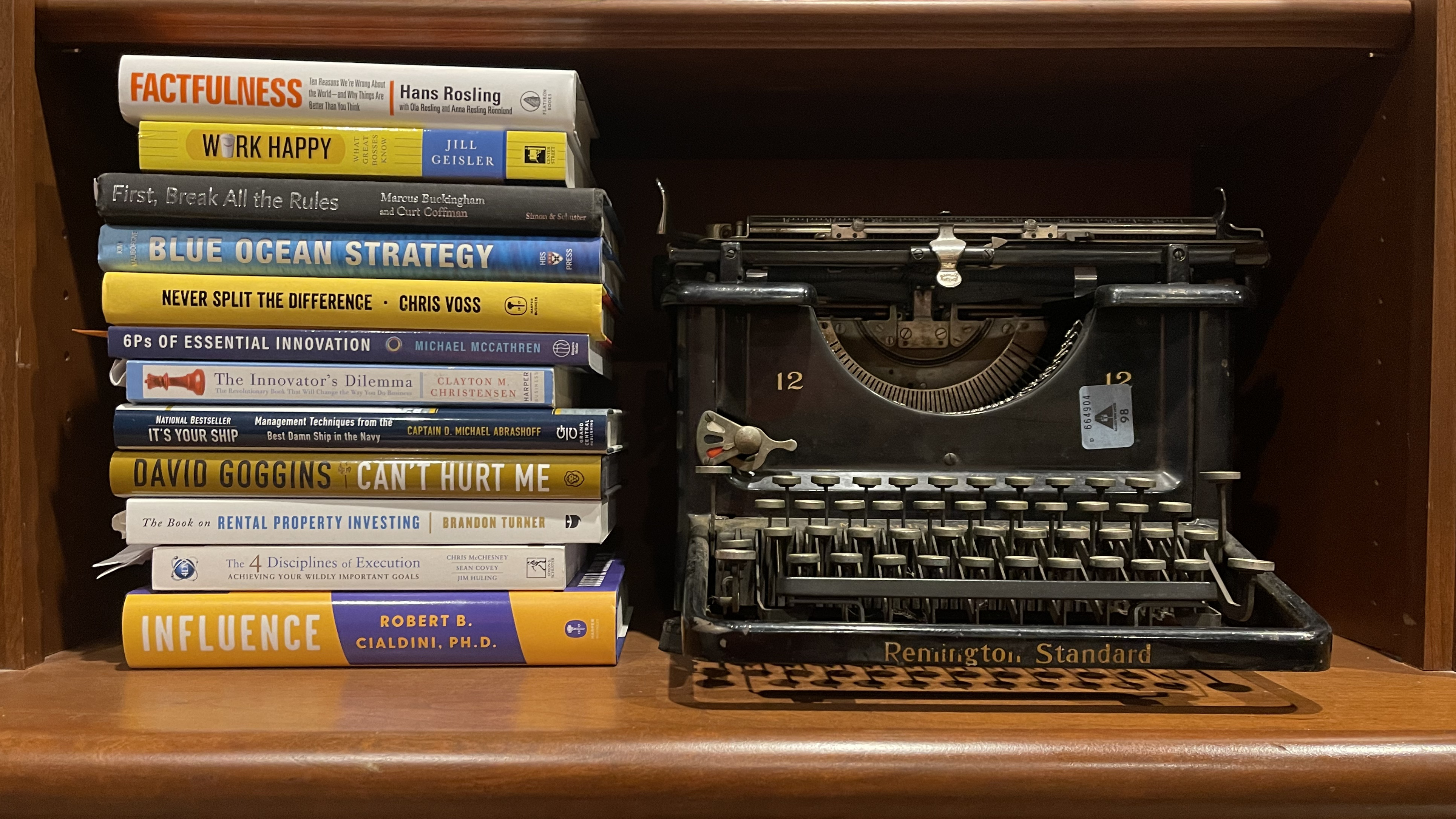
16. Read Read as much as you can about business ideas, successful companies, leaders, and entrepreneurs. This is the greatest entrepreneurial hack there is. Learn all you can from others who you admire and want to emulate. Read about how other Founders did what they did. There is no end to what you can learn from others. Read books, online articles, and blogs. Listen to podcasts and audiobooks as you commute. Drink that knowledge in. Create your own curriculum. And give yourself your own, self-directed advanced degree. You can even walk across your own stage and hand yourself an official-looking piece of paper. That would be weird. But you could do it.
17. Grow Your LinkedIn Connections. LinkedIn offers the best measure of your network. Create a profile if you haven’t already. Become an active user. Add everyone you meet to your LinkedIn profile by sending a custom invitation reminding them of how you know them or why you want to connect. This will become ground zero for raising your profile and staying in touch with your broader network and the opportunities they bring. Like, comment, and share content from other people. Make people who don’t know you curious about who you are. Insider Tip: LinkedIn offers an audio icon next to your name that let’s you share how your name is pronounced. Click on mine to see how it works.
18. Learn As Much As You Can About The Business You Are In Now. While you are still employed by someone else, take advantage of the experts in the organization. Learn from the finance or accounting teams. Talk to HR about how benefits, recruiting, and reviews work. Talk to sales about how they generate leads and close deals. Talk to operations about what makes them such smooth operators. Talk to IT about, well, IT. You can learn about all of the things you are going to need to know as an entrepreneur while in your current job. Think of it like studying. Your coworkers will love your interest in their work. And they will be flattered when you start your own business and credit them as your sliver mentor in their specialty. You’ll also know who would be a good resource to hire after your non-compete clause expires.
19. Write down your plans. It’s one thing to think about starting a business. It’s another to write down a plan to make it happen. Once you have a vision for your dream business, write it down. The more details the better. That written plan becomes your blueprint to build it for real. I followed the written plan approach from The E-Myth, and it gave me great structure and clarity around what I was creating. Do this too. Also carry notebooks. Not only are they great for capturing spontaneous ideas, but if you get shot in the notebook, it just may save your life.
My great client-friend Nicole Hallada was one of the first people I told about The Weaponry.
20. Talk To Former Clients About Your Plans. Your best prospective future clients are your past clients. When I launched The Weaponry I discussed my plans with several former clients. Within the first week of discussions I had 5 clients tell me that if I created a business they would send work our way. That confidence, interest, and demand in my offering made it much easier to jump. 4 out of those 5 former clients became future clients. The other one is living with constant regret. Right Chad?
Key Takeaway
Starting your own business in the middle of your career can sound intimidating. But the more you know, the easier it is. You can do it. Utilize the knowledge of those who have gone before you. Most of it is easier than it seems. With the tips above (that I wish I knew when I was starting out) you will be able to start taking steps today. Then simply never stop. If you need a Mentorpreneur, just reach out to me through Linkedin. Tell me I sent you.
*If you know someone who wants to start their own business and could benefit from this message, please share it with them.


































 Adam Albrecht Blog