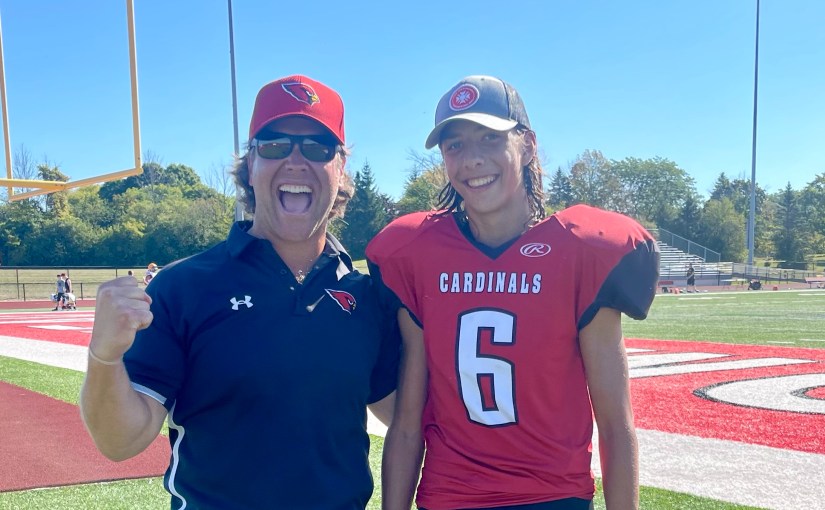
I never expected to be a football coach. 7 seasons later, I am a better parent and leader because of it.

I never wanted to be a coach. Some people are innately drawn to it. I am not. I thought it was a cool role for other people. But I just wasn’t that into whistles and sweatpants. When I graduated from college, I fully expected to never be involved in sports again, other than as a fan. Even after I had 3 kids, I never expected to coach them at any level. I didn’t feel like I knew anything well enough to coach. Except maybe being a class clown. But I felt I could teach that through more of a mentoring relationship.

So it is very strange to realize that this fall I wrapped up my 7th season coaching my son Magnus’ football team. So, how did this happen? To find out we’ve got to go back in time, like Marty McFly.

In The Big Inning…

Like most things, my coaching career started very small. When Magnus was in first grade, we signed him up for flag football. At that level, the teams practiced for one hour and then played a game for one hour on Saturdays in the fall. At the first practice-game the two guys coaching Magnus’ team asked me if I could help out the following week because one of them was traveling. I was happy to help. And I felt like a helper more than a coach. Plus the kids were in Kindergarten and first grade. So they wouldn’t be fact-checking my coaching.
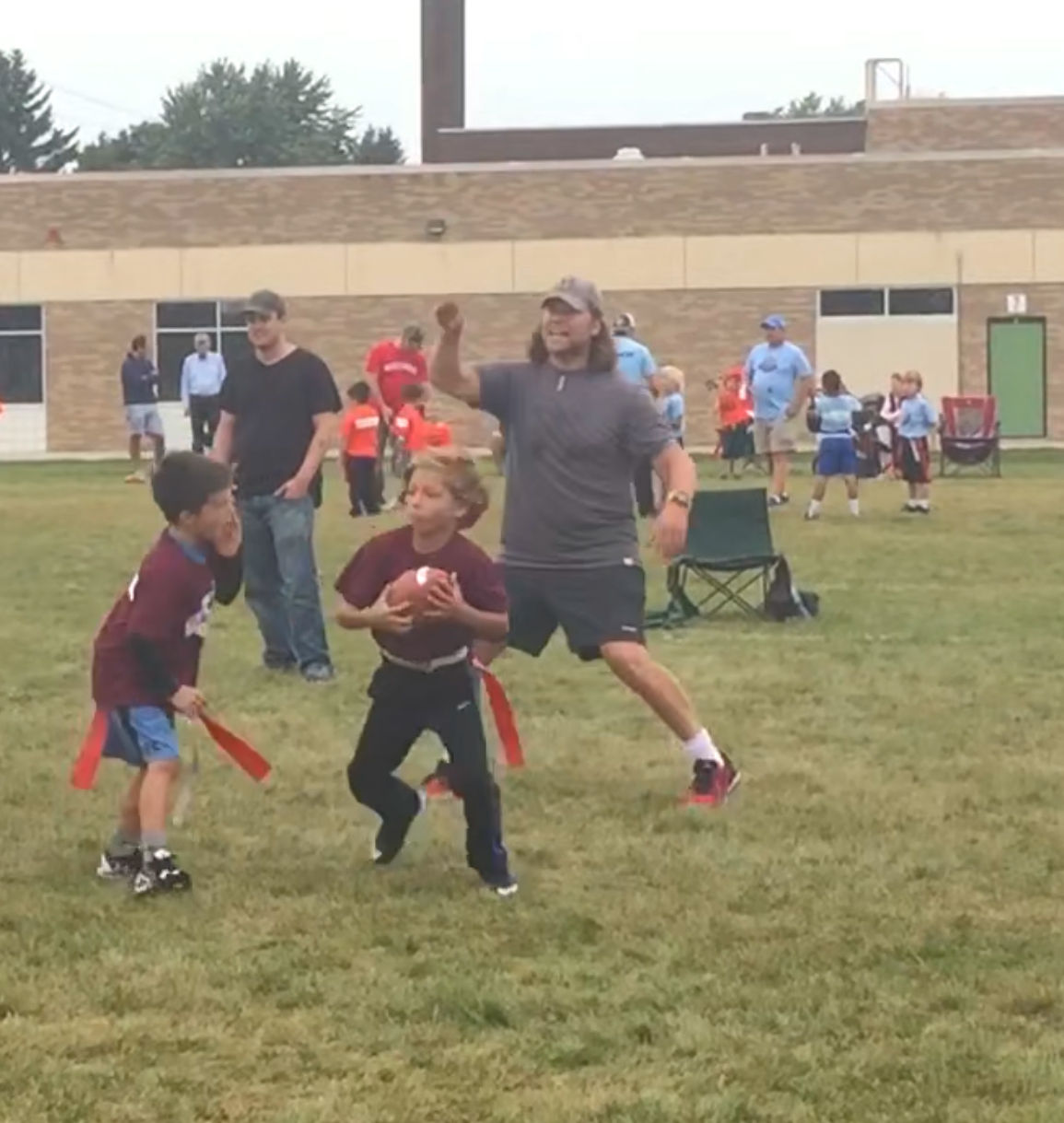
Magnus carrying the ball in 1st grade, when I could point where I wanted the players to go.

That Saturday’s practice-game went well. I had fun. Magnus enjoyed having me involved. None of the kindergartners asked to be traded or held out for more NIL money. So I became the third coach on the staff, helping whenever I could the rest of that cute little 6-week season.

Stepping Up A Notch

When Magnus entered 2nd grade, the program was looking for more parents to coach. My wife Dawn encouraged me to volunteer. So I got paired with another father. And we had a good time. Again, this was just 2nd and 3rd graders with one practice-game combo pack each week on Saturday mornings in the fall. And we were literally on the field placing each player in position and whispering in their ear what we wanted them to do. It was kinda like playing chess with tiny humans. Even better, the play didn’t start until the coaches said they were ready. The hardest part was organizing which parents were bringing the snacks.
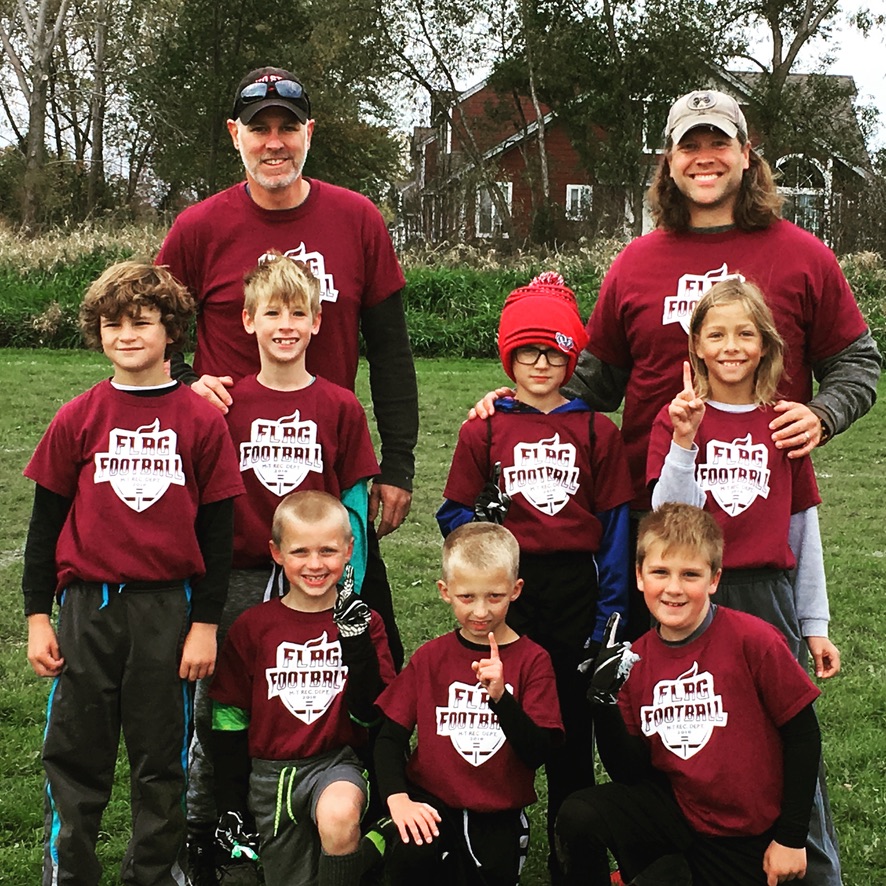
Magnus and Me in our second season together. That’s a happy father/son combo pack.

Gaming The System

By 3rd grade, I realized that you could choose to pair up with another coach to lead a team. And when you did that, it allowed you to stack your team with 2 good players. So my great friend Dr. Mike Brin and I teamed up to coach. DMB played football for the University of Wisconsin Badgers, and we had been friends since we were teenage college athletes in Madison. Mike’s son Josh ‘Aquaman’ Brin was a talented and enthusiastic athlete. Josh and Magnus gave us a strong nucleus to build a team around. Kinda like D-Wade and Chris Bosh. We were lucky enough to land a few other really talented second and third graders, and we had a fun and successful season, even before the snacks.
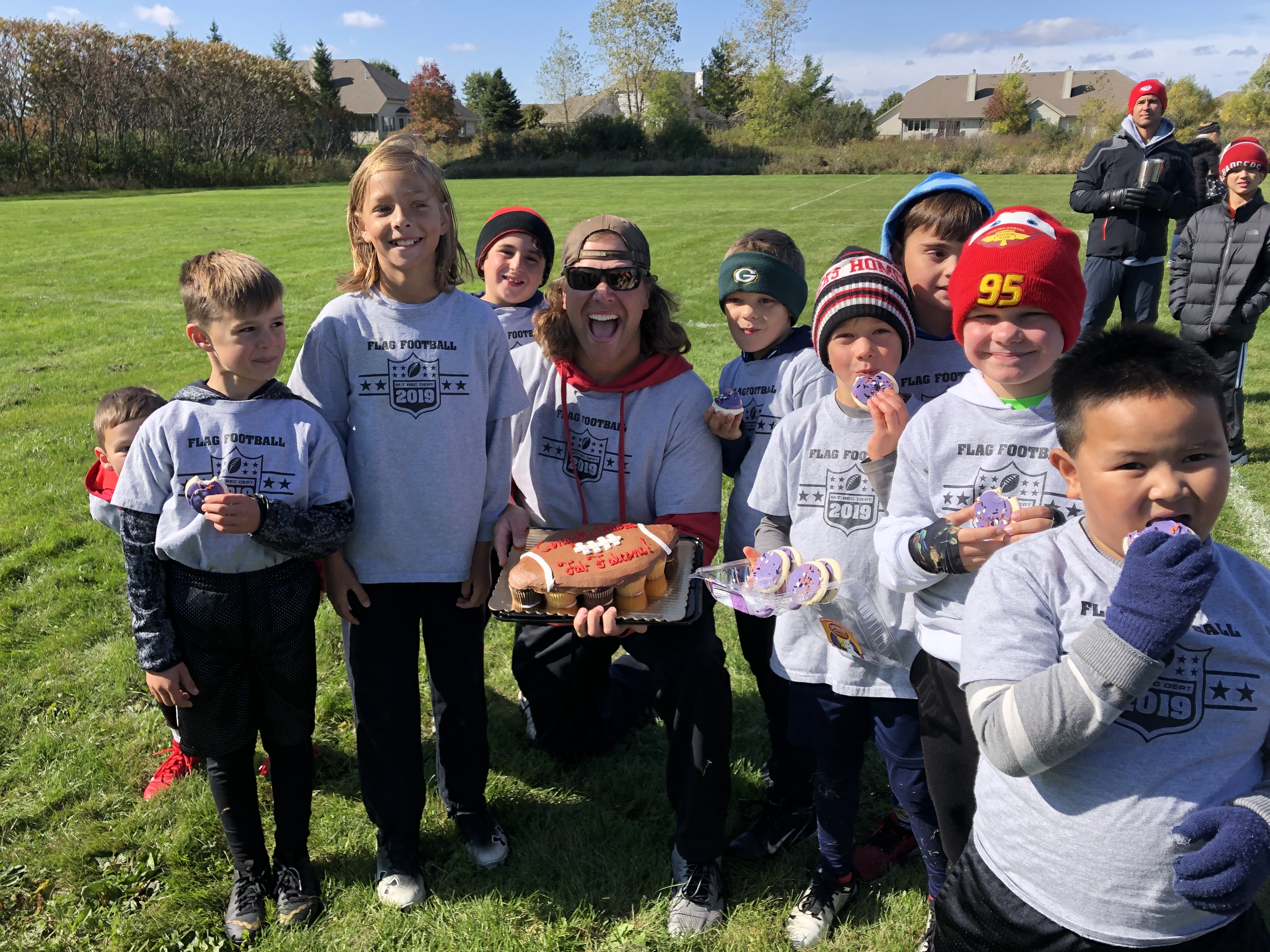
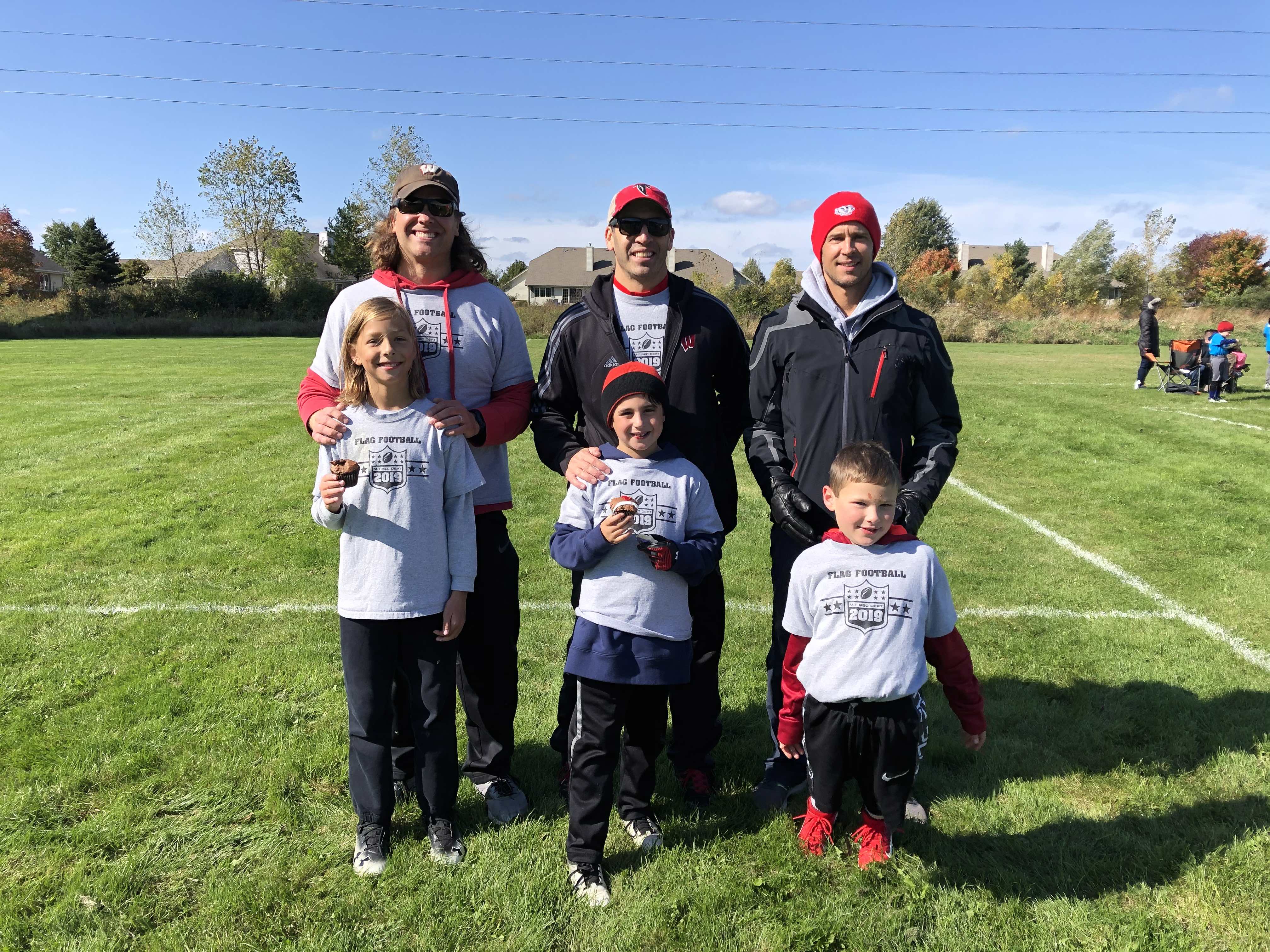
Season 3. We were really upping our snack game by then.
Me and Magnus, Mike and Josh Brin, Josh and Hudson Hunt. All 3 of the guys in the back row were UW Badger athletes, which meant we knew how to recruit. (You do it with cupcakes.)

The Curve Ball

In 4th grade, COVID-19 hit. And the program was canceled for the year. Boo. But Magnus was desperate to play football. So we were allowed to enroll him in the 5th grade Mequon-Thiensville Cardinals tackle football program, where he played up a grade as a tall and eager 4th grader. The boys played with face masks over their face masks, which looked funny and may have had no practical effect, but it made everyone feel better about playing football during a global pandemic. No kids got sick. And I got to sit in the stands, 6 feet apart from other fans, and cheer through a mask like a normal COVID-era parent.

At this point, I thought I was finished coaching. I enjoyed the season as a fan only. (Not to be confused with Fans Only.
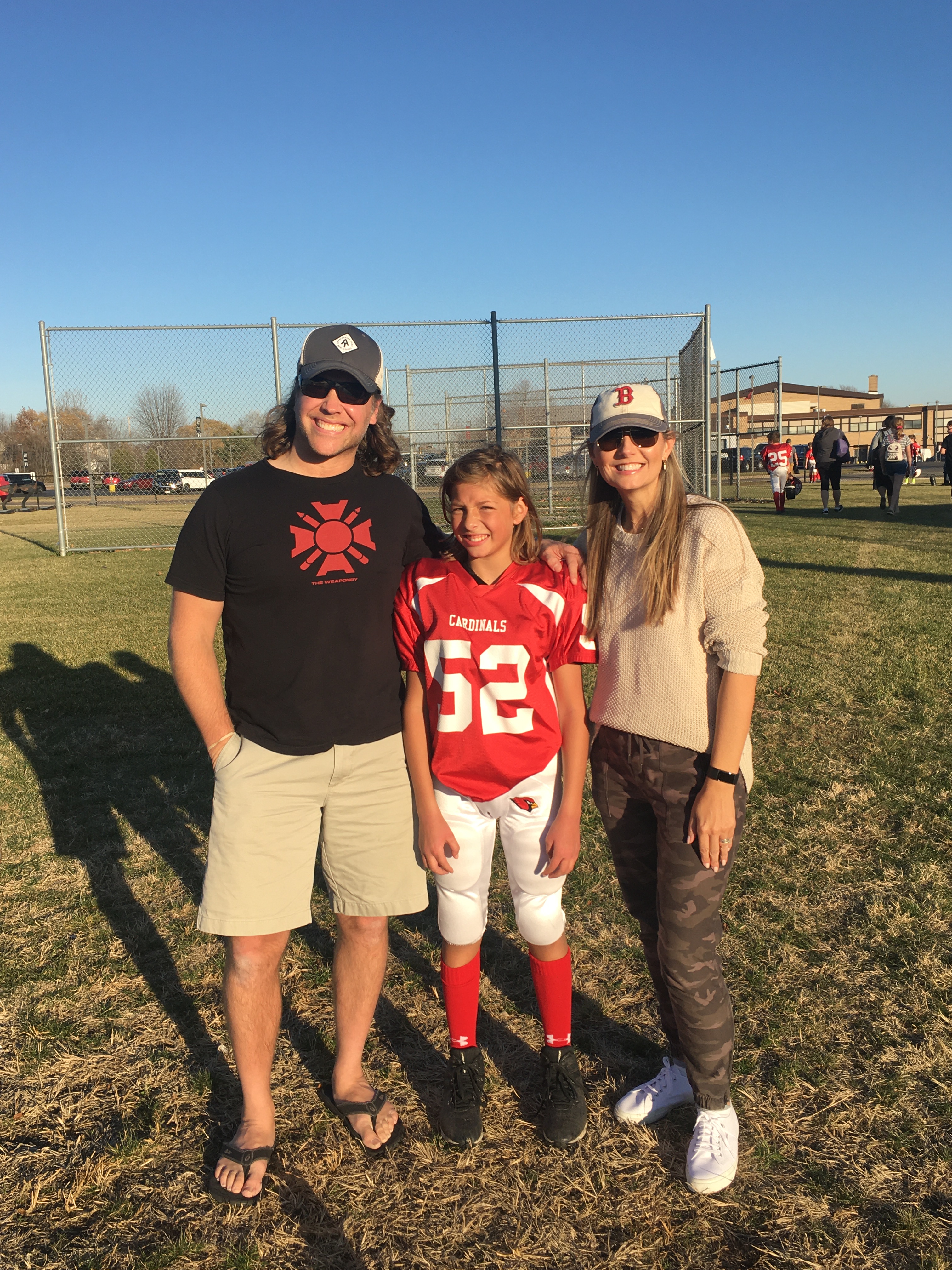
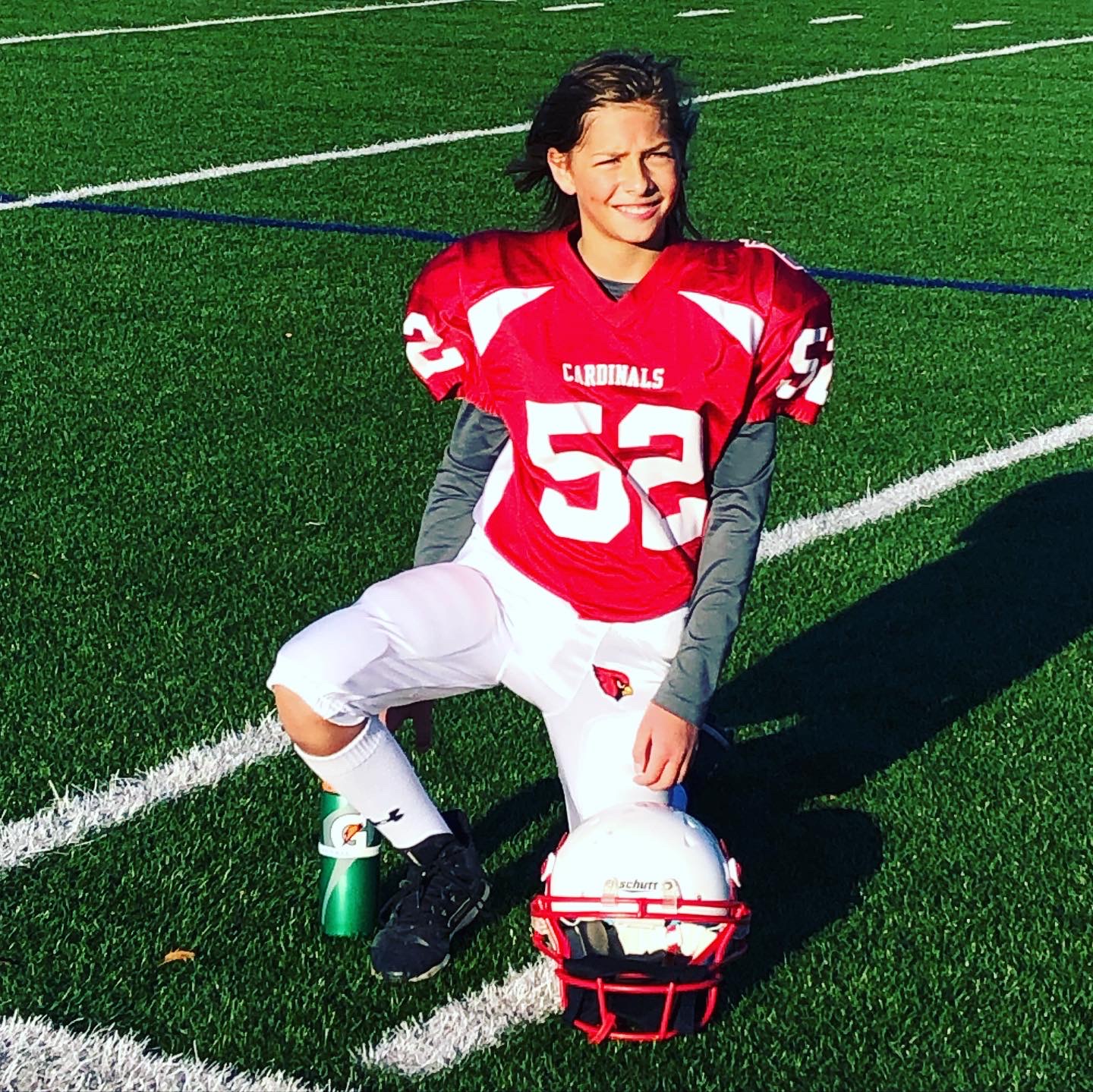
When Magnus was in 4th grade, he played tackle football with 5th graders, And I got to cheer in the stands with Dawn. I also got to wear flip-flops without a fear of getting cleated.
Magnus and a little wind machine for the hair.

Back On Track

That spring, I made a much bigger coaching commitment and started coaching high school track and field. My daughter Ava Albrecht was a freshman at Homestead High School in Mequon, Wisconsin. And I knew that I knew more about throwing the discus and putting the shot than most Mequonians. The flag football coaching experience made me think I could handle track. After all, when you coach throwing, you simply coach technique. There is no strategy. Or defense. Or concussion protocol. Go track!

Tackling Tackle Football

When Magnus entered 5th grade I was asked to help coach his tackle football team. I was reluctant because of the time commitment, especially on the heels of a long track season that went almost to July and left me with just 1 month without coaching obligations. But my coaching confidence was growing. So, I agreed to coach part-time. I was another warm body there to supervise kids and help run drills. I cheered a lot. And I tried to make it fun. For much of the season we only had 16 kids available. So we could only run 8 vs 8 scrimmages. Which was pretty silly. But I like silly.
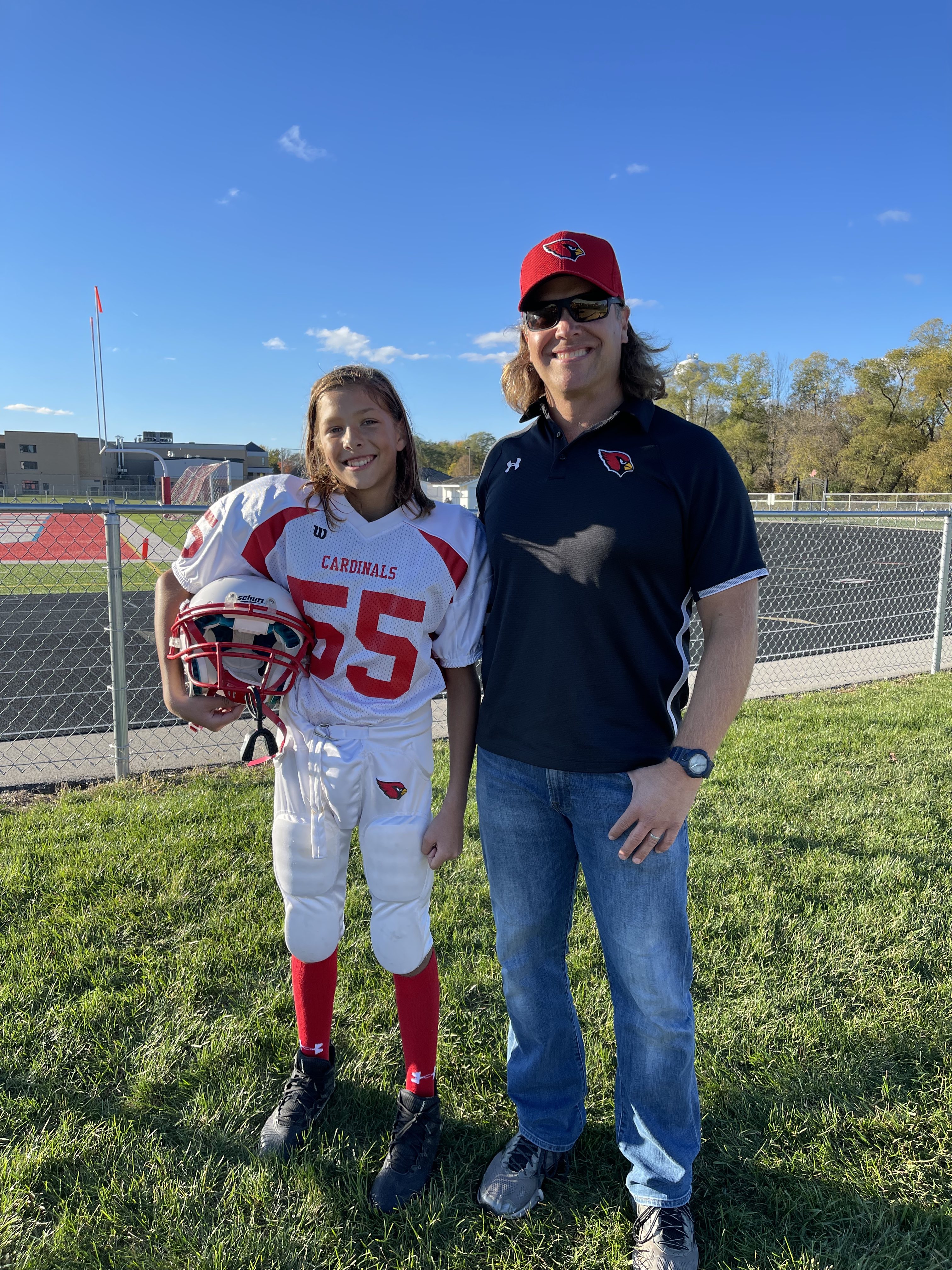
5th Grade. And We’re back together for Cardinal Rules football.

Jumping Into The Deep End Of The Pool.

When Magnus entered 6th grade my friend Josh Hunt volunteered to become the team’s head coach. Josh played football at the University of Wisconsin and had a lot of coaching experience. He asked me if I would be willing to be the defensive coordinator for the team. I agreed. Because Josh is a nice guy and didn’t seem like the type to burn my house down if I made some mistakes.
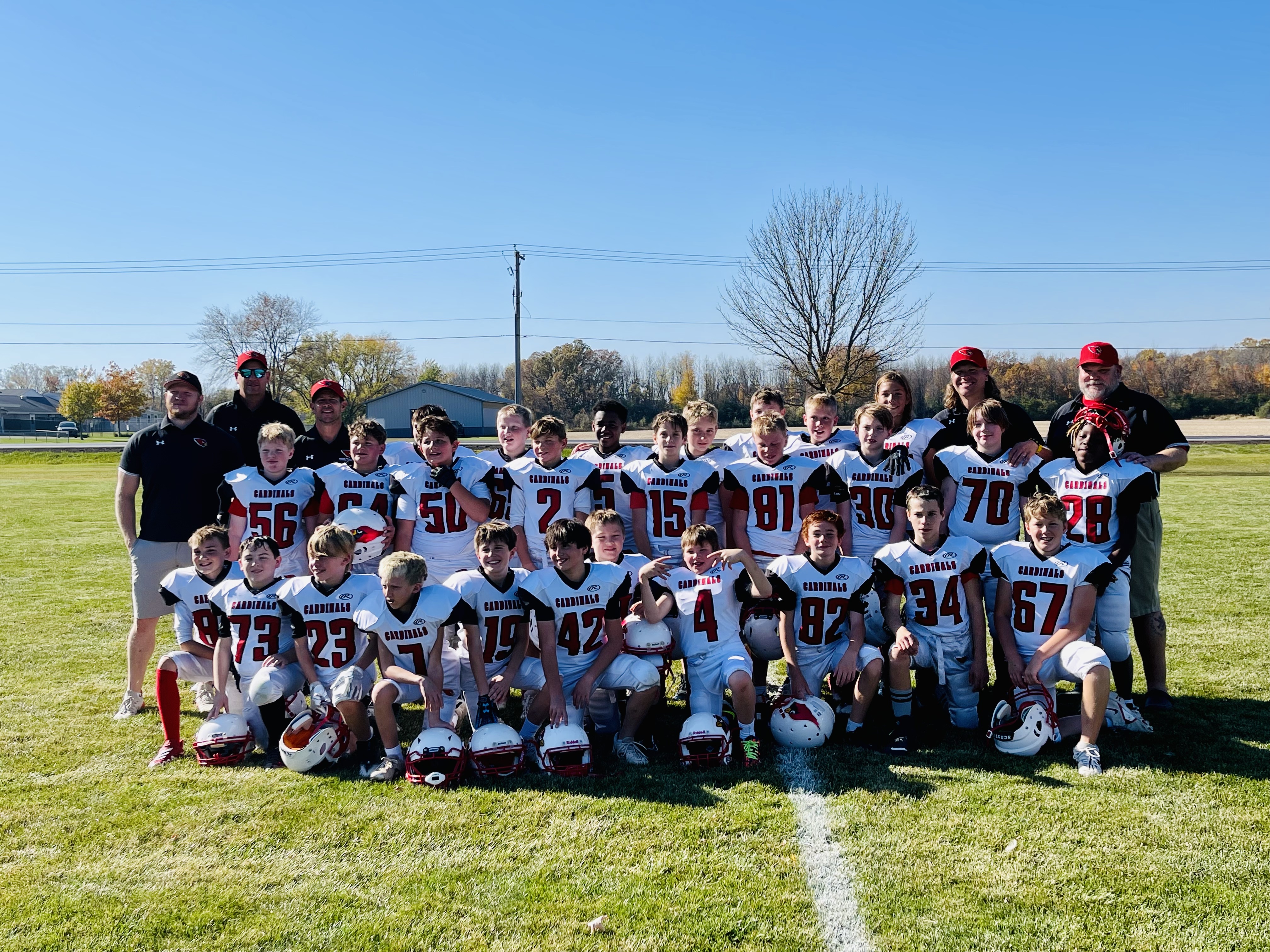
Realer Than Real Deal Holyfield

That’s when coaching got real. The slow build of casual coaching obligations helped lead me to a very real coaching position. Suddenly, I would be preparing for every week by watching game film of the teams we would be playing that week. I sketched out every unique formation and play the upcoming opponent ran, noted who carried or caught the ball, how frequently they ran each play, and generally how effective it had been. This represented a huge increase in both my time commitment and my emotional investment. I started to understand why Bobby Knight threw chairs and why Mike Leach went off on a seemingly insane rant about the players fat little girlfriends. Now I certainly don’t condone their behavior. But I started to understand it.

In practice, I taught our team the opponent’s plays and devised strategies to defend against them. Then, on Sundays, I watched our own game film from Saturday and marked up all of the footage on software called Hudl to show what we did right, what we did wrong and how to do things better the next time. I learned that those 3 lessons are the basic pillars of coaching.

I spent more time than I care to admit watching game film, preparing defensive strategies and developing lineups each week. It was a significant commitment. But I loved coaching this group of boys. And I loved spending so much additional time with Magnus.
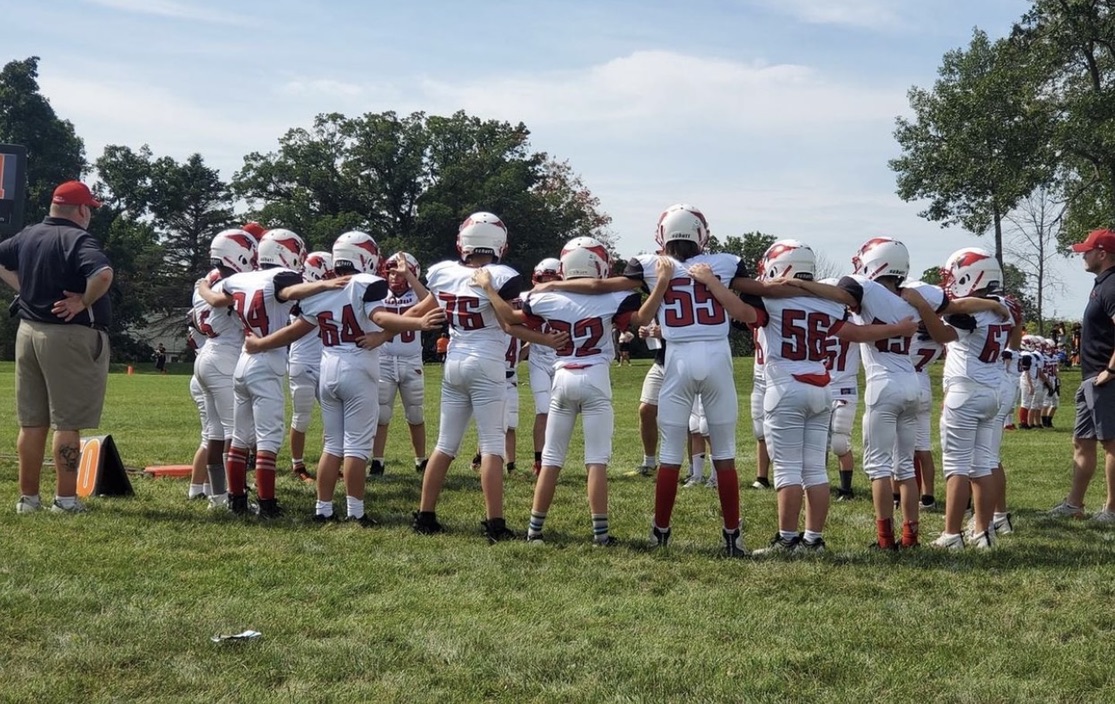
6th Grade. And one of my favorite photos. If you look closely you can see my knee next to Magnus’ (#55)

So I raised my hand to do it again in 7th grade.
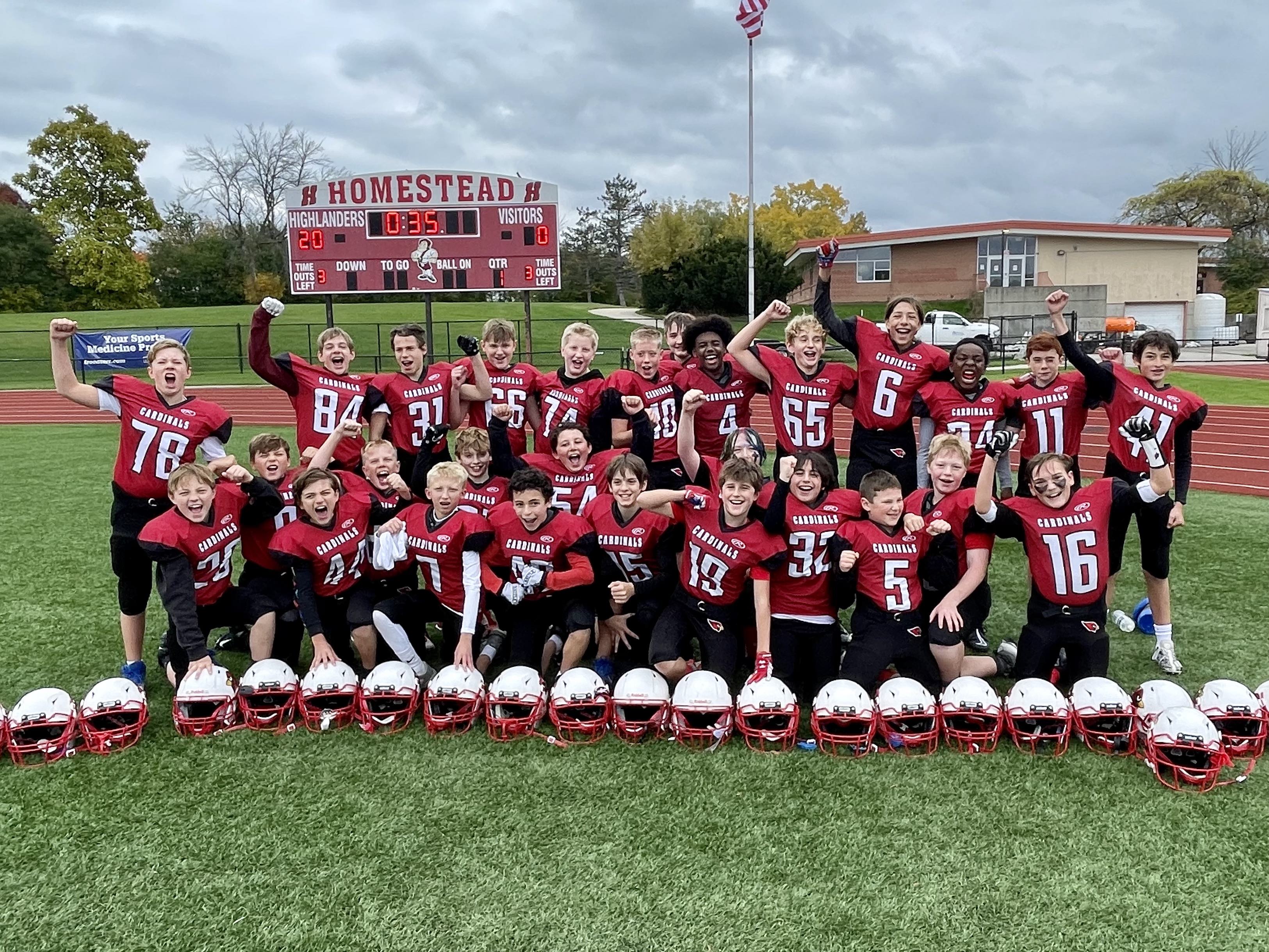
We had a great season in 7th Grade. This was after our last game of the season. Every team should end the year feeling like this.

And again in 8th grade.

For the past four years, from August through October, football has been an intense focus for me. I felt the pressure that comes with being an amateur coach in a high-profile team sport like football. So I prepared as much as I could to help give the boys an edge in the games. Sometimes it really helped. Sometimes it didn’t seem to help at all. This was either because our opponent was so good at doing what they do that we couldn’t stop them, or because they were bigger, faster and stronger than us, and we couldn’t stop them. But either way, I always felt as if I did all I knew to do to prepare our team for each game. And I learned a little from each win and each loss. Which meant that I found a way to win no matter what the outcome was.
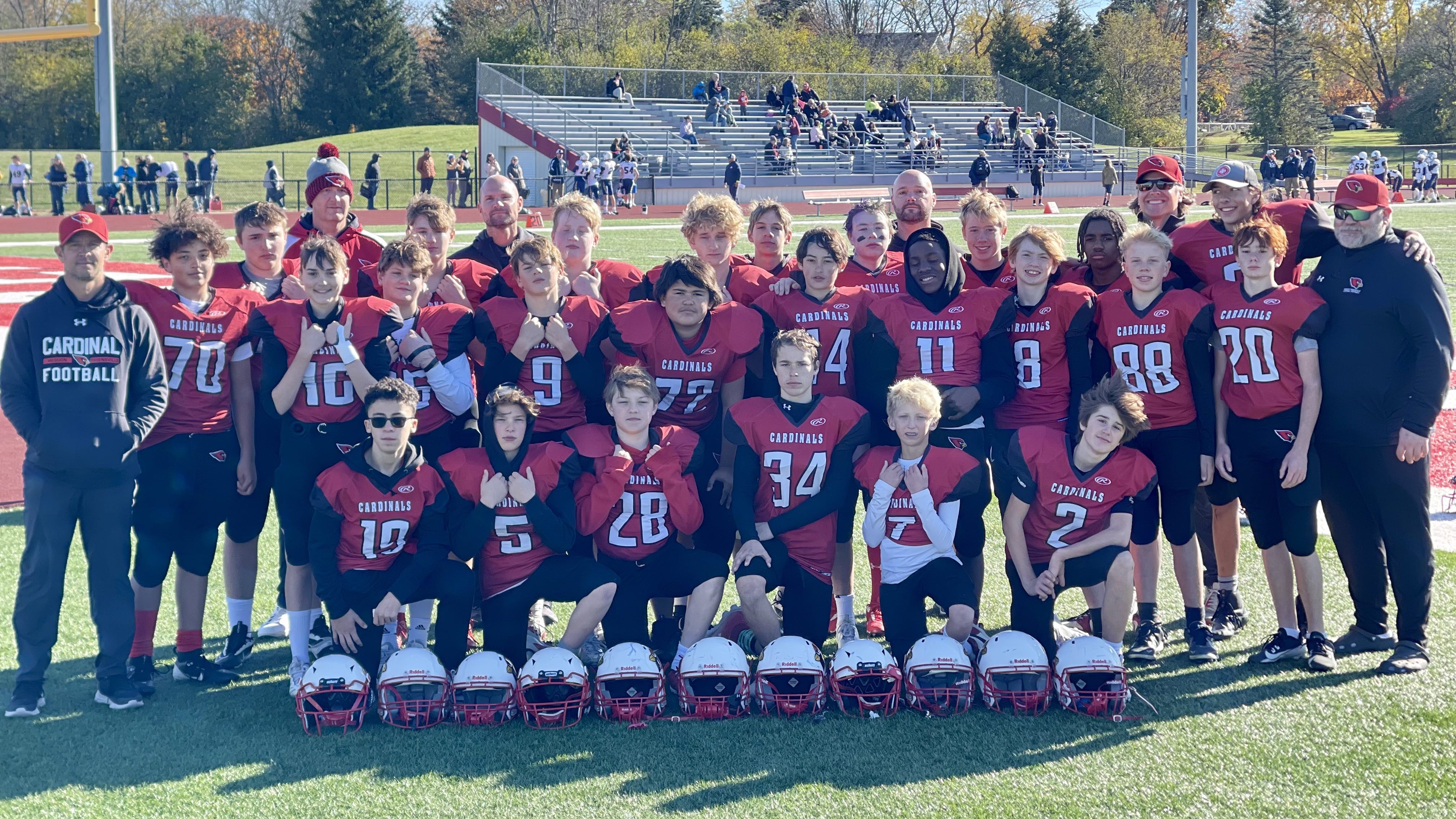
Magnus’ 8th grade season. My last year coaching football. And the first time Magnus was taller than me..

The 10 Best Things About Coaching Football.

1. Winning. There is nothing quite like winning a team sport.

2. Being called Coach. For years, I have been called Coach in our community. It’s always fun and surprising for someone who never expected to coach anything to be called that on the sidewalk, in the schools, and in stores and restaurants. It feels both respectful and as if you had a positive influence on a child’s life. It also makes me feel like I should be wearing a whistle everywhere I go.

3. The Brotherhood: Seeing these boys support each other and coming together as a strong team is amazing. Hearing the stories of them sitting together at lunch at school is rewarding. And knowing how close I still am to the guys I played football with makes me excited for them and the relationships they are forging through their collective football experience.

4. Hearing our defense call out the opponent’s offensive formation and the play they are about to run during a game. It meant the boys were paying attention in practice, they recognized what they were seeing and were prepared to defend the play. I loved that.

5. Stops in the backfield: Quarterback sacks and stuffed runs were the big wins for a defensive coordinator. We have had plenty of those over the past few years. It was a thrill every time.

6. Blocked Punts and Kicks. These have a huge impact on the game. They are magical gifts from heaven. Magnus had a slew of these during his Cardinal football career. And I discovered that a slew is the same amount in both the English and Metric system.

7. Interceptions: These are mission-accomplished plays. They are never not exciting.

8. The Funny Kids: Football is a serious game. But I love the kids who brought their sense of humor to practice and made us all laugh. The funnies often create stronger memories than the wins.

9. The Intense Kids: These kids set the tone for the team at practice and in games. They helped get the team mentally prepared to go to work. I always admired the mentality these winners brought to the field.

10. The Respectful Kids. The kids who responded to all coaching with Yes, Coach and No Coach, who looked you in the eyes, and who asked intelligent questions were a pure pleasure to work with and a sign of good parenting.

Key Takeaway

If you have a chance to positively impact the lives of kids, do it. Coaching, mentoring, volunteering, teaching, chaperoning. All of it helps. And you will get just as much out of it as the kids. Our youth can never have too many positive adult influences in their lives. And you gain by sharing your time, talent and knowledge with others. Don’t worry that you don’t know enough. Raise your hand and learn as you go. That’s what I did. And I can’t imagine my life without this chapter, these experiences, and these boys.

*If you know someone who could benefit from this message, please share it with them.

+For more of the best life lessons I have learned check out my book, What Does Your Fortune Cookie Say? from Ripples Media.
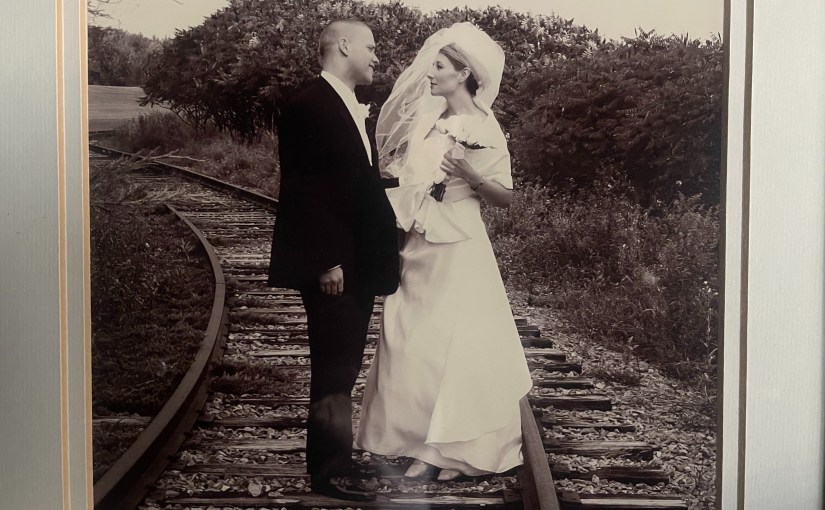
Keys to a Successful Marriage or Business Relationship: Lessons from My Grandfather.

Marriage is a fascinating human experience. It’s both highly rewarding and challenging. Yet while most couples put a lot of preparation into the wedding day, few put much, if any effort into preparing for the marriage itself. Which is why half of marriages end in I don’t. And a healthy percentage of the other half of marriages aren’t as healthy as they could be.

The Program

To help prepare for our marriage, my wife Dawn and I listened to an audio program called Marathon Marriage. We learned the many lessons and philosophies of the program and did all of the exercises shared in the 4 CD set. (At least it wasn’t on 8-track cassettes.) It was a good reminder that just as you need to prepare to run a successful marathon, you need to prepare for a long and successful marriage. So we stocked up on plenty of Gatorade and snacks. And we felt like we had a good game plan.

The Mentors

Then, on our wedding day I wanted to cram in one last bit of preparation. So I scheduled breakfast with my three marriage mentors, which included my dad and my two grandfathers (who would all laugh me off the family tree for calling them my marriage mentors). At the time, my parents had been married 32 years. My two sets of grandparents had been hitched for 61 and 63 years.

After we sat down at Emma Krumbees in Wausau, Wisconsin and worked through some Northwoods pancakes and sausage, I decided it was time for the knowledge share. I asked The Paternity Council, ‘What is the key to making a marriage great?’  With 156 years of experience at the table, I was about to get the fatherlode of great advice.

Then my 86-year-old maternal grandfather, Kenny Sprau, crossed his arms, leaned back in his chair and shared,

‘Keep doing what you’re doing.’

Um… WTF Grampy?  61 years of trial and error, nine kids and a World War, and that’s all you’ve got?  I wanted to give him a mulligan and see if he could hit it past the ladies’ tee this time. But he went on. ‘You have to keep doing the things that got you to this point.’

My Grampy, Kenneth Adam Sprau. (Thanks for the hair.)

Perspective On The Advice

While at the time the 29-year-old me was totally underwhelmed by the advice, over the past 22 years I have developed a deep appreciation for what Grampy Sprau said. Because when we are dating, we are at our best. The unfortunate tendency is to drop the hard work, energy, attention, and charm we put into the relationship after the contract is signed. Without pouring that effort, care and prioritization into the relationship, the relationship isn’t as healthy and strong as it was during your courtship and engagement. Which is kind of like leaving the cap off a bottle of soda-pop, only to realize that it’s the cap that keeps the soda popping.

Over our 22 years of marriage, I have recognized plenty of times when I was not putting in the same kind of attention and prioritization into our relationship as I did when we were just kids in the heartland, like in that little ditty ’bout Jack and Diane. It gets much harder alongside the demands of raising children, building a successful career, growing a business, and the effort required to fend off the Dad bod creep. But whenever I find that my attention to my bride has slipped (or I am reminded by my bride that my attention to my bride has slipped), I use Grampy Sprau’s advice, to help make the appropriate adjustments and corrections.

Applying The Advice To Business

Eight years after launching the advertising and ideas agency, The Weaponry, I have discovered that Grampy Sprau’s advice holds true in business as well as marriage.  You need to treat your potential clients and partners well. Act as if you would like nothing more than to spend the rest of your time together. Listen. Make them laugh. Show them you are interesting, kind and thoughtful. And then after you get the contract signed, keep doing what you’ve been doing.

In business, as in marriage, listening and collaborating are valuable approaches to your growth strategy. Clients and spouses alike really like that stuff. (Crazy right?)  When you respond favorably to a client’s request, they generate something called ‘good feelings’ about you.  And these ‘good feelings’ make them want to see you more and work with you more. And the result is business growth.

The opposite is also true.  If you are the all-time best seller at The Jerk Store, no one wants to be around you. This is true of both the individual and the organization.

If you recognize complacency, apathy or combativeness between your organization and your clients or between you and your spouse, stamp that out like a flaming bag of dog poo on your front porch. The behavior may feel justified today. But you’ll regret the justice leveled tomorrow when you’re trading the offspring in the McDonald’s parking lot.

Key Takeaway

Treat your spouse the way you did when you were dating. Treat your current business like new business. Never take either of them for granted. Work to re-win them every day. Even after you put a ring on it.

Thanks for the wise advice, Grampy.

*If you know someone who could benefit from this message, please share it with them.

+For more of the best life lessons I have learned check out my book, What Does Your Fortune Cookie Say? from Ripples Media.

You have 1 month left to make things happen in 2024.

Welcome to December. 2024 is now 11/12ths complete. Which means you have one month left to make progress on your life and yearly goals. If you are a procrastinator, you have already hit the snooze button 11 times, and it is now time to get up and go. (If you are an amateurcrastinator you are not as good a procrastinator. But I don’t know if that means you put things off more or less. #ThingsThatMakeYouGoHmmm.)

December means you have one month left to:

Finish the year fitter, not fatter. The best way to a better body in 2025 is to start in 2024.

Revisit your New Year’s resolution. You likely left it somewhere in January.

Start a new habit. (Read Atomic Habits by James Clear to check the box on this and the next item. Plus it is half-price right now. You are welcome.)

Read a great book this year. (See above.)

Get in touch with that person or people you haven’t touched in too long.

Go to church. December is the best time to go anyway, for Christ’s sake. And for the bread and juice. And to try to get off the naughty list.

Donate to charity. (And get the tax benefits.)

Start that business. (I am working on starting an Excite Hustle with my son. We have talked about it for forever. But we are going to make it happen this month! An Excite Hustles is like a side hustle, but it excites you about doing work.)

Begin writing that book. Just start by writing down a simple outline of what you know about the topic, or a paragraph summarizing the plot, like Sir Mix-A-Plot. I write my books in a Google Doc. You don’t need anything fancy. Or schmancy.

Take that trip. Or schedule and book that vacation. It’s a great time to lock in your spring or summer travel and give yourself something to look forward to this winter. Unless you live somewhere vacationy already. In which case, pick another thing to do with your 12th month.

Do a million other things. Those first ten items were just examples. I don’t have time to write an exhaustive list of everything you could possibly do this month. Because we both have more important things to do. So let’s go, Geronimo!

Key Takeaway

Time keeps on slipping, slipping, slipping into the future. You have to recognize the passage of time to make its scarcity useful. The last month of the year, the last day of the week and the last hours of the day create a valuable sense of urgency, signaling it’s go time. Remember, when you hit a deadline, the opportunities afforded by that unit of time are dead. Let that motivate you to go now. There’s no better time.

*If you know someone who could benefit from this message, please share it with them.

+For more of the best life lessons I have learned check out my book, What Does Your Fortune Cookie Say? from Ripples Media.

The valuable life lesson you can learn from chewing gum.

When I was a kid, I liked chewing gum. I found the whole process fascinating. And when I say the whole process, I mean the whole process. I discovered that human effort can transform gum. And through the same process, we can learn to transform ourselves. Which is getting pretty deep for a story about chewing gum. But let’s go with it and see what we land.

Chew, Chew!

Gum starts as a solid form. It’s typically a stick or a small blocky nugget of some sort. Although it could be shaped like tape or rope. It could be a primary-colored ball. (I always call gumballs Bryant or Greg.) Or your gum may be shredded like cheese if you are into Big League Chew. And I am into Big League Chew.

As you begin to chew, your gum changes form under your direction. It softens as you mash it and mold it with your molars.

During the chewing process, gum releases its embedded flavor into your mouth. Gumtastic flavors include mint, peppermint, spearmint, experiment, wintergreen, cinnamon, grape, orange, watermelon, sour apple, lemon, strawberry, blueberry and the elusive juicy fruit, the Sasquatch of fruit.

Despite the wide range of interesting flavors that are used to create and market gum, shortly after you start chewing, the flavor disappears. And when it does, the most enjoyable part of the experience is over. Boo.

Then, not long after that, the gum begins to harden. Double Boo.

At this point, the fun part of chewing gum is over for most people. In fact, most people spit their gum out somewhere between the flavor dissipation and the great hardening.

But my favorite part of chewing gum comes after most people quit it, spit it and forget it.

At that point, most people feel they have extracted all the value they could get from gum. Other than maybe sticking the hard, flavorless wad to the underside of a desk or a railing for Buddy Elf.

Most people have no idea what happens after chewing gum loses flavor and hardens.

But I know.

Because when I was a kid, I loved to keep mashing away after the thrill was gone for most kids. I felt like the gum became an opponent to beat. I felt the gum was challenging me to a showdown on the playground at high noon. And the formerly fruity gum thought it was tougher than me.

But I wouldn’t wave the white flag.

I kept chewing and chomping. Like a cow chewing cud. Or Hubba Bubba. Or Bazooka.

Then, an interesting thing happened.

The gum gave up.

The wad of gum that became so tough to chew threw in its tiny little gum towel. It softened again. And then it fell apart. It lost all shape. It lost its will to gum. It stopped resisting. And it literally liquefied.

The formerly proud gum became a runny puddle of nothingness. No flavor. No form. No function. In fact, you could no longer even hold it in your mouth. If you didn’t spit the puddle out it would leak out of your face.

I loved getting to that point. It always made me feel like I had won. I felt like I took on a difficult challenge and completed it. I felt like I took on a difficult opponent, and I beat it. Like Michael Jackson.

The Lesson

Gum chewing taught me I could do hard things. That I could push through the unrewarding muddy middle of a long process. And that if I just kept going, even when it wasn’t fun. I would win.

I have applied the gum-chewing lesson countless times throughout my life. I found the approach useful as a track and field athlete when the work felt hard and the rewards felt small. It was helpful as an entrepreneur when I started The Weaponry and found that you just have to keep chewing no matter what. The lesson served me well when I wrote What Does Your Fortune Cookie Say? and the work seemed long and the finish line was nowhere in sight. And as I faced the hard and unrewarding parts of parenthood, employment and yard maintenance I reminded myself that the key to getting through tough times and past challenging obstacles it to just keep chewing.

Key Takeaway


Success and accomplishment is like chewing gum. Everyone enjoys the beginning. It’s full of flavor and quick rewards. But when those immediate rewards disappear, it’s easy to quit. You lose interest and motivation. And when things get hard, it’s easy to get soft. But if you just keep going, keep doing and chewing, you will win. You will get the ultimate reward of knowing that you are tougher than the things you face. It’s an incredibly valuable lesson to learn from a stick of Big Red or Juicy Fruit. It’s a lesson that is more valuable than the fun, the flavor or the freshening the gum provides. But you only learn that lesson by sticking around when things get hard, and chewing to the very end.

*If you know someone who could benefit from this message, please share it with them.

+For more of the best life lessons I have learned check out my book, What Does Your Fortune Cookie Say? from Ripples Media.

Do you do what you tell yourself you will do?

One of the best things you can do in life is keep your commitments to yourself.

There is no better way to build trust.

There is no better way to build confidence.

There is no better way to build personal momentum.

There is probably no better way to build a skyscraper. (But I have never done that so I’m not really qualified to say.)

Keep Your Commitments

Wake up when you say you will wake up.

Exercise when you say you will exercise.

Show up when you say you will show up. (Especially if you are a pilot, a superhero, or my cable guy.)

And don’t eat what you tell yourself you won’t eat. Even when that thing is a donut sprinkled with bacon and filled with Chick-fil-A nuggets and candy.

Resolve

Resolutions are a great idea.

The bad idea is not doing what you tell yourself you would do.

Which means that the best resolution you can make is to simply keep your commitments.

Getting Started

Start by committing to less.

Do everything you tell yourself you will do.

Because when you do that you will soon realize that you can do anything.


& If you know someone who could benefit from this message, please share it with them.

+For more of the best life lessons I have learned check out my book, What Does Your Fortune Cookie Say? from Ripples Media.

Are you willing to trade a good life right now for a great life later?

I don’t believe in work-life balance. I never have. It’s just a nice mythical idea. Kinda like The Fountain of Youth. Or a happy Kardashian marriage. You can’t divide your life into 3 neat 8-hour blocks of work, personal time and sleep and become rich, successful and fulfilled. To have a wildly successful career you have to throw things out of balance. You need chapters of your life when you put a disproportionate amount of time and energy into your career. That’s what all of the most accomplished people you’ve never met do. It’s why they don’t have time to meet you.

Sometimes this means days of extreme dedication and focus. Sometimes it means weeks. But more likely, there will be many months and years where your career is the thing, Stephen King. You don’t have to ignore the rest of your life the way Michael Douglas ignored Glenn Close in Fatal Attraction. But your career demands to be your priority during certain seasons. Just as farmers must put all their attention into harvesting when it is time to get the crop in, you must pay attention to the opportunity seasons of your career, and make all the progress you can before the window closes.

In the movie about your life, this part of your career would be the montage. You know, the part where they show quick clips of all your hard work, focus, skill development, late night sessions, early morning sessions, and burning-the-candle-at-both-ends kind of work. (You can learn everything you need to know about your montage in this 1-minute video from Team America, World Police.) If you are not willing to have your movie montage chapter (or two or three) you will not be dedicating enough focus and energy to your career to pull away from the pack.

Focusing your time and energy on your career instead of your personal life is like investing your money for greater compounded gains tomorrow rather than spending it on yourself today. That time invested in your professional development and in developing career capital will pay out in massive ways in the future if you don’t scarf your marshmallow today.

The sacrifice is worth it. But you have to keep the primary goal in mind to remember why you are not buying that timeshare in Gatlinburg or knocking off early to meet your friends at Applebee’s. And if you have a family, you and your spouse need to focus on the long-term payoff and be willing to sacrifice whatever nights, weekends, holidays, birthdays, anniversaries and vacations need to be traded now, for better versions of all of those things in the years to come.

One of the great regrets people have in life is that they didn’t do the foundational work they should have done to achieve their dreams. It is important to know about this widespread regret while you still have time to do the foundational work. The work is more than a fair trade. The payout is so handsome, (like George Clooney handsome) that is feels like a small price to pay.

I have experienced enough chapters of significant sacrifice in my advertising career to fill a forthcoming book. In the first chapter of career sacrifice, I wanted to become a stronger writer. So I spent considerable time working on and improving my craft. I read all the time. I wrote far more than my professional peers. I studied other great writers in all John Rahs. (And I learned the word is actually genres.) I read great writers’ writings on writing. I experimented with words, style, structure, tone and humor. Through that focus, my writing got sharper, smarter, and more interesting.

Then I focused a disproportionate amount of time and energy on developing my presentation skills. Because girls only want boyfriends who have great skills. I took courses. I read books. I became a student again. I practiced and applied all that I was learning. This helped make me a strong and entertaining performer in business development meetings, sales pitches and client presentations. Which led to promotions and more responsibility. Because sometimes your hard work gets you more hard work.

Next, I focused heavily on creative direction skills, leadership and management. And within a four year span I motored from my first creative director position to executive creative director to Chief Creative Officer. The only position in my industry left was CEO. And I wanted that job too.

So I began focusing on what it took to run the entire business. I learned as much as I could about accounting and finance. I learned about human resources and non-surgical operations. I learned systems and processes. Project management and IT. I learned stuff that most writers and art directors in advertising never learn anything about. But then again, they get to go to Applebee’s and eat good in the neighborhood.

I didn’t want to wait for a CEO job to open or to wait in line for the CEO in front of me to leave, or die. So I decided to grab the role for myself by starting my own agency called The Weaponry.

As an entrepreneur you not only need to know a bit about all areas of a business, you need to create the whole business from dust. That takes more time, energy, focus, learning, sacrifice and work, work, work, work, work. Like Rihanna said.

Again, I sacrificed other opportunities in my personal life to make this happen. It’s the only way to make big dreams a reality. It’s not easy. But it has been both immensely fun and rewarding.

To share what I was learning through my entrepreneurial journey, I also started this blog. This is the 1023rd blog post I have written in the past 9 years. This too requires sacrifice. I write first thing every morning. I write 5 to 7 days every week. By 6:10 am I am in my office hammering away at another post, another story, another idea. While other people are still in bed or enjoying a cup of coffee and a good social media scroll.

By dedicating so much time to writing I further developed my storytelling skills. And I found my own unique writing style. Which sounds exactly like the way I talk. Now, I write books too. And writing books takes yet another level of dedication and sacrifice. Which is a sacrifice I am willing to make, because I understand the compounding benefits that come from that investment.

Key Takeaway

The great achievements in your career don’t come easy. They don’t come at a natural pace. They come by throwing your life out of balance. By heavying your load. By gorging on learning. And by giving more time, attention and energy to your work than others are willing to give. But by unbalancing your career early your life balance will flip later, and you will receive far more financial and career capital by becoming uncommonly great at what you do. Today, I have no foundational regrets. Instead, I have the rewards of a lot of hard work and sacrifice. And not only can you take that to the bank, you can take it on long, well-deserved vacations with your family and friends.

*If you know someone who could benefit from this message, please share it with them.

+For more of the best life lessons I have learned check out my book, What Does Your Fortune Cookie Say? from Ripples Media.
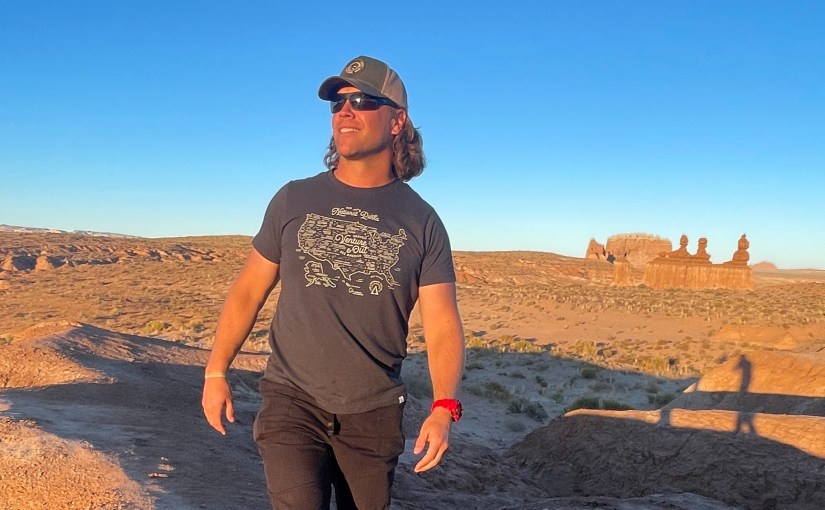
Why it is time for you to harvest more good ideas.

Good ideas are everywhere. Like oxygen and excuses. That’s because people have good ideas all the time, and they are happy to share them with you. In fact, a good idea is the thing people are quickest to share. Because people don’t want to keep good ideas to themselves. It is only through sharing your good ideas that your ideas get validated, like parking. It is only through sharing a good idea that you are given credit for being smart, creative or insightful. Or for being good at evading the law.

Are You Gonna Come My Way?

People share their good ideas with me all the time. Some share because I am an entrepreneur. And entrepreneurs are known for bringing good ideas to life, like General Electric. People share with us either because they want advice on how to bring their idea to life, or because they are hoping that we will bring their idea to life because they don’t have the time, money or energy to do it themselves. Which is kind of like giving your idea up for adoption, because you know you are not fit to raise the idea on your own. Yet you don’t want to terminate your idea either. #ProIdea vs #MyIdeaMyChoice

Another reason people share their good ideas with me is because I am a professional creative thinker. I lead the advertising and ideas agency The Weaponry. So when you think of a great idea, you naturally want to share it with someone who will recognize it and appreciate you for coming up with it. People also know that I will have ideas on what they should do next. Kinda like the owl that those kids asked how many licks it took to get to the Tootsie Roll center of a Tootsie Pop. (Drop the answer in the comments if you know.)

The third and perhaps most important reason people share good ideas with me is because I am looking for them. It’s the law of attraction. They come my way because I am coming their way. And we meet in the middle, like Parker McCollum and Maren Morris.

Why You Should Harvest Good Ideas.

Ideas create opportunities. They make things easier. They make things more enjoyable. They create more Wow in your world. And they offer more ways to make money than The Mint. (Actually, The Mint only makes money the coiny way and the bulliony way.)

But good ideas also offer clues, instructions, blueprints or templates on how to create more good ideas. Because the same insight, combination, application or exploration that led to one good idea can help create more. You can always reverse engineer a good idea, and once you discover the process, you can apply it to create countless others. Which means that when you collect good ideas you are also collecting keys to unlock more good ideas.

Key Takeaway

To live a successful, creative and interesting life, become an idea harvester. Look for them. Go where they grow. Spend time with idea creators. And move through the world like a combine moves through a field of corn, wheat, soybeans, or AI-generated light bulb plants. Pick all the ideas you can. Collect them. Polish them. Combine them in new and novel ways. And they will create more value than anything else can.

*If you know someone who could benefit from this message, please share it with them.

+For more of the best life lessons I have learned check out my book, What Does Your Fortune Cookie Say? from Ripples Media.

How to do hard things.

When I was in college I had a summer job setting up large party tents in Vermont. I loved pitching a tent. It was hard. But looking back, that’s what I loved about it.

The hardest part of the erection process was driving the 4-foot-long steel stakes into the ground. The stakes create the foundation for the tent. You tie the tent ropes to the stakes to help hold the tent upright and sturdy.

To drive the stakes into the ground we used sledgehammers that were 8, 12 or 16-pounds. Size mattered. Because if you swung a bigger hammer you could get the job done in fewer swings.

Sometimes, when the ground was soft, the stakes would go in smoothly. But in Vermont and New Hampshire where I drove most of my stakes, the ground was very hard. They don’t call New Hampshire The Granite State for nothing. (And they don’t call Vermont the Granite State at all, but that’s just because New Hampshire already took it, for granite.)

But during those college years, I learned a valuable lesson about how to do hard things. Because the only way to get those 4-foot stakes in the ground was to keep pounding away until the job was done. More often than not the stakes went in an inch or less at a time. And sinking a 4-foot shaft neck-deep at that rate can be exhausting. But it was the only way to finish the job.

I applied that just-keep-swinging-till-it’s-done lesson in my athletic career as a track and field athlete at the University of Wisconsin. Today, I apply the same lesson to building the advertising and ideas agency, The Weaponry, writing my blog posts, newsletters and books. And simply not stopping until the work is done has never failed to produce results. Even when things get really, really hard.

Key Takeaway

The only way to get a job done is to just keep pounding until you are finished. Hit the task again and again and again. This is true when you are driving stakes in the ground in Vermont, building a company, advancing your career, trying to meet your fitness goals, or getting your education. Focus your efforts. Pound away. And just don’t stop until the job is done.

*If you know someone who could benefit from this message, please share it with them.

+For more of the best life lessons I have learned check out my book, What Does Your Fortune Cookie Say? from Ripples Media.

You just need someone to take a chance on you.

I recently came across this classic photo from July of 20000. It was the first photograph ever taken of me and Dawn Zabel. This was long before she was my wife, and shortly before we started dating. And the photo itself was taken by a camera that wasn’t attached to a phone, social media or Wordle.

When I saw this photograph an interesting and profound thought popped into my hat holder. It wasn’t about how young Dawn and I looked, how short my hair was, or how Clorox-white our shirts were.

My immediate thought when I see this image is that we all need someone to take a chance on us. Because here’s what I see that goes beyond the obvious.

My First Job

This picture is from the Cramer Krasselt company picnic in 2000. CK was my first employer in advertising. They took a chance on me right out of college. I was an unproven commodity that had no track record of advertising success and no experience to draw on. I was just a recent graduate from the University of Wisconsin who came for an informational interview with an endorsement from one of my college professors. It was hard for them to know if I was just a talker or a Hershel Walker. But CK took a chance. And like dough, that was all I needed.

My Credit History

When I started my job at CK I made very little money. (It was actually the same size money that everyone else made, but I didn’t make much of it.) And I had to Stretch Armstrong that money to pay for rent, groceries and a $300 per month student loan payment. So when I applied for a credit card everyone Heismaned me, citing my high debt to income ratio that made me credit unworthy. For 2 years I experienced rejection after rejection by the credit cards who I asked out. Then 2 years into my career I flew to Los Angeles to shoot a commercial for Reddi-Wip whipped cream with my creative partner, Dan Koel and my creative director Mike Bednar.

After the filming was finished I stuck around LA and attended a college football game between USC and San Diego State, with my college friends Alex Mautz and Jaime Smith Mautz. On our way into the game I passed a tent that was giving away free USC t-shirts if you signed up for a USC credit card. I was excited to have a t-shirt to wear to the game, but I knew I wouldn’t actually get the credit card because of my preexisting credit condition. So I filled out the paperwork, took the shirt, and enjoyed the game.

Then, two weeks later, to my total surprise, I received a USC Visa credit card in the mail. Someone finally took a chance on me. I used that Trojan card for the next 6 years like I was the proudest USC grad on the planet. I paid off my entire balance every month. And I built my credit. My credit score passed Pat Robertson’s 700 Club and went to the 800s. All because USC Visa took a chance on me.

Look at this photograph. Every time I do it makes me laugh.
I am wearing the T-shirt they gave me outside the LA Coliseum.

My Wife Dawn.

I first saw Dawn Zabel in the elevator on my way to work in early June of 2000. And my life has never been the same. I got off the elevator and immediately began a long and elaborate Dawn-stalking mission, which turned into the greatest adventure of my life.

But back then, I was just a 27-year-old copywriter with a high debt-to-income ratio and a shiny new USC Trojan visa. My career hadn’t had any major moments indicating future success. I didn’t have an impressive resume of enviable past relationships. I hadn’t been a good parent to a dog, cat or hedgehog. Heck, I didn’t have a fern that could vouch for my skills as a long-term provider.

Yet, Dawn still took a chance on me. A couple weeks after the company picnic we went on our first date to see the movie The Patriot, which to my surprise, didn’t feature Tom Brady or take place in Foxborough. And it didn’t really land with Dawn. But when I dropped Dawn off that night I did land a goodnight kiss. Two years later we got married. Then came 3 kids and 5 houses. We enjoyed moves and promotions. Adventures and opportunities. And we had credit cards that got paid off every month.

This week, Dawn and I celebrated our 22-year wedding anniversary. All because she took a chance on me.

Key Takeaway

All you ever need is a chance. When you find people willing to give you a try, prove them right. Have pride in your reputation and respect the trust others have offered you. Then knock it out of the park. Turn the promise of your potential into proof and performance. When you look back at your life you’ll be thankful to all those who gave you a shot. And it will make you want to do the same for others. Taking a chance on an unproven person is one of the greatest gifts you will ever give. And often times it is all that person will ever need.

*If you know someone who could benefit from this message, please share it with them.

+For more of the best life lessons I have learned check out my book, What Does Your Fortune Cookie Say? from Ripples Media.

5 Things you should always be working on for a happy, fulfilling life.

If you met a genie who could grant you 3 wishes do you know what you would ask for? I do. I would wish for happiness, fulfillment and a lifetime supply of cheese curd flavored Pringles. Unfortunately, when I was in 3rd grade, my friend Todd Brudos told me that genies are not real. They are just something lamp polish manufacturers made up to get you to polish your lamps.

So today, I no longer dream of genies. Instead, I now realize we must work for the things we want. And if you want happiness and fulfillment, the key is to figure out what brings you those things well before you are in hospice care or the electric chair.

Through my own research, trial and error, and a couple of lucky guesses I have discovered that there are 5 things to work on for a happy, fulfilled, and rewarding life.

Here they are, in a particular order.

5 Things You Should Always Be Working On.

1. Your Health: When you stop working on your health, your health stops working on you. Eat right. Sleep right. Exercise. Drop habits that are hard on your health. Keep your weight in the healthy-and-feels-good zone. See your doctor and dentist regularly. Get naked and do the uncomfortable exams when you are supposed to. (Although if your dentist asks you to get naked for an exam consider getting a second opinion first.) If you could use a little help with your mental health see someone there too.

2. Your Relationships: At the end of our days the only thing that will really matter is our relationships and the impact we have on each other. Develop more relationships. Develop better relationships. And see your people in real life. Live life like you want to have a packed house at your funeral. And not just because people want to make sure you are really dead.

3. Your Time Utilization: Time is your most valuable resource. And it’s constantly slip-sliding away. Make sure to use your time wisely, old owl. Do things now. Plan your days, weeks, and adventures in advance. Recognize the things that waste your time and eliminate them now. You’ll thank me later, when you have time.

4. Your Growth: Growth means getting better. Aim to get better every day in every way. Read and learn. Reflect on your experiences to gain wisdom. Surround yourself with great people who you can learn from and model. Develop great habits. Improve your listening skills. And your compassion. Become a better model of yourself every day. Even if you are already a supermodel.

5. Your Wealth: When you grow your wealth, your other opportunities grow too. So does your peace of mind, freedom, and the size of the duffel bag you need to carry all of your money when you leave the country. And like the old saying goes, ‘Mo Money, Mo Pringles’.

Key Takeaway

To make the most of your short time on Earth focus on what matters most. Take care of your health to maximize the quantity and quality of your life. Develop and maintain your relationships. Make great use of your time while you have time. Focus on growing your wealth to grow your opportunities, freedom and peace of mind. And get a little better every day.

*If you know someone who could benefit from this message, please share it with them.

+For more of the best life lessons I have learned check out my book, What Does Your Fortune Cookie Say? from Ripples Media.