The writing and publishing marathons are finite. You complete them and move on. (You should also shower and rehydrate.)
But the promotional marathon only ends when you stop. And when you stop promoting your book your book stops selling.
It’s a good reminder that when you have products or services to sell, you should never stop promoting them. Otherwise, they lose awareness and, in turn, lose value. Because they only have value when people see them, think about them, and value them.
Which means that more exposure leads to greater appreciation. Which leads to preference, desire and demand.
This is how you generate value for your organization.
It’s also how you generate more value for your personal brand.
People have to know you to know your value.
They have to desire what you have in order to give you their money, honey.
If you are unknown, you are also uncompensated.
If your offerings are invisible, they are inconsequential.
If potential customers and clients don’t see you, they won’t see value in you. Unless you sell Invisibility Cloaks. In which case, the opposite is true.
This is why advertising is so valuable.
It’s why trade shows are valuable.
And public relations.
And talking about your offering on social media.
And promotions of all sorts. Even the wacky stuff.
We created The Weaponry to help our clients with all of these activities.
Because the more people who know you, the more they help grow you.
Key Takeaway
Create products worthy of promotion. Offer services that people want. Then talk about them as much as you can. There are always more people who should know about you, your products and your services. You will reap the rewards until the talking stops. Which is why advertising is a never-ending discipline.
*If you know someone who could benefit from this message, please share it with them.
Because the foolproof cure for boredom is to have big goals.
And I am the fool with the proof.
Big goals, and many of them, help fill your days with purpose.
I have so many goals that they govern my days. (In a non-political governing kind of way.)
From the moment I wake up, my routine is constructed to help me achieve my goals.
Because when you have a strong vision for your future, it shapes your now.
And you see time as a tool for you to use to achieve your goals.
Fitness goals inspire you to exercise. Even when you would rather TexMexercise.
Travel goals squash boredom with planning, adventure, reflection and memories.
Career goals inspire you to work harder, more focused, and with more zeal. (Or a more contemporary word for zeal.)
Financial goals drive you to save and invest. Even when you have the urge to splurge, Virg.
And your financial goals will inspire you to explore and discover smarter things to do with your money, honey.
Entrepreneurial goals mean you are never bored. Ever. Like ever, ever.
Reading goals mean that you always have a good reason to log off of electronics and fill your time with something that adds value to your life. (And increases your vocabularium.)
Writing goals drive you to sit down and write every day. And it is hard to be bored when you are creating. Just ask God. Or Tyler Perry.
Domestic goals around improving your home, and yard keep you busy and productive. Not bored.
Relationship goals influence the way you invest your time, the way you treat the important people in your life, and the hashtags you use on social media.
Your goals help you make decisions all day long about the things you should and shouldn’t do with your time. Which means that goals enhance productivity, decision making, time management, and relationships. Not to mention the positive impact they have on your happiness, adventurousness, and good old-fashioned usefulness. (Basically all the nesses.)
Key Takeaway
The next time you find yourself bored, think about the goals that you could be working towards. If you find that you don’t have any, set new ones that you can work towards right now. Boredom is a signal that you need more meaningful activity in your life. And goals are the greatest way to make that happen.
*If you know someone who could benefit from this message, please share it with them.
10 years ago, in the fall of 2015, when Donald Trump was still best known as the star of The Apprentice, I began publishing the Adam Albrecht Blog.
I had just read a book by Jeffrey Gitomer called Little Black Book of Connections, where Gitomer wrote about the importance of having a platform to broadcast your ideas. By doing so, you can share your experience and perspective with many people at once. Which is a far more effective and efficient way of connecting and staying in touch with people than communicating one-on-one. Like Hall & Oates.
At the time, I was planning the launch of The Weaponry, the advertising and ideas agency I have led for the past 9.5 years. I had already dabbled with 6 different blog attempts at that point. In each case, I stopped writing almost as quickly as I started. I simply didn’t have the motivation or the habit to keep them going.
But The Adam Albrecht Blog stuck. Like bubble gum in hair. I spend as much time writing each week as I do eating food or exercising. I spend as much time writing as I do commuting to and from work each week.
All this writing has changed my life. The blogging has led to writing books, which have led to amazing speaking opportunities all over the country. (I would also be happy to speak in any of the other 135 countries where my blog has been read.)
The writing keeps my thinking sharp, like aged cheddar. It creates something of value to contribute to the world 2-3 times each week. Remember, your value to others is directly related to your contribution.
Additionally, because I share all of this writing on broadly visited platforms, I am often top of mind when other people have relevant opportunities. Which means I get more than my fair share of great opportunities. Which is the whole point of advertising.
The Math
This is my 1,100th blog post. It’s a crazy big number to think about. But it’s a simple example of small, consistent efforts compounding over time. 1,100 published blog posts over 10 years equals 110 posts per year. That means, on average, I have published a new blog post every 3.3 days. Or 2 blog posts per week, consistently for 10 years.
If all this math talk sounds like the teacher from Charlie Brown to you, just know that I have written a lot over the past decade. And while I have shared a pile of ideas, lessons and insights with the blog-accessing world, the person who has learned the most through this process is me. Because if you don’t learn a great deal from writing that much, you probably aren’t all that smart to begin with.
11 things I have learned from publishing 1,100 blog posts.
You can’t get to 1,100 without the first step.
1. Get started.
While a journey of 1000 miles begins with a single step, a blog of 1100 stories begins with a single post. I started with a post titled The Perfect Agency Project, which I published on November 9th, 2015. (That was also the name of the blog for the first few years.) Two days later, I followed up with a post titled The perfect agency could be like the DMV. On November 17th, 2015, I published the seminal work, The A-holes Rule. And I was off and writing.
Those first 3 posts gave me a taste for what could be. Just like Neil Armstrong said, it was the first small step that mattered most. If you want to create a blog, podcast, YouTube channel, newsletter, column or any other knowledge share, don’t overthink it. Just get started. That is the pass/fail of any undertaking. Action is the best teacher. You can figure out the rest as you go. Need more help here? Try reading Why you should be an Imperfectionist, like me.
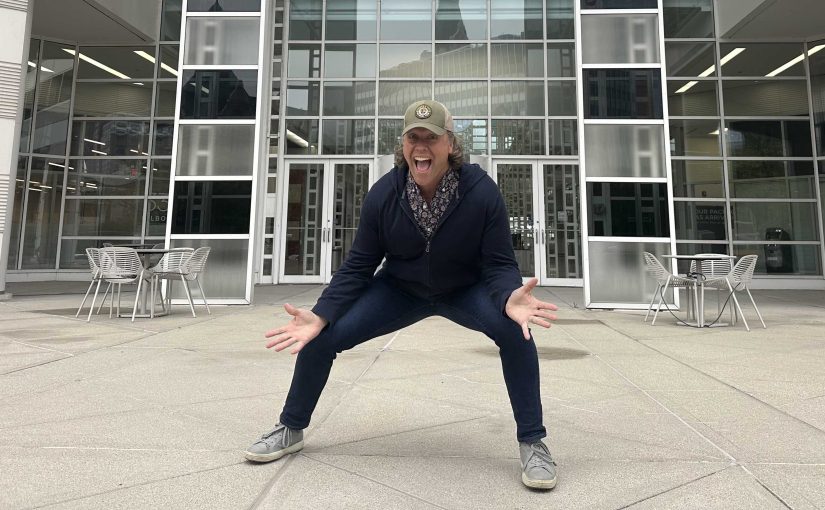
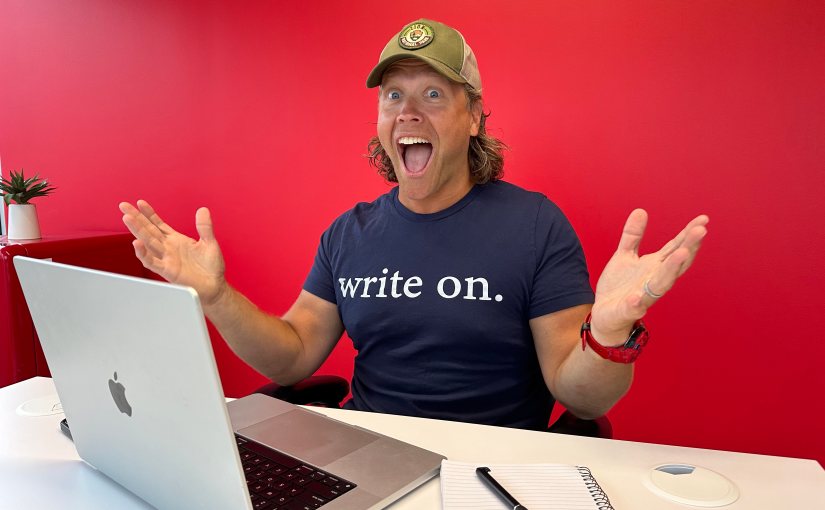
This is my blogging in-action shot.
2. Write About Things You Really Care About.
This makes all the difference. Don’t just write about things you think you should write about. Choose things you really care about, and really think about. It will mean you have a deep well of inspiration. I write regularly about advertising, entrepreneurship, business, creativity, and self-improvement and human relationships.
Unlike a magazine, newspaper or professional blog, the beautiful thing about a personal blog is that you don’t have anyone telling you what you can and can’t write about. I have developed a rule not to complain in my blog posts. But other than that, anything goes. Including these random posts about the fly that landed in my ranch dressing and a strange encounter I had at my local Piggly Wiggly.
3. Create A Strong Writing Habit.
I quickly realized that the best time for me to write is first thing in the morning. I wake up at 6 am and write for an hour, Sunday through Thursday. I don’t think about it. I just do it, automatically. Like Nike.
My writing habit was created in the first year, and it made everything easier. Find a time that works for you every day, or every weekday, or every weekend day, and make it happen. Then watch the production pour in. As Will Durant (not Aristotle) wrote, “We are what we repeatedly do. Excellence, then, is not an act, but a habit.” If you consistently write, you are a writer. And as Matthew McConaughey said, “All write, all write, all write!”
4. Don’t Worry About Readership.
I would love it if every blog post was read by millions of people. But I learned early on that even when you write really good posts on really important topics, you never know what is going to be read and what won’t. You’re blog relies on a series of algorithms to get in front of people. Whether you are posting it on WordPress, sharing on Facebook, LinkedIn, Medium or other platforms, the algorithms play gatekeeper. So write to positively impact just one person, and you have created real value. I also learned that it is valuable to create your own newsletter so that you control the channel. So write good posts that offer value. That is all you should ever care about. Well, that and human rights.
I’ve never heard this guy sing, but I can tell he has a distinct voice. Or he couldn’t rock that hat.
5. Create Your Own Voice.
I have discovered that my favorite writing style mirrors my speaking style. So I write the way I talk. Which is full of random asides and pop culture references. Because that’s the way my mental machine works.
But I have also landed on a recipe that creates a distinct flavor for my writing. I want everyone who reads my work to learn a little, laugh a little and lift a little. Which means my writings should be educational, humorous and optimistic. Most non-fiction writing is educational. It’s the addition of humor and optimism that makes my writings more Rocky Road than vanilla. Find your own flavor. Blogging is great for helping you find it. Just keep writing and experimenting until you find a style that suits you. Like a business suit, jumpsuit or birthday suit.
6.Start A Draft Whenever You Have An Idea.
Inspiration for posts can come from anywhere. When inspiration strikes, write the basic idea into a quick draft on your phone, computer or notebook. I currently have hundreds of unpublished drafts. In fact, my blog is so drafty I am regularly served ads for weather-stripping. Your ideas are likely to disappear if you don’t write them down. Having several drafts started gives you plenty of options to work with on days when you are less inspired to write something new.
7. Posting Brings Good Things.
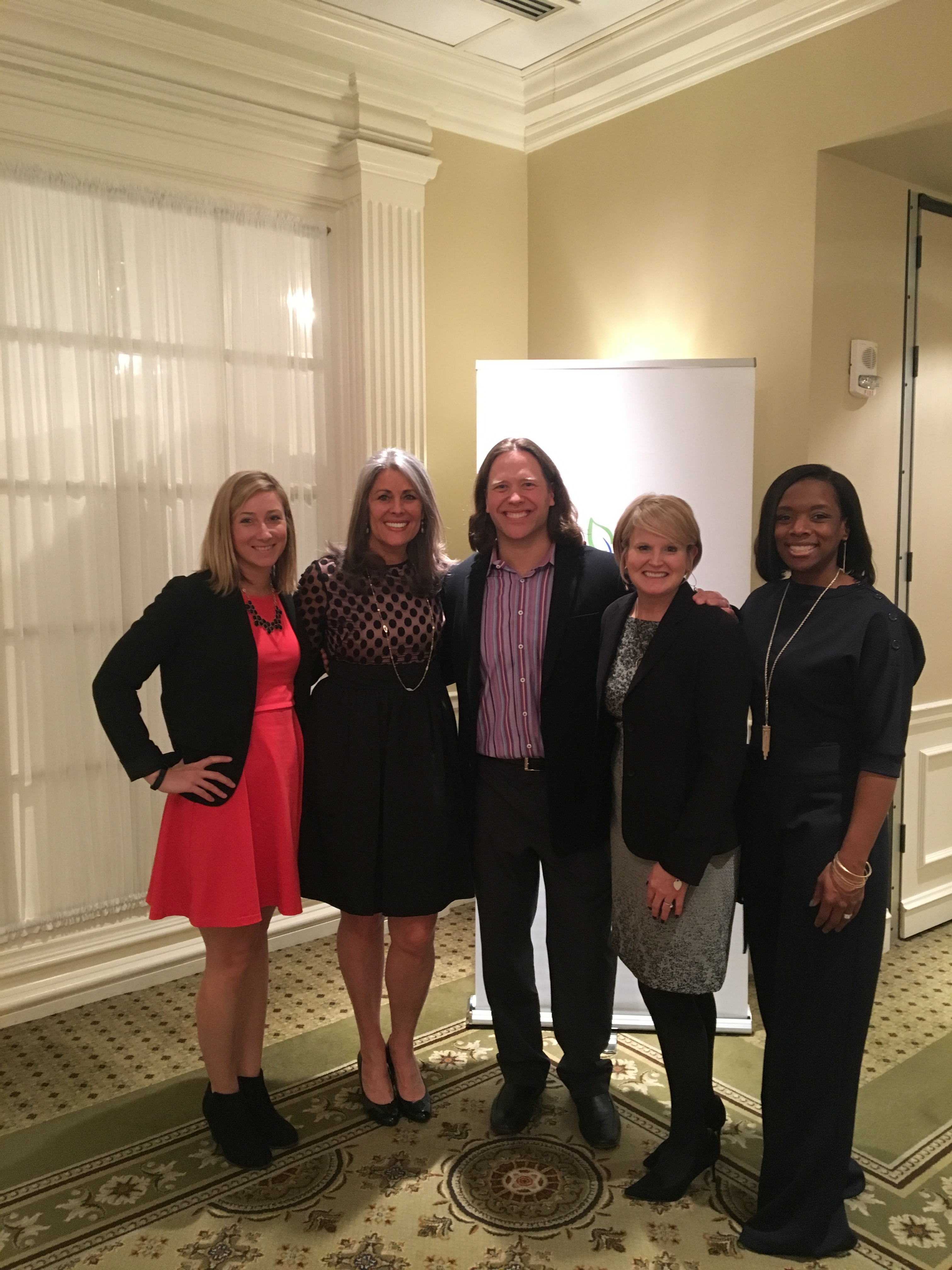
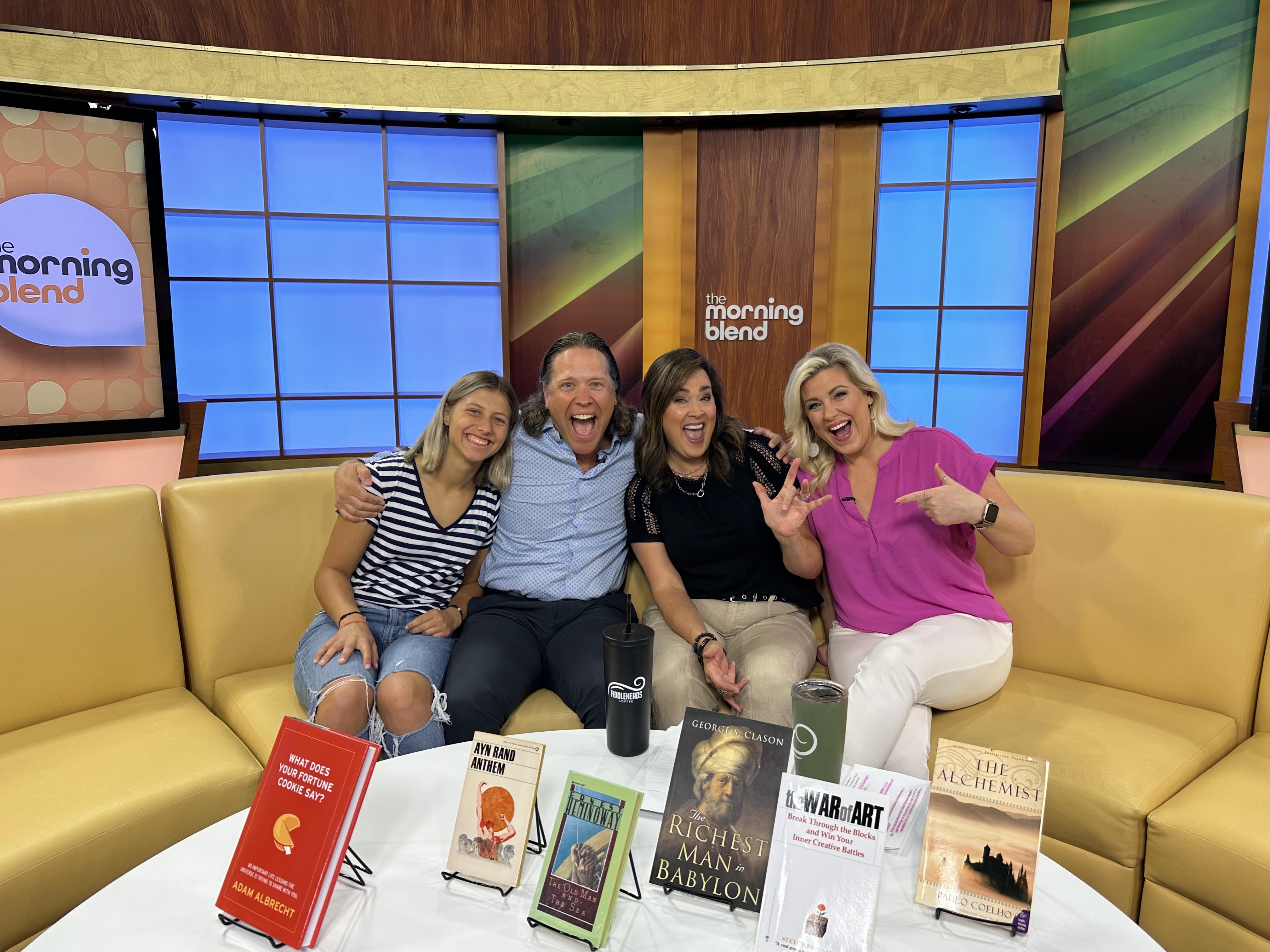
Every time I publish a post something good happens. I get an opportunity or an introduction. I hear from a friend or family member. Or I get a kind, thankful or supportive comment from a reader. And sometimes, I get asked to emcee a charitable luncheon by my friend Stacy Sollenberger (second from right), where I meet a future employee who helps bring great new opportunities to The Weaponry. Or my friend Tim McKercher forwards a post to Vanilla Ice, who tweets the post out to the world. You know, that kinda stuff.
8. There Is Always Something To Fix.
When I look back at my published posts I feel like Michael Jackson looking at his face. Because there is always something I want to change. Always. I would add another example, smooth a transition, insert another joke. (Or take out a joke I would no longer make.) But the blog posts must get published. Published is better than perfect. It’s a blog. Not a book. You get a round of writing. A round of improving. And then you have to push that post out of the nest to fly or flop.
9. The Real Impact Is Not Measured In Views, Follows, Likes Or Comments.
Let me address measurement one more time. After having published 1,100 posts, I am certain that you can not measure the impact of a blog in views, followers, likes or comments. The true impact of a blog is in how it impacts a life. It is in how the story, insights, information, motivation or inspiration you share improve the lives of your readers.
Blog posts are meant to help in some way. That help is not measured in likes and comments. It is measured in things like confidence, reassurance, life lessons learned, successful actions taken, and opportunities seized. Never lose sight of this. The real impact of your blog may not be recognized for years, or even decades. Be patient. And just keep writing.
10. The Blogger Learns More Than The Reader.
When I first began writing my blog I expected to teach others a bit about the things I write about. But I learn more than anyone else. Regular writing forces a lot of self reflection, and analysis. You start viewing everything in life as lessons and insights worth sharing. The writing and editing process teaches you to clarify and refine your thinking. You draw scores of new connections and aha’s along the way. #takeonme So regardless of whether or not anyone ever reads your writings, you will profit from the writing itself.
11. You Can Create A Massive Library Of Knowledge.
My regular blogging habit over the past decade has resulted in an estimated 550,000 words published. That is the equivalent of 11 full-sized, 50,000 word books. That means I have written a shelf worth of books for your home library. It is my contribution to the compounding pile of human knowledge. And it would take you a long time to read it all. The quantity of information, insights and experiences I have shared is almost beyond my own comprehension. But, like Sonny Bono, I am glad I have shared so much. It has provided as least one more perspective for others to consider as they navigate their own adventure.
Key Takeaway
Blogging pays off. But it pays off slowly. You have to be patient. And persistent. When you are, the cumulative effect of writing and sharing good work regularly increases your value to others. Which in turn becomes valuable to you in ways that are both monetary and life-i-tary. Blogging keeps your voice and your viewpoint top of mind for others. Which means that you are both recently and relevantly recalled when opportunities surface. It works for me. It can work for you too. And despite all the tips it really comes down to this:
Think, Write, Review, Publish, Repeat.
Thanks for reading. I really appreciate your time.
*If you know someone who could benefit from this message, please share it with them.
The greatest way to increase your value to yourself and others is through reading.
You could just stop reading this post now and go grab a book to read instead.
But I am going to drop some new reading knowledge on you that is worth 90 seconds of attention.
Why Should You Read?
Bill Gates reads about 50 books a year. Or about a book each week.
Warren Buffett famously reads about 500 pages per day.
Lin-Manuel Miranda bought the book Hamilton to read on vacation in Mexico.
So read books that expand your thinking and your knowledge base.
Read to understand how things work.
Read for inspiration, motivation, and all the other great ations.
Read to understand how successful people became successful.
Read about what worked in the past in your field of expertise.
And read to learn what is changing in your field, so you can surf that change, rather than get pummeled by it.
Read to improve your writing and expand your vocabulary.
Read to develop your focus and your patience for long-term goals.
But most importantly…
Read To Separate Yourself From The Pack.
Despite all of the mental nutrition and long-term success that sprouts from reading, a new study just released by researchers at the University of Florida and University College London (which sounds like the fakest British school name ever) found that reading for pleasure among Americans has declined by 40% over the past two decades.
In 2004, 28% of Americans said they read for fun.
In 2023, only 16% said they read because they wanted to.
It is not lost on me, or the researchers, that Facebook launched in 2004 and the iPhone was released in 2007. Together, social media and smart phones may be accomplices, killing reading softly, like Roberta Flack or the Fugees.
This all means that people who read books have a greater competitive advantage now than ever before.
However, this is massively skewed by the avid readers.
In fact, estimates reveal that between 25-46% of adults READ NO BOOKS each year.
And the median number of books read annually by adults is only about 4. That’s how much the average person hates paper cuts.
Which means there are fewer and fewer people after the pot of gold at the end of the Reading Rainbow.
There are fewer people who are willing to do the slow, steady, yet transformational work of knowledge gain through reading. While others are settling for bite-sized bits of video, podcasts, and tweetable wisdom served by algorithms, readers are accumulating broad and deep knowledge that helps make them more capable, valuable and irreplaceable.
The new study also revealed that those who do read for fun are spending more time doing so. Because while haters gonna hate, readers gonna read.
And in the era of artificial intelligence, it is the humans who can contribute more than the machines that will be in greatest demand.
Key Takeaway
Now more than ever, reading is your great competitive advantage. Your self-directed education makes you a valuable and irreplaceable resource. It improves your thinking. Which drives smarter decisions and actions. And it draws other people to you who want to tap into what you know.
*If you know someone who could benefit from this message, please share it with them.
Back in 2008, the movie Slumdog Millionaire hit the big screens. This smash hit was about a young boy in India, growing up on the streets of Mumbai. Through a series of fortunate events, he becomes a contestant on the game show Who Wants To Be A Millionaire. And apparently he wanted to be a millionaire.
The thing I loved most about the movie was that every question our hero, Jamal (Mr Slumdog), is asked triggers a flashback to the moment or event where Jamal learned the answer to that question.
I have been thinking a lot about this movie lately, even though I only saw it once, nearly two decades ago. I am thinking about the movie now, because I am recognizing the same flashback effect in my own life. It’s kinda like the flashback scenes from Wayne’s World, but without the wavy lines and sound effects.
Today, as I am digging into my ever-larger collection of knowledge, I often experience flashbacks to the moment I acquired the now-useful knowledge. It is as if I am playing an epic game of connect the dots, and as I connect dots, I am not just drawing a line between the dots; I am understanding the origin story of each dot. Which I recognize is getting pretty deep for dots.
This is happening for 2 reasons.
First, I am thinking about the original knowledge-gain experience as I am dippin’ into my dots. I am not mindlessly accessing the answers. I am watching it happen in my head, as if I were the third person, observing the story.
Essentially, the things I could be doing involuntarily, I am performing voluntarily or consciously, which creates a deeper level of insights and understanding.
Second, I am actively trying to collect more dots. Like a knowledge farmer. Or maybe a knowledge hunter and gatherer. I read books with the purpose of collecting dots, which include facts, trivia and history. I am actively collecting tips, tricks, best practices, insights, study results, good news, quotes and positive examples. I ask a lot of questions. I listen closely to details in my conversations. And I am mindful of the knowledge harvest as it happens. It enables me to sort, label and store the knowledge harvest more effectively. Which means that a great reason I am easily accessing my dots is that I am cataloging them on arrival. Like a nerdy librarian. Which may be the only kind of librarian.
The natural question is, ‘Why am I consciously labeling and sorting the new dots I am collecting?’ I believe that this is a result of blogging and writing books. It is rewiring the way my brain works. (Which is good, because my brain has always had pretty wonky wiring.)
As a writer, it is useful to file, organize and label my dots for future use. But the same approach is also beneficial as an advertising professional, strategist, creative thinker and entrepreneur. In fact, creative thinking is nothing more than connecting dots in new and novel ways.
The Insight
We are as wise and worldly as the dots we collect and the dots we can connect. To become a better thinker, more insightful, more creative, more strategic and more empathetic, collect more dots. As you collect, consider the lessons, insights and knowledge you are gaining as you gain them. This helps you store them more effectively and access them more easily. When you have a greater collection of valuable dots, well cataloged, like spice jars stored alphabetically in your spice rack, you can access them when you need them, and create a greater range of outputs with deliberately nuanced flavors. This is a valuable skill and asset. It improves your thinking, and your value to others.
Key Takeaway
Collect more dots so you can connect more dots. Recognize the value of your dots as you amass them. Think like a prospector, and learn to recognize gems when you see them. When you understand what you have collected, whether it is the results of a scientific study, or a broken heart, it becomes more valuable to your human experience. Because you never know when you will need that information again. But when you can easily access your knowledge, you can profit from it greatly, just like the Slumdog Millionaire.
*If you know someone who could benefit from this message, please share it with them.
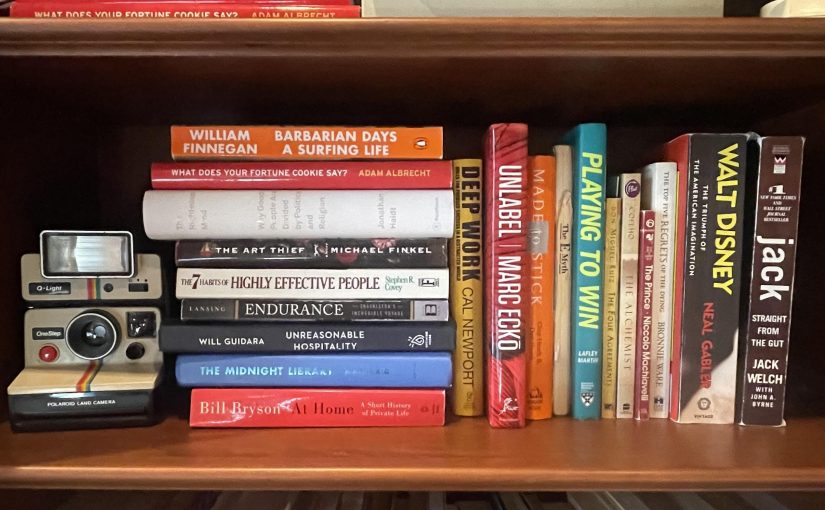
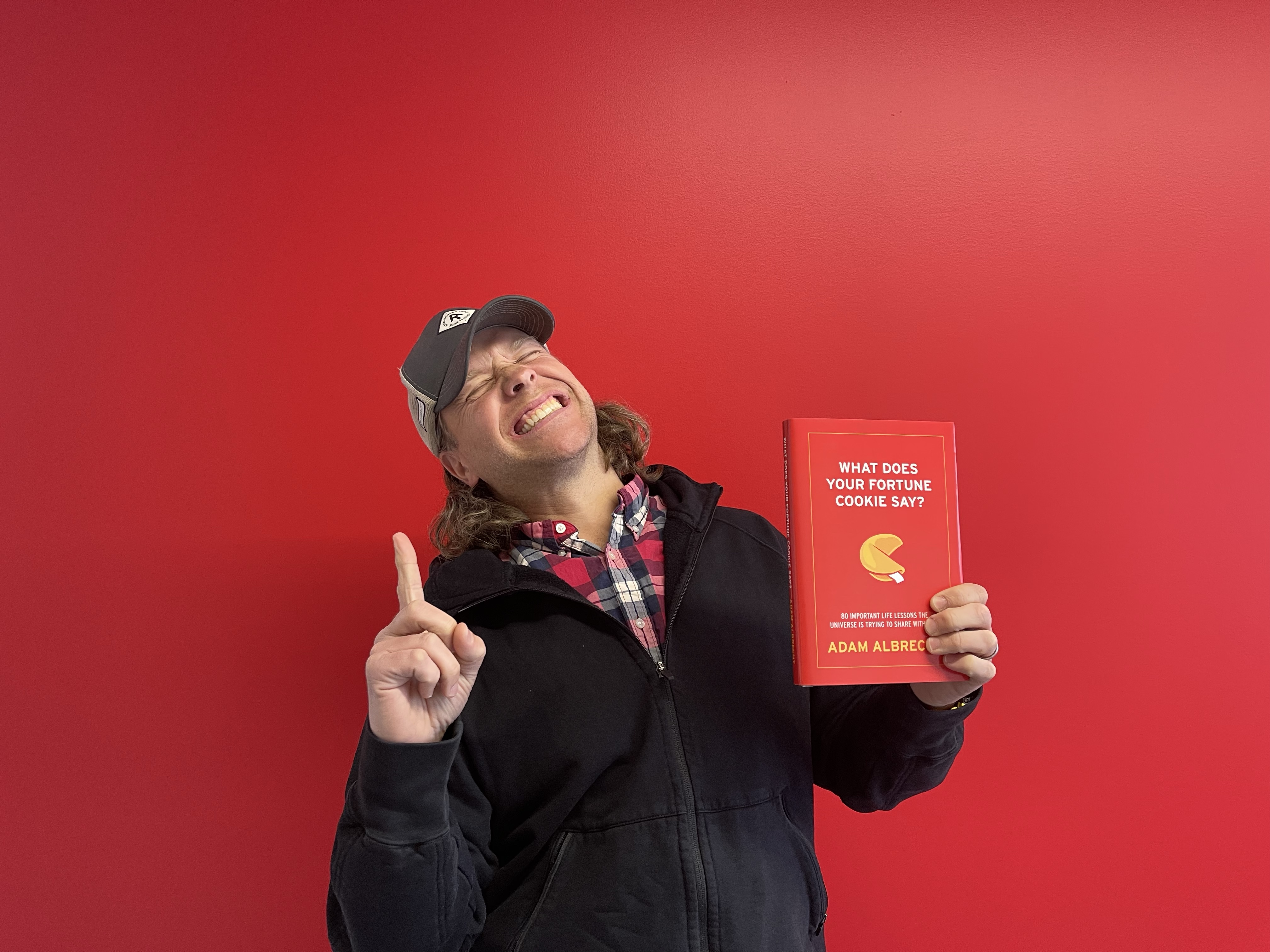
I have dreamed about writing a book since I realized people did such things. As a kid, I knew Dr Suess did it. So did Laura Ingalls Wilder. And Judy Blume got crazy with it. But it seemed super hard. And time-consuming. But in March of 2020, I took the pandemically-induced gift of time, and started writing. And like a literary Forrest Gump, I just kept write-ing and write-ing. Today, my little paper baby, What Does Your Fortune Cookie Say? is 3 years old! The book shares 80 of the best life lessons. Now, I have taken a moment to reflect on how writing this book has impacted my life.
10 Ways writing a book has positively impacted my life.
I learned I can do hard things. Doing hard things demystifies the hard things you do. Yes, writing a book requires a lot of time, energy and focus. But it requires a little bit every day, not a full deposit at one time. Writing a book is actually like running 3 marathons. A writing marathon, a publishing marathon, and a marketing marathon (which only ends when you stop promoting your book.) I wrote more about it in this post. I enjoyed the process. It was not too much for me. And it’s not too much for you either.
2. I have earned a new level of respect. Our society respects published authors. I think it’s because you have done something that other people know is hard. And it indicates that you have a deep level of knowledge in a specific area. Or that you are both creative and disciplined. #createiplined I consider being a published author The Poor Man’s Ph.D. (Or Poor Woman’s Ph.D.) Because when you add author to your title it earns you a higher level of respect. (I always say respect like Ali G says respek!)
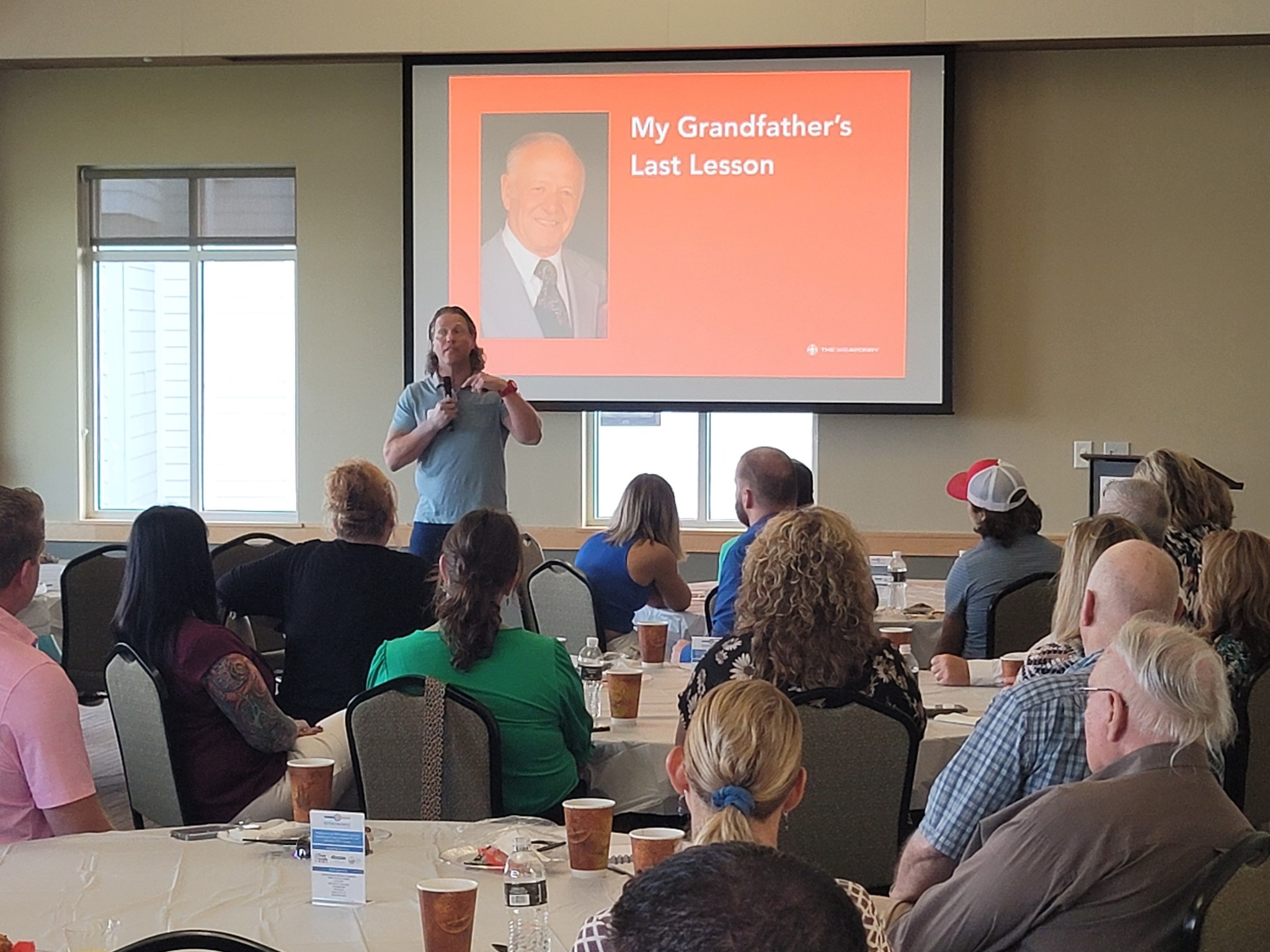
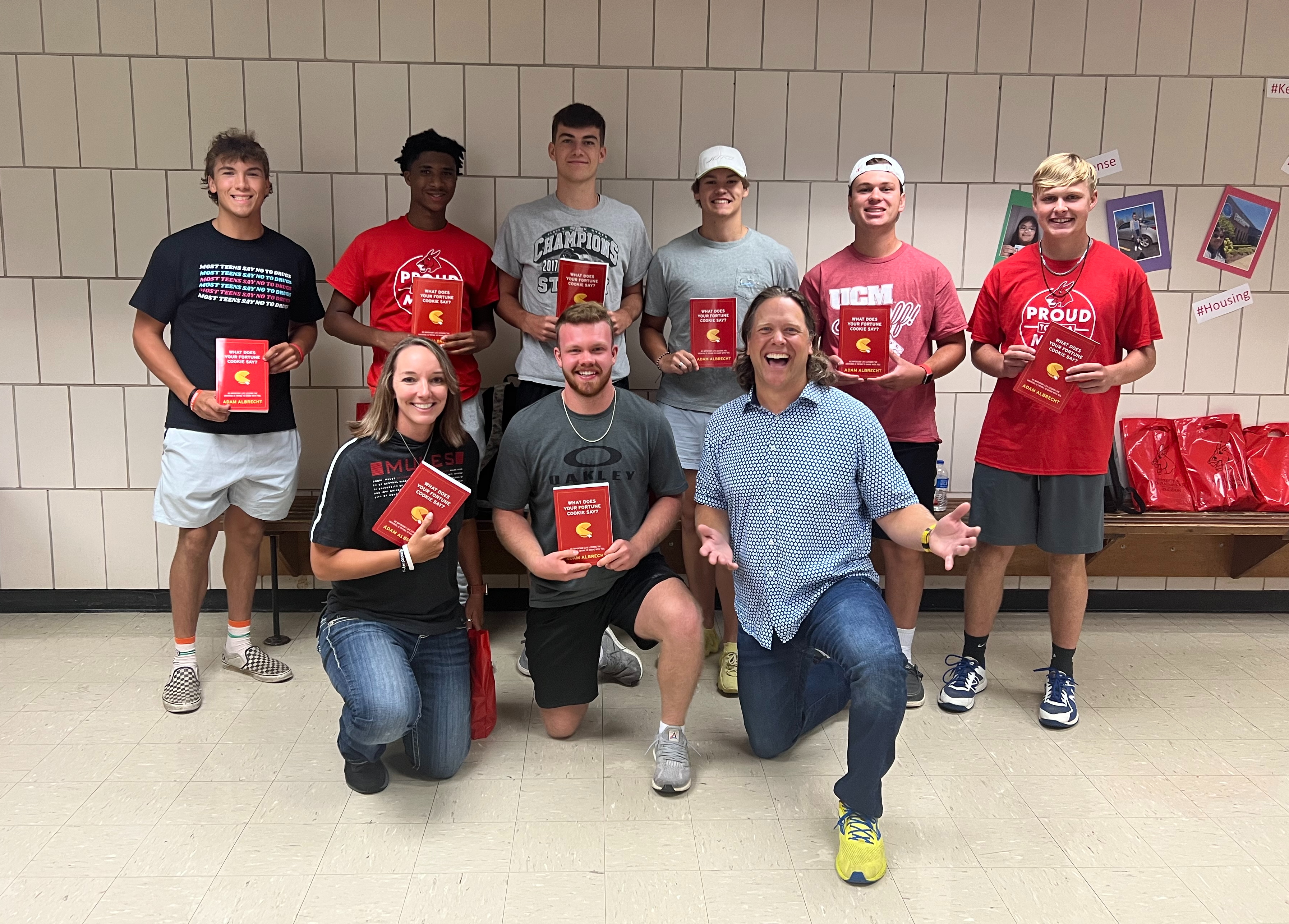
3. I get hired to speak. Since publishing my book my speaking requests have quadrizumpled. (Which is a Mary Poppins-like way of saying ‘greatly increased’. I have traveled all over the country speaking at conferences, symposiums, company meetings, association events, rotary clubs, chamber of commerce events, and schools. I love speaking. For me, it’s right up there with smiling and chocolate milk.
4. I have made money. Between book sales and speaking engagements, my book has become a source of income. It’s cool to have a product that you only have to create once, but you can sell over and over again, like Nelly and Tim McGraw.
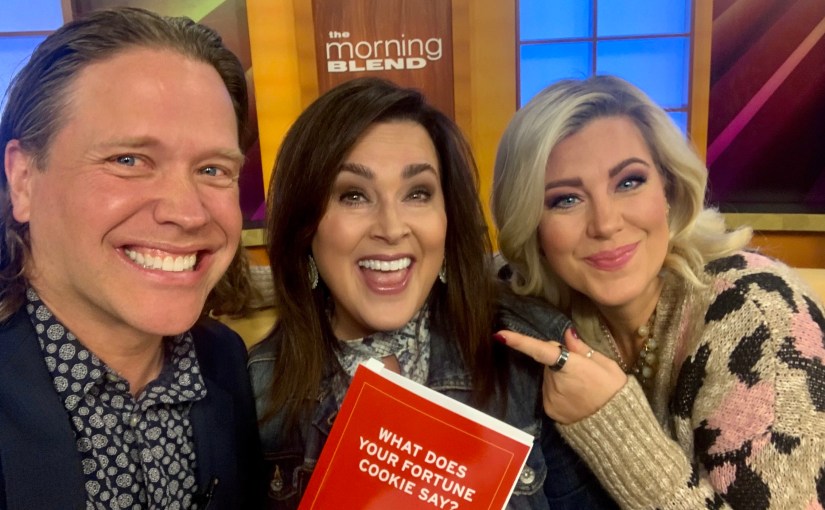
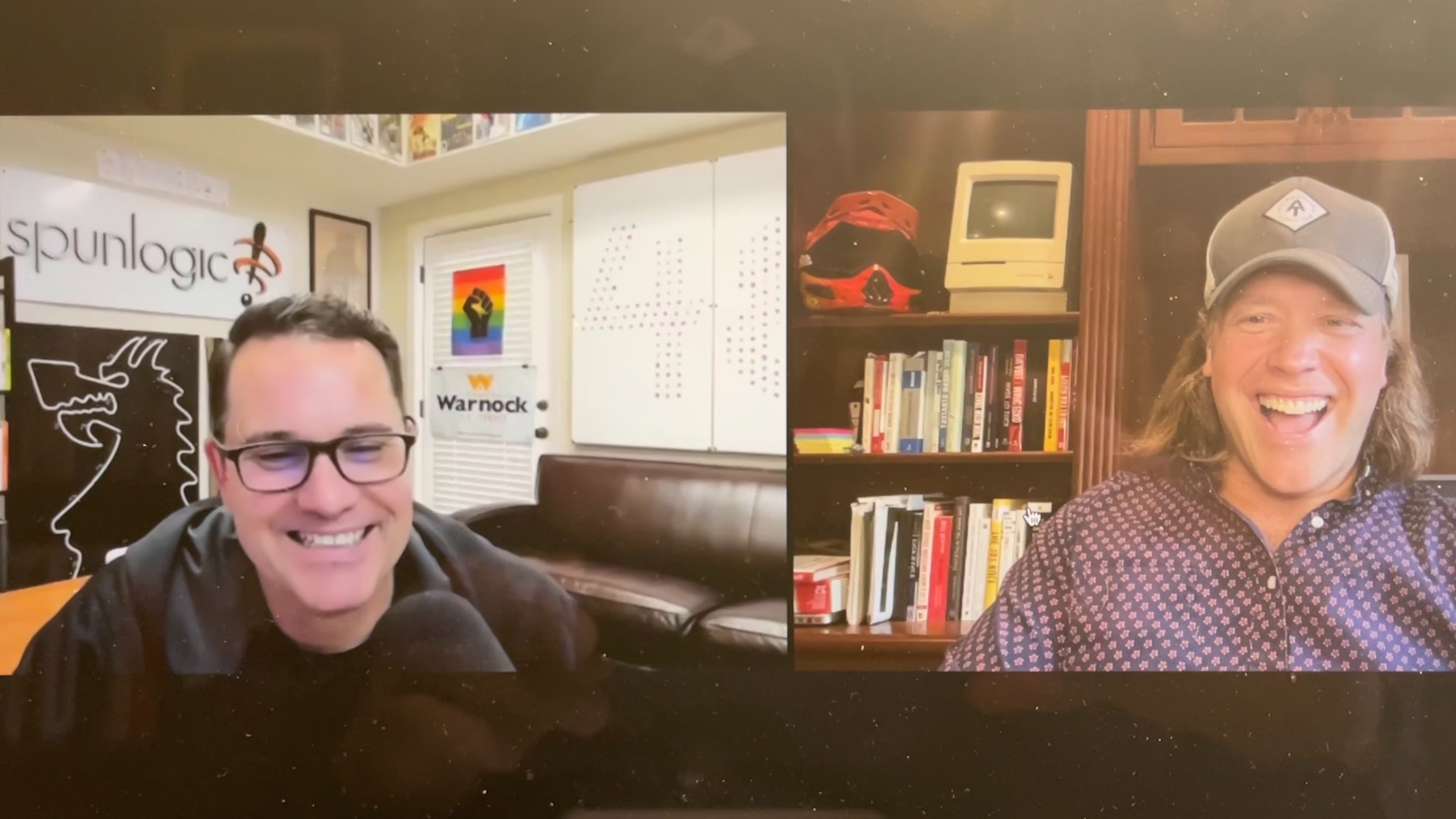
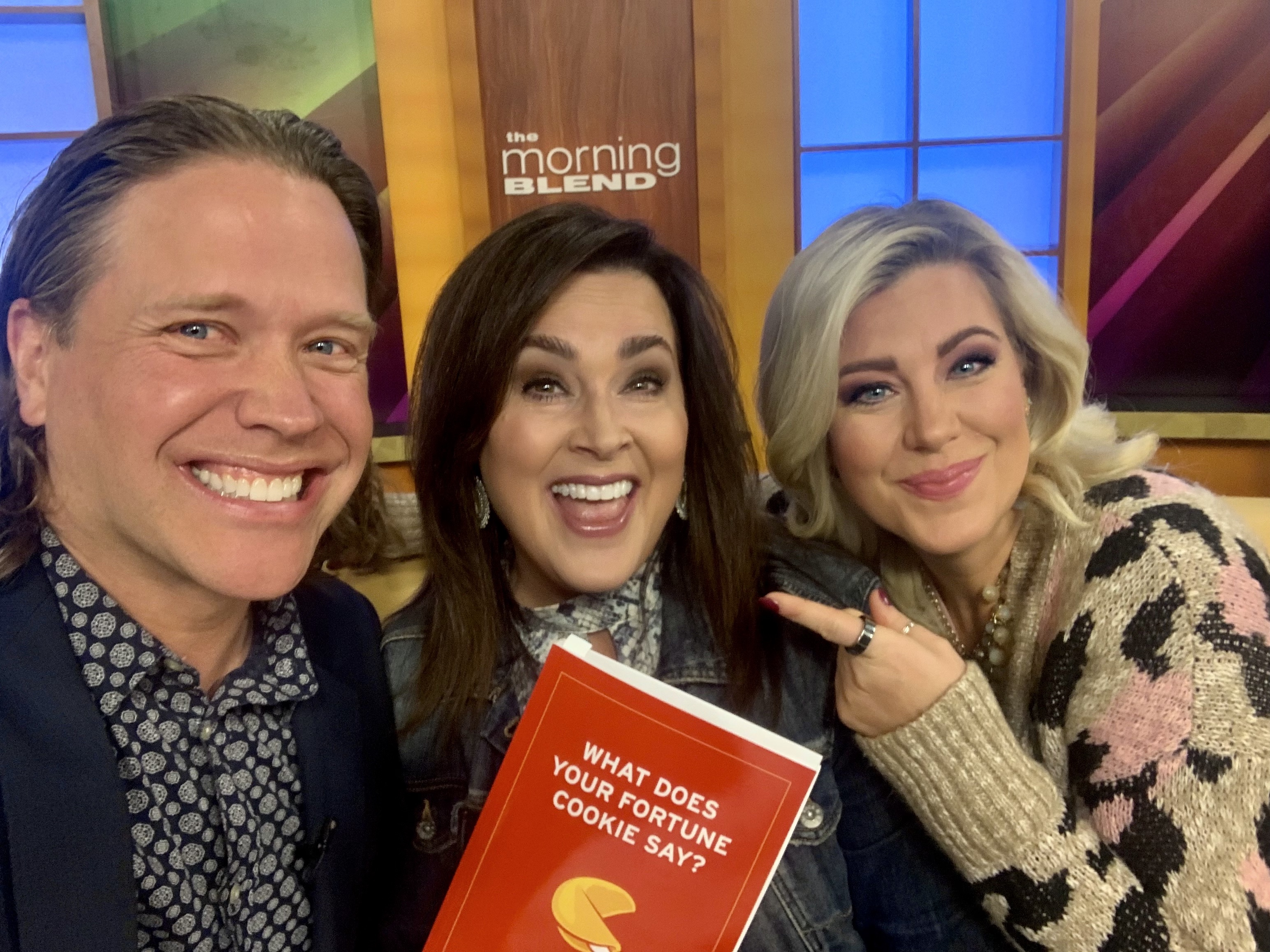
5.I get invited to be a guest. Since publishing my book I have been a guest on countless podcasts. (OK, I could probably count them if I tried really hard, but I haven’t.) I have also been invited to be a guest on the Milwaukee morning show The Morning Blend on NBC countable times: About 8 to 10 appearances.
6.I have been quoted. A cool result of writing a book is that I have been quoted on social media by people I don’t know. I have been alerted of mentions of my name, and when I followed the thread I realized that people I didn’t know shared quotes from the book. I have reached out to some of these people to thank them and find out how they read the quote. Some of them read the book. Others googled for quotes on positivity or other such positive terms. It’s pretty cool to have your work spread like that. Now I know how Jif and Skippy feel when people spread their work.
7.I attend book club discussions. I have never joined a book club. Perhaps because I am a dude, And book clubs have historically seemed less dudey. But I always thought they seemed like a cool idea. Now, every time I hear of a book club reading my book I volunteer to attend the discussion. It’s enjoyable to have conversations with people who read your book critically. And I love it when people share their favorite funny lines from the book. #DepecheMode
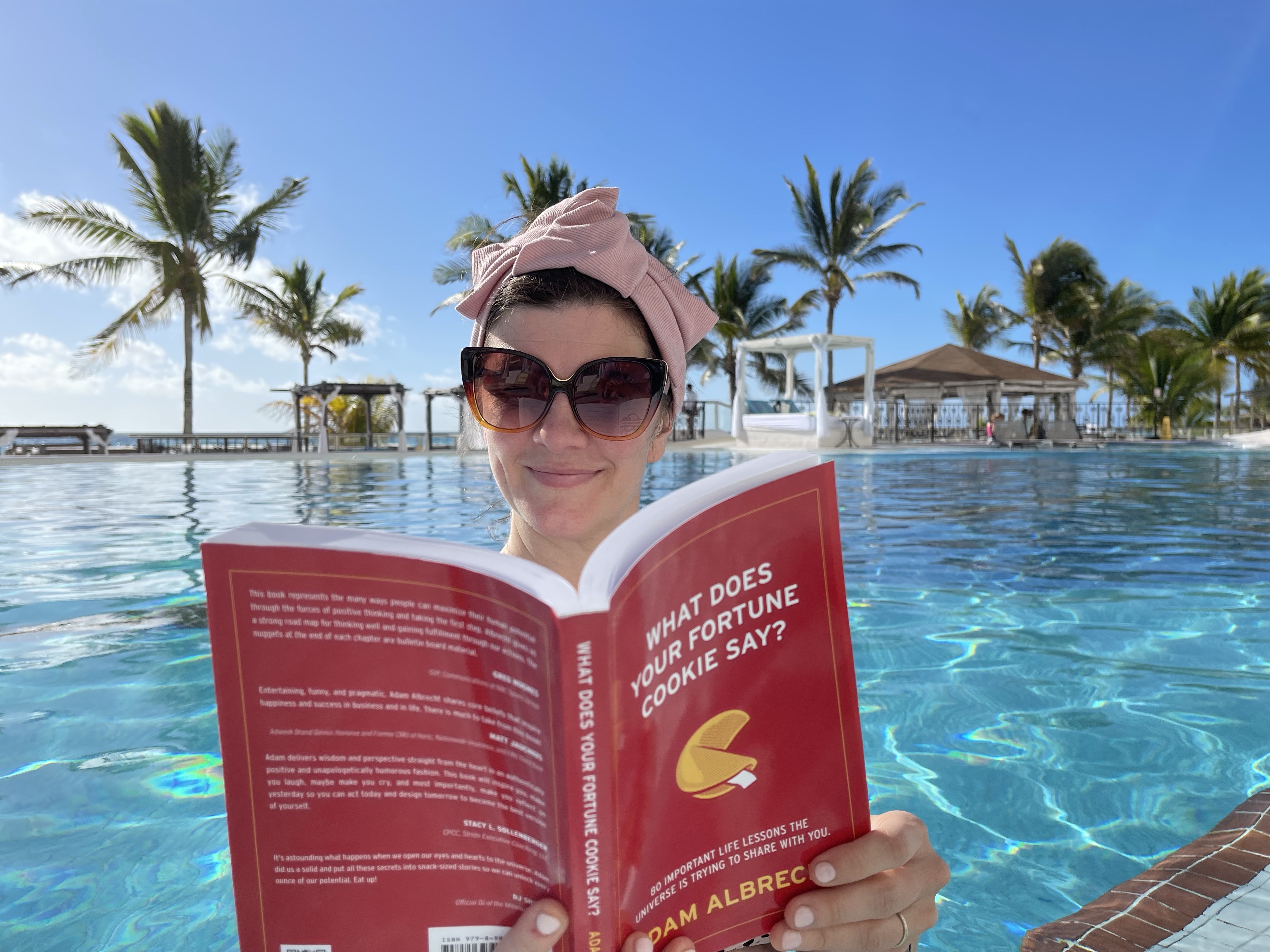
8. I have seen pictures of my book all over the world. Ok, so not North Korea or Antarctica. But, you know, a lot of cool places. People often take my book on vacation and enjoy reading it in some spectacular locales. Then they send me pics or tag me in photos. It is safe to say my book has been to more interesting places than I have.
9. I can buy my book from any bookseller. Initially, my book was only available on Amazon, from my publisher, Ripples Media, or from the trunk of my car. However, now, you can order my book from virtually anywhere. All the online booksellers that I have ever checked now carry it. And all independent bookstores can order it too.
10. I am motivated to write another book. And now I know how to get it done. Now, it’s a matter of when. (I actually already know that too.)
Key Takeaway
Writing and publishing my book has added to my life in many positive and rewarding ways. And the impact continues to compound. Yes, it takes work. But the payoff has been well worth it. If you have considered writing a book I strongly encourage you to do it for real. I am happy to share everything I know. Although the key is to simply open a Google document (or Word doc) and start writing. Then write a little more every day, just like Elvis Costello said.
If you are still looking for a great Christmas present that doesn’t break the bank, please consider giving What Does Your Fortune Cookie Say? If you read this too late to be delivered and you live in the Milwaukee area, reach out to me directly at adam@theweaponry.com. I can hook you up with a signed copy, even up to the last minute. Boom!
*If you know someone who could benefit from this message, please share it with them.
Every day there are new songs, books, and blog posts. (Like the new blog post you are reading right now.)
There are new businesses, restaurants, shops, clubs and bars. Including shops where you buy clubs and bars.
There are new clothes, accessories and decoration.
And there are enough new social posts to fill a whole new social sphere every single day.
So why all the newness, Huey Lewis?
Because people have great new ideas worth betting on all the time.
However, you never know which good new ideas will wallop and which ones will whimper.
Sometimes your favorites will fail like New Coke and Kendall Jenner’s Pepsi ad. And sometimes your maybes will make a mighty roar. Like cat videos.
Learn from both.
And just keep swinging.*
The only real failure is to stop sharing your new ideas.
*Don’t actually be a swinger.
If you know someone who could benefit from this message, please share it with them.Especially if you know Kendall Jenner or anyone thinking about swinging.
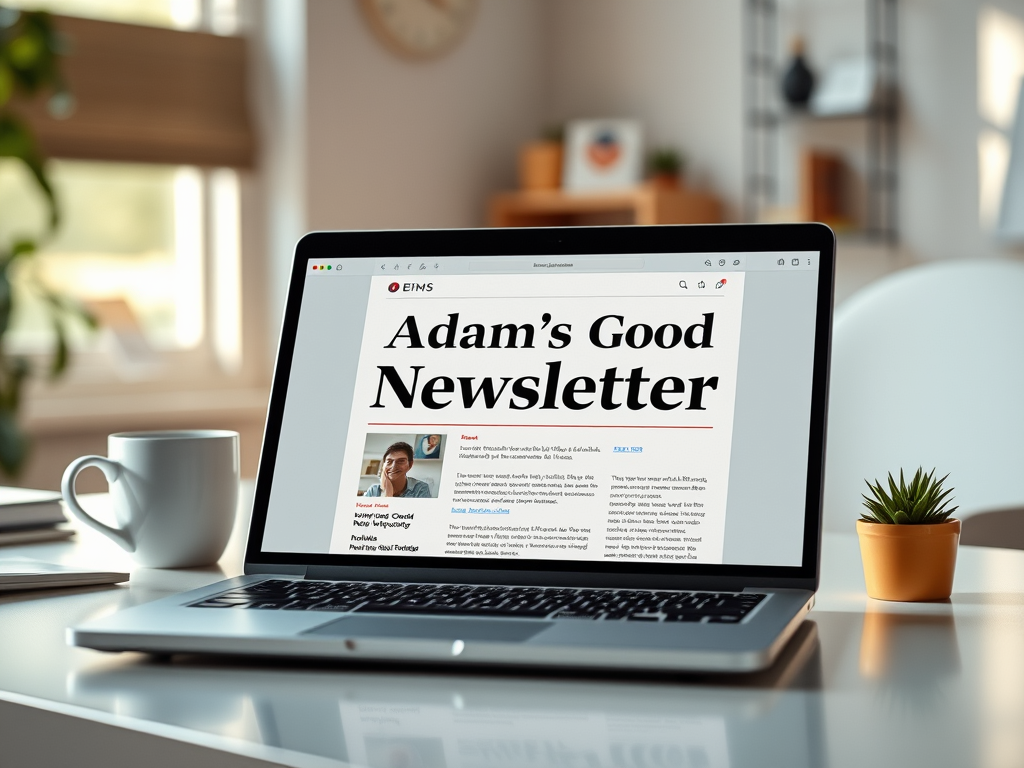
Hey Readers! I have started a newsletter called Adam’s Good Newsletter. You can cheat code to the newsletter right here, right now, like that arena hype song says. But if you want the backstory first, and who doesn’t like a good backstory, you can find it below.
The Backstory
The spring of 2020 was a dark time in America. COVID-19 was creeping across the country like a lung-infecting fog. Race-related issues were boiling over. And our presidential election was unfolding as one of the ugliest in American history.
The events of that spring scared the crap out of Americans. Which helped turn toilet paper into gold. During that dark and stormy time I recognized that we could all use more good news. So I committed to sharing only good, positive, uplifting stories, ideas and perspectives here in my blog.
As a result, I saw a surge in readership. People called, emailed and texted me telling me how much they appreciated the positive outlook I was sharing here. They told me they looked forward to my posts as a bright spot in their day. And they asked if I knew where they could find toilet paper.
Then, without telling anyone what I was doing, I started writing my book What Does Your Fortune Cookie Say? I was committed to writing a book that would help readers learn a little, laugh a little, and lift a little.
18 months later the book was published and my life changed for the better. Suddenly I had speaking opportunities, TV and podcast interviews, and more interesting things to talk about at career day at my kids’ school. Readers sent me pictures of my book all over the world. Well not in North Korea. Or Antarctica. Or the Gulag. #BookGoals
Now, I had a blog and a book. But I became obsessed with a third vehicle for sharing positivity. Because somewhere between the simplicity of a blog post and the intensity of a book lies the newsletter. For years I wanted to create a fun newsletter to spread good news, ideas, recommendations, motivational quotes, photos, and a little more humor.
But I couldn’t find the time in my schedule to start the newsletter until June of this year, when I finally started publishing Adam’s Good Newsletter.
Please message me at adam@theweaponry if you would like to be added to the mailing list. (Also message me if you have found The Fountain of Youth or a Wonka Bar with the golden ticket.)
In 2015 I read a book titled The Little Black Book of Connections by the self-proclaimed King of Sales, Jeffery Gitomer. One of the important tenets of the book is, Success is not about who you know, but who knows you. (Who knew?)
Gitomer goes on to share that the best way to have more people know you is to share your knowledge, expertise, ideas and experiences broadly. Which is what Kim Kardashian did with her first home movie back in 2007. And look how well that worked out for her.
Gitomer points out that platforms like blogs, vlogs, podcasts, editorial columns and books enable you to share your ideas with many people at once. In fact, it allows people you would never meet face to face to discover your ideas and be positively impacted by your knowledge and expertise.
What started with a single blog post has gone farther than I ever imagined.
Gettin’ Bloggy With It
In the fall of 2015, I began planning to launch a new advertising agency. So I decided to take Gitomer’s advice and start blogging to share my ideas about advertising, branding, and creativity. I also wanted to share what I was learning about entrepreneurship. Success leaves clues. And I wanted to share breadcrumbs for other entrepreneurs to follow. (It seems I failed to learn the downside of leaving breadcrumbs from Hansel and Gretel.)
I wasn’t sure how the whole blogging thing would go. I had tried it before. In fact, I had started 5 or 6 different blogs and quickly stopped. But this time I felt more inspired. I had Gitomer’s encouragement. I had a strong desire to succeed as an entrepreneur. (And I wanted to be able to feed my family.) I believed that writing a blog would be a great way to share my expertise, let people know I was starting The Weaponry, and share our growth and success.
I have always enjoyed writing. I started my career as a copywriter. So I figured that writing a blog would be fun. It would enable me to tap into my strengths. And most importantly, it would allow me to write funny things without a client or editor telling me no.
So I began writing in November of 2015. And like Forrest Gump, I just kept going, and people started to follow. I began slowly, with a blog post every week. Then I moved to 2 posts per week. And finally, I developed a 3 post-per-week habit, writing 5 days a week, and publishing on Tuesdays, Thursdays and Sundays, when Chick-fil-A was closed.
Today, less than 9 years later, I have published 1000 blog posts!
My writings have generally fallen into 3 buckets:
Marketing: This covers the topics of marketing, advertising, branding, creativity, design, writing and yes, blogging. Which is totally meta. (Non-Zuckerberg meta.)
Business: This includes entrepreneurship, startups, sales, network development, professional development, and my personal favorite, funny business.
Self-Improvement: This was unintentional. But I have written a lot about personal development and motivation. I have learned so much over the past 9 years about how to do better and be better (through trial and error) that I felt I had to share these lessons.
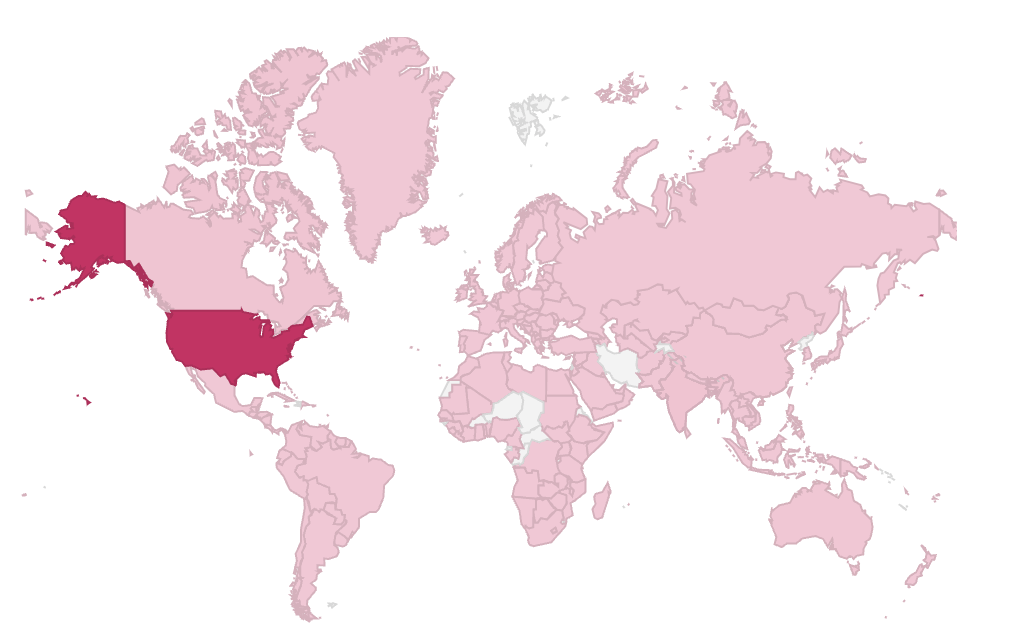
These are all the countries where my blog has been read. North Korea, Iran and the croissant in Africa are holding out on me.
What Do 1000 blog posts look like?
111 blog posts every year.
More than 2 new blog posts every week.
The equivalent of 10 full length 50,000 word books
A minimum of 2000 hours of writing time.
The equivalent of one full year of 40-hour work weeks spent writing blog posts.
The equivalent word count of writing The Old Testament of The Bible. (Truly I say to you, this fact hath blown my mind.)
Blogging created a pathway to publishing books. And holding books I published.
5 Benefits Of Blogging
It provides original content I can share on LinkedIn, Twitter, Facebook, Instagram, Threads, Medium and Reddit (Although Reddit readers hate everything, like Mikey.)
It provides a great collection of well-considered and well-organized ideas and stories that are ready to be adapted to books. The hardest work of writing my books happens in the blog stage. The easiest work is collecting blog posts with related themes to create chapters and books.
Blogging created a path to professional speaking. The blog posts led to a book. The book led to speaking opportunities. The speaking opportunities have created the best source of income in my Information Creation + Communication Ecosystem.
Blogging organizes great ideas, lessons and stories to share as a professional speaker.
The blogs have allowed me to share far more jokes and humorous asides than I would be able to share any other way. This is really the thing that keeps me writing.
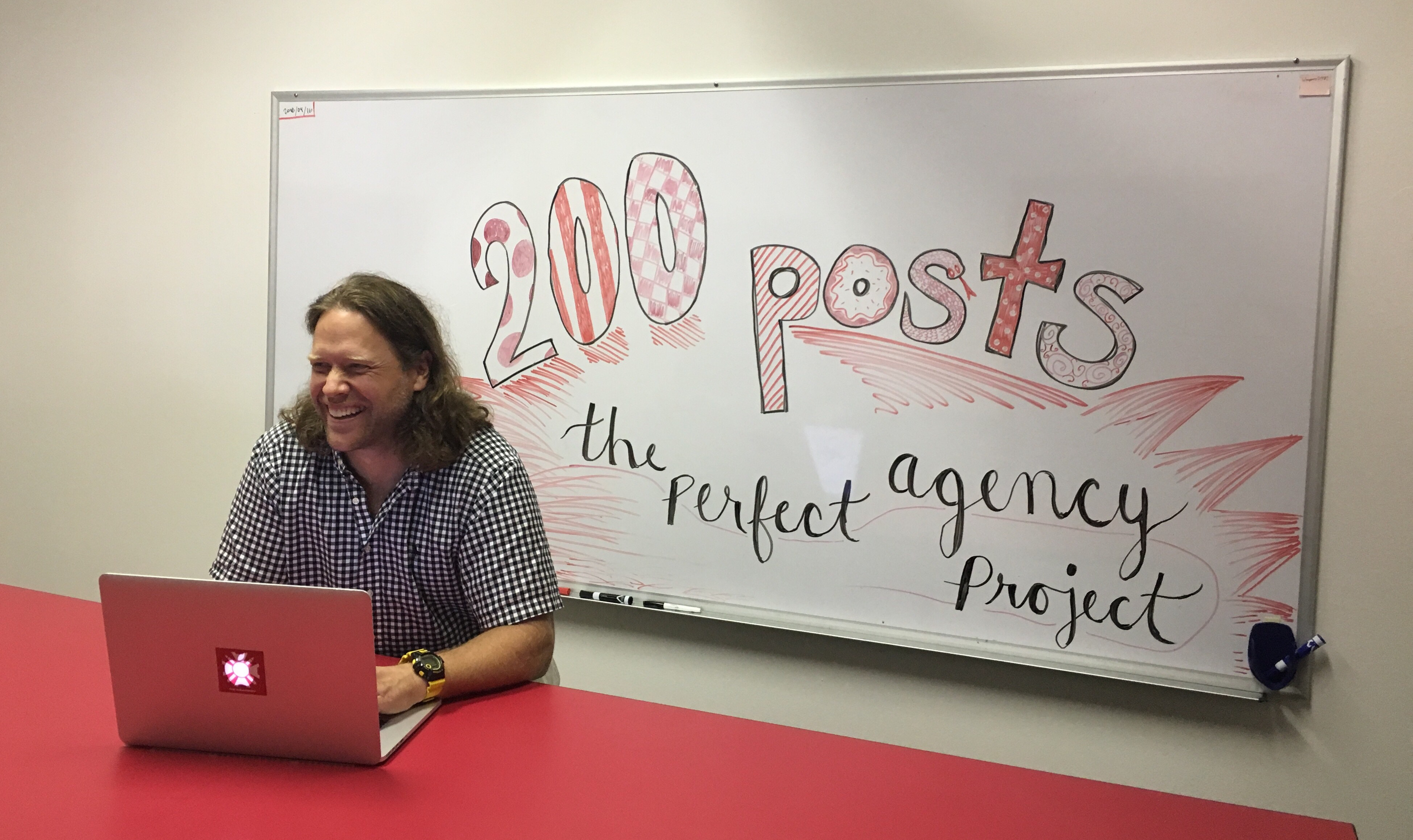
I was excited to hit 200 posts back in 2018 when I was just a baby blogger.
6 Things I Want Everyone To Know About Writing 1000 Blog Posts
Anyone can do it.
There are no barriers.
There are tons of tools and templates that make it easy. (I use WordPress to write and publish my blog.)
The 2 key steps are: 1. Get Started 2. Don’t Stop.
To sustain a blog you have to create a regular writing habit. Write at the same time for a set duration every day, or every weekday, or every Friday or whatever works for you. The habit is how it happens. (Which is also how you know someone is a nun.)
Don’t do it for huge numbers of readers. You can’t predict who will read your posts, or how many people will read what you write. If you are like most people, including me, your reach and readership will always be lower than you would want. And my blog has been read in over 160 countries. But you can create good information that can have a huge impact on one reader. That’s the real win of blogging.
Key Takeaway
As the saying goes, the best way to eat an elephant is one bite at a time. And the best way to write 1000 blog posts is one post at a time. Find a topic or topics that you are really interested in. Get started. And just don’t stop. Write at a regular time each day or each week. And when people tell you they enjoy reading your posts, or somehow benefited from your writings, use that as fuel to keep going. The world needs more good ideas, lessons, and stories. You have them. So start sharing. You’ll be surprised by how many lives you can positively impact. And that is the real benefit.
*If you know someone who could benefit from this message, please share it with them.
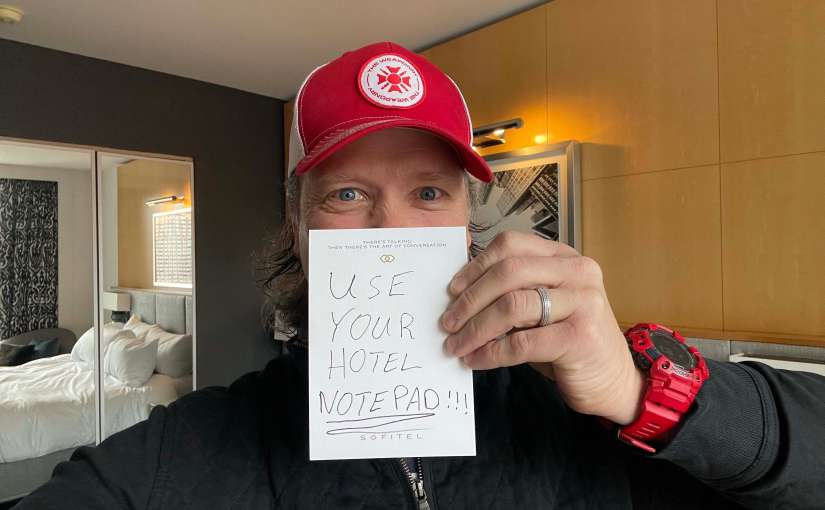
Last week when I was at my local gym my friend Spencer Koenig approached me while I was on the elliptical machine. (Not the ellipsis machine…) He handed me his phone. It displayed a photo of a profound thought he had written on a hotel room notepad.
Spencer smiled at me and shared, ‘In 2017, you wrote a blog post about how you should always use the notepad in your hotel room to write down your ideas. And I always think of that when I stay at hotels.’
I loved that!
I stay in a lot of hotel rooms each year. I have Titanium Elite status with Marriott. Apparently, that’s better than silver, gold and platinum, because they make body parts out of titanium. So I have body-part-worthy-metal status for my hotel room stays.
The Lesson
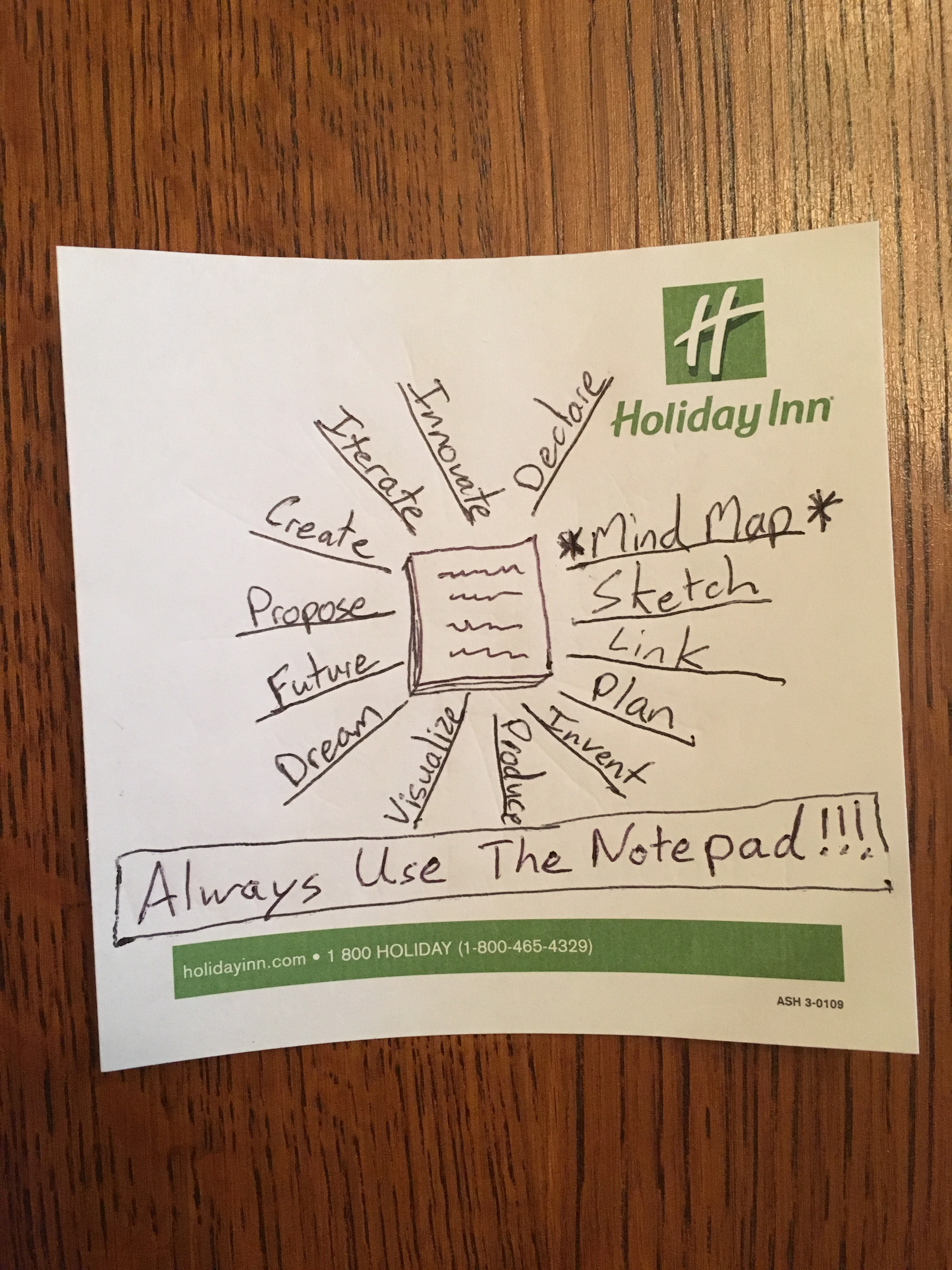
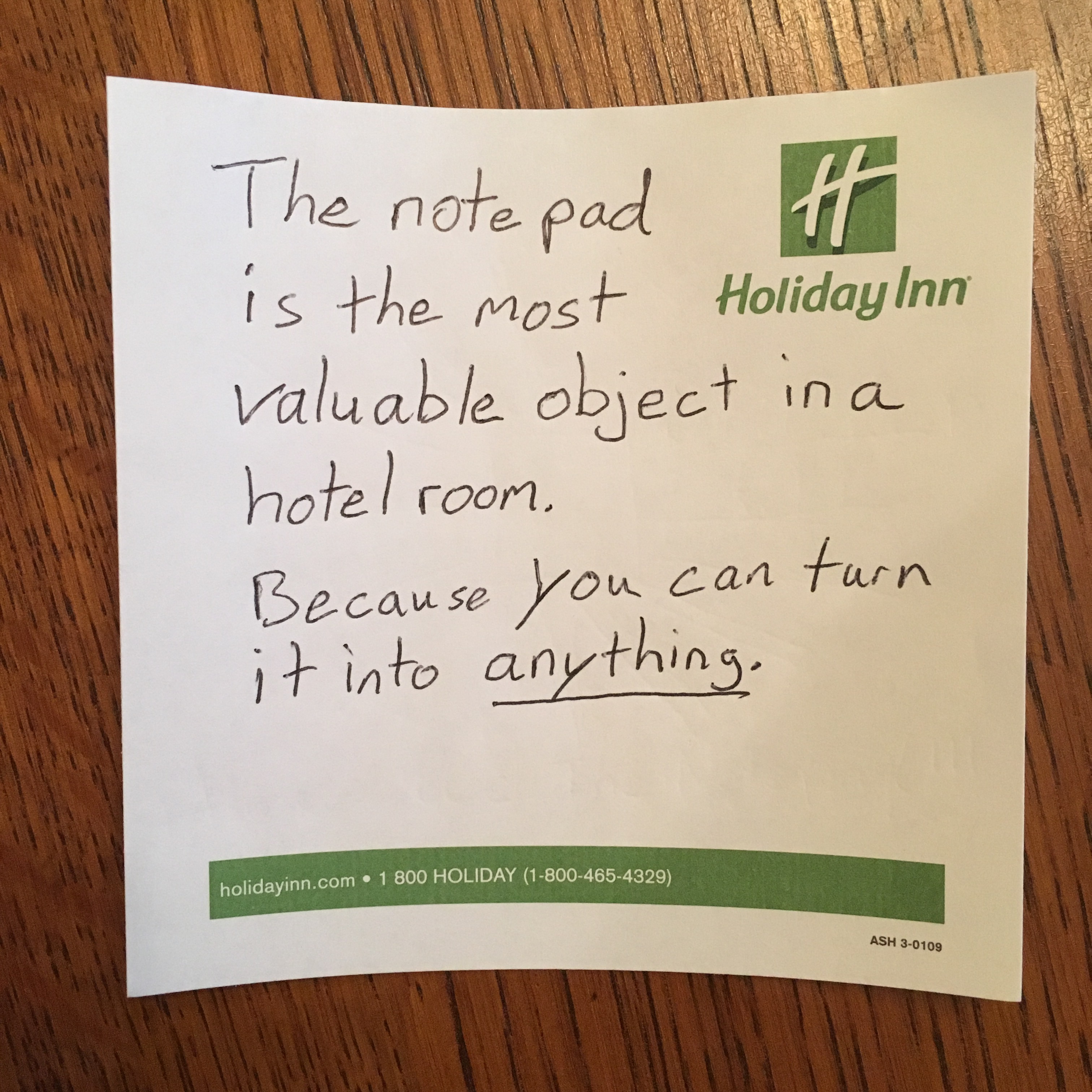
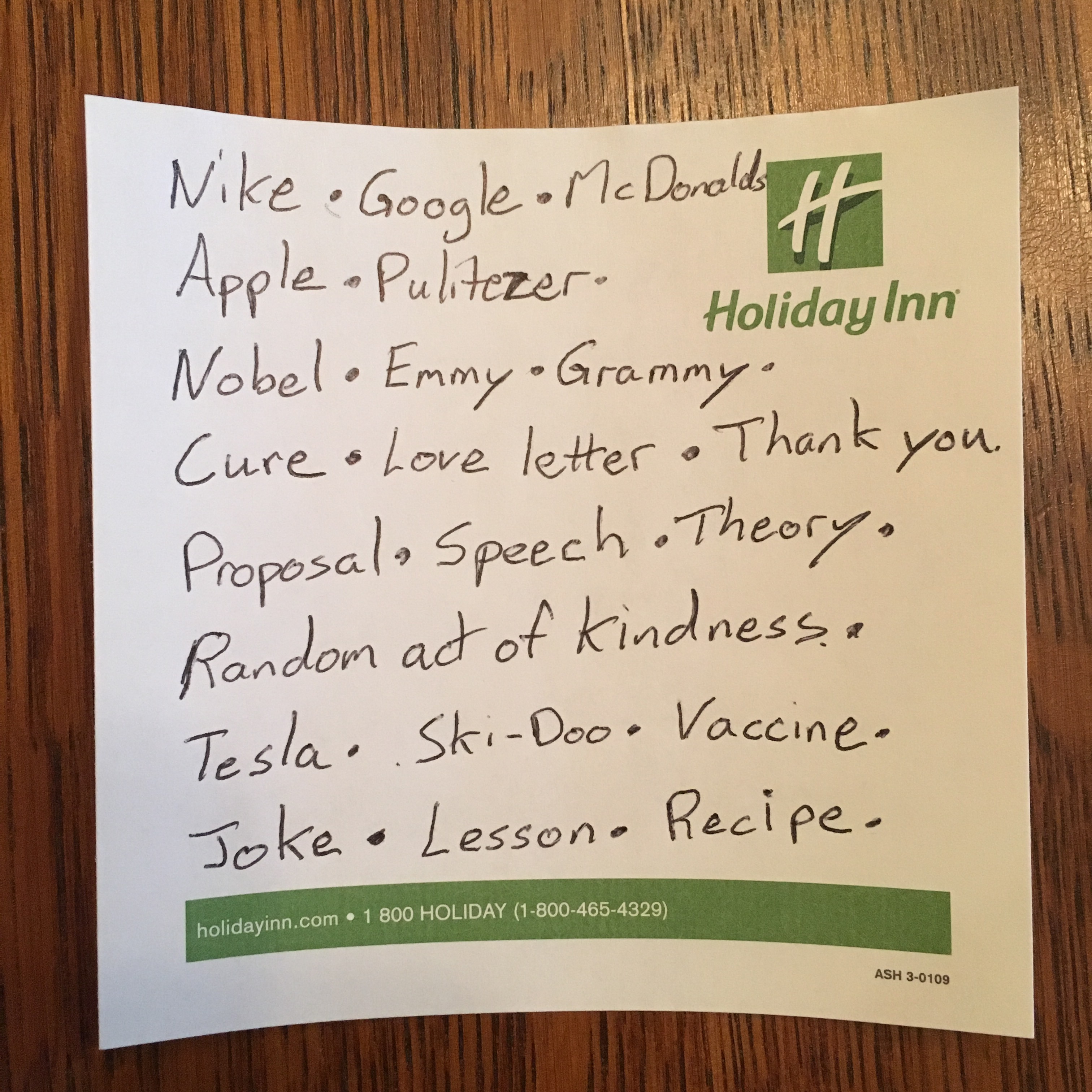
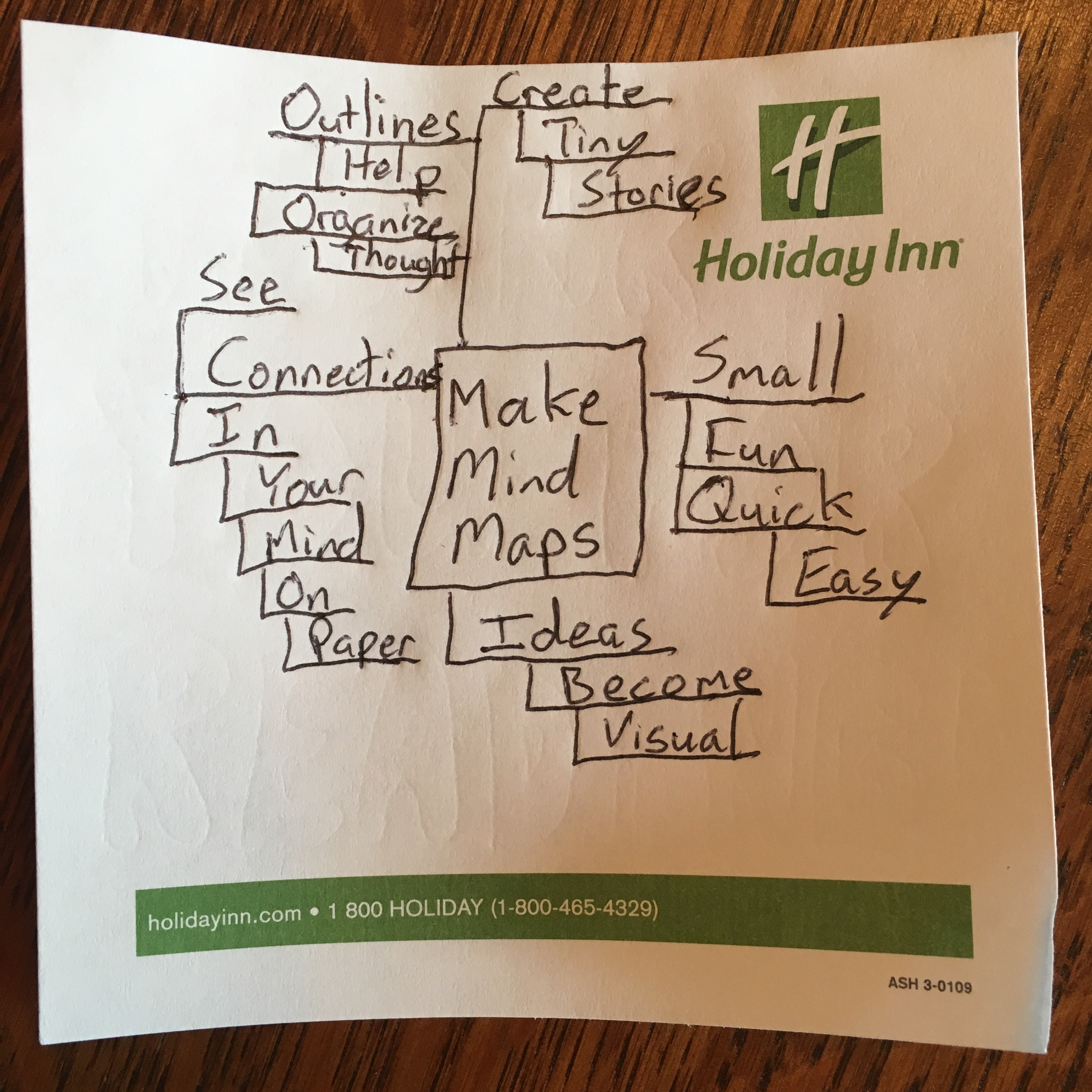
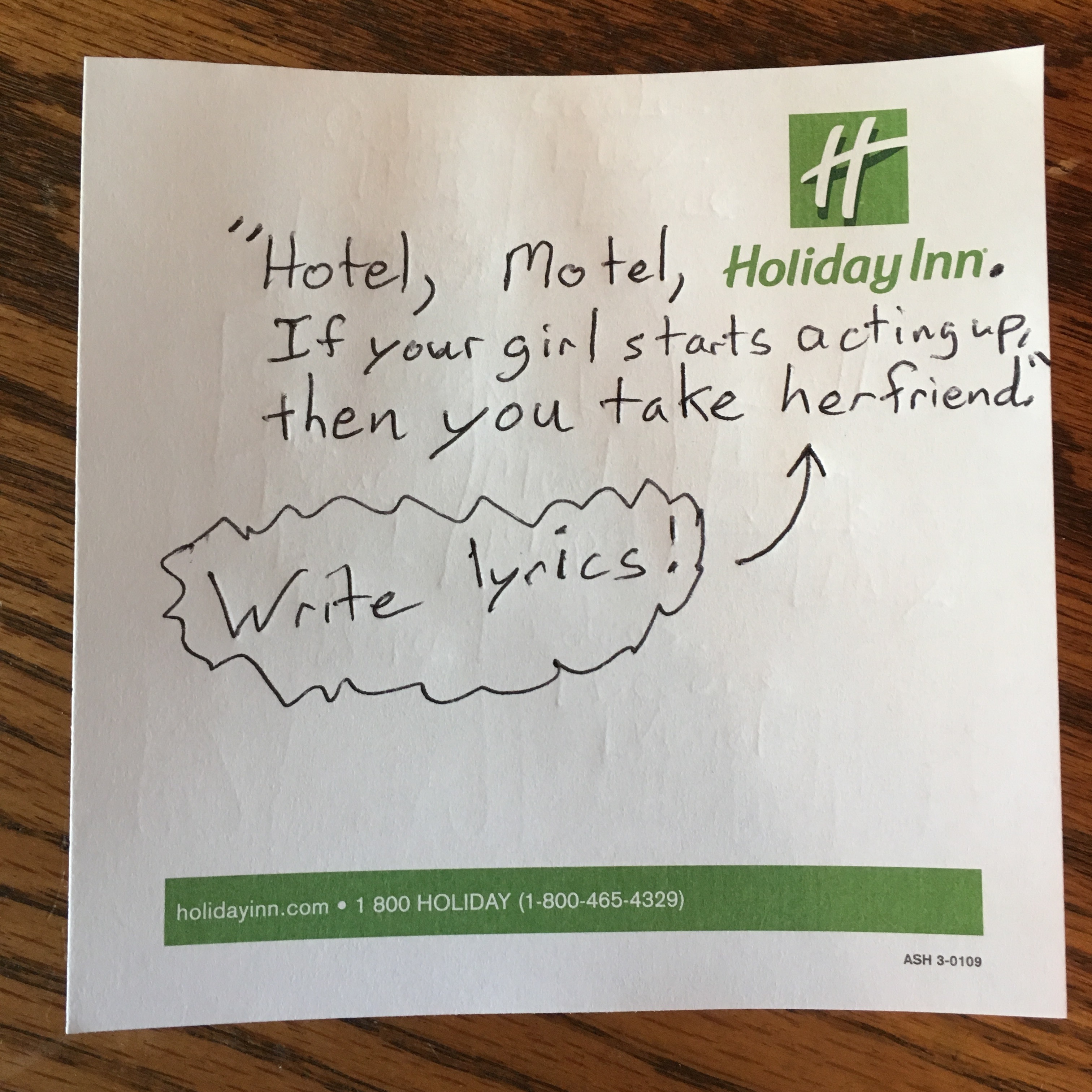
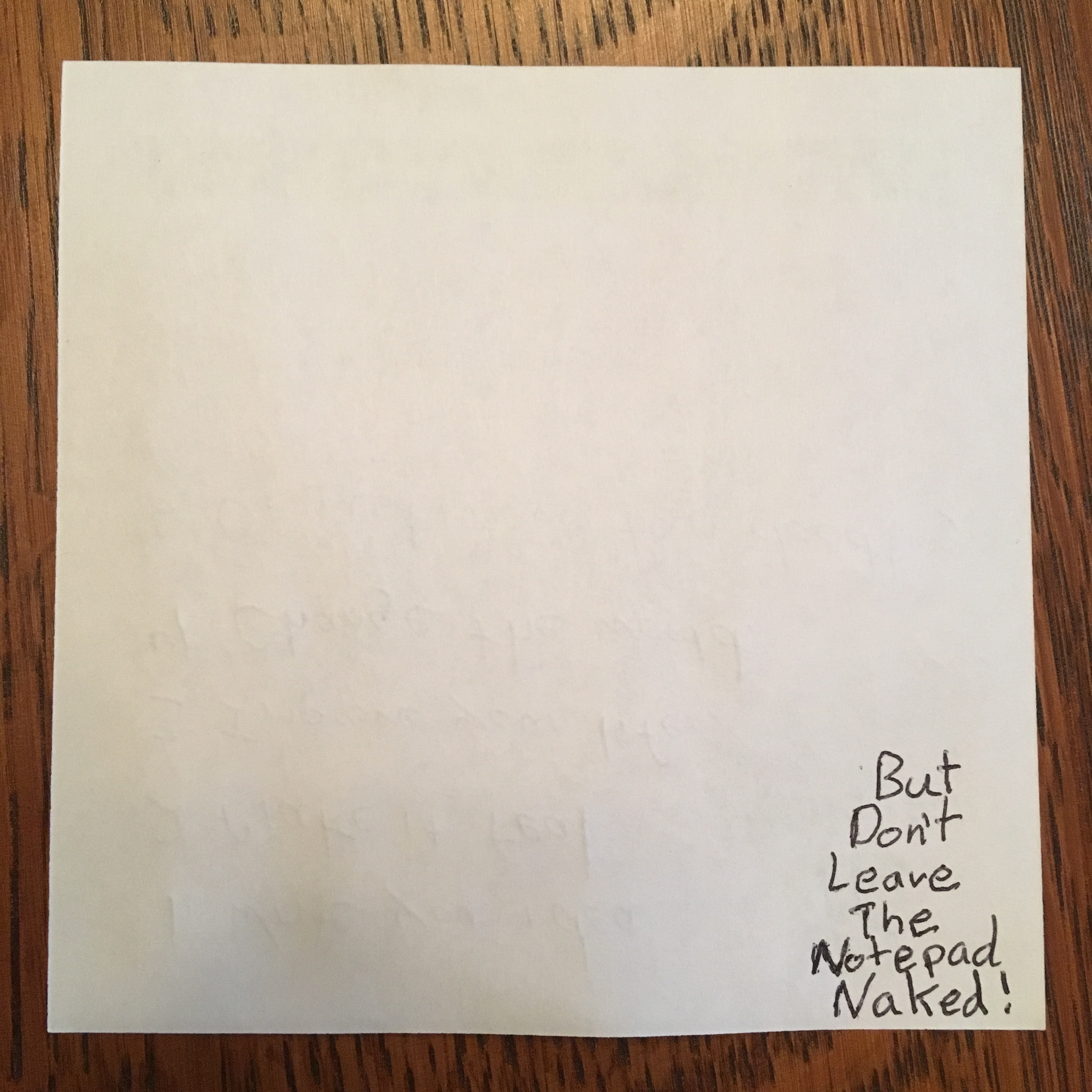
The most important thing I have learned from all that staying is that you should capture your ideas on the hotel notepads. By doing so, you turn the notepads into the most valuable object in the room.
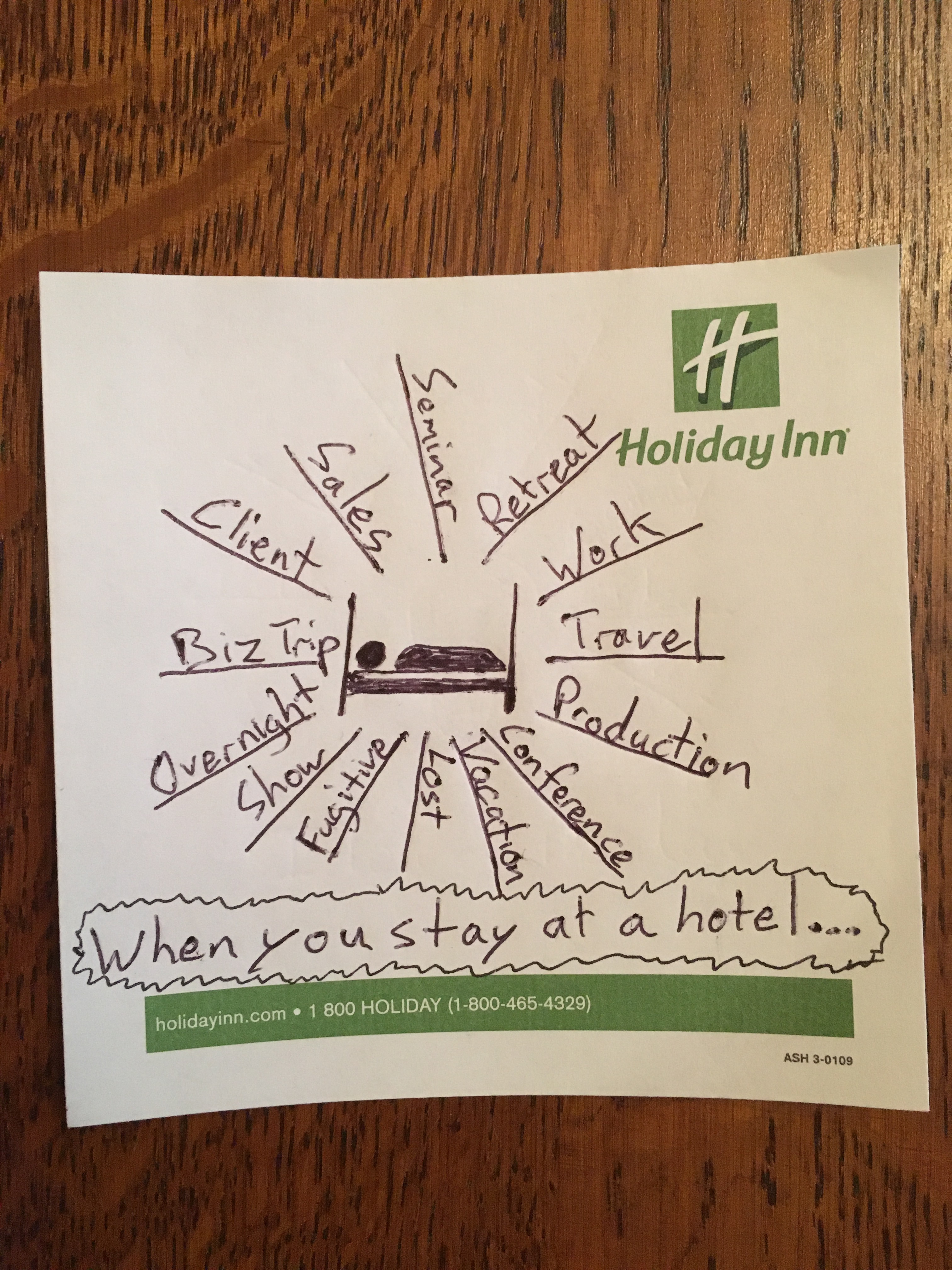
The following is the post I first shared in 2017. It is all written on the notepad from the hotel room I stayed at when visiting family in Austin, Minnesota.
Note: The Holiday Inn is a sweet hotel in Austin. And the Perkins next door is my go-to breakfast spot. I always order The Tremendous 12.
















 Adam Albrecht Blog