Your Actions Tell You Who You Are.

Earlier this week, I took the day off from work to take my son Magnus to Six Flags for his 15th birthday. We invited Magnus’ friend Phineas along for the day of adventure. I had to go because they can’t drive. And also because I FREAKING LOVE ROLLER COASTERS! (Did I type that too loud?) In fact, if I could take a roller coaster to work, I would be living my ideal life.

I picked Magnus and Phineas up after their strength and conditioning session in Mequon, Wisconsin, at 9:30 am. We drove a giddy hour to the park, which is just north of Chicago. We chattered about all the rides we couldn’t wait to hit.

Then we arrived at the park, and crushed it!

In fact, I didn’t drop Phineas off at his home until 11:30pm. (This is the point where I warn you that if I invite you or your kids to an amusement park, we are going to stay until they kick us out.) By the time those boys got to bed, it was midnight in Mequon. And Montgomery.

But early the next morning, when I dropped Magnus off for strength and conditioning at Homestead High School, I saw Phineas bouncing across the parking lot with his large jug of water, ready to run and lift weights.
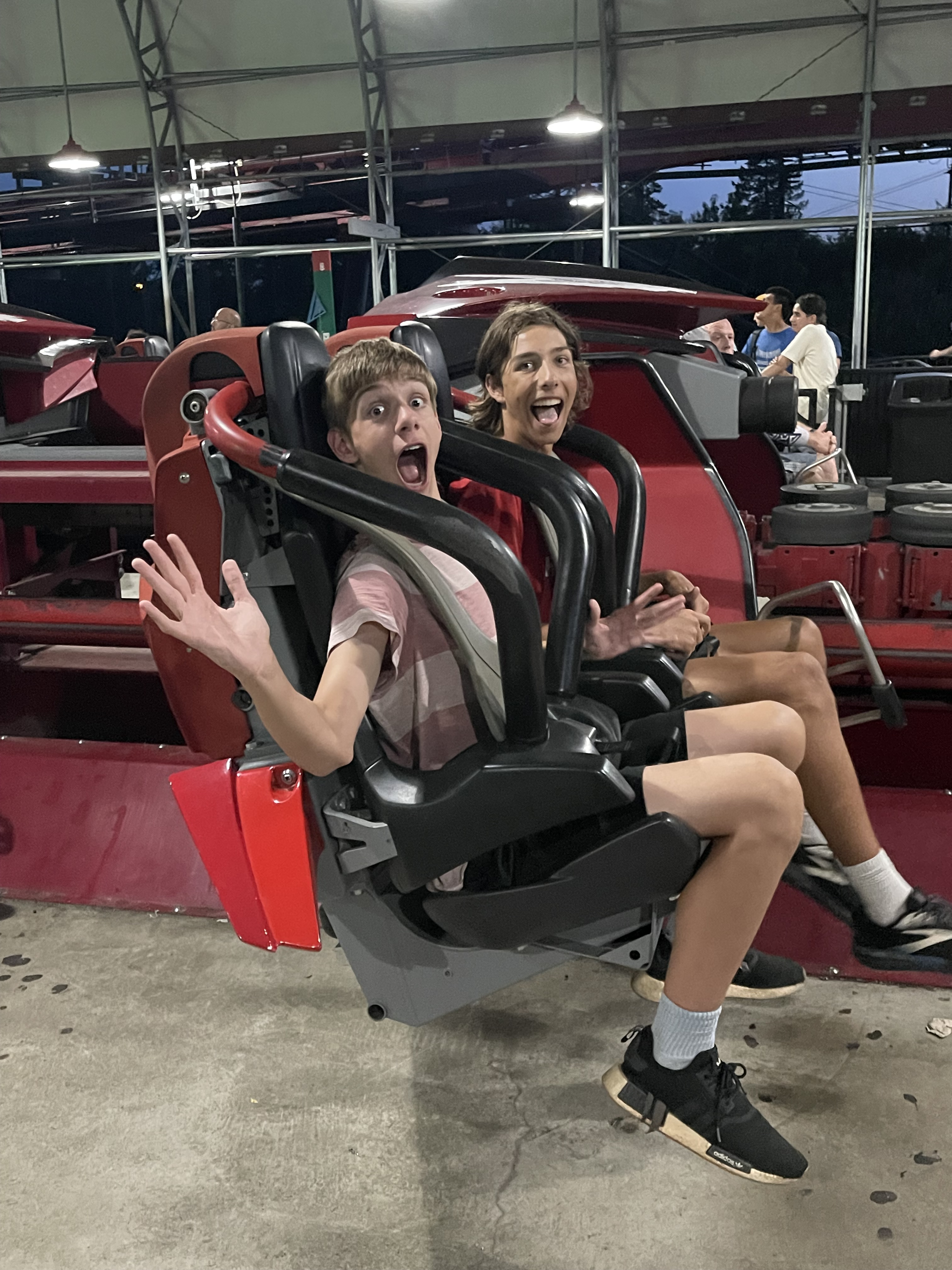
Phineas and Magnus were roller coaster riding pros.

I love what these high school freshmen did in those 24 hours.

First, they worked out hard in the morning.

Then they played all day, and practically all night long. Like Lionel Richie. They rode 11 different roller coasters that flipped, spun and dropped them until the park closed. Neither of them ever hinted at wanting to quit early. Or barfing.

They got home late.

They got to bed late.

But the next day, they woke up early and got right back to work.

That is a work hard, play hard, work hard approach to life. Wiz Khalifa-style.
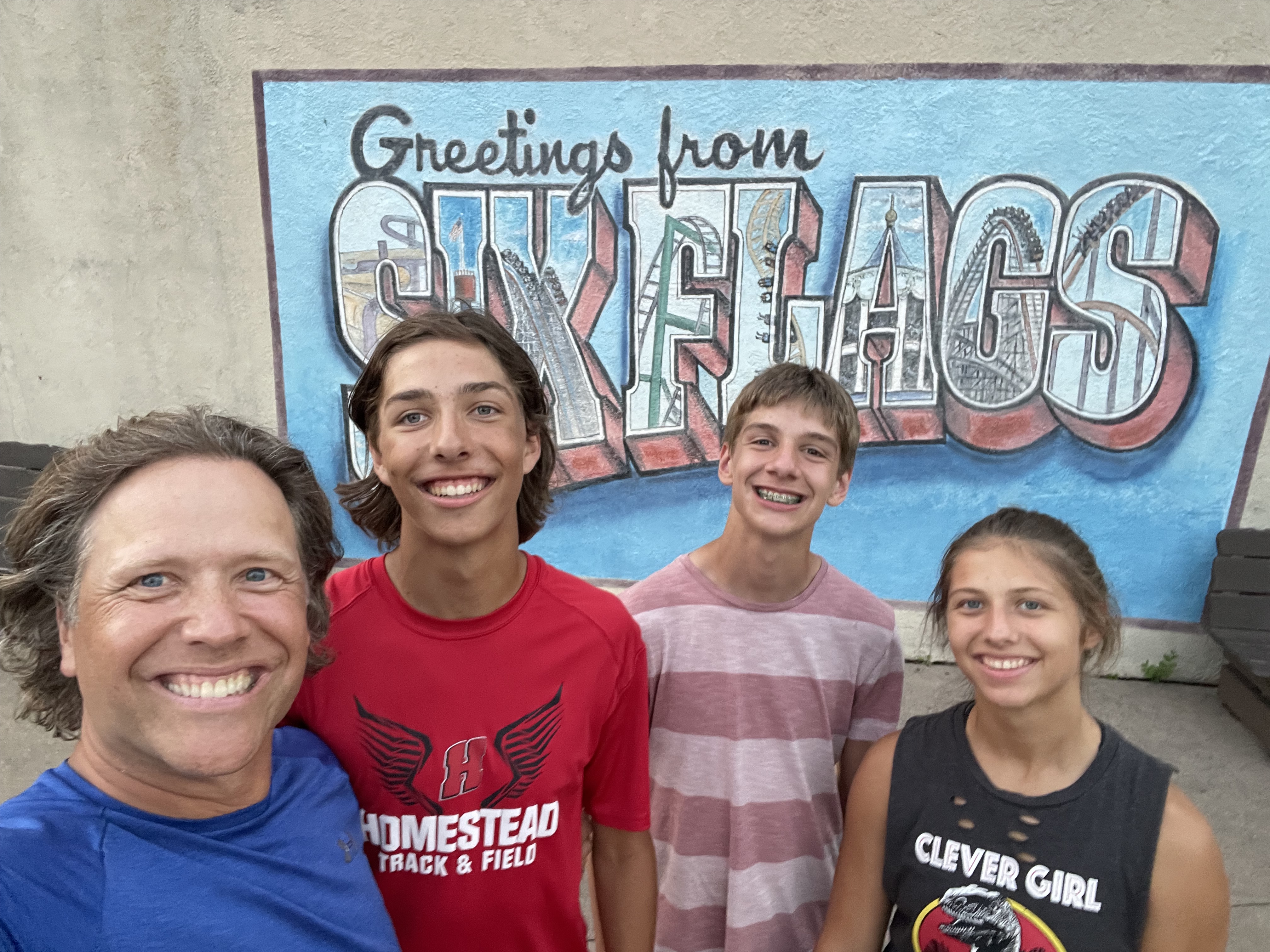
The Mid-Week Coaster Crew. And my coaster hair.

Through their own actions, those boys are telling themselves that they are the kind of people who will soak up as much fun as they can. And they will still keep their commitments the next morning.

They will do hard things, even when they don’t necessarily feel like doing them.

Because to be highly successful, you do what you have committed to do, even when you don’t feel like it.

Through such actions, you tell yourself that you are resilient, determined and focused. And when you believe your positive self-talk, you stick to your commitments. And you build momentum. Like a roller coaster on that first drop.

That type of discipline will get you everything in life.

Keep up the strong work, boys.

You’re training. yourselves to be great.
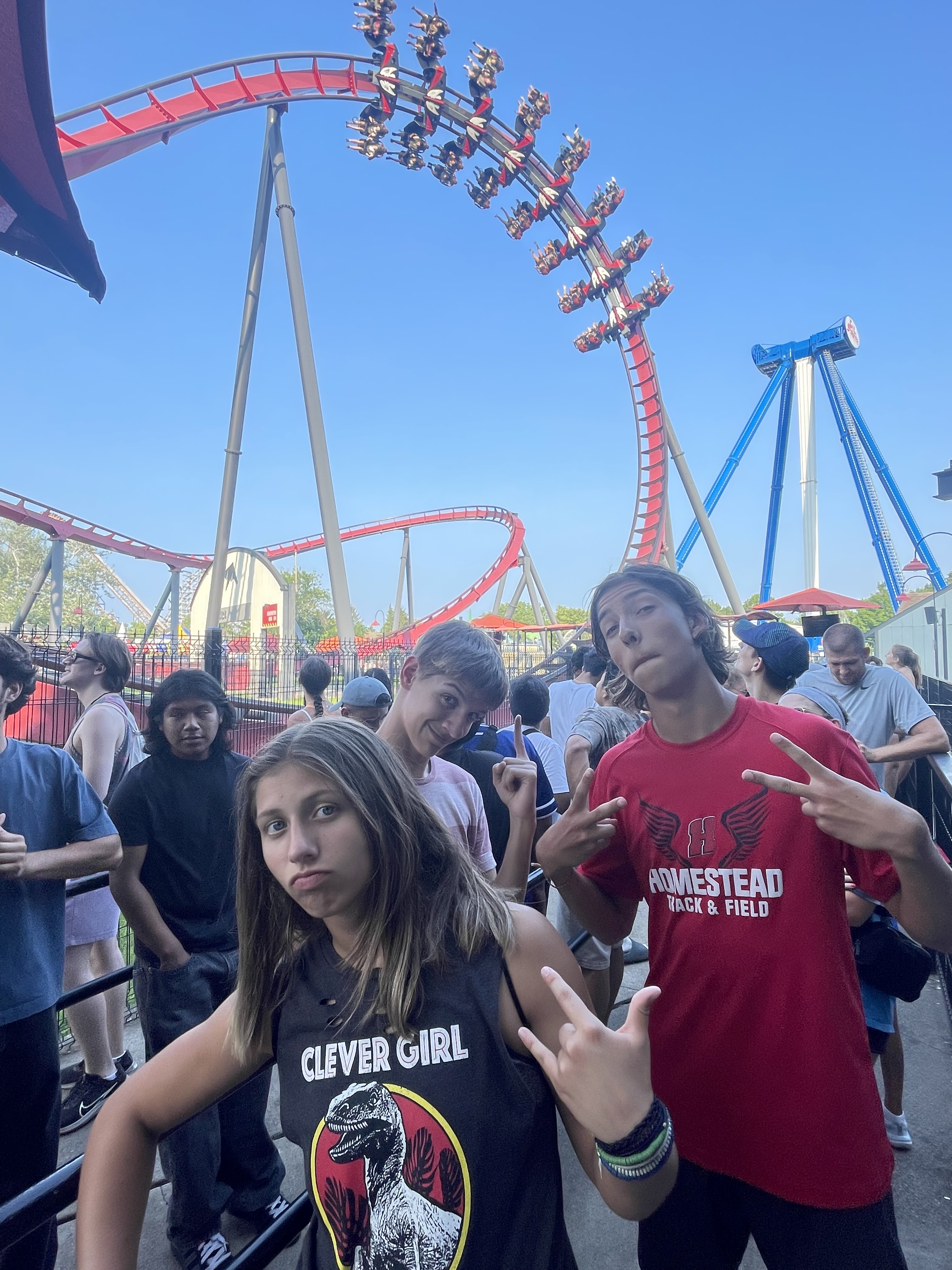
My daughter Ava also joined, because roller coasters, like pickle ball, are better with 4 people.

Key Takeaway

To achieve great things, you need to take action. You need to commit to hard work. Even when you are tired. Even when you have good excuses not to. Even when you don’t feel like it. Even when you played hard the night before. But when you stick to your personal commitments, you send a powerful message to yourself. You tell yourself that you do do hard things. That you are committed, disciplined and determined. Those actions build trust in yourself. They build self-confidence. And they lead to outstanding results.

*If you know someone who could benefit from this message, please share it with them.

+For more of the best life lessons I have learned check out my book, What Does Your Fortune Cookie Say? from Ripples Media.  And consider subscribing to Adam’s Good Newsletter.
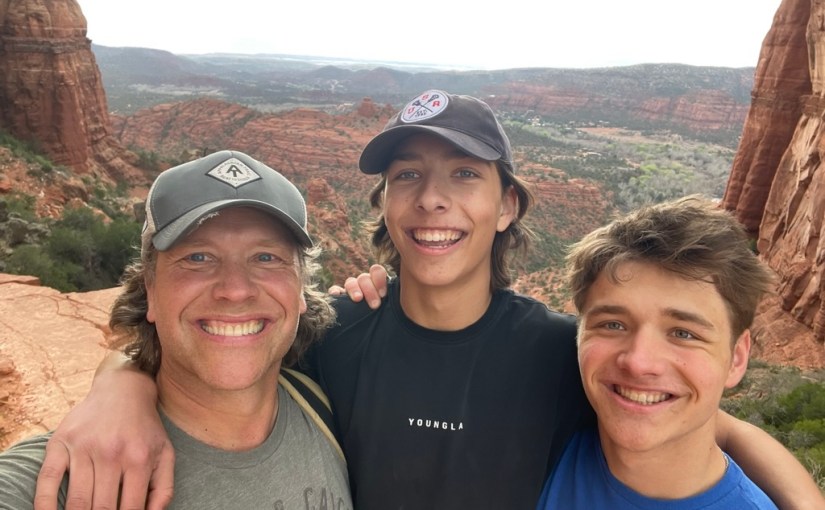
Let your experiences and adventures change you.

This year, I have had a tall flapjack stack of fun and interesting experiences outside of work.

  • I traveled to Nashville in May to visit colleges and enjoy some live music at the Grand Ole Opry. (Although I still have no idea what an opry is.)
  • I spent our family’s spring break in Arizona, splitting time between Scottsdale and Sedona. (I didn’t have time for standing on the corner in Winslow.)
  • I completed a circle tour of Lake Michigan, seeing many things that are not that far away by the way the crow flys or the salmon swims, but quite far away by the way the car drives.
  • I coached 2 great athletes at the Wisconsin State High School Track Championship on the other side of the state in La Crosse.
  • I attended a family reunion in southern Minnesota, in my mom’s hometown of Elkton, with a whole flock of reuning relatives.

How To Profit From Your Experiences

My goal, when I experience such things, is to come back different.

I don’t want these to be inert experiences.

You want the special experiences of your life to have impact.

You want them to expand your view of the world.

You want them to create new or deeper relationships.

You want new learning.

You want new ideas.

You want to grow through each one of your novel experiences and be better as a result. (Your novel experiences don’t have to include a novel.)

You want to be a different and more capable version of yourself after the experience than you were before. (And you want to maintain all of your limbs and phalanges.)

When you aim to grow, expand and improve through your experiences, you will always find your path to accomplish your aim.

You will spot things you have never seen before.

You will recognize the learning, the lessons and the insights when they arrive.

You will grab the opportunity to meet new people you encounter. And you will find that each new person you meet will change you in some way. Sometimes these changes are large and profound. Other times, they are small and seemingly insignificant. But if you genuinely try to get to know people in a greater way, you will walk away a greater person.

Key Takeaway

Throughout your human experience, always look for ways to grow. Collect and connect dots. Add new humans to your world. Expand your circle of friends. Upgrade your world view. Come back from your experiences and adventures smarter, wiser and more informed. It helps generate excitement and curiosity every time you leave home. And it brings you back better, wiser and more creative than you were when you left.

*If you know someone who could benefit from this message, please share it with them.

+For more of the best life lessons I have learned check out my book, What Does Your Fortune Cookie Say? from Ripples Media.And consider subscribing to Adam’s Good Newsletter.

Why you need to have a need for speed.

If there is one defining factor of how the world works today versus any other time in history it is speed.

Today, everything happens faster. Not just Jimmy John’s. And Tinactin.

Communication technology has advanced from mail, to email to Slack and texting. Information arrives instantly.

News can be reported with a tweet, just seconds after it occurs.

You can stream practically anything you want to watch on demand, anytime.

AI has squeezed the gestational period of our research, discovery, query and analysis down to a mere burp.

So Why All The Slow Motion?

Yet, with all of the technology enabling us to move at Lightning McQueen-speed, I am constantly surprised by how slow many organizations move.

Nearly all technological friction has been taken out of our systems, yet human friction is still ubiquitous. K, why is that?

Human decision making, prioritization and hesitation still kill momentum, push deadlines and slow progress to a snail-mail’s pace.

The Weaponry, the advertising and ideas agency I lead, was launched 9 years ago, and the urgency of the social era was baked into our DNA. Because in the social era, opportunities come and go in a flash. In the social era, you must harvest social opportunities during the very short season when the opportunities are ripe. This can be as short as a few seconds, but never longer than a couple of days.

One of the mandates for our organization is to operate with the urgency of social media. Move quickly. Jump on opportunities. Thwart threats quickly. Move faster than other organizations. It was programmed into our genomic code from the start.

When we present timelines in our proposals, we share aggressive timelines, and note that this timeline only works if the client can keep up, and turn approvals around within our reasonable, but not generous, turnaround periods.

Yet as much as we hear about how important the work we do is to our clients’ success and how they want to get it done quickly, organizations can rarely keep up with their own ambitions. They are simply not built for speed and urgency.

While not all windows of opportunity close as quickly as social media does, all opportunities are finite.

When you fail to get your advertising in market in time, you also fail to drive sales during that time. For seasonal businesses, that is revenue lost forever. For non-seasonal businesses, it means your sales slide later in the year or into the next year. When you delay decisions, your overall revenue numbers for the current month, quarter or year are lower than they should be. That’s a loss. And an avoidable one.

My friend and client Bob Monnat, Senior Partner at Mandel Group Inc, shared some insights with me about one of his organization’s best partners. He revealed that they are great partners because they are always pushing them to move faster, to decide quicker, to get the work done so that they can ultimately turn their projects into cash-flowing assets.

Never lose sight of the reason businesses exist. They are created to make money. And time is money. The quicker you move, the more money you are likely to make.

Key Takeaway

Move faster. Today, advanced technology means that the slowest part of the process is the humans who have the most to gain. Slow actions and slow decisions cause wasteful delays. Identify the bottlenecks and pinch points in your process. Then attack them. Address your delays to help move your organization faster so that everyone can enjoy the success of speed. It is today’s competitive advantage.

*If you know someone who could benefit from this message, please share it with them.

+For more of the best life lessons I have learned check out my book, What Does Your Fortune Cookie Say? from Ripples Media. And consider subscribing to Adam’s Good Newsletter.

How I screwed up my very first email, but lived to email you about it.

Do you remember writing your first email?

I do.

It was very confusing.

I composed my first email message when I was a college student. It was my second or third year of college at the University of Wisconsin. I wrote the email to my parents from the computer lab at college. Because back then, almost no students in my socio-economic subdivision owned their own computers.

I was awestruck by the idea of this new technology. It would allow me to send a written letter to my parents, but without having to find a sheet of paper or an envelope. I wouldn’t have to buy a stamp. Or lick a stamp. I wouldn’t have to find a mailbox. Or lick a mailbox. And I wouldn’t have to wait a week for them to get the letter. They would get it instantaneously! This was some kind of magic from the future. And I couldn’t wait to try it out.

But when I went to write my first high-tech email letter, something went wrong.

I quickly filled the small field provided for the message with my first sentence. Then, as I continued to type, the new words pushed the old words out of the field. It was very confusing. But, hey, this was magic mail. And I was just a regular human. So I figured I wasn’t supposed to fully understand the wizardry.

I stared at the email for a long time, trying to understand what was happening to my message. But finding no good explanation, I eventually poked the send button and sent my magic mail into the ether, hoping it would land as promised inside my parents’ home computer in the woods of Norwich, Vermont.

The next day, when I received a reply email from my parents, I realized what had gone wrong.

I wrote my entire email letter to them in the subject field.

Looking back, it is easy to laugh at that mistake. It is easy to say I was a dufus. Or a doofus. (Both of which are dictionarily acceptable.)

But I find inspiration in this story. Because it serves as a reminder that when you try new things, you will be bad at them. Or at least as bad as you will ever be.

But just because you are bad at things at first doesn’t mean you will be bad at them forever. In fact, the only way to greatness is to travel through badness and mediocrity. It’s like traveling through the wardrobe into Narnia.

My first email experience demonstrates that by trying, experimenting and exploring, you grow and expand your capabilities. You have to be willing to try new things to accomplish new things. You have to be willing to be bad to become good. You have to be willing to make mistakes to make yourself great.

I am now 9 years into leading the advertising and ideas agency, The Weaponry. And I can draw a direct connection from my willingness to try to ride a bike, to my willingness to try to write my first email, to my eagerness to try to launch a startup business. They are all plunges into the unknown. They all involved missteps, mistakes, mistypes, or mispedals.

Here’s The Recipe:

You try.

You mess up.

You learn.

You correct.

You try again.

You improve.

You try again.

You improve again.

And you just keep trying.

Forgive my braggadocio, but today, I am freaking good at writing emails. I can fill in the To, CC, and BCC fields like a boss. I can write a subject that will tell the recipient why they should want to read the email. I can craft a clear, concise, compelling and occasionally comedic message. And I write that whole message in the body section. I can add an attachment. I can change the font size. I have a standard signature that includes my name, title, office location, and website address. My email also lets people know that I wrote a book called, What Does Your Fortune Cookie Say? And that I publish Adam’s Good Newsletter. Which is a newsletter that I send out regularly via email. Boom!

Key Takeaway

Don’t be afraid to try something new because you think you will be bad at it. You will be bad at it. At least as bad as you will ever be. But that is the price you pay to achieve greatness. You have to humble yourself at the beginning of the process. Which helps you appreciate your growth and ultimate success. The learning journey is the life journey. So learn as much as you can. It’s how you create the most rewarding life.

*If you know someone who could benefit from this message, please share it with them. And if you want to show off your email skillz, send me a note at adam@theweaponry.com.

+For more of the best life lessons I have learned, check out my book, What Does Your Fortune Cookie Say? from Ripples Media. And consider subscribing to Adam’s Good Newsletter.
Would people stand in long lines to get to you?

Over the 4th of July weekend, I completed a circle tour of Lake Michigan. My wife Dawn, sons Johann and Magnus, and I took 4 and a half days to circumnavigate the lake clockwise, starting in Milwaukee. Which is on the southwestern shore of the Great Lake, 90 miles north of Chicago. But a world away in terms of traffic, cost of living and pizza.

On our adventure, we saw a lot of new things. New cities and towns. New parks and National Lakeshores. We took new ferries and boat tours. We crossed new bridges. We explored new islands. Who knew there was so much new to know?

We also needed to eat, drink and do a little shopping. In the process we found many establishments that were mostly empty and easily accessible.

But we found other establishments with long lines out the door and down the sidewalk.

The places with the long lines still have my attention as I return to work at The Weaponry, the advertising and ideas agency I lead. Because generating long lines of eager customers should be the goal of those who create, run or contribute to successful businesses. And it should be the goal of every brand that offers products or services.

Today, I encourage you to think about creating lines out the door for your offerings. Here are the 6 things that help create long lines that people are happy to stand in.

6 Factors That Create Lines Out The Door.

1. Quality products. Offer products that really work. Things that are well-made and do their jobs well. Products that take care of business will take care of your business. Like Bachman-Turner Overdrive.

2. Great Service: Take care of your customers. Make them feel that their needs and expectations are met, their questions are answered, and their time is respected. Treat them like that boyfriend or girlfriend you really want to keep. But don’t make out with them. Unless that’s part of your service. (I hope it’s not.)

3. Great Value: Make your customers feel like they get more than they paid for. Or more than they would get for the same dollar spent somewhere else. This does not mean your offering is cheap or inexpensive. It means every penny is well worth the investment.

4. Great Experience: You want your customers to feel that the whole experience was interesting, fun, worthwhile, memorable, and story-worthy. It wasn’t just a transaction. There was something more to it. It felt different than other seemingly similar transactions or purchases. It was worth doing again. It was worth telling others about. It was something you are proud to have done. Even if you can’t fully articulate why it was so great. Even if you are a fully articulate human.

5. Scarcity: This means that what you offer isn’t easy to find. There is no easy substitute. It means that people are willing to make additional sacrifices for your offering. They will wait and trade more of their time in order to get what you are offering. They are ok suffering inconveniences like standing in line. Or sitting in a waiting area for their opportunity to enjoy your offering. Because nothing compares to you. Like Sinead O’Connor said.

6. Esteem: Some offerings are so good that they transcend mere preference and become part of what can be considered esteem experiences. This means that you get additional social credit for having experienced the offering.

Examples:

  • People who saw the play Hamilton in its first year.
  • Consumer space travel
    • Eating a Cronut in 2013
    • Attending a Taylor Swift, Coldplay or Noah Kahan concert in 2025.
    • Owning American Giant hoodies when there was a waiting list.

Cue the Queue

Consider these 6 factors when crafting your offers. They will push you to develop things that are beyond compare. Beyond substitute. Things that are rewarding to experience. Things that are hard or impossible to find anywhere else. They lead to offerings that command a higher price and are still worth every penny, Marshall. And they leave customers feeling like you did a great job taking care of them.

It’s a winning recipe. It is how brands thrive. It is how startups become stalwarts. It is how you grow revenue, profits and envy. It is how you create momentum. And competitive advantages. It is how you build a moat around your business. It is how you generate talk value, word of mouth advertising, referrals, 5-star ratings, and repeat customers.

That’s how you create lines out the door.

Key Takeaway

Never settle for good enough. Push for greatness. Continually look for opportunities to improve your offering, your experience, your value and your uniqueness. If others copy you, innovate again. You can’t create advantages or envy with commodity and parody offerings. Your goal should always be to create lines out the door, and be able to charge a premium to your competitors. Better yet, innovate your offering to the point where there are no competitors. There are just customers lined up out the door.

*If you know someone who could benefit from this message, please share it with them.

+For more of the best life lessons I have learned check out my book, What Does Your Fortune Cookie Say? from Ripples Media.And consider subscribing to Adam’s Good Newsletter.
This 4th of July, Remember That You Come From Brave People.

Happy 4th of July!

I love everything about this holiday.

The parades and fireworks.

The American flag swimsuits.

The hot dog eating contests, and imagining the parade and fireworks they must cause at the other end of the GI tract.

America

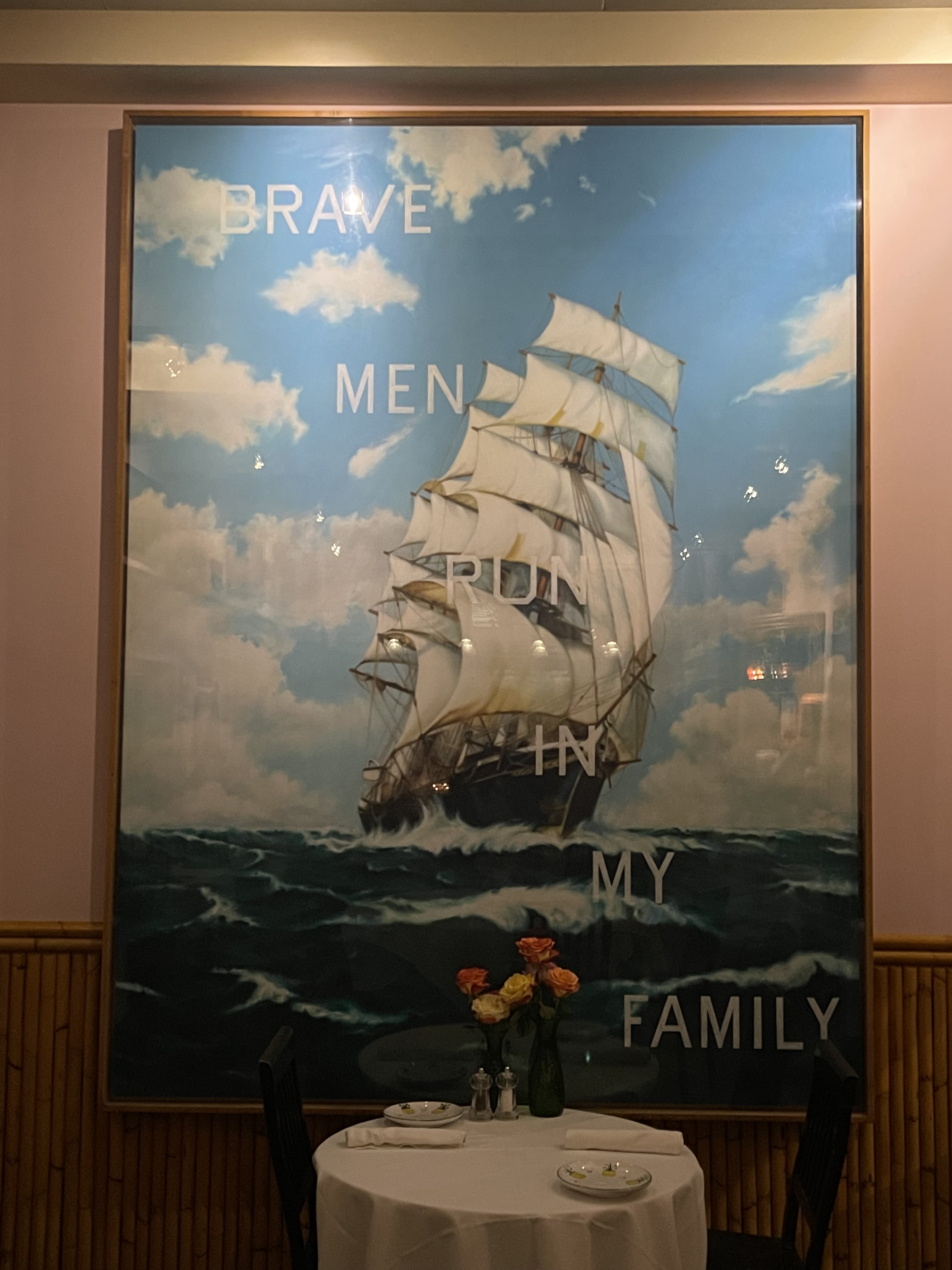
This year, as we celebrate the 249th 4th of July in America, my mind keeps returning to a piece of art I saw several years ago in California.

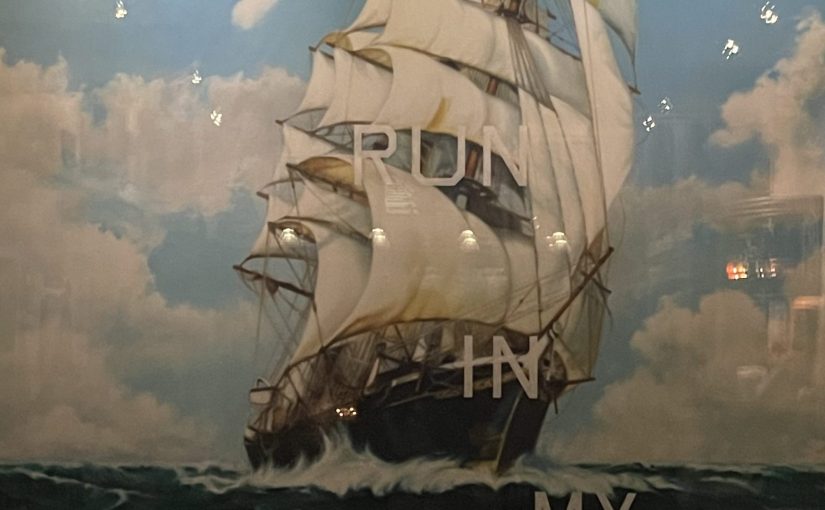
My family and I were celebrating my son Magnus’ birthday at Ivy At The Shore in Santa Monica. In the restaurant, there was a large image of a sailing ship with all sheets fully winded, plowing through rough seas.

Over the image were the words. ‘Brave Men Run In My Family.’

Ed Ruscha originally created this idea. I’m not sure who to credit this version to.

This piece really speaks to me.

Not because I come from a sailing family. (I come from more of a rummage saling family.)

I love it because the painting reminds me of all the brave decisions my forefathers and foremothers made to come to America and risk so much for a better life.

Their brave decisions gave me and my fellow American offspring better opportunities than we would have had in the non-American countries my people came from.

However, this truth is not unique to me and my family.

All Americans are descendants of brave Grandcestors who bet on themselves and came to America for the freedom to create better lives. Amazing lives. The kind of lives Robin Leach would have profiled, up close and personal.

As we celebrate Independence Day, remember that you come from brave men and women.

They left home, family, friends, and all that they knew to come to America, the land of the free, for the chance at something even greater.

Make sure to honor them by doing great things with your life.

Be brave and courageous.

Take calculated risks.

Live into your own dreams.

Bet on yourself.

It is the safest bet you will ever make.

Do if for yourself.

And do it for your family members who did it for you first.

Happy Independence Day.


*If you know someone who could benefit from this message, please share it with them.

+For more of the best life lessons I have learned check out my book, What Does Your Fortune Cookie Say? from Ripples Media.And consider subscribing to Adam’s Good Newsletter.
My Misogi Challenge for 2025.

I have been intrigued with Misogi Challenges since I was a teenager. Granted, back then, I didn’t know that they were called Misogi Challenges. I just called them Personal Challenges. Or Doing Hard Things. But I like the Japanese name for them better. Because it makes them sound more profound and official and less like a Hold-My-Beer stunt.

What the Miyagi is a Misogi Challenge?

A Misogi challenge is an annual event in which you take on a difficult personal challenge with a high probability of failure. You do this to push your personal limits, develop grit, resiliency, growth and confidence. It also provides good content for your social media network. Especially if your challenge is to step into a boxing ring with 57-year-old Rusted Mike Tyson.

My Misogi Challenges have included:

  • Trying to break the New Hampshire state record in the discus within 8 months of ACL reconstruction surgery. (That was freaking hard.)
  • Eating my lunch outside every weekday for an entire year. (I ate alone a lot in 2015.)
  • Launching a business. (That’s how I started The Weaponry)
  • Publishing a book (That’s how I wrote What Does Your Fortune Cookie Say?)

Misogi Challenge 2025

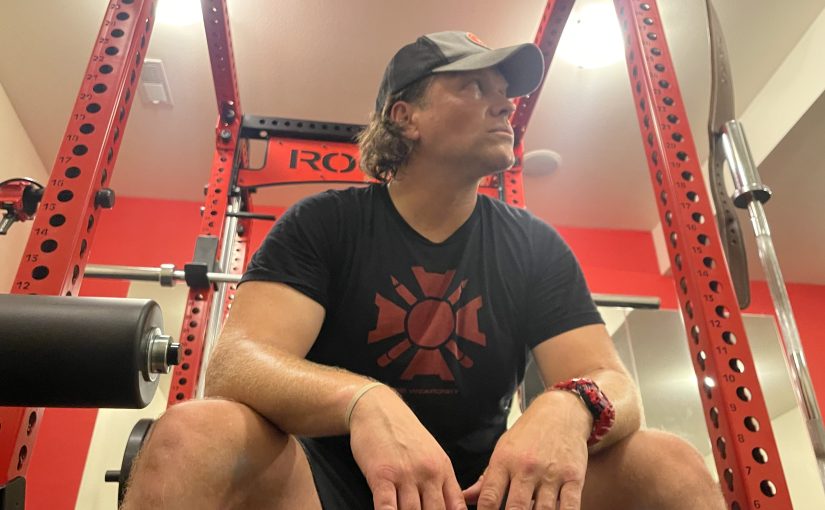
This year, I have given myself a bench press challenge.

For context, I first benched 300 pounds when I was 17 years old, during the summer after my junior year of high school.

My senior year in high school, I benched 335 pounds while recovering from the ACL reconstruction surgery mentioned above.

At the end of college, when I was 23, I put up 423 pounds when I weighed 211 pounds. 423 is an odd number for weight lifting. But I was using heavy-duty, 1.5-pound collars to secure the weight to the bar. And at 211 pounds of body weight, I counted every pound to see if I could double my body weight.

But that was nearly 30 years ago. That was back when Mike Tyson would have destroyed a social media influencer if such a thing existed.

My 2025 Misogi Challenge includes 4 different goals.

  1. Bench Press 300 pounds. This is a fun club to still be in 35 years after I first joined it.
  2. Bench Press 315 pounds. Everyone who lifts weights seriously knows that this is three 45-pound plates on each side of the bar. It’s a milestone for weightlifters. And it looks great on the bar. (But not so great if it is sitting on your chest.)
  3. Bench Press 335 pounds. I love the idea of still being as strong at 52 as I was at 18.
  4. Living to fight another day. I don’t want to push myself in a way that compromises my tomorrow. So I am listening to my body. And if it says, ‘Back off!‘ like those Yosemite Sam mud flaps, I will back off. You have to play the long game.

The Progress

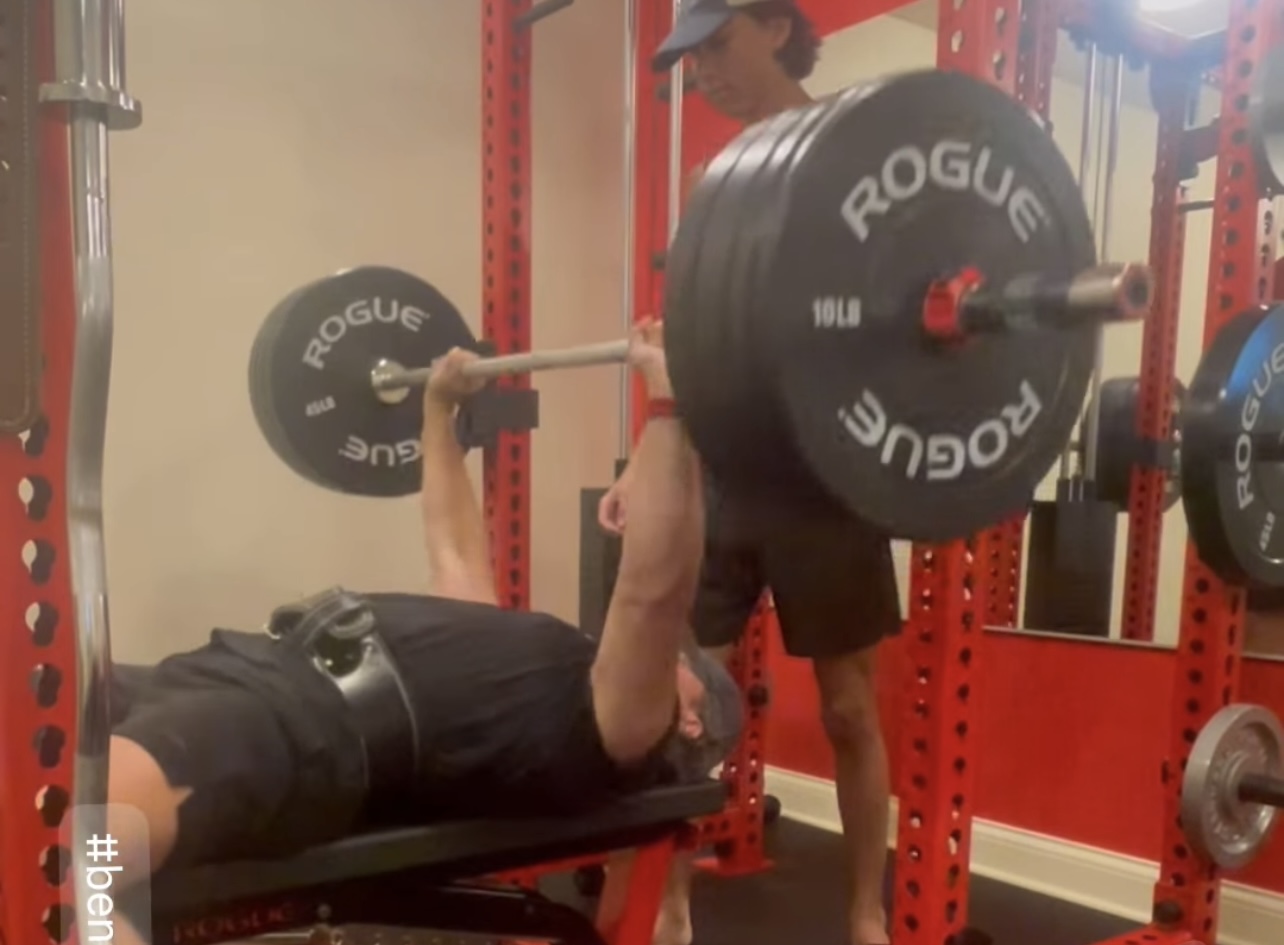
Monday night at 9:15pm, I bench 295 pounds 4 times.

The week before, when I was fresher and lifted earlier in the day, I benched 290 pounds for 5 reps.

My Monday night workout with my undersized spotter.

While these numbers are a far cry from where I was at my best, I have learned that the decades add to the degree of difficulty. I love that this challenge is pushing me to do hard things. When I was in my teens, 20s and 30s I never thought I would still be flirting with these kinds of numbers in my 50s. But then again, I also thought I would be bald.

I plan to share updates on my progress over the next month. I should attain the 300-pound goal next week. And I expect to peak by late July or August. And most importantly, I hope to live to fight another day. Because I have plenty more challenges yet to come.

It’s Your Turn

I encourage you to take on your own Misogi Challenge. They can help you accomplish great feats, like writing books, starting businesses and running marathons. They create exciting chapters of your life, which help make the story of your life more interesting. They push you to expand and redefine your personal limits. And they fan the flames of your competitive spirit.

Key Takeaway

Do hard things. Push yourself. Challenge yourself. A good Misogi Challenge, or difficult challenge by any other name, makes you feel alive. These challenge force your to keep growing. They stoke your competitiveness. They build your resilience and confidence. They help you live a more interesting life. And they help remind you that you can do hard things. Which means that when the hard things come your way, you know you can handle them. Because you’re a badass. And you choose to do hard things for fun.

*If you know someone who could benefit from this message, please share it with them.

+For more of the best life lessons I have learned check out my book, What Does Your Fortune Cookie Say? from Ripples Media.And consider subscribing to Adam’s Good Newsletter.