When I was 6 years old, I went to a local rodeo with my family at the county fairgrounds. As a blooming buckaroo, I thought the horses, bulls, cowboys and clowns were the most exciting thing I had ever seen in person. All I needed to complete the perfect experience was a ten-gallon hat and a Marlboro.
Then something totally unexpected happened.
The announcer called for all of the 6-year-old boys in the stands to come on down to the ring to participate in the rodeo!
It was straight out of this little cowpoke’s dream.
So with the approval of my Dad, I galloped down the bleachers to the railing that encircled the arena. I was quickly up and over that delineation between us and them and dropped onto the sacred dirt floor. I hustled over to the gathering huddle of 6ers, like me, who were all filled to the pearl-snapped collars with anticipation.
Then the show announcer boomed over the PA system like the Wizard of Oz. He announced that they were about to release chickens in the arena, and that we would have to be quick like a fox to grab ourselves a fine feathered friend. But once we caught one, it was ours to take home!
That was crazy.
And I was crazy enough to play chicken with them.
A moment later, a gate swung open, and a dozen chickens began strutting across the arena floor. And a gaggle of lil cowboys gave chase.
Which only sped up the chickens.
A couple of the other boys grabbed a bird right away.
But not me.
I chased the birds like a chicken with its head cut off.
You could say I lacked strategy. Or focus. Or speed. Or stamina. Or all of the above. But as hard as I tried, I couldn’t catch a single one of those struttin’ egg slingers.
The basic problem I dealt with was that the arena was huge, and I was small. Those chickens had far too much room to run away from me. In every direction.
The audience in the stands enjoyed a good laugh at my plight as I tried to catch a chicken that had what felt like a dirt ocean’s worth of escape routes from my chase.
Eventually, the rodeo officials decided that the chickens and the audience had had enough fun at my expense. So one of the adults with the show grabbed a snow-white chicken and handed it to me. And with what felt more like a pet store-bought chicken than a triumphantly wrastled chicken, I headed back to my dad in the stands.
A Common Problem
Today, I see adults face a similar challenge to the one I faced at the rodeo when I was a young’n.
People often have a want, wish or dream, but they have too much latitude in how and when they will make it a reality.
Thus, the dreams and aspirations remain ever-elusive. Like those rodeo chickens.
The Solve.
To make great progress, you need demanding deadlines. Those are deadlines that are so short that they demand actions or decisions today. Tight deadlines help narrow your focus, clarify your next steps, and increase productivity. Which drives results.
Short deadlines reduce options. And they squeeze out unnecessary actions. This time-constrained focus helps you reach your end goal faster.
Key Takeaway
To accomplish more, you need more constraints. Shorten your timeline until it forces decisions and actions today. This transforms ambiguity into clarity. It creates urgency. And urgency is the universal activator. It is how you turn someday thinking into today thinking and right-now necessity. That’s how you get more done. And avoid wasting time in the arena, outfoxed by unconstrained chickens.
*If you know someone who could benefit from this message, please share it with them.
One of the best things you can do for others is to let them know when you see their skills and talents at work. When you see someone perform well, give great effort, or step up to take on responsibility, you’ve got to let them know.
It’s kind of like a sailor high in the crow’s nest, yelling ‘Land Ho!’ (Ho didn’t used to be a derogatory term.) And it can generate the same kind of feeling of success, accomplishment and enthusiasm.
When you call out great effort, ability, or accountability, it creates a valuable reward for the person recognized. It says, ‘I see what you are doing. It is good. It is valuable. Do more of that. ‘ Mark Twain once said, “I can live for two months on a good compliment.” (Which also seems to indicate that he stopped getting compliments at the end of his life.)
Your positive reinforcement can call other people’s attention to the good things you see. Which shines more sunlight on the good and helps it grow and flourish.
Humans grow towards praise. So praise people for their valued actions, and you will see more. Gandhi said, “Be the change you want to see in the world.” But you should also praise the change you want to see in the world. When you do, it will multiply.
Key Takeaway
When you see others doing good, call it out. Even if it’s awkward. Even if you don’t know them. (Especially if you don’t know them!) That random reward creates positive reinforcements around valued actions and behaviors. And it encourages others to develop into a greater version of themselves. So when you see something good, say something good, and the world will get more good in return.
*If you know someone who could benefit from this message, please share it with them.
We all know people who do more than everyone else.
They do the family things and the home things.
They do the friends things, the travel things, the work things, and the wild things.
And miraculously, they seem to be enjoying it all.
Like cyborgs. Or Stepford Wives.
They are creating things that interest them.
They are volunteering for causes they care about.
They are having success in their career, running their own business or leading their family.
They do the networking activities you would like to do.
They exercise.
And they get to worship, too, God bless them.
Plus, they coach or chaperone or team parent for the activities their kids do.
You wonder How do they do it all?
How are they involved in so many things? How do they fit it all in? And how do they not Chernobyl like it’s 1986?
The answer is simple.
Capacity is a state of mind.
You decide how much you can handle, how much you can take on, how much you can fit in.
You decide how much you can do with your hours, days and weeks.
When you decide you are full and overwhelmed, you stop. (Presumably in the name of love.)
People who do more believe they have a capacity to do more.
They see spaces to add things.
They find time in their schedule to make things happen.
They see opportunities that are worth their time and their energy.
And they recognize that at some point, they will run out of time, energy and opportunity.
So they go now.
The scarcity of time is precisely what drives them to see more capacity in their everyday.
Now is the time.
Now is the opportunity.
Now is the alternative to never.
Key Takeaway
If you want to fill your life with meaning, action and contribution, adjust your mindset to create capacity. Because when you want to find the time for more, you will find it. Or you will optimize, prioritize, reduce or eliminate things to make room. There is more space and time in your continuum for the things you really want to do. Find it. Enjoy it. Do more with it. And make others wonder how you do it all.
*If you know someone who could benefit from this message, please share it with them.
Because the foolproof cure for boredom is to have big goals.
And I am the fool with the proof.
Big goals, and many of them, help fill your days with purpose.
I have so many goals that they govern my days. (In a non-political governing kind of way.)
From the moment I wake up, my routine is constructed to help me achieve my goals.
Because when you have a strong vision for your future, it shapes your now.
And you see time as a tool for you to use to achieve your goals.
Fitness goals inspire you to exercise. Even when you would rather TexMexercise.
Travel goals squash boredom with planning, adventure, reflection and memories.
Career goals inspire you to work harder, more focused, and with more zeal. (Or a more contemporary word for zeal.)
Financial goals drive you to save and invest. Even when you have the urge to splurge, Virg.
And your financial goals will inspire you to explore and discover smarter things to do with your money, honey.
Entrepreneurial goals mean you are never bored. Ever. Like ever, ever.
Reading goals mean that you always have a good reason to log off of electronics and fill your time with something that adds value to your life. (And increases your vocabularium.)
Writing goals drive you to sit down and write every day. And it is hard to be bored when you are creating. Just ask God. Or Tyler Perry.
Domestic goals around improving your home, and yard keep you busy and productive. Not bored.
Relationship goals influence the way you invest your time, the way you treat the important people in your life, and the hashtags you use on social media.
Your goals help you make decisions all day long about the things you should and shouldn’t do with your time. Which means that goals enhance productivity, decision making, time management, and relationships. Not to mention the positive impact they have on your happiness, adventurousness, and good old-fashioned usefulness. (Basically all the nesses.)
Key Takeaway
The next time you find yourself bored, think about the goals that you could be working towards. If you find that you don’t have any, set new ones that you can work towards right now. Boredom is a signal that you need more meaningful activity in your life. And goals are the greatest way to make that happen.
*If you know someone who could benefit from this message, please share it with them.
If you are not careful, your life will pass by in a flash. Your career will be over in a snap. Your kids will be grown and will have flown in a Blink-182. Because time is a crafty thief that lulls you into someday thinking. Like Sugar Ray. And then it yanks that someday away just like your prankster friend, pulling your chair away just before you’re about to sit on it, Potsy.
Milestones
One of the great ways to create a far more enjoyable and successful life and create memorable experiences is to utilize the power of milestones.
Milestones are those moments on the calendar that humans have made to mark the passage of time. Those days or events offer valuable markers for accomplishments, challenges and traditions. They are there to host rites of passage and other memory-making events. And without milestones, Hallmarkwould have a hard time selling you paper.
You know the big and obvious milestones. At Halloween, you dress up in a costume and do candy things. At Thanksgiving, you gather with family or friends, feast, and get thanky. At Christmas, you exchange gifts, eat, drink and praise Mary. At New Year’s, you celebrate and create lists of how the next 2 weeks will be different.
Deadlines and Opportunities
But milestones also create deadlines for accomplishments and opportunities for memorable experiences.
I sit down to write every morning by 6:10am. But Tuesdays and Thursdays are milestones to publish blog posts. Every 3 weeks, I publish Adam’s Good Newsletter. And every five years, I want to publish a new book. Those are all random and arbitrary deadlines. But they become useful milestones that make my elective activities time-bound. Milestones offer navigational markers on the naked landscape of time. Which ramps up your self-imposed productivity.
I had a major speaking event yesterday, and I used it as an opportunity to get in better shape. I committed to doing 30 minutes of cardio every day for 30 days leading up to the talk, so that I would look and feel more fit on stage in front of 1,000 people. (And I requested to have no cameras in the venue, because the camera adds 10 pounds.)
I always use my birthday as a motivating milestone. I’ve also used class reunions, New Year’s Eve, and the birth of my children as important starting points, end points and exclamation points.
I have used milestones to gain traction towards health and fitness goals, to measure my business success, and to create deadlines for my entrepreneurial launches. (Which are a lot less launchy than Elon Musk, Richard Branson or Jeff Bezos’ entrepreneurial launches.)
I used the end of the COVID-19 lockdown in 2020 as a milestone to finish the first draft of my manuscript for my first book, What Does Your Fortune Cookie Say? Then I used Thanksgiving of 2021 as my milestone to publish the book. I made both of those goals happen, thanks to the power of milestones. (Since then, I have learned how to write a manuscript without a worldwide pandemic.)
I use milestones to schedule big travel. For my wife Dawn’s 40th birthday, I surprised her with a trip to Europe. We scheduled a trip to Europe in the summer before my daughter Ava’s senior year of high school. We realized that the milestone provided the last summer opportunity for us to all travel together before college obligations made summer travel problematic. Using milestones is one of the best ways to visit the big places on your life-travel list. (Using airplanes is the other best way.)
I used a milestone to plan a major move. My wife and I wanted to find a place where we could settle to allow our children to finish their schooling without moving by the time my daughter Ava entered middle school. We moved from Atlanta to Mequon, Wisconsin, a large-yarded, low-taxed, great-schooled northern suburb of Milwaukee that sits on the Western shore of Lake Michigan. We called this our 13-year home. Which meant that we would stay in Milwaukee for 13 years, until we hit another major milestone: our son Magnus’s high school graduation. Then Dawn and I are free to hit the road again and take on more adventures.
Key Takeaway
Your greatest ambitions, experiences and traditions are far less likely to happen if you don’t tie them to a milestone. Use those special days to inspire your work, to create deadlines, and to force urgency. Use them to create regular events to bring your people together. Or to reset your ambitions, spark your goal setting and help you accomplish more elective activity than you could without them.
*If you know someone who could benefit from this message, please share it with them.
10 years ago, in the fall of 2015, when Donald Trump was still best known as the star of The Apprentice, I began publishing the Adam Albrecht Blog.
I had just read a book by Jeffrey Gitomer called Little Black Book of Connections, where Gitomer wrote about the importance of having a platform to broadcast your ideas. By doing so, you can share your experience and perspective with many people at once. Which is a far more effective and efficient way of connecting and staying in touch with people than communicating one-on-one. Like Hall & Oates.
At the time, I was planning the launch of The Weaponry, the advertising and ideas agency I have led for the past 9.5 years. I had already dabbled with 6 different blog attempts at that point. In each case, I stopped writing almost as quickly as I started. I simply didn’t have the motivation or the habit to keep them going.
But The Adam Albrecht Blog stuck. Like bubble gum in hair. I spend as much time writing each week as I do eating food or exercising. I spend as much time writing as I do commuting to and from work each week.
All this writing has changed my life. The blogging has led to writing books, which have led to amazing speaking opportunities all over the country. (I would also be happy to speak in any of the other 135 countries where my blog has been read.)
The writing keeps my thinking sharp, like aged cheddar. It creates something of value to contribute to the world 2-3 times each week. Remember, your value to others is directly related to your contribution.
Additionally, because I share all of this writing on broadly visited platforms, I am often top of mind when other people have relevant opportunities. Which means I get more than my fair share of great opportunities. Which is the whole point of advertising.
The Math
This is my 1,100th blog post. It’s a crazy big number to think about. But it’s a simple example of small, consistent efforts compounding over time. 1,100 published blog posts over 10 years equals 110 posts per year. That means, on average, I have published a new blog post every 3.3 days. Or 2 blog posts per week, consistently for 10 years.
If all this math talk sounds like the teacher from Charlie Brown to you, just know that I have written a lot over the past decade. And while I have shared a pile of ideas, lessons and insights with the blog-accessing world, the person who has learned the most through this process is me. Because if you don’t learn a great deal from writing that much, you probably aren’t all that smart to begin with.
11 things I have learned from publishing 1,100 blog posts.
You can’t get to 1,100 without the first step.
1. Get started.
While a journey of 1000 miles begins with a single step, a blog of 1100 stories begins with a single post. I started with a post titled The Perfect Agency Project, which I published on November 9th, 2015. (That was also the name of the blog for the first few years.) Two days later, I followed up with a post titled The perfect agency could be like the DMV. On November 17th, 2015, I published the seminal work, The A-holes Rule. And I was off and writing.
Those first 3 posts gave me a taste for what could be. Just like Neil Armstrong said, it was the first small step that mattered most. If you want to create a blog, podcast, YouTube channel, newsletter, column or any other knowledge share, don’t overthink it. Just get started. That is the pass/fail of any undertaking. Action is the best teacher. You can figure out the rest as you go. Need more help here? Try reading Why you should be an Imperfectionist, like me.
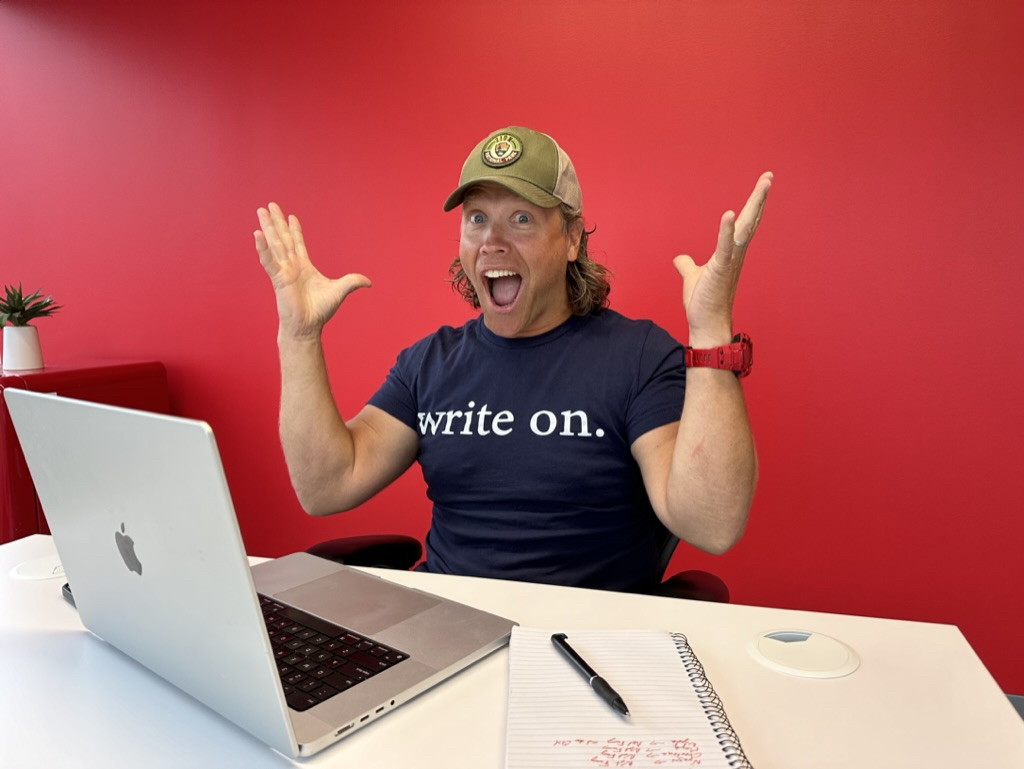
This is my blogging in-action shot.
2. Write About Things You Really Care About.
This makes all the difference. Don’t just write about things you think you should write about. Choose things you really care about, and really think about. It will mean you have a deep well of inspiration. I write regularly about advertising, entrepreneurship, business, creativity, and self-improvement and human relationships.
Unlike a magazine, newspaper or professional blog, the beautiful thing about a personal blog is that you don’t have anyone telling you what you can and can’t write about. I have developed a rule not to complain in my blog posts. But other than that, anything goes. Including these random posts about the fly that landed in my ranch dressing and a strange encounter I had at my local Piggly Wiggly.
3. Create A Strong Writing Habit.
I quickly realized that the best time for me to write is first thing in the morning. I wake up at 6 am and write for an hour, Sunday through Thursday. I don’t think about it. I just do it, automatically. Like Nike.
My writing habit was created in the first year, and it made everything easier. Find a time that works for you every day, or every weekday, or every weekend day, and make it happen. Then watch the production pour in. As Will Durant (not Aristotle) wrote, “We are what we repeatedly do. Excellence, then, is not an act, but a habit.” If you consistently write, you are a writer. And as Matthew McConaughey said, “All write, all write, all write!”
4. Don’t Worry About Readership.
I would love it if every blog post was read by millions of people. But I learned early on that even when you write really good posts on really important topics, you never know what is going to be read and what won’t. You’re blog relies on a series of algorithms to get in front of people. Whether you are posting it on WordPress, sharing on Facebook, LinkedIn, Medium or other platforms, the algorithms play gatekeeper. So write to positively impact just one person, and you have created real value. I also learned that it is valuable to create your own newsletter so that you control the channel. So write good posts that offer value. That is all you should ever care about. Well, that and human rights.
I’ve never heard this guy sing, but I can tell he has a distinct voice. Or he couldn’t rock that hat.
5. Create Your Own Voice.
I have discovered that my favorite writing style mirrors my speaking style. So I write the way I talk. Which is full of random asides and pop culture references. Because that’s the way my mental machine works.
But I have also landed on a recipe that creates a distinct flavor for my writing. I want everyone who reads my work to learn a little, laugh a little and lift a little. Which means my writings should be educational, humorous and optimistic. Most non-fiction writing is educational. It’s the addition of humor and optimism that makes my writings more Rocky Road than vanilla. Find your own flavor. Blogging is great for helping you find it. Just keep writing and experimenting until you find a style that suits you. Like a business suit, jumpsuit or birthday suit.
6.Start A Draft Whenever You Have An Idea.
Inspiration for posts can come from anywhere. When inspiration strikes, write the basic idea into a quick draft on your phone, computer or notebook. I currently have hundreds of unpublished drafts. In fact, my blog is so drafty I am regularly served ads for weather-stripping. Your ideas are likely to disappear if you don’t write them down. Having several drafts started gives you plenty of options to work with on days when you are less inspired to write something new.
7. Posting Brings Good Things.
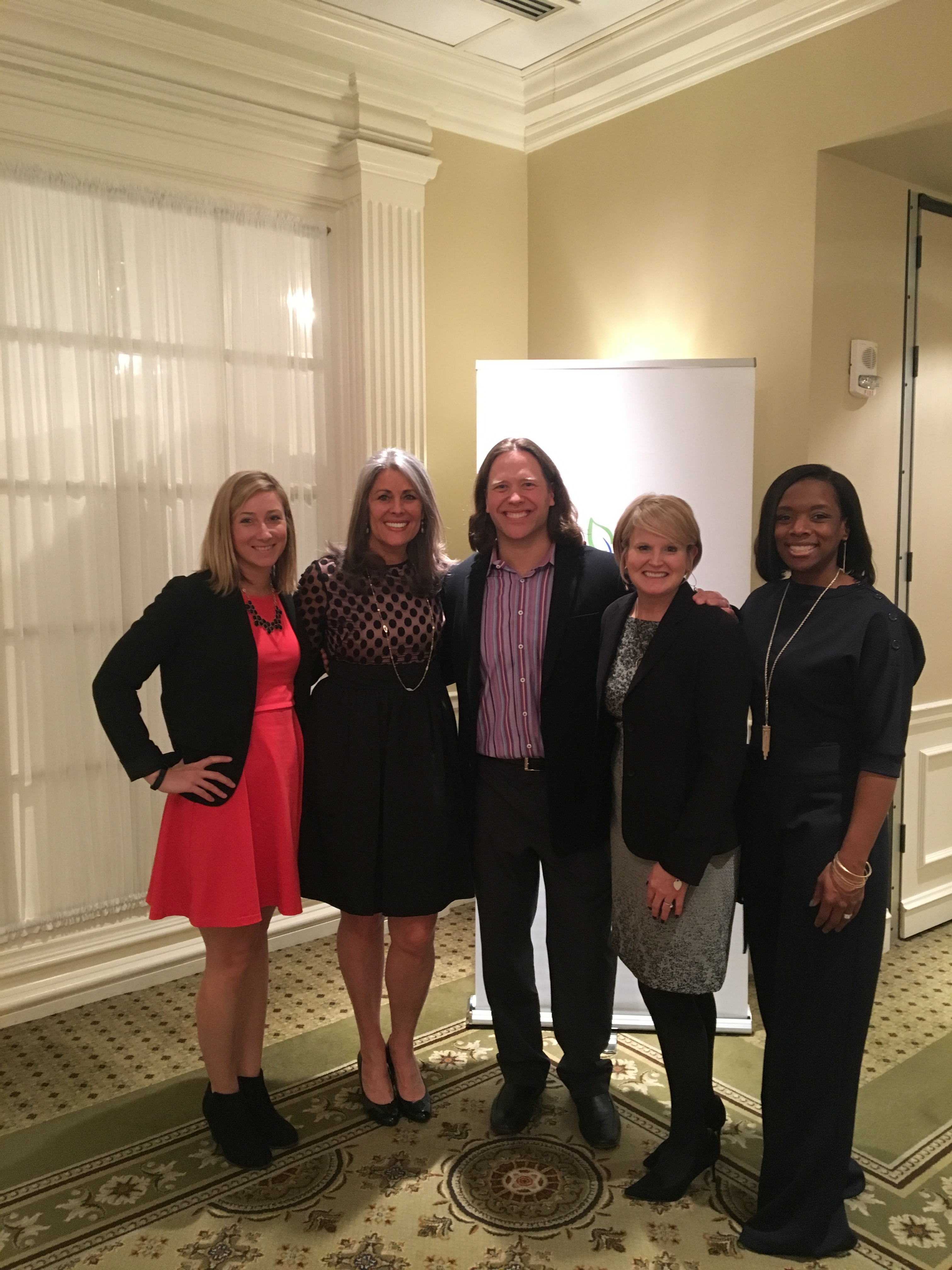
Every time I publish a post something good happens. I get an opportunity or an introduction. I hear from a friend or family member. Or I get a kind, thankful or supportive comment from a reader. And sometimes, I get asked to emcee a charitable luncheon by my friend Stacy Sollenberger (second from right), where I meet a future employee who helps bring great new opportunities to The Weaponry. Or my friend Tim McKercher forwards a post to Vanilla Ice, who tweets the post out to the world. You know, that kinda stuff.
8. There Is Always Something To Fix.
When I look back at my published posts I feel like Michael Jackson looking at his face. Because there is always something I want to change. Always. I would add another example, smooth a transition, insert another joke. (Or take out a joke I would no longer make.) But the blog posts must get published. Published is better than perfect. It’s a blog. Not a book. You get a round of writing. A round of improving. And then you have to push that post out of the nest to fly or flop.
9. The Real Impact Is Not Measured In Views, Follows, Likes Or Comments.
Let me address measurement one more time. After having published 1,100 posts, I am certain that you can not measure the impact of a blog in views, followers, likes or comments. The true impact of a blog is in how it impacts a life. It is in how the story, insights, information, motivation or inspiration you share improve the lives of your readers.
Blog posts are meant to help in some way. That help is not measured in likes and comments. It is measured in things like confidence, reassurance, life lessons learned, successful actions taken, and opportunities seized. Never lose sight of this. The real impact of your blog may not be recognized for years, or even decades. Be patient. And just keep writing.
10. The Blogger Learns More Than The Reader.
When I first began writing my blog I expected to teach others a bit about the things I write about. But I learn more than anyone else. Regular writing forces a lot of self reflection, and analysis. You start viewing everything in life as lessons and insights worth sharing. The writing and editing process teaches you to clarify and refine your thinking. You draw scores of new connections and aha’s along the way. #takeonme So regardless of whether or not anyone ever reads your writings, you will profit from the writing itself.
11. You Can Create A Massive Library Of Knowledge.
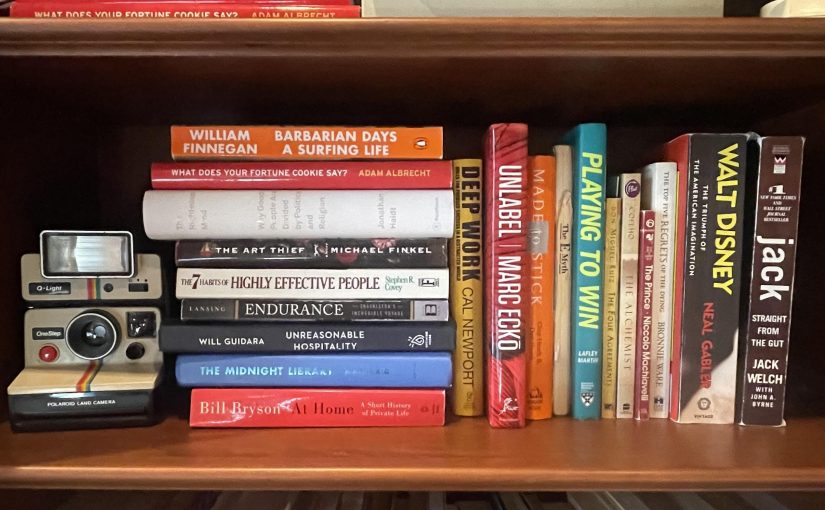
My regular blogging habit over the past decade has resulted in an estimated 550,000 words published. That is the equivalent of 11 full-sized, 50,000 word books. That means I have written a shelf worth of books for your home library. It is my contribution to the compounding pile of human knowledge. And it would take you a long time to read it all. The quantity of information, insights and experiences I have shared is almost beyond my own comprehension. But, like Sonny Bono, I am glad I have shared so much. It has provided as least one more perspective for others to consider as they navigate their own adventure.
Key Takeaway
Blogging pays off. But it pays off slowly. You have to be patient. And persistent. When you are, the cumulative effect of writing and sharing good work regularly increases your value to others. Which in turn becomes valuable to you in ways that are both monetary and life-i-tary. Blogging keeps your voice and your viewpoint top of mind for others. Which means that you are both recently and relevantly recalled when opportunities surface. It works for me. It can work for you too. And despite all the tips it really comes down to this:
Think, Write, Review, Publish, Repeat.
Thanks for reading. I really appreciate your time.
*If you know someone who could benefit from this message, please share it with them.
The more options you create, the more success you will find.
Comedians know this.
The more jokes you come up with, the more likely you are to have really funny jokes.
To be a raging success, you write lots of jokes. Perform those jokes in front of small crowds. Keep only the ones that work. Toss the rest. Repeat.
If you want more innovation, explore more what-ifs. While it may only take 3 licks to get to the center of a Tootsie Pop, it took Thomas Edison 10,000 attempts to create a light bulb. (And it took Natalie Merchant 10,000 Maniacs to create a hit song.)
The more people you know, the more likely you are to know a person who can help you open the next door, overcome a challenge, or offer you a kidney.
To find your prince or princess, you must kiss a lot of frogs. Or frogettes.
To catch one muskie, studies show you have to cast an average of 3,000 times.
To create a bag of tricks, you need many tricks. (And a bag.)
At The Weaponry, the advertising and ideas agency I lead, one of our hallmarks is that we explore a lot of options.
We explore a wide variety of strategies.
We explore as many creative options as the time and budget allow.
Great advertising doesn’t come from crafting one great headline. And designing one look.
There are often hundreds of headlines explored when creating a single ad. And dozens, if not hundreds, of looks.
It creates a large population of options to choose from. And large populations increase the potential for greatness.
So consider many strategic options.
Consider many, many creative options.
Consider many candidates.
And life partners.
Write a lot of jokes.
Pick only the very best ones.
That’s how you do smart things that set you apart.
Key Takeaway
To be successful, you first have to be productive. Create lots of options. You will both become better and create better by doing more. So drill more holes. That’s how you find the gusher.
*If you know someone who could benefit from this message, please share it with them.
The greatest way to increase your value to yourself and others is through reading.
You could just stop reading this post now and go grab a book to read instead.
But I am going to drop some new reading knowledge on you that is worth 90 seconds of attention.
Why Should You Read?
Bill Gates reads about 50 books a year. Or about a book each week.
Warren Buffett famously reads about 500 pages per day.
Lin-Manuel Miranda bought the book Hamilton to read on vacation in Mexico.
So read books that expand your thinking and your knowledge base.
Read to understand how things work.
Read for inspiration, motivation, and all the other great ations.
Read to understand how successful people became successful.
Read about what worked in the past in your field of expertise.
And read to learn what is changing in your field, so you can surf that change, rather than get pummeled by it.
Read to improve your writing and expand your vocabulary.
Read to develop your focus and your patience for long-term goals.
But most importantly…
Read To Separate Yourself From The Pack.
Despite all of the mental nutrition and long-term success that sprouts from reading, a new study just released by researchers at the University of Florida and University College London (which sounds like the fakest British school name ever) found that reading for pleasure among Americans has declined by 40% over the past two decades.
In 2004, 28% of Americans said they read for fun.
In 2023, only 16% said they read because they wanted to.
It is not lost on me, or the researchers, that Facebook launched in 2004 and the iPhone was released in 2007. Together, social media and smart phones may be accomplices, killing reading softly, like Roberta Flack or the Fugees.
This all means that people who read books have a greater competitive advantage now than ever before.
However, this is massively skewed by the avid readers.
In fact, estimates reveal that between 25-46% of adults READ NO BOOKS each year.
And the median number of books read annually by adults is only about 4. That’s how much the average person hates paper cuts.
Which means there are fewer and fewer people after the pot of gold at the end of the Reading Rainbow.
There are fewer people who are willing to do the slow, steady, yet transformational work of knowledge gain through reading. While others are settling for bite-sized bits of video, podcasts, and tweetable wisdom served by algorithms, readers are accumulating broad and deep knowledge that helps make them more capable, valuable and irreplaceable.
The new study also revealed that those who do read for fun are spending more time doing so. Because while haters gonna hate, readers gonna read.
And in the era of artificial intelligence, it is the humans who can contribute more than the machines that will be in greatest demand.
Key Takeaway
Now more than ever, reading is your great competitive advantage. Your self-directed education makes you a valuable and irreplaceable resource. It improves your thinking. Which drives smarter decisions and actions. And it draws other people to you who want to tap into what you know.
*If you know someone who could benefit from this message, please share it with them.
Last week, I talked to my friend Ashley Skubon about her fun wine-focused business in Austin, Texas, called Snooti. Ashley and I worked together at Engauge. The first time I met Ashley, she said, ‘My name is Ashley, by the way.’ So naturally, I asked her if she was related to any other Bytheways.
I had seen through social media that Ashley and The Snooties had introduced some exciting new offerings recently, and I wanted to get the scoop.
During our conversation, she said something that has stayed with me.
As she told me the story about the big idea she recently launched, she shared that she felt that she had been playing small ball.
Which is a way of saying that she hadn’t been thinking big enough.
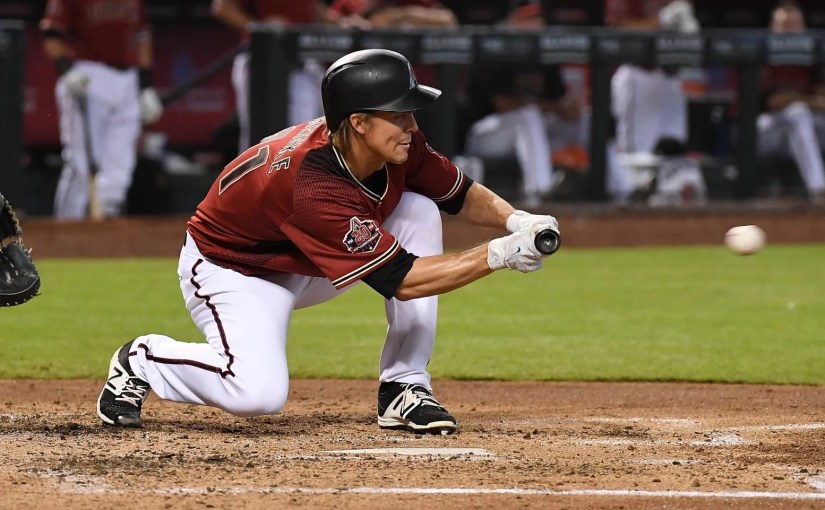
In baseball or softball terms, small ball is a careful approach that focuses on small opportunities for singles, walks, bunts and stolen bases. But when you play small ball, you are not swinging for the fences. You are not hitting home runs or grand slams. And AC/DC won’t sing songs about you.
The small ball mindset can keep you in the game. But it will also prevent you from recognizing when a home run opportunity is perfectly teed up for you.
Remember, Hank Aaron and Babe Ruth are American legends for their home run hitting prowess. While Brett Butler, the all-time leader in bunt hits, is the baseball player most likely to be confused with a character from Gone With the Wind. Or Grace Under Fire.
It is easy to buy into the safety of small-ball thinking. It keeps the lights on. It allows you to live to fight another day. But it doesn’t change the world. It won’t change your fortunes, your career or your tax bracket.
Key Takeaway
If you find you are playing small ball in life, in your career, as an entrepreneur, leader, innovator or artist, it’s time to carve out time to think bigger. Consider the smash hit opportunities right in front of you. See the benefits of your big swings. They can change your trajectory and your life in an instant.
*If you know someone who could benefit from this message, please share it with them.
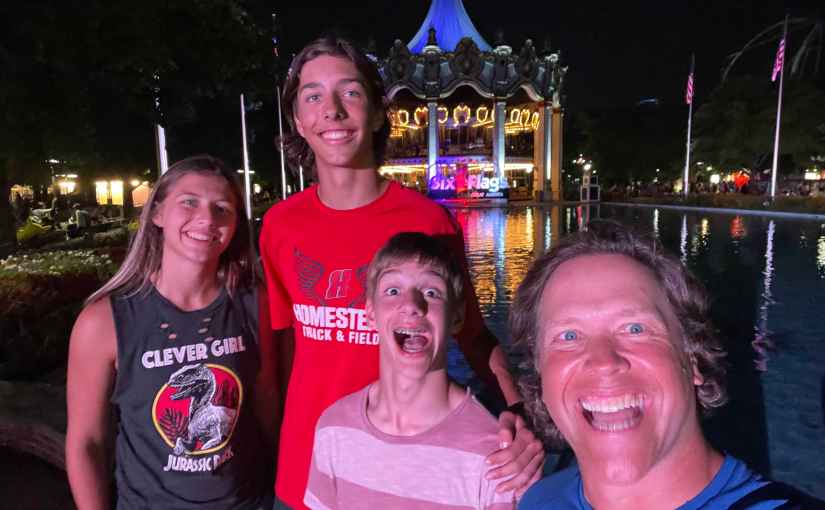
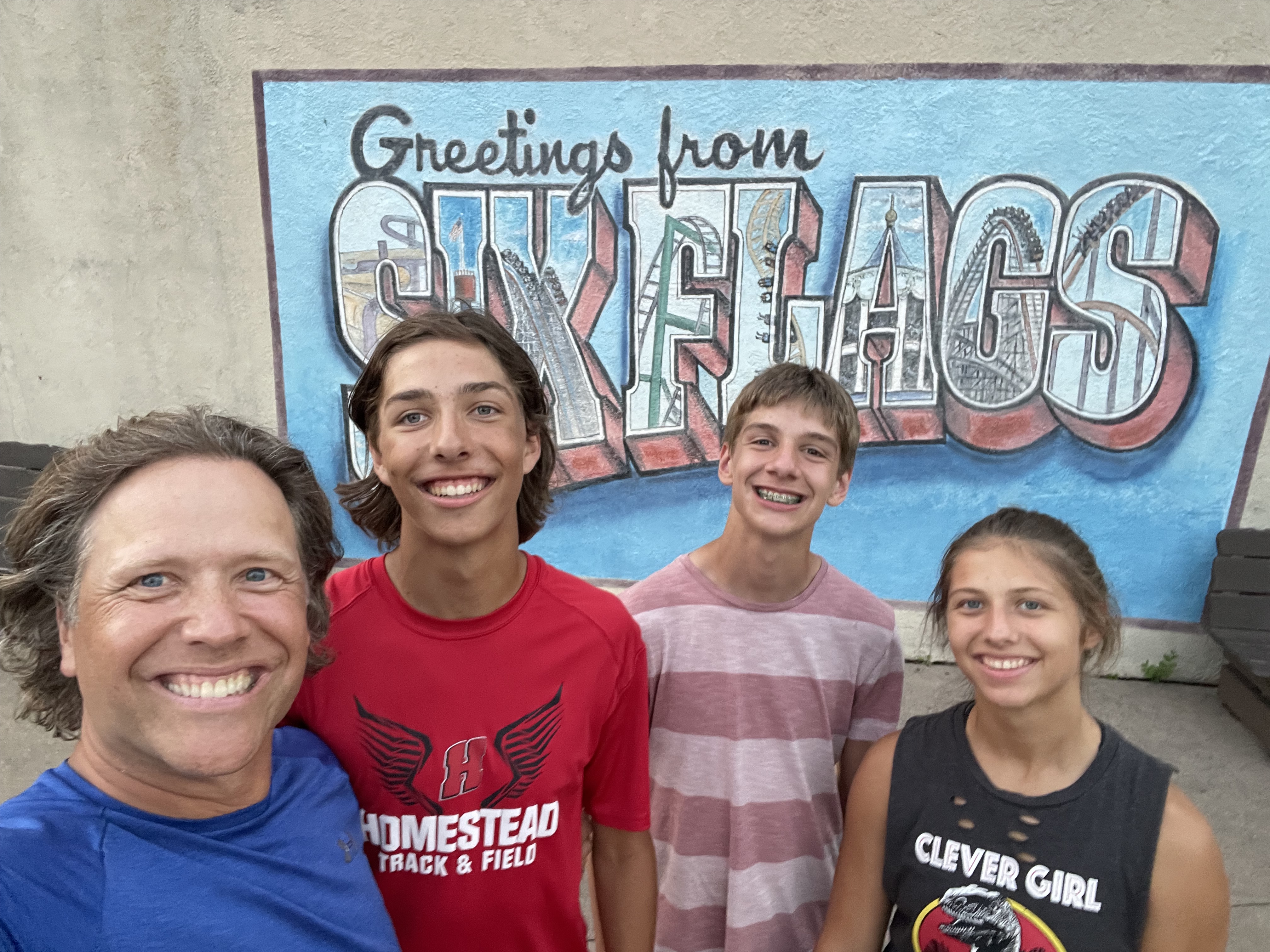
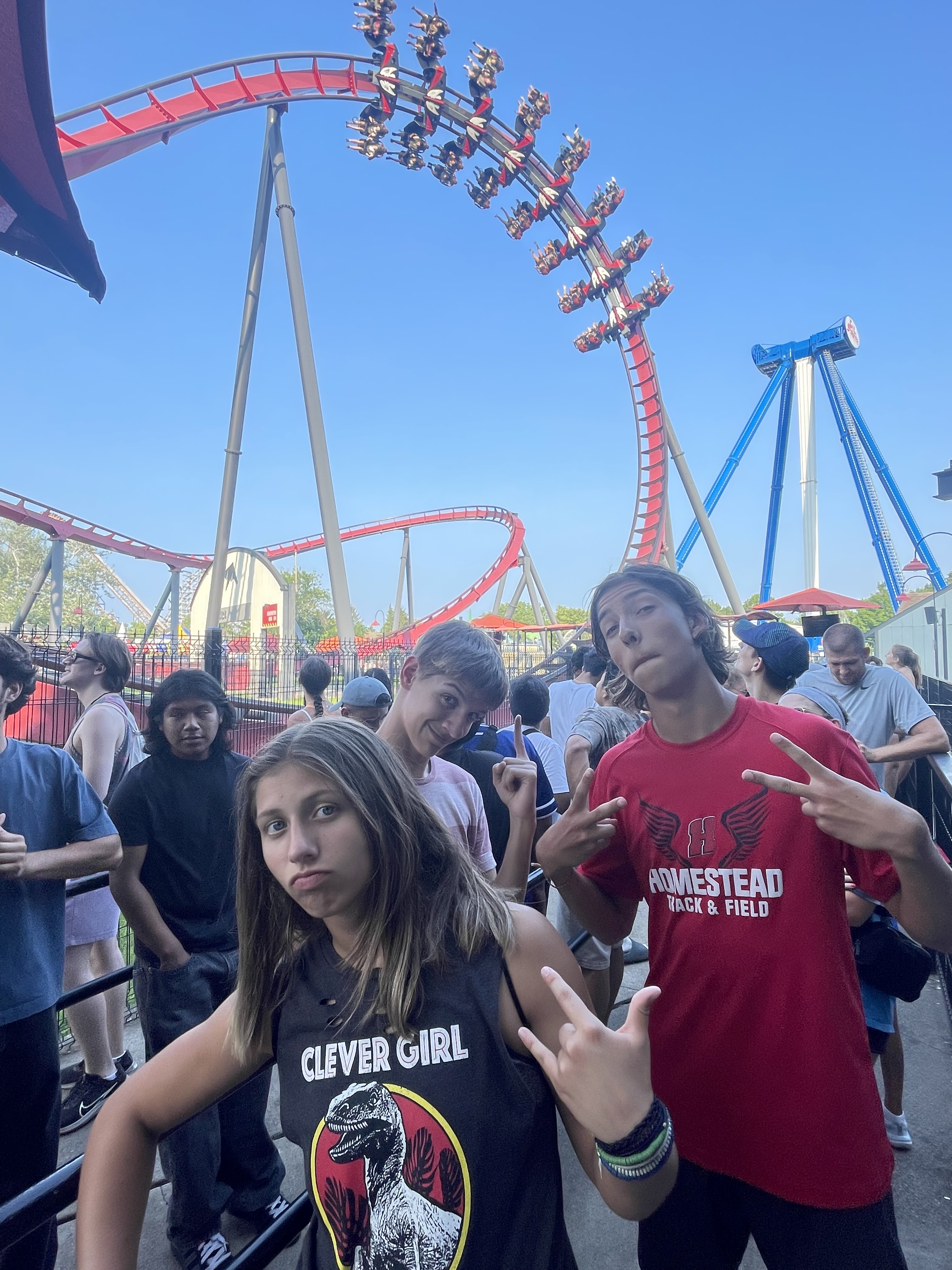
Earlier this week, I took the day off from work to take my son Magnus to Six Flags for his 15th birthday. We invited Magnus’ friend Phineas along for the day of adventure. I had to go because they can’t drive. And also because I FREAKING LOVE ROLLER COASTERS! (Did I type that too loud?) In fact, if I could take a roller coaster to work, I would be living my ideal life.
I picked Magnus and Phineas up after their strength and conditioning session in Mequon, Wisconsin, at 9:30 am. We drove a giddy hour to the park, which is just north of Chicago. We chattered about all the rides we couldn’t wait to hit.
Then we arrived at the park, and crushed it!
In fact, I didn’t drop Phineas off at his home until 11:30pm. (This is the point where I warn you that if I invite you or your kids to an amusement park, we are going to stay until they kick us out.) By the time those boys got to bed, it was midnight in Mequon. And Montgomery.
But early the next morning, when I dropped Magnus off for strength and conditioning at Homestead High School, I saw Phineas bouncing across the parking lot with his large jug of water, ready to run and lift weights.
Phineas and Magnus were roller coaster riding pros.
I love what these high school freshmen did in those 24 hours.
First, they worked out hard in the morning.
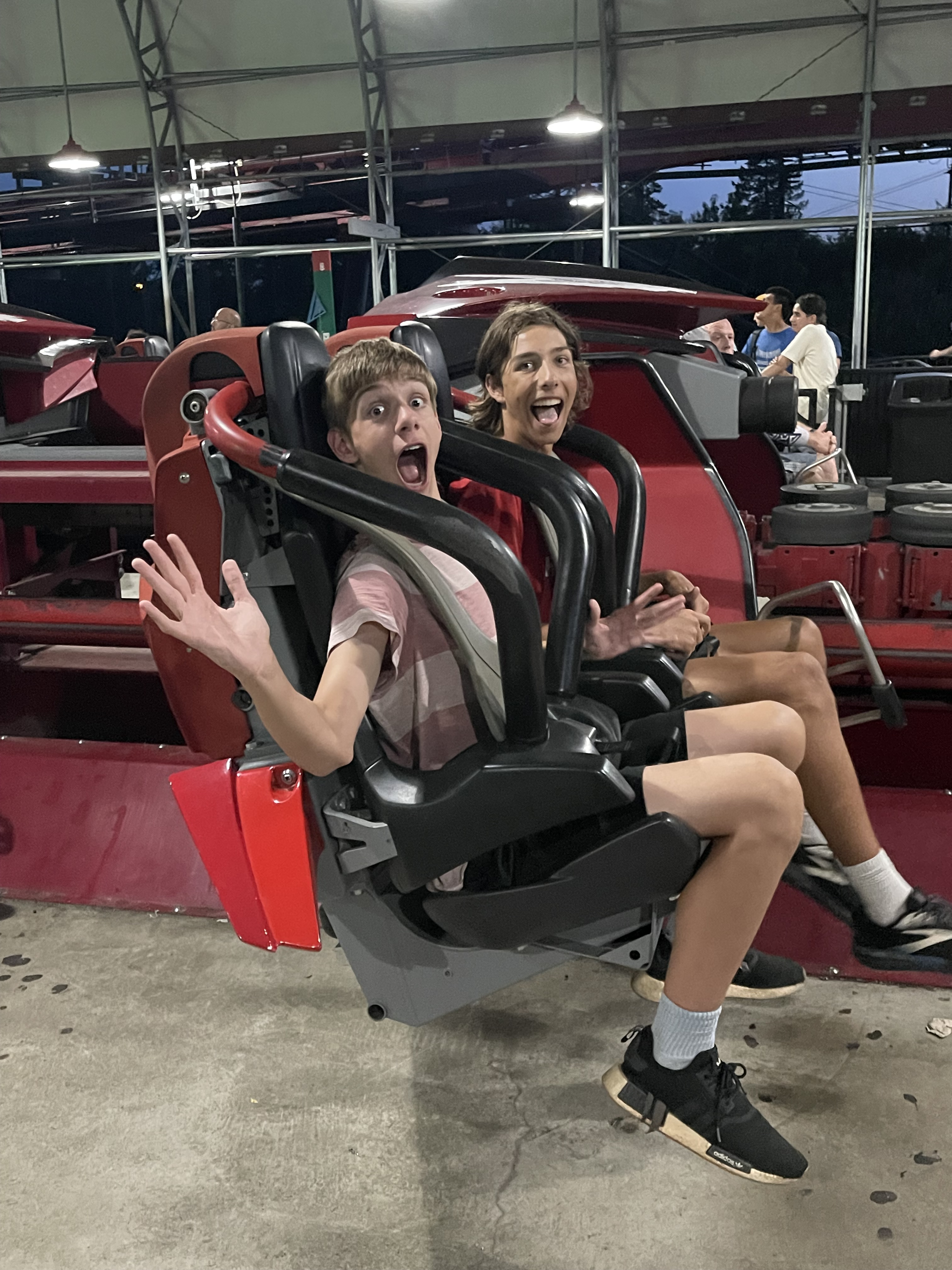
Then they played all day, and practically all night long. Like Lionel Richie. They rode 11 different roller coasters that flipped, spun and dropped them until the park closed. Neither of them ever hinted at wanting to quit early. Or barfing.
They got home late.
They got to bed late.
But the next day, they woke up early and got right back to work.
That is a work hard, play hard, work hard approach to life. Wiz Khalifa-style.
The Mid-Week Coaster Crew. And my coaster hair.
Through their own actions, those boys are telling themselves that they are the kind of people who will soak up as much fun as they can. And they will still keep their commitments the next morning.
They will do hard things, even when they don’t necessarily feel like doing them.
Because to be highly successful, you do what you have committed to do, even when you don’t feel like it.
Through such actions, you tell yourself that you are resilient, determined and focused. And when you believe your positive self-talk, you stick to your commitments. And you build momentum. Like a roller coaster on that first drop.
That type of discipline will get you everything in life.
Keep up the strong work, boys.
You’re training. yourselves to be great.
My daughter Ava also joined, because roller coasters, like pickle ball, are better with 4 people.
Key Takeaway
To achieve great things, you need to take action. You need to commit to hard work. Even when you are tired. Even when you have good excuses not to. Even when you don’t feel like it. Even when you played hard the night before. But when you stick to your personal commitments, you send a powerful message to yourself. You tell yourself that you do do hard things. That you are committed, disciplined and determined. Those actions build trust in yourself. They build self-confidence. And they lead to outstanding results.
*If you know someone who could benefit from this message, please share it with them.











 Adam Albrecht Blog