The Power Of Enthusiasm And Teamwork.

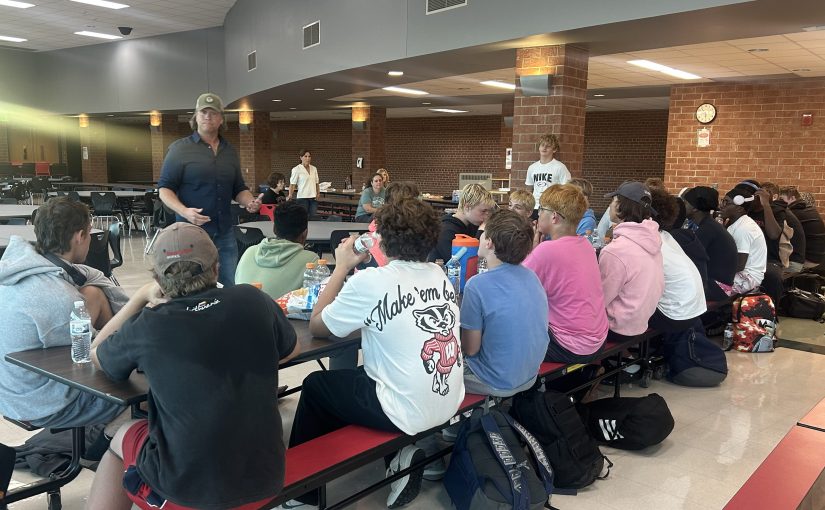
Last week I had a fun and unique opportunity. Some of the coaches and parents of my son Magnus’s freshman football team asked me if I would come speak to the team at their Wednesday night team dinner before their final game of the season on Thursday. I jumped at the chance, nearly pulling a hamstring in the process.

The team had a frustrating season and hadn’t lived up to their own expectations. Despite good coaching and plenty of talent, they were going into their 8th game with a 2-4-1 record. They were just 5 points away from being 4-3. Which is like the difference between being cute and having a nice personality.

So on Wednesday night, I talked to them about two things that could have a major impact on their final game.

First, I talked about the energy and enthusiasm they brought to the field. The psychological force you bring to the game offers a major advantage. I noticed that they weren’t bringing their full allotment of energetic horsepower to their games, and that hurt their play. (It was like their 10-gallon hat was feeling 10-gallons flat, and they hankered for a hunk of cheese.)

Then I talked about the importance of playing as a team. Even when you make mistakes, and everyone makes mistakes, you have to support each other and move forward. You have to include everyone in the team huddle, treat each other like a band of brothers, because you are stronger when you play together. Otherwise, you’ll all end up living in a van down by the river.

I also shared that when I played football and the other team started pointing fingers and fighting with each other, we knew we had won. Because when teammates fight each other, they beat themselves.

To add color, I told the team that my freshman football teammates were still many of my closest friends. We stood up in each other’s weddings. We helped each other start businesses. And even though we are scattered from New England to California, we still have a group chat, do team Zoom calls, and get together back home every few years. And we have more inside jokes than most people have outside jokes.

This group of 14 and 15-year-old boys listened intently as I encouraged them to bring their best energy and enthusiasm to the field on Thursday. They paid attention as I urged them to end the season on a high note, with the right trajectory going into the offseason, their next sports, and the next football season. I encouraged them to play like a team, feed off each other’s energy, and good things would happen.

So what happened?

From the moment the boys took the field, I could see the difference in their attitude, energy and team dynamics. They were fired up, they were connecting with each other, and ready to bring the heat. (And maybe da noize, and da funk.)

And they did.

On the opening drive, the Homestead Highlanders’ freshman team was hitting on all 11 cylinders. The boys marched down the field with attitude and scored a touchdown and a 2-point conversion to go up 8-0.

On their following defensive series, they bent, but they didn’t break. They played united as a team. Then, cornerback Markey Walker intercepted the opponent’s pass at the 3-yard line. With a key block from my son Magnus and an escort of teammates, Markey returned the interception 97 yards for a touchdown. Boom!

That play fanned the flames of their team spirit. (Not Teen Spirit.) And they just kept rolling. The score at halftime was 20-0.

They came out sharp and aggressive in the second half. Like aged Wisconsin cheddar. In fact, when the opponent fumbled the opening kickoff, our boys jumped on it. A minute later, we punched the ball in for another touchdown.

At that point, the opponent began fighting with themselves and blaming each other. And our boys knew they had won.

Our team scored again. Everyone got significant playing time. The sideline was spirited and the play on the field was inspired. The camaraderie was palpable. And the boys were a force to be reckoned with. The coaches were pumped up. The parents were proud. And when the final whistle blew, the scoreboard accurately summarized the story of the game with the final score of 33-8.

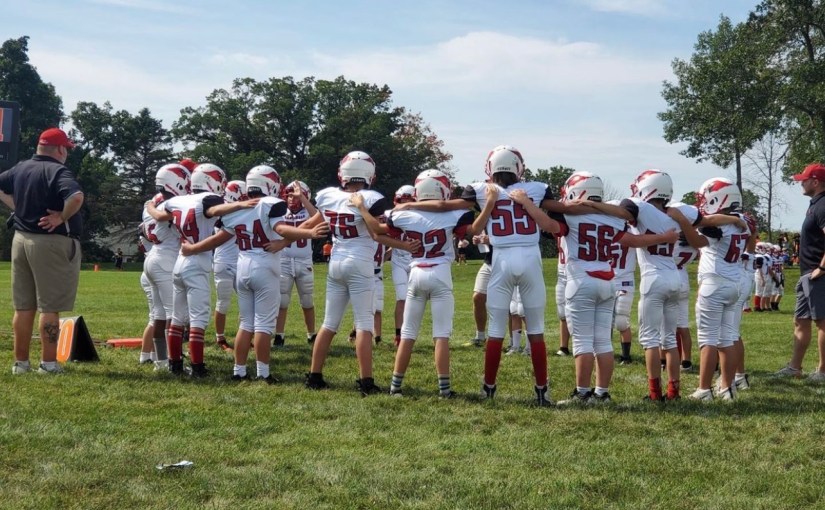
After shaking hands with the opponent, a fired-up group of young men rushed to gather in the endzone, as a team, one last time. The team energy was palpable. The pride and togetherness hung like a halo over the huddled players and their coaches. It was the perfect ending to an imperfect season. A great step in the right direction. And proof of what happens when you play together, with energy.

I am thankful for the opportunity to talk to the boys the night before their last game. I was extremely proud of the way they took full ownership of their mental approach to the game. And I am delighted to see this group finish on such a high note. I hope that over the course of their high school careers they create deep and lasting relationships with each other that last a lifetime. Like the relationships I have with my high school football teammates. And I hope that they learn the most important lesson of all. And that is that the same things that make you successful in sports, make you successful in life. Which is why youth sports are so important.

*If you know someone who could benefit from this message, please share it with them.

+For more of the best life lessons I have learned, check out my book, What Does Your Fortune Cookie Say? from Ripples Media. And consider subscribing to Adam’s Good Newsletter.
Valuable Lessons From The 2025 Wisconsin State Track Meet.

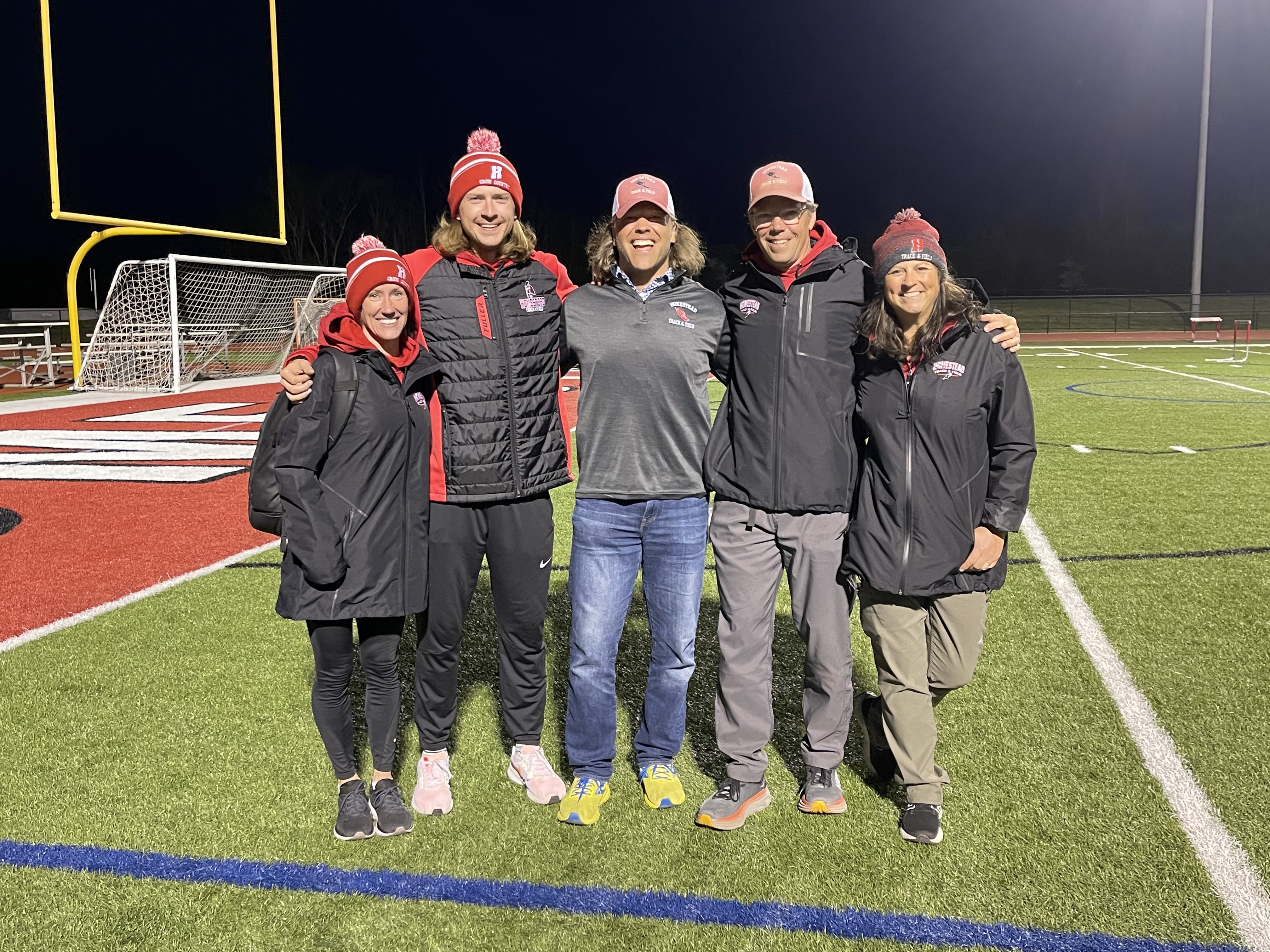
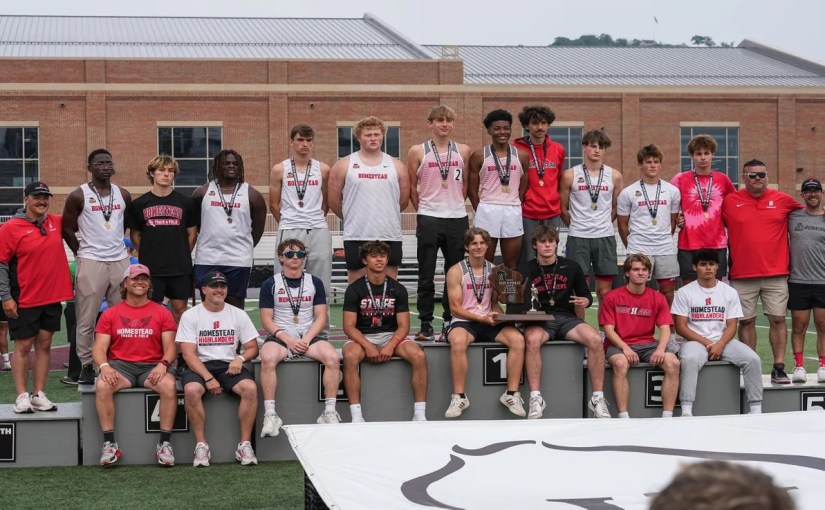
This past weekend I joined 17 athletes and 5 other coaches from Homestead High School in Mequon, Wisconsin, as we competed at the 130th edition of the Wisconsin State Track & Field Championships in La Crosse. As we left for the meet last Thursday, I could not have possibly predicted how the story was going to unfold over the next two days. At least not without a DeLorean and a flux capacitor.

We knew we were going into the competition with a strong team. While most teams at this level have a few star athletes, typically in similar events, we rolled into La Crosse with a wide load of talent. We had athletes competing in the 110-meter hurdles, 100-meter dash, 200-meter dash, 300-meter hurdles, 800-meter run, long jump, high jump, shot put, and discus. Plus, we had elite teams in the 400, 800, and 3200-meter relays. (I also just set a personal record for most times I have written the word ‘meter’ in a single sentence.)

So, How Did Homestead Do?

It all depends on which lens you use.

Our relays were top shelf. We won the 400-meter and 3200-meter relays with blisteringly fast times. We grabbed second place in the 800-meter relay, behind a team that broke the state record. In fact, believe we also broke the previous state record in that race, but in the name of speed, I am not double-checking that fact so that I can finish this post quickly. #IWannaGoFast

Our hurdler, Jeridon ‘It’s a Beaut’ Clark, finished 6th in the 110-meter hurdles and narrowly missed the finals in the long jump.

Our stud 800-meter specialist Jay Tally not only anchored the 3200-meter relay, passing 5 runners in 2 laps to win the race, he also won the 800-meter run in state record time of 1:51.21!

Senior sprint star Sean ‘OMG’ O’Byrne took 8th in the 100-meter dash.

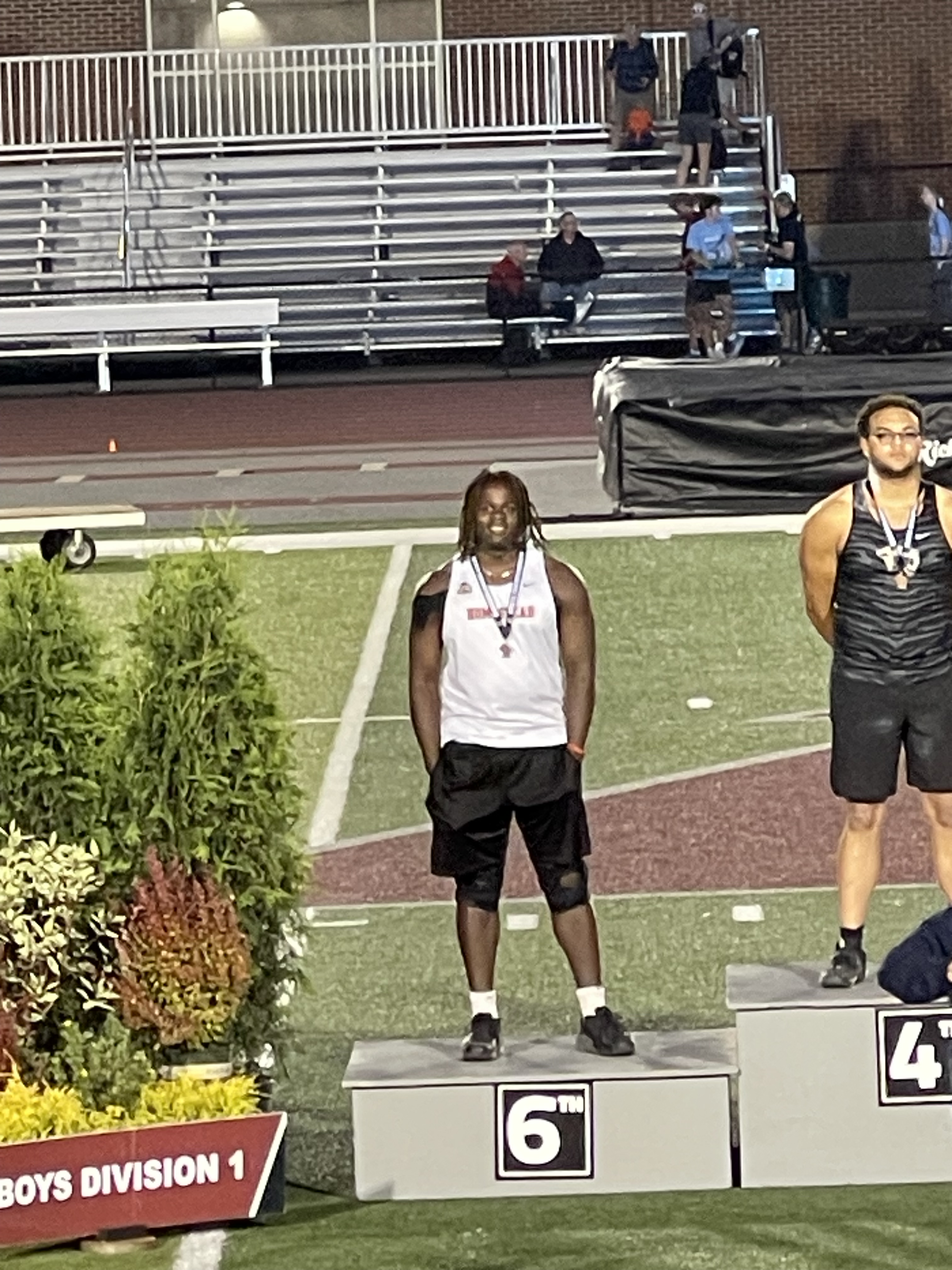
And Senior Terron ‘The Terror’ McCall, whom I coach, took 6th place in the shot put.

Terron on the podium for the shot put.

Together, those remarkable results helped the Homestead Highlanders boys’ team grab the State Runner-Up Title. And those were all great reasons to celebrate and be very proud of our team achievement.

A Second Perspective

However, through another lens, the meet was less satisfying.

You see, we lost the state championship by just 1 point.

Boo.

While the relays went great, the 6 races in 2 days demanded a toll on our top two all-star sprinters Sean O’Byrne and Lucas ‘Show No’ Mersky. Their selfless performances in the relays helped score valuable team points, but impacted their ability to rack up individual points and personal accolades. Sean was just .03 seconds from picking up an additional point, and .05 from picking up 3 more points. And Lucas’ specialty, the 200-meter dash, came at the end of the meet. And like The Giving Tree, Mersky had already given all he could for his team.

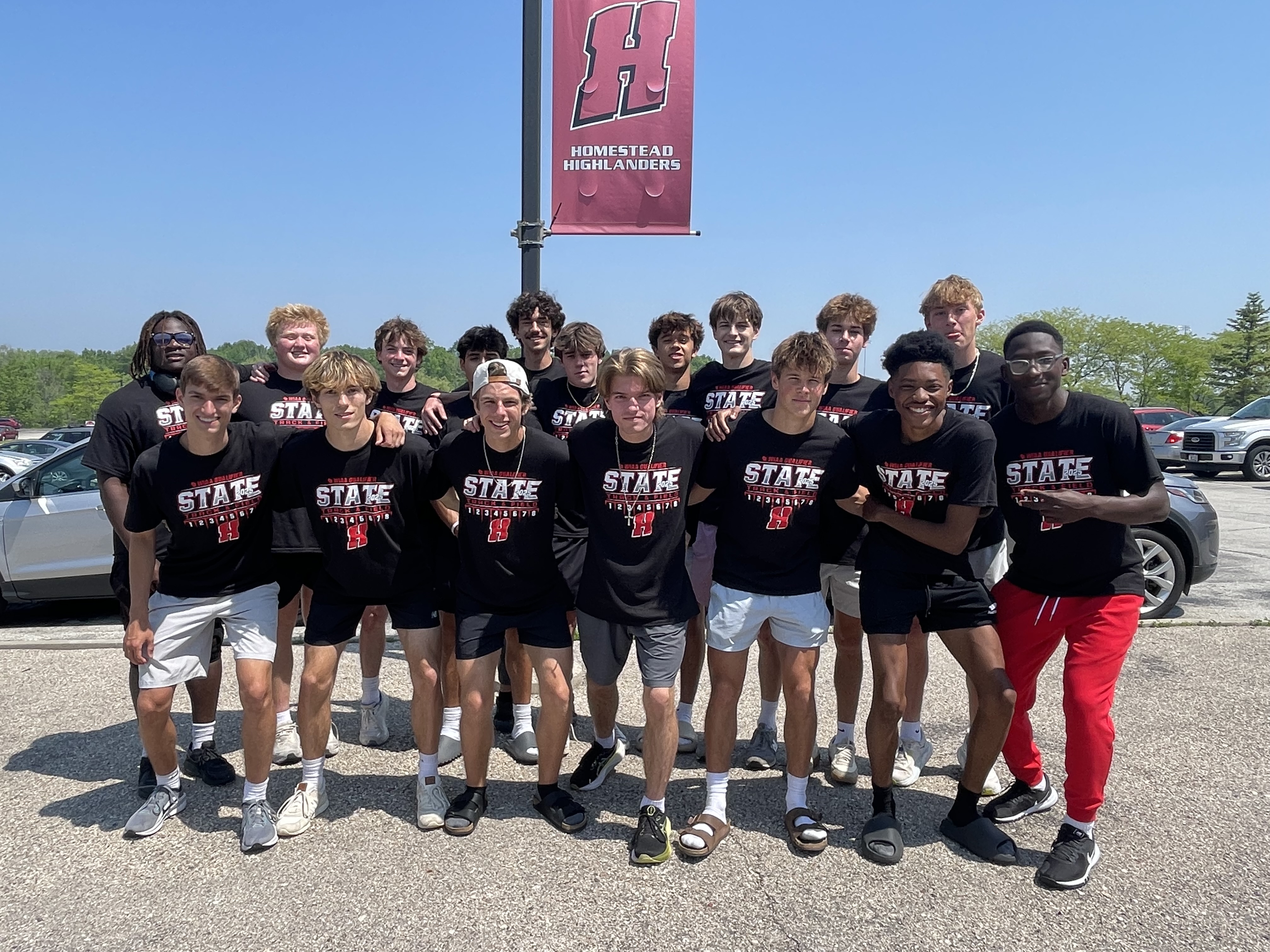
The Squad in the parking lot at Homestead High School, just before we left on our 3-hour drive to the other side of the state.

Now, we find ourselves looking through the results at what might have been…

We were just one height away from scoring in the high jump.

We were just 5 inches from scoring 1 point in the long jump.

The Throws

And then there were the throws. These are the events that I coached along with Jake Kroll.

I was extremely proud that Homestead was the only team with 2 throwers in the shot put finals. Junior Luka ‘The Big Red Machine’ Ivancevic finished 9th, just 9 inches from 8th and that valuable additional point. But Luka had been sick all week and gave all he had. In fact, he was the highest-placing non-senior and will come storming back for a great showing next year.

Then there was Terron McCall. Terron had been nursing a strained right pec muscle all week. In fact, he didn’t throw any actual implements last week until Thursday morning to help his injury heel.

On his first attempt, he had a big throw that landed foul, just left of the sector line, and smashed into the 59-foot marker box. For context, had that throw landed fair, it would likely have earned him a top 3 finish. (Even though he isn’t Finnish)

On his second throw, he hit 55 feet even, good enough for 6th place. Unfortunately, the throw re-aggravated the pec injury. And despite a run to the medical tent and an attempt to tape the shoulder to protect the injury, the 3rd attempt confirmed he could no longer continue in the competition.

Just before the finals began, I had to inform the judges that Terron, who was sitting in 4th place at the time of his injury, would have to drop out of the competition. I don’t ever remember having to pull the plug on an athlete in competition. And I hope I never have to do it again.

When the competition was finished, Terron’s best throw sat just 7 inches off the extra point we needed to win the meet.

We’re happy to leave La Crosse with La Hardware.

Luka and Terron both qualified for the discus on Saturday, too. Luka went hard to try to make finals, but in his go-big-or-go-home mode, he fouled 2 throws and missed making the finals.

Terron showed up like a champ. Despite the injury to the muscle most vulnerable in the discus, he attempted 2 ultra-light warm-up throws, which clearly bothered him.

But rather than withdraw from the competition, Terron decided he had to take one attempt in the competition. His competitors, teammates and many of the coaches and fans in attendance knew his situation. The crowd held their collective breath as Terron stepped into the circle, and launched into a full force attempt at a miracle ending. But it was not to be. The pain was to much to complete the mission. The discus fluttered out of his hand and Terron immediately grabbed his right pec in pain. And his senior track season came to an end.

Terron’s best throw of the season of 184’3″ broke the 15-year old Homestead High School Discus Record. And anything within about 20 feet of his best mark would have won us the state meet.

Through this lens, the meet felt as if we missed a golden opportunity.

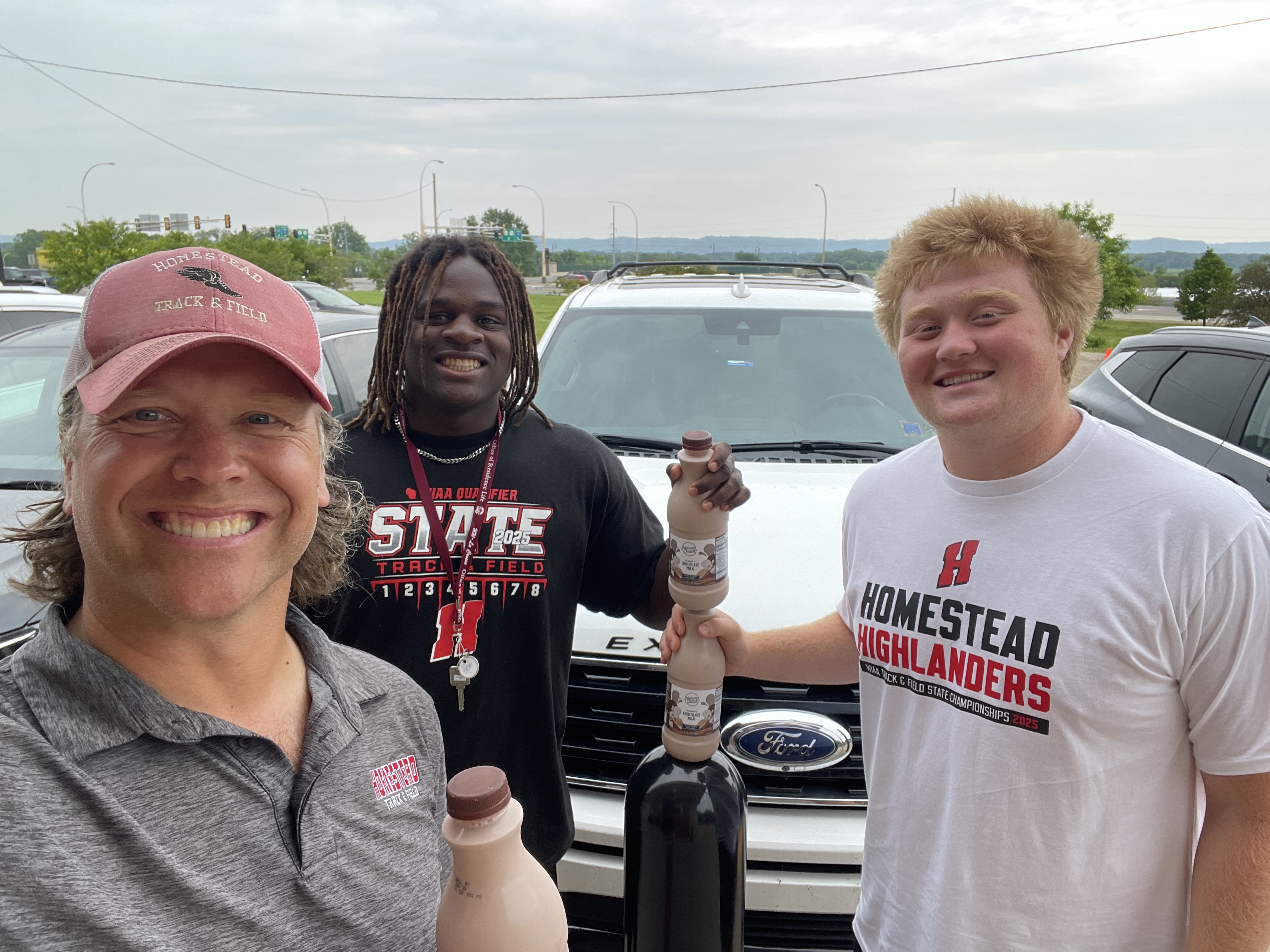
Me, Terron, and Luka fueling up for the meet.

However, There Is A Third Lens.

While we lost to De Pere by just one point to finish second, we also beat another team by just 1 point. Yes, the top 3 teams in the state scored 46, 45 and 44 points. Arrowhead Union High School, the defending state champ and a perennial top finisher, came in 3rd place. While the winning team and the runner-up both get trophies and recognition on the podium at the end of the meet, 3rd place simply gets a long, quiet bus ride home.

So through the ‘At Least’ lens, every point mattered. Every point by every athlete earned us a very special and memorable award experience that provided a cap to a fantastic season. Through that lens, we were thankful for all of the effort and didn’t take a single point for granted.

Key Takeaway

There are several different ways to look at everything in life. Each lens tells a different story. Use each lens as needed. Some perspectives will instill confidence, some provide satisfaction, and some sting and drive you to improve. They all have their time and place. Remember, the human is the most complicated of all machines, requiring highly nuanced tools to perform at its best. Always tell yourself the story you need to hear in the moment.

Thanks to the 2025 Homestead Boys Track Team and coaches for a remarkable season. I was proud to play a small part in this great season. And I can’t wait to see what we can do next year.

*If you know someone who could benefit from this message, please share it with them.

+For more of the best life lessons I have learned check out my book, What Does Your Fortune Cookie Say? from Ripples Media.

The 2 Key Factors That Determine Success in Sports and Life.

I have spent a lot of time coaching and participating in sports. Both team sports and individual sports. My teams have won and lost. The individual athletes I have coached have both dominated and been dominated. Along the way, I have carefully analyzed what creates wins and losses. And I have discovered that there are 2 key factors that determine the outcomes of all sporting events. And despite what Nike and Mars Blackmon would like you to believe, it is not da shoes.

The key 2 factors that determine the outcomes of all sporting events are effort and errors.

Effort

In sporting competitions, the effort exerted by a team or individual competitor is stacked directly against the effort exerted by the other team or individual competitor.

The more effort you exert, the more likely you are to win. This is true in contact sports, races of all types, gymnastics, putting the shot, dodgeball, and Red Rover. (Where you always ask your opponent to send that low-effort kid over.)

However, effort is not the only factor at play. (See what I did there?)

Errors

The other key element that impacts every sporting event outcome is errors.

There is an ideal way to perform every move in sports, from the discus throw to the jump shot to the form tackle to the Triple Lindy. Any deviation from that technique, form, move or execution is an error. The more errors you commit, the less likely you are to win. Like Bruce Hornsby said, that’s just the way it is,

Sometimes, errors result from a lack of focus and are self-created. Other times, your errors are forced by your opponent. In fact, it is your job as a competitor to force errors in your competitors. You do this either through physical effort or through mental or psychological stress applied through pressure, confusion, conditions, or crowd noise. (Although crowd noise is illegal in tennis and golf.)

However, you and your opponent aren’t the only ones committing errors. There are also errors made by officials, judges, referees, umpires, scoreboard operators, timekeepers, and eager Cubs fans in left field excited to catch a foul ball. Their errors have the potential to completely change the outcome of a competition. Those are simply the facts of life, like Tootie, Blair, Jo and Mrs. G.

As a competitor, there are two things you can do to impact the outcome of a sporting event.

  1. Maximize your own effort.
  2. Minimize your own errors.

The rest is beyond your control.

Beyond Sports

The impact of effort and errors doesn’t just apply to sports. The same key factors influence such varied fields as business, relationships, and academic success. They are the key ingredients in gardening, investing, music performance, and even picking up hotties at a nightclub. So pay close attention to both your successes and failures. You’ll find these two critical variables play a major role in each.

Key Takeaway

Success in sports is simply a result of maximizing effort and minimizing errors. It is why you train and improve your strength and stamina. It is why you practice and drill over and over and over again. But these same influences on sports also determine the outcomes in most areas of life. From marriage to sales to self-confidence. Which is why sports are so valuable. They teach you how to be successful in all areas of life. And that’s the great win for us all.

*If you know someone who could benefit from this message, please share it with them.

+For more of the best life lessons I have learned check out my book, What Does Your Fortune Cookie Say? from Ripples Media.

The one thing all college athletes should do to become better brand endorsers.

Once upon a time, college athletics was where amateur athletes competed for bragging rights, trophies, t-shirts and gaudy championship rings. But today, college athletics has been deamateurified in a major way thanks to the rules changes related to NIL.

As the Founder & CEO of the advertising and idea agency The Weaponry, and as a former college athlete at the University of Wisconsin athlete, I love working with both athletes and marketers on endorsement deals. Throughout my advertising career, I have spent a great deal of time working with athletes including:

  • NFL All-Pros
  • MLB All-Stars
  • Olympic Gold Medalists
  • PGA Championship Golfers
  • Top NASCAR Drivers
  • College Athletes and Teams

Today, in the NIL era, I see one specific mistake made repeatedly by college athletes. And, no, it’s not getting arrested. (Which might land you a sweet deal endorsing handcuffs or mugshot makeup.)

What the NIL is NIL?

NIL is shorthand for the NCAA rule change related to Name, Image and Likeness. The rule change is not about athletes actually having a name, image or likeness. University athletes have always had those things. (Except maybe athletes who play for the Nevada College No-Names, the Florida Tech Phantoms, or the Delaware Institute Dislikes.)

The real change to college athletics in the NIL era is about NCAA athletes’ rights. And the right that is right at the heart of the issue is the Athletes’ Right of Publicity. This is a particularly interesting topic because universities have always loved using athletes to get publicity for the school itself.

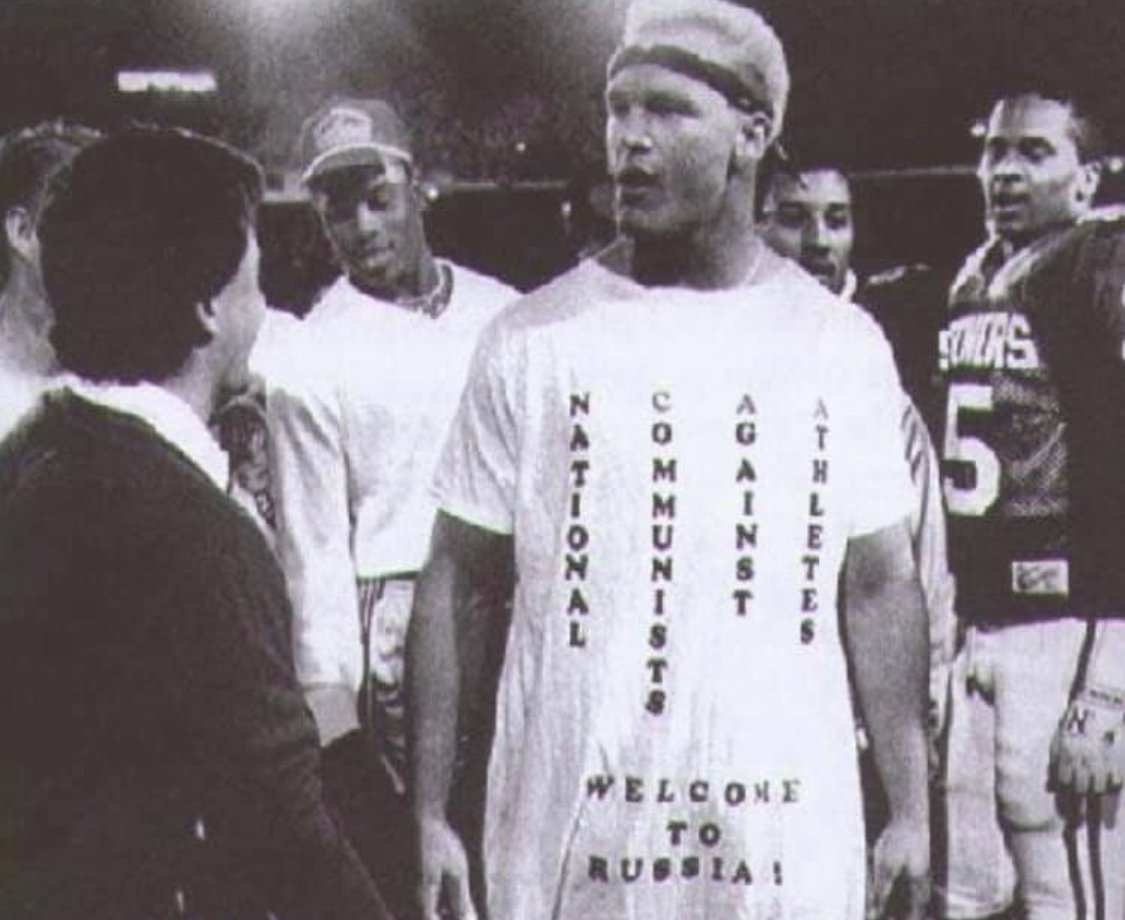
Before 2021 the NCAA ruled that athletes did not have a right of publicity to promote a product or a service and get paid in the process. Which is a pretty crazy thing to declare in a free-market society. That is probably why Brian Bosworth wore that National Communists Against Athletes t-shirt at the 1987 Orange Bowl. But as of 2021, the world has decided that college athletes do have the right of publicity, which allows them to promote products and services.

Name, image and likeness (NIL) are simply the three elements that make up “Right of Publicity” and allow NCAA athletes to be compensated. They are like the Earth, Wind and Fire of ROP. They just aren’t as much fun to dance to at weddings. #DoYouRemember

Boz, before he got his endorsement deal with Dr. Pepper as the Sheriff of Fansville.

The NIL Problem

The rule is intended to allow college athletes to cash in on their well-knownness.

The problem is that many college athletes refer to their engagements publicly as NIL deals.

NIL is simply the name of the rule that allows you to work with brands that, in theory, you love, use and endorse.

When you say you have an NIL deal, it is kind of like saying you have a ‘Freedom of speech’ deal. Or a ‘I have legal rights’ deal. Or a ‘I get paid to talk about this stuff’ deal. Or a ‘You can’t stop me’ deal.

Advice to College Athletes

Don’t reference NIL when you talk about your opportunities. No one other than NCAA athletes talk about opportunities this way. It’s an amateur way to think about being a paid Spokesathlete. Talking about a relationship as a NIL deal cheapens the work you are doing.

When a brand pays you to endorse a product, place or service, you have a job. That job is as a promoter, endorser, representative or spokesperson.

The audience you are paid to help influence doesn’t want to hear you have an NIL deal. They want authentic partnerships and collaborations.

They like ambassadors. They like relationships.

They like a good old-fashioned endorsement. In fact, the widely accepted ratings and review system that is so popular on the interwebs is an endorsement system. We all gravitate toward products, places and services that are endorsed by the people who have tried them.

So college athletes, tell us that you use, endorse and recommend products, services and brands. Tell us that you are collaborating with your favorite fill-in-the-blank because it is your favorite fill-in-the-blank in the whole fill-in-the-blank-ing world, and you want everyone to know.

But remember, endorsement relationships are most impactful when the compensation element is not discussed. The more you highlight the compensation the less credible and convincing the endorsement is.

LSU celebrity spokes-gymnast Livvy Dunne, loving her some Vuori.

What To Do Instead

Partner with brands, products and services that you really use, like and recommend. Focus on your positive feelings about the brand. Focus on promoting the brand, not on the fact that you are a paid promoter.

As athletes you want to feel like you are winning. And it is easy to think that you are winning by telling the world you won an NIL deal. Or that you are getting paid because you are such a good athlete. Or because you are cute and have a nice body.

But don’t.

You win by having the brands you work with want to do more work together. You win by having other brands recognize the great job you do as a promoter, which makes them want to work with you too. Just keep the compensation behind the scenes.

Key Takeaway

If you have the opportunity to promote brands, products or services as a college athlete the best thing you can do is think like a professional athlete. Enthusiastically promote, support and endorse the things you like, but keep the compensation part low-key. Professionals recognize the importance of the marketing work they do as a key part of their livelihood, so they approach the work as professionals. College athletes need to do the same thing. It’s the best way to keep your opportunities going long after your college days are over.


**Yes, you can add ‘Paid Partnership’ to your social posts when you feel it is necessary to be transparent. Just don’t add NIL-deal. Deal?

*If you know a college athlete who could benefit from this message, please share it with them.

+For more of the best life lessons I have learned check out my book, What Does Your Fortune Cookie Say? from Ripples Media.

The great life lesson you can learn from these two stars.

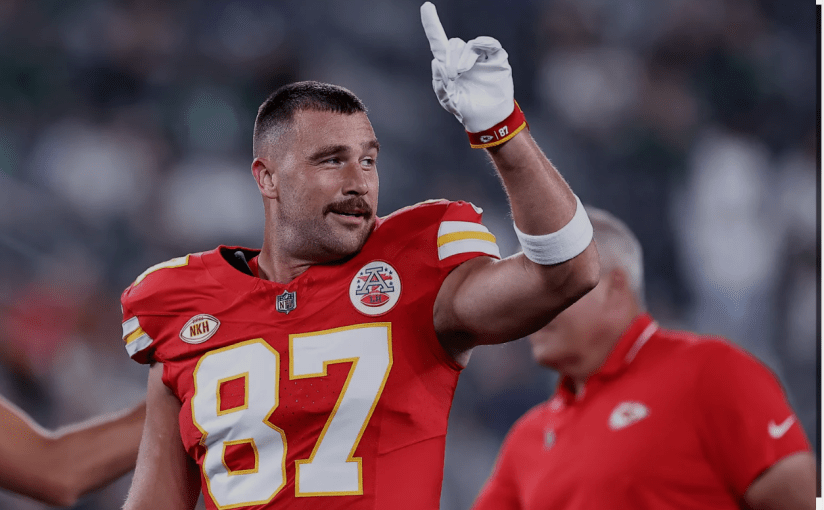
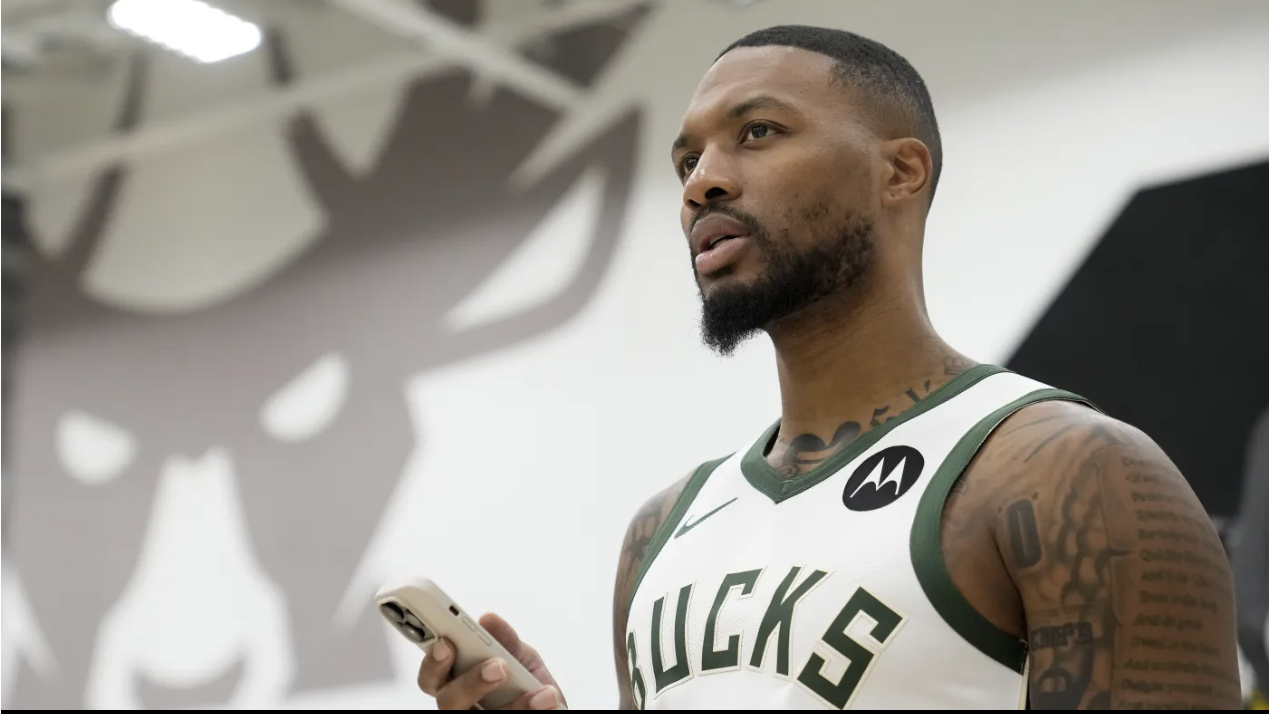
Recently I did my best Alice In Wonderland impression and fell down an internet rabbit hole or two. First I looked up information on NBA star, Damian Lillard, the newest member of the Milwaukee Bucks. Then I looked up info on Travis Kelce, the tight end for the Kansas City Chiefs. Kelce has received a lot of attention lately for his relationship with Taylor Swift. There must be a lot of pressure dating Taylor Swift. Because you know going into it that if you break up there be a song about you. And you also know that you are never, ever getting back together. Like, ever.

Are you ready for this, Travis?

Kelce and Lillard have a lot in common, besides unusual last names. They are both amongst the very best ever to do what they do.

Lillard is a 7-time NBA All-Star. Kelce is an 8-time Pro Bowler. (Those 2 designations are equivalent in their sports. Because in basketball you star, and in football you bowl.)

They both make a shipload of money. Lillard will make $45 million dollars this season. Kelce will make $14 million dollars. (Note: The NBA plays 82 games per season and the NFL plays 17. Which means Kelce is actually paid more on a per-game basis. However, he is also more likely to spend retirement sitting in a dark room struggling to remember his catchphrase. So let’s call it a wash.)

Two Stars

But the other thing they have in common may surprise you. Coming out of high school they were both considered 2-Star athletes.

Damian Lillard proves that even if you are a 2-Star high school athlete you can still make $45 million a year and get to live in Milwaukee.

This means that the experts who evaluate potential college talent rated them both as 2-star prospects in high school. That’s not on a 2-point scale but on a 5-point scale. Said another way, there were 3 tiers of athletes considered better than them.

Yet, here they are. Both make millions of dollars playing their sport at the highest level and are considered amongst the very best at what they do. They make headlines. They date superstars. And perhaps more noteworthy, they are causing dudes like me to check out their Wikipedia pages on their lunch break.

Key Takeaway

Don’t believe the lack of hype. Believe in yourself and your abilities and skills. Believe in your self-improvement journey and potential. Believe that your mind is your most powerful weapon. Your mind determines what you are really capable of. It is not where you start that matters. It is the work you are willing to put in to get to where you want to go. Your will is the great equalizer. Until it is the great surpasser.

*If you know someone who could benefit from this message, please share it with them.

+For more of the best life lessons I have learned check out my book, What Does Your Fortune Cookie Say? from Ripples Media.

All successful results are a product of these 2 simple factors.

I have competed all my life. As an athlete. As a businessman. And as a coach. I have seen how some teams and businesses always generate great results, while others never do. (Coughing: Cleveland Browns.)

I have learned what it takes to achieve great results. And like Bennifer, Hall & Oates, and Gin n’ Juice, successful results are a product of two things.

The System and The Subject.

The System is the way of doing things.

It is the process. The expectations. The values. The technique. It is the school of thought. The philosophies. It is the declared purpose and priorities. It is the tolerances permitted. It is the culture. It is the rituals and norms. And the people with other names besides Norm.

The Subject is the person being coached, led or taught.

Subjects vary in skills, talent, commitment, attitude, experience, determination, resolve and grit. They vary in natural ability and capacity. They vary in tolerance for pain and suffering. They vary in height, weight and speed. And subjects vary in loyalty, royalty, and the price they are willing to pay.

What This Means.

The system will determine how much you can get out of the subject.

The subject will determine how much you can get out of the system.

A better system will generate better results for a subject.

A better subject will generate better results within a system.

Key Takeaway

For the team to create the greatest results, continuously improve your system, and attract better subjects. For the individual to achieve the greatest results, find the greatest system.

*If you know someone who could benefit from this message, please share it with them.

+For more of the best life lessons I have learned check out my book, What Does Your Fortune Cookie Say? from Ripples Media.

How Our Team Won An Impossibly Close Championship.

I have loved track and field since I first joined my high school track team as a freshman. I loved it when I was no good. I loved it when I set a state record. And I loved the whole self-improvement journey in between. (Other than the times that I threw up. Which was a lot.)

While track and field is thought of as an individual sport, some of my favorite memories were winning conference team championships, both in the Connecticut Valley Conference as a Hanover High School Marauder and in the Big Ten Conference, as a University of Wisconsin Badger. There is something about being part of a great team win that makes you feel like part of a gang. A very fit gang with good nutritional habits.

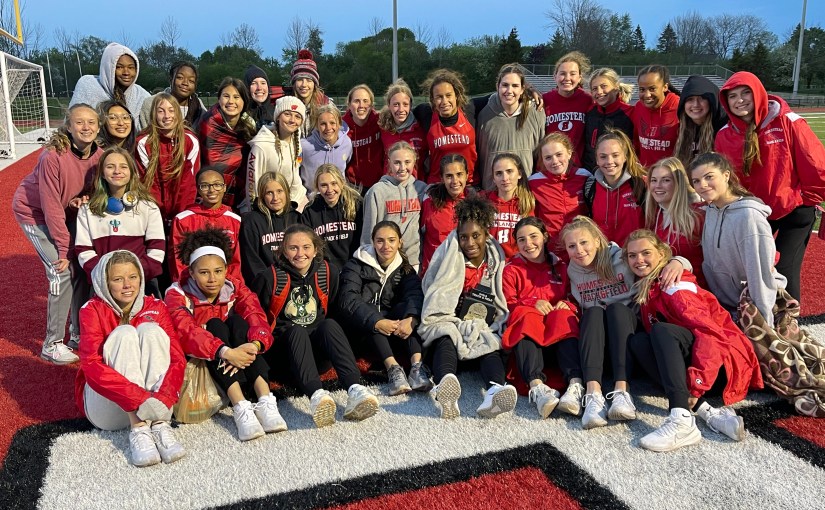
Today, my day job is running the advertising and ideas agency The Weaponry. But in the spring, my later afternoon job is coaching athletes to throw the discus and put the shot on the girl’s track team at Homestead High School in Mequon, Wisconsin.

Conference Championships

On Tuesday afternoon we had our North Shore Conference Championship meet. Our conference is loaded with 10 great schools with top-tier talent and excellent coaches. (I note that because it is true and because some of them also read this blog.)

We knew the meet would be close, but just how close we never would have imagined.

The Homestead girl’s team is deep and talented. But so are our competitors. And despite our high hopes and the fact that we have won the team championship the past 2 years, we stumbled right out of the blocks. #UhOh

We had a talented runner, Sophia LaGalbo, hit a hurdle and take a nasty fall. We had an athlete we expected to score in several events, Korynne Moga, get hurt in her first event and have to drop out of the competition. We got disqualified in an early relay for passing the baton outside the zone. And we had other girls enter the competition ranked high in their event and wind up just outside of the top 8 places that score points. #gulp

As the defending conference champions this was all very disappointing. Especially as we watched other teams rack up great performances and the well-deserved points that go with them.

But despite the poor luck and poor performances, the Homestead Highlanders kept going. And we kept collecting points. Senior Savannah Fraley won the 800-meter dash like a rock star. And Eva Brandenburg dominated the 300-meter hurdle race. Plus Sophia LaGalbo, road rash and all, finished 7th in the 300 hurdles to add 2 more points.

Too Little. Too Late?

It was getting late in the meet and we were still well behind. But we had some late events with great potential to add points to the team total. In the 200-meter dash, Brandenburg took 3rd and Natalie Mueller took 8th to add 9 more points. Which was great. But that was followed by the 3200-meter run, where we had no entries, which was bad. Then came the discus results. One of the events I coach. And I was a very proud Coach-Dad when my athlete-daughter Ava took 1st place by 7 feet. And Senior Mariah Reynolds took 5th. This meant we added 14 points to the team total, which was great.

The Final 2

The meet came down to the final 2 events. The triple jump and the 4×400 meter relay.

We have a strong 4 x 400 relay. And we started strong with Grace Zortman finishing the first leg in first place. Then Shaylin Swenson ran an equally strong 2nd leg to lengthen our lead. Natalie Mueller added a great 3rd leg to maintain the lead. Which meant the race all came down to first-year track athlete Charlotte Lueck, a smiley and talented sophomore, and her 4th and final leg.

Charlotte, who is one of my favorite athletes on the team, came around the first 100 meters strong and steady. But a strong runner from Grafton High School charged hard and was right behind Charlotte by the time they reached the backstretch. But Charlotte kept her cool, and at 200 meters the challenger had dropped back several meters. The Homestead home crowd was going crazy. But on the final 100 meters, the race tightened up again, getting closer and closer as they approached the finish line.

But Charlotte held the lead and ran a very fast lap against very tough competition. Like all-you-can-eat-steak-buffet tough. With the victory, we added 10 more points to our total. Which meant that the conference championship all came down to the triple jump to determine if Homestead or Slinger High School would be conference champs.

One…Two…

Our team is great at the triple jump. Standout athlete Anisa Barnett won the event. And Sheba Bentum-Mensah grabbed 8th to help us rack up 11 more points. However, the Slinger Owls are also great at the triple jump. And they placed 2nd and 6th, to also scored 11 points. OMG!

The Final Tally

In sports, there are close competitions. And then there are really, really, really close competitions. In football, basketball and baseball you can win by as little as one point. And our track team would have been thrilled to have just one more point than our competitors. But we fell short.

However, in track and field, because of ties within the field events, (typically in the pole vault and the high jump, where competitors can finish at the same height) you can be awarded half points. And when the final total was tallied our team had won the North Shore Conference Championship by 1/2 of a point. A freaking half-point!

This meant that if any of our scorers had finished just one place lower we would not have won. It was the truest possible team victory. Every performance matters. There was no literally no breathing room. No room for error. But we won. And winning by 1/2 point is as good as winning by a mile. Maybe better.

There are 3 great things about team championships:

  1. Your teammates are there to help you out when you stumble, fall or pull a hamstring.
  2. Celebrating a victory together is far greater than celebrating alone.
  3. The win creates a team bond that lasts forever. And at the end of the day, the relationships and team memories are what you will remember and value most.

Key Takeaways

  1. Sometimes bad things happen. Keep going.
  2. Get up when you fall.
  3. Never give up.
  4. Work hard.
  5. Run your race.
  6. Lean on your teammates. You’ll go farther together.
  7. Finish Strong.
  8. It’s not over until it’s over.
  9. Sometimes 1/2 point is all it takes.
I am very proud to coach and win 3 conference team championships in a row with this crew of Laura Bosley, Jay Fuller, Me VonMe, John Krueger and Heather Krueger.

Congratulations to the following girls on their hard-fought team championship!

  • Ava Albrecht
  • Anisa Barnett
  • Scout Bonkoski
  • Eva Brandenburg
  • Savannah Fraley
  • Sierra Gill
  • Alexandra Gaskin
  • Korynne Moga
  • Natalie Mueller
  • Kyah McCray
  • Savannah Fraley
  • Shaylin Swenson
  • Charlotte Lueck
  • Sophia LaGalbo
  • Julia Gaskin
  • Sheba Bentum-Mensah
  • Mariah Reynolds
  • Emma Rader
  • Grace Zortman
  • Leila Lu Maye
  • Annika Johnson
  • Grace Zortman
  • Kelsey Hart
  • Caroline Garsha
  • Addie Kane
  • Amelia Horwitz
  • Ava Lamb

*If I missed anyone I am sorry. If I duplicated any names you are welcome. The search engines will find you first.


There is more than one way to win.

Yesterday I coached my son Magnus’ 6th-grade football team against a really strong opponent. I am the defensive coordinator. Which means that I spent many hours this week preparing for the game.

Here’s a breakdown of my efforts:

  1. I watched game film of our win last week. Then I went all John Madden, and telestrated the game film on Hudl to show our team things they did really well. And things they need to improve. There was plenty of both.
  2. I watched game film of our upcoming opponent to understand their offense. I documented every play and every formation they ran in their past 2 games. Then I strategized a game plan to defend them. I even considered cutting off the sleeves of my hoodie to help me channel my inner Bill Belichick.
  3. I created our 3 different defensive lineups (Black, Red and White) that would ensure everyone on the team got to play defense.
  4. I worked with my fellow coaches Josh Hunt, Jon Eippert, Paul Lillyroot, Scott Steger and Ryan Smith at practice for 2 hours on Monday, Wednesday and Friday to prepare our boys for the Saturday game.

I was confident that we had a great game plan and that our team was talented enough to win the game.

But we got beaten badly.

35-0.

I was frustrated and disappointed with the outcome. But I didn’t throw any chairs, clipboards, or hissy fits. I knew that we were playing a great team. And I saw them do the same thing they did to us to their previous 2 opponents. I realized that sometimes you can have a good plan, feel prepared, and still get beat.

But something interesting happened on my drive home from the game.

In the car, Magnus shared with me and my wife Dawn that the football players on his team sit together at lunch at school. I asked who sat together. He replied, ‘Everybody.’

He continued. ‘It’s really fun. We sit at a table that is supposed to sit like 6 people. But we crowd everybody in. There are probably 15 guys who all pack together at lunch.’

Stunned, I asked Magnus who specifically sat together. He again, said, ‘Everybody.’ Then he listed them by name. And sure enough, he included everyone on his team that attends Steffen Middle School in Mequon. (There are other kids on his team at 2 other schools in town.)

The kids he listed included the stars of the team and kids who are just happy to participate. It included kids who were born and raised in Mequon and new kids who just moved in from other towns and states. All of these 6th graders are in their first month of middle school. Which can be a challenging and lonely time.

As I drove the last couple of miles home after our loss I couldn’t help but think that while we lost the game that day, our team was winning at life. That the team culture we were creating at practice and through the broader Mequon-Thiensville Cardinal football program, and indeed the Homestead High School program, was translating to a winning team culture at school and in our community. The boys have developed strong bonds of friendship and a team identity. And just as importantly, they have someone to sit, talk and laugh with at lunch.

Key Takeaway

Not all of your wins show up on the scoreboard. Focus on developing a team culture where everyone feels included, and everyone feels important. Focus on the goals of unity, support, and continuous improvement. If you do, the wins will surely come. Often in unexpected ways.

*If you know someone who could benefit from this message, please share it with them.

+For more of the best life lessons I have learned check out my new book, What Does Your Fortune Cookie Say? from Ripples Media. For more ideas on team culture, look for my next book, The Culture Turnaround that I co-authored with Jeff Hilimire. The book is scheduled for publication in November.

You have the ability to create your own comeback stories.

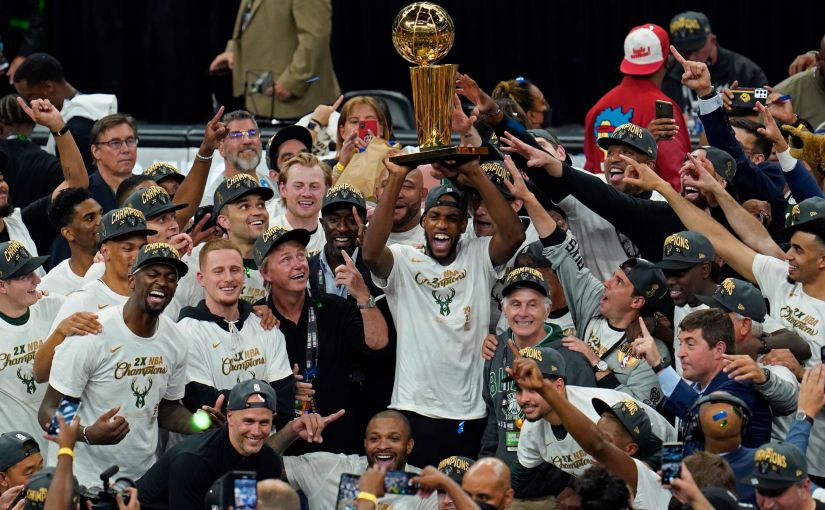
I am a Milwaukee Bucks fan. This week the Bucks won the NBA championship for the first time since 1971. I wasn’t even alive the last time the Bucks won the NBA title. In fact, during the Bucks’ championship drought bellbottoms went in and out of style 3 times.

The 2021 title did not come easy. There were several times when a championship this season seemed out of the question. Like in the second round of the playoffs when the Bucks were down 2 games to 0 versus the Brooklyn Nets. (Not to be confused with the Moscow Nyets.) In the second game of that series, Milwaukee lost 125-86. In case you don’t know sports, that’s really bad.

Then, in game 7 of that series, it looked like the Bucks had been eliminated when the Nets’ Kevin Durant hit a last-second 3-pointer to seal the win. But it turned out the toe of his size 18 shoe was on the 3-point line, making the shot a 2-pointer, and sending the game to overtime, and a Bucks win.

In game 5 Against the Atlanta Hawks, the Bucks’ superstar Giannis Antetokounmpo went down with a nasty knee injury that looked as if it was sure to end his season, his ability to walk right, and the team’s championship hopes.

Then the Bucks opened the NBA Finals in Phoenix against the Suns. Despite the fact the Giannis miraculously was back and played great, the Bucks got rolled in back-to-back games. Things didn’t look good when the team was down 2 games to none.

But the Bucks never gave up. They never waved the white flag. They stole Phoenix’s schtick and kept rising to the occasion.

They won game 7 in overtime against the Nets.

They rallied after it looked like they lost their best player against the Hawks and won the final 2 games without him.

Then, when they came back to Milwaukee down 2-0 against the Suns in the finals, the crowd cheered the now famous ‘Bucks In Six! Bucks In Six! Bucks In Six!’ Which meant the team would win the next 4 games in a row. And that is exactly what happened.

Key Takeaway

  • Just because you are losing doesn’t mean you have lost.
  • It isn’t over until it is over.
  • Bad breaks don’t mean a bad outcome.
  • What has happened doesn’t indicate what will happen.
  • Humans can cause their own momentum shifts.

*If you know someone who could benefit from this message, please share it with them.

Why you should approach self improvement like a sport.

I first published this post a few years ago while reflecting on my track & field career. I recently shared the post with some track athletes and coaches who really appreciated the message, especially the Key Takeaway (so you could just jump to that). So I decided to repost it again during the heart of track season.

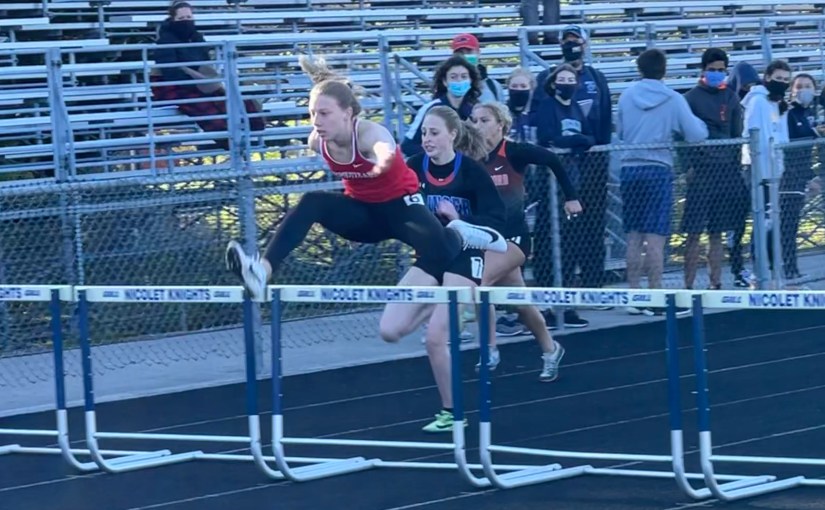
Pre-Note: Wednesday I was at a track meet and took the cover pic of our family friend Eva Brandenburg hurdling. Eva and my daughter Ava (confusing right?) have played basketball together since 5th grade, and are now having fast starts to their freshman track seasons. Keep an eye out for Eva. She is going to do special things!

Here is the original post, now in an unoriginal post...

I love track and field. I first got involved in the sport as a freshman in high school, mostly because I was terrible at baseball. But also because it was co-ed. And, I thought the fact that it was a no-cut sport significantly improved my chances of actually making the team.

Trying Everything

I have competed in a wide variety of track and field events. My resume includes the 100 meters, 400 meters, 1600 meters, high jump, long jump, shot put, discus, javelin, hammer, 35-pound weight, 110-meter hurdles, 4×100 meter relay, 4×400 meter relay, and, yes, even the pole vault (which I approached more like the high jump with a stick).

I have enjoyed every event I have ever competed in (except the 1600 meter run). I love the energy and atmosphere at track meets. But you know when track and field becomes really fun?

The Second Meet.

The second meet is the most important and impactful event in a track athlete’s career. In your first meet, you are just setting a baseline. But once you get to your second meet you walk in with a time, distance, or height to beat. And most of the time, the results in the second meet are a rewarding step forward from the first meet.

In track and field, every result is measured in minutes and seconds, or feet and inches. Which means that your linear progression is clear and quantifiable. Your undeniable improvement in the second meet gets you thinking about the third meet. It makes you think about practicing more, training harder, lifting weights, warming up smarter and getting some better hype music. You start wondering just how much better you can get. The seeds of self-improvement are planted, fertilized and watered in that second meet.

The Broader Lesson

This is not just a track and field thing. This is a life thing. The same principle of self-improvement applies to our careers, our relationships, our responsibilities and our hobbies. Our first attempts simply set a baseline. The second time we do anything we start the improvement process. We recognize that as we pour more energy, time and focus into any activity we get better and better. This is true of presenting a closing argument in court, hiring good employees and folding fitted sheets (although my wife, Dawn is so good at the fitted sheet thing that I focus on the closing arguments in court instead).

Key Takeaway

Don’t be afraid to try something new because you think you will be bad at it. You will be bad at it. Or at least you will be the worst you will ever be. But that first attempt creates a starting point. The climb from there is both exciting and rewarding. As you improve, remember that first attempt. Recognize how far you have come since you first started. It is one of the most rewarding reflections in life.

*If you know someone who could benefit from this message, please share it with them.