How I screwed up my very first email, but lived to email you about it.

Do you remember writing your first email?

I do.

It was very confusing.

I composed my first email message when I was a college student. It was my second or third year of college at the University of Wisconsin. I wrote the email to my parents from the computer lab at college. Because back then, almost no students in my socio-economic subdivision owned their own computers.

I was awestruck by the idea of this new technology. It would allow me to send a written letter to my parents, but without having to find a sheet of paper or an envelope. I wouldn’t have to buy a stamp. Or lick a stamp. I wouldn’t have to find a mailbox. Or lick a mailbox. And I wouldn’t have to wait a week for them to get the letter. They would get it instantaneously! This was some kind of magic from the future. And I couldn’t wait to try it out.

But when I went to write my first high-tech email letter, something went wrong.

I quickly filled the small field provided for the message with my first sentence. Then, as I continued to type, the new words pushed the old words out of the field. It was very confusing. But, hey, this was magic mail. And I was just a regular human. So I figured I wasn’t supposed to fully understand the wizardry.

I stared at the email for a long time, trying to understand what was happening to my message. But finding no good explanation, I eventually poked the send button and sent my magic mail into the ether, hoping it would land as promised inside my parents’ home computer in the woods of Norwich, Vermont.

The next day, when I received a reply email from my parents, I realized what had gone wrong.

I wrote my entire email letter to them in the subject field.

Looking back, it is easy to laugh at that mistake. It is easy to say I was a dufus. Or a doofus. (Both of which are dictionarily acceptable.)

But I find inspiration in this story. Because it serves as a reminder that when you try new things, you will be bad at them. Or at least as bad as you will ever be.

But just because you are bad at things at first doesn’t mean you will be bad at them forever. In fact, the only way to greatness is to travel through badness and mediocrity. It’s like traveling through the wardrobe into Narnia.

My first email experience demonstrates that by trying, experimenting and exploring, you grow and expand your capabilities. You have to be willing to try new things to accomplish new things. You have to be willing to be bad to become good. You have to be willing to make mistakes to make yourself great.

I am now 9 years into leading the advertising and ideas agency, The Weaponry. And I can draw a direct connection from my willingness to try to ride a bike, to my willingness to try to write my first email, to my eagerness to try to launch a startup business. They are all plunges into the unknown. They all involved missteps, mistakes, mistypes, or mispedals.

Here’s The Recipe:

You try.

You mess up.

You learn.

You correct.

You try again.

You improve.

You try again.

You improve again.

And you just keep trying.

Forgive my braggadocio, but today, I am freaking good at writing emails. I can fill in the To, CC, and BCC fields like a boss. I can write a subject that will tell the recipient why they should want to read the email. I can craft a clear, concise, compelling and occasionally comedic message. And I write that whole message in the body section. I can add an attachment. I can change the font size. I have a standard signature that includes my name, title, office location, and website address. My email also lets people know that I wrote a book called, What Does Your Fortune Cookie Say? And that I publish Adam’s Good Newsletter. Which is a newsletter that I send out regularly via email. Boom!

Key Takeaway

Don’t be afraid to try something new because you think you will be bad at it. You will be bad at it. At least as bad as you will ever be. But that is the price you pay to achieve greatness. You have to humble yourself at the beginning of the process. Which helps you appreciate your growth and ultimate success. The learning journey is the life journey. So learn as much as you can. It’s how you create the most rewarding life.

*If you know someone who could benefit from this message, please share it with them. And if you want to show off your email skillz, send me a note at adam@theweaponry.com.

+For more of the best life lessons I have learned, check out my book, What Does Your Fortune Cookie Say? from Ripples Media. And consider subscribing to Adam’s Good Newsletter.
My two-word formula for success at anything.

I have spent my whole life alphabetically advantaged. Adam Albrecht appears near the top of every list whether you decide to organize people by first name, last name, or the more rarely-used, 3rd letter of the first name.

I love my initials. AA. I sign my emails and notes with -AA. It’s symmetrical and primary. It would work well as a name for a ranch. (The kind with cattle, not the kind that Paul Newman makes.)

My favorite batteries are AA. My favorite company swag comes from American Airlines. And if I ever become ambitious enough to start drinking alcohol, and then ambitious enough to stop drinking alcohol, I am going to join AA, and wear all of their swag. I’ll be the most non-anonymous AA member of all time.

But AA is not just my initials. It is also shorthand for my formula for success.

That simple yet powerful formula is Action & Analysis.

To be successful you have to take Action. You have to verb. You have to do. You have to try. Action is the fuel that creates results.

But once you have taken Action, you have to perform an Analysis. You need to study the results. You need to evaluate the outcome. You need to learn what worked and what didn’t. You have to learn which jokes landed, and which ones were only funny in your head. (It was the 3rd- letter-of-the-first-name thing wasn’t it?)

Then you adjust your aim, reload, and fire more action at your target. Then analyze again. And repeat.

Action & Analysis is a simple formula for success. It has been proven in action, and through analysis. And it never fails.

Key Takeaway

To become the best version of yourself you need Action and Analysis. Do what you think you should do. Then analyze the outcome. Adjust according to your learnings. Then take action again. Success leaves clues. Failure steers us. Reflecting on experience leads to wisdom. Repeat the process over and over and over. All the way to success. -AA

*If you know someone who could benefit from this message, please share it with them.

+For more of the best life lessons I have learned check out my book, What Does Your Fortune Cookie Say? from Ripples Media.

Why no one else can see the most important work you do.

Your self-improvement work is not obvious work. It is not showy. No one can watch you do it. It would be pretty boring to watch in a zoo. Or in a red-light district. Because it happens on the inside. In fact, the most important work you do is changing your mindset, your beliefs and your habits. And not just changing. Upgrading.

Upgrading Yourself

Upgrading your thoughts is big. Upgrading your responses is huge. Upgrading your whole operating system changes everything.

This is why education is so important. It exposes you to new ideas that you can incorporate into your own thinking. But it is not enough to educate. The application is where the value appears. So you must first understand that there is a better way, then act in that better way. This is the basic plot of the movie Billy Madison. (This classic film also includes important reminders of the power of nepotism and some top-shelf potty humor.)

The More You Learn…

Develop the habit of learning new ideas. This is done through curiosity and a desire for self-improvement. It will lead you to seek and find new and better sources of information. You’ll find it in classes, books, articles, podcasts, blogs, videos, experts, and fortune cookies. (And even in books about fortune cookies.)

Apply Your Knowledge

Once you have better information, it becomes knowledge. Applying your knowledge in your various roles makes you a more valuable contributor.

Think about everything that you know you should do today. Eat right. Sleep well. Exercise. Read. Work in focused and productive ways. Invest in your relationships. Invest your money. Give back. See a doctor. Floss. Close your barn door. You and everyone else on the planet know that you should be doing those things.

But are you doing them?

There are two types of people:

  1. People who know the basic actions they should take. (This includes nearly everyone.)
  2. People who take the basic actions they know they should take. (This includes far less than everyone.)

This means that basic action is the great separator of people. But go beyond the basics. The things everyone knows they should do. Self-education helps you level up. It helps you discover the other things should you be doing if you want to be even more valuable in your career, as a spouse, parent, or friend. What is the next level of health and fitness? What is the next level of investing? Or productivity? Or spiritual enlightenment? That knowledge comes from more curiosity and more self-directed learning.

Just like a pyramid, that may or may not have been built by aliens, there are fewer and fewer people at each level as you ascend. Which means that the success pyramid is really a matter of attaining knowledge and then applying that knowledge. To take a full step higher you have to do both: attain and apply. Because it is the person who applies their new knowledge and self-improvement that is ultimately successful.

Key Takeaway

Always be learning. Educate yourself on new and better approaches to all areas of life and work. This is the invisible work of self-improvement. Then put that knowledge into action. And when you do it will change your life in ways that everyone will see.

*If you know someone who could benefit from this message, please share it with them.

+For more of the best life lessons I have learned check out my book, What Does Your Fortune Cookie Say? from Ripples Media.

Why January is a great time to feel uncomfortable.

Happy New Year! That is what we say to people in January. But Januarys aren’t supposed to be happy. Not even if you are a Gilmore. Or Pharell Williams.

In November you should feel thankful. In December you should feel Joy. (Comfort & Joy…) But in January, if you are doing things right, you should feel uncomfortable.

January is meant to be a time for change. It is a time for new goals, resolutions, and habit alteration. (Even if you are not a fashionable nun.)

If you are introducing new habits, new thinking and new actions don’t expect to feel happy right now. Expect to feel uncomfortable. And the more comfortable you are with feeling uncomfortable now, the happier you will be later.

Feeling uncomfortable now is a sign that you are trying something new. You are changing your routine. You are creating a new habit. You are experimenting.

You feel uncomfortable when you take new risks. It is a sign of growth. And learning. This is how you push your own envelope. This is how you discover better approaches.

This is January stuff. This is New Year stuff. This is how you get to the new You.

Key Takeaway

A great year of growth and improvement begins with changes in January. Feeling uncomfortable right now is a great sign. Getting uncomfortable now is how you break through to a new level of comfort later. Keep going. It gets better. And so will you.

*If you know someone who could benefit from this message, please share it with them.

+For more of the best life lessons I have learned check out my book, What Does Your Fortune Cookie Say? from Ripples Media.

Why it’s important to give yourself credit for small victories.

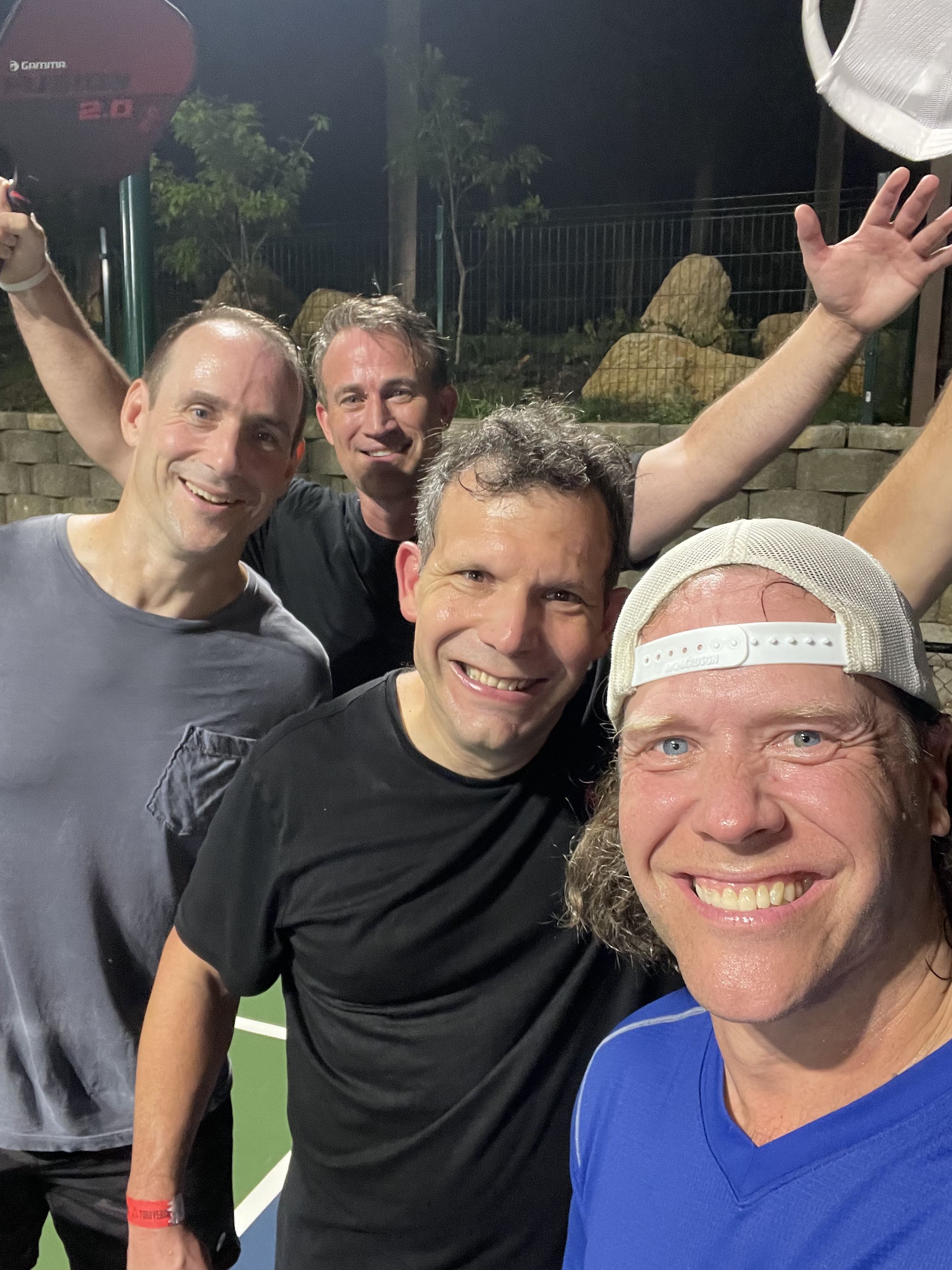
I went to Puerto Rico on a Guys’ Weekend recently. During the action-packed adventure, my friends Dan Richards, Matt Prince and James Colligan played 11 games of pickleball. I had only played the game twice before. I am not good. But that weekend I played enough to get more intelligent about the game. I am now starting to have ideas on strategies. And techniques. And excuses.

One of my greatest problems, among many others, is that I hit the ball long a lot. As I played more I wouldn’t say I stopped hitting it long. But I could see that I was hitting it less long. My shots or pickles or whatever you call them were inching closer and closer to being in the area I was trying to hit. I recognized that progress as my true, but subtle victory.

pickleball
Me and my guys on our Guys’ Weekend. Despite the fact that I know 4 guys named Guy, none of them joined us on our trip.
I guess if your name is Guy, every weekend is a Guys Weekend.

When you are learning a new skill it is important not to simply see success and failure. Pass and fail. Or right and wrong. It is valuable to recognize your progress. To note your closer and closer approximations. To identify your good misses. Like Doubtfire, Butterworth and Fields.

Skill acquisition doesn’t happen overnight. It happens as a creep towards correct. The key is to increase the percentage of times you get it right. And to shrink your range of variation. Recognize your improvement along the way, even when you are still not doing things correctly. Because it proves that you are on the right track. And it provides the encouragement you need to keep going.

Key Takeaway

When learning new skills look for small wins. Recognize the improvements that don’t show up on the scoreboard. Give yourself permission to be an amateur. It’s not about hitting the bullseye. It’s about throwing the dart, taking feedback from where it hits, and correcting accordingly. Then just keep adjusting, attempting and learning until you can’t miss. But be patient. It will take a while. All worthwhile things do.

*If you know someone who could benefit from this message, please share it with them.

+For more of the best life lessons I have learned check out my book, What Does Your Fortune Cookie Say? from Ripples Media.

What is the best thing you can offer a homeless person?

America has a problem with homelessness. We have a lot of people who don’t have a home or a proper place to shelter. And when you don’t have that basic human need met it is hard to bring your best self to the rest of life’s challenges.

I have a homelessness problem too. My problem is that I don’t know how to respond to homeless people. In most areas of my life, I have a well-considered way of thinking about situations. But when it comes to responding to homeless people I still have glitches in my processor.

Do I give them money? Food? Water? Boxes and sleeping bags? Or do I just walk past?

Early in my career, I got paid for a freelance writing project with a bunch of gift certificates to a crummy restaurant chain. I carried those certificates with me and handed them to homeless people. But when they saw the name of the restaurant they usually looked as if they wanted to hand them right back.

Last Week

On my morning commute last week I saw a homeless man holding a sign at a stoplight. The light was red, so I stopped. Because I remembered that rule from my driver’s education class.

I had my window down and my music up. I was in a great mood on a beautiful morning.

The man on the corner stepped towards me and began nodding his head to my music.

Then he said to me, ‘Man, you are the happiest person I have seen all day!

I smile at him and replied, ‘That’s my thing!’

I asked him his name.

He said, ‘Rick.’

I responded, ‘My name is Adam.’

He shared, ‘I used to be The Humble Artist.’

I replied, ‘You still are aren’t you?’

He said, ‘No.’

I asked what changed.

He confessed, ‘I don’t do art anymore. And I’m no longer humble.’

I said, ‘Neither am I! Deion Sanders once said “They don’t pay nobody to be humble!'”

We both laughed. It was really nice to hear a homeless person laugh.

The light turned green.

And I said “It was nice to meet you, Rick! Have a great day. And do your art!

As I drove through Milwaukee to my downtown office I reflected on my interaction with Rick.

Was our conversation worth more than money or food?

Was it worth anything?

How about the smile and happiness I shared with him?

Or my interest in learning his name?

Or the encouragement to create art?

Did any of that help?

I don’t know.

Maybe.

Maybe not.

But I wrote down his name, so I won’t forget.

And I hope that he feels like he made a new friend. And that someone else knows him by name. I hope that he felt like another human respected him as an equal. I hope he knows I am pulling for him to find a home so that he can spend more time thinking about art.

Key Takeaway

Keep trying to figure out the things you don’t know. Life is a big experiment full of trial and error. Don’t be afraid to try different approaches and learn what works for you. The aim should be to have a positive impact in your own way. And share what you learn so that others can learn too.

*If you know someone who could benefit from this message, please share it with them.

+For more life lessons I have learned check out my new book, What Does Your Fortune Cookie Say? from Ripples Media.

Spend quality time with people who know things you don’t.

From the moment you were born you were programmed to grow stronger and smarter every day. Which is why you don’t come out of the womb with a driver’s license and a scalpel.

One of the most important ways you become a stronger, more capable machine is by simply interacting with other people. In fact, you learn more from other humans than from any other source. Even if you have a killer set of encyclopedias.

When you engage with humans they add:

  • Knowledge
  • Skills
  • Insights
  • Perspective
  • Confidence
  • Connections
  • Resources
  • Joy
  • Entertainment
  • Ideas
  • Tools
  • Support
  • Kindness
  • Happiness
  • Inspiration
  • Motivation
  • Charcuterie (Definitely spend more time with anyone who offers a solid spread.)

Key Takeaway

Seek out human interaction. When you spend time with people who are ahead of you on your development journey they naturally pull you forward. Make sure to share with others too. You have gifts and knowledge that offer great value to those around you. And everyone improves in the process.

*If you know someone who could benefit from this message, please share it with them.

+For more of the best life lessons I have learned check out my new book, What Does Your Fortune Cookie Say? from Ripples Media.

The amazing moment that made writing my book worth the effort.

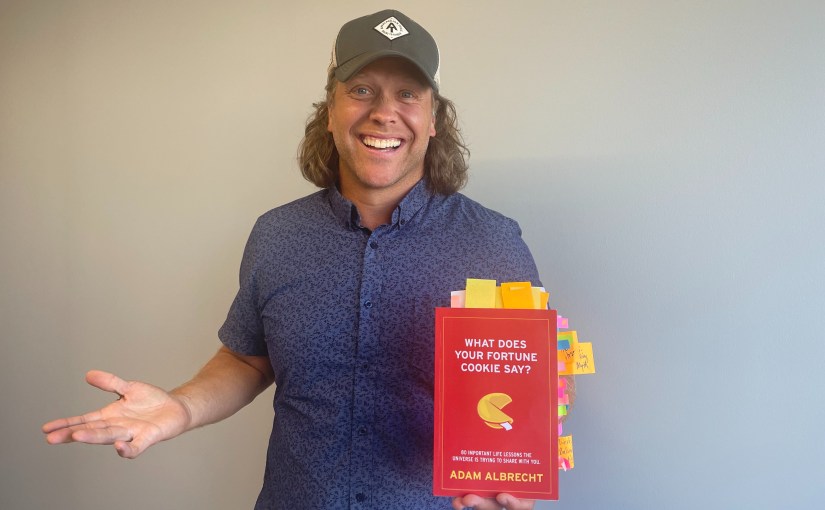
In December of 2021, I published my first book titled What Does Your Fortune Cookie Say? It takes a lot of effort to birth a book. The process is like running 3 marathons back to back to back. There is a writing marathon, a publishing marathon, and a promoting marathon. And the promoting marathon only ends when you quit. And I’m no quitter.

Is all that work worth it?

I wrote my book to help share the best life lessons I have learned with anyone interested in growth and self-improvement. I didn’t write the book for money. I didn’t write it to become famous. I simply felt that I had accumulated a valuable library of life lessons. And I felt that by sharing those lessons I could make my own valuable contribution to the world. Because teaching the world to sing and buying the world a Coke were already taken.

The feedback I have received has been extremely rewarding. Readers as young as 15 and into their 80s have told me how much they have enjoyed the book. I assume the 90+ crowd is too busy to provide feedback.

Leigh Peine

Shortly after my book was first published by Ripples Media, my client-friend Leigh Peine, Senior Director of Marketing and Client Solutions at Education Credential Evaluators (ECE), contacted me to say that she wanted to order copies of the book for her team to read like a book club. She then requested that after they all read the book we gather for a book talk.

Fast Forward

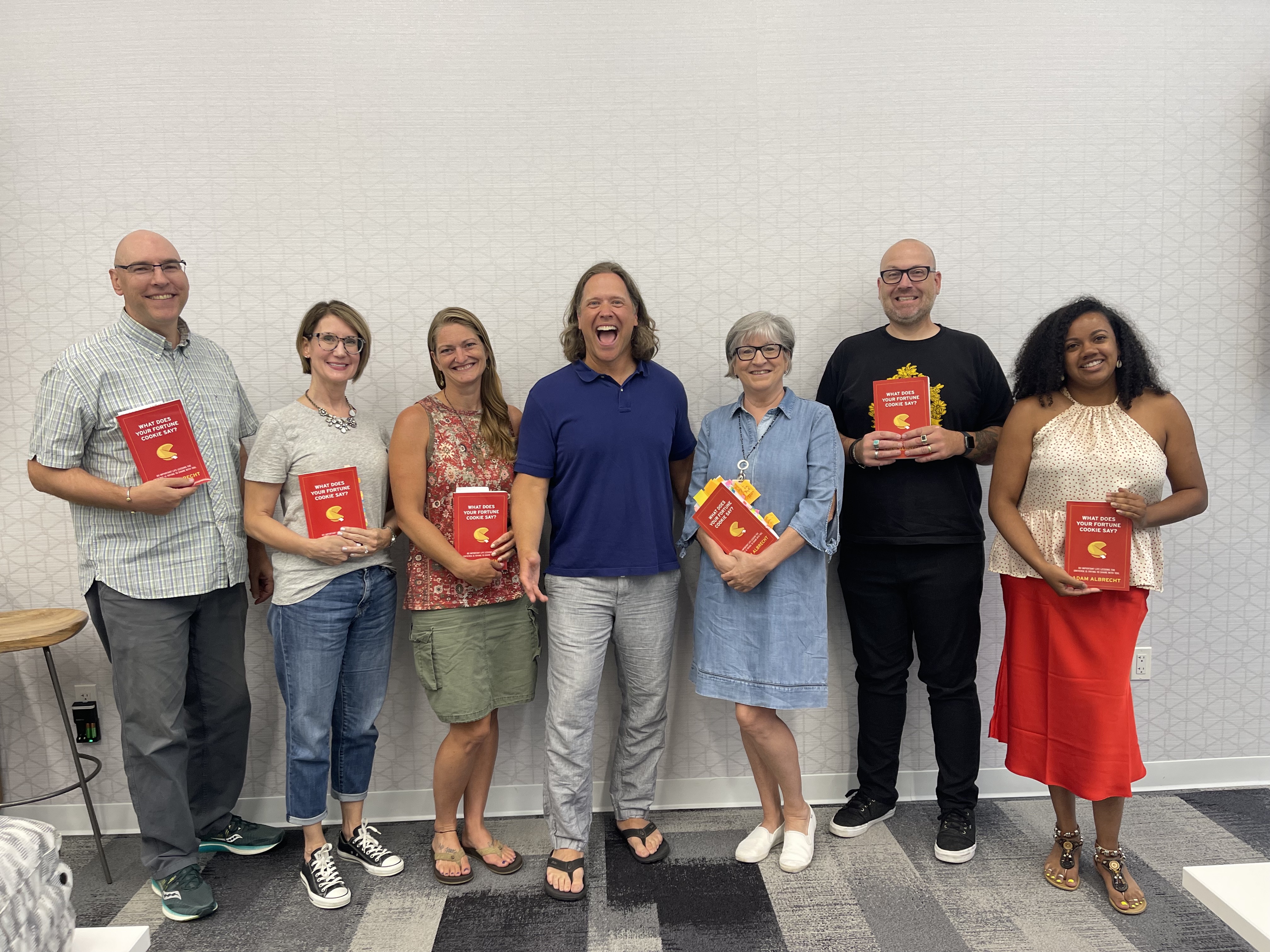
We gathered for our book talk 2 weeks ago. The ECE marketing team brought their copies of the book with them for me to sign. It was amazing to see a team show up at a talk with copies of the book that they had already read.

The questions asked by the group were different and deeper than they are at talks where people are first introduced to the book through the talk.

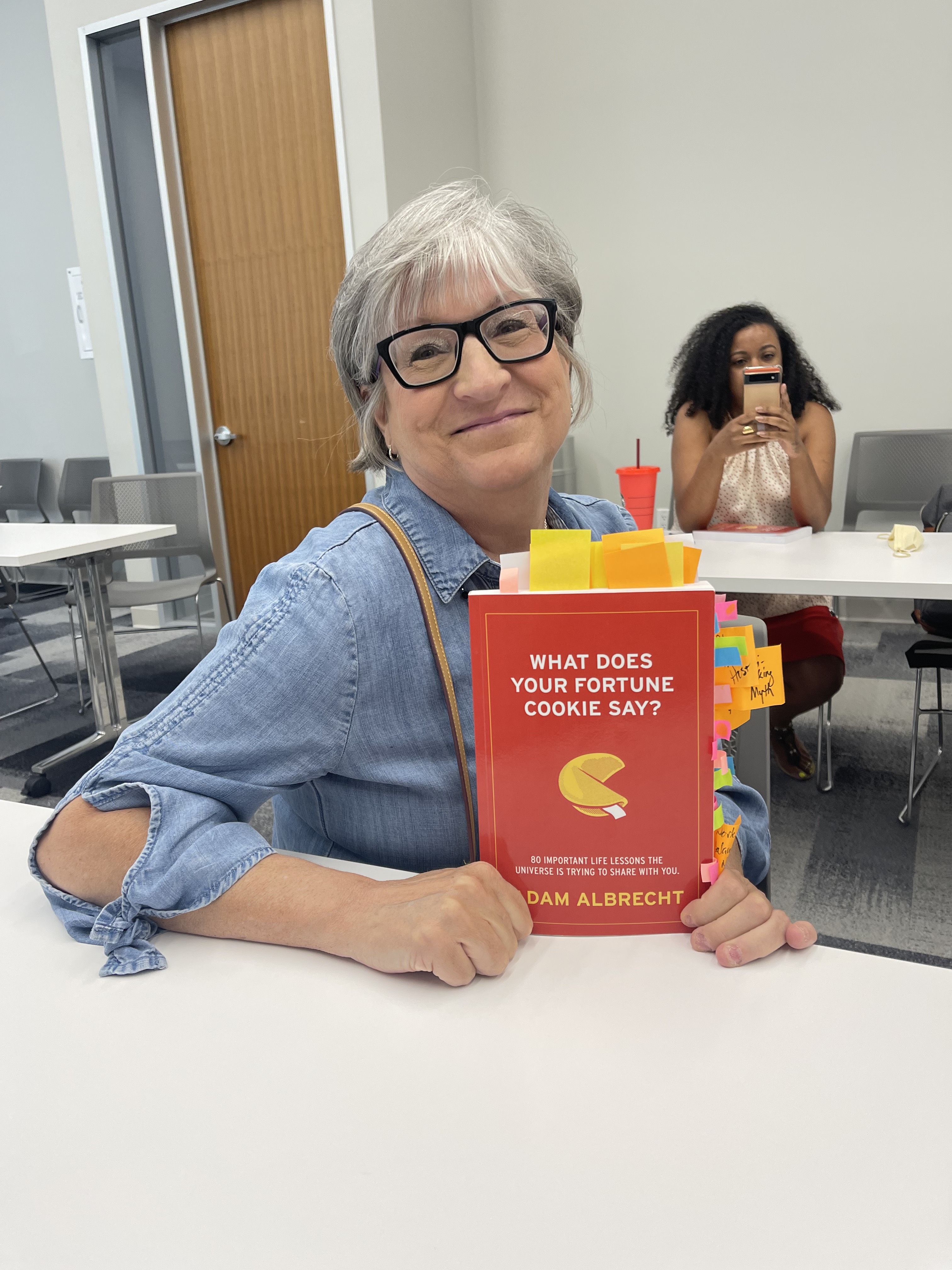
But the moment that stood out to me was when I saw Marybeth Gruenewald’s book.

Marybeth and her Technicolor Dream Book.

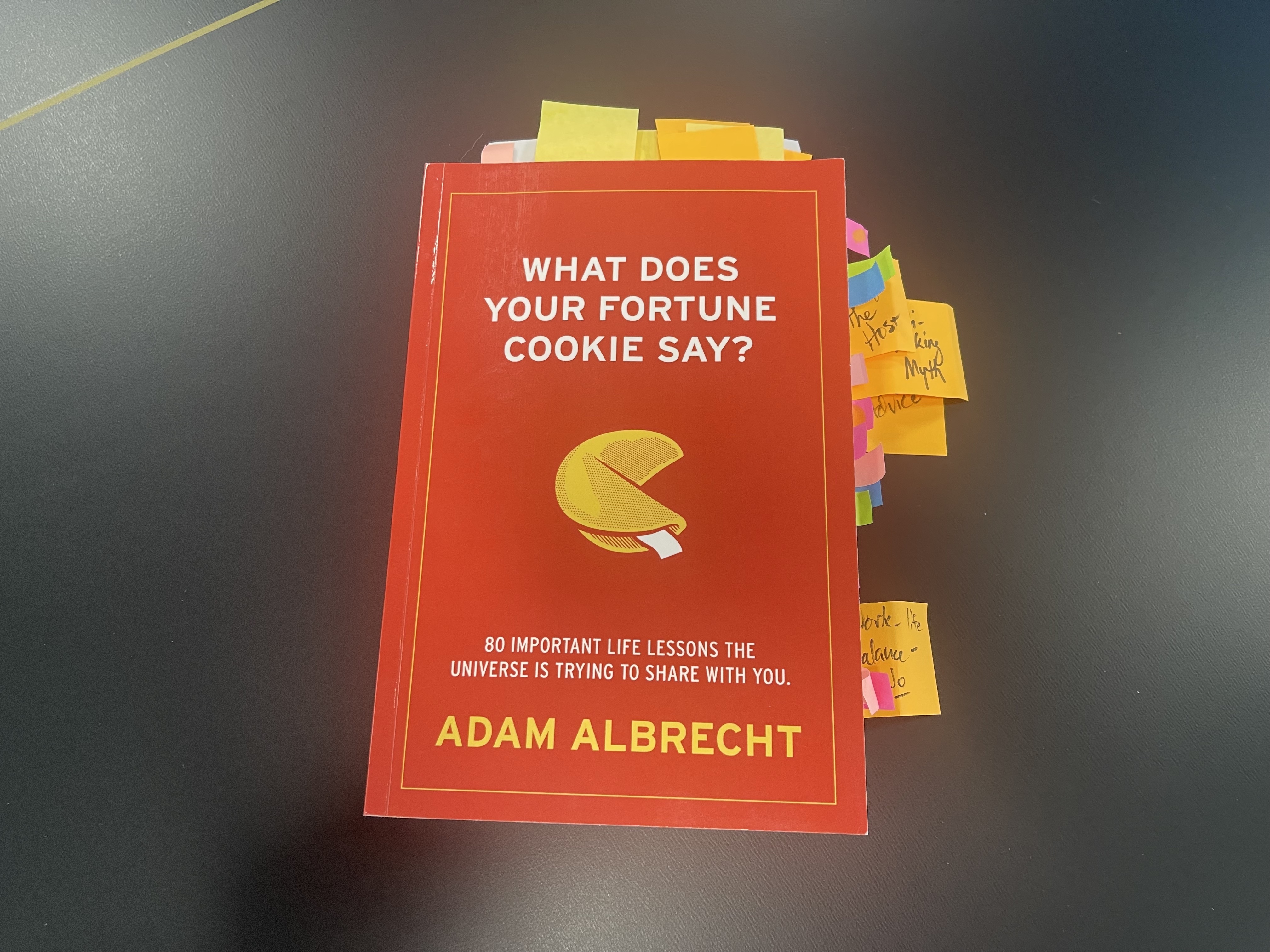
Marybeth, the Director of Global Initiatives at ECE not only read the book, she made the book her own. She flagged new and interesting ideas that stood out to her. She made notes. She highlighted lines. She turned the book into a beautiful piece of art. And her liberal use of Post-it Notes will likely impact 3M’s Q3 revenue numbers.

I was absolutely stunned when I saw Marybeth’s book. Not just because it was so interesting to look at, which it was. But this copy of the book visually demonstrated where a reader found value. Where they encountered ideas worth remembering. Where a new thought had reached them. Or where a new phrasing of an idea connected.

This book visually represents what I hoped would happen to people as they read. Their minds would light up and expand. Their brains would grow and add dimension, depth and texture. Their thoughts would brighten, and lighten and lift. (Oh my!)

Marybeth’s copy of the book is beautiful. I wish I owned it. (Perhaps I will make a replica of it in art class.)

Thank you Marybeth for bringing your copy of the book to the talk. Seeing it was one of the great pleasures of my author’s adventure.

Thank you Leigh for sharing the book with your team and organizing a talk. It was more rewarding for me than I can express. (Although I suppose this blog post probably expresses it fairly well. I’m just a big fan of hyperbole.)

Thank you Greg Haag, Leigh Peine, Melissa Ganiere, Marybeth, Zak Holochwost, Whitney Mosby and (joining via Zoom) Kimberly Hejec for your time and your interest in the book!

Key Takeaway

Share what you know. Pass along your lessons and learning and ideas. If it works for you, chances are it will help others too. We can all benefit from hearing new and differing perspectives. If you lead a team, find ways to introduce new ideas to keep your team learning and growing. Like Leigh Peine did for her team at ECE.

*If you know someone who could benefit from this message, please share it with them.

+For more of the best life lessons I have learned check out my new book, What Does Your Fortune Cookie Say? from Ripples Media.

The 2 things that can help anyone become happy, fulfilled, and successful.

Everyone has the potential to be highly successful. Everyone. Regardless of your background or socio-economic factors. Regardless of the opportunities you thought were or were not available to you. Even if you don’t currently maintain a minimum standard of personal hygiene.

The 2 Things

There are 2 things you need to achieve greatness, happiness and any other type of ness you are after.

  1. A Model

You need a model of success to follow.

Ask yourself some simple questions. Who do you want to become? What do you want to be like? This could be anything. A great parent. An influential teacher. A successful business person. An accomplished athlete. A great stay-at-home Dad.

Then look for your model. The person who has done what you want to do. A model that can show you what you could create or become.

Best of all, you don’t need to know what you want to do to find a great model. Simply start looking for people who are happy and fulfilled. When you find a person you admire or envy and want to emulate, you have found a model. But you still get to choose which model to choose as your North Star.

2. A Path

Once you have a model, you need a path. Your path is like your personal Yellow Brick Road. It is the course you must travel to achieve the model. And depending on your path it may or may not contain lions, scarecrows and trees that throw apples at you.

In short: The model is your destination. The path is how you get there.

The path provides the instructions and the coursework. The path includes the dos and don’ts. The path shows you the roads to travel, complete with onramps and interchanges.

The path includes books, schools, and teachers. It includes habits, practices and processes. And it may include other models to study.  And in my experience studying models doesn’t even feel like studying.

Mapping The Path

Once you find the model you want to follow you need to discover their path. Mapping their path becomes your research project.

Potential Questions To Ask Your Model

  • What did they do?
  • How did they do it?
  • When did they do what?
  • And where?
  • Why did they make the decisions they made?
  • Who helped them?
  • What would they do differently now that they know what they know?

Don’t guess. Don’t reinvent the wheel. Don’t spin your wheels either. The answers are there for you to discover. If your model is someone famous, or dead, research their story. You will find many of the answers you need through a little digging. (To be clear, I mean you can dig into their story, not dig up their dead body.)

Key Takeaway

Begin looking for your model today. And when you find that person, discover their path. The path is where the transformational magic happens.

If you have become a model, share your path. Share what you know. Inspire others. Bring others along. If you have found joy, happiness, success, and fulfillment in your life consider showing others how you did it. It may be the most valuable work you ever do.

*If you know someone who could benefit from this message, please share it with them.

+For more of the best lessons I have learned check out my new book What Does Your Fortune Cookie Say? from Ripples Media.

The reason you make mistakes is because you are human.

Easter is not about eggs.

It’s not about baskets and bunnies.

It’s not about bonnets and brunch. (Despite the Pavlovian response I just had to the word brunch. #drooling)

Easter is about forgiveness.

Easter is a reminder that we all make mistakes. That we all fall short of the ideal. That we often offend or disappoint others through our actions or inactions.

We are imperfect humans. Despite our best efforts and intentions, we don’t always do the right thing. (Sorry Spike Lee.)

The human mind is the most complicated of all machines. Our outputs are not always logical. Just ask Will Smith.

Remember that you are on your own learning journey. And so am I.

Canceling a human for making a mistake is a mistake.

You’re only human. You’re supposed to make mistakes.

-Billy Joel

It is far better to celebrate growth and improvement through the infinite Earthly game of trial and error.

Forgive others. Forgive yourself.

Key Takeaway

You have been forgiven by a higher power. That is the great news of Easter.

Pass it on.


*If you know someone who could benefit from this message, please share it with them.

+For more life lessons I have learned on my journey check out my new book, What Does Your Fortune Cookie Say? from Ripples Media.