I reread one of my favorite books and realize you never read the same book twice.

Before I launched the advertising and ideas agency, The Weaponry, I read an article about Pharrell Williams in Fast Company. In the article, the famously happy singer, songwriter, and producer talked about his success and inspirations that have helped him along the way. He didn’t mention the Arby’s hat.

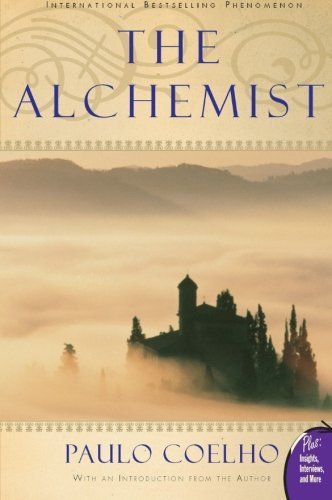
Williams raved about the book The Alchemist by Paulo Coelho. In fact, he claimed that this book was like his Bible. And since The Bible is my Bible, I figured The Alchemist was probably also worth reading. So I bought a used copy. And I devoured it. (In a literary way, not a digestive track-way.)

The book helped me think about the story of my life and my personal legend. It made me start paying attention to all the signs the universe was sending me, encouraging me to follow my own path. This was highly valuable because at the time the universe started putting up neon signs everywhere. Like Reno.

Those signs were telling me that I should launch a new ad agency. So I did, in part because The Alchemist helped me recognize the signs, and taught me that when you want something enough the whole universe conspires to help you get it. (Except maybe for short sellers. Those people love a good dumpster fire.)

Shortly after reading The Alchemist, I started my entrepreneurial adventure. That was 7 years ago. Entrepreneurship led me to blog. Which led me to write my first book, What Does Your Fortune Cookie Say? Which has led me to amazing speaking opportunities. Which has made me think a lot about what’s next for me and my personal story.

So I recently picked up The Alchemist again. I eagerly read through it in 3 days. But I also recently read a quote (or maybe it was a fortune cookie) that said You never read the same book twice. That was definitely true of my reread of The Alchemist.

This time around I didn’t feel like I was just starting my journey. I felt like I was in the thick of writing my story every day, with the universe as my co-author. And the story keeps getting better. Today I feel a little like Clark Kent or Bruce Banner must have felt once they began understanding their superpowers. Except my superpowers are more like smiling, offering encouragement, and dropping random pop culture references. But I’ll take what I can get, yes I’ll take what I can get. (And then she looked at me with big brown eyes and said…)

Key Takeaway:

Read The Alchemist. Or re-read it if you have read it before. You will find something new and inspiring. I am sure there are signs the universe is giving you right now that you don’t recognize. This book will help you see.

*If you know someone who could benefit from this message, please share it with them.

+For more of the best life lessons I have learned check out my book, What Does Your Fortune Cookie Say? from Ripples Media.


Why you should tell your people that they deserve better.

We always want the best for the people in our lives. But our people don’t always find the best. We’ve all seen friends or family members in less-than-ideal situations. It’s hard to watch. It’s even harder to bite your tongue and not say anything to them. (Or bite your thumbs if you are the texting type.)

Sometimes the less-than situation is a bad job that makes them miserable. Or at a minimum, it doesn’t enable them to utilize their full talents. Other times we see our people in bad relationships. It could be a romantic relationship that isn’t so romantic. Or peers who are putting the wrong kind of pressure on your person. Or any number of lesser situations that bring your peeps down rather than raise them up, like a good Josh Groban song.

What Would Scooby Do?

When you recognize that your people are in situations that are bringing them down, bring it up to them. Let them know how great and capable and worthy they are of more. Encourage them to find the right job, the right people, or the right situation for them.

Your people will know you are right. And they will want better for themselves too. But when you hear someone who cares about you tell you that you deserve more it carries more weight. And more urgency.

If you can help your person stack one more stone on the right side of the scale, you can help them tip their next decision in favor of a better future. Which means you have done your job as a valuable supporter. (Even if you’re not an athletic supporter.)

My Reminder

Last night I saw a good friend of mine at a school event. He is successful, well-liked, and well-respected. But a few years ago he found himself in a position where he wasn’t fully appreciated for his talents, vision and work ethic. His greatness had earned him a major opportunity. But the organization wasn’t worthy of my friend. I could see that he was wasting his time in what seemed like a great role. But it really wasn’t. And I told him so. Last night, he told me that my words to him encouraged him to make a change. Today he is in a job that is just as big, but way better, and far more supportive. Like Spanx.

Key Takeaway

Tell your people in lesser situations that they deserve better. They know it. Let them know you know it too. Show them you care. Add to their confidence. Give them the push they need. At a minimum, they will know how much you care for them. At a maximum, you will help change their life.

*If you know someone who could benefit from this message, please share it with them.

+For more of the best life lessons I have learned check out my book, What Does Your Fortune Cookie Say? from Ripples Media.
No good at marketing yourself? Try these 5 things now.

I have had numerous conversations lately with people who have told me they don’t understand marketing and don’t know how to market themselves. I find this more frightening than the twin girls from The Shining. Because if you don’t understand basic marketing, you will lose out to someone who does.

It’s important to know that sales don’t go to the best products or services. And opportunities don’t go to the most worthy candidates. They often go to those who market themselves best. Which is the only way to explain the success of Bobcat Goldthwait.

You have to be able to market yourself. Because you are constantly being evaluated as a more or less worthy candidate than another person. The opportunity at stake could be a job, a sale, a spot on a team, or a date. With 8 billion people on the planet, there are always other options to choose from. Which means that people are deciding to swipe right or swipe left on you every day. To be a successful contestant on The Swipe Is Right, here are some marketing basics.

5 things to know about marketing yourself.

  1. It is not who you know, it is who knows you. It is important that you are both visible and discoverable. The first step to marketing is being findable. So make yourself easy to find. Be on social media. Especially LinkedIn. Show up at events. Join organizations. Participate. Don’t be Boo Radley. Or Sasquatch. Or translucent.

2. Share your successes. One of the best ways to market yourself is to share your successes. Share them as part of your social and professional profiles where appropriate. Make your successes part of your introduction to others, whether in person or via email or classic mail.

When people think of you, you want them to think of your successes. People have to know what you are good at. This makes you memorable for your strengths. Don’t be humble about your successes, or you are likely to lose out on opportunities to someone with lesser success. As Deion Sanders once said, ‘They don’t pay nobody to be humble.’ And Deion is the master of marketing. (He is also the master of having one too many vowels in his name.)

3. Gain Endorsements: Know which of your friends, family, or acquaintances have influence. Spend time with them. Highlight your relationship with them. Be seen with them. When people with influence endorse, support or choose you it carries weight with others. This is why celebrity spokespeople are valuable. They help drive sales of everything from peanut butter to hair replacement. You are known by the company you keep. And cool kids like to spend time with other cool kids. (And all the cool kids, they seem to fit in.)

4. Stand out. Have something in your style, dress, or language that makes you highly identifiable. You have to stand out from the crowd to be remembered. And you have to be remembered to have opportunities find you. The year that I first grew my hair longer, I was amazed at how much more people recognized and remembered me. I attribute much of that to the fact that I simply looked different from many of the people around me. My friend Tony Sharpe always wears black. T-Pain has AutoTune. Aaron Neville, Drew Brees, Post Malone, and Cindy Crawford are all known for things on their faces. Find your signature thang and leverage it.

5. Be the go-to for something. Great brands are synonymous with something specific. Think about what one valuable thing you stand for in the minds of others. It could be creativity or trustworthiness, hard work, problem-solving, willingness, funniness, or intelligence. Really it could be any single strength or positive trait that distinguishes you. Grab it. Own it. And anytime people feel they need that, they come to you. Because you’ve got the Motts.

Key Takeaway

The world is full of opportunities. To make sure you get your share of them it is important to learn basic marketing skills. Make yourself visible. Tout your wins. Associate with people that others know, like and respect. Develop an identifiable personal trademark. And develop your rare and valuable skills. You’ll be surprised how many good things start coming your way.

*If you know someone who could benefit from this message, please share it with them.

+For more of the best life lessons I have learned check out my book, What Does Your Fortune Cookie Say? from Ripples Media.
I have a new and improved way to exchange names with new people.

There are roughly 8 billion people on the planet. You can categorize them in all kinds of ways. You can group them by their gender, smell, like or dislike of mushrooms, or their opinion on various TikTok dances.

But I find it most valuable to sort people into 2 simple groups:

  1. Those whose names I know.
  2. Those whose names I don’t know.

One of my most important goals here on Planet #3 is to shift as many people as possible from Group 2 to Group 1. Because real relationships don’t begin until you exchange names.

For most of my life, I have used a very simple introductory technique. During a conversation or in response to awkward proximity, I traditionally made the following statement:

My name is Adam.

While I have used this line thousands of times, I have not been very happy with the results. And if you are going to use a technique thousands of times, you should really like the results.

The 2 main problems with this approach

First, the other person doesn’t always know what to do next. I am always amazed when I share my name with another person and they don’t respond by sharing their name with me. It feels like I have whacked the front of their knee with a small rubber-headed mallet, and their foot did not kick forward. Which makes me think there is something wrong with their wiring.

The other problem with my introduction technique is that the name retention rate is fairly low. In other words, The other person doesn’t absorb or remember that my name is Adam nearly as often as you might expect. Especially given the fact that I just told them my name right to their face.

However, I read Jocko Willink and Leif Babin’s book Extreme Ownership. So I find it useful to explore how I am at fault for the lower-than-expected retention rate. As a result, I have radically transformed my standard introductory technique. Today, when I want to get to know someone better, I use the following new line, that I wrote myself:

What is your name?

The results from this approach have been amazing. I have found that nearly everyone knows their own name and is willing to share it when prompted using this technique.

But wait, there’s more!

I have also found that far more people remember my name when I use this technique, as measured by a name-based goodbye at the end of our conversations, and first-name greetings on follow-up encounters.

Contributing Success Factors

When I ask you for your name, you know the answer and are prepared to share it. I am also fully prepared to receive your name because I just asked you for it.

However, the real magic of this technique comes in Phase 2 of Technique 2.

In Technique 1, the receiver is not always ready to absorb my name. While well-intentioned, my initial name share could come in hot, like a ball thrown at someone when they didn’t have their hands up and ready to protect their nose.

In Phase 2 of Technique 2, when the other person asks to know your name they are prepared to receive the answer. So when they hear your name they already have created a space for it to live in their brain. It might be on a shelf, hanging on a wall, or on a comfy bean bag chair, depending on how the other person has decorated the namespace in their brain. But because that space was prepared before you shared your name it is far more likely to be found later when the person needs or wants it.

Key Takeaway

For more successful name exchanges ask for the other person’s name first. This sequence enables both parties to be best prepared to remember the other’s name. Plus, it feels fun to have someone ask ‘what’s your name?’ Because in the movies, that’s the question the gatekeepers always ask right before they give the main character their big break.

*If you know someone who could benefit from this message, please share it with them.

+For more of the best life lessons I have learned check out my book, What Does Your Fortune Cookie Say? from Ripples Media.
Which of your strengths do you use to make money? Here are my top 7.

Last week I was invited to Minneapolis to give the keynote address at Ungerman’s annual meeting. Ungerman is a Twin Cities-based restoration company that offers 24/7 emergency cleanup and repair. They are a great company to have on speed dial after a flood, fire, storm, or epic house party.

The company gathered to reflect on its successes from 2022 and plan for a great 2023. I spoke to the Ungermaniacs about one of my favorite topics: How to become your best self. I related lessons from my book What Does Your Fortune Cookie Say? to the company’s core values. Everyone who attended got a copy of the book. I announced the giveaway like Oprah announcing that everyone gets a car. At least it sounded like that in my head. (And you get a book! And you get a book!)

Ungerman Top Dawgs, Kirsten Meehan, Ron Ungerman Jr., and Lindsey Uselding. Sisters Kirsten and Lindsey are stars of the upcoming HGTV show Renovation 911! (Not to be confused with Reno 911)

After my talk, there was a Q&AA portion of the program. (Questions and Adam Albrecht.) Heather Jurek, the head of Human Resources, shared that the team at Ungerman focuses on strengths and opportunities/growth areas. She asked me to share what I thought my #1 strength was.

While I shared an answer with Ungerman, I’ve thought a lot about Heather’s questions since the talk. (Those sneaky HR leaders know how to get you thinking about yourself!)

However, I have reframed the question to elicit an even more valuable answer. The question I find most interesting is:

‘What strengths of yours earn you money?

I began searching for the answers by considering the ways that I earn money.

The 4 ways I earn money:

  1. The Weaponry. The advertising and ideas agency I founded and lead.
  2. Books Sales from What Does Your Fortune Cookie Say? and The Culture Turnaround
  3. Speaking Engagements.
  4. Investments

My Money-Making Strengths

With this backdrop, I analyzed why people choose to spend their money with me. The answers came quickly when viewed through this lens.

  1. Creativity: I have spent my career in advertising as a professional creative. First as a writer, then as a Creative Director and Chief Creative Officer, before launching The Weaponry in 2016. Creativity is my craft. If I lost everything and had to start again with just my children and my wife (like Lee Greenwood sang about in God Bless The USA) my creativity is the strength I would lean on for my comeback. Because there is always a demand for creative thinking.

2. Strategic Thinking: This is my career strength 1A. It provides the valuable foundation for my creative thinking. My problem-solving and game-planning skills are critical differentiators. They are why I get so many calls from business leaders who want my help thinking through their challenges. Work on your problem-solving skills and strategic thinking every day. Study other successful people. You can learn a lot from their examples.

3. Energy/Enthusiasm My natural energy is my most visible strength. I love taking on whatever work needs to be done. I get invited into a lot of important rooms because my energy has a positive effect on those around me. It has had a major impact on sales and business development because people enjoy spending their time and money with people they know have the energy to make a valuable contribution to their business. My energy is also a significant reason I get hired for speaking events. Because as Maya Angelou said, ‘People will never forget how you made them feel.’ I encourage you to put more energy into your energy. It is both a highly valuable and highly renewable resource.

4. Trustworthiness: Those who have worked with me in the past keep coming back because they trust me. They trust that I will deliver. They trust that I can help them navigate their challenges, which can seem ethereal in advertising and marketing. My trustworthiness is the reason clients took a chance on The Weaponry when it was a startup with no website, no logo and no business cards. Trust me on this.

5. Relationships I am better than most people at developing and maintaining relationships because I value relationships more than most people. People like to work with people they like. (Or as the kids would say, People like, like to like work with people they like, like.) My relationships keep leading to new opportunities, new referrals and new relationships. All of which positively impact The Weaponry, my book sales, speaking opportunities, and my investments. Make sure you develop and maintain more and better relationships.

6. Risk Taking: My above-average risk tolerance is what led me to bet on myself and launch The Weaponry. It is what lead me to invest time, energy and money into books that had no guaranteed ROI. My risk tolerance also enables me to invest in businesses when they are in the toilet. Which has led to several of my greatest returns. Pairing risk tolerance with research and good strategic thinking is a powerful recipe for success. If I ever write a cookbook full of recipes for success, I will include this recipe as a hot dish. If you want more rewards, take more risks.

7. Storytelling On day one of my career I would not have guessed that my storytelling skills would have made me money. But storytelling has been an extremely valuable strength for me. And it is a strength everyone should work on. It creates value in job interviews, when developing relationships, when writing books and when delivering speeches. It is central to marketing and advertising. And it is the best way to convey the rest of your valuable strengths to the world.

Key Takeaway

You must first add value before you can extract value. Which makes it important to know which of your strengths provide the most value to others. Develop your rare and valuable skills. Become sought after for your strengths. It is the best way to have the greatest impact on the world. And making a significant impact pays off in more ways than one.

*If you know someone who could benefit from this message, please share it with them.

+Thanks for inviting me to talk Heather, Lindsey and Kirsten. And special thanks to Nate Uselding for suggesting me to the Ungerman team!

How to win more by loading your dice before you roll them.

The most successful people I know have taken significant chances. The universe is willing to pay out great rewards. But it requires you to put something on the line to prove you deserve it.

I first learned this lesson from a piece of cross-stitch art in my childhood home that said The turtle only makes progress when it sticks its neck out. You can learn a lot from cross-stitch philosophy.

The great barrier to success is your willingness to take a risk. Most people simply aren’t willing to risk enough to earn a great reward. They play it too safe. But the safe harbor you think you are anchored in is not nearly as safe as you think. (And there is very little safety in safes as Geraldo Rivera showed us.)

The relative lack of safety everywhere means that you should risk it for the biscuit. Always bet on yourself. But it is easy to lower the risk in your risky endeavors. In fact, there is a maxim I adhere to every time I take my chances:

Load your dice before you roll them.

Whenever you take a chance, like ABBA, take as much chance out of the situation as possible. You can do this by taking on opportunities where you have the greatest chance of winning.

Remember, not all playing fields are even. Choose to play on fields that are tilted in your favor. And tilt every board you compete on in your direction by knowing and playing to your strengths.

Take on battles where you have advantages. Lean on your relationships. People advantages are often the greatest advantages of all. Choose opportunities where your proximity is a strength. Compete where your category knowledge is high. It’s what Alex Trebek would do.

Count the cards. Know the decision makers. Do your homework. Study patterns. Start a business in a space where you have great expertise. Then do what hedge funds do and create situations where you win no matter what happens.

Key Takeaway

Take the chance out of the chances you take. Know your strengths. Play to them. You will significantly increase your likelihood of success. Which will ensure that you win more than your fair share of victories.

*If you know someone who could benefit from this message, please share it with them.

+For more of the best life lessons I have learned check out my book, What Does Your Fortune Cookie Say? from Ripples Media.
The greatest teacher of all time doesn’t work at a school.

One of the great mistakes you can make in life is studying things to death. By this, I mean that you read and research the things you want to do. And then you die. Your life is full of studying, thinking and preparing. But never actually doing. This is a big mistake. Huge. Like Julia Roberts said.

Most people think they need to prepare to get started. But they are never prepared enough to go. If you subscribe to this philosophy you will never meet the greatest teacher of all. Because she isn’t in your books. And she isn’t part of the PTA in Harper Valley.

The best teacher in the history of the planet is action. Action provides immediate lessons, feedback and progress. You learn by doing. You do not really learn by not really doing. I think Dr. Doolittle said that.

You learn to play a game by actually playing the game. This was true on the playground. It’s true in board games, video games and head games. (Just ask Lou Gramm.) It is also true in the game of life and in the great game of business.

As an entrepreneur, I learned how to start and run a business by simply jumping in and doing it. I learned more in the first week I launched The Weaponry than I learned from all of the books, magazines and articles I ever read.

I’ve learned how to coach sports by jumping in and doing it, while I was still totally ignorant. (Now I am just 3/4 ignorant.) Each step you take teaches you what you should do next. It’s how Mark Zuckerberg invented Facebook. And why the Winklevosses did not.

Key Takeaway

If you really want to learn how to do something don’t study it. Do it. You will learn more and faster by taking action than you could through any other approach. The more action you take the more you will learn. You are already prepared enough. It’s go-time.

*If you know someone who could benefit from this message, please share it with them.

+For more of the best life lessons I have learned check out my book, What Does Your Fortune Cookie Say? from Ripples Media.
The best thing to do after you set your goals.

Like a soccer player, I am goal-oriented. I always have been. I set goals in all areas of my life. They challenge me. They motivate me. And they make it easy to track my big-picture progress.

However, I also recognize that my ultimate goals are really lag measures. They are results. Or outcomes. Or accumulated totals. And if all I ever did was focus on my lag measures, I would be unlikely to ever achieve them. Which would be laggravating

The secret to achieving your goals is to focus your attention on the lead measures.

The lead measures are the inputs that are likely to lead you to the results you want.

An Example We Can All Relate To

I have a big birthday coming up in May. So I set a goal of weighing 210 pounds by May 25th. I picked the number because it is what I consider to be my ideal weight, where I feel and look my best. For context, I weighed 215 lbs when I graduated from high school and 211 lbs when I graduated from college. But I have been as heavy as 224 lbs within the last 6 months.

But I don’t obsess over the number 210. And I am not dieting. Instead, I am focusing on the 2 lead measures that impact weight loss:

  1. Calories consumed
  2. Calories burned.

It’s that simple.

I weigh myself first thing every morning. That gives both a progress report and a baseline for the day. I write the number down every day to track progress over time. Because if I can measure it I can manage it. (Which I think was a quote from Stanley, the retractable tape measure guy.)

I eat every day. But I don’t eat beyond the just-full feeling. (Which is better than that not-so-fresh feeling.) This means I am eating what I need. But I’m not taking on excess food or calories. So my lead indicator is ‘Did I eat past just-full? If ‘no’, I have a positive meal experience, and I give myself a tally, Ali. I want to have 3 of those every day.

However, I also track my calorie burning. In fact, to improve my calorie-burning habit I bought cardio equipment for my home gym so that I can burn calories every day that I am home. Each day I track whether I burned calories through deliberate exercise of at least 30 minutes.

By focusing on my lead measures I am taking actions that are leading to predictable weight loss. Today I weigh 214 pounds. And I have 4 months to lose 4 pounds. Which is quite manageable. Or woman-ageable.

But Wait, There’s More!

On my quest for self-improvement and achievement, I track several other lead indicators:

  1. Hours of sleep at night: This is a great indicator of energy, mood, productivity and Zzzs caught.
  2. Books Read Per Month: This is my indicator of increased intelligence. I want to read at least 2 books per month. One of them can’t be a picture book.
  3. Hours spent writing per day. This is a great indicator of how many blog posts I will publish and pages I will write for my next book. If I write for 1-2 hours every day, my progress is steady and good. By doing so I can usually come up with one funny joke per day. (As judged by me, which is totally cheating.)
  4. Hours spent on business development per day. I am the Founder & CEO of the advertising and ideas agency The Weaponry. Which means that I am responsible for growing the business. The most important thing to know about business development is that you have to plant seeds in the spring if you want to harvest in the fall. So I track the time I spend planting. #WWJAD (What Would Johnny Appleseed Do?)
  5. Placing water on my vanity each night: Drinking water is a valuable part of my health plan. It helps with my mood, and alertness, and makes me feel full, which prevents overeating. I track whether or not I set a glass of water next to my sink each night. Because if I do that I drink water first thing in the morning.
  6. Dates with my wife per month. This year I want to have at least one date with my wife every month. It is an important investment in our relationship. You can’t just set the goal of having a happy marriage. You have to spend quality time together, talk, and focus on each other regularly to achieve the goal.
  7. Speaking events per month: Since publishing my book What Does Your Fortune Cookie Say? I have had a lot of speaking opportunities. These enable me to share more positivity, inspiration and valuable life lessons with the world. I can track my positive influence on others, in part, through the number of talks I give.

Key Takeaway

Set measurable goals. Then determine which lead indicators you can measure to track your effort toward achieving your goals. Your lead indicators are great predictors of success. Focus on the lead measures and they will lead you where you want to go.

*If you know someone who could benefit from this message, please share it with them.

+For more of the best life lessons I have learned check out my book, What Does Your Fortune Cookie Say? from Ripples Media.

If you want to be an entrepreneur the great limiter is you.

I thought about becoming an entrepreneur for a long time before I summoned my inner David Lee Roth and actually jumped. In fact, I thought about starting a business for nearly 2 decades before I launched the advertising and idea agency The Weaponry. Which means that, unlike Geddy Lee, I didn’t rush into anything.

Once I had my entrepreneurial awakening in the summer of 2015 I began generating income within just a few months. I officially legalized The Weaponry as an LLC (yeah, you know me) in the spring of 2016. And while I have physically looked back since then, I have had no regrets.

Over the past 7 years, I have learned a lifetime’s worth of lessons about entrepreneurship. (Starting with how to spell the word itself.) But the most important thing to know about entrepreneurship is this:

The entrepreneur is the great limiter of the business.

10 Ways Entrepreneurs Limit Their Business

  1. You will be limited by your energy and ability to work hard.

2. You will be limited by your network and willingness to reach out and connect.

3. You will be limited by your ability to recruit and hire. (Think about it. There must be hire love.)

4. You will be limited by your willingness to create standardized processes.

5. You will be limited by your ability to give up control to others.

6. You will be limited by the size and scope of your vision.

7. You will be limited by your ability to control your greed and keep your hands off the cash flow, Gordon Gekko.

8. You will be limited by your ability to grow sales to scale your operation into a more effective and efficient machine.

9. You will be limited by your creativity and willingness to innovate

10. You will be limited by your risk tolerance. If you are not willing to walk the tightrope to the promised land you will never get there.

Perhaps most importantly, there is no one else to blame if you don’t become an entrepreneur at all. And if you are an entrepreneur, there is no one else that will prevent you from growing your business’s annual revenue to $100,0000, $1,000,000, $100,000,000, or $1,000,000,000 per year. That’s on you.

As the entrepreneur, you are both the gas pedal and the brake. Most people are afraid to take their foot off the brake, and as a result, never get going. Which means they never see where their journey could have taken them. Don’t let that be you.

Key Takeaway

Find your entrepreneurial gas pedal. Get going. Keep going. Then go faster. It will be your willingness to go, grow, create, and accelerate that will determine how far your journey takes you. We all have a limited amount of time. So go while you can. Realize that you are the determining factor. So be determined to be more.

*If you know someone who could benefit from this message, please share it with them.

+For more of the best life lessons I have learned check out my new book, What Does Your Fortune Cookie Say? from Ripples Media.
Why it’s better to look for the truth than for someone to blame.

The world isn’t perfect. It isn’t always fair. And things go wrong all the time. This is well documented by Murphy’s Law, and in every episode of Seinfeld. Just ask Mulva.

Since you are technically part of the world, you are not perfect either. You sometimes do the wrong things. You make mistakes. You react too quickly and make poor decisions. You don’t always control your temper. Or your tongue. Or, your thumbs. (Which are like modern Jobsian tongues.)

When things go bad there is a natural tendency to blame. Humans have an innate ability to draw quick conclusions and simplistic explanations. Because it is much easier to judge than to seek understanding.

This is a massive mistake.

Blaming is a lazy response that prevents you from investigating and discovering the truth. Blaming discounts your own responsibility. And it discounts the complexity of the universe and human interactions. That’s why, as Phil Dunphy might say, when you blame, you be lame.

Key Takeaway

If you want to live a better life stop blaming others. Commit to discovering the truth. Look at the facts. Explore all sides of the story. Ask questions. Don’t make accusations. Consider your own role and your contribution to each situation. Truth seekers and blamers see the world differently. And only one of them gets it right.

*If you know someone who could benefit from this message, please share it with them.

+For more of the best life lessons I have learned check out my book, What Does Your Fortune Cookie Say? from Ripples Media.