17 Ways To Develop Your Entrepreneurial Mindset

On Monday, I had the opportunity to talk to a talented group of young entrepreneurs about the entrepreneurial mindset. This 2025 cohort of Youth Mean Business was inspiring, engaging, curious, and full of good questions and good answers. They made me feel like a total Slackle Jack for waiting until I was in my 40s to start my own business.

To prepare for my talk, I combed through the things I feel have most helped me develop my entrepreneurial mindset. This mindset offers a valuable approach to life that enables you to create value for others. It’s not just about starting businesses. It’s about creating value, solving problems, and developing resilience in yourself. But like Trix Cereal, these approaches aren’t just for kids. Here are tips anyone can use. Even silly rabbits.

17 Ways To Help Develop Your Entrepreneurial Mindset

  1. Spend Time With Other Entrepreneurs.

 Jim Rohn famously declared, “You are the average of the five people you spend the most time with.”

So, spend time with entrepreneurs to become more like them. Entrepreneurs think differently. They see the world through a different lens. Surround yourself with them. Read about them. Ask them questions. It’s the fastest way to transform your mindset. And for Pete’s sake, stop hanging out with Debbie Downer.

2. Tap Into Your Energy & Enthusiasm

They make things happen. And they attract customers, employees and partners.

3. Create Things

James Clear shared, ‘Education teaches you to analyze. Entrepreneurship teaches you to create.’

So always Be Creating.

Not just businesses:

  • Systems
  • Processes
  • Clubs
  • Blogs
  • Newsletters
  • Events
  • Content
  • Videos
  • Words
  • Lists of bullet points

4. Develop a Bias Towards Action

Nontrepreneurs Talk. Entrepreneurs Act.

Take action. When you see an opportunity that you think is right for you, take steps towards it. Each time you take a step, the next step is likely to reveal itself. It is more important to take action than to plan everything out ahead of time. The need to plan everything will prevent you from taking steps. And there is no elevator to success. You’ve got to take the steps.

5. Be An Imperfectionist.

Perfectionists have to get everything exactly right. They down’t lyke mayking missteaks. But entrepreneurship is quick, messy and full of janky solutions, until you can afford better solutions.

Create quick models, products, services, content and promotions. Then improve as you go. That is how life works. You don’t have to have everything figured out from the beginning.

6. Give Yourself Permission To Be An Amateur.

One of the greatest gifts I gave myself as an entrepreneur was the permission to be an amateur.

It took the pressure off. It allows me to learn as I go. And to not beat myself up over the mistakes I would surely make, Shirley.

In fact, I loved what this did for my entrepreneurial mindset so much that I have adopted this in all areas of my life.

Today, I give myself permission to be an amateur as a:

  • Parent
  • Husband
  • Speaker
  • Coach
  • Blogger
  • Author
  • Newsletterer
  • Content Creator
  • Brain Surgeon (Which is probably why my rating is so low on Health Grades.)

As a result, I am always learning a lot. And I remain open to suggestions.

7. Read

Read as much as you can. On a plane. On a train. In a box. With a Fox. Entrepreneurs need to know things about all areas of their business.

  • Read about business and entrepreneurship.
  • Read for motivation and inspiration.
  • Read biographies of successful people to pick up clues you can use to be more successful.
  • Read to practice the slow grind of reading.
  • Listen to audiobooks when you are commuting.

8. Be Trustworthy

The most important thing you need to do to become an entrepreneur is to have people trust you.

To earn your first customers, you have to sell on trust.

  • So do what you say you will do.
  • Show up on time.
  • Deliver what you said you would deliver
  • Catch people if you do that trust-fall team-building exercise. (But if you do drop someone, make sure to get it on video.)

9. Approach Your Business Like A Video Game

Entrepreneurs face endless challenges and obstacles. Embrace the challenges.

Video games are fun specifically because they offer a challenge. The deeper you get into them, the higher level you achieve, the more challenging they get.

That’s part of the fun.

When things get hard, think of it as a fun and interesting challenge that will help you level up and become even better. And remember, you get points for eating Inky, Pinky, Blinky and Clyde.

10. Collect Friends

All opportunities come through people.

The more people you know the better.

My very first client was a friend of mine I have known since 7th grade.

  • Always be meeting new people.
  • Introduce yourself to people.
  • Ask for introductions to people you think would be good to know.
  • If you don’t have business cards, get them printed and hand them out whenever you can.
  • Then, make a regular effort to reach out to your people.
  • Especially when you don’t want or need anything from them. (Read this bullet again. And then reach out to me to practice this.)
  • This is how you maintain relationships and make them valuable when either of you needs something later on.

11. Grab Chocolate Milk

Get together with people to talk.

Adults grab coffee or beer or wine or cocktails.

I don’t drink alcohol.

So I grab chocolate milk.

Or Ice Cream

Or Juice or Soda.

Or Carmels.

It all works the same way. These activities offer a good opportunity to get together and talk and develop your friendship, share ideas and discuss other opportunities.

12. Become A Problem Solver

Businesses are designed to solve problems.

So, become good at spotting problems.

And become good at solving them. Like Vanilla Ice.

This means replacing ‘I can’t do that.’ with ‘How could I do that?’

13. Focus

You will have the greatest success when you really focus on the most important thing at the moment.

FOCUS = Focus On Completely Until Solved

Focus fully on the important things you need to do or create. Do less. And do them better.

*Focus is the English word that many of my native French-speaking friends pronounce most hilariously. Listen for it. And let me know when you hear it.

14. Be Willing To Sacrifice

To be a successful entrepreneur, you have to sacrifice things you would like to do or have now. But you do this to get more freedom and more opportunities later. The delay of gratification means more gratification later. So don’t eat the first marshmallow right away.

15. Don’t worry about how much milk you spill as long as you don’t lose your cow.

You will lose money at times.

That’s ok.

Just don’t lose your money maker, and you will always be ok.

16. Bet On Yourself

You are the safest bet you will ever make. You can stack the odds in your favor through your hard work, determination, and creativity.

Bet!

17. Don’t Burnout

You need to pace yourself.
Entrepreneurship is a marathon. Not a sprint.

Key Takeaway

Entrepreneurship is a mindset. It is a way of approaching life. So develop yours. And it will empower you to create businesses and all kinds of other valuable things that make the world a better place. And remember to share what you know. When others approach you to share your knowledge, do it. It’s one of the best ways you can add value to the Universe and positively impact lives.

*If you know someone who could benefit from this message, please share it with them.

+For more of the best life lessons I have learned check out my book, What Does Your Fortune Cookie Say? from Ripples Media.And consider subscribing to Adam’s Good Newsletter.

How I Use An Annual Self-Evaluation As A Guide to Personal Growth.

I just had another birthday. Which I think is great. But it is easy to not think your birthday is great. When you are happy with your life, family, career, health and finances, birthdays can be enjoyable reminders that you are doing well. Because you are where you thought you would be at your stage of life. And not living in a van down by the river.

However, the opposite is also true. When you reach your birthday, but feel that you are not where you expected to be at your age, it can make you feel like you are behind the pace you set for yourself. And the farther off pace you feel you are, the more likely it is to affect your happiness.

A great exercise to do when you feel off pace is an honest self-evaluation. This helps you identify where you are feeling short of your expectations, which gives you an area to focus on for greater happiness and accomplishment.

The other benefit of the self-evaluation is that it often highlights all the things that are going well in your world. This can help you shift your focus from your shortcomings to your longcomings. (I don’t think I will use that parallel phrasing again.)

Despite the fact that I am feeling good about my life right now, I find the annual self-evaluation valuable. It serves as a reminder of the good in my life. And it highlights areas for growth and improvement and helps me prioritize experiences and actions that I identify as important. Remember, what is important to you is both highly personal and fluid. Like your blood, sweat and tears. So your list can change significantly from year to year. Just like your hairstyle or the style of your fashionable jeans.

So without any more color commentary, here’s Adam’s Annual Self-Evaluation 2025.

Doing Well

  • I am happy.
  • I smile a lot (Smiling’s my favorite.)
  • I am very happy in my marriage.
  • I have a good relationship with my 3 kids.
  • I enjoy my work.
  • I have seen my doctor and my dentist in the past year. (And I play Doctor My Eyes by Jackson Browne as my appointment walkup music.)
  • My health labs and screenings are all up to date and in the right zones.
  • I continue to both develop and maintain good relationships .
  • I seek out a lot of knowledge and self-improvement.
  • I believe in myself (Someone has to.)
  • I gather people (Kinda like Noah, but without the ark and the imminent doom.)
  • I read dozens of books each year.
  • I talk to my parents regularly.
  • I believe in my ability to improve.
  • I exercise regularly.
  • I feel strong for my advanced age.
  • I have relatively good endurance. (but not for long boring meetings)
  • I don’t drink or do drugs. (But I understand why others do. #raisingteenagers)
  • I have hobbies and activities I enjoy.
  • I have added to my investments in the past year.
  • I vote regularly. (Typically for Pedro)
  • I travel regularly.
  • The Weaponry is healthy with a great outlook.
  • My speaking opportunities are exciting.
  • I have prioritized my annual guys trip for several years now, making it a real thing.
  • I typically get good sleep.
  • I volunteer a lot of my time.
  • I am sharing my knowledge with youth.
  • I think I am pretty good at admitting when I am wrong.

Want To Do Better

  • Be more patient and tolerant.
  • Be a better Christian. (And a better Adam.)
  • Less time on my phone.
  • Be more present. (Because the present is a present.)
  • Follow through on all the things I say I will do.
  • Get better at giving gifts.
  • I want to drop below my snoring weight. (I’m about 5 pounds over my snore-free weight now.)
  • Get in better shape (But I still want to be human-shaped.)
  • Think bigger.
  • Create a better system for giving to charities and other worthy causes.

Things I have done.

  • Started a business (The Weaponry LLC. This was on my Life List when I turned 40.)
  • Wrote a book (What Does Your Fortune Cookie Say? This was on my Life List when I turned 40.)
  • Created a blog (AdamAlbrecht.Blog) (I tried starting a blog 6 times before it finally took.)
  • Created a newsletter (Adam’s Good Newsletter) (This was on my life list last year. Now there are 16 issues.)
  • Traveled extensively across America (49 Countries and Puerto Rico – no Hawaii by the time I turned 5-0.)
  • Traveled to 6 countries in Europe
  • Traveled to India and Argentina
  • Been married for 22+ years
  • Own a home
  • Paid off my cars
  • Coached Track & Field at a proficient level
  • Coached youth football
  • Helped kids improve their skills and confidence
  • Made people smile and laugh. (I don’t know if they were laughing with me or at me, but I’ll take it.)
  • Found a great wife (Yes, it is you, Dawn!)
  • Created and partially raised 3 pretty great kids
  • I have ridden a snowmobile 113 mph
  • I have bounced back from failure. (And I am still bouncing.)
  • I have volunteered for hard jobs when I knew I was the best person for the job
  • Donated blood regularly (Which I had never done until COVID. This was on my list of things I regretted never having done when I turned 40. Now I give regularly, which is proof that this evaluation helps. And that I have blood.)

Things I haven’t done yet that I really want to do.

  • Write more books.
  • Give a commencement address.
  • Travel to East Asia.
  • Travel to Africa (And bless the rains, like Toto.)
  • Travel to Australia & New Zealand.
  • Travel to Italy and Norway.
  • Rim-to-rim hike of the Grand Canyon. (While drinking Brim)
  • Walk a marathon.
  • Attend a Super Bowl, The Grammys and The Oscars.
  • Become proficient at an instrument. (Preferably a musical instrument.)
  • Become reasonably fluent in another language.
  • Do everything I say I will do.
  • Own enough rental properties to support my retirement.
  • Hike to Havasu Falls.
  • Create a self-sustaining business that doesn’t need me anymore.
  • Go hunting. (Like Good Will)
  • Create my own highly successful brand.
  • Become embarrassingly rich.
  • Go skydiving (I’m waiting for that sweet spot when my dependents don’t depend on me anymore, but I’m still not wearing Depends.)

Key Takeaway

To create the life you want, give yourself an annual self-evaluation. Focus on the positive. Note your accomplishments and what is going well. Then consider areas of improvement, experiences, actions, and accomplishments that would be meaningful to you. Identify them. Prioritize them. And deadline them. It’s the best way to do more of the things you value in the year ahead.

*If you know someone who could benefit from this message, please share it with them.

+For more of the best life lessons I have learned check out my book, What Does Your Fortune Cookie Say? from Ripples Media.

The simple steps to achieve not-so-simple goals.

First, the bad news:

You can’t reach your goals in a day.

Boo.

At least not any meaningful goals that stretch your current skillz and abilities.

Now, for the good news:

You can do something every day to make meaningful progress towards your goals.

Boom!

When you have a clearly identified goal, you can clearly identify actions that will help you make progress towards that goal every single day. Even if you are not single. Or ready to mingle.

If you want to get in great shape, you can make time each day to lift weights, do cardio, eat well, or get good sleep. All of which are steps towards your goal. Even the sleeping part. (How sweet is that?)

If you want to write a book, blog, newsletter, song or screenplay, you can write a few lines every day. That’s how it is done. (And it’s how the 27 lines of this blog post ended up in your eyeballs.)

If you want to start a business, you can work on your offerings, plan your business, map out your next steps, put some money away, talk to other entrepreneurs, or read relevant books every day. That is the business of developing a business.

Recognize that your goals are destinations. You can make progress towards them every day through productive actions. And when you arrive at your goals, you’ll be happy that you started taking those daily steps. Because simple daily steps get you to the finish line.

Key Takeaway

Today is a great day to make progress towards your biggest goals. Make the small investment of your time and energy today that will compound with your small investment tomorrow, and the day after that. Start now. You’ll thank yourself tomorrow.

*If you know someone who could benefit from this message, please share it with them.

+For more of the best life lessons I have learned check out my book, What Does Your Fortune Cookie Say? from Ripples Media.

Here’s the other reason reading is so good for you.

Reading is better for you than you know. Yes, reading is a great way to learn things. That’s why I read Judy Blume novels in middle school. But that’s only part of the benefit. Just as importantly, reading is mental exercise that helps you maintain your mental strength and fitness. Which means that reading can help prevent your brain from getting any softer and flabbier than it already is.

One of the most important reasons to read books is that reading for long periods of time is hard. Reading is a grind. And not the kind R. Kelly sang about. Reading is not something you can rush through. It is slow, deliberate, unrushable work. Reading is something you have to do at a walking pace. And walking a great distance takes time and steady effort. That slow, steady effort is how things get done. It is how learning happens. It is how knowledge gets accumulated. It is how brains and the humans that walk them around transform into better versions.

Remember, success, like reading, is slow. So is growth. And wisdom accumulation.

Reading helps you develop your patient pursuit of greatness. Word by word, day by day, you learn to stay with your self-improvement tasks.

If you hired someone else to read for you, which is essentially what you do when you listen to an audiobook, your pace is basically the same. You just read with your ears, rather than your eyes. Which means there really isn’t a way around the pedestrian pace of reading. There is no hack, other than hacking your way through a book like a slow, steady walk from Hackensack to Hacksaw Ridge.

It is often said that the average CEO reads a very above-average number of books each year. That number has been reported to be as high as 5 or 6 books per month, or 60 books per year. The question is, do CEOs start to read a lot once they become CEOs? Or do people who have trained themselves to slowly and steadily accumulate knowledge through reading become CEOs? The answer should be clear.

Brain coach and speed-reading expert Jim Kwik breaks it down like this:

“I went to Amazon and looked at the medium average number of words per book, and it came out to about 64,000 words. So let’s say the average person reads 200 words per minute. We’re talking about 320 minutes to get through a book, which is about 45 minutes a day, to read a book per week. That makes it a little more realistic.”

-Jim Kwik

Have you ever thought about reading in terms of distance? I have. Because I am curious, like George. If all those lines you read in an average book were laid out in a straight line, on the earth, you would read for half a mile. This is according to my calculations of width per line (4 inches) multiplied by number of lines per page (27) multiplied by pages in book (263). Then I converted the inches into miles. Because I read on American roads. And always on the right side.

That steady mental march along mile after mile of words laid out in books improves you along the journey. As you travel that great literary distance, you pick up new words and expand your vocabulary. You gain new knowledge. You learn about people and places and things. (Oh, my!) You improve your understanding of people, history and problems. That’s why reading creates such a valuable adventure.

As you read, you collect knowledge to draw upon to create new and novel products, services, and art. You collect tools that can be used to solve problems. And you accumulate best practices and all the things that people before you learned in much harder ways than reading.

Strengthening your reading muscles helps you develop mental stamina to focus on all kinds of tasks longer. Reading helps you write for longer stretches. It helps you sit still and quiet. (And if I can sit still and quiet, you can too.)

By learning to read books, you become better at reading reports, studies, and briefings. All of which help make you smarter and more informed. And if you ever find yourself in court and they try to throw the book at you, being able to read that book is highly beneficial to you and your lawyer.

But patiently reading books also helps you learn to read the world. Including nature, people, weather, and art. You learn to slow down and pick up on clues all around you. You learn to slowly and patiently observe how the world works and how humans and animals feel. You notice the health of plants. And countless quiet signs and signals from the universe.

So put down your phone and your other electronics. (After you finish this post.) Find books on bestseller lists. Find the greatest books you haven’t read. They get you on track for developing those very valuable reading muscles that will improve your life.

Key Takeaway

Dedicate time to the slow, deliberate process of reading. It helps train your brain to work at its most effective pace. It teaches you patience and rewards you with a steady, long-term return on your invested time. It strengthens your focus and task stamina. And it provides a road map to reach your most important long-term goals.

*If you know someone who could benefit from this message, please share it with them.

+For more of the best life lessons I have learned check out my book, What Does Your Fortune Cookie Say? from Ripples Media. Don’t worry, it’s a quick read.

The best way to get back on course.

There are proven ways to get results in every area of your life. Some methods are universally true. Some are proven to work for you. But when you discover a process that gets you results, use it. And don’t lose it.

I have proven processes:

  • To help me shed pounds when I creep above my target weight. (Like a creeper.)
  • To help me gain strength.
  • To help me put out 3 blog posts per week. (Which is a safe way to put out.)
  • To help me grow my business.
  • To feel closer to God.
  • To wake up well-rested. (Instead of feeling like I rested in a well.)
  • To make my hedges look good.
  • To read 3 books every month
  • To make sure my teeth don’t fall out

But sometimes I get away from my processes. And I gain weight, lose strength, fall off my reading pace, wake up tired, think less about God, write less, and give the Cavity Creeps a shot at my teeth.

When these things happen, and I realize I have strayed from my ideals, goals and norms, it is time to get back on track, Jack. And to get back on track, I give myself a 3-word reminder:

Trust The Process.

You have developed great habits that are proven to get great results over time. But only when you follow the process. If you are not getting the results you have come to expect, chances are that you have gotten away from your best habits.

In those times, return to the process. Resume the great habits. Trust the process. The results won’t come the same day. (Like Amazon.) Or overnight. (Like FedEx.) But be patient. The results will come.

Key Takeaway

Trust your proven processes to get you the results you seek. Give your processes time to work their magic. Your good habits are like the processes in an assembly plant, creating great results. You have to run the process through the full line. And when you do, you will be happy with the final product that rolls out of the factory.


*If you know someone who could benefit from this message, please share it with them.

+For more of the best life lessons I have learned check out my book, What Does Your Fortune Cookie Say? from Ripples Media.

Embracing Vulnerability: My Sunday Lesson.

On Sunday at church, I sat unusually close to the front of the sanctuary. My wife Dawn and I started a walk n’ talk with Pastor Bill Knapp in the narthex, and ended up walking him down the aisle until we got to the altar. Since we didn’t qualify for the exclusive seating on the altar, we sat in the second pew. Or the second row, if you don’t use the word pew. To me, this is the real first row. Because who sits in the row without a pew rack in front of them? People with nothing to hide from God?

I noticed things from that ultra-close vantage point that I had never noticed before.

  • There were more people wearing jeans to church than I realized.
  • I saw people who walk to the altar for communion but didn’t kneel to partake, presumably because their kneelers no longer kneel.
  • I noticed how the choir files out to the choir-itorium up front, then circles to the back of the church to grab a little bread n’ wine. (Emphasis on the little.)
    • I discovered the patterns the distributors use to return to the beginning of their side of the altar after working across the altar to distribute the Jesus goodies.

The Children’s Sermon

But I also witnessed something interesting during the children’s sermon. About 20% of the way through the service, our pastor invited the wee folk to come up to the altar for the children’s sermon.

Within seconds, I saw a young boy dash down the aisle like an eager bride on her wedding day. The boy sprinted to the altar, jumped the 2 steps to the main stage, and hit a hook slide across the wooden floor to a spot at the dead center. And just a foot in front of Pastor Bill. It was such an amazingly enthusiastic Dukes of Hazard way to show up for the word of the Lord that I couldn’t help but admire the young boy’s enthusiasm and aggressiveness.

After all the other kids filed up to the altar and took their seats crisscross applesauce-style, I saw another very young boy slowly approach the altar. This boy looked very timid, and unsure. He squeezed his father’s hand. And as he passed just in front of me, I heard him whisper to his dad, ‘Stay with me, ok?’ I then watched the loving father sit on the edge of the altar, with his arm around his son, so that the boy felt comforted in this scary, vulnerable and foreign situation.

After witnessing both boys approaching the same children’s sermon in the same church with such drastically different styles, I couldn’t help but consider which of these boys I identified with.

The answer came to me quickly and obviously:

Both.

While I love the eager, enthusiastic approach of Hook Slide Sven, and often employ a similarly energetic entrance, there are times when I feel like Timid Teddy.

When I was young, I felt that way a lot in specific new and confusing situations. Over the years, the balance has shifted dramatically. My moments of timidity today are few and far between. But they still happen. I don’t look meek. But I feel like I have no idea what I am walking into. But like Timid Teddy, I go anyway.

It’s important to recognize the value of experience. Anything you do can be scary and intimidating the first time. But do it anyway. Because everything you do is easier the second time. I see Hook Slide Sven at church all the time. He’s altared countless times for the children’s sermon and to sing in the children’s choir. He’s very comfortable in that environment. Which makes it easy for him to show up as his authentic hook-sliding self.

Timid Teddy was trying. Good for him. And good for you when you try something new, go somewhere new, eat something new or wear something new and bedazzled. It’s ok to show up feeling uncomfortable. That’s how you grow, learn, expand your world, and develop life skills and confidence. And once you are confident in a situation, help bring others along.

Key Takeaway

Sometimes you will feel confident, energetic and aggressive going into situations. That’s great. That is you at your best. Embrace and enjoy when you feel like that. It comes with experience. But know that it is ok to feel unsure, unprepared, apprehensive and cautious. The world does a good job of making us feel like that when we are out of our element and out of our comfort zone. When you feel unsure, but go, do, try, ask, join or partake anyway, you are growing. And that is just as valuable. Because when you do, you gain comfort and confidence. And you will soon be sliding into the same situation like Bo Duke, Rickey Henderson, or the boy at my church.

*If you know someone who could benefit from this message, please share it with them.

+For more of the best life lessons I have learned check out my book, What Does Your Fortune Cookie Say? from Ripples Media.

Don’t be a fool. Make sure to get all the value you can from your vacation days.

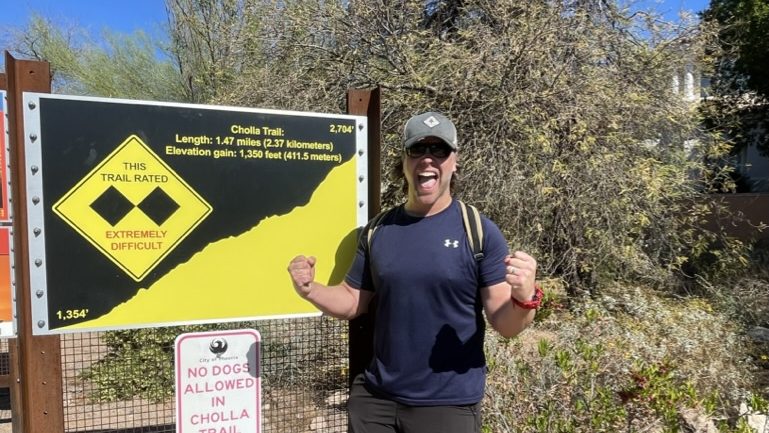
Happy April Fool’s Day! I just returned from a spring break trip with my family. The best thing I came back with was not relaxation or a tan. In fact, my vacations are rarely relaxing. I logged nearly 30 miles worth of desert hikes in Scottsdale and Sedona, Arizona. And my dermatologist would be happy with how much F-ing SPF I used. (Ok, so I don’t actually have a dermatologist. But I do pack a lot of derm, like a pachyderm)

Inspiration

What I came back from vacation with were more memories with my family, new inspiration, and more ideas. None of those things took up any space in my carry- on bag. In fact, the only souvenir I bought on vacation was a single ornament to hang on our Christmas tree. It’s a family tradition. And I’m traditional.

I saw new things. I ate new things. I explored new places that expanded my thinking.

I discovered businesses that made me think about businesses that I could start. And things I could introduce to The Weaponry, the advertising and ideas agency I lead.

People

I met new people at hotels, on planes, and on hiking trails. I also saw my cousins Cher Fesenmaier and Chawn Tipton who live in Phoenix, whom I hadn’t seen since our Grandma Albrecht’s funeral a few years ago. Which was a surprisingly fun funeral. After all, she was 99 and taught us how to have fun. Even at funerals.

Cher, Adam and Chawn in Tempe. Make sure to see your people in real life.

Reading

I finished a book on vacation. (The Splendid and The Vile) I started reading 2 new books. (Barbarian Days and Dave Grohl’s The Storyteller.) Everything you read helps make you more creative. It feeds your brain more material and creates more dots to connect. Vacations would be valuable even if you just stayed at home and read. Your dermatologist would probably like that too.

Appetizers

I got to really dig into some locations that I had only experienced as appetizers in the past. My mom taught me that short visits to new places are like having appetizers. If you enjoy the appetizer, you can come back for more another time.

Memories

Your most valuable possessions are your memories. They are like pieces of art, movies, photos and paintings that you hang in the museum in your mind. The more new experiences you have the more you fill the most valuable gallery in your head. That gallery serves as your perpetual source of inspiration when you need ideas, and as your perpetual source of entertainment and conversation starters when you don’t have the time or money to travel. You get to relive the experiences of your memories over and over in your mind. Even when you are too old, weak, or poor to travel and adventure.

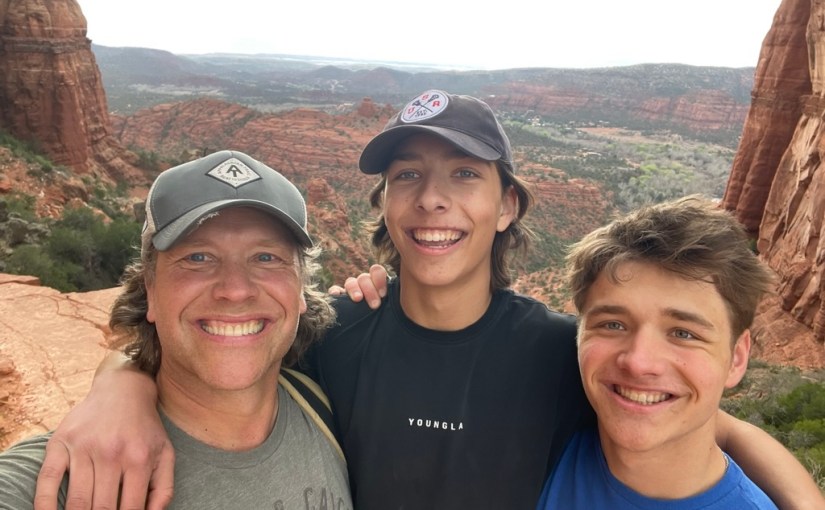
My people in Sedona. 10 out of 10. Can definitely recommend.

Key Takeaway

Make sure to take your vacation time. Use it to do new things. It enhances your creativity in immense ways. You collect new dots to connect to the other dots you already have. This helps you come up with new ideas and combine old ideas in new and novel ways. It expands your world and your thinking. It creates new perspective. It introduces you to new people. It gifts you new stories. And new reasons to laugh. It creates new memories. And sooner or later you realize that your relationships and your memories are your most valuable possessions. Your vacation days help you develop both.

*If you know someone who could benefit from this message, please share it with them.

+For more of the best life lessons I have learned check out my book, What Does Your Fortune Cookie Say? from Ripples Media.

From Surviving to Thriving: The Power of Daily Commitment.

I have a plant in my office. I inherited it 25 years ago from a coworker who was leaving the company and moving to Canada. I don’t think she was dodging the draft. If I remember correctly, she had a thing for men in uniform on horses. And Tim Horton’s.

The plant in my office hasn’t been faring well.

To be fair, I have been watering the plant just enough to keep it alive.

As a result, it looks like a plant that has been watered just enough to keep it alive. Like the office plant version of a Charlie Brown Christmas tree.

But a couple of months ago I altered my plant care routine.

I committed to watering the plant every day. Or at least every day that I was in the office.

And an interesting thing happened.

By day three, I saw a noticeable difference in the plant’s posture. The spindly little fella stood taller. The leaves looked fuller. And prouder. And chlorophyllier.

By day five, I noticed a new leaf beginning to grow and unfurl.

And then another.

And then another.

As I have continued to water, dozens of new leaves have emerged and added a great deal of canopy to this once-struggling office mate of mine.

It’s like I was feeding the little guy plant Rogaine.

Today, the plant is thriving. It is providing more beauty, more greenery, and more oxygen in my office.

But more importantly, it is providing a valuable lesson.

My plant has reminded me that there is a major difference between living and thriving.

The plant serves as a daily reminder that you can put the minimum effort into your relationships and get the minimum out. Or you can pour as much as you can into your most valuable relationships every day and watch them thrive.

The plant’s regeneration also reminds me that when you put more into your health, fitness, spiritual life, passions, career, business and financial well-being, you get more out of all of them. That’s a heck of a valuable lesson to relearn from an adopted office plant and a daily dose of water.

Key Takeaway

To get more out of life, put more in. Pour more into your valued relationships, your health, and your professional endeavors. And watch them all thrive. Pour more into your faith, and God knows what will happen. And don’t forget to water your plants. Because the things you take care of take care of you.

*If you know someone who could benefit from this message, please share it with them.

+For more of the best life lessons I have learned check out my book, What Does Your Fortune Cookie Say? from Ripples Media.

How to Develop a Growth Mindset Effectively, And Grow Baby, Grow!

When I was a little boy, I had a piece of needlepoint art in my bedroom. It depicted a little cowboy, like me, and the words, ‘Please by patient. God isn’t finished with me yet.’ It was my first reminder that who I was as a young boy was not who I was going to be as a full-grown adult. I just didn’t know that I would never outgrow my love for potty humor.

The Growth Mindset

As I grew older, I recognized how much I was changing, learning and growing. First, in elementary, middle and high school. Then, the growth and learning continued at The University of Wisconsin, where I majored in psychology, journalism and cheese curds.

But I liked learning, growing and developing so much that when I graduated from college, I enrolled in Adam Albrecht’s Self-Directed School of Life Long Learning. It’s where I have received all of my advanced degrees. The tuition at AASDSLLL is a great value. But our basketball team couldn’t beat a drum.

Lessons I Have Learned Along The Way.

I have learned that everyone adopts 1 of 2 mindsets.

Those with a fixed mindset believe their knowledge, skills, abilities and limitations are fixed and unchanging.

People with a growth mindset believe that they are continuously growing, evolving and improving. Which sounds way more hopeful. (Pro Tip: It’s also the mindset they are looking for at your parole hearing.)

A growth mindset means you recognize that what you know now is just a tiny percentage of what you could know.

A growth mindset means that you believe that you can feed your brain, your body, and your emotions with better inputs and get better outputs.

It means that if you currently stink at stuff, you are not condemned to a life sentence of stinkage.

It means that you have the superpower to transform yourself into a much better and more powerful version of yourself. Like Ironman.

A growth mindset means that every time you spend time with someone better than you are, their knowledge, skills and mindset rub off on you and make you better.

A growth mindset means that when you read a book, you reach the back cover smarter and more capable than you were when you lifted the front cover.

A growth mindset means you don’t say things like, I can’t or I don’t. And you don’t say Popeye stuff like, ‘I yam what I yam.’ What kind of sweet potato nonsense is that?

A growth mindset means that you see your self-improvement journey as an infinite staircase. The level, step or stair that you are on today is simply where you are today. You have the ability to take another step up in any area of your life, and by any measure you choose, any time you choose.

A growth mindset means having faith in the self-improvement process. Like George Michael. It means that small incremental gains will add up to have a transformational effect. Like compound interest in every area of your life that you invest time and energy into.

Leveling Up

When I entered high school, I was a 6-foot-tall, 150-pound freshman. During my 4 years at Hanover High School in Hanover, New Hampshire, no one spent more time in the weight room than I did. As a result, I graduated as a senior who was 6 feet tall and 215 pounds. (I couldn’t seem to do anything about the height. Maybe I have a fixed heightset.)

In my first track meet as a high school shot putter my freshman year, I finished 28th out of 30 throwers. My senior year I was the state champion.

During my freshman year, my coach didn’t think I was good enough to throw the discus in a meet. But, by the time I was a senior, I was a state champ, New England champ, and held the all-time state record in the discus. All of this happened because I could imagine it happening. So I put in the work to keep climbing that staircase.

How To Develop A Growth Mindset

The first step to developing a growth mindset is to visualize the best version of yourself. Imagine the greatest version of yourself you can conceive of. That is your ideal self. What you are today is your real self. It is the version of you that you have already realized or attained. Now, your job is to simply put in the effort to close the gap between your real self and your ideal self.

The Model And The Path

A growth mindset is simply having an open mind to your ability to improve yourself into someone greater than you are today. One of the best ways to do this is to find a model and a path.

A model is a person whom you aspire to be like. Pick a person you think has the skills, abilities, success, character or mindset that you want to have. (They don’t have to be an actual model, like Heidi Klum, Bella Hadid, or a T Ford.)

Then, examine your model’s path. Learn what work, steps, opportunities and influences helped them develop into the person they are today. (Or, if you choose a historical figure, focus on the path they traveled before they died. And decomposed.) Learn their helpful habits and routines. Learn about their knowledge sources. Which could be books, coaches, teachers, and role models. Learn about their experiences and influences.

Next, reproduce or approximate the helpful forces that pushed them to grow into the model you admire. This provides both a great recipe for improvement, and prevents you from having to reinvent the wheel. Or become a psycho stalker.

A Few Final Thoughts

A growth mindset is about experimenting. It is about adjusting variables to get better results.

A growth mindset means you give yourself permission to be an amateur. You can’t beat yourself up over all the things you don’t yet know or can’t do yet. By giving yourself permission to be an amateur, you allow yourself to start and put a premium on all the growth you experience along the way.

A growth mindset is about developing great habits. You are a product of your habits. Growth-focused habits have the power to help you improve every day. These include reading, practicing the skills you want to develop, time management, exercise, sleep, and gratitude.

Key Takeaway

To become the greatest version of yourself, you have to adopt a growth mindset. Imagine a version of yourself far greater and more capable than you are today. Then continuously work to close the gap. Allow yourself to be an amateur. Develop great habits that help you learn and grow. Experiment. Stay curious. Find someone who you want to be more like and discover their path. It will help you discover your own path to an even greater you.

*If you know someone who could benefit from this message, please share it with them.

+For more of the best life lessons I have learned check out my book, What Does Your Fortune Cookie Say? from Ripples Media.

To become a great problem solver, create backup plans for your backup plans.

I love meeting new people. And I love helping people solve problems. I got to do both of those things early one morning in 2016, and I still think about the story often.

The Story

I arrived at Hartsfield Jackson International airport in Atlanta just before 6:30am for a flight to New York City. I was flying to meet with Rachael Ray on the set of her TV show. I was neither a guest nor an audience member on her show. We were meeting between tapings so that I could present scripts for some new commercials we were going to film together. But as I stepped out of my car in the airport parking garage a panicked woman approached me saying, 

“I’m so sorry to bother you. But I just locked myself out of my car. My phone, purse, laptop and suitcase are all locked inside. I don’t know what to do.”

Talk about an exciting start to your day! The woman’s name was Kelly Harbin. She said she was flying to St. Louis on an 8:00 am flight. So we started going through our options. And yes, I said OUR options. Because as a professional problem solver, when someone brings me a problem, it becomes my problem too. Except for maybe hair loss. With hair loss, you’re on your own.

This was the scene that early morning at ATL when Kelly and I went into super solver mode.

So, like a couple of resourceful first-world problem solvers, we sprang into action! I pulled out my trusty smartphone, and we called the airport to see if they had an unlocking service. They didn’t. Boo. But they did offer us the phone number of a locksmith partner who may be able to help. Yay! 

So we called the locksmith. And yes, they could send someone to help. Yay! But not until  9:00am. Boo.

So we looked at other options. 

Me: Do you have a AAA membership?

Kelly: No.

Me: Do you have emergency services through your car manufacturer?

Kelly: No.

Me: Hmmm. Do you have any sevens?

Kelly: No. Go Fish.

Me: What time is your meeting in St. Louis?

Kelly: 11:00 am.

Me: So a later flight won’t work?

Kelly: No. And my company is counting on me to be there. We have built a technology product for this client and they are refusing to close the deal because they don’t understand it. I need to walk them through how the product works and solves their problem, or the multi-million dollar deal will fall apart! (Dun-Dun-Dun!)

Me: Do you have your driver’s license? 

Kelly: No.

Me: Why don’t we go see how we can get you through security without ID. (Heck, I got into bars in college all the time without an ID. How hard could it be?)

Kelly: (reluctantly) Let me check my car one more time just to make sure I’m not losing my mind.

At this point she walked back to her Ford Edge for another check. And I began searching on my phone for a Ford dealership that may be able to help.

A moment later she returned, slumped her shoulders and said, “You should go and catch your flight. And you can tell everyone on Facebook and Twitter that you met the dumbest woman in America. Because I have a Ford Edge. And the Edge has a keypad on the driver door.”

Me: Do you know the code?

Kelly: Yes.

Me: So you’re all set! 

 Kelly Yes!

At this point Kelly and I, strangers only moments ago, hugged, laughed and cheered on the top of the parking deck at the airport in the pre-dawn darkness. We celebrated our victory like we had just won the Showcase Showdown on The Price Is Right.


I made a new friend before 6:45am. Kelly made her flight. I got a test run on a valuable problem solving scenario. The Ford Edge got serious credit for a great problem-solving, flight-catching and potentially deal-saving feature. And as Kelly said, I got to tell all of my friends on Facebook, Twitter and LinkedIn about her morning. Kelly made the meeting! She closed that deal. And she no longer closes her car door until she has her key in hand.

Key Takeaway

Life presents an all-you-can-eat buffet of problems. The key is to become good at solving them. This means coming up with multiple ways to address the problem you face. The more solutions you consider, the more likely you will arrive at a great solve. And chances are, you’re problem isn’t as bad as you first thought it was. Just ask Kelly.

*If you know someone who could benefit from this message, please share it with them.

+For more of the best life lessons I have learned check out my book, What Does Your Fortune Cookie Say? from Ripples Media.