24 Important self-reflection questions to ask yourself at the end of 2024.

The end of the year is always an exciting time for 3 reasons.

  1. We get to reflect on our wins and successes from a good year, preferably with a Kip Dynamite fist pump.
  2. We get to leave a bad year behind the way Bill Murray sneaks away from Father Rat Farts after he gets struck by lightning in Caddyshack.
  3. We get to start a fresh new year full of hope, like Hope Solo.

Preparing For 2025

Now it’s time to prepare for a great 2025. Why prepare? Because great years, like great lives, don’t just happen. You make them happen.

A key element of living a great life is self-reflection. Asking yourself good questions is like conducting your own performance review. It’s a simple way to discover where you need to course correct, where your course is already correct, and where your corset could help correct.

If you don’t know what questions to ask yourself, you’ve come to the right blog post. Here are 24 questions to ask yourself now to prepare to make 2025 your best year yet. For best results, write your answers down. In fact, I created a Google Doc that you can print or make a copy of right here.

24 Questions In A Particular Order.

1. Am I educating myself? Getting better starts with getting smarter. Continue to self-educate and your knowledge, abilities, and competitive advantages will grow like compound interest. 
TheONEThing_Book1-525x525
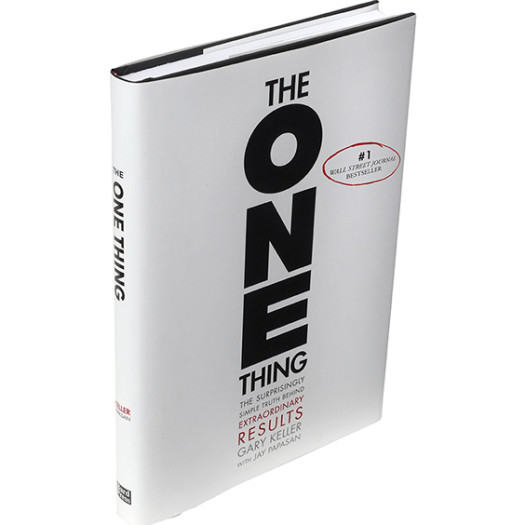
If you only read one thing in 2025, I suggest reading The One Thing.

2. Am I exercising enough? Your body is your life vehicle. Regular exercise keeps it in top shape. Which will allow you to travel further, faster and over rougher terrain without breaking down, like Tone-Loc.

3. Am I giving enough to others? Shel Silverstein famously wrote about The Giving Tree. But there is also a magical Giving Boomerang (perhaps made of wood from the giving tree). Because when you give your time, talent and treasure to others, good things come back to you in even bigger and better ways.  

4. Am I disciplined enough? Discipline is what gets the job done. If you are not doing the things you’ve committed to, or if you are not avoiding the things you should avoid, check your discipline. Remember, you only need enough to create a habit. Then the habit takes over and discipline can be deployed towards something else. Read James Clear’s Atomic Habits if you want to become great at developing great new habits.

5. Am I thinking big enough? The answer for 99% of us is no. So start thinking bigger! Think as big as you can. Think Elon Musky. Because bigger thoughts lead to bigger results. It costs the same amount to think big as it does to think small. But the return on your thinking investment is much different. You can always go bigger. #TWSS

woman draw a light bulb in white board
Photo by Andrea Piacquadio on Pexels.com

6. Am I taking the actions that matter most? Not all actions are created equal. Remember the 80/20 rule. Find the small actions with the biggest rewards. There are a lot of actions that generate very little results. Simply taking the right kinds of action (interacting with the right people for example) can change your life. For proof see Sliding Doors or Run Lola Run.

7. Am I getting better or getting worse? Check your trajectory. You are either headed up or down on every possible measure. The good news is that with all but some physical aging issues you can always improve your own angle through focused effort, commitment and mindset. 

8. Am I strengthening my network? Most people think far too little about the strength of their network. But take it from the mobile carriers, it is all about the strength of your network. Continue to develop and maintain meaningful relationships. Make as many genuine friendships as you can. When you do, your social, professional and political capital will continue to grow. Which opens you to more opportunities. Remember, opportunities come through humans. 

Some Milwaukee W-Club members flashing our gang sign. (I am very pleased with my font choice.)

9. Am I valuable to know? Do you add value to others? Are you kind, helpful, or inspiring? Do you offer access and connections? Are you are great listener? Really think about the value you offer others. The more value you offer, the more people will seek you out. And you want to be sought after. Just not by police. Or hitmen. Or Glenn Close.

10. Am I keeping my word? Trustworthiness is the bedrock of relationships, and the gateway to opportunity. Check your trustworthiness more often than once a year. Keeping your word is required on a daily basis. Like flossing and changing your undies.

11. Am I living into my vision for myself? You have aspirations. But simply having aspirations is not enough. You have to get yourself to the destination. You have to become the person you imagined, dragon. Do the doing, not just the dreaming. 

My son Magnus envisioning at Yosemite this summer.

12. Am I noticing those who need me? We all have people who need us. Family, friends, clients, employees, community members. Do you see them? Do you notice what they need from you?  Do you notice what you have to give?

13. Am I being present? Be now. This is all you ever have.

14. Am I taking care of my health? Have you seen your doctor and dentist lately? Do you have a doctor and dentist? How about a mental health specialist? A chiropractor? Take care of yourself. Because everybody needs a body.

15. Am I eating well? You are what you eat. Literally. Be mindful of your personal building materials. It makes a difference. Because you don’t want to look like Cheetos in your Speedos. 

16. Do I have a healthy way to de-stress? The world is an all-you-can-eat stress buffet. You need to have ways to rid yourself of the stress. Sleep, exercise and church are my go-to’s. Find your ways to de-stress best.

17. Am I spending enough time in nature? Spending time in nature is great for re-grounding yourself. A little quiet time with Mama Nature provides peace and perspective you can’t get anywhere else.

18. Am I getting enough sleep? Sleep is the great reset button. It enables you to regenerate your best self. Take advantage of it. Get as much as you need.

19. Am I finding joy in my work? Work fills half of your waking hours. Finding joy in work is finding joy in life. If you are not finding joy it is time for a change. A new approach, a new job, or a new career should be on the table. And a bottle of Joy should be on the counter next to the kitchen sink.  
Sprecher_SprecherSeason_1400x400_2

20. Does my boss value me? An unfair amount of your happiness is tied to your relationship with your boss. If you have a boss that values you and treats you well you have won half the battle. If not, make a change. Life is too short for bad bosses. 

21. Am I living a story worth reading? You only get one shot at life. Make it great. make it a story worth telling, worth hearing and worth reading.  

22. Am I positively impacting others? At the end of our days, the only thing that really matters is the impact we have on each other. Focus on making a positive impact and you will live a great life.

23. Am I laughing enough? This is the easiest way to measure happiness. Laughter is more valuable than money. Spend more time with the people who make you laugh. They will make you feel most alive. 
All Rights Reserved
All Rights Are Reserved. All Lefts Are Outgoing.

24. Am I investing enough in my most important relationship? Think of the one relationship that means more to you than any other. A spouse or significant other. A parent, child or sibling. A friend, partner or neighbor. Are you investing in that person as much as you should? Always give the most important people the most. 

Key Takeaway

Self-improvement starts with asking yourself good questions. You are a work in progress. Knowing what you should work on is how you make the progress.

*If you know someone who would benefit from these questions, please share this with them.

Here is the link to the Google Doc with the 24 questions. Plus some bonus questions. Because you should always give more than others expect.


+For more of the best life lessons I have learned check out my book, What Does Your Fortune Cookie Say? from Ripples Media.

Why Everyone Needs a Wish List Beyond the Holidays

This holiday season many people have a wish list.

This is a list of things that you would like to have.

Or used to have. But you lost it. Like that loving feeling. Now it’s gone, gone, gone.

You share your wish list with the people who are apt to give you a gift.

Usually this is your family or friends.

But sometimes, it’s a bearded dude in a red suit who leads an army of magical elves.

(And sometimes that works out far better than logic would indicate.)

The wish list does 2 valuable things:

  1. It forces you to think about the things you need and want.
  2. It helps others get you the things you need or want.

But a powerful tool like a wish list shouldn’t be limited to the holidays.

And it shouldn’t just be something you offer other people.

You should create a wish list for yourself.

It should include the things you would like to have. Both needs and wants. Big and small

The things on your wish list could be:

  • Material
  • Psychological
  • Emotional
  • Physical
  • Spiritual
  • Relational
  • Financial
  • Brown paper packages tied up with string

By creating a wish list, you are identifying the things that would improve your life.

Once you know what those things are you can pursue them.

You can attract them.

You can recognize them when you see them.

You can appreciate them when they arrive.

This wish list can be used to improve your personal life.

But it can also improve your professional career.

Or your business.

Or your community.

Or your wardrobe.

Because when you become clear on the things you really want, you create your own gravitational pull.

That’s when the things you really want find a way to find you.


*If you know someone who could benefit from this message, please share it with them.

+For more of the best life lessons I have learned check out my book, What Does Your Fortune Cookie Say? from Ripples Media.

How To Prevent Holiday Weight Gain: Tips to Stay Fit

Happy Holidays! And welcome to the most wonderful time of the year. But if you have ever wondered why this time isn’t so wonderful on the waistline of your Wonderoos, you are not alone.

The November through January holiday corridor is where Americans gain the most weight. On average we gain a little over 1 pound. While the amount isn’t whaley, the problem is that most people don’t lose that weight. When you gain 1 pound at the holidays every year, the cumulative effect will have a negative impact on how you feel about yourself in your birthday suit.

According to Thomas Rutledge, Ph.D., Professor-in-Residence in the Department of Psychiatry at UC San Diego, there are 3 things you should do to avoid the annual holiday plumping.

  1. Increase your physical activity above your baseline level.

A study published in the New England Journal of Medicine looked at the weight of 3 groups during the holiday season. (With the whoop-de-do. And dickory dock.)

The first group decreased their physical activity. And these Merrymen and Merrywomen gained 50% more weight than the average weight gainers. And they shook when they laughed, like a bowl full of jelly.

The second group maintained their normal physical activity, like Steady Cousin Eddies. Unfortunately, this group gained only slightly less than the average of everyone in the study. Who knew?

The third group was “much more active” than normal. Think of that as 50% more active than normal. Which could mean taking 50% more steps than usual, or increasing the number of workouts per week by 50%, or extending their workout time by 50%. Or maybe they rocked around the Christmas tree 50% harder. Or they took 50% more Dreidel Spin classes.

This was the only group that not only did not gain weight, but actually trimmed up while trimming the tree. This is why the Turkey Trot is such a good idea. You burn your calories to earn your calories. This is a great approach this time of year.

2. Weigh yourself every day during the holidays.

In independent studies published in 2018 and 2019, regularly scaling your scale was shown to effectively prevent holiday weight gain. This means that instead of burying your head in the powdered sugar, you should face the scale every day. Because knowledge is power. And if you overdid the eating the day before, today you can underdo it to rebalance the scales. Literally.

I weigh myself every day, and track my weight on an app called Happy Scale. This allows me to see my daily weight loss trend, and take the right actions to correct for small weight gain before it becomes a big deal. (And before I become a big deal.) It also provides positive reinforcements for my good eating choices and physical activity.

Essentially, I am trying to create calorie-negative days through a combination of food intake levels and activity. Weighing myself every day is the best thing I have done to help minimize or eliminate long-term weight gain. I have found there is nothing more powerful than the long-term graphical evidence I have accumulated over the past 3 years of my body weight highs, lows and averages. I have learned to trust my proven process. Because it’s proven. And Groovin.

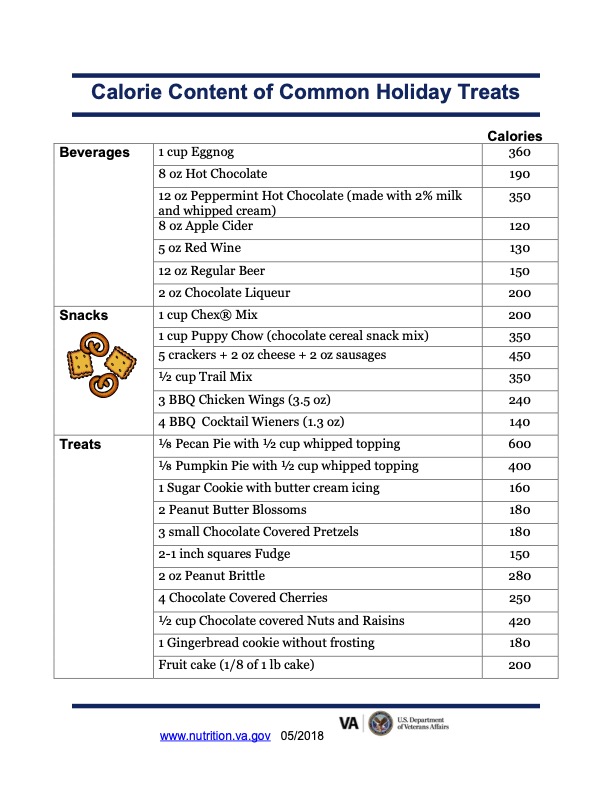
3) Review Holiday Food and Drink Calorie Information.

Holidays foods and drinks are different. Many of them are plum full of calories, like plum pudding. You should know how many calories are in those cookies, hot chocolate, cheesecake and eggnog before you nog them back. It will help you make better choices, and determine which treats are worth the splurge, Virg.

Here’s A Quick Calorie Content Reference Chart.

Key Takeaway

The happiest holidays are the ones that help you start the new year fitter, not fatter. So make sure to increase your physical activity over the next 2 weeks. Get on the scale every morning for motivation to make good food and activity choices the rest of the day. And arm yourself with caloric information about your go-to holiday treats, so you can budget your calories effectively. By avoiding a one-pound weight gain this and every holiday season, you will reap the benefits for a lifetime.

*If you know someone who could benefit from this message, please share it with them.

+For more of the best life lessons I have learned check out my book, What Does Your Fortune Cookie Say? from Ripples Media.
My book just turned 3 years old! Here are 10 ways it has changed my life.

I have dreamed about writing a book since I realized people did such things. As a kid, I knew Dr Suess did it. So did Laura Ingalls Wilder. And Judy Blume got crazy with it. But it seemed super hard. And time-consuming. But in March of 2020, I took the pandemically-induced gift of time, and started writing. And like a literary Forrest Gump, I just kept write-ing and write-ing. Today, my little paper baby, What Does Your Fortune Cookie Say? is 3 years old! The book shares 80 of the best life lessons. Now, I have taken a moment to reflect on how writing this book has impacted my life.

10 Ways writing a book has positively impacted my life.

  1. I learned I can do hard things. Doing hard things demystifies the hard things you do. Yes, writing a book requires a lot of time, energy and focus. But it requires a little bit every day, not a full deposit at one time. Writing a book is actually like running 3 marathons. A writing marathon, a publishing marathon, and a marketing marathon (which only ends when you stop promoting your book.) I wrote more about it in this post. I enjoyed the process. It was not too much for me. And it’s not too much for you either.

2. I have earned a new level of respect. Our society respects published authors. I think it’s because you have done something that other people know is hard. And it indicates that you have a deep level of knowledge in a specific area. Or that you are both creative and disciplined. #createiplined I consider being a published author The Poor Man’s Ph.D. (Or Poor Woman’s Ph.D.) Because when you add author to your title it earns you a higher level of respect. (I always say respect like Ali G says respek!)

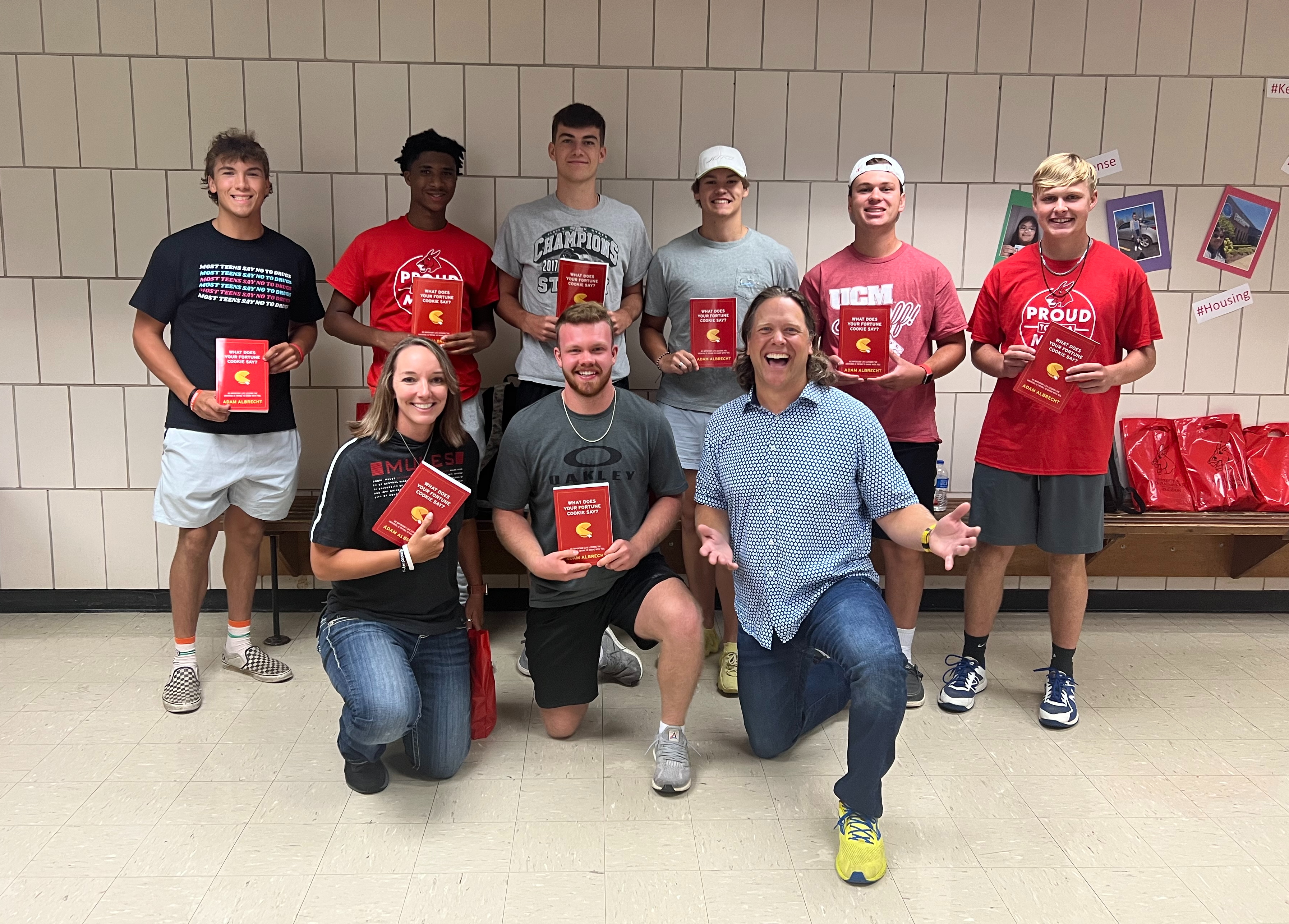
3I get hired to speak. Since publishing my book my speaking requests have quadrizumpled. (Which is a Mary Poppins-like way of saying ‘greatly increased’. I have traveled all over the country speaking at conferences, symposiums, company meetings, association events, rotary clubs, chamber of commerce events, and schools. I love speaking. For me, it’s right up there with smiling and chocolate milk.

4I have made money. Between book sales and speaking engagements, my book has become a source of income. It’s cool to have a product that you only have to create once, but you can sell over and over again, like Nelly and Tim McGraw.

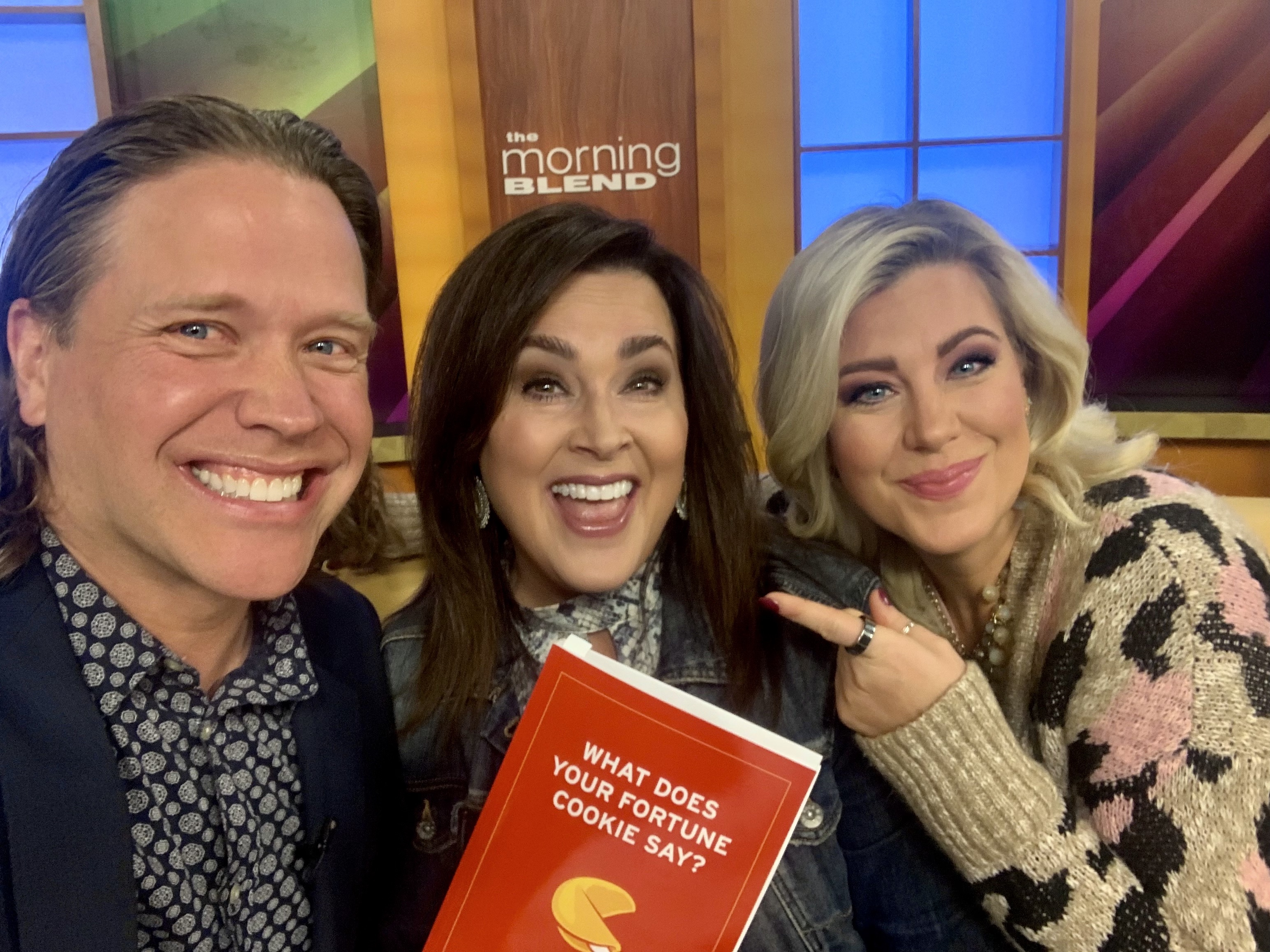
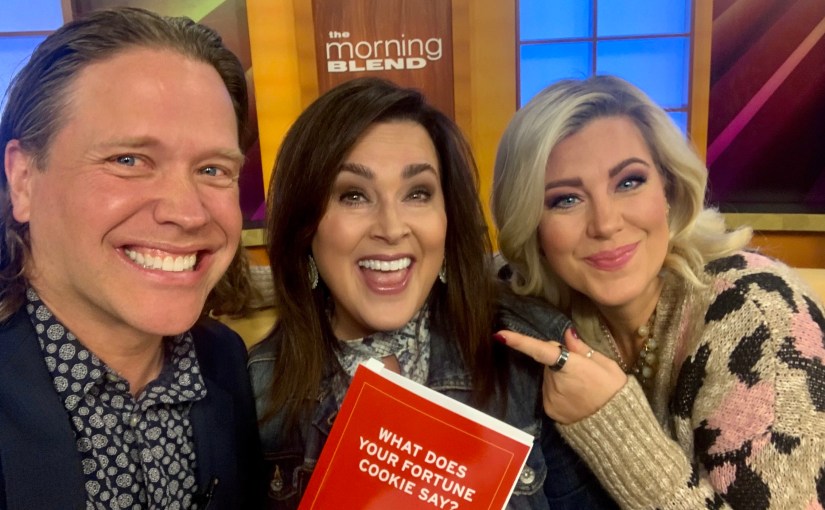
5. I get invited to be a guest. Since publishing my book I have been a guest on countless podcasts. (OK, I could probably count them if I tried really hard, but I haven’t.) I have also been invited to be a guest on the Milwaukee morning show The Morning Blend on NBC countable times: About 8 to 10 appearances.

6. I have been quoted. A cool result of writing a book is that I have been quoted on social media by people I don’t know. I have been alerted of mentions of my name, and when I followed the thread I realized that people I didn’t know shared quotes from the book. I have reached out to some of these people to thank them and find out how they read the quote. Some of them read the book. Others googled for quotes on positivity or other such positive terms. It’s pretty cool to have your work spread like that. Now I know how Jif and Skippy feel when people spread their work.

7. I attend book club discussions. I have never joined a book club. Perhaps because I am a dude, And book clubs have historically seemed less dudey. But I always thought they seemed like a cool idea. Now, every time I hear of a book club reading my book I volunteer to attend the discussion. It’s enjoyable to have conversations with people who read your book critically. And I love it when people share their favorite funny lines from the book. #DepecheMode

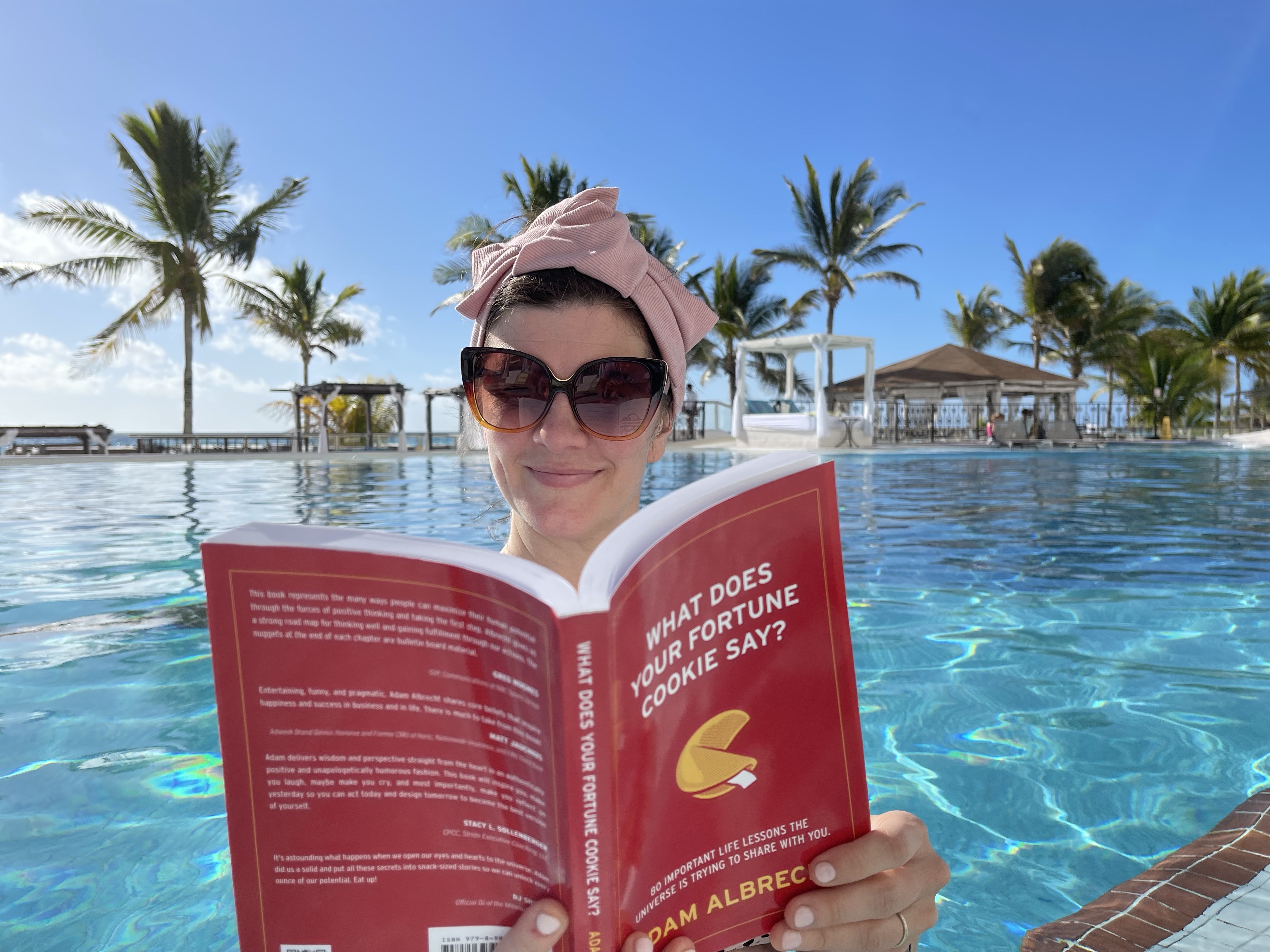
8I have seen pictures of my book all over the world. Ok, so not North Korea or Antarctica. But, you know, a lot of cool places. People often take my book on vacation and enjoy reading it in some spectacular locales. Then they send me pics or tag me in photos. It is safe to say my book has been to more interesting places than I have.

9. I can buy my book from any bookseller. Initially, my book was only available on Amazon, from my publisher, Ripples Media, or from the trunk of my car. However, now, you can order my book from virtually anywhere. All the online booksellers that I have ever checked now carry it. And all independent bookstores can order it too.

10. I am motivated to write another book. And now I know how to get it done. Now, it’s a matter of when. (I actually already know that too.)

Key Takeaway

Writing and publishing my book has added to my life in many positive and rewarding ways. And the impact continues to compound. Yes, it takes work. But the payoff has been well worth it. If you have considered writing a book I strongly encourage you to do it for real. I am happy to share everything I know. Although the key is to simply open a Google document (or Word doc) and start writing. Then write a little more every day, just like Elvis Costello said.

If you are still looking for a great Christmas present that doesn’t break the bank, please consider giving What Does Your Fortune Cookie Say? If you read this too late to be delivered and you live in the Milwaukee area, reach out to me directly at adam@theweaponry.com. I can hook you up with a signed copy, even up to the last minute. Boom!

*If you know someone who could benefit from this message, please share it with them.

I never expected to be a football coach. 7 seasons later, I am a better parent and leader because of it.

I never wanted to be a coach. Some people are innately drawn to it. I am not. I thought it was a cool role for other people. But I just wasn’t that into whistles and sweatpants. When I graduated from college, I fully expected to never be involved in sports again, other than as a fan. Even after I had 3 kids, I never expected to coach them at any level. I didn’t feel like I knew anything well enough to coach. Except maybe being a class clown. But I felt I could teach that through more of a mentoring relationship.

So it is very strange to realize that this fall I wrapped up my 7th season coaching my son Magnus’ football team. So, how did this happen? To find out we’ve got to go back in time, like Marty McFly.

In The Big Inning…

Like most things, my coaching career started very small. When Magnus was in first grade, we signed him up for flag football. At that level, the teams practiced for one hour and then played a game for one hour on Saturdays in the fall. At the first practice-game the two guys coaching Magnus’ team asked me if I could help out the following week because one of them was traveling. I was happy to help. And I felt like a helper more than a coach. Plus the kids were in Kindergarten and first grade. So they wouldn’t be fact-checking my coaching.

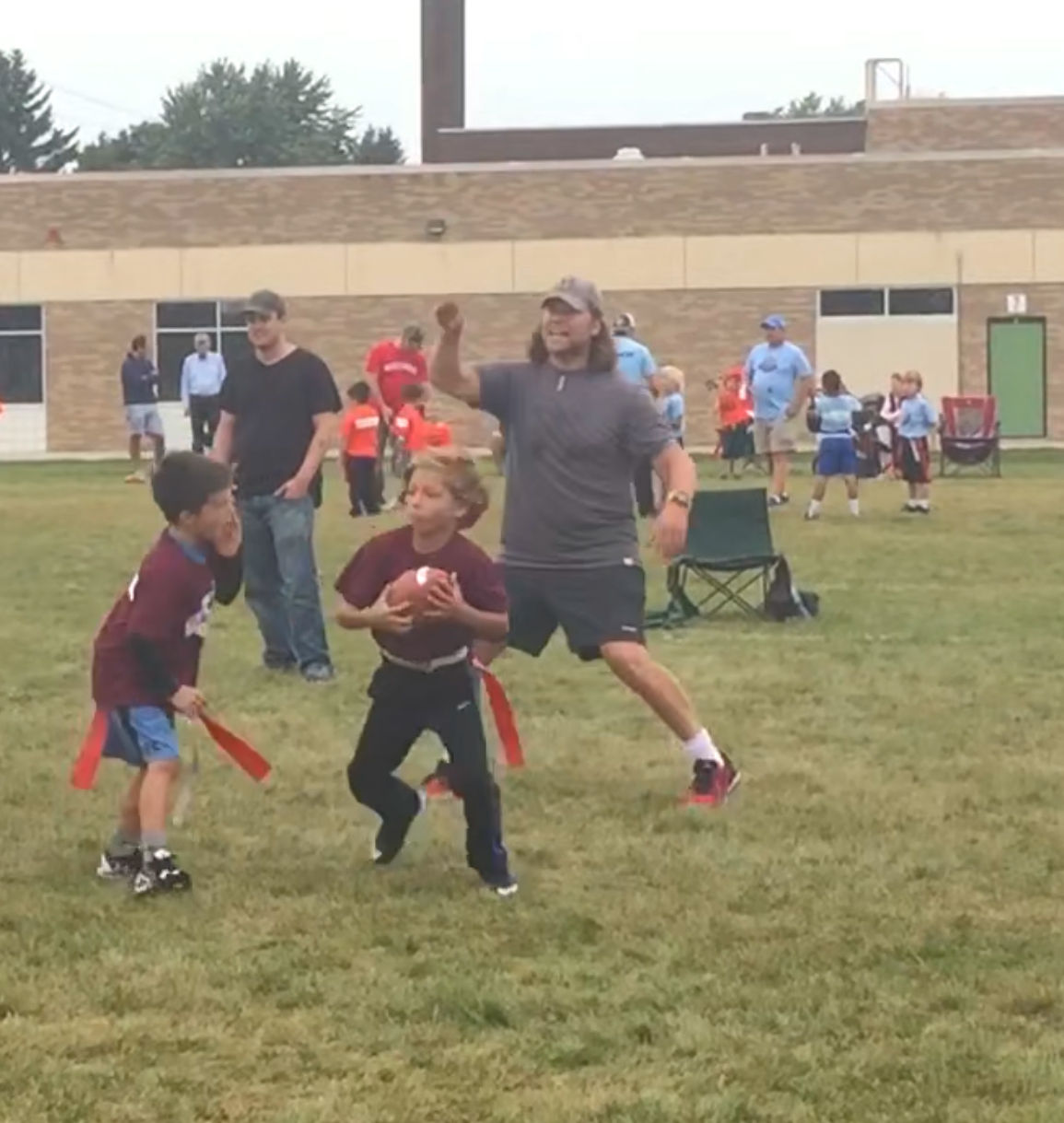
Magnus carrying the ball in 1st grade, when I could point where I wanted the players to go.

That Saturday’s practice-game went well. I had fun. Magnus enjoyed having me involved. None of the kindergartners asked to be traded or held out for more NIL money. So I became the third coach on the staff, helping whenever I could the rest of that cute little 6-week season.

Stepping Up A Notch

When Magnus entered 2nd grade, the program was looking for more parents to coach. My wife Dawn encouraged me to volunteer. So I got paired with another father. And we had a good time. Again, this was just 2nd and 3rd graders with one practice-game combo pack each week on Saturday mornings in the fall. And we were literally on the field placing each player in position and whispering in their ear what we wanted them to do. It was kinda like playing chess with tiny humans. Even better, the play didn’t start until the coaches said they were ready. The hardest part was organizing which parents were bringing the snacks.

Magnus and Me in our second season together. That’s a happy father/son combo pack.

Gaming The System

By 3rd grade, I realized that you could choose to pair up with another coach to lead a team. And when you did that, it allowed you to stack your team with 2 good players. So my great friend Dr. Mike Brin and I teamed up to coach. DMB played football for the University of Wisconsin Badgers, and we had been friends since we were teenage college athletes in Madison. Mike’s son Josh ‘Aquaman’ Brin was a talented and enthusiastic athlete. Josh and Magnus gave us a strong nucleus to build a team around. Kinda like D-Wade and Chris Bosh. We were lucky enough to land a few other really talented second and third graders, and we had a fun and successful season, even before the snacks.

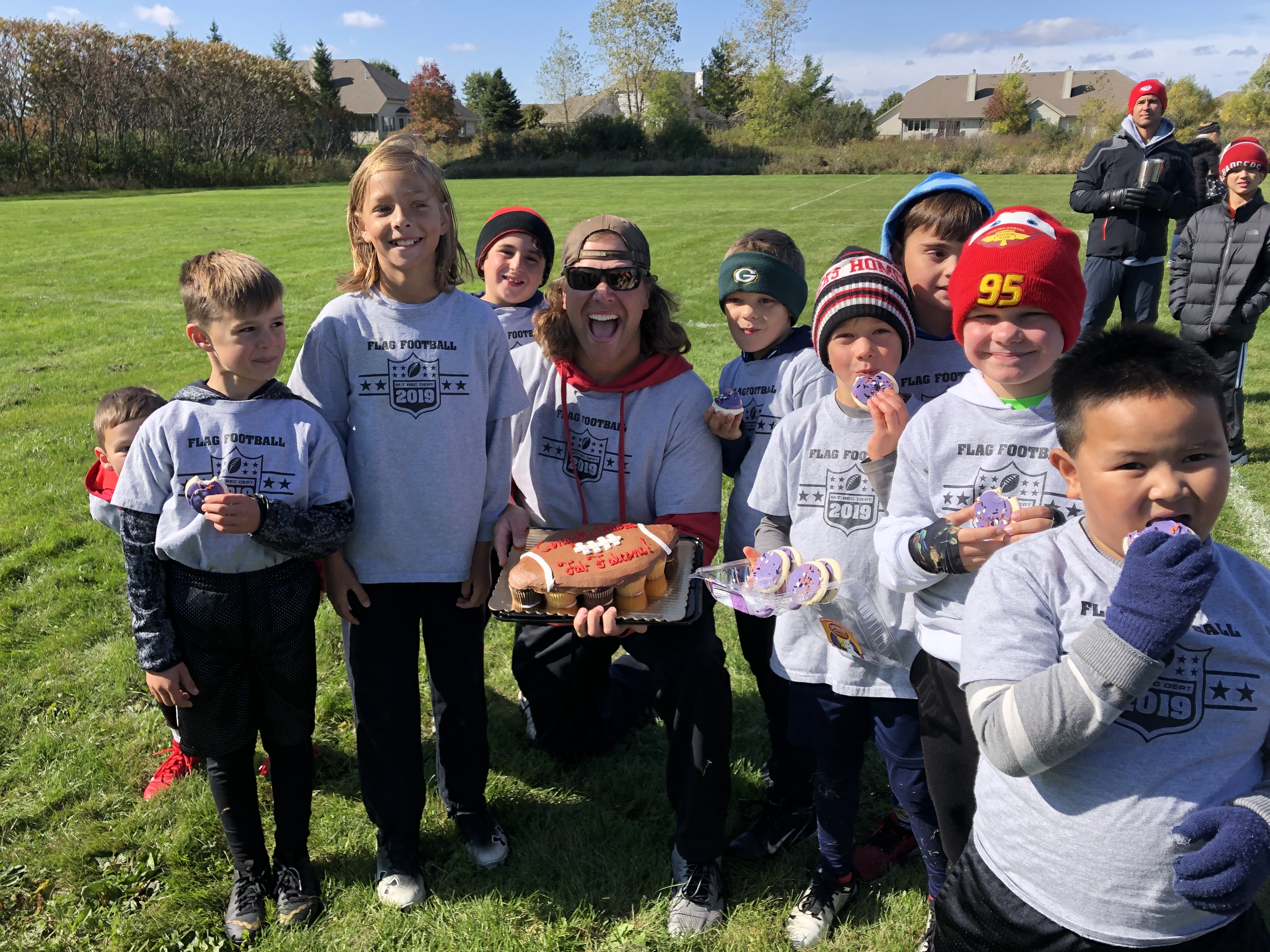
Season 3. We were really upping our snack game by then.
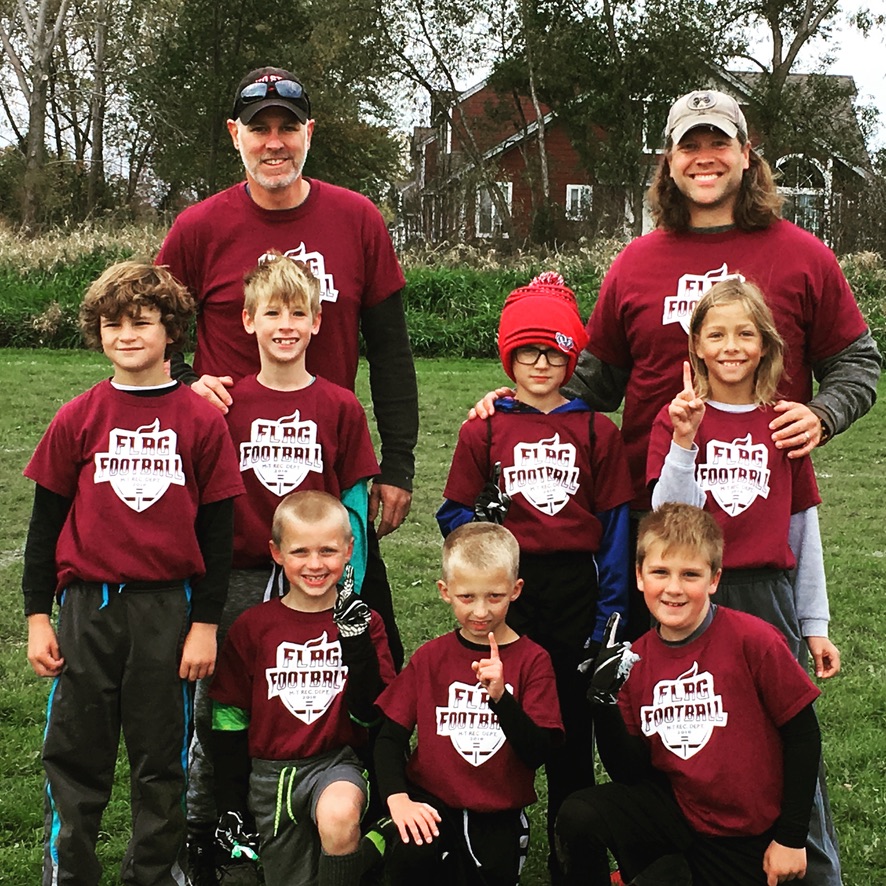
Me and Magnus, Mike and Josh Brin, Josh and Hudson Hunt. All 3 of the guys in the back row were UW Badger athletes, which meant we knew how to recruit. (You do it with cupcakes.)

The Curve Ball

In 4th grade, COVID-19 hit. And the program was canceled for the year. Boo. But Magnus was desperate to play football. So we were allowed to enroll him in the 5th grade Mequon-Thiensville Cardinals tackle football program, where he played up a grade as a tall and eager 4th grader. The boys played with face masks over their face masks, which looked funny and may have had no practical effect, but it made everyone feel better about playing football during a global pandemic. No kids got sick. And I got to sit in the stands, 6 feet apart from other fans, and cheer through a mask like a normal COVID-era parent.

At this point, I thought I was finished coaching. I enjoyed the season as a fan only. (Not to be confused with Fans Only.

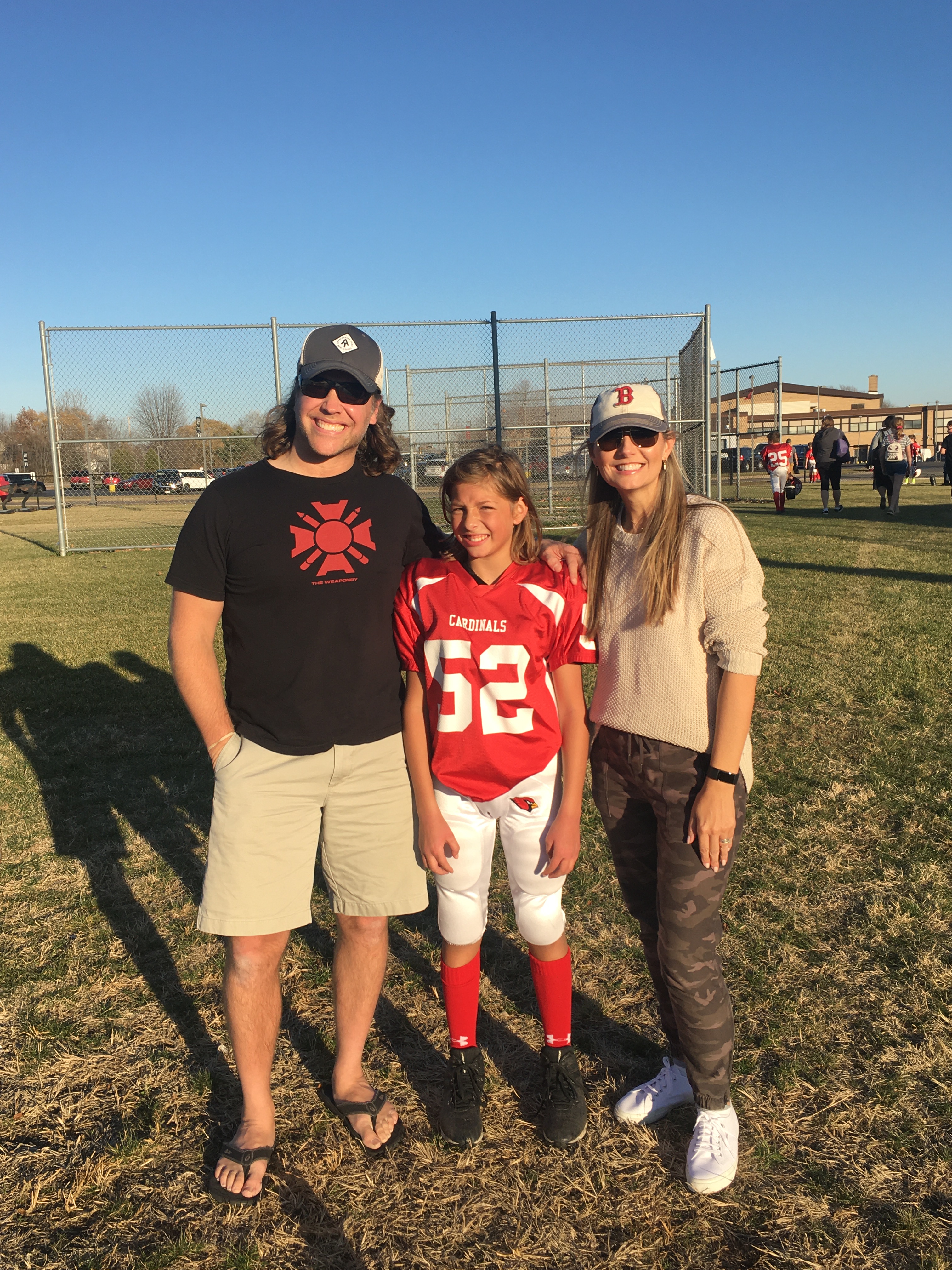
When Magnus was in 4th grade, he played tackle football with 5th graders, And I got to cheer in the stands with Dawn. I also got to wear flip-flops without a fear of getting cleated.
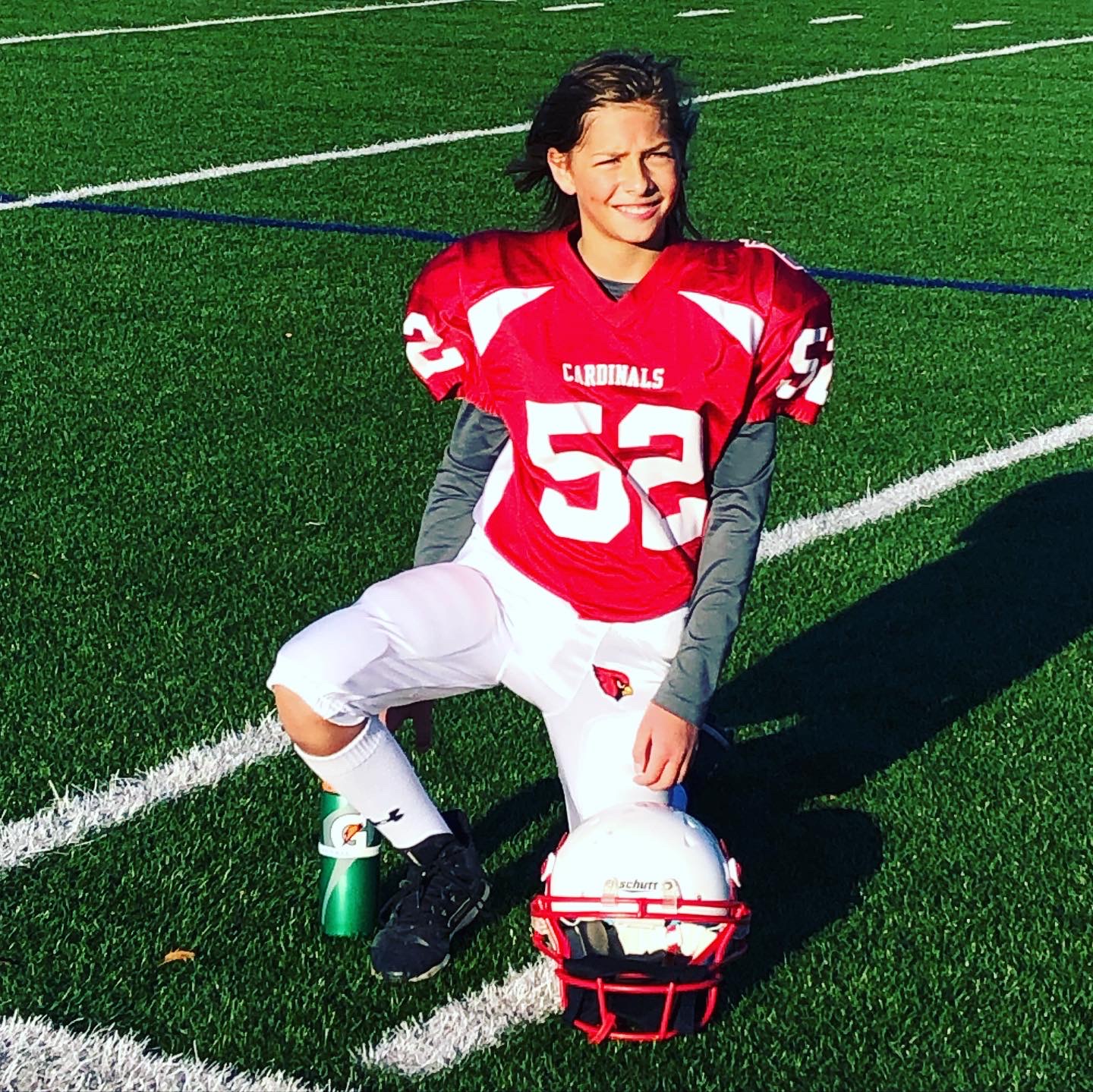
Magnus and a little wind machine for the hair.

Back On Track

That spring, I made a much bigger coaching commitment and started coaching high school track and field. My daughter Ava Albrecht was a freshman at Homestead High School in Mequon, Wisconsin. And I knew that I knew more about throwing the discus and putting the shot than most Mequonians. The flag football coaching experience made me think I could handle track. After all, when you coach throwing, you simply coach technique. There is no strategy. Or defense. Or concussion protocol. Go track!

Tackling Tackle Football

When Magnus entered 5th grade I was asked to help coach his tackle football team. I was reluctant because of the time commitment, especially on the heels of a long track season that went almost to July and left me with just 1 month without coaching obligations. But my coaching confidence was growing. So, I agreed to coach part-time. I was another warm body there to supervise kids and help run drills. I cheered a lot. And I tried to make it fun. For much of the season we only had 16 kids available. So we could only run 8 vs 8 scrimmages. Which was pretty silly. But I like silly.

5th Grade. And We’re back together for Cardinal Rules football.

Jumping Into The Deep End Of The Pool.

When Magnus entered 6th grade my friend Josh Hunt volunteered to become the team’s head coach. Josh played football at the University of Wisconsin and had a lot of coaching experience. He asked me if I would be willing to be the defensive coordinator for the team. I agreed. Because Josh is a nice guy and didn’t seem like the type to burn my house down if I made some mistakes.

Realer Than Real Deal Holyfield

That’s when coaching got real. The slow build of casual coaching obligations helped lead me to a very real coaching position. Suddenly, I would be preparing for every week by watching game film of the teams we would be playing that week. I sketched out every unique formation and play the upcoming opponent ran, noted who carried or caught the ball, how frequently they ran each play, and generally how effective it had been. This represented a huge increase in both my time commitment and my emotional investment. I started to understand why Bobby Knight threw chairs and why Mike Leach went off on a seemingly insane rant about the players fat little girlfriends. Now I certainly don’t condone their behavior. But I started to understand it.

In practice, I taught our team the opponent’s plays and devised strategies to defend against them. Then, on Sundays, I watched our own game film from Saturday and marked up all of the footage on software called Hudl to show what we did right, what we did wrong and how to do things better the next time. I learned that those 3 lessons are the basic pillars of coaching.

I spent more time than I care to admit watching game film, preparing defensive strategies and developing lineups each week. It was a significant commitment. But I loved coaching this group of boys. And I loved spending so much additional time with Magnus.

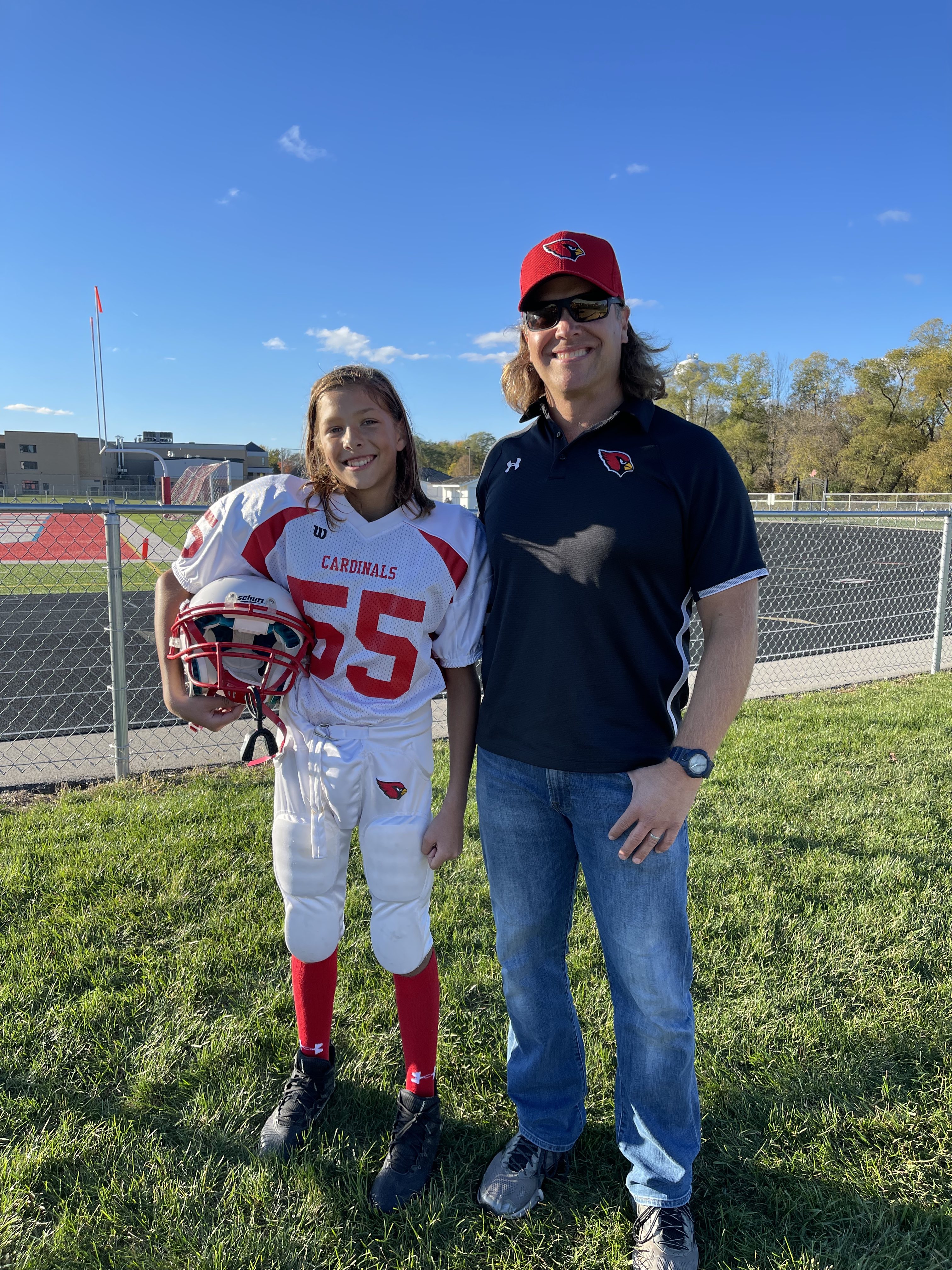
6th Grade. And one of my favorite photos. If you look closely you can see my knee next to Magnus’ (#55)

So I raised my hand to do it again in 7th grade.

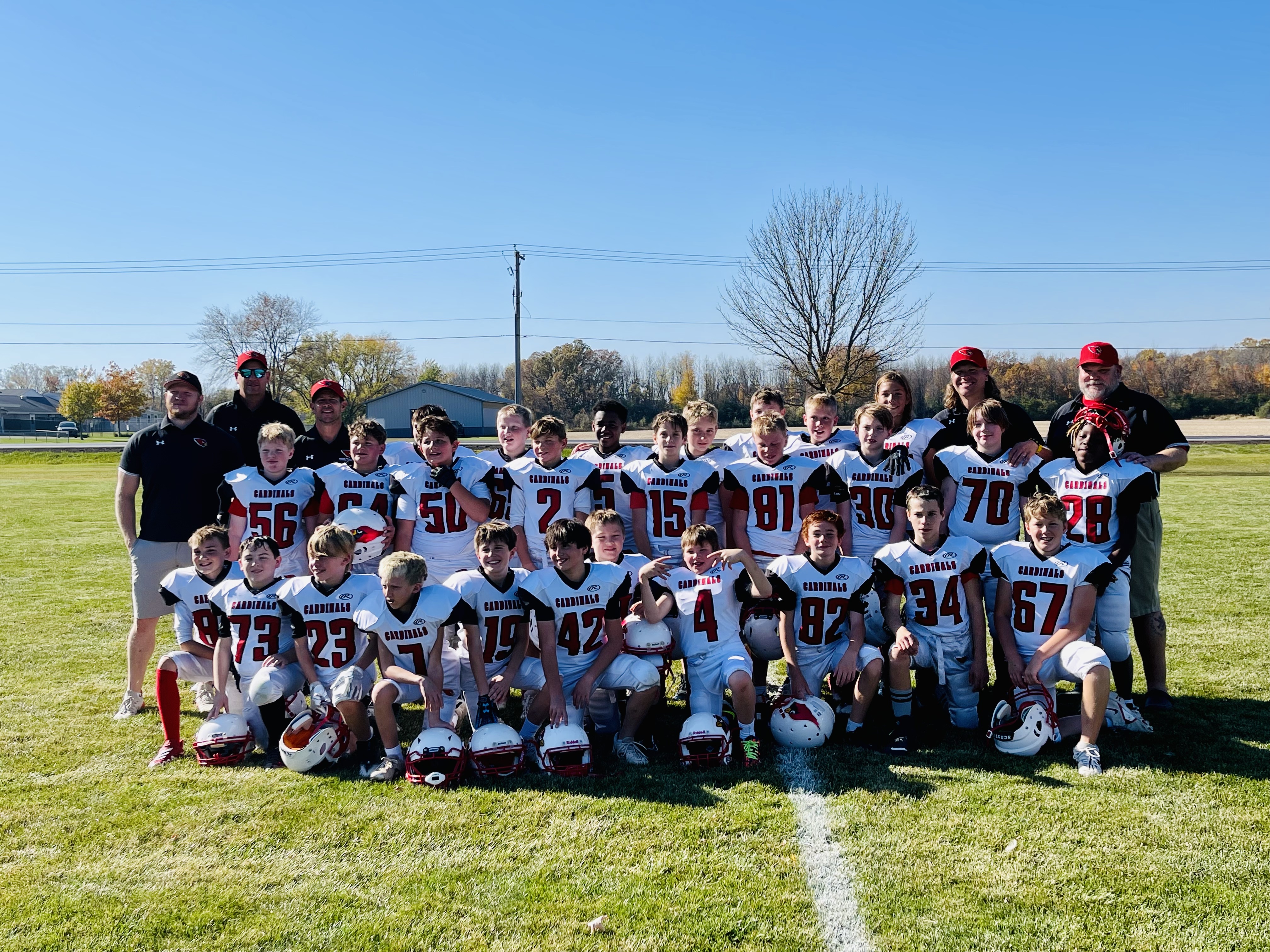
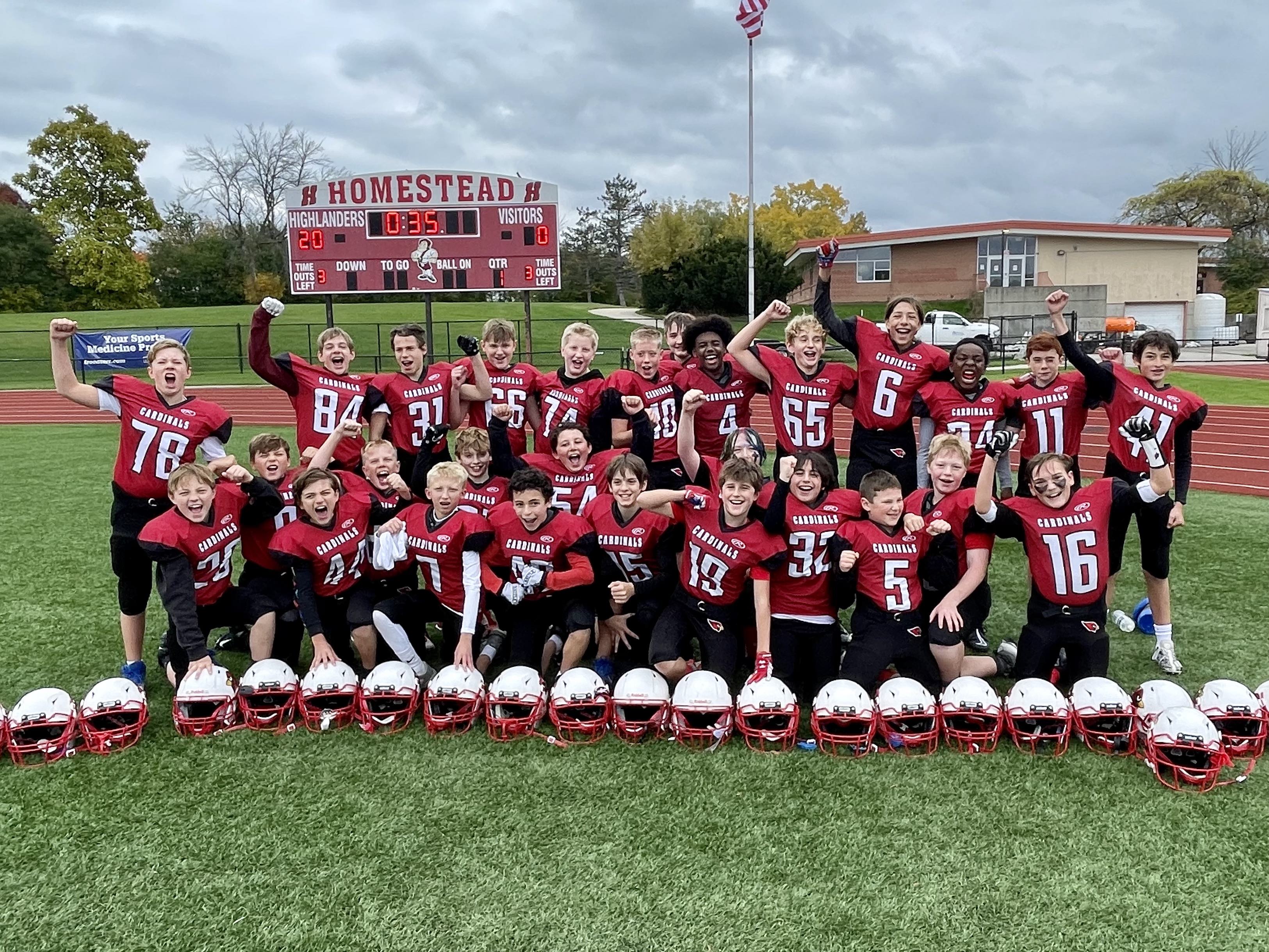
We had a great season in 7th Grade. This was after our last game of the season. Every team should end the year feeling like this.

And again in 8th grade.

For the past four years, from August through October, football has been an intense focus for me. I felt the pressure that comes with being an amateur coach in a high-profile team sport like football. So I prepared as much as I could to help give the boys an edge in the games. Sometimes it really helped. Sometimes it didn’t seem to help at all. This was either because our opponent was so good at doing what they do that we couldn’t stop them, or because they were bigger, faster and stronger than us, and we couldn’t stop them. But either way, I always felt as if I did all I knew to do to prepare our team for each game. And I learned a little from each win and each loss. Which meant that I found a way to win no matter what the outcome was.

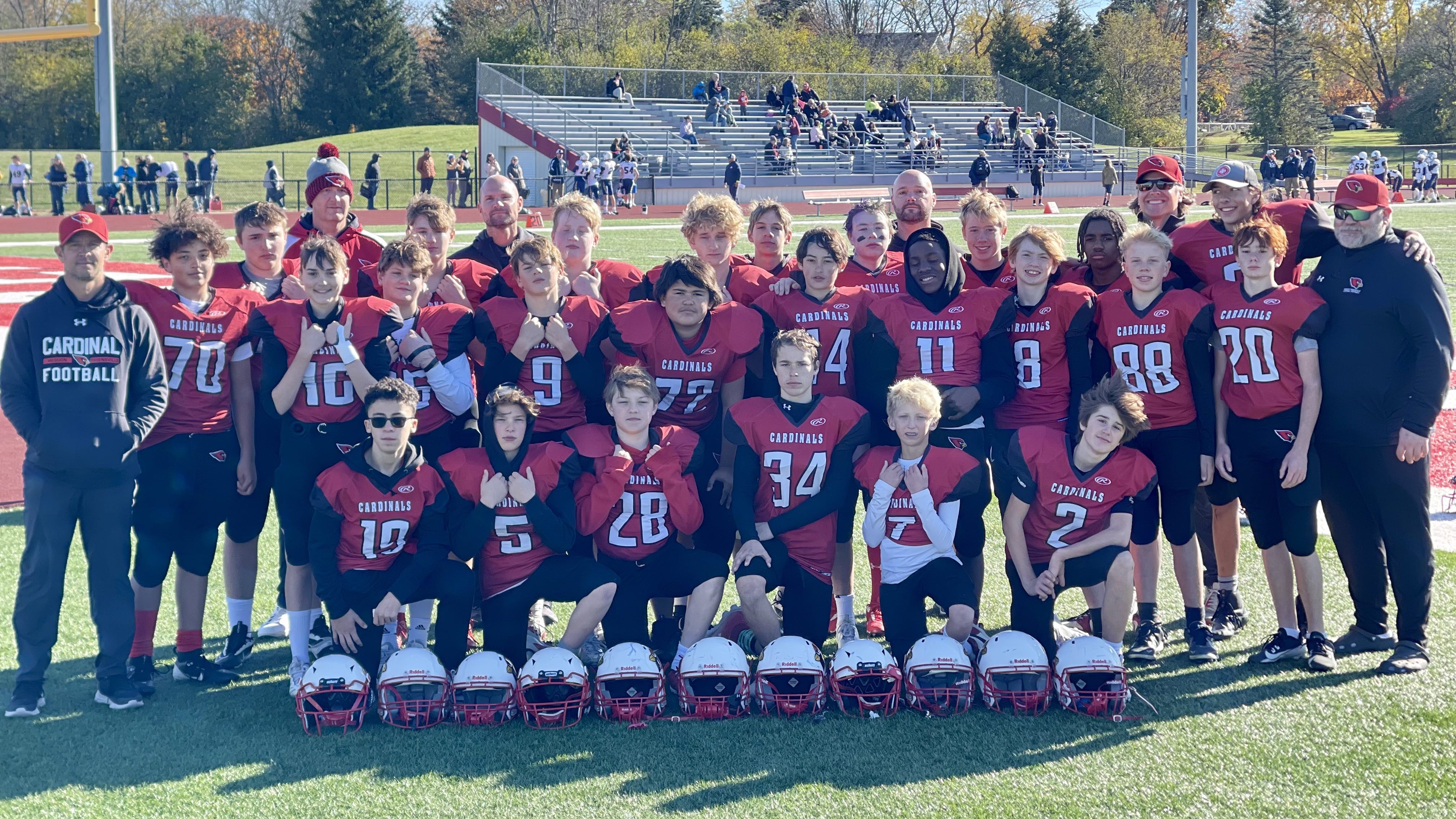
Magnus’ 8th grade season. My last year coaching football. And the first time Magnus was taller than me..

The 10 Best Things About Coaching Football.

1. Winning. There is nothing quite like winning a team sport.

2. Being called Coach. For years, I have been called Coach in our community. It’s always fun and surprising for someone who never expected to coach anything to be called that on the sidewalk, in the schools, and in stores and restaurants. It feels both respectful and as if you had a positive influence on a child’s life. It also makes me feel like I should be wearing a whistle everywhere I go.

3. The Brotherhood: Seeing these boys support each other and coming together as a strong team is amazing. Hearing the stories of them sitting together at lunch at school is rewarding. And knowing how close I still am to the guys I played football with makes me excited for them and the relationships they are forging through their collective football experience.

4. Hearing our defense call out the opponent’s offensive formation and the play they are about to run during a game. It meant the boys were paying attention in practice, they recognized what they were seeing and were prepared to defend the play. I loved that.

5. Stops in the backfield: Quarterback sacks and stuffed runs were the big wins for a defensive coordinator. We have had plenty of those over the past few years. It was a thrill every time.

6. Blocked Punts and Kicks. These have a huge impact on the game. They are magical gifts from heaven. Magnus had a slew of these during his Cardinal football career. And I discovered that a slew is the same amount in both the English and Metric system.

7. Interceptions: These are mission-accomplished plays. They are never not exciting.

8. The Funny Kids: Football is a serious game. But I love the kids who brought their sense of humor to practice and made us all laugh. The funnies often create stronger memories than the wins.

9. The Intense Kids: These kids set the tone for the team at practice and in games. They helped get the team mentally prepared to go to work. I always admired the mentality these winners brought to the field.

10. The Respectful Kids. The kids who responded to all coaching with Yes, Coach and No Coach, who looked you in the eyes, and who asked intelligent questions were a pure pleasure to work with and a sign of good parenting.

Key Takeaway

If you have a chance to positively impact the lives of kids, do it. Coaching, mentoring, volunteering, teaching, chaperoning. All of it helps. And you will get just as much out of it as the kids. Our youth can never have too many positive adult influences in their lives. And you gain by sharing your time, talent and knowledge with others. Don’t worry that you don’t know enough. Raise your hand and learn as you go. That’s what I did. And I can’t imagine my life without this chapter, these experiences, and these boys.

*If you know someone who could benefit from this message, please share it with them.

+For more of the best life lessons I have learned check out my book, What Does Your Fortune Cookie Say? from Ripples Media.
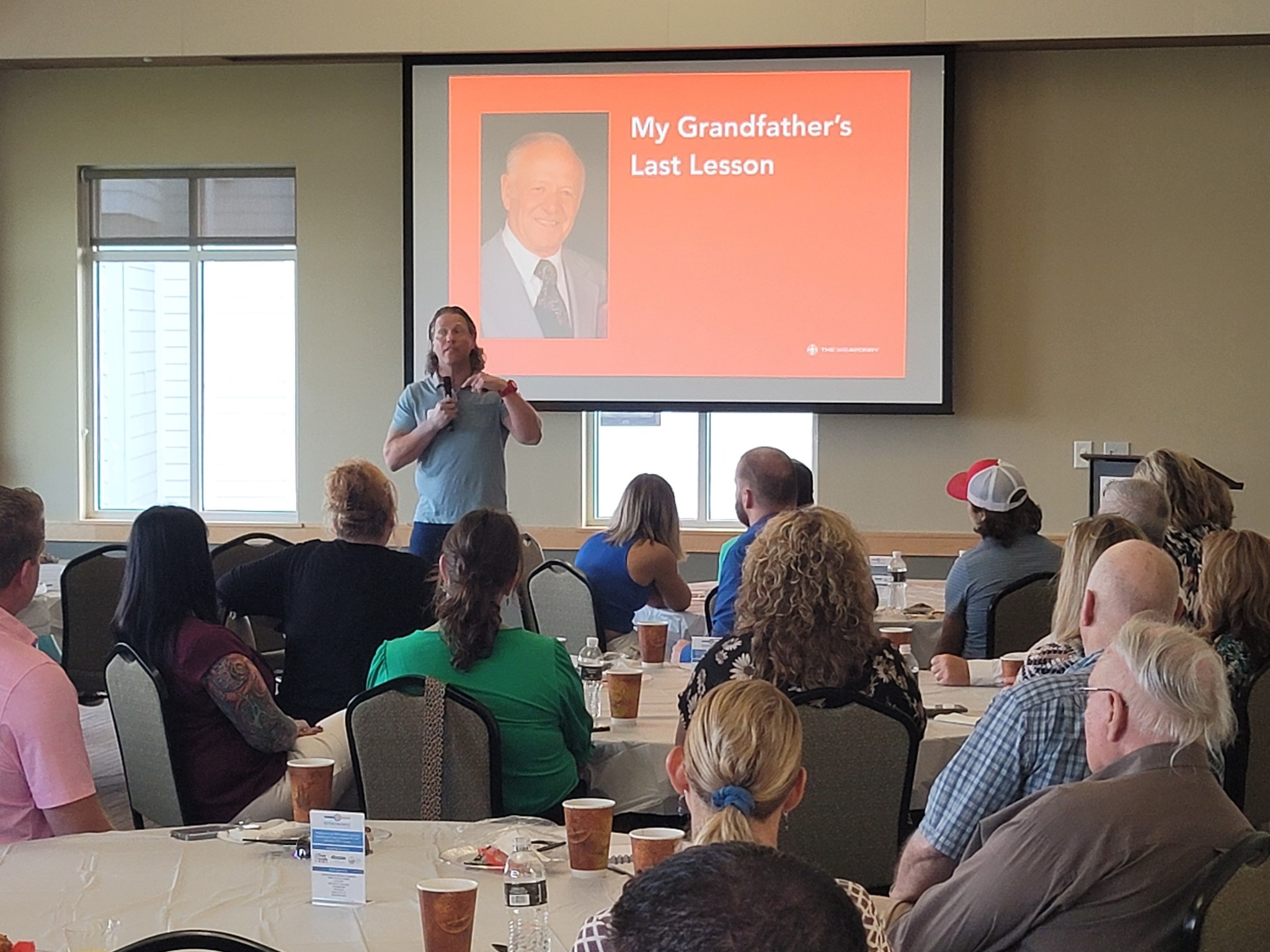
Keys to a Successful Marriage or Business Relationship: Lessons from My Grandfather.

Marriage is a fascinating human experience. It’s both highly rewarding and challenging. Yet while most couples put a lot of preparation into the wedding day, few put much, if any effort into preparing for the marriage itself. Which is why half of marriages end in I don’t. And a healthy percentage of the other half of marriages aren’t as healthy as they could be.

The Program

To help prepare for our marriage, my wife Dawn and I listened to an audio program called Marathon Marriage. We learned the many lessons and philosophies of the program and did all of the exercises shared in the 4 CD set. (At least it wasn’t on 8-track cassettes.) It was a good reminder that just as you need to prepare to run a successful marathon, you need to prepare for a long and successful marriage. So we stocked up on plenty of Gatorade and snacks. And we felt like we had a good game plan.

The Mentors

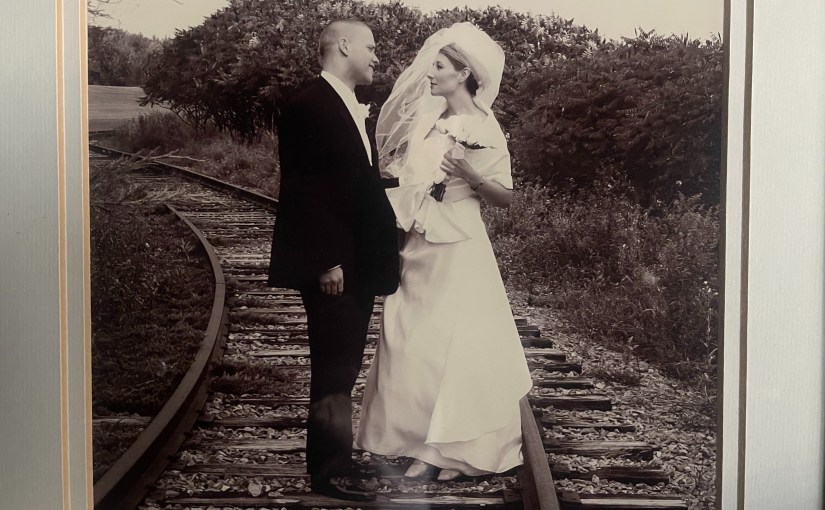
Then, on our wedding day I wanted to cram in one last bit of preparation. So I scheduled breakfast with my three marriage mentors, which included my dad and my two grandfathers (who would all laugh me off the family tree for calling them my marriage mentors). At the time, my parents had been married 32 years. My two sets of grandparents had been hitched for 61 and 63 years.

After we sat down at Emma Krumbees in Wausau, Wisconsin and worked through some Northwoods pancakes and sausage, I decided it was time for the knowledge share. I asked The Paternity Council, ‘What is the key to making a marriage great?’  With 156 years of experience at the table, I was about to get the fatherlode of great advice.

Then my 86-year-old maternal grandfather, Kenny Sprau, crossed his arms, leaned back in his chair and shared,

‘Keep doing what you’re doing.’

Um… WTF Grampy?  61 years of trial and error, nine kids and a World War, and that’s all you’ve got?  I wanted to give him a mulligan and see if he could hit it past the ladies’ tee this time. But he went on. ‘You have to keep doing the things that got you to this point.’

My Grampy, Kenneth Adam Sprau. (Thanks for the hair.)

Perspective On The Advice

While at the time the 29-year-old me was totally underwhelmed by the advice, over the past 22 years I have developed a deep appreciation for what Grampy Sprau said. Because when we are dating, we are at our best. The unfortunate tendency is to drop the hard work, energy, attention, and charm we put into the relationship after the contract is signed. Without pouring that effort, care and prioritization into the relationship, the relationship isn’t as healthy and strong as it was during your courtship and engagement. Which is kind of like leaving the cap off a bottle of soda-pop, only to realize that it’s the cap that keeps the soda popping.

Over our 22 years of marriage, I have recognized plenty of times when I was not putting in the same kind of attention and prioritization into our relationship as I did when we were just kids in the heartland, like in that little ditty ’bout Jack and Diane. It gets much harder alongside the demands of raising children, building a successful career, growing a business, and the effort required to fend off the Dad bod creep. But whenever I find that my attention to my bride has slipped (or I am reminded by my bride that my attention to my bride has slipped), I use Grampy Sprau’s advice, to help make the appropriate adjustments and corrections.

Applying The Advice To Business

Eight years after launching the advertising and ideas agency, The Weaponry, I have discovered that Grampy Sprau’s advice holds true in business as well as marriage.  You need to treat your potential clients and partners well. Act as if you would like nothing more than to spend the rest of your time together. Listen. Make them laugh. Show them you are interesting, kind and thoughtful. And then after you get the contract signed, keep doing what you’ve been doing.

In business, as in marriage, listening and collaborating are valuable approaches to your growth strategy. Clients and spouses alike really like that stuff. (Crazy right?)  When you respond favorably to a client’s request, they generate something called ‘good feelings’ about you.  And these ‘good feelings’ make them want to see you more and work with you more. And the result is business growth.

The opposite is also true.  If you are the all-time best seller at The Jerk Store, no one wants to be around you. This is true of both the individual and the organization.

If you recognize complacency, apathy or combativeness between your organization and your clients or between you and your spouse, stamp that out like a flaming bag of dog poo on your front porch. The behavior may feel justified today. But you’ll regret the justice leveled tomorrow when you’re trading the offspring in the McDonald’s parking lot.

Key Takeaway

Treat your spouse the way you did when you were dating. Treat your current business like new business. Never take either of them for granted. Work to re-win them every day. Even after you put a ring on it.

Thanks for the wise advice, Grampy.

*If you know someone who could benefit from this message, please share it with them.

+For more of the best life lessons I have learned check out my book, What Does Your Fortune Cookie Say? from Ripples Media.

How to make yourself more important.

How do you make yourself more important? It’s a simple but valuable question to ask. While there may be a million ways to become more important, there is one proven approach that anyone can use, regardless of your current skills and resources. It even works if you are not really, really good-looking, like Zoolander.

Here it is in two simple steps.

  1. In every situation you are in determine who is the most important person.
  2. Make yourself useful to that person.

Some examples:

In school, become useful to your teacher, professor, principal or Dean. Volunteer. Ask questions or provide answers. Make them look good during their annual evaluations. (Definitely do that last one.)

On a team, make yourself useful to your coach. This could be through actions or attitude. Set a great example. Help set up for practice or clean up after. You could also show up every day really tall, fast, strong, or coordinated. Coaches love that.

As an employee, make yourself useful to your boss, Hugo. Get your work done on time, every time. Help improve processes, efficiencies and effectiveness. Help improve revenue or profitability. If your boss is a bumbling idiot, help them hide it. (I always appreciate it when my team does that for me.)

At a party, make yourself useful to the host. Be a quick set of helping hands. Smile and have a good time. Introduce people. Play the games the host wants played. Unless the host is P-Diddy.

At home, there are always opportunities to be useful to your spouse or your parents. And making yourself more useful at home is one of the most important things you can do.

Try It Yourself

Start by evaluating who is the most important person in every room or situation you are in. Most of the time, this is easier than it sounds.

Then look for opportunities to provide value.

It’s a great habit to develop. And you’ll get better at it the more you practice. Soon you’ll recognize how valuable this approach is when you are the most important person in the room and others are going out of their way to be useful to you.

Key Takeaway

People are deemed important because they add value in some way. It may be through their intelligence, leadership, experience, responsibility, or a range of other skills and attributes. When you make yourself valuable to those people, you are adding to the value they bring. Which in turn increases your usefulness. As a result, you stand out from the crowd in the eyes of the person who already stands out from the crowd. Remember, your value is directly related to your contribution. Contribute to the most important person in the room’s success and you will contribute to everyone in the room’s success. That is how you make yourself important.

*If you know someone who could benefit from this message, please share it with them.

+For more of the best life lessons I have learned check out my book, What Does Your Fortune Cookie Say? from Ripples Media.
You have 1 month left to make things happen in 2024.

Welcome to December. 2024 is now 11/12ths complete. Which means you have one month left to make progress on your life and yearly goals. If you are a procrastinator, you have already hit the snooze button 11 times, and it is now time to get up and go. (If you are an amateurcrastinator you are not as good a procrastinator. But I don’t know if that means you put things off more or less. #ThingsThatMakeYouGoHmmm.)

December means you have one month left to:

Finish the year fitter, not fatter. The best way to a better body in 2025 is to start in 2024.

Revisit your New Year’s resolution. You likely left it somewhere in January.

Start a new habit. (Read Atomic Habits by James Clear to check the box on this and the next item. Plus it is half-price right now. You are welcome.)

Read a great book this year. (See above.)

Get in touch with that person or people you haven’t touched in too long.

Go to church. December is the best time to go anyway, for Christ’s sake. And for the bread and juice. And to try to get off the naughty list.

Donate to charity. (And get the tax benefits.)

Start that business. (I am working on starting an Excite Hustle with my son. We have talked about it for forever. But we are going to make it happen this month! An Excite Hustles is like a side hustle, but it excites you about doing work.)

Begin writing that book. Just start by writing down a simple outline of what you know about the topic, or a paragraph summarizing the plot, like Sir Mix-A-Plot. I write my books in a Google Doc. You don’t need anything fancy. Or schmancy.

Take that trip. Or schedule and book that vacation. It’s a great time to lock in your spring or summer travel and give yourself something to look forward to this winter. Unless you live somewhere vacationy already. In which case, pick another thing to do with your 12th month.

Do a million other things. Those first ten items were just examples. I don’t have time to write an exhaustive list of everything you could possibly do this month. Because we both have more important things to do. So let’s go, Geronimo!

Key Takeaway

Time keeps on slipping, slipping, slipping into the future. You have to recognize the passage of time to make its scarcity useful. The last month of the year, the last day of the week and the last hours of the day create a valuable sense of urgency, signaling it’s go time. Remember, when you hit a deadline, the opportunities afforded by that unit of time are dead. Let that motivate you to go now. There’s no better time.

*If you know someone who could benefit from this message, please share it with them.

+For more of the best life lessons I have learned check out my book, What Does Your Fortune Cookie Say? from Ripples Media.