How to build your personal brand, even without TikTok.

A good friend called me this week to tell me he had started a new business. Because his new entrepreneurial adventure would require him to sell himself to others, he asked me for my best advice on how to build a personal brand. I’m not sure if he asked me because I have spent my entire career building brands, because he admired my personal brand, or because he wanted to understand where I went wrong. I was afraid to ask. After a moment of reflection, I shared my best advice on building a personal brand. And here it is for you.

Influencers know something that other people don’t:

It is not about who you know. It really is about who knows you. 

The more people who know about you, what you know, and what you are doing, the better. The Kardashians have built an empire on this simple principle. And the fact that so many people can actually spell Kardashian is proof that it works.

The first thing you should consider when building your personal brand is to start a blog, vlog, podcast, newsletter, social media feed, or other regularly published knowledge. (Which would include having your own TV show like the Kardashians.)

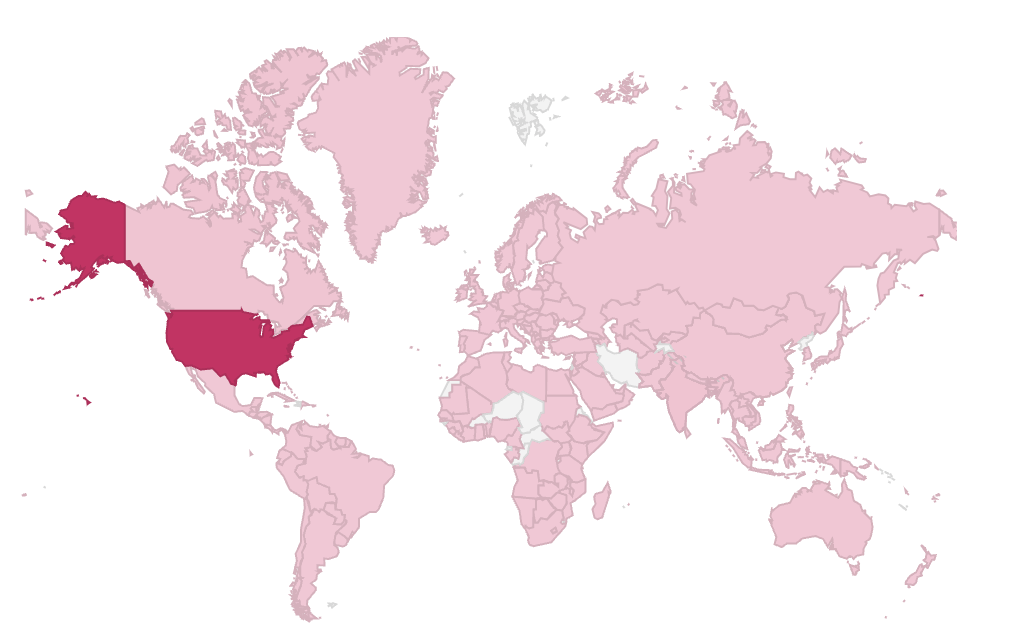
When I first started The Weaponry, I also started The Adam Albrecht Blog. It has been an amazing vehicle to share my thoughts, ideas, successes, and learnings with the world. Literally. My blog has been read in over 150 countries. Who knew there were over 150 countries? (Geographers and cartographers knew. There are actually 195 countries.)

A regular commitment to sharing your knowledge and experience through blogging helps build your personal brand and reputation. For the past 9 years, I have shared my thoughts, experiences and perspectives two to three times per week. This creates a steady stream of value-adding content that I can then share on various other channels, including LinkedIn, Facebook, X, Medium, Reddit, Instagram and Threads. However, as of this morning, we Americans can no longer share our expertise or best dance moves and lip-syncing skillz on TikTok. Because apparently national security is more important.

As of this publishing, I have written and published 1,045 blog posts that I can share across my social media ecosystem. As a result, my business and I are both top of mind when people have relevant opportunities. I regularly hear from people that I haven’t seen in a long time who tell me that they think of me often. This is what sharing your content does for you. This makes it great for building your brand but terrible if you are in the witness protection program.

Podcasts, newsletters, vlogs, columns, and social media channels all work too. The key is to share information and value with the world broadly so that more people than you could reach through individual messages know about you, your skills, experience, philosophies, and your business offering.

While you may create your platform to help support your business, you never know where your platform may lead. My blog readers encouraged me to write a book. Which sounded crazy-hard, until 2020, when I suddenly had plenty of time on my over-sanitized hands to do crazy-hard things. I published my first book in 2021, building on the content I had first created for my blog. 

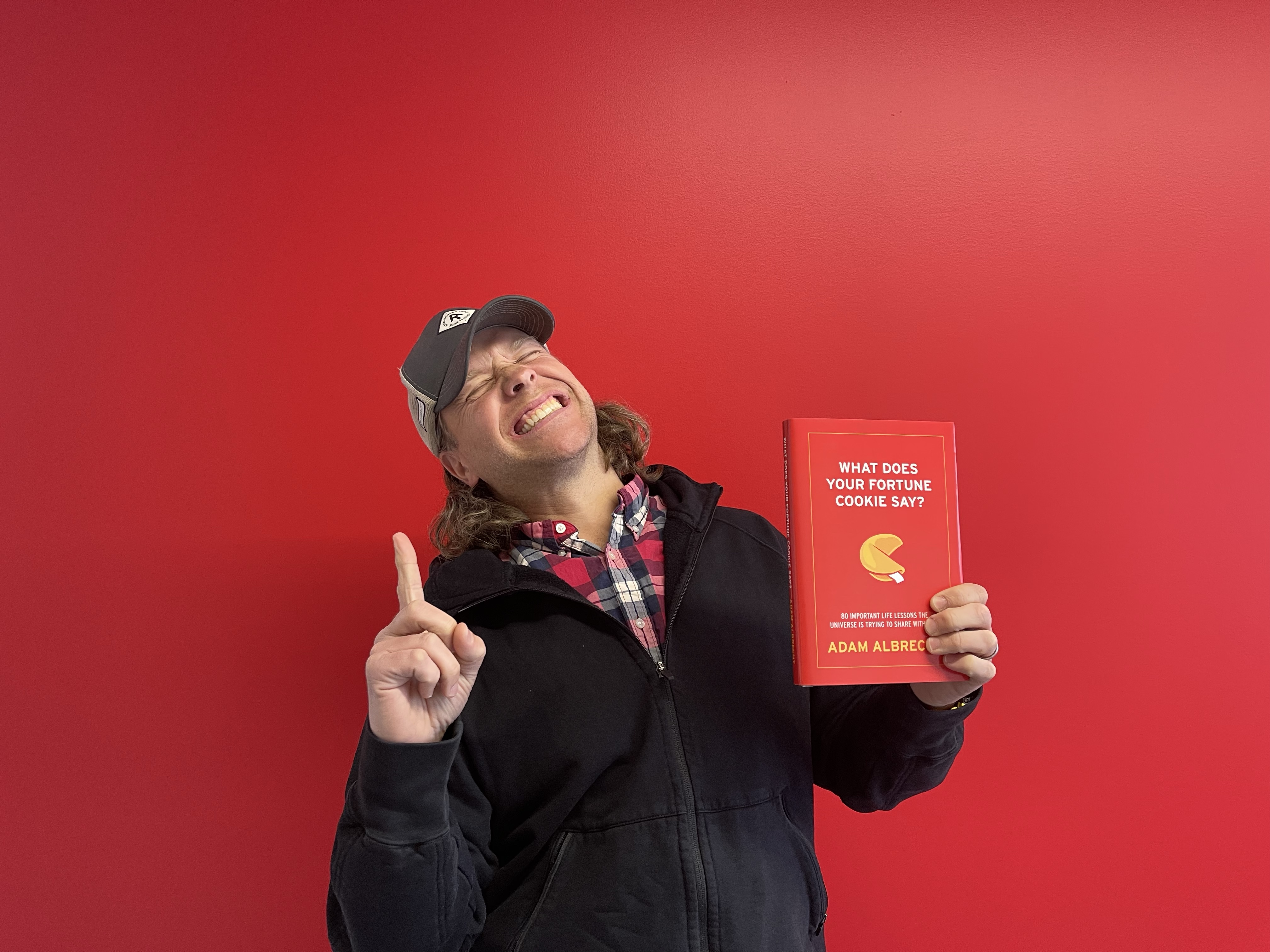
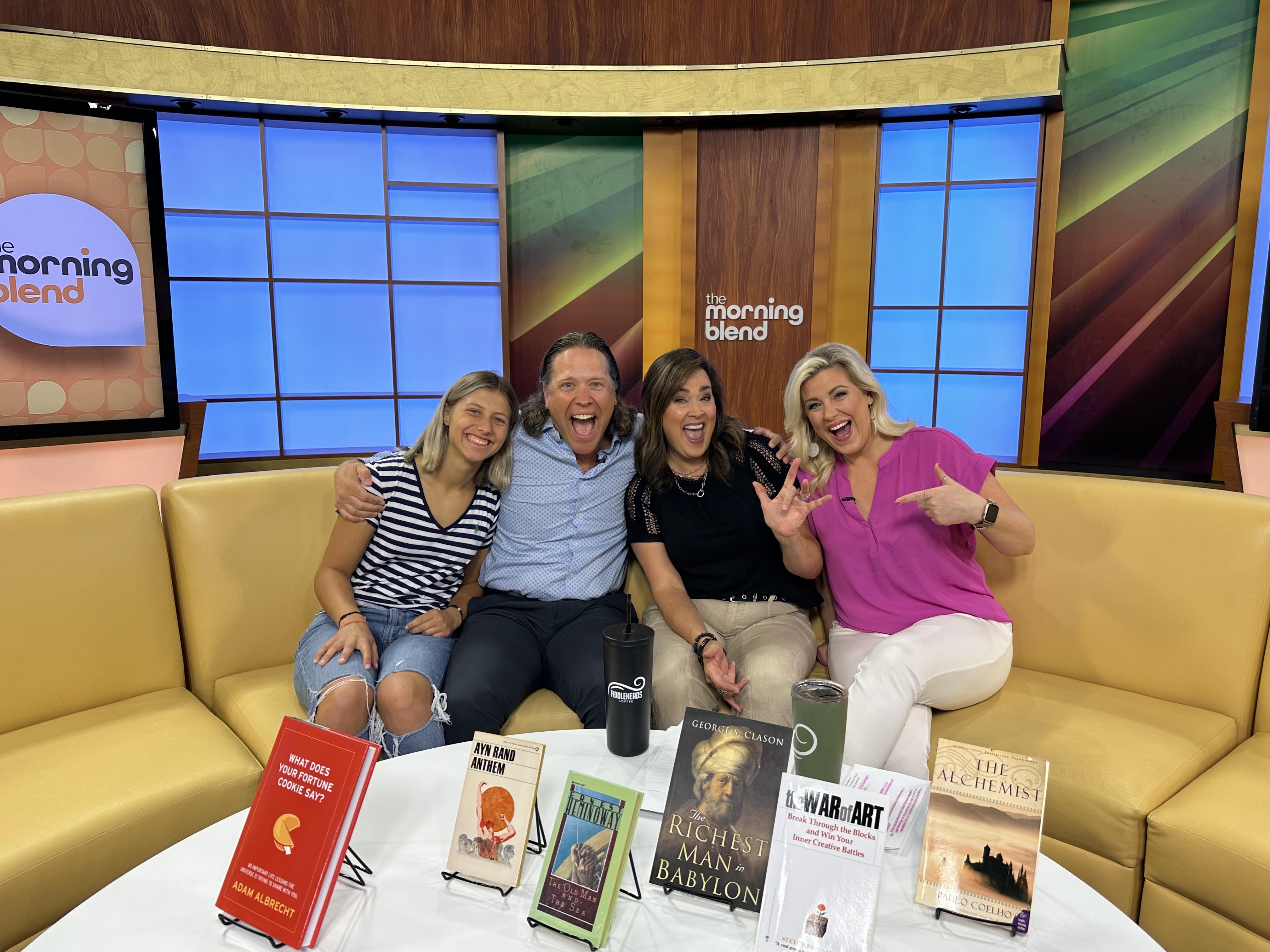
My first book, What Does Your Fortune Cookie Say?, created amazing new opportunities for me as a paid speaker, and as a guest on TV shows and podcasts. Those opportunities helped raise my profile, and enabled me to share more about my business and my personal perspective on a wide range of topics. 

In 2024 I also started publishing Adam’s Good Newsletter. The reach of the newsletter now exceeds the reach of my blog. And the newsletter is a great vehicle to share good news and information about all of my activities, interests and offerings. 

Having your own newsletter also means that you own a media channel. While Facebook, LinkedIn and X continue to modify their algorithm to their own advantage, making it harder and harder for you to share your message without paying for exposure, like at those clubs, you control everything about the way your message is shared in a newsletter. And the audience you develop for your newsletter becomes one of your greatest assets. 

What’s more, a newsletter created through a newsletter service provider like Mailchimp (which I use), Substack or others, enables you to see when readers have opened your newsletter, and which links interested them enough to click on them. This feedback enables you to create an even more valuable offering, both for your readers and for yourself and your business.

Key Takeaway 

Always remember, it’s not about who you know. It’s who knows you. Develop a platform to share what you know and what you are experiencing with others. This not only creates value for your audience, it raises your profile. It means that people will think of you more often, even when you are not thinking of them. As a result, you won’t just seek out your own new opportunities, the dynamic flips, and both people and opportunities find their way to you. Which changes everything. Kinda like a TikTok ban.

*If you know someone who could benefit from this message, please share it with them.

+For more of the best life lessons I have learned check out my book, What Does Your Fortune Cookie Say? from Ripples Media.

Why it is time for you to harvest more good ideas.

Good ideas are everywhere. Like oxygen and excuses. That’s because people have good ideas all the time, and they are happy to share them with you. In fact, a good idea is the thing people are quickest to share. Because people don’t want to keep good ideas to themselves. It is only through sharing your good ideas that your ideas get validated, like parking. It is only through sharing a good idea that you are given credit for being smart, creative or insightful. Or for being good at evading the law.

Are You Gonna Come My Way?

People share their good ideas with me all the time. Some share because I am an entrepreneur. And entrepreneurs are known for bringing good ideas to life, like General Electric. People share with us either because they want advice on how to bring their idea to life, or because they are hoping that we will bring their idea to life because they don’t have the time, money or energy to do it themselves. Which is kind of like giving your idea up for adoption, because you know you are not fit to raise the idea on your own. Yet you don’t want to terminate your idea either. #ProIdea vs #MyIdeaMyChoice

Another reason people share their good ideas with me is because I am a professional creative thinker. I lead the advertising and ideas agency The Weaponry. So when you think of a great idea, you naturally want to share it with someone who will recognize it and appreciate you for coming up with it. People also know that I will have ideas on what they should do next. Kinda like the owl that those kids asked how many licks it took to get to the Tootsie Roll center of a Tootsie Pop. (Drop the answer in the comments if you know.)

The third and perhaps most important reason people share good ideas with me is because I am looking for them. It’s the law of attraction. They come my way because I am coming their way. And we meet in the middle, like Parker McCollum and Maren Morris.

Why You Should Harvest Good Ideas.

Ideas create opportunities. They make things easier. They make things more enjoyable. They create more Wow in your world. And they offer more ways to make money than The Mint. (Actually, The Mint only makes money the coiny way and the bulliony way.)

But good ideas also offer clues, instructions, blueprints or templates on how to create more good ideas. Because the same insight, combination, application or exploration that led to one good idea can help create more. You can always reverse engineer a good idea, and once you discover the process, you can apply it to create countless others. Which means that when you collect good ideas you are also collecting keys to unlock more good ideas.

Key Takeaway

To live a successful, creative and interesting life, become an idea harvester. Look for them. Go where they grow. Spend time with idea creators. And move through the world like a combine moves through a field of corn, wheat, soybeans, or AI-generated light bulb plants. Pick all the ideas you can. Collect them. Polish them. Combine them in new and novel ways. And they will create more value than anything else can.

*If you know someone who could benefit from this message, please share it with them.

+For more of the best life lessons I have learned check out my book, What Does Your Fortune Cookie Say? from Ripples Media.

There are no guarantees that your great idea will work every time.

Every day there are new songs, books, and blog posts. (Like the new blog post you are reading right now.)

There are new businesses, restaurants, shops, clubs and bars. Including shops where you buy clubs and bars.

There are new clothes, accessories and decoration.

And there are enough new social posts to fill a whole new social sphere every single day.

So why all the newness, Huey Lewis?

Because people have great new ideas worth betting on all the time.

However, you never know which good new ideas will wallop and which ones will whimper.

Sometimes your favorites will fail like New Coke and Kendall Jenner’s Pepsi ad. And sometimes your maybes will make a mighty roar. Like cat videos.

Learn from both.

And just keep swinging.*

The only real failure is to stop sharing your new ideas.


*Don’t actually be a swinger.

If you know someone who could benefit from this message, please share it with them. Especially if you know Kendall Jenner or anyone thinking about swinging.

+For more of the best life lessons I have learned check out my book, What Does Your Fortune Cookie Say? from Ripples Media.

How to do hard things.

When I was in college I had a summer job setting up large party tents in Vermont. I loved pitching a tent. It was hard. But looking back, that’s what I loved about it.

The hardest part of the erection process was driving the 4-foot-long steel stakes into the ground. The stakes create the foundation for the tent. You tie the tent ropes to the stakes to help hold the tent upright and sturdy.

To drive the stakes into the ground we used sledgehammers that were 8, 12 or 16-pounds. Size mattered. Because if you swung a bigger hammer you could get the job done in fewer swings.

Sometimes, when the ground was soft, the stakes would go in smoothly. But in Vermont and New Hampshire where I drove most of my stakes, the ground was very hard. They don’t call New Hampshire The Granite State for nothing. (And they don’t call Vermont the Granite State at all, but that’s just because New Hampshire already took it, for granite.)

But during those college years, I learned a valuable lesson about how to do hard things. Because the only way to get those 4-foot stakes in the ground was to keep pounding away until the job was done. More often than not the stakes went in an inch or less at a time. And sinking a 4-foot shaft neck-deep at that rate can be exhausting. But it was the only way to finish the job.

I applied that just-keep-swinging-till-it’s-done lesson in my athletic career as a track and field athlete at the University of Wisconsin. Today, I apply the same lesson to building the advertising and ideas agency, The Weaponry, writing my blog posts, newsletters and books. And simply not stopping until the work is done has never failed to produce results. Even when things get really, really hard.

Key Takeaway

The only way to get a job done is to just keep pounding until you are finished. Hit the task again and again and again. This is true when you are driving stakes in the ground in Vermont, building a company, advancing your career, trying to meet your fitness goals, or getting your education. Focus your efforts. Pound away. And just don’t stop until the job is done.

*If you know someone who could benefit from this message, please share it with them.

+For more of the best life lessons I have learned check out my book, What Does Your Fortune Cookie Say? from Ripples Media.

How to put Charlie’s Rule of opportunities to work for you.

Last week I was talking with my good friend Charlie Wills about business. Charlie and I met through The W-Club, the University of Wisconsin varsity athlete alumni group. Talking with Charlie is a pain in the neck. Literally. Because Charlie is really, really tall. He is a former University of Wisconsin standout basketball player, who played in the 2000 Final Four against the Flintstones. #IYKYK

Today, Charlie towers over the real estate world in Madison, Wisconsin where he has been putting people before profits for over 20 years. Not only is Charlie a close friend of mine, but he is also a client of The Weaponry, the advertising and ideas agency that I lead.

Charlie shared an interesting statistic with me about where his clients come from. He told me that 96% of his organization’s clients come from within their sphere. That includes current and past clients, recommendations, friends, family and acquaintances.

If you are good at math, you also realize that only 4% of opportunities came from outside their sphere. Which is a shockingly small number. In fact, if that number was 4 sizes smaller it would be nothing.

I love the fact that Charlie uses the term sphere instead of network or circle. It’s very basketbally of him. And it gives the group more dimension.

Charlie’s Rule: The vast majority of your opportunities in business and in life originate within your sphere.

This rule, while surprising, is also logical.

People in India whom you have never met and have no real connections to, are highly unlikely to come to you with a life-changing opportunity. (The same goes for the dude from the royal family in Nigeria.) But your past client, your cousin, and the person you know from that thing you do in your spare time are likely to think of you when they need a You-Like person to help solve the kind of problem you are great at solving.

Armed with the knowledge that we all benefit from some variation of Charlie’s Rule, what are you supposed to do about it?

1. Develop more relationships. Whenever you are dealing with success as a percentage game, and it always is, increase the base number. The more people you know the more opportunities will come your way. Because opportunities come to you through humans. Kinda like COVID-19 and invitations to Tupperware parties.

2. Maintain the relationships you have. Not all relationships are equal. The kid you knew from kindergarten who you haven’t spoken to since you stopped napping together in class is not very valuable. So stay in touch with your people. Reach out via phone, email, text, or social media to keep your relationship active. Write a newsletter, blog, or other way to share what’s happening in your life. Social media is great for maintaining relationships across a broad spectrum of familiarity. Use this amazing resource.

Key Takeaway

Your relationships are critical to your success. Remember, Charlie’s Rule says that the vast majority of your opportunities in business and in life originate within your sphere. So bring more people into your sphere. Keep the relationships in your sphere active by staying in touch through any appropriate means. As a result, more good opportunities will find their way to you. Just like Charlie said.

*If you know someone who could benefit from this message, please share it with them.

+For more of the best life lessons I have learned check out my book, What Does Your Fortune Cookie Say? from Ripples Media.

Remember, what’s obvious to you now is extremely valuable to others.

I met with an entrepreneur earlier this week who has a startup. My friend is in the early stages of his newborn business where you don’t get much sleep and you change a lot of diapers. (Your own.)

As my entrepreneur friend talked about his startup experience, I realized I had advice that would help with each of his challenges. I shared some actions to take, resources to employ, strategies to consider and helpful materials to read. I also shared the relative merits of Zantac, Tums and Rolaids for heartburn and upset stomachs. Because I know what Rolaids spells.

I could tell that my friend found my guidance valuable. Both because he told me it was useful and because he later texted me and said the same thing. (I’m quick like that.)

However, what I shared wasn’t complicated, specialized or exclusive knowledge. It was simply logical common sense. Or so I thought. Until I thought about it more.

The Insight

It’s important to recognize that much of what feels like logical common sense to you today was once completely foreign and unknown.

You improve your logic and common sense every day. It is a byproduct of your experience and education. The more logic and common sense you accumulate the more valuable you become to others, both as a user of your own knowledge and as a coach, mentor or advisor. (Those are all different things. My friend Stacy Sollenberger taught me that in the book Guide Coaching.)

Since you were a wobbly, pooping-you-pants toddler you have collected a lifetime of logic and common sense. You have racked up far more than you know, and in more areas than you recognize. Realize that others don’t know what now feels obvious and commonplace to you. That makes you a valuable resource to people who are one or more steps behind you. You can offer tremendous help when you pass your baton of wisdom to them. (And good job not pooing yourself anymore.)

Examples

-As an entrepreneur, you can share your wisdom with anyone who is behind you.

-As a career haver, you can pass your knowledge to anyone junior to you to help them advance their learnings at a faster pace than they could through their own experience alone.

-As a married human you can share your learnings with anyone considering getting married, newlyweds and others passing through the various phases and challenges of the most important relationship you will ever have. This is true even if you are bad at marriage because you have discovered what doesn’t work. Like Edison said about his lightbulb moment.

-As a parent, you can pass along great insights and approaches to both new parents and parents who are passing through phases you have already passed through, like the valley of the shadow of death. Or raising 3-year-olds.

Key Takeaway

As you accumulate knowledge and experience it can camouflage itself as common sense. It is not. It just feels like logic because it has become an obvious truth to you. Recognize the value of your earned wisdom and share it with those trailing behind you on the learning curve. It will help them accelerate their own growth and impact. It will help them accumulate wisdom that will increase their value to the world. And as the people you share your knowledge with pass your baton of wisdom to others your positive impact on the world compounds without end.


*If you know someone who could benefit from this message, please share it with them.

+For more of the best life lessons I have learned check out my book, What Does Your Fortune Cookie Say? from Ripples Media.

When you feel the heat of inspiration it’s go time!

I have heard countless times that time is our most valuable commodity. I believe this. After all, you can’t buy it. It constantly running out. And despite what Mick Jagger said, it’s not really on your side. (No it’s not.)

But right up there alongside time on the Mt. Rushmore of Most Valuable Commodities are inspiration and motivation.

They light your fire. Like Jim Morrison.

They lead to growth and improvement.

They create the empire state of mind that builds empires. Like JAY-Z and Alicia Keys.

They change the world.

Yet to be effective, both inspiration and motivation require you to act. To move. To do! Do! Do! (Not da-da-da.)

Unfortunately, both forces burn bright for a moment, then the moment’s gone. Like dust in the wind.

Which means when you feel the powerful heat of inspiration and motivation you have to go.

You have to cook while the heat is on, Glenn Frey.

You have to jump on the action you feel inspired to take.

Take steps to start that business.

Start writing that book.

Plan that remodel.

Create that art.

Build the prototype.

Plan that travel.

Create that event.

Get to the gym.

Enroll in that class.

Reach out to that person that could change your day. Or your life.

Acting on the heat of inspiration is how I started The Weaponry.

It’s how I wrote What Does Your Fortune Cookie Say?

And it is how I worked out last night at 10 pm after a 15-hour work day.

Key Takeaway

Take advantage of those precious sparks of inspiration and motivation. They don’t last long. But if you take action while your mind is in the red, the impact can be felt long after your time is up.

*If you know someone who could benefit from this message, please share it with them.

+For more of the best life lessons I have learned check out my book, What Does Your Fortune Cookie Say? from Ripples Media.
9 Random things I share about myself in a new podcast.

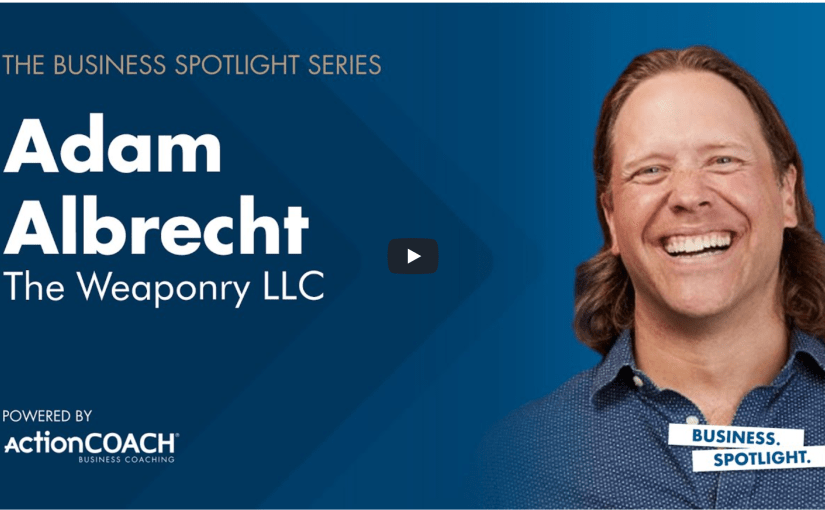
I love to share stories. That’s probably why I started blogging in the first place. Over the 1001 blog posts I have published, I have shared a small country library worth of stories. But recently I sat down for a fun podcast interview to share stories with Kory Dogs, of ActionCOACH. (I kept thinking he sounded like the action hero Kory whose superpower would be saving Corey Feldman and Corey Haim from themselves.)

Kory asked me questions I don’t often get asked. Which means you hear some little-known details about my life.

9 Things You Learn About Me In This Podcast

  1. The 5 States I lived in as a kid.
  2. My connection to the Shawshank Prison.
  3. My unique experience on a bull stud.
  4. The surprising comment my boss made 2 years into my career that inspired me to start my own advertising agency. (No, it was not You’re Fired!)
  5. How I describe my leadership style.
  6. What I would do differently if I could go back and do it all again. (Which sounds like a Garth Brooks song.)
  7. The new things I want to learn.
  8. The book I recommend to all entrepreneurs.
  9. Who I would give a shoutout to at the end of a podcast when surprised with the question, ‘Who would you like to give a shoutout to, right now?’

You can read or watch the interview here.

Why listen or read when you can watch?

The Book Recommendation

During the podcast I talked about a book I suggest every entrepreneur, or aspiring entrepreneur, or spiraling entrepreneur should read. Here’s the excerpt, in case you don’t have time to watch, read or listen to the full podcast:

Kory: What advice do you have for business owners trying to do everything on their own?

Adam: I often advise business owners and entrepreneurs to read The E-Myth by Michael Gerber. This book offers a fantastic framework for developing your business through systems and processes. It teaches you how to structure your business so that it can operate on a larger scale, similar to a franchise.

By thinking through your business in this way, you ensure that all aspects are well-organized. You create a mature system where you’re not overwhelmed by every detail. Instead, you take on specific responsibilities and avoid getting bogged down by tasks outside your main role.

For example, you don’t want to be the person who not only bakes pies but also handles HR, sales, and operations. The book helps you define your role clearly and understand what additional roles are needed in your organization.

I read The E-Myth before starting The Weaponry, and it provided a strong foundation for me. For any business owner feeling stuck in a cycle of chaos, I recommend this book to help you assess and address your challenges effectively.

For those who aren’t familiar, the book is called The E-Myth and its subtitle is “Why Most Small Businesses Fail and What to Do About It.” Essentially, it argues that if you don’t get the business fundamentals right, it won’t survive. But if you do, it can thrive. The E-Myth refers to the belief that only certain people are born to be entrepreneurs. Michael Gerber challenges this idea, asserting that anyone can be an entrepreneur. He presents a process and approach that can make entrepreneurship work for everyone.

Thank You!

Thanks to Kory Dogs of ActionCOACH for the interview. And for making me feel like I know a real-life action hero.

Thank you blog readers for reading this blog. It’s the only way to earn your title.


If you know someone who you thing could benefit from listening to this podcast, please share it with them.

+For more of the best life lessons I have learned check out my book, What Does Your Fortune Cookie Say? from Ripples Media.
This is my 1000th blog post! Here’s how I did it.

In 2015 I read a book titled The Little Black Book of Connections by the self-proclaimed King of Sales, Jeffery Gitomer. One of the important tenets of the book is, Success is not about who you know, but who knows you. (Who knew?)

Gitomer goes on to share that the best way to have more people know you is to share your knowledge, expertise, ideas and experiences broadly. Which is what Kim Kardashian did with her first home movie back in 2007. And look how well that worked out for her.

Gitomer points out that platforms like blogs, vlogs, podcasts, editorial columns and books enable you to share your ideas with many people at once. In fact, it allows people you would never meet face to face to discover your ideas and be positively impacted by your knowledge and expertise.

What started with a single blog post has gone farther than I ever imagined.

Gettin’ Bloggy With It

In the fall of 2015, I began planning to launch a new advertising agency. So I decided to take Gitomer’s advice and start blogging to share my ideas about advertising, branding, and creativity. I also wanted to share what I was learning about entrepreneurship. Success leaves clues. And I wanted to share breadcrumbs for other entrepreneurs to follow. (It seems I failed to learn the downside of leaving breadcrumbs from Hansel and Gretel.)

I wasn’t sure how the whole blogging thing would go. I had tried it before. In fact, I had started 5 or 6 different blogs and quickly stopped. But this time I felt more inspired. I had Gitomer’s encouragement. I had a strong desire to succeed as an entrepreneur. (And I wanted to be able to feed my family.) I believed that writing a blog would be a great way to share my expertise, let people know I was starting The Weaponry, and share our growth and success.

I have always enjoyed writing. I started my career as a copywriter. So I figured that writing a blog would be fun. It would enable me to tap into my strengths. And most importantly, it would allow me to write funny things without a client or editor telling me no.

So I began writing in November of 2015. And like Forrest Gump, I just kept going, and people started to follow. I began slowly, with a blog post every week. Then I moved to 2 posts per week. And finally, I developed a 3 post-per-week habit, writing 5 days a week, and publishing on Tuesdays, Thursdays and Sundays, when Chick-fil-A was closed.

Today, less than 9 years later, I have published 1000 blog posts!

My writings have generally fallen into 3 buckets:

  1. Marketing: This covers the topics of marketing, advertising, branding, creativity, design, writing and yes, blogging. Which is totally meta. (Non-Zuckerberg meta.)
  2. Business: This includes entrepreneurship, startups, sales, network development, professional development, and my personal favorite, funny business.
  3. Self-Improvement: This was unintentional. But I have written a lot about personal development and motivation. I have learned so much over the past 9 years about how to do better and be better (through trial and error) that I felt I had to share these lessons.
These are all the countries where my blog has been read. North Korea, Iran and the croissant in Africa are holding out on me.

What Do 1000 blog posts look like?

  • 111 blog posts every year.
  • More than 2 new blog posts every week.
  • The equivalent of 10 full length 50,000 word books
  • A minimum of 2000 hours of writing time.
  • The equivalent of one full year of 40-hour work weeks spent writing blog posts.
  • The equivalent word count of writing The Old Testament of The Bible. (Truly I say to you, this fact hath blown my mind.)
Blogging created a pathway to publishing books. And holding books I published.

5 Benefits Of Blogging

  1. It provides original content I can share on LinkedIn, Twitter, Facebook, Instagram, Threads, Medium and Reddit (Although Reddit readers hate everything, like Mikey.)
  2. It provides a great collection of well-considered and well-organized ideas and stories that are ready to be adapted to books. The hardest work of writing my books happens in the blog stage. The easiest work is collecting blog posts with related themes to create chapters and books.
  3. Blogging created a path to professional speaking. The blog posts led to a book. The book led to speaking opportunities. The speaking opportunities have created the best source of income in my Information Creation + Communication Ecosystem.
  4. Blogging organizes great ideas, lessons and stories to share as a professional speaker.
  5. The blogs have allowed me to share far more jokes and humorous asides than I would be able to share any other way. This is really the thing that keeps me writing.
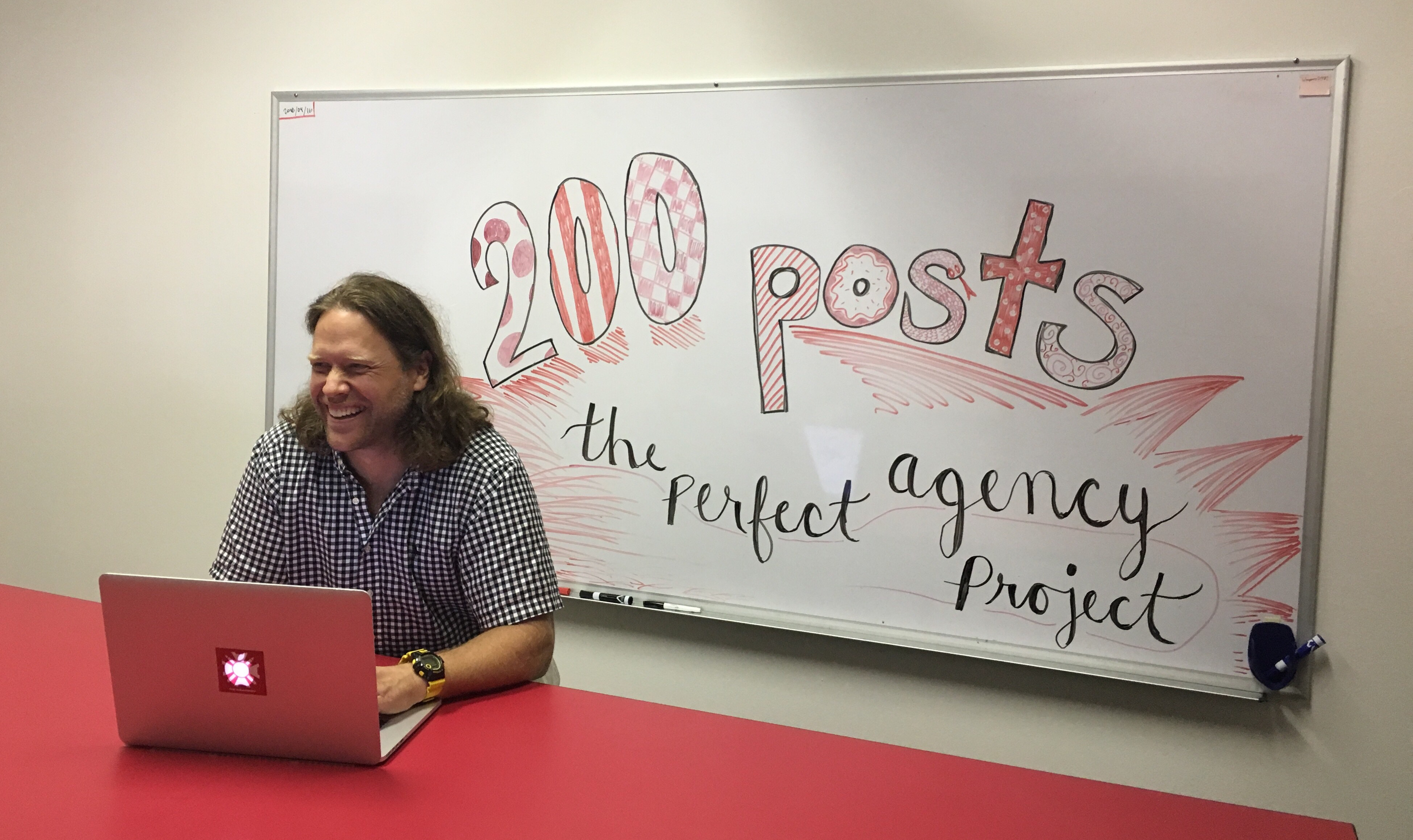
I was excited to hit 200 posts back in 2018 when I was just a baby blogger.

6 Things I Want Everyone To Know About Writing 1000 Blog Posts

  1. Anyone can do it.
  2. There are no barriers.
  3. There are tons of tools and templates that make it easy. (I use WordPress to write and publish my blog.)
  4. The 2 key steps are: 1. Get Started 2. Don’t Stop.
  5. To sustain a blog you have to create a regular writing habit. Write at the same time for a set duration every day, or every weekday, or every Friday or whatever works for you. The habit is how it happens. (Which is also how you know someone is a nun.)
  6. Don’t do it for huge numbers of readers. You can’t predict who will read your posts, or how many people will read what you write. If you are like most people, including me, your reach and readership will always be lower than you would want. And my blog has been read in over 160 countries. But you can create good information that can have a huge impact on one reader. That’s the real win of blogging.

Key Takeaway

As the saying goes, the best way to eat an elephant is one bite at a time. And the best way to write 1000 blog posts is one post at a time. Find a topic or topics that you are really interested in. Get started. And just don’t stop. Write at a regular time each day or each week. And when people tell you they enjoy reading your posts, or somehow benefited from your writings, use that as fuel to keep going. The world needs more good ideas, lessons, and stories. You have them. So start sharing. You’ll be surprised by how many lives you can positively impact. And that is the real benefit.

*If you know someone who could benefit from this message, please share it with them.

+For more of the best life lessons I have learned check out my book, What Does Your Fortune Cookie Say? from Ripples Media.
12 Lessons I have learned from 8 years as an entrepreneur.

When I set out on my entrepreneurial adventure 8 years ago I had a lot to learn. So I became a student of entrepreneurship in the same way that I became a student of Journalism, Psychology and Bratwurst at The University of Wisconsin. I read books, magazines, and blogs. I talked to friends who were entrepreneurs and business leaders. The non-standardized tests started in April of 2016 when I launched the advertising and ideas agency, The Weaponry. And I am still tested every day.

8 years later, I can’t imagine my career without this chapter. I have learned a lot about what it takes to launch and run a business. It turns out there is a lot more to it than printing up a batch of business cards and cool company t-shirts. (Although you should do those things too.)

I wanted to share 8 lessons I have learned along the way. Because 8 ideas from the past 8 years seemed well-balanced. But I had too many lessons to stop at The Ocho. So here are 12-ish lessons I have learned that you should know if you are thinking about starting your own business, or if you already have a business and you now need to get your fecal matter straight.

12 Lessons I have learned from 8 years as an entrepreneur.

  1. Don’t quit your day job*. This is the most important lesson. Start working on your new business as a side hustle. Use your nights and weekends to study, plan and create your business. Use the income from your day job to fund your embryonic startup. Start generating revenue from the new entity. Then, as your startup indicates that it will be able to replace your required income, you can transition out of your full-time employment. But allowing your startup to grow as a side hustle will take a lot of pressure and stress off the early stages of entrepreneurship. From my first paid project to leaving my day job was 5 months. But a year or two of side hustling is not crazy. It is time well spent. *Note: This lesson is only for people who currently have day jobs. If you don’t have a day job the next 11 lessons are for you.

2. Good people are gold, Pony Boy. Business is the ultimate team sport. A great business is simply a great team of people running great plays. Find the right people. Treat them well. They will make the company and the culture amazing. As an entrepreneur, you get to pick your entire team. It’s one of the best parts of entrepreneurship. That and picking the dress code.

3. Good processes make it happen. Your systems and processes enable success, reduce friction, and organize the organization. Determine your organization’s way of doing everything. Write it down. Share it broadly. It ensures that everyone in your organization knows that you always pass the Dutchie on the left-hand side. Don’t worry if the process isn’t perfect. You can always improve it when you discover a better way. Read The E-Myth by Michael Gerber and Traction by Gino Wickman to help you dial this in.

4. Great creative thinking is key. As an advertising and ideas agency, creativity is what our clients come to us for. This has to be great or nothing else matters, like Metallica said. However, all entrepreneurial organizations should focus on creative thinking. It is how you get things done when you don’t have all the resources you wish you had. And it is how you beat competitors who always do things the same old way. Because creativity creates competitive advantages.

5. Great customer service is a must. This is why your clients stay. Always think about your service, and how you can make it better. We want to treat our clients so well that they never want to leave. And we want to make sure they hire us again when they leave their current job for a new opportunity. This has happened more times than I can count. And I am relatively good at counting.

6. Business development is critical. You have to put focused effort into expanding your business. There is natural attrition that happens in business, even if your product and your service are great. The economy plays games you can’t control. So do a dozen other influences. Businesses that forget to find new customers eventually die. Sometimes they die slowly. Sometimes they die all at once. But the net result is the same.

7. Trust is everything. At the beginning of your entrepreneurial adventure, people will take a chance on buying from your new entity solely because of you. The company will have no real track record or history of doing what it says it will do. But you do. Be a trustworthy human. That personal trust will be the bridge that gets early customers to try your offering before you have real proof that your business is as good as advertised. (Also remember to advertise that you are good.)

8. Build in a fair profit. It’s not enough to have paying customers. You have to understand the cost of your goods or services. Then you have to build in a fair profit. Which means if your offering costs you $100 to deliver, you must charge $5, $10, $20, or $100 on top of that to make sure the business makes a fair profit. That profit is what keeps the business sustainable. Some customers and most procurement departments will try to beat the profit out of your business. Don’t let them. Know what you need to make, know your value, and stick to it. Like a cocklebur on corduroy.

9. Share the success with your team. Business success is team success. You have to recognize and celebrate the contributions of everyone involved. When you do, a good team is eager to create even more success. That stuff is addicting. Like Dot’s Pretzels.

10. Relationships are extremely important. The personal relationships you create help create your success. Those include your relationships with your team, clients, partners, vendors, bankers, brokers, accountants, lawyers and the media. But all your relationships matter to business. Because you never know where your next referral will come from. And you never know who you may need as a character witness. Or who may be carrying an extra kidney that you may need one day. And don’t neglect your relationships with your family to make the business work. My relationship with my wife Dawn has been the most valuable relationship on my entrepreneurial adventure. And I get to spend more time with my kids now as an entrepreneur than I did as an employee. Which is perhaps the biggest win of all.

11. You have to keep experimenting. Business success is an interesting combination of running tried and true plays and trying new things that create new advantages. It’s kinda like the way you have to keep things spicy in your romantic relationship. Businesses that keep experimenting with new technology, new offerings, and new models survive changes. So stay on your toes. (If you have toes.) Watch the horizon for change, both in your industry and the broader economy. Expect that the future will be different than the past and you will be prepared for the strange changes. Like David Bowie said.

12. Create a newsletter. This is a great way to stay in contact with your community, which includes team members, customers, partners, supporters, potential customers, potential employees, the media, fans, and your parents. Add value through each issue. Share your news and successes. Social media channels are beyond your control, and it can be challenging to get your message in front of your audience there. But a newsletter is your own media outlet. It is like an express train to your audience’s inbox. Choo Choo! We use Mailchimp for our newsletter. There are many good options you can find using the Googler. You can sign up for The Weaponry newsletter here to see how we do it.

Bonus

13. Learn to spell entrepreneur. When you become one you end up writing the word a lot. At least you do if you have a blog sharing your experience as an entrepreneur. To spell entrepreneur, remember that all of the vowel holes start with ‘e’ and you come last. Which is how I remember that there is a ‘u’ after the last ‘e.’

Key Takeaway

Starting your own business is an exciting and rewarding adventure. It enables you to design your own life. It combines the thrill of competitive sports with the satisfaction of having a positive impact on your team members and your community. To start your journey, do some prep work. But then get going. You will learn what you need to know along the way. Remember to always bet on yourself. It is the safest bet you will ever make.

*If you know someone who could benefit from this message, please share it with them.

+For more of the best life lessons I have learned check out my book, What Does Your Fortune Cookie Say? from Ripples Media.