Two valuable money-making skills you need to develop now.

Sunday afternoon I told my 14-year-old son Magnus we were going for a drive. He looked both confused and curious as he followed me towards the garage, pulled on his shoes and hurried out the door behind me.

As we tore out of the driveway like Bo and Luke Duke in my White Ford Bronco Expedition I explained that I had just seen a brand new listing on Facebook Marketplace for 3 large boxes full of 1980s-era baseball cards. The woman selling them posted that she didn’t know what was in the boxes. She simply wanted them out of her house. $25 took all 3 boxes. And I was hyperventilating. (Well, I was actually just hyper while I was ventilating.)

I collected these baseball cards when I was a kid. And I knew this created an opportunity to teach Magnus a valuable lesson. As we sped down the rural Wisconsin highway I told Magnus that one of the most valuable skills you can develop is a sense for undervalued assets. Those assets could be baseball cards. But they could also be stocks, real estate, businesses, antiques, coins, stamps, equipment and countless other things. Including undervalued people. (Especially undervalued people.)

The other valuable skill I encouraged Magnus to develop is the ability to move quickly. You have to act on your detection of undervalued assets before other people do. Hence the quick reply on Facebook and the Smokey and The Bandit-style driving.

You can’t do what Warren Buffet calls thumbsucking, and lose time re-contemplating when you already know what the right action is. Because as you wait, other people are discovering the undervalued asset. And only one person will be able to grab that asset at that price. So you gotta act like Sir Mixalot when they toss it. And leave it. And pull up quick to retrieve it.

When we arrived at the seller’s home the couple selling the cards were already in the garage, ready to tote the large boxes of cards to my vehicle. After some quick pleasantries, the woman shared that right after I responded to her listing she was flooded with others who also wanted to buy the cards. This confirmed my suspicion of undervaluedness. And it underscored the importance of acting quickly. From the time I first spotted the baseball card listing to the time they were in the back of my vehicle was less than an hour. Boom.

When we returned home, we estimated that there were 9000 baseball cards in the collection we just bought. We began picking out a few random cards from one of the boxes and immediately discovered 3 Randy ‘The Big Unit’ Johnson rookie cards from 1989 that were rare and desirable because they were printed with his wrong birth year. (But his correct height of 6′ 10″!) One of those cards alone was worth more than we paid for the entire collection.

Key Takeaway

Develop a sense for undervalued assets. This comes from understanding markets just well enough to have an undervalued item ping on your radar. All you need is that ping. Because once you sense it, you can perform quick research online or by phoning a friend to get a better sense of the specific value and opportunity. As soon as you have a high degree of confidence that you have discovered a good deal that you can capitalize on, you have to act. Commit and complete the sale swiftly. Because gold doesn’t lie on the sidewalk for long.

*If you know someone who could benefit from this message, please share it with them.

+For more of the best life lessons I have learned check out my book, What Does Your Fortune Cookie Say? from Ripples Media.

Do you do what you tell yourself you will do?

One of the best things you can do in life is keep your commitments to yourself.

There is no better way to build trust.

There is no better way to build confidence.

There is no better way to build personal momentum.

There is probably no better way to build a skyscraper. (But I have never done that so I’m not really qualified to say.)

Keep Your Commitments

Wake up when you say you will wake up.

Exercise when you say you will exercise.

Show up when you say you will show up. (Especially if you are a pilot, a superhero, or my cable guy.)

And don’t eat what you tell yourself you won’t eat. Even when that thing is a donut sprinkled with bacon and filled with Chick-fil-A nuggets and candy.

Resolve

Resolutions are a great idea.

The bad idea is not doing what you tell yourself you would do.

Which means that the best resolution you can make is to simply keep your commitments.

Getting Started

Start by committing to less.

Do everything you tell yourself you will do.

Because when you do that you will soon realize that you can do anything.


& If you know someone who could benefit from this message, please share it with them.

+For more of the best life lessons I have learned check out my book, What Does Your Fortune Cookie Say? from Ripples Media.

Are you willing to trade a good life right now for a great life later?

I don’t believe in work-life balance. I never have. It’s just a nice mythical idea. Kinda like The Fountain of Youth. Or a happy Kardashian marriage. You can’t divide your life into 3 neat 8-hour blocks of work, personal time and sleep and become rich, successful and fulfilled. To have a wildly successful career you have to throw things out of balance. You need chapters of your life when you put a disproportionate amount of time and energy into your career. That’s what all of the most accomplished people you’ve never met do. It’s why they don’t have time to meet you.

Sometimes this means days of extreme dedication and focus. Sometimes it means weeks. But more likely, there will be many months and years where your career is the thing, Stephen King. You don’t have to ignore the rest of your life the way Michael Douglas ignored Glenn Close in Fatal Attraction. But your career demands to be your priority during certain seasons. Just as farmers must put all their attention into harvesting when it is time to get the crop in, you must pay attention to the opportunity seasons of your career, and make all the progress you can before the window closes.

In the movie about your life, this part of your career would be the montage. You know, the part where they show quick clips of all your hard work, focus, skill development, late night sessions, early morning sessions, and burning-the-candle-at-both-ends kind of work. (You can learn everything you need to know about your montage in this 1-minute video from Team America, World Police.) If you are not willing to have your movie montage chapter (or two or three) you will not be dedicating enough focus and energy to your career to pull away from the pack.

Focusing your time and energy on your career instead of your personal life is like investing your money for greater compounded gains tomorrow rather than spending it on yourself today. That time invested in your professional development and in developing career capital will pay out in massive ways in the future if you don’t scarf your marshmallow today.

The sacrifice is worth it. But you have to keep the primary goal in mind to remember why you are not buying that timeshare in Gatlinburg or knocking off early to meet your friends at Applebee’s. And if you have a family, you and your spouse need to focus on the long-term payoff and be willing to sacrifice whatever nights, weekends, holidays, birthdays, anniversaries and vacations need to be traded now, for better versions of all of those things in the years to come.

One of the great regrets people have in life is that they didn’t do the foundational work they should have done to achieve their dreams. It is important to know about this widespread regret while you still have time to do the foundational work. The work is more than a fair trade. The payout is so handsome, (like George Clooney handsome) that is feels like a small price to pay.

I have experienced enough chapters of significant sacrifice in my advertising career to fill a forthcoming book. In the first chapter of career sacrifice, I wanted to become a stronger writer. So I spent considerable time working on and improving my craft. I read all the time. I wrote far more than my professional peers. I studied other great writers in all John Rahs. (And I learned the word is actually genres.) I read great writers’ writings on writing. I experimented with words, style, structure, tone and humor. Through that focus, my writing got sharper, smarter, and more interesting.

Then I focused a disproportionate amount of time and energy on developing my presentation skills. Because girls only want boyfriends who have great skills. I took courses. I read books. I became a student again. I practiced and applied all that I was learning. This helped make me a strong and entertaining performer in business development meetings, sales pitches and client presentations. Which led to promotions and more responsibility. Because sometimes your hard work gets you more hard work.

Next, I focused heavily on creative direction skills, leadership and management. And within a four year span I motored from my first creative director position to executive creative director to Chief Creative Officer. The only position in my industry left was CEO. And I wanted that job too.

So I began focusing on what it took to run the entire business. I learned as much as I could about accounting and finance. I learned about human resources and non-surgical operations. I learned systems and processes. Project management and IT. I learned stuff that most writers and art directors in advertising never learn anything about. But then again, they get to go to Applebee’s and eat good in the neighborhood.

I didn’t want to wait for a CEO job to open or to wait in line for the CEO in front of me to leave, or die. So I decided to grab the role for myself by starting my own agency called The Weaponry.

As an entrepreneur you not only need to know a bit about all areas of a business, you need to create the whole business from dust. That takes more time, energy, focus, learning, sacrifice and work, work, work, work, work. Like Rihanna said.

Again, I sacrificed other opportunities in my personal life to make this happen. It’s the only way to make big dreams a reality. It’s not easy. But it has been both immensely fun and rewarding.

To share what I was learning through my entrepreneurial journey, I also started this blog. This is the 1023rd blog post I have written in the past 9 years. This too requires sacrifice. I write first thing every morning. I write 5 to 7 days every week. By 6:10 am I am in my office hammering away at another post, another story, another idea. While other people are still in bed or enjoying a cup of coffee and a good social media scroll.

By dedicating so much time to writing I further developed my storytelling skills. And I found my own unique writing style. Which sounds exactly like the way I talk. Now, I write books too. And writing books takes yet another level of dedication and sacrifice. Which is a sacrifice I am willing to make, because I understand the compounding benefits that come from that investment.

Key Takeaway

The great achievements in your career don’t come easy. They don’t come at a natural pace. They come by throwing your life out of balance. By heavying your load. By gorging on learning. And by giving more time, attention and energy to your work than others are willing to give. But by unbalancing your career early your life balance will flip later, and you will receive far more financial and career capital by becoming uncommonly great at what you do. Today, I have no foundational regrets. Instead, I have the rewards of a lot of hard work and sacrifice. And not only can you take that to the bank, you can take it on long, well-deserved vacations with your family and friends.

*If you know someone who could benefit from this message, please share it with them.

+For more of the best life lessons I have learned check out my book, What Does Your Fortune Cookie Say? from Ripples Media.
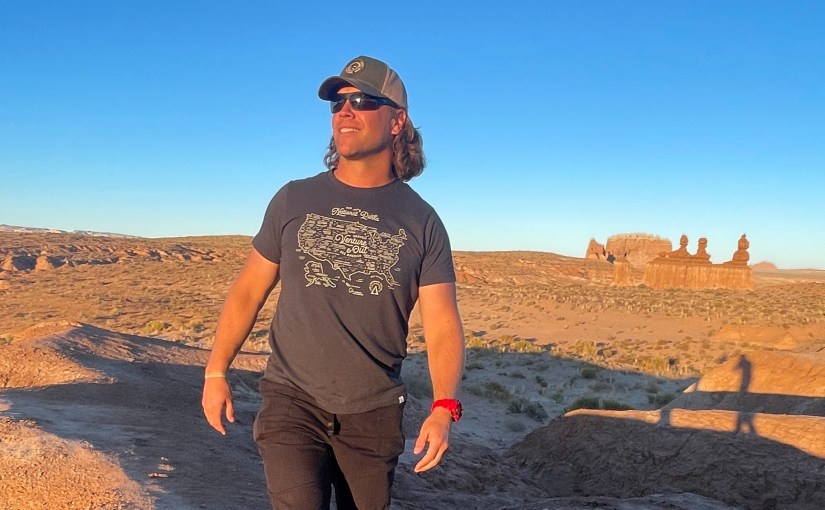
Why it is time for you to harvest more good ideas.

Good ideas are everywhere. Like oxygen and excuses. That’s because people have good ideas all the time, and they are happy to share them with you. In fact, a good idea is the thing people are quickest to share. Because people don’t want to keep good ideas to themselves. It is only through sharing your good ideas that your ideas get validated, like parking. It is only through sharing a good idea that you are given credit for being smart, creative or insightful. Or for being good at evading the law.

Are You Gonna Come My Way?

People share their good ideas with me all the time. Some share because I am an entrepreneur. And entrepreneurs are known for bringing good ideas to life, like General Electric. People share with us either because they want advice on how to bring their idea to life, or because they are hoping that we will bring their idea to life because they don’t have the time, money or energy to do it themselves. Which is kind of like giving your idea up for adoption, because you know you are not fit to raise the idea on your own. Yet you don’t want to terminate your idea either. #ProIdea vs #MyIdeaMyChoice

Another reason people share their good ideas with me is because I am a professional creative thinker. I lead the advertising and ideas agency The Weaponry. So when you think of a great idea, you naturally want to share it with someone who will recognize it and appreciate you for coming up with it. People also know that I will have ideas on what they should do next. Kinda like the owl that those kids asked how many licks it took to get to the Tootsie Roll center of a Tootsie Pop. (Drop the answer in the comments if you know.)

The third and perhaps most important reason people share good ideas with me is because I am looking for them. It’s the law of attraction. They come my way because I am coming their way. And we meet in the middle, like Parker McCollum and Maren Morris.

Why You Should Harvest Good Ideas.

Ideas create opportunities. They make things easier. They make things more enjoyable. They create more Wow in your world. And they offer more ways to make money than The Mint. (Actually, The Mint only makes money the coiny way and the bulliony way.)

But good ideas also offer clues, instructions, blueprints or templates on how to create more good ideas. Because the same insight, combination, application or exploration that led to one good idea can help create more. You can always reverse engineer a good idea, and once you discover the process, you can apply it to create countless others. Which means that when you collect good ideas you are also collecting keys to unlock more good ideas.

Key Takeaway

To live a successful, creative and interesting life, become an idea harvester. Look for them. Go where they grow. Spend time with idea creators. And move through the world like a combine moves through a field of corn, wheat, soybeans, or AI-generated light bulb plants. Pick all the ideas you can. Collect them. Polish them. Combine them in new and novel ways. And they will create more value than anything else can.

*If you know someone who could benefit from this message, please share it with them.

+For more of the best life lessons I have learned check out my book, What Does Your Fortune Cookie Say? from Ripples Media.

There are no guarantees that your great idea will work every time.

Every day there are new songs, books, and blog posts. (Like the new blog post you are reading right now.)

There are new businesses, restaurants, shops, clubs and bars. Including shops where you buy clubs and bars.

There are new clothes, accessories and decoration.

And there are enough new social posts to fill a whole new social sphere every single day.

So why all the newness, Huey Lewis?

Because people have great new ideas worth betting on all the time.

However, you never know which good new ideas will wallop and which ones will whimper.

Sometimes your favorites will fail like New Coke and Kendall Jenner’s Pepsi ad. And sometimes your maybes will make a mighty roar. Like cat videos.

Learn from both.

And just keep swinging.*

The only real failure is to stop sharing your new ideas.


*Don’t actually be a swinger.

If you know someone who could benefit from this message, please share it with them. Especially if you know Kendall Jenner or anyone thinking about swinging.

+For more of the best life lessons I have learned check out my book, What Does Your Fortune Cookie Say? from Ripples Media.

How to do hard things.

When I was in college I had a summer job setting up large party tents in Vermont. I loved pitching a tent. It was hard. But looking back, that’s what I loved about it.

The hardest part of the erection process was driving the 4-foot-long steel stakes into the ground. The stakes create the foundation for the tent. You tie the tent ropes to the stakes to help hold the tent upright and sturdy.

To drive the stakes into the ground we used sledgehammers that were 8, 12 or 16-pounds. Size mattered. Because if you swung a bigger hammer you could get the job done in fewer swings.

Sometimes, when the ground was soft, the stakes would go in smoothly. But in Vermont and New Hampshire where I drove most of my stakes, the ground was very hard. They don’t call New Hampshire The Granite State for nothing. (And they don’t call Vermont the Granite State at all, but that’s just because New Hampshire already took it, for granite.)

But during those college years, I learned a valuable lesson about how to do hard things. Because the only way to get those 4-foot stakes in the ground was to keep pounding away until the job was done. More often than not the stakes went in an inch or less at a time. And sinking a 4-foot shaft neck-deep at that rate can be exhausting. But it was the only way to finish the job.

I applied that just-keep-swinging-till-it’s-done lesson in my athletic career as a track and field athlete at the University of Wisconsin. Today, I apply the same lesson to building the advertising and ideas agency, The Weaponry, writing my blog posts, newsletters and books. And simply not stopping until the work is done has never failed to produce results. Even when things get really, really hard.

Key Takeaway

The only way to get a job done is to just keep pounding until you are finished. Hit the task again and again and again. This is true when you are driving stakes in the ground in Vermont, building a company, advancing your career, trying to meet your fitness goals, or getting your education. Focus your efforts. Pound away. And just don’t stop until the job is done.

*If you know someone who could benefit from this message, please share it with them.

+For more of the best life lessons I have learned check out my book, What Does Your Fortune Cookie Say? from Ripples Media.

A great adventure book that will help toughen you up.

Yesterday afternoon was chilly in Wisconsin. The mid-October temperature dropped throughout the day. Dark clouds rolled in. The wind picked up. And I was outside mowing my 1.7 acre lawn in Mequon on my John Deere lawn tractor.

Suddenly the clouds burst open with rain. Big fat, cold drops quickly soaked my clothing. The wind whipped at my face. The obvious discomfort brought a big broad smile to my face, and I just kept on mowing.

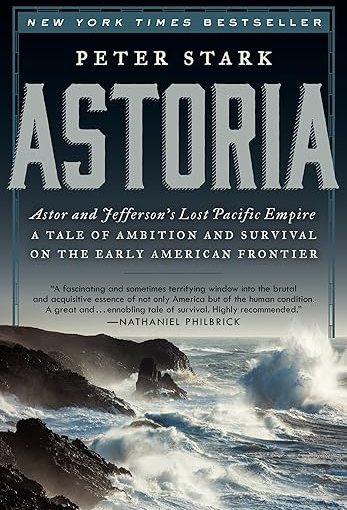
You see, as I was mowing I was also listening to the tail end of the audiobook Astoria by Peter Stark. This amazing book tells the epic tale of the men and one woman who set off to establish the first American settlement in the northwestern United States in 1811 at what is now Astoria, Oregon. You may know Astoria better as the location where The Goonies was filmed. #pinchersofperil

This adventure had huge influences on the development of the Pacific Northwest, including the discovery of what would become the Oregon Trail and fertile ground to grow grunge music.

Astoria was the vision of famed fur mogul and real estate hoarder John Jacob Astor. Astor wanted to establish Astoria at the northwestern hub of his transcontinental fur trade where the great Columbia River meets the Pacific Ocean with a roiling fist bump. This is just down the block from where the Lewis and Clark expedition spent a miserable winter once they reached the Pacific Ocean at Cape Disappointment. (Note to self: Don’t move anywhere that has the name Disappointment.)

The expedition dealt with unfathomable challenges as the overland party trudged across the continent with resistance at every turn. While others experienced the worst the sea has to offer as they sailed from New York City, south around Cape Horn, to Hawaii, and on to Vancouver Island. Things went bad. Really bad. Which is part of the reason this story hasn’t endured as a great American tale. But it is also the reason the story is so fascinating to read now.

Astoria is one of the top 3 adventure books I have ever read. It ranks up there with Stephen Ambrose’s Undaunted Courage about the Lewis and Clark’s adventure, and Endurance, about the fateful voyage of Ernest Shackleton’s crew to Antarctica.

Key Takeaway

If you like stories of survival, adventure, drama, business, or history you will love Astoria. This instant classic will also remind you that things could always be worse and that you can endure far more than you think you can. All of which makes a little cold rain on your lawn tractor feel like no problem at all.

*If you know someone who might enjoy this book, please share this review with them.

+For more of the best life lessons I have learned check out my book, What Does Your Fortune Cookie Say? from Ripples Media.
8 Ways to reload your spring every day.

A good day is full of actions. Some physical. Some mental. Some social. But the progress you make each day is a result of the actions you take. But one good day is not enough. To live a good, good life you need to create good day after good day, mate.

However, a day full of action depletes your resources. That’s why it is important to reload your spring. (#snickering) Whether you are focused on your career, caring for your family, or training for competition, it’s important to come back day after day with great energy and effort.

To create a long chain of great days of action and progress you have to reload your spring.

8 Ways To Reload Your Spring

1. Sleep: A great night of sleep is the best thing you can do to reload. After a long day of activity, your spring is fully uncoiled. Your energy is expended. Like The Giving Tree, you have nothing left to give. No leaves. No branches. No apples. But overnight something magical happens. A full night of sleep reloads and resets your spring. It makes you ready to uncoil on another day of important actions, Jackson.

2. Eating: All that work you are doing burns calories. When you feel like a hangry, hangry hippo, it’s a sign that your spring is fully uncoiled. When you eat you are putting calories back in your system. You are refueling. As you reload energy into your system with great nutrition you are resetting your spring. Also, make sure to hydrate.

3. Hydrate: Make sure you are drinking plenty of water. Humans are basically walking bags of water. So rehydrate early and often to keep your spring at full hydraulic power. Start your day with a tall drink of water to make sure you hit the day fully recoiled.

4. Exercise When you exercise you are creating a better spring. You are putting more power into it. You are enabling it to uncoil over a longer period without losing strength. Plus, it makes you look more springy.

5. Socializing: If you have extroverted tendencies, you reload by spending time with others. For extroverts, socializing is like Gatorade. (But instead of replacing your electrolytes, it replaces your socialytes.) Make sure to add social activities to your calendar to regain what you have lost.

6. Solitude: If you have introverted tendencies, you reload in your quiet time alone. Don’t neglect this time. It will help you reset and prepare for another day among the Yappers.

7. Reading: Reading reloads your spring through education, inspiration and motivation. (Basically all the ations.) Learning new things helps you find new and better approaches to add to your weaponry. Reading exposes you to people who have done great things and inspires you to do more. Plus, reading provides motivation and reminds you of the reasons you are taking all those actions.

8. Faith: Faith isn’t just for George Michael and Tim McGraw. Tapping into and practicing your faith has the power to reload like nothing else can. Don’t miss out on its power to re-energize your system and bolster your resilience day after day.

Key Takeaway

Success is a result of putting your all into each day and then reloading. The better you are at reloading your spring daily the easier it is to sustain progress and deliver results. Whether you are the CEO of the world’s biggest company or the head of your household, make sure to reload your spring. It’s the key to bringing your best to each day.

*If you know someone who could benefit from this message, please share it with them.

+For more of the best life lessons I have learned check out my book, What Does Your Fortune Cookie Say? from Ripples Media.

The 3 types of affluence that lead to happiness.

There is almost nothing more enviable than affluence.

The two inventors of the dictionary, Meaning Miriam and Definition Webster, decided that affluence means an abundant flow or supply.

And when you have an abundant supply of good things your life tends to be good. Unless the things you have in abundance are news coverage and bottles of lube.

Affluence most certainly leads to happiness. But not in the way that most people think.

Here’s how it works:

The Affluence Formula

1. First develop your relationship affluence. The more and better friends the better. This is the greatest investment you will ever make. (Unless you bought Apple at its IPO.)

    2. Relationship affluence leads to financial affluence. Your relationships increase your opportunities, knowledge, support, encouragement and positive peer pressure. It’s not just about a small group of great friends like Monica and Chandler. Your outer ring of relationships is sneaky valuable as you can read here in the study The Strength of Weak Ties.

    3. Financial affluence leads to time affluence. The more financial resources you have the more control you have over your time. This is the greatest freedom in the world.

    4. Time affluence leads to happiness affluence. When you have control over your time you have control over your life. That Janet Jackson-level control enables you to spend your time doing the things you enjoy most with the people you enjoy most.

    Plot Twist!

    The great happiness in life will come from your abundance of relationships and time. Not from the money itself. Never forget that.

    Key Takeaway

    More and better relationships lead to more and better opportunities. Opportunities create financial resources. And financial resources give you control over your time. Which is the greatest affluence of all.

    *If you know someone who could benefit from this message, please share it with them.

    +For more of the best life lessons I have learned check out my book, What Does Your Fortune Cookie Say? from Ripples Media.

    You just need someone to take a chance on you.

    I recently came across this classic photo from July of 20000. It was the first photograph ever taken of me and Dawn Zabel. This was long before she was my wife, and shortly before we started dating. And the photo itself was taken by a camera that wasn’t attached to a phone, social media or Wordle.

    When I saw this photograph an interesting and profound thought popped into my hat holder. It wasn’t about how young Dawn and I looked, how short my hair was, or how Clorox-white our shirts were.

    My immediate thought when I see this image is that we all need someone to take a chance on us. Because here’s what I see that goes beyond the obvious.

    My First Job

    This picture is from the Cramer Krasselt company picnic in 2000. CK was my first employer in advertising. They took a chance on me right out of college. I was an unproven commodity that had no track record of advertising success and no experience to draw on. I was just a recent graduate from the University of Wisconsin who came for an informational interview with an endorsement from one of my college professors. It was hard for them to know if I was just a talker or a Hershel Walker. But CK took a chance. And like dough, that was all I needed.

    My Credit History

    When I started my job at CK I made very little money. (It was actually the same size money that everyone else made, but I didn’t make much of it.) And I had to Stretch Armstrong that money to pay for rent, groceries and a $300 per month student loan payment. So when I applied for a credit card everyone Heismaned me, citing my high debt to income ratio that made me credit unworthy. For 2 years I experienced rejection after rejection by the credit cards who I asked out. Then 2 years into my career I flew to Los Angeles to shoot a commercial for Reddi-Wip whipped cream with my creative partner, Dan Koel and my creative director Mike Bednar.

    After the filming was finished I stuck around LA and attended a college football game between USC and San Diego State, with my college friends Alex Mautz and Jaime Smith Mautz. On our way into the game I passed a tent that was giving away free USC t-shirts if you signed up for a USC credit card. I was excited to have a t-shirt to wear to the game, but I knew I wouldn’t actually get the credit card because of my preexisting credit condition. So I filled out the paperwork, took the shirt, and enjoyed the game.

    Then, two weeks later, to my total surprise, I received a USC Visa credit card in the mail. Someone finally took a chance on me. I used that Trojan card for the next 6 years like I was the proudest USC grad on the planet. I paid off my entire balance every month. And I built my credit. My credit score passed Pat Robertson’s 700 Club and went to the 800s. All because USC Visa took a chance on me.

    Look at this photograph. Every time I do it makes me laugh.
    I am wearing the T-shirt they gave me outside the LA Coliseum.

    My Wife Dawn.

    I first saw Dawn Zabel in the elevator on my way to work in early June of 2000. And my life has never been the same. I got off the elevator and immediately began a long and elaborate Dawn-stalking mission, which turned into the greatest adventure of my life.

    But back then, I was just a 27-year-old copywriter with a high debt-to-income ratio and a shiny new USC Trojan visa. My career hadn’t had any major moments indicating future success. I didn’t have an impressive resume of enviable past relationships. I hadn’t been a good parent to a dog, cat or hedgehog. Heck, I didn’t have a fern that could vouch for my skills as a long-term provider.

    Yet, Dawn still took a chance on me. A couple weeks after the company picnic we went on our first date to see the movie The Patriot, which to my surprise, didn’t feature Tom Brady or take place in Foxborough. And it didn’t really land with Dawn. But when I dropped Dawn off that night I did land a goodnight kiss. Two years later we got married. Then came 3 kids and 5 houses. We enjoyed moves and promotions. Adventures and opportunities. And we had credit cards that got paid off every month.

    This week, Dawn and I celebrated our 22-year wedding anniversary. All because she took a chance on me.

    Key Takeaway

    All you ever need is a chance. When you find people willing to give you a try, prove them right. Have pride in your reputation and respect the trust others have offered you. Then knock it out of the park. Turn the promise of your potential into proof and performance. When you look back at your life you’ll be thankful to all those who gave you a shot. And it will make you want to do the same for others. Taking a chance on an unproven person is one of the greatest gifts you will ever give. And often times it is all that person will ever need.

    *If you know someone who could benefit from this message, please share it with them.

    +For more of the best life lessons I have learned check out my book, What Does Your Fortune Cookie Say? from Ripples Media.