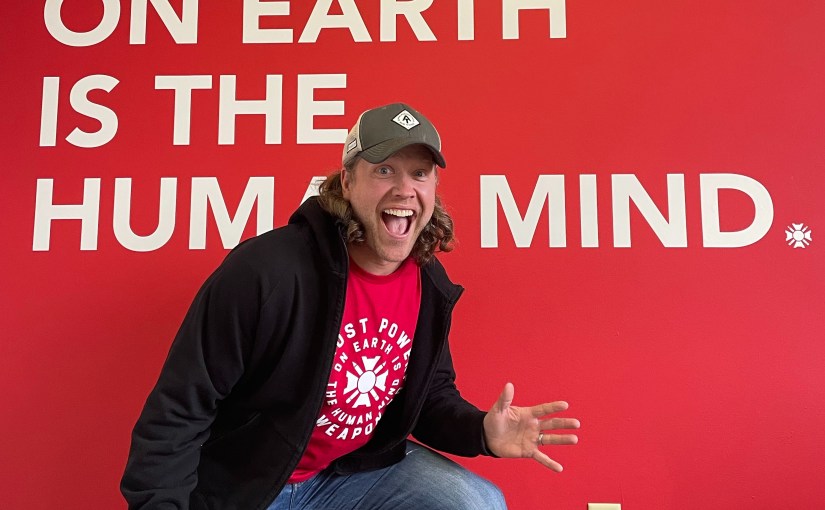
When you feel the heat of inspiration it’s go time!

I have heard countless times that time is our most valuable commodity. I believe this. After all, you can’t buy it. It constantly running out. And despite what Mick Jagger said, it’s not really on your side. (No it’s not.)

But right up there alongside time on the Mt. Rushmore of Most Valuable Commodities are inspiration and motivation.

They light your fire. Like Jim Morrison.

They lead to growth and improvement.

They create the empire state of mind that builds empires. Like JAY-Z and Alicia Keys.

They change the world.

Yet to be effective, both inspiration and motivation require you to act. To move. To do! Do! Do! (Not da-da-da.)

Unfortunately, both forces burn bright for a moment, then the moment’s gone. Like dust in the wind.

Which means when you feel the powerful heat of inspiration and motivation you have to go.

You have to cook while the heat is on, Glenn Frey.

You have to jump on the action you feel inspired to take.

Take steps to start that business.

Start writing that book.

Plan that remodel.

Create that art.

Build the prototype.

Plan that travel.

Create that event.

Get to the gym.

Enroll in that class.

Reach out to that person that could change your day. Or your life.

Acting on the heat of inspiration is how I started The Weaponry.

It’s how I wrote What Does Your Fortune Cookie Say?

And it is how I worked out last night at 10 pm after a 15-hour work day.

Key Takeaway

Take advantage of those precious sparks of inspiration and motivation. They don’t last long. But if you take action while your mind is in the red, the impact can be felt long after your time is up.

*If you know someone who could benefit from this message, please share it with them.

+For more of the best life lessons I have learned check out my book, What Does Your Fortune Cookie Say? from Ripples Media.
9 Random things I share about myself in a new podcast.

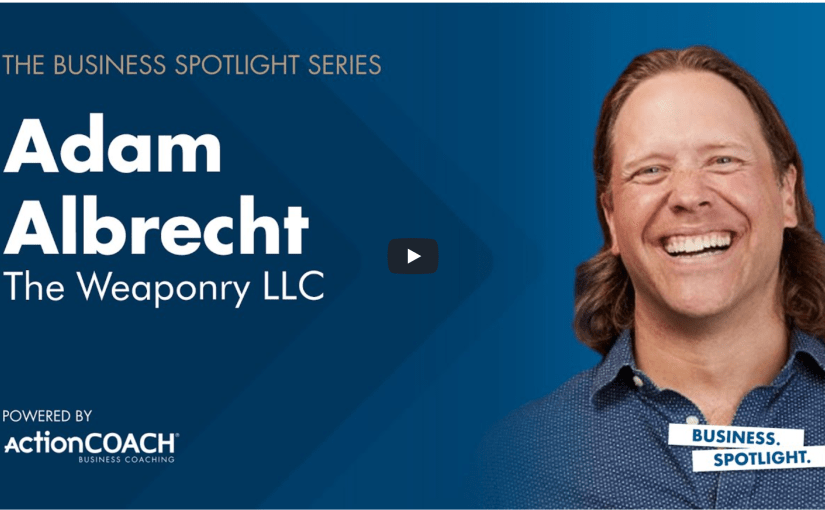
I love to share stories. That’s probably why I started blogging in the first place. Over the 1001 blog posts I have published, I have shared a small country library worth of stories. But recently I sat down for a fun podcast interview to share stories with Kory Dogs, of ActionCOACH. (I kept thinking he sounded like the action hero Kory whose superpower would be saving Corey Feldman and Corey Haim from themselves.)

Kory asked me questions I don’t often get asked. Which means you hear some little-known details about my life.

9 Things You Learn About Me In This Podcast

  1. The 5 States I lived in as a kid.
  2. My connection to the Shawshank Prison.
  3. My unique experience on a bull stud.
  4. The surprising comment my boss made 2 years into my career that inspired me to start my own advertising agency. (No, it was not You’re Fired!)
  5. How I describe my leadership style.
  6. What I would do differently if I could go back and do it all again. (Which sounds like a Garth Brooks song.)
  7. The new things I want to learn.
  8. The book I recommend to all entrepreneurs.
  9. Who I would give a shoutout to at the end of a podcast when surprised with the question, ‘Who would you like to give a shoutout to, right now?’

You can read or watch the interview here.

Why listen or read when you can watch?

The Book Recommendation

During the podcast I talked about a book I suggest every entrepreneur, or aspiring entrepreneur, or spiraling entrepreneur should read. Here’s the excerpt, in case you don’t have time to watch, read or listen to the full podcast:

Kory: What advice do you have for business owners trying to do everything on their own?

Adam: I often advise business owners and entrepreneurs to read The E-Myth by Michael Gerber. This book offers a fantastic framework for developing your business through systems and processes. It teaches you how to structure your business so that it can operate on a larger scale, similar to a franchise.

By thinking through your business in this way, you ensure that all aspects are well-organized. You create a mature system where you’re not overwhelmed by every detail. Instead, you take on specific responsibilities and avoid getting bogged down by tasks outside your main role.

For example, you don’t want to be the person who not only bakes pies but also handles HR, sales, and operations. The book helps you define your role clearly and understand what additional roles are needed in your organization.

I read The E-Myth before starting The Weaponry, and it provided a strong foundation for me. For any business owner feeling stuck in a cycle of chaos, I recommend this book to help you assess and address your challenges effectively.

For those who aren’t familiar, the book is called The E-Myth and its subtitle is “Why Most Small Businesses Fail and What to Do About It.” Essentially, it argues that if you don’t get the business fundamentals right, it won’t survive. But if you do, it can thrive. The E-Myth refers to the belief that only certain people are born to be entrepreneurs. Michael Gerber challenges this idea, asserting that anyone can be an entrepreneur. He presents a process and approach that can make entrepreneurship work for everyone.

Thank You!

Thanks to Kory Dogs of ActionCOACH for the interview. And for making me feel like I know a real-life action hero.

Thank you blog readers for reading this blog. It’s the only way to earn your title.


If you know someone who you thing could benefit from listening to this podcast, please share it with them.

+For more of the best life lessons I have learned check out my book, What Does Your Fortune Cookie Say? from Ripples Media.
This is my 1000th blog post! Here’s how I did it.

In 2015 I read a book titled The Little Black Book of Connections by the self-proclaimed King of Sales, Jeffery Gitomer. One of the important tenets of the book is, Success is not about who you know, but who knows you. (Who knew?)

Gitomer goes on to share that the best way to have more people know you is to share your knowledge, expertise, ideas and experiences broadly. Which is what Kim Kardashian did with her first home movie back in 2007. And look how well that worked out for her.

Gitomer points out that platforms like blogs, vlogs, podcasts, editorial columns and books enable you to share your ideas with many people at once. In fact, it allows people you would never meet face to face to discover your ideas and be positively impacted by your knowledge and expertise.

What started with a single blog post has gone farther than I ever imagined.

Gettin’ Bloggy With It

In the fall of 2015, I began planning to launch a new advertising agency. So I decided to take Gitomer’s advice and start blogging to share my ideas about advertising, branding, and creativity. I also wanted to share what I was learning about entrepreneurship. Success leaves clues. And I wanted to share breadcrumbs for other entrepreneurs to follow. (It seems I failed to learn the downside of leaving breadcrumbs from Hansel and Gretel.)

I wasn’t sure how the whole blogging thing would go. I had tried it before. In fact, I had started 5 or 6 different blogs and quickly stopped. But this time I felt more inspired. I had Gitomer’s encouragement. I had a strong desire to succeed as an entrepreneur. (And I wanted to be able to feed my family.) I believed that writing a blog would be a great way to share my expertise, let people know I was starting The Weaponry, and share our growth and success.

I have always enjoyed writing. I started my career as a copywriter. So I figured that writing a blog would be fun. It would enable me to tap into my strengths. And most importantly, it would allow me to write funny things without a client or editor telling me no.

So I began writing in November of 2015. And like Forrest Gump, I just kept going, and people started to follow. I began slowly, with a blog post every week. Then I moved to 2 posts per week. And finally, I developed a 3 post-per-week habit, writing 5 days a week, and publishing on Tuesdays, Thursdays and Sundays, when Chick-fil-A was closed.

Today, less than 9 years later, I have published 1000 blog posts!

My writings have generally fallen into 3 buckets:

  1. Marketing: This covers the topics of marketing, advertising, branding, creativity, design, writing and yes, blogging. Which is totally meta. (Non-Zuckerberg meta.)
  2. Business: This includes entrepreneurship, startups, sales, network development, professional development, and my personal favorite, funny business.
  3. Self-Improvement: This was unintentional. But I have written a lot about personal development and motivation. I have learned so much over the past 9 years about how to do better and be better (through trial and error) that I felt I had to share these lessons.
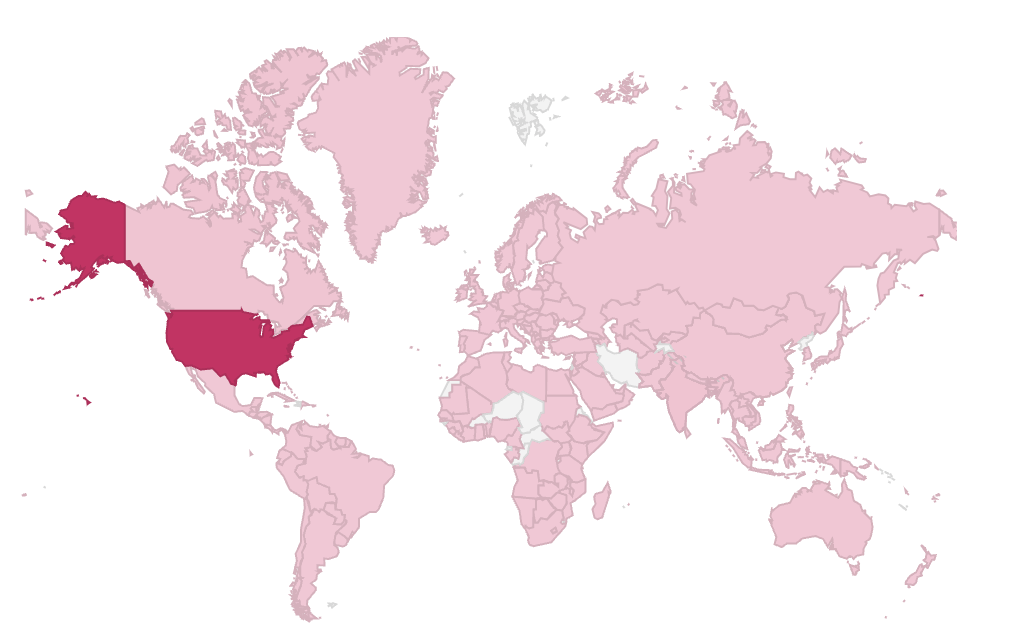
These are all the countries where my blog has been read. North Korea, Iran and the croissant in Africa are holding out on me.

What Do 1000 blog posts look like?

  • 111 blog posts every year.
  • More than 2 new blog posts every week.
  • The equivalent of 10 full length 50,000 word books
  • A minimum of 2000 hours of writing time.
  • The equivalent of one full year of 40-hour work weeks spent writing blog posts.
  • The equivalent word count of writing The Old Testament of The Bible. (Truly I say to you, this fact hath blown my mind.)
Blogging created a pathway to publishing books. And holding books I published.

5 Benefits Of Blogging

  1. It provides original content I can share on LinkedIn, Twitter, Facebook, Instagram, Threads, Medium and Reddit (Although Reddit readers hate everything, like Mikey.)
  2. It provides a great collection of well-considered and well-organized ideas and stories that are ready to be adapted to books. The hardest work of writing my books happens in the blog stage. The easiest work is collecting blog posts with related themes to create chapters and books.
  3. Blogging created a path to professional speaking. The blog posts led to a book. The book led to speaking opportunities. The speaking opportunities have created the best source of income in my Information Creation + Communication Ecosystem.
  4. Blogging organizes great ideas, lessons and stories to share as a professional speaker.
  5. The blogs have allowed me to share far more jokes and humorous asides than I would be able to share any other way. This is really the thing that keeps me writing.
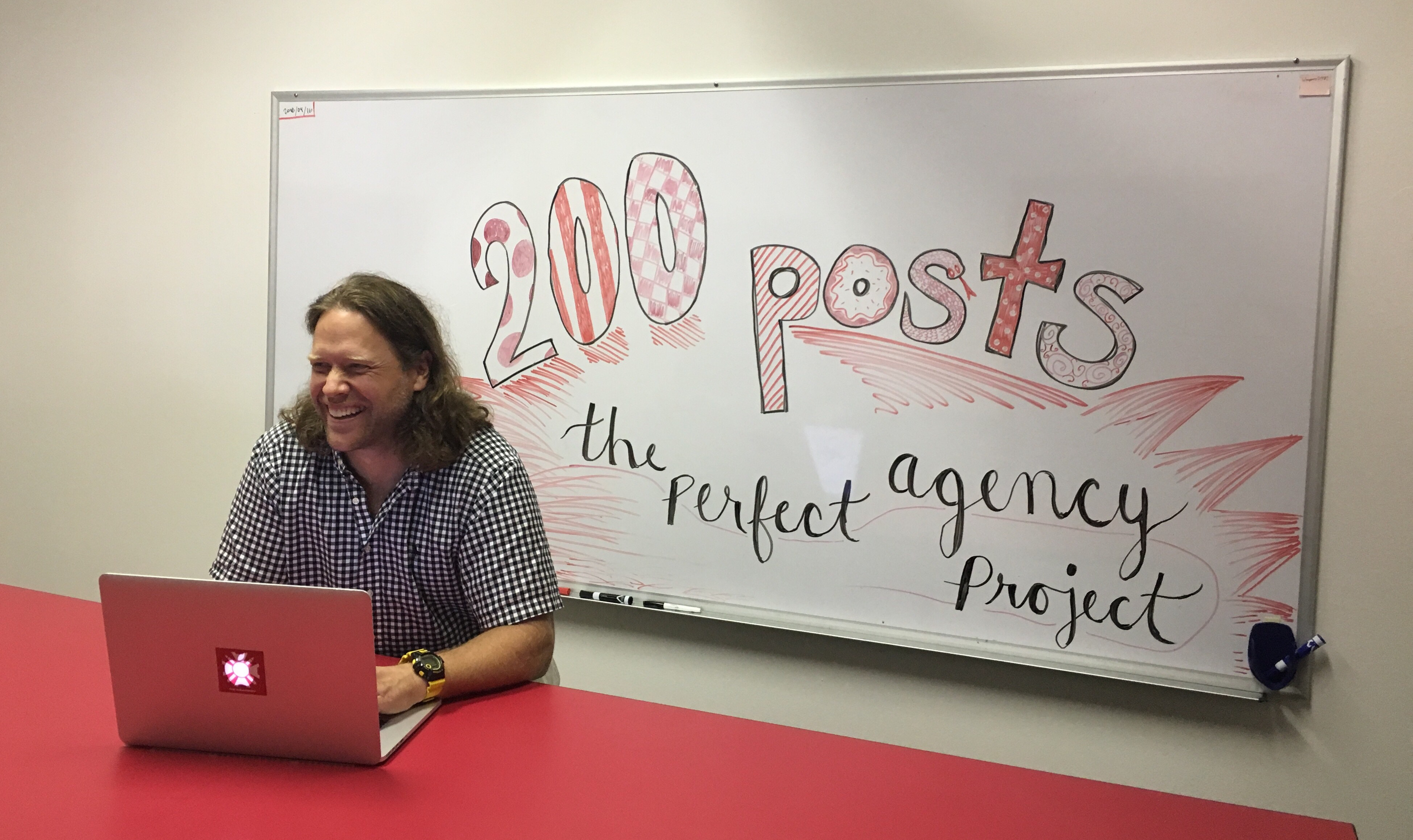
I was excited to hit 200 posts back in 2018 when I was just a baby blogger.

6 Things I Want Everyone To Know About Writing 1000 Blog Posts

  1. Anyone can do it.
  2. There are no barriers.
  3. There are tons of tools and templates that make it easy. (I use WordPress to write and publish my blog.)
  4. The 2 key steps are: 1. Get Started 2. Don’t Stop.
  5. To sustain a blog you have to create a regular writing habit. Write at the same time for a set duration every day, or every weekday, or every Friday or whatever works for you. The habit is how it happens. (Which is also how you know someone is a nun.)
  6. Don’t do it for huge numbers of readers. You can’t predict who will read your posts, or how many people will read what you write. If you are like most people, including me, your reach and readership will always be lower than you would want. And my blog has been read in over 160 countries. But you can create good information that can have a huge impact on one reader. That’s the real win of blogging.

Key Takeaway

As the saying goes, the best way to eat an elephant is one bite at a time. And the best way to write 1000 blog posts is one post at a time. Find a topic or topics that you are really interested in. Get started. And just don’t stop. Write at a regular time each day or each week. And when people tell you they enjoy reading your posts, or somehow benefited from your writings, use that as fuel to keep going. The world needs more good ideas, lessons, and stories. You have them. So start sharing. You’ll be surprised by how many lives you can positively impact. And that is the real benefit.

*If you know someone who could benefit from this message, please share it with them.

+For more of the best life lessons I have learned check out my book, What Does Your Fortune Cookie Say? from Ripples Media.
Why logic isn’t enough to win at marketing.

As the Founder & CEO of the advertising and idea agency, The Weaponry, I get to work on a lot of great brands with a lot of great people. But as someone passionate about great creative work it may surprise you to hear that one of my favorite brands to work on is in a historically conservative category. Yet we have developed a brand personality and creative work for our client that is full of the type of personality and wit that is more common in categories like soda pop or men’s deodorant. #ImOnAHorse.

But like most brands, our fun client also has a lot of legitimate reasons to choose it the way choosey moms choose JIF. So a while back the marketing team decided to emphasize those legitimate reasons to choose the brand in a fairly straightforward way. The personality was downplayed. Features and benefits took center stage. And the brand started feeling, well, flat. Kinda like soda pop after someone left the cap off of the bottle for a few days, in Iowa.

I could tell that we were starting to drift slowly off course. The fun brand we had built was an honest reflection of the reason customers loved the organization. The people and culture of the place were great. We simply made sure that it shined bright like a diamond in the marketing too.

So we met with our client and shared our concerns. I told the client that we were getting too logical. We were focusing on rational reasons to choose our brand. And our endearing personality, the fun, cool, the funny, was fading into the background. As we focused on our features and benefits, things that many of our competitors could also promote, we were losing our differentiation. And we were in danger of losing our emotional magnetism.

As marketers, we must never forget this fundamental law:

To be wildly successful, you need your audience to love you, not logic you.

Our superstar clients understood the problem. And we made appropriate adjustments. Starting with our next creative campaign, we put our personality front and center as we promoted the great reasons to believe in the brand.

Today, when I see our work I love everything about the brand. The personality is fun, smart and clever. It provides a smile if not a laugh. There is a clear reason to choose the brand in every marketing morsel. People comment on the work all the time. And the brand is enjoying strong growth and success across the board. Which I love most of all, Scarecrow.

Key Takeaway

Resist the temptation to focus fully on your features and benefits. Brands should have personalities, just like people. Invest time and energy in developing a great personality that grabs attention and magnetizes your audience to the brand. Make your customers and prospects love you, not logic you. Because once you win their hearts, everything else will follow.

*If you know someone who could benefit from this message, please share it with them.

+For more of the best life lessons I have learned check out my book, What Does Your Fortune Cookie Say? from Ripples Media.
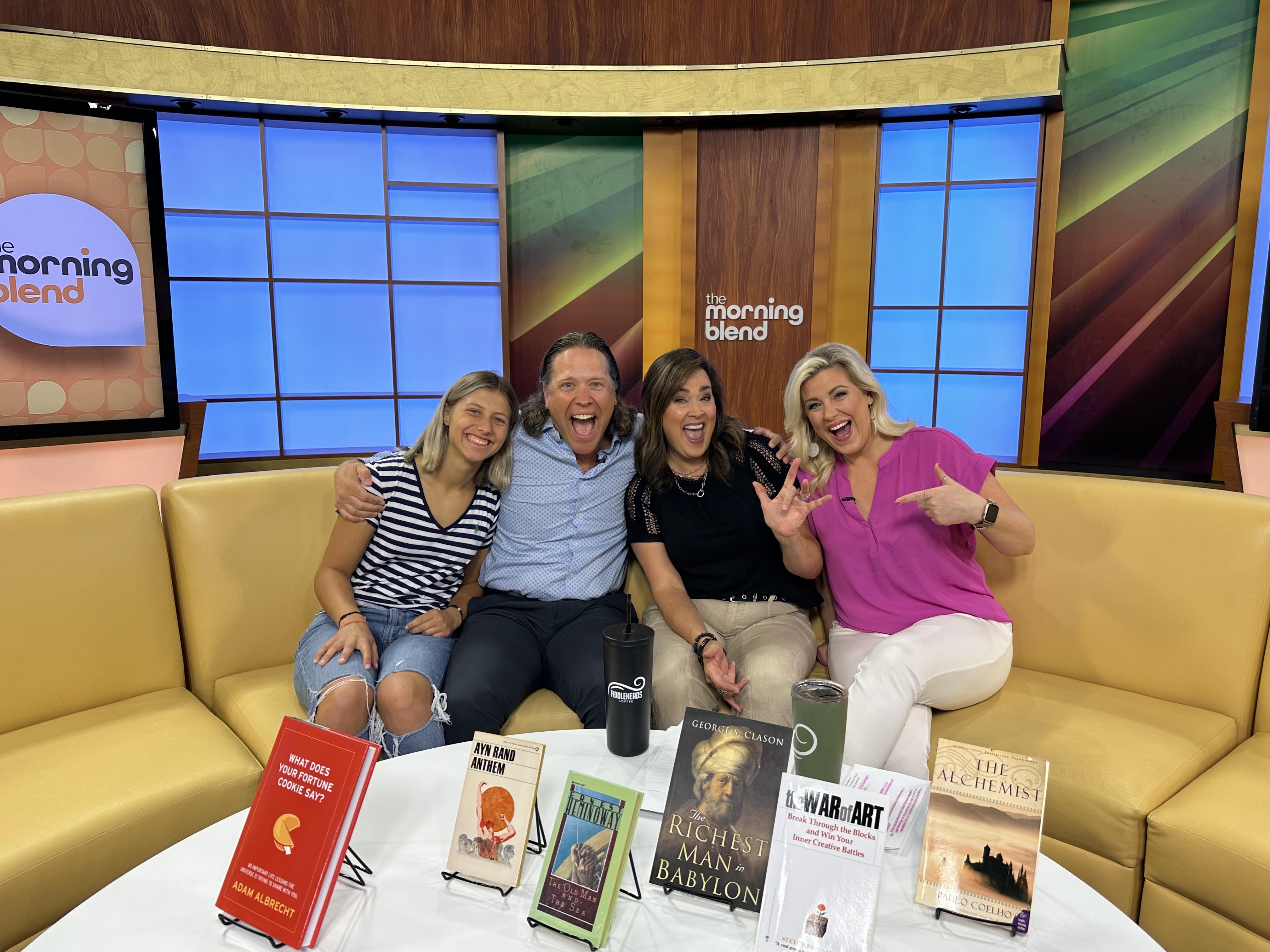
Why I’m launching my good newsletter, and how to sign up.

In 2015 I began writing a blog to share what I was learning as I started the new advertising and ideas agency The Weaponry. I wrote about entrepreneurship, startups, advertising and marketing. But I also shared lessons I was learning about self-improvement, professional development and positivity. Because if you have a blog you can write about anything you want. Even the strange people you meet at Piggly Wiggly.

People seemed to like what I was writing. And my blog readers encouraged me to write a book. So in 2021, I published my first book titled What Does Your Fortune Cookie Say? Which lead to speaking opportunities across the country. The whole experience was a good reminder, as Michael Jackson said, that you wanna be startin somethin. (You gotta be startin somethin.)

I have been blogging for more than 8 years now. In fact, this is the 987th post I have published. According to WordPress, my blog has been read in 187 countries. Including almost all the countries you’ve ever heard of except North Korea. Clearly, I am no Dennis Rodman.

Sharing the insights and ideas I have discovered with the world is my way of paying forward all the knowledge and good fortune that has come my way. But today I have a problem. And it goes beyond North Korea.

The Problem

Most people discover my writings through a social media distribution channel. These channels include Facebook, TwiXter, WordPress and LinkedIn. The problem is that I don’t own any of those platforms. Which means that Mark Zuckerberg, Elon Musk, Jimmy WordPress and ‘Linky’ Linkenstein decide whether or not to share my posts with you to read and benefit from. In fact, if you are not reading this post it is likely because those gatekeepers are keeping us apart. (And while obviously, you are reading this post, there are billions on this planet who are not.)

The best way around this challenge is to create a newsletter that enables me to share worthwhile lessons, stories and positive thoughts directly with you and the billions of literate humans on Earth.

I have been thinking about this for several years. I have even crafted examples of the newsletter and gathered an initial email distribution list. But I have never sent out a newsletter.

It’s Go Time

I recently had another birthday. (Yay me!) This spurred significant self-reflection. And one of the things that I reflected on was my unborn newsletter. I resolved to begin publishing it right away.

So that is what I am doing.

Adam’s Good Newsletter

I am excited to announce the introduction of Adam’s Good Newsletter. It will contain the articles I write each week. Plus it will include a range of other fun and quick elements like:

  • Book reviews and recommendations
  • Pictures
  • Stories
  • Quotes I find helpful
  • Things I’m digging
  • My personal book writing updates and previews
  • Other things I don’t know I am going to share

The goal of writing this newsletter remains the same as all of my other writings:

To help people learn a little, laugh a little, and lift a little.

To sign up for this email newsletter please send your email to adam@theweaponry.com with the subject: Newsletter. Or just respond wherever you read this post. I’ll get the message. And as long as I also get an email address, you are in like Flynn.

I plan to share one new issue each week. Although it may be every other week or monthly as I figure out a sustainable rhythm.

As with the blog, the books, and the business, I am excited to see where this goes.

Thanks for reading. I always appreciate your time.

-AA

12 Lessons I have learned from 8 years as an entrepreneur.

When I set out on my entrepreneurial adventure 8 years ago I had a lot to learn. So I became a student of entrepreneurship in the same way that I became a student of Journalism, Psychology and Bratwurst at The University of Wisconsin. I read books, magazines, and blogs. I talked to friends who were entrepreneurs and business leaders. The non-standardized tests started in April of 2016 when I launched the advertising and ideas agency, The Weaponry. And I am still tested every day.

8 years later, I can’t imagine my career without this chapter. I have learned a lot about what it takes to launch and run a business. It turns out there is a lot more to it than printing up a batch of business cards and cool company t-shirts. (Although you should do those things too.)

I wanted to share 8 lessons I have learned along the way. Because 8 ideas from the past 8 years seemed well-balanced. But I had too many lessons to stop at The Ocho. So here are 12-ish lessons I have learned that you should know if you are thinking about starting your own business, or if you already have a business and you now need to get your fecal matter straight.

12 Lessons I have learned from 8 years as an entrepreneur.

  1. Don’t quit your day job*. This is the most important lesson. Start working on your new business as a side hustle. Use your nights and weekends to study, plan and create your business. Use the income from your day job to fund your embryonic startup. Start generating revenue from the new entity. Then, as your startup indicates that it will be able to replace your required income, you can transition out of your full-time employment. But allowing your startup to grow as a side hustle will take a lot of pressure and stress off the early stages of entrepreneurship. From my first paid project to leaving my day job was 5 months. But a year or two of side hustling is not crazy. It is time well spent. *Note: This lesson is only for people who currently have day jobs. If you don’t have a day job the next 11 lessons are for you.

2. Good people are gold, Pony Boy. Business is the ultimate team sport. A great business is simply a great team of people running great plays. Find the right people. Treat them well. They will make the company and the culture amazing. As an entrepreneur, you get to pick your entire team. It’s one of the best parts of entrepreneurship. That and picking the dress code.

3. Good processes make it happen. Your systems and processes enable success, reduce friction, and organize the organization. Determine your organization’s way of doing everything. Write it down. Share it broadly. It ensures that everyone in your organization knows that you always pass the Dutchie on the left-hand side. Don’t worry if the process isn’t perfect. You can always improve it when you discover a better way. Read The E-Myth by Michael Gerber and Traction by Gino Wickman to help you dial this in.

4. Great creative thinking is key. As an advertising and ideas agency, creativity is what our clients come to us for. This has to be great or nothing else matters, like Metallica said. However, all entrepreneurial organizations should focus on creative thinking. It is how you get things done when you don’t have all the resources you wish you had. And it is how you beat competitors who always do things the same old way. Because creativity creates competitive advantages.

5. Great customer service is a must. This is why your clients stay. Always think about your service, and how you can make it better. We want to treat our clients so well that they never want to leave. And we want to make sure they hire us again when they leave their current job for a new opportunity. This has happened more times than I can count. And I am relatively good at counting.

6. Business development is critical. You have to put focused effort into expanding your business. There is natural attrition that happens in business, even if your product and your service are great. The economy plays games you can’t control. So do a dozen other influences. Businesses that forget to find new customers eventually die. Sometimes they die slowly. Sometimes they die all at once. But the net result is the same.

7. Trust is everything. At the beginning of your entrepreneurial adventure, people will take a chance on buying from your new entity solely because of you. The company will have no real track record or history of doing what it says it will do. But you do. Be a trustworthy human. That personal trust will be the bridge that gets early customers to try your offering before you have real proof that your business is as good as advertised. (Also remember to advertise that you are good.)

8. Build in a fair profit. It’s not enough to have paying customers. You have to understand the cost of your goods or services. Then you have to build in a fair profit. Which means if your offering costs you $100 to deliver, you must charge $5, $10, $20, or $100 on top of that to make sure the business makes a fair profit. That profit is what keeps the business sustainable. Some customers and most procurement departments will try to beat the profit out of your business. Don’t let them. Know what you need to make, know your value, and stick to it. Like a cocklebur on corduroy.

9. Share the success with your team. Business success is team success. You have to recognize and celebrate the contributions of everyone involved. When you do, a good team is eager to create even more success. That stuff is addicting. Like Dot’s Pretzels.

10. Relationships are extremely important. The personal relationships you create help create your success. Those include your relationships with your team, clients, partners, vendors, bankers, brokers, accountants, lawyers and the media. But all your relationships matter to business. Because you never know where your next referral will come from. And you never know who you may need as a character witness. Or who may be carrying an extra kidney that you may need one day. And don’t neglect your relationships with your family to make the business work. My relationship with my wife Dawn has been the most valuable relationship on my entrepreneurial adventure. And I get to spend more time with my kids now as an entrepreneur than I did as an employee. Which is perhaps the biggest win of all.

11. You have to keep experimenting. Business success is an interesting combination of running tried and true plays and trying new things that create new advantages. It’s kinda like the way you have to keep things spicy in your romantic relationship. Businesses that keep experimenting with new technology, new offerings, and new models survive changes. So stay on your toes. (If you have toes.) Watch the horizon for change, both in your industry and the broader economy. Expect that the future will be different than the past and you will be prepared for the strange changes. Like David Bowie said.

12. Create a newsletter. This is a great way to stay in contact with your community, which includes team members, customers, partners, supporters, potential customers, potential employees, the media, fans, and your parents. Add value through each issue. Share your news and successes. Social media channels are beyond your control, and it can be challenging to get your message in front of your audience there. But a newsletter is your own media outlet. It is like an express train to your audience’s inbox. Choo Choo! We use Mailchimp for our newsletter. There are many good options you can find using the Googler. You can sign up for The Weaponry newsletter here to see how we do it.

Bonus

13. Learn to spell entrepreneur. When you become one you end up writing the word a lot. At least you do if you have a blog sharing your experience as an entrepreneur. To spell entrepreneur, remember that all of the vowel holes start with ‘e’ and you come last. Which is how I remember that there is a ‘u’ after the last ‘e.’

Key Takeaway

Starting your own business is an exciting and rewarding adventure. It enables you to design your own life. It combines the thrill of competitive sports with the satisfaction of having a positive impact on your team members and your community. To start your journey, do some prep work. But then get going. You will learn what you need to know along the way. Remember to always bet on yourself. It is the safest bet you will ever make.

*If you know someone who could benefit from this message, please share it with them.

+For more of the best life lessons I have learned check out my book, What Does Your Fortune Cookie Say? from Ripples Media.
The Weaponry turns 8 years old!

When I first started my career in advertising I dreamed of starting my own agency one day. And one day I did. That one day was eight years ago. Today, I can say that there is almost nothing better than to say that your one day happened in the past. That your one day has an actual date. That your one day is not a hope, dream, or wish. It is part of your permanent record. Like that suspension from high school.

How It Happened

I didn’t just dream about starting my own business. I envisioned it. I planned it. I took action. And I made it happen. I did what I told myself I would do. And because I did, I started believing that I could take on other big challenges. Like starting a blog, writing a book, or swallowing a spoonful of cinnamon without crying for my mommy.

You may have noticed there were a lot of ‘I’s in the last paragraph, eleven to big exact. That is because it takes a lot of personal action, initiative and determination to start a business. But once you’ve started, it takes a lot of weness to keep it going. I am extremely thankful to our talented team of Weapons for building The Weaponry into the organization it is today.

The Weaponry was born on April of 2016. (I know that because I checked its born-on date, like a can of Budweiser from 1996.) In the beginning, it was a huge accomplishment to get to our first birthday. In fact, it was a huge accomplishment to make it to each of our first 5 birthdays, because such a high percentage of businesses don’t last 5 years. Kinda like a Kim Kardashian marriage.

But the thing that I love most about The Weaponry turning 8 years old is that there is no real significance to it. 8 years is not a memorable milestone. The business is simply taking care of business. Like Bachman-Turner Overdrive. If we put out a press release saying The Weaponry Celebrates 8 Years of Business no media would reshare our news. Except maybe The Adam Albrecht Blog. Because I know a guy there.

No Surprise Party

The other thing I love about turning 8 years old is that it is not a surprise. No one worried when we hit 7 years that we wouldn’t be here for the 8th. We didn’t eke out another year by the skin of our teeth. (Although I have never understood that saying. And I’ve never met a dental dermatologist.) Quite to the contrary, The Weaponry has had our two best years in 2022 and 2023, growing steadily each year.

Key Takeaway

When you start a new business there is a lot of instability. Which is part of the fun. And most of the challenge. But there is a great reward in reaching stable ground. It’s important to appreciate the steadying effect of hard work, smart systems, tested processes, a strong team, and accumulated experience. They make your business more predictable. Undoubtedly, there will always be more challenges ahead. And you will be ready for them when they come.

*If you know someone who could benefit from this message, please share it with them.

+For more of the best life lessons I have learned check out my book, What Does Your Fortune Cookie Say? from Ripples Media.
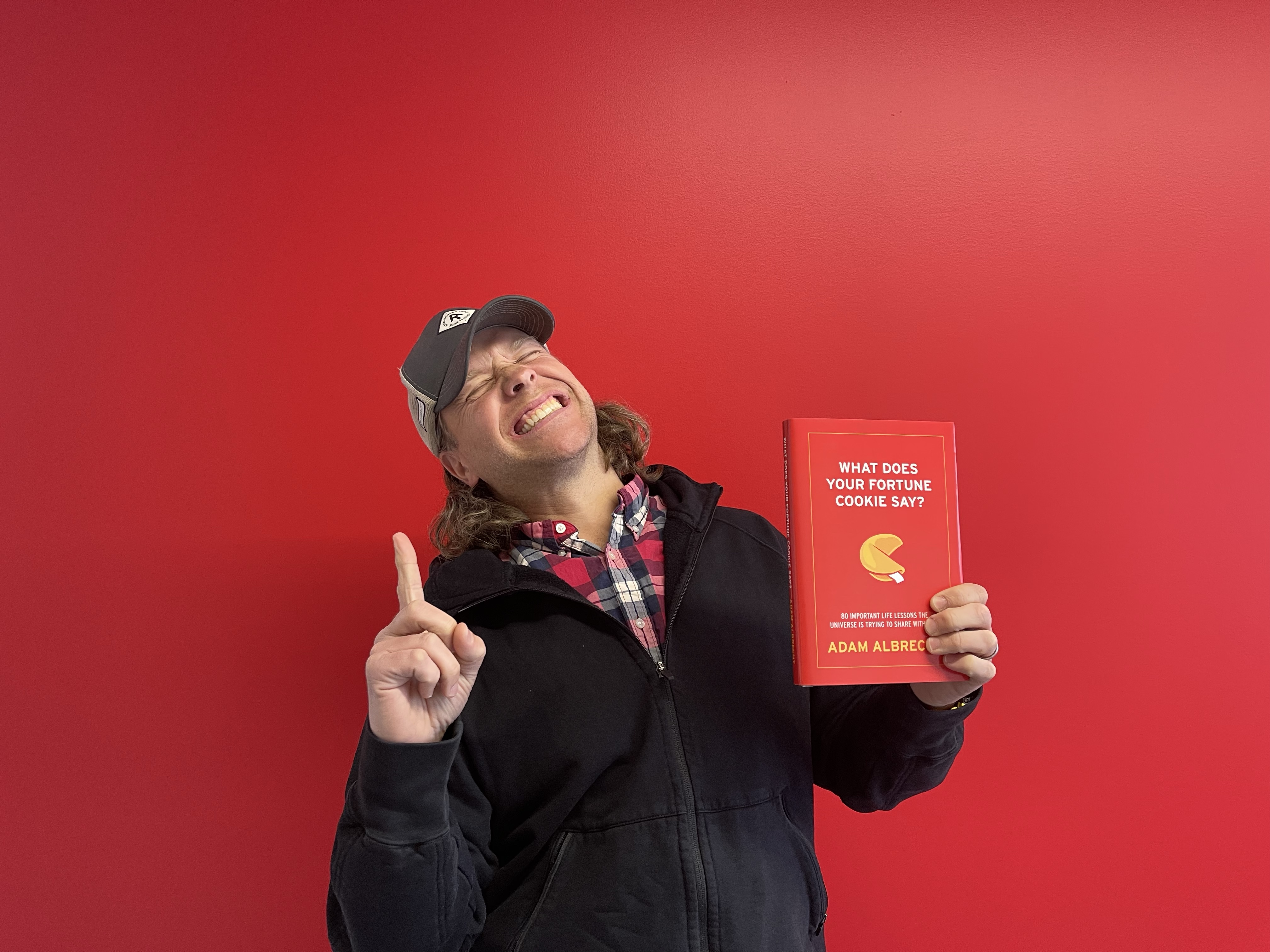
Happy Leap Day! Seize the bonus day by starting something new.

Happy Leap Day! February 29th is your lucky day. In fact, it’s luckier than a 5-leaf clover. And it’s rarer than a mooing steak. In fact, it is so rare that it only happens every 4 years. Like the Olympics, a Presidential election, or a J-Lo wedding.

Opportunity Day!

However, it is not the rarity of Leap Day that matters. It’s the opportunity. Today is a bonus day! Which means that today is the perfect day to do something extra. Like Michael Jackson said, today, ‘You got to be startin’ somethin. Or finishing somethin’. Or working hard on somethin’.

Take a few minutes to think about those things you can never seem to find the time to start, plan or complete. Take a leap and get rolling today.

Possible Leap Day Activities:

  • Exercise
  • Take a hike
  • Play a Game
  • Start a blog, vlog, slog, or drink Glogg
  • Start a business
  • Pick up a new hobby, or re-engage in an old hobby (like Holly)
  • Create a podcast
  • Play an instrument
  • Create a product
  • Start a book (reading or writing)
  • Paint
  • Marie Kondo your house
  • Volunteer, or sign up to volunteer
  • Go to church (or find a place of worship to go to this week)
  • Start a meetup
  • Join a club or worthy organization
  • Ask someone to be your mentor.
  • Call someone you haven’t talked to for too long
  • Find a Dentist
  • Find a Doctor
  • Find a nurse
  • Find a lady with an alligator purse
  • Start your taxes
  • Plan a vacation
  • Organize a girls’ night, or a guys’ night, or a Michael Knight
  • Make a career or life plan
  • Do something more you, because no one knows you better than you

Bonus Time Is Start Time

Me in my office. That leaf is what the original Adam was wearing when he got in trouble with God.

I started planning my own business, The Weaponry, during a little bonus time like you have today. Now we have been in business for nearly 8 years. We have 2 offices and clients from Quebec to California.

I started this blog during a little bit of free time. This is post number 966.

The pink and red countries are where my blog has been read. Crazy, right?

During the last leap year in 2020, I used the bonus free time provided by the COVID-19 lockdown to write my first book, What Does Your Fortune Cookie Say?

Today, will use some of my bonus time to work on my next book currently titled, Adam Albrecht’s Next Book. Catchy, I know.

The 3 Big Bs

My business, blog, and book represent the 3 biggest elective projects of my life. And they were all birthed during bonus time. It was time that I used wisely.

Now it’s your turn to do something meaningful. Don’t miss the opportunity today is offering You.

Key Takeaway

Time is your more precious resource. Use it wisely. Alchemize it into magic. And when you get a bonus day or a bonus hour, take advantage of it. Otherwise, when you come to the end of your time, you will wish you had.

Which begs the question: What will you do with your Leap Day?

Note: Happy Leap Day Birthday to my friend Jeff Hilimire, who turns 12 today.

IMG_20191105_143236
Jeff ‘The Leap Day’ Hilimire, shows us how big he was when he was born.

How to get more out of your reading every day.

I love to read.  Like most people, I was born highly uneducated. Reading has become an instrumental part of my master plan to overcome my early shortcomings. I love to learn and to become inspired. And if you are reading this I expect you do too.

I like reading classic literature because it makes me feel worldly. I liked reading the first three Harry Potter books because they made me feel magical. But then I realized my time is too scarce to read four more books about a fanciful wizard boy.

Today I read a lot of books on self-improvement, business, and biographies. I also read healthy portions of magazines like Fast Company and Inc. because I find them both creatively stimulating and educational. Plus I like the pictures.

Several years ago I read an interesting quote from Charlie “Tremendous” Jones that said, “You are the same today as you’ll be in five years except for two things: the books you read and the people you meet.” And this reading about reading encouraged Adam “Ordinary” Albrecht to read even more.

But there is also a potential danger in reading. And not just the threat of papercuts and eye strain. I have found that too much reading can lead to too little doing. If I fill all of my time with learning and inspiration I leave no time for action. Like the career student who seems to know everything but does nothing.

If you find that you are reading and learning, but not actually putting your learnings into action, follow this simple rule of thumb that influences my reading today:

Read just enough to learn something new and become inspired. Then act on it.

This simple rule has helped me accomplish more. I’ve wasted less time. And I’m more excited about my work.

I think of reading now like a pregame speech. One that I listen to just long enough to become properly motivated. And as soon as I am lathered up I jump to work, acting on the inspiration.

That’s when I start writing, planning, structuring, detailing, calling, creating, wizarding or potioning. When I have one hour available, instead of one hour of reading, I can do 10 or 15 minutes of reading. Then I can spend the rest of the hour implementing. Which means that the return on that one hour is significantly higher than it would be from reading alone.

I use my reading to prompt action. This approach has been vital to my experience as an entrepreneur and Founder of The Weaponry. It has empowered me to author What Does Your Fortune Cookie Say? and my current writing projects. And it is the driving force that has inspired more than 960 blog posts. Because reading is not the goal. It is just the beginning.

Key Takeaway

Reading is a great way to learn and grow. But putting your new knowledge into action is far more valuable. For the next week, I encourage you to read enough each day to want to do something new and exciting. Then do it. Then repeat the process. And let me know how it works for you.

*If you know someone who could benefit from this message, please share it with them.

+For more of the best life lessons I have learned check out my book, What Does Your Fortune Cookie Say? from Ripples Media.
Do you know the pivotal days of your career?

In the story of your life, some days matter more than others. A lot more. In fact, in most careers, there are ten days that make all the difference. The actions you take on those 10 pivotal days not only have an outsized impact on your career, but they also have a transformational impact on your life. These are the days that songs, books and movies are written about. These are the days that will help the actor playing you in the movie about your life win the big awards. So make sure to take good notes for them.

If you take a little time to reflect on your career it is not hard to find your 10 pivotal days. The days that changed the trajectory or accelerated the velocity of your career. The days that earned you new respect, new responsibility and made you more money. The days that you didn’t have vomit on your sweater. (Mom’s spaghetti.)

Here are my 10 Pivotal Days.

  1. The day I got off the couch and called Paul Counsell, The CEO of Cramer Krasselt, and asked for an informational interview. This was the first domino to fall in my career. I got an interview. It lasted 5 hours. I made people laugh. I got a job. Everything else happened because of this call.
  2. The first new business pitch I was in. The client started the meeting by telling our agency we had no chance of winning the account. But I had seen the movie The Secret of My Success. I knew I was the Michael J Fox character. And I had prepared as if this was the biggest moment of my career. Which it was. We won the account. Boom goes the dynamite.
  3. The day I met my wife Dawn. We met at work. The impact she has had on my career growth and entrepreneurial journey can’t be overstated. She is my greatest cheerleader. Like the Toni Basil to my Mickey.
  4. The day I accepted the job as the Creative Director at Engauge. Taking on a new job with new responsibilities in a new jack city with all new coworkers and clients turbocharged my growth and development. It changed my family’s lives too.
  5. The day of my first Nationwide TV commercial shoot. We filmed a Corvette doing donuts in a cul-de-sac in Charlotte, North Carolina, in 100-degree heat. The new clients that I met that day, the challenges of the shoot that we overcame together and the strong friendships I developed with them had a huge influence on me both professionally and personally. But this day was as important for what I didn’t do as it was for what I did do. (Which I know sounds like a lot of do-do.) I wrote a story about that day here.
  6. The day I became Chief Creative Officer of Engauge. The new level of responsibility and opportunity to impact an organization was monumental. My learning, exposure and influence increased tremendously. I was ready to leave Engauge for this kind of opportunity. So when it came to me, it felt like the end of the book The Alchemist. (Which you should read if you haven’t.)
  7. The day I was picked to be part of the pitch team when Engauge was being sold. Being part of the 4-person leadership team that met with all of our potential buyers offered me an advanced degree in business. That process taught me critical lessons that prepared me for my entrepreneurial journey. Like Jamal Malik in Slumdog Millionaire.
  8. The day I was encouraged to start my own agency. I got 2 calls the same day in August of 2015 from former clients. In both conversations, the callers talked about wanting to work with me, but not wanting to work with my current agency. Which led to a discussion of starting my own agency. All the other dominoes had led to this. (Except for the Domino’s that delivers pizza.)
  9. The day I left my job at Moxie to start The Weaponry. It is one thing to think about or talk about starting your own agency. It’s another thing to do it. I had been ramping up The Weaponry by doing night and weekend side work for 5 months. But jumping made everything different. Like Camp Randall Stadium before the 4th Quarter.
  10. The day that The Weaponry signed its first retainer client. The Weaponry had generated significant cash flow over its first year and a half. But it wasn’t predictable. Once we landed our first retainer client we had the stability to hire staff and lease an office. It was when we Pinocchioed from a startup to a real business. 

Key Takeaway

Know your pivotal days. They are valuable to identify. Because they provide clues to your success. They show you what mattered most along your career journey and your story. By knowing your pivotal days, you are also able to recognize when the next pivotal days come along. When you understand how situations and opportunities lead to transformation you better prepare to make sure those opportunities go your way.

*If you know someone who could benefit from this message, please share it with them.

+For more of the best life lessons I have learned check out my book, What Does Your Fortune Cookie Say? from Ripples Media.